Tag: CES

  • CES 2017 unveils game-changing innovation to the world

    CES 2017 unveils game-changing innovation to the world

    LAS VEGAS: The future of technology was unveiled yesterday on opening day of CES® 2017, as more than 3,800 companies debuted products across a record 2.6 million net square feet of exhibit space. Opening day featured future-focused product announcements and keynotes from the leaders of Carnival Corp., Huawei and Nissan, in addition to a C Space keynote with chairman and senior executive of IAC and Expedia, Inc. Barry Diller and chairman and CEO of MediaLink Michael E. Kassan. Owned and produced by the Consumer Technology Association (CTA)TM, CES 2017 runs through Sunday, January 8, in Las Vegas, Nevada.

    Keynotes
    CTA president & CEO Gary Shapiro kicked off CES 2017 by exploring how technology transcends industries, transforms lives and fosters innovation. “Today’s innovators are working long hours and late nights to change lives for the better – and in some cases they’re saving lives,” he said. Shapiro announced that CTA will invest $1 million in five initiatives to help create better paying American jobs that maintain U.S. leadership in technology and innovation. “Our industry supports 15 million jobs and it’s time those of us in corporate America take an ethical responsibility and ownership in our national future.” Shapiro also announced CTA’s “Let’s Go Humans” campaign, celebrating innovators and creators who are developing technologies that are improving lives and making the world a better place to live.

    Immediately following Shapiro, Carnival Corp president & CEO Arnold Donald took the opening keynote stage to unveil the Ocean Medallion, a first-of-its-kind wearable that acts as a personal digital concierge for cruise guests. The Medallion enables guests to access rooms, make on-board purchases, locate family and friends and so much more to maximize the cruise experience. “Each guest is different and the things that make them happy are different,” said Arnold. “Our mission is to personalize and simplify the vacation experience for everyone.”

    During the C Space keynote, IAC and Expedia’s Barry Diller discussed changes in the media landscape and how the advertising industry is being challenged today by fake news. This interview-style session was moderated by MediaLinks’ Michael E. Kassan and addressed the potential negative consequences of the public’s newly-found freedom to publish content. “Before, you needed a distributor,” said Diller, “Now you push a button and publish to the world; while that’s freeing, it has lots of nasty consequences.”

    Richard Yu, CEO of Huawei Consumer Business Group delivered a keynote address on Thursday afternoon. He said the company has invested $38 billion in R&D in the last 10 years and announced a new smartphone with a dual-camera – a second generation Leica Dual camera, featuring dual sensors and 2X hybrid zoom. Yu showcased an ultra-long lasting battery with the Huawei SuperCharge, which charges four times faster and lasts 50 percent longer than other smartphone batteries. He also introduced the Mate 9, the world’s first intelligent smartphone to integrate with Alexa, the intelligent voice service.

    Wrapping up the day, Nissan Motor Corp chairman & CEO Carlos Ghosn shared the company’s vision for a zero-emissions, zero-fatality world. “The disruptive angle of autonomous drive technology, electric vehicles, connected cars and services means we will see more change in the next ten years than we did in the last 50,” said Ghosn. He then announced that the next-generation Nissan Leaf electric vehicle will come with the semi-autonomous ProPilot system, as well as the company’s plans to launch their Seamless Autonomous Mobility (SAM) system. Developed from NASA technology, SAM enables a “human in the loop” approach to autonomous driving, which monitors a vehicle’s path from a distance, providing peace of mind to drivers.

    SuperSessions and Conferences
    Opening day featured dynamic SuperSessions and conferences, including the Sports Business Innovation conference, C Space Storytellers panel series and the Innovation Policy conference.

    The Stoked About 5G SuperSession, moderated by ReCode Senior Editor of Mobile Ina Fried, featured executives from 20th Century Fox Film, BMW Group, Ericsson and SK Telecom. The panel discussed the possibilities for innovation using the new 5G network – a network that reacts faster than the human brain.

    CTA’s Gary Shapiro sat down with Federal Trade Commission Chairwoman Edith Ramirez to discuss consumer privacy, the Internet of Things, patent trolls and the sharing economy. Ramirez emphasized the need for Congressional action to ensure the functions of internet-enabled devices are transparent. “All of the innovation you see on the CES show floor depends on the use and gathering of data, and that’s only going to accelerate, especially in regard to artificial intelligence and machine learning,” said Ramirez.

    David Kirkpatrick, founder and CEO of Techonomy, moderated The Challenges Facing an Artificially Intelligent World SuperSession. Speakers included Chris O’Connor, general manager, IBM Watson, Dr. Vivienne Ming, co-founder, Socos, Jeroen Tas, CEO, Connected Care & Health Informatics, Philips, and Paul Daugherty, chief technology & innovation officer, Accenture. The panel discussed the future of Artificial Intelligence (AI), how it will grow to become all-inclusive, similar to IoT, and how AI will enhance human lives, help further develop our abilities and change our society.

    CNET’s Next Big Thing SuperSession was moderated by CNET Editor-in-Chief Lindsey Turrentine and CNET’s Editor-at-Large Brian Cooley. The panel explored barriers to unlocking the smart home. Obstacles discussed included cost, complexity and security. When the group turned to discuss security, they were briefly joined on stage by actress Carly Chaikin, who plays the hacker Darlene on the USA television series “Mr. Robot.” Security of the smart home, the panelists agreed, is the starting point of any smart home device.

    C Space Storyteller Sessions

    Thursday’s C Space Storyteller sessions kicked off with Margo Georgiadis, president, Americas at Google, moderating a panel with leaders from Universal Pictures and AT&T. The executives took a deep dive into how each brand leverages mobile to grow stronger and drive business results. They also touched on how to win the war for attention with so much content competition, with the consensus being to hook and hold audiences with compelling content.

    Next, executives from Hulu and Live Nation took the C Space stage to discuss how they are redefining the concert experience through a new frontier: Virtual Reality. Kevin Chernett, executive vice president, global partnerships and content distribution at Live Nation Entertainment and Noah Heller, vice president, emerging technology at Hulu addressed the new frontier of leveraging virtual entertainment to give fans unprecedented access into the worlds of top artists both on and off stage.

    Mike Parker, president, iCrossing moderated an afternoon Storytellers panel with executives from Bridgestone, PepsiCo and Whirpool Corp. to explore customer behavior driven by technology and innovation. Marketers need to manage the flow of data and leverage the analytics while learning more about their audiences. Brands will be challenged to maintain consistency with their stories, given the new tools coming into the market.

    Rounding out the Storyteller sessions, President of Verizon Digital Media Services Ralf Jacob talked with leading content creators about how OTT strategies and technologies have enabled them to engage audiences and further drive opportunities. The goal isn’t to get the most clicks, but to keep their audiences coming back, increasing page time and sharing information with the brand. Engaging new users presents a gamble because marketers are forced to use new strategies with little data.

    Sports Business Innovation
    David Levy, president of Turner, kicked off the Sports Business Innovation Conference Track on Thursday. Panelists included WNBA player Sue Bird, NBA analyst Grant Hill, NCAA President Dr. Mark Emmert, and NBA Commissioner Adam Silver. The panel, moderated by Turner Sports Sportscaster Ernie Johnson, covered a number of topics related to technology’s effect on professional sports. Seven-time NBA All-Star Grant Hill put it best, “We are all connected. Not just in how you interact with fans, but how you manage your body.”

    The three subsequent panels examined topics varying from an athlete’s life outside of sports, the challenges of, and strategies for, consumer engagement and the massive opportunity presented by the growing popularity of eSports. Participants included Chris Bosh of the NBA’s Miami Heat; Draymond Green of the NBA’s Golden State Warriors and Dexter Fowler’s of Major League Baseball’s St. Louis Cardinals, as well as executives from Bleacher Report, Dell and Ford.

    To round things out, Federal Communications Commission (FCC) and Federal Trade Commission (FTC) Commissioner Roundtable Session was moderated by Julie Kearney of CTA with panelists FCC Commissioners Mignon Clyburn, Mike O’Rielly and Ajit Pai and FTC Commissioners Maureen Ohlhausen and Terrell McSweeny. FCC Commissioners kicked off the panel with broad agreement on the ongoing broadcast spectrum incentive auction, each commenting they are optimistic the incentive spectrum auction will succeed and make resources more efficient. The FTC Commissioners identified ongoing issues for data privacy and security for consumers with IoT, but stressed that any approach to regulating should be flexible enough to promote innovation.

    Thursday also featured the Stuff Wearable Tech Awards, highlighting the 10 best wearables coming to market. The full list of award winners and honorees can be found at Stuff.tv.
  • India’s startup gets J&J support for maiden device

    India’s startup gets J&J support for maiden device

    LAS VEGAS: Ray IoT is creating a non-contact wellness and sleep tracker for babies for which it has received support by Johnson & Johnson and HAX. Ray IoT will be introducing its product at the Consumer Electronics Show (CES) in Las Vegas 5-8 January. This is the first time a startup from India has been given the support of J&J to create a baby product.

    Ray IoT’s maiden product is a device to monitor sleeping babies. It lets parents know on their cell phones if their baby is sleeping well, if it’s breathing normally or it has rolled over. Unlike other baby monitors, Raybaby, as it’s called, doesn’t touch the baby, so it’s non-intrusive.

    Bangalore-based Ray IoT, creators of the first non-contact sleep and wellness tracker for babies, announced the support extended by Johnson & Johnson and HAX as part of the Joint Consumer Health Device Accelerator Program. Ray IoT is the first Indian company to be supported by Johnson & Johnson Innovation as part of this initiative.

    Famous for its baby products, J&J invests US$8 billion annually on research and development and is now keen to look to outside sources to keep its technology fresh.

    According to Ray IoT VP for External Innovation and New Business Models John Bell: “What we are learning is that doing everything on your own is no longer possible. We have found out the hard way every now and then that if you try to do everything, it doesn’t work.” Announcing the program launch, Bell added “We are really focused on working together with the external world to co-create new products.”

    Ray IoT co-founder and CEO Ranjana Nair said, “Johnson & Johnson is a household name in India. The first gift you think of buying for a new born baby in India is the Johnson & Johnson baby hamper. We at Ray are excited to be the first Indian company to be a part of this initiative.”

    Ray IoT will also participate in the demo day by HAX in San Francisco on 10 January, and launch its campaign on Kickstarter on 31 January to collect pre-orders.

    Ray IoT has also benefitted from being in China’s Silicon Valley of hardware, Shenzhen.

  • India’s startup gets J&J support for maiden device

    India’s startup gets J&J support for maiden device

    LAS VEGAS: Ray IoT is creating a non-contact wellness and sleep tracker for babies for which it has received support by Johnson & Johnson and HAX. Ray IoT will be introducing its product at the Consumer Electronics Show (CES) in Las Vegas 5-8 January. This is the first time a startup from India has been given the support of J&J to create a baby product.

    Ray IoT’s maiden product is a device to monitor sleeping babies. It lets parents know on their cell phones if their baby is sleeping well, if it’s breathing normally or it has rolled over. Unlike other baby monitors, Raybaby, as it’s called, doesn’t touch the baby, so it’s non-intrusive.

    Bangalore-based Ray IoT, creators of the first non-contact sleep and wellness tracker for babies, announced the support extended by Johnson & Johnson and HAX as part of the Joint Consumer Health Device Accelerator Program. Ray IoT is the first Indian company to be supported by Johnson & Johnson Innovation as part of this initiative.

    Famous for its baby products, J&J invests US$8 billion annually on research and development and is now keen to look to outside sources to keep its technology fresh.

    According to Ray IoT VP for External Innovation and New Business Models John Bell: “What we are learning is that doing everything on your own is no longer possible. We have found out the hard way every now and then that if you try to do everything, it doesn’t work.” Announcing the program launch, Bell added “We are really focused on working together with the external world to co-create new products.”

    Ray IoT co-founder and CEO Ranjana Nair said, “Johnson & Johnson is a household name in India. The first gift you think of buying for a new born baby in India is the Johnson & Johnson baby hamper. We at Ray are excited to be the first Indian company to be a part of this initiative.”

    Ray IoT will also participate in the demo day by HAX in San Francisco on 10 January, and launch its campaign on Kickstarter on 31 January to collect pre-orders.

    Ray IoT has also benefitted from being in China’s Silicon Valley of hardware, Shenzhen.

  • Whoa! CES 2017 Opens with Next-Generation Innovation

    Whoa! CES 2017 Opens with Next-Generation Innovation

    LAS VEGAS: CES® 2017 officially opened its doors today, celebrating the show’s 50th anniversary with a recording-breaking exhibit floor spanning more than 2.6 million net square feet. More than 3,800 companies will launch innovative products this week at CES, including an unprecedented 600 startups in Eureka Park. Owned and produced by the Consumer Technology Association (CTA)TM, CES 2017 runs through Sunday, 8 January in Las Vegas, Nevada.

    “What an incredible way to celebrate the 50th anniversary of CES – with the largest show floor in our history showcasing the next generation of innovation that will revolutionize our world,” said CTA president & CEO Gary Shapiro. “The products and services unveiled at CES 2017 will touch nearly every single global industry. From the latest in virtual reality, smart home, self-driving vehicles, robotics, wearables, health and fitness tech and more, CES 2017 is unveiling the future of the connected experience and what it means for consumers around the world.”

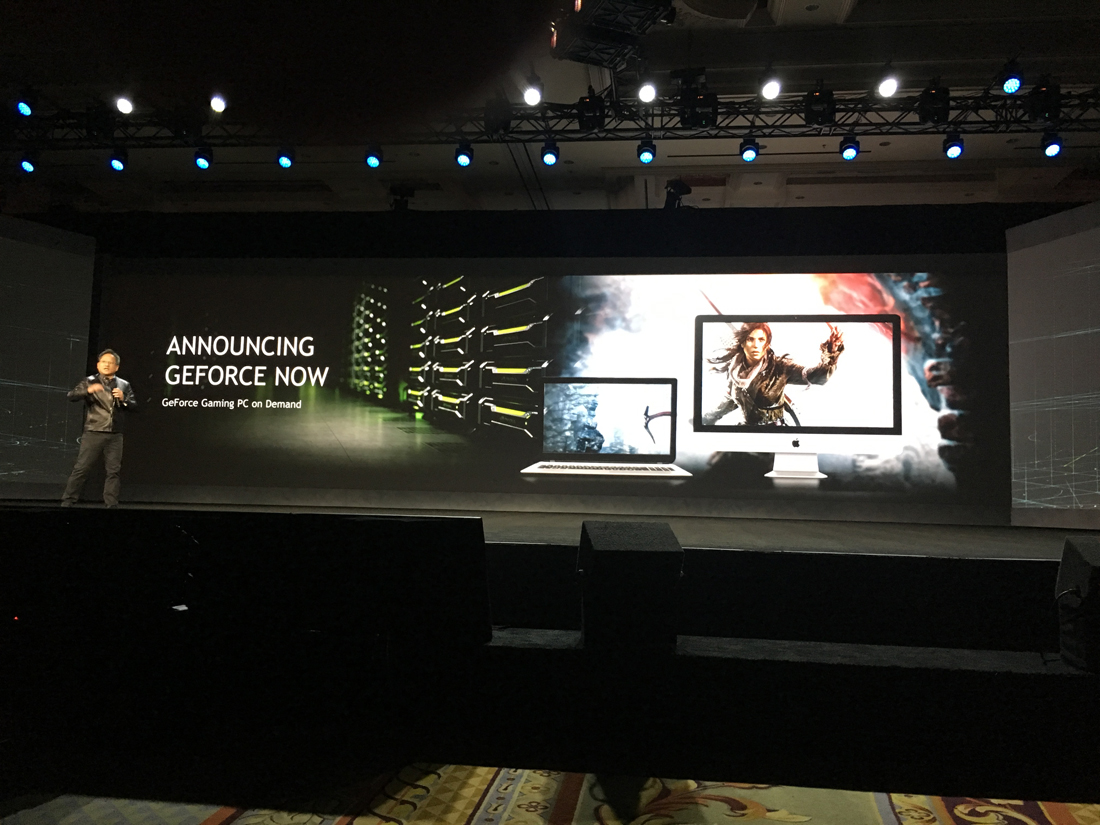
    CES welcomed NVIDIA founder & CEO Jen-Hsun Huang to the keynote stage Wednesday night, where he made multiple groundbreaking announcements based on the company’s leadership in developing advanced graphics processors and artificial intelligence. Mass Effect: Andromeda, a popular video game made by BioWare, was previewed by NVIDIA along withGeForce NOW™, a streaming service that turns any PC into a powerful gaming PC from the cloud. Huang also unveiled a new version of the Shield TV — now just called Shield — which will support 4K HDR for both games and movies making it the world’s first 4K HDR entertainment platform. To support Shield’s Artificial Intelligence (AI), Huang introduced NVIDIA SPOT, a plug-in device that understands natural language and complex patterns to help build a user’s AI experience. Huang also announced an AI car supercomputer called Xavier used in NVIDIA’s own self-driving car BB8 and a new capability on the NVIDIA AI car computer called AI Co-Pilot, which provides drivers with road alerts and recognizes facial expressions and voice recognition to improve drivers’ experience.

    Huang further announced an expanded partnership with Audi to develop artificial intelligence for a new generation of self-driving cars, with plans to have vehicles on the road by 2020. He also provided details on partnerships with mapping companies HERE and ZENRIN; and two of the world’s largest automotive suppliers, ZF and Bosch.

    Wednesday also kicked off the C Space Storytellers series, with key influencers and newsmakers sharing best practices surrounding the relationships among brands, entertainment and technology. In the series’ first session, Spotify’s Alex Underwood moderated a panel with executives from GroupM, Nestle S.A. and Wordsworth and Booth providing a 30,000 foot view of the advertising opportunities in audio.

    During the Nielsen Storytellers session, Nielsen’s Executive Vice President & Global Retail Practice Leader Louise Keely discussed new technologies for advertising for consumer-facing companies. In this “period of great disruption” in the consumer path to purchase, companies must change measurement tools and methods.

    Preshow media events kicked off on Tuesday which included the largest CES Unveiled in history. The official media event of CES 2017 featured a record 190 exhibiting companies, an 18 percent increase over 2016, including 60 startups from Eureka Park, the most startups ever showcased at CES Unveiled. Featuring the latest in virtual reality, companion sensing robots, wireless headphones, sleep trackers, smart lighting, wearables and more, CES Unveiled provided the more than 2,000 media attending with a sneak peak of the innovation launching this week at the show. The official CES Unveiled highlights reel can be viewed here.

    New for 2017, CES included two full Media Days where companies large and small introduced products to the global market. Setting the stage for a week filled with innovation, 28 companies hosted preshow news conferences, with a wide array of major product announcements:

    • A&D Medical/Mobile Health – The MobileHelp Tablet Medical Alarm with MobileVitals Monitoring.
    • BMW – Prototype of BMW’s 7-fully automated sedan.
    • Bosch – Concept car featuring face recognition and intelligent personalization, gesture control with Ultra Haptics, a crystal-clear OLED display and digital exterior mirrors.
    • Carnival – Ocean Medallion, a highly personalized wearable concierge service, which enables elevated service through enhanced guest interactions during the entire cruise experience.
    • Casio – PRO TREK, a smart watch, which uses Android Wear 2.0 and is equipped with low-power GPS and new full-color map functionality.
    • Continental – High-Resolution 3D Lash Lidar, capable of 3D measurement of the environment in challenging conditions such as fog, dust, rain and light.
    • Faraday Future – The FF 91, a fully-electric, fully-connected, self-driving, keyless vehicle experience with a “driverless valet” function that allows the car to park itself from your smartphone.
    • FCA – Portal, a concept car, is battery electric, cloud connected and offers fully self-driving capabilities.
    • Hisense – The H10D 4K HDR TV, featuring proprietary ULED display technology, quantum dot wide color gamut and full array local dimming.
    • Huawei/Honor Brands – The Honor 6X dual-camera, dual-sensor smartphone, retailing for $250 USD.
    • Hyundai – IONIC Scooter, a “micro mobility” fold-up scooter aimed at those who live in urban environments with limited parking options.
    • LG – LG Signature OLED TV W, or the “The Wallpaper TV.” The 65” model is 2.57 mm wide – 1/10th of an inch – with no gap between the TV and wall.
    • Lucaro – iRobotics 7 Medical Massage Chair, a full-body massage chair that also uses blood pressure and heart rate monitoring for added comfort and options.
    • Monster – Soundstage 2, to be integrated with Amazon Alexa.
    • Panasonic – Lumix GH5 mirrorless camera that excels at shooting video and has 4K and 6K capabilities.
    • Qualcomm – Snapdragon 835, the first 10 nanometer mobile processor, with enhanced efficiency that helps to create thinner phones with longer battery life.
    • Royole – The Royole Moon, a 3D virtual mobile theater combining 1080p AMOLED displays at over 3000 ppi resolution that simulate a giant 800” curved screen, with stereoscopic 3D and noise-cancelling headphones for a completely immersive experience.
    • Samsung – The Wash and FlexDry IoT-enabled washer/dryer system featuring four separate compartments for washing and drying, letting you maximize efficiency and customize how you manage your laundry.
    • Sony – Crystal LED integrated structure display, with superfine LED structures serving as a light source, making it virtually impossible to see the pixels.
    • TCL – The Xess series – X2 and X3 models – which are edgeless, flat and curved proving ultimate picture quality.
    • Toyota – Concept-i, a self-driving car allowing passengers to interact with the car’s artificial intelligence agent named “Yui,” which anticipates drivers’ needs, measures emotions and responds automatically.
    • Valeo – The 360AEB Nearshield, an emergency braking system that eliminates drivers’ blind spots, bringing the vehicle to a stop in emergency situations.
    • VOXX – Terk delivers the strongest Wi-Fi signals throughout the home, as well as free HDTV. The soon-to-be released Terk Omni features circle beam technology, which will allow you to receive broadcast signals up to 65 miles away.
    • ZF – The ZF ProAI, a deep learning software and ZF’s first step into artificial intelligence that goes beyond automotive applications.
    • ZTE – The Hawkeye, the world’s first crowdsourced phone.
    Wednesday afternoon also featured ShowStoppers LaunchIt, the Official Pitch Event at CES, built around the entrepreneurial companies that exhibit in Eureka Park, the home for startups at CES. Twelve startups pitched their products to a standing room-only crowd. First prize was awarded to Nonda, makers of a family of connected, app-enabled devices for the vehicle. Kino-mo, developer of high tech smart holographic displays, took second place. Third place was awarded to In&Motion, creator of a smart wearable that aims to reduce the risk of serious injury due to falls. Attendees can experience these and other innovative startups at the Eureka Park Marketplace, located in the Sands, Level 1, Hall G.

  • Whoa! CES 2017 Opens with Next-Generation Innovation

    Whoa! CES 2017 Opens with Next-Generation Innovation

    LAS VEGAS: CES® 2017 officially opened its doors today, celebrating the show’s 50th anniversary with a recording-breaking exhibit floor spanning more than 2.6 million net square feet. More than 3,800 companies will launch innovative products this week at CES, including an unprecedented 600 startups in Eureka Park. Owned and produced by the Consumer Technology Association (CTA)TM, CES 2017 runs through Sunday, 8 January in Las Vegas, Nevada.

    “What an incredible way to celebrate the 50th anniversary of CES – with the largest show floor in our history showcasing the next generation of innovation that will revolutionize our world,” said CTA president & CEO Gary Shapiro. “The products and services unveiled at CES 2017 will touch nearly every single global industry. From the latest in virtual reality, smart home, self-driving vehicles, robotics, wearables, health and fitness tech and more, CES 2017 is unveiling the future of the connected experience and what it means for consumers around the world.”

    CES welcomed NVIDIA founder & CEO Jen-Hsun Huang to the keynote stage Wednesday night, where he made multiple groundbreaking announcements based on the company’s leadership in developing advanced graphics processors and artificial intelligence. Mass Effect: Andromeda, a popular video game made by BioWare, was previewed by NVIDIA along withGeForce NOW™, a streaming service that turns any PC into a powerful gaming PC from the cloud. Huang also unveiled a new version of the Shield TV — now just called Shield — which will support 4K HDR for both games and movies making it the world’s first 4K HDR entertainment platform. To support Shield’s Artificial Intelligence (AI), Huang introduced NVIDIA SPOT, a plug-in device that understands natural language and complex patterns to help build a user’s AI experience. Huang also announced an AI car supercomputer called Xavier used in NVIDIA’s own self-driving car BB8 and a new capability on the NVIDIA AI car computer called AI Co-Pilot, which provides drivers with road alerts and recognizes facial expressions and voice recognition to improve drivers’ experience.

    Huang further announced an expanded partnership with Audi to develop artificial intelligence for a new generation of self-driving cars, with plans to have vehicles on the road by 2020. He also provided details on partnerships with mapping companies HERE and ZENRIN; and two of the world’s largest automotive suppliers, ZF and Bosch.

    Wednesday also kicked off the C Space Storytellers series, with key influencers and newsmakers sharing best practices surrounding the relationships among brands, entertainment and technology. In the series’ first session, Spotify’s Alex Underwood moderated a panel with executives from GroupM, Nestle S.A. and Wordsworth and Booth providing a 30,000 foot view of the advertising opportunities in audio.

    During the Nielsen Storytellers session, Nielsen’s Executive Vice President & Global Retail Practice Leader Louise Keely discussed new technologies for advertising for consumer-facing companies. In this “period of great disruption” in the consumer path to purchase, companies must change measurement tools and methods.

    Preshow media events kicked off on Tuesday which included the largest CES Unveiled in history. The official media event of CES 2017 featured a record 190 exhibiting companies, an 18 percent increase over 2016, including 60 startups from Eureka Park, the most startups ever showcased at CES Unveiled. Featuring the latest in virtual reality, companion sensing robots, wireless headphones, sleep trackers, smart lighting, wearables and more, CES Unveiled provided the more than 2,000 media attending with a sneak peak of the innovation launching this week at the show. The official CES Unveiled highlights reel can be viewed here.

    New for 2017, CES included two full Media Days where companies large and small introduced products to the global market. Setting the stage for a week filled with innovation, 28 companies hosted preshow news conferences, with a wide array of major product announcements:

    • A&D Medical/Mobile Health – The MobileHelp Tablet Medical Alarm with MobileVitals Monitoring.
    • BMW – Prototype of BMW’s 7-fully automated sedan.
    • Bosch – Concept car featuring face recognition and intelligent personalization, gesture control with Ultra Haptics, a crystal-clear OLED display and digital exterior mirrors.
    • Carnival – Ocean Medallion, a highly personalized wearable concierge service, which enables elevated service through enhanced guest interactions during the entire cruise experience.
    • Casio – PRO TREK, a smart watch, which uses Android Wear 2.0 and is equipped with low-power GPS and new full-color map functionality.
    • Continental – High-Resolution 3D Lash Lidar, capable of 3D measurement of the environment in challenging conditions such as fog, dust, rain and light.
    • Faraday Future – The FF 91, a fully-electric, fully-connected, self-driving, keyless vehicle experience with a “driverless valet” function that allows the car to park itself from your smartphone.
    • FCA – Portal, a concept car, is battery electric, cloud connected and offers fully self-driving capabilities.
    • Hisense – The H10D 4K HDR TV, featuring proprietary ULED display technology, quantum dot wide color gamut and full array local dimming.
    • Huawei/Honor Brands – The Honor 6X dual-camera, dual-sensor smartphone, retailing for $250 USD.
    • Hyundai – IONIC Scooter, a “micro mobility” fold-up scooter aimed at those who live in urban environments with limited parking options.
    • LG – LG Signature OLED TV W, or the “The Wallpaper TV.” The 65” model is 2.57 mm wide – 1/10th of an inch – with no gap between the TV and wall.
    • Lucaro – iRobotics 7 Medical Massage Chair, a full-body massage chair that also uses blood pressure and heart rate monitoring for added comfort and options.
    • Monster – Soundstage 2, to be integrated with Amazon Alexa.
    • Panasonic – Lumix GH5 mirrorless camera that excels at shooting video and has 4K and 6K capabilities.
    • Qualcomm – Snapdragon 835, the first 10 nanometer mobile processor, with enhanced efficiency that helps to create thinner phones with longer battery life.
    • Royole – The Royole Moon, a 3D virtual mobile theater combining 1080p AMOLED displays at over 3000 ppi resolution that simulate a giant 800” curved screen, with stereoscopic 3D and noise-cancelling headphones for a completely immersive experience.
    • Samsung – The Wash and FlexDry IoT-enabled washer/dryer system featuring four separate compartments for washing and drying, letting you maximize efficiency and customize how you manage your laundry.
    • Sony – Crystal LED integrated structure display, with superfine LED structures serving as a light source, making it virtually impossible to see the pixels.
    • TCL – The Xess series – X2 and X3 models – which are edgeless, flat and curved proving ultimate picture quality.
    • Toyota – Concept-i, a self-driving car allowing passengers to interact with the car’s artificial intelligence agent named “Yui,” which anticipates drivers’ needs, measures emotions and responds automatically.
    • Valeo – The 360AEB Nearshield, an emergency braking system that eliminates drivers’ blind spots, bringing the vehicle to a stop in emergency situations.
    • VOXX – Terk delivers the strongest Wi-Fi signals throughout the home, as well as free HDTV. The soon-to-be released Terk Omni features circle beam technology, which will allow you to receive broadcast signals up to 65 miles away.
    • ZF – The ZF ProAI, a deep learning software and ZF’s first step into artificial intelligence that goes beyond automotive applications.
    • ZTE – The Hawkeye, the world’s first crowdsourced phone.
    Wednesday afternoon also featured ShowStoppers LaunchIt, the Official Pitch Event at CES, built around the entrepreneurial companies that exhibit in Eureka Park, the home for startups at CES. Twelve startups pitched their products to a standing room-only crowd. First prize was awarded to Nonda, makers of a family of connected, app-enabled devices for the vehicle. Kino-mo, developer of high tech smart holographic displays, took second place. Third place was awarded to In&Motion, creator of a smart wearable that aims to reduce the risk of serious injury due to falls. Attendees can experience these and other innovative startups at the Eureka Park Marketplace, located in the Sands, Level 1, Hall G.

  • Google-Fiat tease Android-based car infotainment system

    Google-Fiat tease Android-based car infotainment system

    MUMBAI: FCA and Google are using CES 2017 to demonstrate a seamless integration of the award-winning Uconnect 8.4-inch connected vehicle system featuring Android, the world’s most popular open-source operating system.

    The collaboration focuses on the next generation of connected car systems, using the Android open-source platform. Android offers automakers user interface customisation, a full-featured automotive infotainment stack and ability to integrate Android apps into the vehicle’s infotainment system.

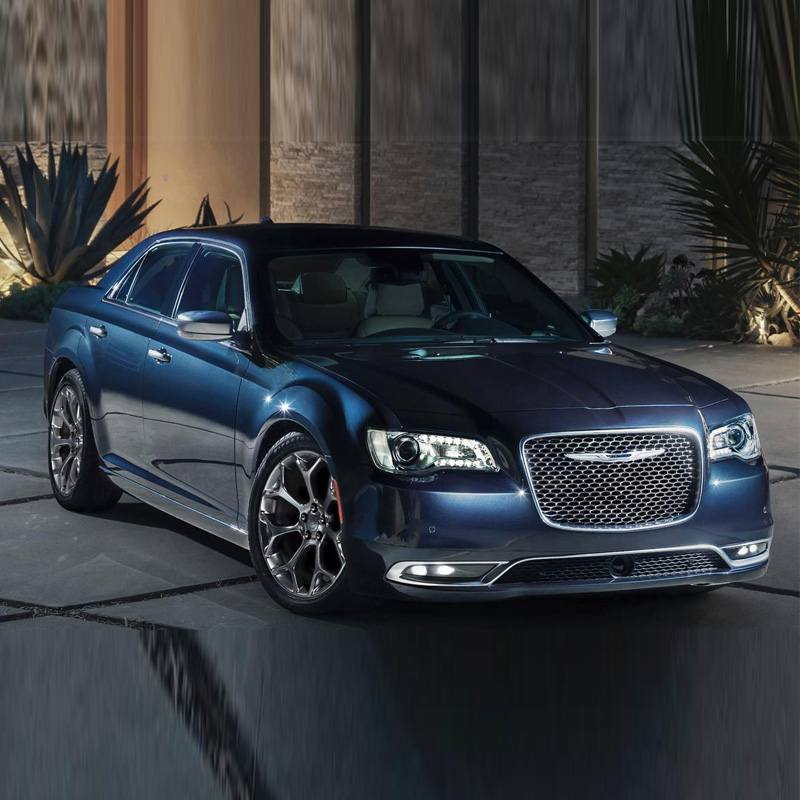
    A hands-on concept demonstration of the power of combining Uconnect with Android is on display at the global consumer electronics and consumer technology tradeshow CES, 5-8 January in Las Vegas, inside a Chrysler 300 sedan.

    FCA is in collaboration with Google regarding the next-generation connected car systems enabled by the power of an open platform and ecosystem of Android.

    “This collaboration with Google has been an extremely beneficial opportunity for both companies to explore how in-vehicle infotainment and connectivity technology continues to evolve, and what it takes to meet consumers’ increasing desire for innovation of information with minimal distraction,” says FCA head of electrical engineering Chris Barman. “With Android, we are able to maintain our unique and intuitive Uconnect user interface, all while integrating our easy-to-use systems with Android’s features and ecosystem of applications.”

    CES attendees can get one-on-one demonstrations of the Uconnect system powered by the latest version of Android, 7.0 Nougat, which includes core infotainment features such as radio and comfort controls.

    The Uconnect and Android integration also enable a system that is built for connectivity and compatibility with the universe of popular Android applications. The demonstration will show a seamless integration with Google Assistant, Google Maps and popular Android apps like Pandora, Spotify, NPR One and Pocket Casts.

    “Google is committed to building Android as a turn-key automotive platform that integrates deeply with the vehicle in a safe and seamless way,” said Google director of android engineering Patrick Brady. “This collaboration with FCA brings together the industry standard for connected car systems with Android to create powerful infotainment systems designed for the digital age.”

  • Google-Fiat tease Android-based car infotainment system

    Google-Fiat tease Android-based car infotainment system

    MUMBAI: FCA and Google are using CES 2017 to demonstrate a seamless integration of the award-winning Uconnect 8.4-inch connected vehicle system featuring Android, the world’s most popular open-source operating system.

    The collaboration focuses on the next generation of connected car systems, using the Android open-source platform. Android offers automakers user interface customisation, a full-featured automotive infotainment stack and ability to integrate Android apps into the vehicle’s infotainment system.

    A hands-on concept demonstration of the power of combining Uconnect with Android is on display at the global consumer electronics and consumer technology tradeshow CES, 5-8 January in Las Vegas, inside a Chrysler 300 sedan.

    FCA is in collaboration with Google regarding the next-generation connected car systems enabled by the power of an open platform and ecosystem of Android.

    “This collaboration with Google has been an extremely beneficial opportunity for both companies to explore how in-vehicle infotainment and connectivity technology continues to evolve, and what it takes to meet consumers’ increasing desire for innovation of information with minimal distraction,” says FCA head of electrical engineering Chris Barman. “With Android, we are able to maintain our unique and intuitive Uconnect user interface, all while integrating our easy-to-use systems with Android’s features and ecosystem of applications.”

    CES attendees can get one-on-one demonstrations of the Uconnect system powered by the latest version of Android, 7.0 Nougat, which includes core infotainment features such as radio and comfort controls.

    The Uconnect and Android integration also enable a system that is built for connectivity and compatibility with the universe of popular Android applications. The demonstration will show a seamless integration with Google Assistant, Google Maps and popular Android apps like Pandora, Spotify, NPR One and Pocket Casts.

    “Google is committed to building Android as a turn-key automotive platform that integrates deeply with the vehicle in a safe and seamless way,” said Google director of android engineering Patrick Brady. “This collaboration with FCA brings together the industry standard for connected car systems with Android to create powerful infotainment systems designed for the digital age.”

  • #NetflixEverywhere: India launch amongst 130 countries; subscription priced at Rs 500-800

    #NetflixEverywhere: India launch amongst 130 countries; subscription priced at Rs 500-800

    #NetflixEverywhere: India launch amongst 130 countries; subscription priced at Rs 500-800

     
    MUMBAI: After months of speculation, over the top (OTT) player Netflix has finally made its big bang launch in India simultaneously with another 129 countries.
     
    In a rapidly crowding Indian OTT space, Netflix will be offering subscribers three monthly subscription plan options. 
     
    The Basic plan is priced at Rs 500, the Standard at Rs 650, whereas the Premium plan is priced at Rs 800. The different subscription plans offer viewers the choice of viewing the content in different formats including HD as well Ultra HD and on multiple screens and devices. What’s more, the first month’s subscription is being offered for free to subscribers.
     
    It may be recalled that the Singtel, Sony Pictures Television and Warner Bros’ JV OTT venture HOOQ, which launched in India last year priced its monthly subscription at Rs 199. On the other hand, ErosNow is planning to adopt the quasi-premium two-tiered subscription service priced at Rs 50 and Rs 100 per month in India. Moreover, with most other players offering content for free on their platforms, Netflix’s entry level subscription might come across as slightly steep, especially for the Indian audience, who is used to watching content for free.
     

    Netflix will offer drama, action, comedy, documentaries and TV shows personalised for viewers. The OTT player will keep adding new movies and TV shows all the time and will also provide options for subtitles or dubbing.

    The much anticipated big announcement was made by Netflix CEO Reed Hastings at the ongoing Consumer Electronics Show (CES) in Las Vegas.
     
    Apart from India some of the other countries where the service was launched are: Vietnam, Saudi Arabia, Singapore, Turkey and Indonesia amongst others. However, a major market that was missing was China.
     
    With Netflix’s entry into the Indian market, it’s game on as existing OTT players like Hotstar, Sony Liv, ErosNow, DittoTV, Spuul and HOOQ gear up to face the competition.
     
    How 2016 will shape up for the OTT players, only time will tell but one thing’s for sure, the ones with the correct content, marketing and revenue generating strategies as well as with deep pockets will survive in the long haul.
     
  • Netflix launches in India; three pricing packages on offer

    Netflix launches in India; three pricing packages on offer

    MUMBAI: In one fell swoop, it is hoping to change the world of audio visual consumption. Netflix co-founder & chief executive Reed Hastings today announced the launch of the Internet TV network or OTT service in 130 countries all over the world at the CES show in Las Vegas. And India figures amongst the list, taking its footprint to 190 nations. 


    The price: Rs 500 for the basic service, Rs 650 for the standard package and Rs 800 for the premium one. The Rs 500 tag allows viewers to watch the content in standard definition on one screen only at one time. For Rs 650 viewers get access to HD content and can watch on two screens simultaneously. The Rs 800 package brings in the full monty with subscribers being able to watch both HD and Ultra HD content on four screens at the same time. 


    However, the first month is being offered free for trial to new subscribers.


    “Today you are witnessing the birth of a new global Internet TV network,” said Hastings in Las Vegas. “With this launch, consumers around the world — from Singapore to St. Petersburg, from San Francisco to Sao Paulo — will be able to enjoy TV shows and movies simultaneously — no more waiting. With the help of the Internet, we are putting power in consumers’ hands to watch whenever, wherever and on whatever device.”


    Viewers in India will get to watch Netflix original series such as Marvel’s Daredevil and Marvel’s Jessica Jones, Narcos, Sense8, Grace and Frankie, and Marco Polo, as well as a catalog of licensed TV shows and movies.


    While largely available in English in most new countries, Netflix has added Arabic, Korean, Simplified and Traditional Chinese to the 17 languages it already supports. He added that newer languages will be added from hereon.


    “From today onwards, we will listen and we will learn, gradually adding more languages, more content and more ways for people to engage with Netflix,” said Hastings. “We’re looking forward to bringing great stories from all over the world to people all over the world.” 


    He emphasised that the consumption on Netflix is on the up. “Our 70 million members consumed 12 billion hours of Netflix in Q4 of this year as compared to 8.5 billion last year,” he said. He also announced that Netflix will be adding high dynamic range (HDR) video delivery later this year, adding to the 4K or Ultra HD, which it produces most of its series in currently.


    Netflix chief content officer Ted Sarandos revealed that 600 hours of original programming will be delivered to its members in 2016. This will include 31 new and returning original series, two dozen original feature films and documentaries, a wide range of stand-up comedy specials and 30 original kids series — available at the same time to members everywhere. 


    Amongst the highlights are The Crown, which is about the young Queen Elizabeth while Baz Luhrmann will be directing a series called The GetDown about New York at a time when its crime scene was crumbling and giving way to the disco,  graffiti and hiphop culture. 


    Sarandos explained that Netflix is making a difference to piracy wherever it goes because it does not trap viewers in frustrating business models and linear viewing experiences in which television operates. 


    “We deliver all episodes at one go so viewers can watch when they want to watch and we are constantly improving our compression technologies to allow for a better viewing experience. We helped create binge viewing,” he said. 


    He stated that peer-to-peer torrent downloading via Bittorrent has dropped by 14 per cent in the first six months of the service’s launch in Australia. 


    A Netflix press release explained that the service is available on virtually any device that has an Internet connection, including personal computers, tablets, smartphones, Smart TVs and game consoles, and automatically provides the best possible streaming quality based on available bandwidth. Many titles, including Netflix original series and films, are available in high-definition with Dolby Digital Plus 5.1 surround sound and some in Ultra HD 4K. Advanced recommendation technologies with up to five user profiles help members discover entertainment they’ll love.

  • Turner aims to re-imagine commercial breaks by combining ads with content

    Turner aims to re-imagine commercial breaks by combining ads with content

    MUMBAI: Turner Ad Sales is returning to the CES this week as part of an ongoing approach to collaborate with clients and agencies through ideation-fueled discussions. With an introduction by Turner Ad Sales president Donna Speciale, the meetings will include her new leadership team and introduce a new insights-powered unit within the division, Turner Ignite, led by executive vice presidents Dan Riess, head of content partnerships and Michael Strober, head of client strategy & ad innovation. Speciale will share Turner Ad Sales’ vision in better enabling business partners to re-imagine advertising by combining data and content. 


    Turner Ignite is the combination of two solution-oriented teams under Strober and Riess. The unit will focus on content and data solutions that power the next generation of portfolio capabilities for Turner, enhancing the ad viewing experience while also driving better ad performance.  During the meetings at CES, Turner Ignite will share with clients how they can keep one foot in today’s opportunities, while stepping another foot into tomorrow’s possibilities. Clients will be led through a suite of planning, creating, targeting and measuring solutions that put the consumer at the center of it all, and drive stronger business results for partners.


    “Turner Ignite will play an instrumental role in moving our partners’ businesses forward. While other companies separate their data and content teams, we believe it’s vital to bring them together, allowing advertisers to re-imagine the possibilities of advertising in one conversation. We want to continue to be a resource to clients and better help them accomplish their goals. With Turner Ignite and this powerful suite of solutions, we are set up to make that happen now,” said Speciale.


    Turner Ignite will share the newest tool within its arsenal of capabilities, Turner Native Plus. Once experienced only on digital and social platforms, Turner Native Plus expands the power of native advertising to television, producing a powerful environment for better brand storytelling. Utilising targeting capabilities to find the right placement across the entire portfolio, Turner will align with a brand and replace the traditional commercial pod with a space more powerful and impactful to the viewer. Turner can produce longer-form branded content for a client, or utilise the client’s existing and typically digital-based long-form content that previously didn’t have a home on television. Turner Native Plus will extend storytelling into the commercial pod by developing the right environment for the client, increasing exposure to the brand, and as a result, driving higher ROI.


    In addition to Turner Native Plus, Turner will share updates to previously announced solutions, real results out of last year’s deals, and highlight ways the company is leading in branded content. 


    Launchpad: New to Turner, this first-of-its kind product combines the power of Turner’s premium branded content with real-time social analytics and promotion. Launchpad takes the influential branded content Turner creates for partners, and launches it into social and beyond, using data and insights to maximise a brand’s effectiveness. 


    TargetingNOW: With 30 campaigns completed and a 27% average lift, Targeting Now will continue to target a specific audience and optimise a client’s schedules within their same media mix across the Turner portfolio in 2016.


    AudienceNOW: A true audience-based selling product spanning the entire portfolio, AudienceNOW is a turbocharged version of TargetingNOW. Currently being executed with four key partners, the solution leverages the entire Turner portfolio to find the best schedule for the brand’s target audience across the entire day.


    Turner Data Cloud: Turner’s Data Management Platform (DMP) can directly link to a client’s DMP to effectively execute targeting in digital and soon linear. The team will share a recent movie studio example where Turner Data Cloud enabled the brand to better connect with the right audience by finding new segments.


    ROINOW: Turner’s proprietary research clarifies the distinct sales lift advertisers get from Turner’s branded content partnerships. With over 50 campaigns measured, ROINow continues to show powerful bottom line gains for partners.


    Provable ROI: Building on the success of ROINOW, ProvableROI launched in 4th Quarter 2015 with 18 partners across the Turner Emerging Consumers portfolio of brands. All brands receive guaranteed success at the front end of their deals, and early insight shows that Provable ROI will be Turner’s next big measurement success story for partners.


    Branded Content: Led by Courageus, CNN and HLN’s first-ever branded content, and including network brands such as Adult Swim and CONAN, marketers have extensive production opportunities utilising the breadth of Turner’s global, multi-screen portfolio.


    “We broke ground last year with our suite of data products, and now we are building on that with Turner Native Plus and Launchpad,” said Speciale. “These capabilities aren’t available anywhere else. We are fully equipped to take the burden off our partners and become a stronger resource for them. We want brands to connect with consumers like never before.”