Tag: CEO

  • Puma appoints JWT New York as global creative agency

    Puma appoints JWT New York as global creative agency

    MUMBAI: Sports company, Puma, has appointed advertising agency JWT New York as its lead creative agency.

    Effective immediately, JWT will assume a leadership position over all Puma advertising and creative on a global basis.

    Over the last three months, Puma’s new management team has created a unified brand platform and simplified mission: Forever Faster. The new tagline that will launch in 2014, reflects a 65-year-old history of making fast product designs for the fastest athletes on the planet.

    On the appointment, sais Puma CEO Björn Gulden , “In JWT, we have found an agile agency with a global reach that understands the PUMA brand and culture.”

    He added, “The team quickly proved that they could deliver on our new mission to become the fastest sports brand in the world. Together we’ll craft a more nimble creative structure that will allow us to support all of the company’s sporting and lifestyle categories with a single consumer message and streamlined creative concept across territories”

    The account will be led out of JWT’s flagship headquarters in New York, with offices across the agency’s network contributing regional insight and localisation of the global brand campaign.

    “Puma is more than an advertising relationship for us; it’s a true brand and business partnership,” said JWT New York CEO Peter Sherman. “It will be a privilege to work with this team.”

    In the last couple of months, JWT New York has won various accounts including a consolidation of energizer brands and a creative assignment from Google.

  • Women make better leaders, industry speaks

    Women make better leaders, industry speaks

    MUMBAI: Haven’t we all heard/read jokes about women driving; however, General Motors, American multinational holding corporation, sealed everyone’s mouth when it announced it’s first-ever woman CEO – Mary Barra.

    The 51 year-old has been with the company for over three decades and will take charge from next year. The current CEO Dan Akerson will hand over the charge on 15 January, the announcement was made on 10 December.

    There are many women at high positions and who are running the show. If we take a look at the Fortune 500, there are 22 CEOs as per January 2013. Last year, Yahoo had appointed a pregnant Marisa Mayer as its CEO and this year Twitter added former Pearson CEO Marjorie Scardino to its board of directors.

    Closer home, things aren’t every different as well. From Vinita Bali to Chanda Kochchar to Kumud Srinivasan, there is no dearth of women taking charge. In October this year, State Bank of India too got its first woman CEO in Arundhati Bhattacharya.

    The news of Barra’s appointment was applauded by many across the world; however, the company shares fell 0.5 per cent to $40.70 in Tuesday morning trading after the announcement.

    This does raise one question: does the glass-ceiling effect still exists? The latest Pantene advertisement released in Philippines puts light on the old-age debate. The 60-seconder highlights how women and men are labeled differently. For instance, a man is the ‘boss’, but a woman in the same role is ‘bossy’. A man grooming himself is ‘neat’, while his female counterpart is ‘vain’. And so on.

    The brand which usually depends on celebrities took a brave step to bring out the double standards practiced in the society.

    Indiantelevision.com spoke to a few men in the industry to get their views if things have changed and which company or sector do they feel needs a woman on top.

    According to Everest Brand Solutions president Dhunji Wadia there is no point in segregating by industry. “Women leaders are everywhere – from banking and finance, insurance, FMCG, movie production, television, media, alcoholic beverages, hospitality….the list would be quite long.  It’s on the ability of the individual person.”

    Reflecting Wadia’s thoughts, Beyond Dreams Entertainment producer and creative director Yash Patnaik says: “I think all the companies should be run by women. Women are better managers then men. Wherever a man can lead, woman can as well.”

    But there are a few who believe that certain sectors need a woman’s touch. Talking about the current issues related to women in the country, Scarecrow co-founder and director Manish Bhatt feels that the shape that public transport is in, it needs a woman to take charge of it. “A lot of crimes against women are happening in public transport; hence, it would be great if a woman took charge as she would be able to understand it better. Similarly, products related to kids (colours, drinks etc) need a woman on top as well because mothers understand a kid better than a man or a father would.”

  • Madison Media Group wins HomeShop18 Media AOR

    Madison Media Group wins HomeShop18 Media AOR

    MUMBAI:  Madison Media Group has been appointed as the media AOR (Agency on Record) for Homeshop18, a shopping channel from the Network 18 group. The account will be handled by Platinum Media in Delhi. The account was previously handled by Mindshare and the estimated media spend is in the range of Rs 30 crore.

    Commenting on the win, Platinum Media CEO Basabdatta said, “We are delighted with this new win and are confident that we can add strategic value in building the HomeShop18 brand in the country.”

    On the development, HomeShop18 chief marketing officer Vikrant Khanna said, “Homeshop18 is proud to be associated with Madison, which is the leading media planning agency in the country. I am confident they will be a strong partner in our journey to become India’s leading virtual commerce player. Having worked with Madison in the past I know that Madison is best equipped to help us  reach our intended audience in the most economical and integrated way.”

    Madison Media has been on an account winning spree, having recently won a host of new businesses including Raymond Apparel, Piramal Healthcare, Epic Channel, McCain Foods, Ruchi Soya, Max India’s corporate account, Café Coffee Day, Radikal Rice and Crompton Greaves.

    The gross billing of Madison Media is about Rs. 3000 crores.

  • Datsun to sell vehicles directly through Nissan Motor in India

    Datsun to sell vehicles directly through Nissan Motor in India

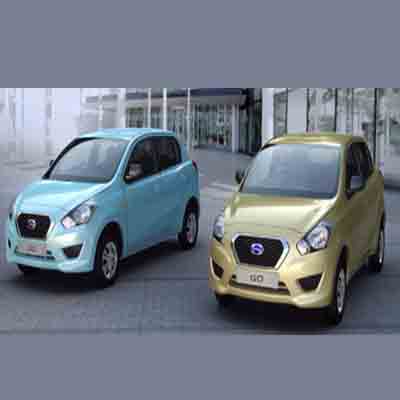
    MUMBAI: The launch of the Datsun GO is now just months away, and when the first model goes on sale in early 2014 the vehicles will be sold directly through Nissan Motor in India.

    Datsun global head Vincent Cobee said in a release: “Selling the Datsun GO and future Datsun models through Nissan Motor represents a natural evolution of the company’s operations in India, which are well recognised in the market. We are excited about launching the iconic Datsun brand in India and look forward to bringing a growing range of bespoke, locally-produced products and high level services to our customers.”

    Cobee further added that an expanded model range will follow the introduction of the Datsun GO, a hatchback model that received positive reviews when it was revealed to the press and public earlier this year.

    Datsun will work primarily with existing dealer investors who have already demonstrated high capabilities and commitment to the Nissan brand in recent years. This arrangement will in particular allow Datsun to rapidly establish a top quality, expansive retail network and open the brand to a large segment of the potential market straight from the initial launch.

    Datsun is one of three brands within the Nissan Motor portfolio, joining Nissan and Infiniti. When president and CEO Carlos Ghosn announced that the venerable Datsun brand would reemerge after three decades, he said that the brand would serve optimistic up-and-coming customers in India.

  • “There’s a lot of mileage in pay TV news”:BBC GLOBAL NEWS CEO JIM EGAN

    “There’s a lot of mileage in pay TV news”:BBC GLOBAL NEWS CEO JIM EGAN

    As the country sheds tears over  onion prices, cringes about the skyrocketing cost of LPG, cribs for a better system in place for tackling the ever-growing crime incidents and hopes for the 2014 general elections to change things, the news channels are gearing up to catch all the action live. 

    And when all the international and domestic news channels are at it, why should the Beeb – the world’s biggest pubcaster that reaches over 360 million households globally; 12 per cent of which are from India – miss a chance to report on the political battle of the world’s so-called largest democracy? 

    BBC Global News CEO Jim Egan, who was in Mumbai to launch its India Direct series, reveals that the channel is looking at grabbing more eyeballs during the election season. The channel plans to scale up the coverage on India in the coming months. 

    And he gave some time to Indiantelevision.com’s Vishaka Chakrapani on the sidelines of the launch, to talk about the BBC World News’ India gameplan, its global digital push wherein it aims to melt the barriers between broadcast and online news. Egan emphasised that India is an important market for BBC in terms of pay TV and digital advertising.

    Excerpts from the interview:

    What is the benefit of investing in the news business in India?

    When I say investment I’m not talking about corporate investment, it’s about editorial investment. It’s been a good year for us in India. Digitisation has been broadly good for us and we are seeing our household penetration increase. 

    What is the growth in reach that you have experienced due to digitisation?

    It has grown steadily in single digit millions and has reached 30 million now, which means one in four homes. Digitisation is moving at a different pace in different parts of India. We would like to be bigger but we are addressing a relatively niche population in the English language and thus we are never going to be a mainstream news channel in the country. 

    With so many international channels making a mark in India, how will BBC World News differentiate itself and stay on top?

    We are looking at doing product and editorial investments to the extent we can afford it. Other operators are well resourced such as CCTV in China is well financed, so is Al Jazeera. If we are going to get into a spending arms race, BBC won’t be able to get there. We will capitalise on our reputation and emphasise on being different. Being successful is not about spending a lot as some qualities cannot just be bought.

    Why has the industry been hit with a bout of layoffs happening across the world?

    The last five to 10 years have been very difficult for journalism. It’s coming to terms with internet and digitisation. In  print, it has been a very difficult time, but not so much in India. A lot of broadcast journalism has been buffeted by the internet, particularly in international news. You see lots of retrenchment and people closing bureaus. BBC is slightly different because we have both public and commercial funding that has helped us expand and maintain ourselves. We are swimming against the tide but we are doing it deliberately because we think having a well funded and well resourced international network of correspondents is what success is about.  

    What about the entry of many international news channels in the market? Could that also be a reason that’s leading to increased competition?

    There’s been a bit of fragmentation but I don’t see demand for news going down. Demand for news is going in different directions. But as long as you are prepared from the editorial and corporate points, there’s good business to be made. It’s just at slightly different places these days.  


    We would like to be bigger but we are addressing a relatively niche population in the English language and thus we are never going to be a mainstream news channel in the country…

    In the future, would having multilingual skills be an important criteria for journalists?

    That’s an interesting one. I don’t think we would hire someone just because they can speak many languages but the ability to broadcast and write digital content in those languages is something we are seeking to develop and nurture. We are going to have a dedicated Asian edition of our website with front page stories about India and China. There will be global programmes to improve the profile and output of bilingual journalists such as the ones in India. We are producing more relevant and easier to find content for our websites.  

    How important is India on a global scale for BBC World News?

    India has been and will be important for us. There is huge digital consumption that is growing in the mobile sector here. India is the fourth biggest market in terms of traffic, the first three being the US, Australia and Canada in that order. We need a big English speaking market to do well for us, and I’m leaving the UK out of this. One thing particularly exciting about India is that in the other markets digital penetration is nearing saturation point but in India there is a lot of room for growth in the mobile sector.

    In the recent years, the budget of BBC has been cut by 20 per cent. Does that affect the investment?

    The 20 per cent cut is due to TV licence fee being frozen for a period of five years, taking inflation into account. Internationally, we are funded through advertisements while domestically we are run by public money which is an involuntary payment of about $200 a year. We have the challenge and the freedom to earn commercial revenues.  

    Original content on mobile is what people seem to be asking for. Is that something you are looking to cash on?

    We are not doing that in mobile because on this platform the key for us is about following news from screen to screen. It’s about trying to make news consumption something that people can take with them with their screens and stay up to date on their mobile phones. That’s the editorial idea. The product idea is to get more video content on mobile. One line growing more steeply than mobile is ‘video on mobile’ as people’s devices become better, internet packs get cheaper and network availability becomes more reliable.  From the commercial point of view, it is working with the advertising community for digital. 

    How big is mobile advertising given that mobile marketing forms a relatively small part of the marketing budgets in India?

    I don’t think mobile marketing in India is necessarily small compared to other countries. In most countries, mobile advertising has lagged behind mobile consumption of media. That’s another area where you are seeing rapid change and the amount of money we are generating from mobile globally has come a long way in the last four months. India is one of the biggest growth markets for mobile apart from sub Saharan Africa where mobile device consumption is also increasing.  

    Do you see threat from OTT in the country?

    When I’m in India I haven’t till date heard people worrying about OTT. TV adoption is still growing as well as pay TV penetration, although not so drastically. Too many people have written of TV news as something people want to consume and as well as pay for. But I think there’s quite a lot of mileage left in pay TV news.  

    How do you deal with carriage fees in the country?

    I’m glad to say we don’t pay for carriage but we rather earn from it. I wouldn’t say we haven’t had a problem with it but it’s been a business policy. We don’t think we should have to pay people to carry us. We are very proud of the quality of BBC World News. Our business policy is often questioned.

     When do we get to see BBC HD TV in India?

    One of the new features of the new office in London is its native HD transmission from glass to glass, ie camera to screen. In a number of markets in Asia we are introducing BBC World News in HD. We would love to launch in HD here but we don’t have any active discussions underway. The markets in the world where we are present in HD, like Singapore, have given us good feedback and we believe HD would be a good value addition to our distributors.


    We will capitalise on our reputation and emphasise on being different. Being successful is not about spending a lot as some qualities cannot just be bought…

     Looking at a possibility if FDI norms are eased in India, do you see a Hindi news channel from BBC?

    I don’t think we will set up a corporate vehicle here to be honest. We have a Hindi show called Global India on ETV so it is a content supply set of arrangement. We’d like to be bigger in Hindi and other languages but I don’t see us making a corporate investment in the Hindi news business.

    Do you see the possibility of a JV in India?

    We were examining a possibility of doing a JV in the Hindi language but it didn’t work out due to issues such as FDI regulations and MIB stipulation around editorial. The concept of editorial content is very hard to share.

    There is also a financial reason. We are not in a position to make capital investment into a JV that will be successful and have an impact in one of the world’s highly contested news landscape. We are never going to be better at covering Indian news than the Indian news providers themselves.

    We will cover Indian news to show them globally but not try to outdo the local competition. That is something that you cannot do because it is an extremely dangerous and expensive game. 

    Will we see BBC World News going regional?

    We always talk about relevance more than presence. Although we won’t be a part of the Indian domestic news landscape, we want to be relevant to audiences here. There are financial limitations to such a prospect too. We can’t tailor everything for 100 different markets around the world. So, instead we always think from our broadcast centres as to where is the peak audience at that point of time that will view the channel. 

    How many Indian advertisers do you have and how have they been doing lately?

    We have about 10-20 advertisers from India such as Karnataka tourism, Bharati Airtel, Micromax and airlines who want to reach an international audience through TV as well as online. Our Europe market was hit badly due to recession but Asia stayed better. However, this year has seen a slowdown from our Indian advertisers.

  • ‘Blow The Whistle’ for road safety campaign

    ‘Blow The Whistle’ for road safety campaign

    MUMBAI: SABMiller India’s ‘Respect the Road’- Don’t drink and drive campaign, launched ‘Blow The Whistle’ initiative on digital media to promote the message of responsible drinking and overall road safety.

    As a part of this initiative, people would be given whistles to blow against all kinds of road and traffic offenders e.g. signal jumpers, rash drivers, people indulging in drinking and driving etc.

    Respect the Road is India’s biggest Don’t drink and drive campaign on digital platform. Going beyond highlight the perils of drunk driving, the Facebook page of the campaign will now also highlight dangerous and risky road behavior leading to road accidents and fatalities.

    SABMiller India VP sustainability and communications Meenakshi Sharma said: “Promoting responsible drinking is one of the core sustainable priorities for SABMiller worldwide.  Through ‘Respect the Road’- Don’t drink and drive campaign, we promote responsible drinking encouraging people to use alternatives to drinking and driving such as calling a cab, hiring a chauffeur or designating a buddy to drive. Blow The Whistle initiative is an extension of our campaign and goes a step further to involve people giving them the responsibility to take action and spread the word about road safety. We are confident that people will step out of their comfort zones and blow the whistle against road offenders.”

    The page will showcase whistle creatives and images of people blowing whistles at traffic offenders. The objective is to involve people and encourage them to participate in this campaign to address the issue of road safety. People can post pictures of road offenders, share their experiences and testimonials of blowing whistles at offenders and send in pictures and videos of what/who would they blow the whistle against. The campaign would also urge people to help the victims in a road mishap and respond when they hear a whistle on the street.

    Geek Creative CEO Mayank Agarwal said: “Blow The Whistle was conceptualized as an initiative to involve people on ground and encourage them to take up the issue of road safety. Through social media, we will engage with people through pictorial representations, participation through quizzes, contests and encourage people to use a whistle against traffic and road offenders. Our strategy involves a 360 degree integration of the top digital platforms to connect with our audience and spread awareness about road safety.”

    The campaign will be taken on ground during the festive season this year where people can come and share their thoughts on making the roads safer. Whistles will be distributed to people for them to blow it against the road offenders and rule breakers. Other engaging activities like quizzes, street plays will be organised to create awareness about the campaign and the issue of road safety.

    The campaign has staged interactive street plays on responsible drinking, tied up with radio station urging listeners to pledge for responsible drinking and associated with cab services to spread the message of responsible drinking and road safety.

    The Facebook page of the campaign (https://www.facebook.com/respecttheroad) is highly interactive with more than 30,000 followers. Recently a safety shayari contest was organised where twitteratis tweeted Road Safety slogans in form of Shayari along with the hashtag # Blow the Whistle. Within hours both Blow the Whistle and Safety Shayari hashtags # were trending all over India and the campaign reached to over one lakh people.

    SABMiller India’s ‘Respect the Road’- Don’t drink and drive campaign has partnered with Home Safe, Delhi NCR’s first chauffeur service, popular radio taxi providers Mega Cabs and radio station Radio City 91.1 FM.

  • Anatomy of the top 100 brands 2013

    Anatomy of the top 100 brands 2013

    MUMBAI: This year, Apple has re-written history by replacing Coca-Cola, the number one brand for the past 13 years, as the new numero uno in the coveted top 100 global brands announced by brand consultancy, Interbrand.


    Interestingly, it’s not as if Coca-Cola got it wrong this time round. Rather, the FMCG brand has been on a successful spree; winning awards, launching brilliant campaigns, and engaging people in popular initiatives like Coke Studio. Just that technology and new media have emerged leaders this year.


    Says Interbrand India managing director Ashish Mishra: “If we look at the top five or ten, its technology and new media which is leading the pack and this is the trend all across.”


    The top 10 brands convey a message: A brand today has got to be all about the people. And how anticipation, co creation, conversation, innovation, investment in people & big data, strategic CSR and new leadership is the new way ahead. Mishra goes on to say that Apple has climbed the charts because of the Apple culture is has fashioned across the globe.


    East is East, West is West


    What emerges from the list is that most of the top 100 brands belong to the Western world. So is it to do with our white fixation or the fact that brands from the US, UK, Germany or France have made a name for themselves globally?


    “A brand needs to be where the top 10 GDPs are,” says Ashish, adding that apart from the brands’ financial performance, their role in influencing consumer choice, the strength they command as also recognition across the globe are important factors while determining their value.


    What is more unfortunate is that no Indian brand figures in the top 100. The consultancy reasons it’s all about diversification.


    Mishra explains that post Independence, India grew at a fast clip while business grew in various directions. For example, Tata today means different things i.e. Tata Steel, Tata Motors, TCS etc. to different people. Ditto for other Indian conglomerates, which diversified into different brands and sub-brands, which in turn grew bigger than the mother brand in some cases.


    “An organisational structure is important and somewhere down the line, custody of sub-brands was handed over to people (CEOs, CMOs, CFOs etc) who took charge but forgot to work towards the mother brand,” says Mishra of the irony of the Indian market.


    The agency is helping many companies in India to bridge the gap and be part of the global brands. And to achieve it, the agency feels the companies need to have an inside-outside perspective wherein they need to go to the right markets after creating a name for themselves here as well as compete with the global counterparts on the same parameters.


    Media not so savvy


    Of the top 100, the only media brands are Disney, Thomson Reuters, Discovery (new entrant this year) and MTV. Implying that while media may be the most influential opinion maker for readers and viewers, it somehow fails to impress brand creators.
    While the consultancy does evaluate media brands excluding publishing houses, very few made it to the list. Also, the consultancy made an exception for India and China by taking into consideration government-owned brands because of their sheer number in these countries.


    “The names in the list are the most influential brands globally. But if you look at the media in a broader context, then many other brands too would be included. For example, Facebook,” says Ashish. Incidentally, the top 30 brands evaluated by the consultancy in India did not have a single name from the media.
    Whatever may be the case, the names that figure on the list demonstrate that these brands have indeed managed to deliver meaningful and seamless experiences across all platforms and touch points.

  • Man Jit Singh re-elected IBF president

    Man Jit Singh re-elected IBF president

    MUMBAI: The 14 annual general meeting (AGM) of the IBF took place late yesterday in Mumbai, proceeding which multi screen media (MSM) CEO Man Jit Singh was re-elected as the president of the foundation for the year 2013-14.

    Discovery Networks Sr VP and GM south Asia Rahul Johri has been elevated as the new vice-president along with existing vice-presidents Zeel MD and CEO Punit Goenka as well as India TV chairman and editor in chief Rajat Sharma. Times Television Network (TTN) CEO Sunil Lulla is the new IBF treasurer.

    On his re-appointment Singh said “I am delighted that my industry colleagues continue to have faith in me to guide the IBF. The last year has been very eventful for our industry with digitisation phases I and II, considerable progress on a new measurement system under BARC, and a shift from TRPs to TVTs. Substantial challenges continue in the current year. We need to build on the success of content regulation, continue the process of digitisation and work collaboratively with the broader industry.”


  • It’s exciting time for IRS: Ravi Rao

    It’s exciting time for IRS: Ravi Rao

    MUMBAI: Media Research Users Council (MRUC) at its Annual General Meeting has elected GroupM’s flagship agency, Mindshare Leader South Asia Ravi Rao as the new Chairman for 2013-14.

    On his new role, Rao said, “It is a great honour to drive the MRUC agenda collectively with some of the top professionals from the advertising, media and marketing fraternity. It is exciting times with the new avatar of IRS in the offering by end of this year.”

    ENIL (Radio Mirchi) CEO Prashant Pandey has taken over the new vice chairman’s role from Rao.

    Three new members from the publishers’ category have also been inducted into the 24-member Board of Governors. They are: HT Media executive director Benoy Roy Chowdhury; The Hindu CEO Arun Anant and Bombay Samachar director of Gujarati daily Hormusji N Cama.

  • Will Kolkata go the Mumbai way?

    Will Kolkata go the Mumbai way?

    KOLKATA: Digital marketing may have caught on in a big way in metros like Mumbai and Delhi but in Kolkata, it is struggling to play catch-up, largely due to skepticism around its success as a promotional strategy.

    This, despite the recent example of Bengali film Aborto garnering over 30,000 Facebook likes, not to mention huge pre-release awareness simply by paying Facebook Rs 832 per day for a period of 25 days before the movie hit theatres.

    City-based digital advertising agencies are positive that all businesses stand to benefit by deploying new methods of advertising, moreso those related to travel, real estate and e-commerce.

    In fact, with the number of internet users having multiplied, most businesses that have been following traditional advertising methods (TV, radio and newspaper ads) are expected to divert some portion of their ad budget to digital platforms.

    And yet, there’s agreement on the fact that it would take some more convincing before the City of Joy gets into serious digital space.

    In a bid to understand the situation at ground zero, this correspondent spoke to a cross-section of industry.

    Inter Action owner Prantar Chaudhuri said: “Apart from Facebook and Twitter, the next most used digital platforms are Instagram and LinkedIn. But FB and Twitter are priority.” However, he did say they had done a short-term Facebook plan for a client called Call Buddy, which is into customised gifts and novelties.

    While Let’s Assist Digital Services CEO Prasit Bhattacharya opined that digital marketing is being adopted by both small and medium sized businesses. “The growth rate of digital advertising is almost 50 per cent and it will keep growing as the number of internet users increases. While social media marketing (SMM) finds a niche market here, we are seeing more activity in this space than before,” he said.

    Bhattacharya said that with people searching for more and more information online, sites such as Tumblr and SlideShare were now featuring in people’s priority lists and companies were targeting applications advertising to reach out to more clients on their phones and tablets. “We are also developing a website with iOS and Android Apps, where people can create landing pages and websites by themselves, do A/B spilt testing and get detailed analytics reports on their digital marketing efforts in real time,” he added.

    However, The Webspidy MD Avishek Tarafdar said that around 80 per cent of the people in Kolkata use facebook and the remaining 20 per cent use Google ppc. Going by 2013-14 social media trends, mobile/video ads on YouTube/Vimeo were the main platforms. The size of the advertising industry is $7.3 billion in India, of which, digital ad spend is only around six per cent, Tarafdar pointed out.

    Even Bhattacharya was quick to point out the challenges associated with digital advertising. “Making clients understand the lifespan and reach of each campaign and ad can be challenging. While newspaper ads have a lifespan of one day, online ads can be strictly ROI focused if measured properly,” he said.

    A media planner said: “Clients only want to spend on print media now. They like TT (The Telegraph) for space in Sunday magazine and pay for three months. But they are not sure what they want to put in that space.”

    Another player said on condition of anonymity: “In Kolkata, mid-segment clients do not differentiate between advertising, brand building and propaganda. What most clients do is propaganda and not brand building.”

    A third player rued: “To the Kolkata client, it will start only when some Mumbai agency comes and tells them.” A Delhi-based agency felt most Kolkata brands go digital because everyone else is going that way. Yet another source opined that Kolkata clients do not want to take a risk with new methodology until and unless they’re sure about its acceptability even among competitors.

    The source added: “Moreover, ad budgets in east Indian cities like Kolkata are less than in Mumbai or Delhi. Besides, Kolkata-based clients are not very clear about SMM marketing. They think they can simply open a FB page and voila… they are doing SMM.”

    Worth mentioning here is the initiative by Advertising Standards Council of India (ASCI) chairman Partha Rakshit, who is working to liaison with Google and Twitter for a tighter monitoring of digital ads. Ads that are in serious breach of the ASCI’s code, and that includes digital ads, will be withdrawn immediately.

    So, given this scenario, will digital advertising take flight in Kolkata? It’s something only time will tell…