Tag: CEO

  • Guest Column: Dear Me…Be a good loser!

    I failed often, failed bitterly, had my fair share of ups and downs. I had my apprehensions and my faults. I share here the positive convictions I have gained. May be they hold some wisdom for the millennials of today too as they venture for their first inclines.

    A line in a poem by Czeslow Milosz that’s always stuck with me: “Love means to learn to look at yourself/ The way one looks at distant things/ For you are only one thing among many.” The key to happiness, the poem suggests, is to understand that you need to become less self-obsessed – so that you can better relate to the world around you.

    I was fortunate to rise to the job of a CEO within 11 years of take-off.

    24 years since I started and as an athlete at the peak of his game today, here are 7 things I would want my younger self to take care of. 

    1. Seize the moment. Carpe Diem. I would volunteer for the next responsibility and rise to the occasion. I would not make ‘best’ the enemy of ‘better’. No work is too small. I would relish the opportunity to work. If you’re not progressing, you’re regressing; so, keep moving forward. The key to success in any field or endeavor is to keep moving forward. In the block-buster Indian movie Baahubali, the Hero gives the dark horse a piece of advice – “Zindagi Ek Baar Sher banane ka mauka sabko zaroor deti hai” (Life gives you the chance to become a Hero at least once). This one moment must be seized. Also as goes the popular Hindi saying “Behta paani nirmala” – translated into English which is “Rolling Stones gather no moss”.

    2. Take care of myself. Your body is the greatest instrument you will ever have. I would keep it in fit condition. You are beyond your body. The quality and power of your mind will determine how you well you would fare in the wake of challenges. I would train my mind. The importance of constant upgradation of your intellect cannot be emphasised enough.

    3. Kill my ego. Adapt to the world. You need them. They don’t. Simple. Adapt to the situation or the challenge. Not even a whiff of entitlement. Please. Half of my problems is me. The other half is the circumstances. I would find the best combination.

    4. Choose to be happy. I would not be rigid about my wants. I would awake to the truth that I can change my wants. Happiness does not depend on anything but me. Wants are changeable.

    5. Save money. I would start early to create wealth by saving money. A dollar yesterday is bigger than one today. Money grows. The power of the exponential function is one of the most misunderstood!

    6. Be a good loser. I would rise every time I fall. You only fail if you do not get up. I would fail fast, fail often, fail uninhibitedly and fail – not quit – till I succeed. And again… A progressive mentality doesn’t mean that you’ll never experience major setbacks, or even utter failure–which can deliver vital lessons and invaluable experience. Additionally, reflecting on how far you’ve come can provide necessary motivation. Remember, there are no shortcuts. True success is as much about hard work as about resilience–the ability to keep getting up when you’re tempted to throw in the towel. Never give up. Ever.

    7. Find my spiritual center. I would involve myself in spirituality much earlier than I did. To know how to live better, be content and spend life so that it is worthwhile.

    Some of the above are convictions because they invariably stood me in good stead. Some of them I did not practise but would be wise to – were I to do it again! Happy Living.

    public://Untitled-4_3_0.jpg

    (Piyush Sharma, a global tech, media and entrepreneurial leader, created the successful foray of Zee Entertainment in India and globally under the ‘Living’ brand. The views expressed here are of the writer’s and Indiantelevision.com may not subscribe to them.)


  • Conviction comes from the society & your country, says Star India’s Uday Shankar, E&Y’s ‘Entrepreneurial CEO’ award-winner

    MUMBAI: “The conviction comes from the society, the world and the country you live in,” Star India chairman and CEO Uday Shankar said to a question on the conviction of taking billion-dollar bets on various major steps in the industry after winning the “Entrepreneurial CEO’ award of the year 2016 by EY, the consulting firm formerly known as Ernst & Young.

    The citation for the “Entrepreneirial CEO” stated: With a background in journalism, he seemed to be an unconventional choice to be a CEO of a global media corporation. But, his deep curiosity, disruptive thinking, and restless sense of pace sparked off a series of bold moves across digital platforms, regional entertainment, sports leagues and differentiated content which resonates with a varied audience, and all this has helped his organisation become an undisputed leader in India’s media and entertainment sector.

    On convincing STAR’s global shareholders, he said, “I have to do just one thing — to convince them about the possibilities and potential in India. The rest followed. I am very lucky to work for an entrepreneurial company where the promoters’ genes itself is about (the promoters believe) taking risks in a democracy with a billion people.” “It all boils down to the potential that my company sees in India, which we have been able to harness,” Shankar said.

    A distinguished independent jury led by Sun Pharmaceuticals MD Dilip Shanghvi had selected the finalists. Other members included Tata Communications chairman Subodh Bhargava, Info Edge (India) executive vice-chairman Sanjeev Bikhchandani, Max Financial Services chairman Naina Lal Kidwai, Kotak Mahindra Bank MD Uday Kotak, and JP Morgan Chase CEO – south Asia and India Kalpana Morparia.

    Motherson Sumi Systems chairman Vivek Chaand Sehgal has been named Indian entrepreneur. Sehgal will also be in the running for the EY World Entrepreneur of the Year award in Monte Carlo in June where he will contest with world business leaders.

    Infosys Ltd co-founder Nandan Nilekani was honoured with a lifetime achievement award for spearheading India’s Aadhaar project as head of the Unique Identification Authority of India (UIDAI).

    Force Motors chairman Abhay Firodia bagged EY’s business transformation award and Balaji Wafers whole-time director Chandubhai Virani won the award in the consumer products and retail category.

    Also Read: TED Talks to get Hindi version on Star with SRK as host

    Media distribution infra needs to change: Star India CEO Uday Shankar

  • Guest Column: 7 digital trends that will dominate 2017

    Guest Column: 7 digital trends that will dominate 2017

    As a digital marketing specialist, I often get asked by peers, clients and friends alike: “What can marketers look out for in the digital space next year? “Digital is by far the fastest growing medium and we can gear up for exciting times ahead. Here’s a peek at the top digital marketing trends (in random order) that, in my opinion, will reign supreme in 2017.

    1. Video, the shining star: Video has come to the fore like never before, with talks of it replacing television even. Video on Demand and Over the Top content on mobile are doing well and marketers will jump on the bandwagon. With the introduction of apps like Sony LIV, Hotstar and Voot performing well, this category is poised for significant growth. Research has shown that the engagement levels of video ads through mobile are significantly higher when compared to television ads. Mobile video ads too are extremely popular and an effective form of mobile advertising today, especially in the case of in-app and native video ads. Live videos especially will see great growth.

    2. My mobile strongest: With the 4G entry, increased internet speeds and the 200 million odd smartphone users in India, mobile devices have become a preferred medium to consume content. Mobile advertising is like any other exponential technology and will adorn a large part of the digital landscape in the future. Though it occupies only four per cent of the advertising pie currently, it is almost doubling every year. It could be half of all advertising in about five years. Mobile optimization will be a top priority. Over and above the upsurge in dedicated mobile apps, mobile will also be the best medium to consume local and regional content, which most industry players are attempting to ace.

    3. Intelligence goes artificial: Been reading all about Chabots lately? Yes, artificial intelligence has arrived, and will see more traction in the next couple of years. This combined with concepts like robotics and machine learning are set to revolutionize digital and disrupt most industries. It will replace the functions human beings do, not human beings altogether. The best part about machines is that once one machine makes a mistake, no other machine makes a mistake! This makes concepts like voice assistants sound last season.

    4. The rise of augmented and virtual reality: The possibility of augmented and virtual reality as an advertising format is exciting, since that pretty much increases the screen size to infinity. Apart from advertising, augmented and virtual reality will go more mainstream and create a paradigm shift in all sectors as consumers seek real life immersive experiences.Pokémon Go gave us a flavor of the same, however reflected only a fraction of capabilities of the concept. Imagine falling off a cliff into a large net with the logo of a particular brand, you will never forget the brand after that experience!

    5. Data, data and data: Data is the lifeline of marketers – its actionable insights and analysis form the crux of any brand campaign, not just digital. Technologies that can identify customer psychographics, demographics, behavioral patterns, preferences more and more minutely, will rise rapidly. Visualization and interpretation of the data will be an increasing need. If companies tried hard to crack the consumer code last year, they will try much harder this year. Automation will drive digital – as they say, there is nothing like too much data.

    6. About the Internet of Things: Wearable technology will keep looking at reinventing itself to solve more problems, change the way we interact with each other and redefine how businesses target its customers. Smart devices will get smarter as consolidation will be the answer to most services. Product experiences will take centre-stage rather than pushing mere features and capabilities. Innovation will be at its best as marketing attempts to get more real.

    7. Social media under the limelight: Research shows that a majority of the millions of Internet users in urban India regularly access social media platforms. Personalized content will gain popularity and users will demand real-time information. Brands will be compelled to shell out more monies in a bid to gain increased visibility in the cluttered space given most have turned to social media for their marketing solutions. Also, social media platforms will eventually provide end-to-end services making it more user-friendly.

    The biggest trend, however, is that we are moving from digital advertising to digital age – where digital will play the role of a catalyst and multiplier for every facet of an organization rather than being limited to advertising and communication.

      http://www.indiantelevision.com/sites/drupal7.indiantelevision.co.in/files/styles/large/public/vivek_0.jpg?itok=sKo4Mw7cVivek Bhargava is CEO, DAN Performance Group. The views expressed here are personal and Indiantelevision.com need not necessarily subscribe to them
  • Guest Column: 7 digital trends that will dominate 2017

    Guest Column: 7 digital trends that will dominate 2017

    As a digital marketing specialist, I often get asked by peers, clients and friends alike: “What can marketers look out for in the digital space next year? “Digital is by far the fastest growing medium and we can gear up for exciting times ahead. Here’s a peek at the top digital marketing trends (in random order) that, in my opinion, will reign supreme in 2017.

    1. Video, the shining star: Video has come to the fore like never before, with talks of it replacing television even. Video on Demand and Over the Top content on mobile are doing well and marketers will jump on the bandwagon. With the introduction of apps like Sony LIV, Hotstar and Voot performing well, this category is poised for significant growth. Research has shown that the engagement levels of video ads through mobile are significantly higher when compared to television ads. Mobile video ads too are extremely popular and an effective form of mobile advertising today, especially in the case of in-app and native video ads. Live videos especially will see great growth.

    2. My mobile strongest: With the 4G entry, increased internet speeds and the 200 million odd smartphone users in India, mobile devices have become a preferred medium to consume content. Mobile advertising is like any other exponential technology and will adorn a large part of the digital landscape in the future. Though it occupies only four per cent of the advertising pie currently, it is almost doubling every year. It could be half of all advertising in about five years. Mobile optimization will be a top priority. Over and above the upsurge in dedicated mobile apps, mobile will also be the best medium to consume local and regional content, which most industry players are attempting to ace.

    3. Intelligence goes artificial: Been reading all about Chabots lately? Yes, artificial intelligence has arrived, and will see more traction in the next couple of years. This combined with concepts like robotics and machine learning are set to revolutionize digital and disrupt most industries. It will replace the functions human beings do, not human beings altogether. The best part about machines is that once one machine makes a mistake, no other machine makes a mistake! This makes concepts like voice assistants sound last season.

    4. The rise of augmented and virtual reality: The possibility of augmented and virtual reality as an advertising format is exciting, since that pretty much increases the screen size to infinity. Apart from advertising, augmented and virtual reality will go more mainstream and create a paradigm shift in all sectors as consumers seek real life immersive experiences.Pokémon Go gave us a flavor of the same, however reflected only a fraction of capabilities of the concept. Imagine falling off a cliff into a large net with the logo of a particular brand, you will never forget the brand after that experience!

    5. Data, data and data: Data is the lifeline of marketers – its actionable insights and analysis form the crux of any brand campaign, not just digital. Technologies that can identify customer psychographics, demographics, behavioral patterns, preferences more and more minutely, will rise rapidly. Visualization and interpretation of the data will be an increasing need. If companies tried hard to crack the consumer code last year, they will try much harder this year. Automation will drive digital – as they say, there is nothing like too much data.

    6. About the Internet of Things: Wearable technology will keep looking at reinventing itself to solve more problems, change the way we interact with each other and redefine how businesses target its customers. Smart devices will get smarter as consolidation will be the answer to most services. Product experiences will take centre-stage rather than pushing mere features and capabilities. Innovation will be at its best as marketing attempts to get more real.

    7. Social media under the limelight: Research shows that a majority of the millions of Internet users in urban India regularly access social media platforms. Personalized content will gain popularity and users will demand real-time information. Brands will be compelled to shell out more monies in a bid to gain increased visibility in the cluttered space given most have turned to social media for their marketing solutions. Also, social media platforms will eventually provide end-to-end services making it more user-friendly.

    The biggest trend, however, is that we are moving from digital advertising to digital age – where digital will play the role of a catalyst and multiplier for every facet of an organization rather than being limited to advertising and communication.

      http://www.indiantelevision.com/sites/drupal7.indiantelevision.co.in/files/styles/large/public/vivek_0.jpg?itok=sKo4Mw7cVivek Bhargava is CEO, DAN Performance Group. The views expressed here are personal and Indiantelevision.com need not necessarily subscribe to them
  • 68 per cent SMEs offline; Google plans smartphone-optimised regional websites

    68 per cent SMEs offline; Google plans smartphone-optimised regional websites

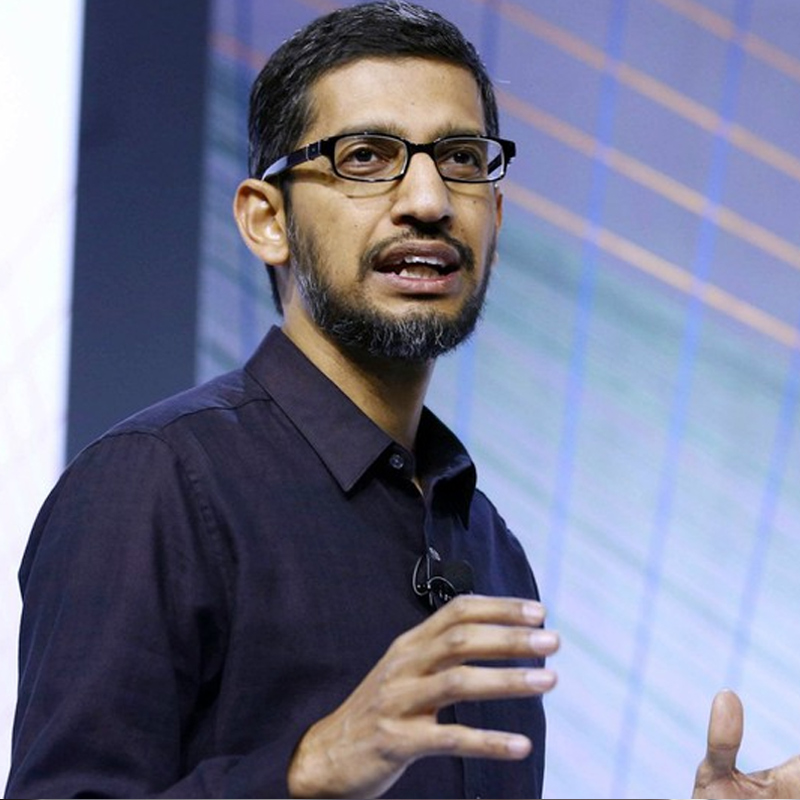
    MUMBAI: Google has announced the launch of Digital Unlocked, a training program to empower thousands of Indian SMBs with essential digital skills that will enable them to get online and start using the power of the internet to grow their business. Google also previewed My Business Websites, an easy-to-use offering to help businesses to have a rich, mobile optimised digital presence that will be launched later this year. Making the announcements at an event held in the city today, Google CEO Sundar Pichai spoke to representatives from hundreds of small and medium business from across the country on the benefits of the web and digital technology.

    My Business Websites will be available in English, Hindi, Bengali, Telugu, Marathi, Tamil, Urdu, Gujarati, Kannada, and Malayalam.

    Google India reaffirmed its commitment to digitally empower India’s 51 million strong small and medium business community.

    During his address, Sundar Pichai said, “The Internet is a powerful equalizer and we are motivated to bring the benefits of information and technology to as many people as possible. Building for everyone and making it available in the hands of as many people is at the heart and core of what we do. And we do this by investing in open ecosystems.”

    Referring specifically to small and medium businesses, Pichai added, “the Internet and digital technology will be an engine of growth for the Indian economy. Today, anyone can become an entrepreneur, a developer, or a creator, but it is important that they have the right tools and skills to digitize. We believe it is important for us to invest in training and equipping these individuals and small businesses to accelerate their journey of growth.”

    Setting the context for the initiative Google unveiled a joint research study with KPMG titled “Impact of internet and digitisation on SMBs in India”. The study reiterates that 68 per cent of the 51m Indian SMBs are offline. Highlighting the macro-economic impact of the internet, the research found that rising penetration and greater uptake for digital by SMBs could help increase their contribution to India’s GDP by 10 percentage points, taking it up to 46-48 per cent by 2020. Ascertaining the benefits of going digital for small businesses, it determined that profits of digitally engaged SMBs grow twice as fast compared to offline SMBs. Likewise digitally engaged businesses are able to grow their customer base significantly with 52 per cent catering to customers beyond their home city versus only 29 per cent offline SMBs. The report cites the lack of understanding of the benefits of digital technologies and technical skills as the essential reasons for being offline.

    With Digital Unlocked, Google is committed to ensuring that every single small business in India that wants to go digital has access to quality training. In keeping with the varied learning needs of the millions of businesses in India, we’ve built this program across online, offline and mobile. The offline training is being conducted in partnership with FICCI and over the next three years, 5,000 workshops will be held across 40 Indian cities. The online training comprises a set of 90 self-paced video tutorials, curated specifically for India and is available free of charge at g.co/digitalunlocked. The tutorials cover a comprehensive set of topics ranging from building a web presence and driving online growth to reaching customers over mobile and video. The trainings are certified by Google, Indian School of Business and FICCI.

    Further, for India’s mobile-first audience, Google also launched Primer, a free mobile app uniquely designed to teach digital marketing skills in a quick, easy and interactive way. It is available for download through the Google Play and iOS app store. Primer also works offline and is currently available in English and Hindi with Tamil, Telugu and Marathi versions coming shortly.

    At the event, Google also previewed My Business Websites, aimed at equipping the vast majority of small businesses with a simple way to start their digital journey by creating a free, mobile optimised website, easily and instantly. Available for Google My Business users later in the year, this new feature will provide simple, templated, editable websites for small businesses created from their data and photos on Google Maps.

    Several small businesses that have leveraged Google’s products and technologies were also present at the event. Three of them – Walnut, Go Co-op and Maganlal Dresswalla – were in conversation with Sundar Pichai and shared their journey to digital using Google offerings including Google My Business, Google AdWords as well as the Google Cloud Platform.

    The announcement today is a continuation of Google’s efforts to support Digital India. Last year Google had launched Google My Business, a program aimed at helping small medium businesses get an online presence on Google Search and Google Maps, without having to invest in a website or domain. Over 8 million Indian SMBs are already on these platforms, with thousands more coming online every month.

  • 68 per cent SMEs offline; Google plans smartphone-optimised regional websites

    68 per cent SMEs offline; Google plans smartphone-optimised regional websites

    MUMBAI: Google has announced the launch of Digital Unlocked, a training program to empower thousands of Indian SMBs with essential digital skills that will enable them to get online and start using the power of the internet to grow their business. Google also previewed My Business Websites, an easy-to-use offering to help businesses to have a rich, mobile optimised digital presence that will be launched later this year. Making the announcements at an event held in the city today, Google CEO Sundar Pichai spoke to representatives from hundreds of small and medium business from across the country on the benefits of the web and digital technology.

    My Business Websites will be available in English, Hindi, Bengali, Telugu, Marathi, Tamil, Urdu, Gujarati, Kannada, and Malayalam.

    Google India reaffirmed its commitment to digitally empower India’s 51 million strong small and medium business community.

    During his address, Sundar Pichai said, “The Internet is a powerful equalizer and we are motivated to bring the benefits of information and technology to as many people as possible. Building for everyone and making it available in the hands of as many people is at the heart and core of what we do. And we do this by investing in open ecosystems.”

    Referring specifically to small and medium businesses, Pichai added, “the Internet and digital technology will be an engine of growth for the Indian economy. Today, anyone can become an entrepreneur, a developer, or a creator, but it is important that they have the right tools and skills to digitize. We believe it is important for us to invest in training and equipping these individuals and small businesses to accelerate their journey of growth.”

    Setting the context for the initiative Google unveiled a joint research study with KPMG titled “Impact of internet and digitisation on SMBs in India”. The study reiterates that 68 per cent of the 51m Indian SMBs are offline. Highlighting the macro-economic impact of the internet, the research found that rising penetration and greater uptake for digital by SMBs could help increase their contribution to India’s GDP by 10 percentage points, taking it up to 46-48 per cent by 2020. Ascertaining the benefits of going digital for small businesses, it determined that profits of digitally engaged SMBs grow twice as fast compared to offline SMBs. Likewise digitally engaged businesses are able to grow their customer base significantly with 52 per cent catering to customers beyond their home city versus only 29 per cent offline SMBs. The report cites the lack of understanding of the benefits of digital technologies and technical skills as the essential reasons for being offline.

    With Digital Unlocked, Google is committed to ensuring that every single small business in India that wants to go digital has access to quality training. In keeping with the varied learning needs of the millions of businesses in India, we’ve built this program across online, offline and mobile. The offline training is being conducted in partnership with FICCI and over the next three years, 5,000 workshops will be held across 40 Indian cities. The online training comprises a set of 90 self-paced video tutorials, curated specifically for India and is available free of charge at g.co/digitalunlocked. The tutorials cover a comprehensive set of topics ranging from building a web presence and driving online growth to reaching customers over mobile and video. The trainings are certified by Google, Indian School of Business and FICCI.

    Further, for India’s mobile-first audience, Google also launched Primer, a free mobile app uniquely designed to teach digital marketing skills in a quick, easy and interactive way. It is available for download through the Google Play and iOS app store. Primer also works offline and is currently available in English and Hindi with Tamil, Telugu and Marathi versions coming shortly.

    At the event, Google also previewed My Business Websites, aimed at equipping the vast majority of small businesses with a simple way to start their digital journey by creating a free, mobile optimised website, easily and instantly. Available for Google My Business users later in the year, this new feature will provide simple, templated, editable websites for small businesses created from their data and photos on Google Maps.

    Several small businesses that have leveraged Google’s products and technologies were also present at the event. Three of them – Walnut, Go Co-op and Maganlal Dresswalla – were in conversation with Sundar Pichai and shared their journey to digital using Google offerings including Google My Business, Google AdWords as well as the Google Cloud Platform.

    The announcement today is a continuation of Google’s efforts to support Digital India. Last year Google had launched Google My Business, a program aimed at helping small medium businesses get an online presence on Google Search and Google Maps, without having to invest in a website or domain. Over 8 million Indian SMBs are already on these platforms, with thousands more coming online every month.

  • Viva appoints Ashley before global OTT rollout

    Viva appoints Ashley before global OTT rollout

    MUMBAI: Viva Entertainment Group, Inc., a developer of OTT systems through which television services are delivered using the Internet, has announced the appointment of FlixFling founder and CEO, Thomas Ashley, to its board of directors.

    Ashley will serve as an independent director of the company. Viva’s Board now comprises four, with Johnny Falcones, Viva’s CEO, serving as the chairman of the board. Ashley is an industry veteran and brings a new dimension to its seasoned board. This wealth of knowledge makes the perfect team as the company embarks on a global rollout of its cutting edge OTT platform.

    Viva’s CEO, Johnny Falcones expressed, “Ashley’s experience in content rights and global distribution makes him nothing short of an industry guru. Ashley will play a major part in our decision-making when it comes to his fields of expertise. He continues to be a top notch CEO having advanced FlixFling to one of the top streaming music and movie services in North America. The addition of his expertise to Viva’s Board is part of our complete package, rounding out insight into all arenas related to OTT, as we ready our products for global distribution. We could not be more thrilled to have his guidance as we advance Viva’s mission in the market place.”

    Viva founder chairman and CEO Johnny Falcones is an industry veteran with the strategic vision, drive, and connections to advance Viva’s platform in the TV industry. His extensive experience in the entertainment world drove him to start his quest with Viva.

    From day one at a young age he helped develop the careers of Marc Anthony (India) and not long ago Soleil J. This champion then continued his career with Icons such as Celia Cruz and Tito Puente. He also developed a successful record label with Universal Music and Video Distribution, turning it in to a multi-million dollar label.

    Two decades ago, Falcones was just a Puerto Rican born, cool kid from Brooklyn, who moonlighted as a DJ while attending LaGuardia College in New York .2 turntables & a keen ear, Falcones quickly became the music authority of NY’s Latin House music scene of 90s. It was one faithful night at Palladium nightclub, where he had a chance encounter with legendary music impresario Ralph Mercado, who recruited him to RMM Records. Together they globalized the Latin record industry, converting starry-eyed local vocalist Marc Anthony & India from buzz act, to icons.

    Within months, the young up and coming Falcones was globe-trotting with Superstars, Celia Cruz & Tito Puente. Under Falcones’ management, these stars collected a bevy of international awards & were immortalized via ‘Hollywood Walk of Fame’ slots. Falcones co-exec. produced the White House’s 24th Annual Hispanic Heritage Awards in Sep. 2010, which featured a luminaries such Juan Luis Guerra & Don Francisco. He also produced the Last Tito Puente concert Viva La Musica which was release on Showtime pay-per view and the was release on CD and DVD.

    Ashley is an unprecedented CEO who brings two decades of experience in the film industry. As founder and CEO of FlixFling, Ashley has created the largest privately held streaming movie service in North America. FlixFling is the only service to offer both streaming music and movies for one low monthly fee. Through its partnership with Music Choice, FlixFling is also the only streaming service to offer streaming music videos across 25 channels. Flixfling boasts over 10,000 titles, with Ashley negotiating all content deals for the company with partners including Warner Brothers, Sony, Paramount, Universal, Starz Digital Media, Magnolia Pictures, Image Entertainment and VuBiquity among others.

    A veteran in the Advertising Industry Ashley’s experience is paramount in marketing to mainstream audiences. As CEO of Invincible Pictures, Ashley has created a major independent entertainment group pioneering digital film and television distribution. In November of 2008 Ashley opened Philadelphia Sound Stages a 70,000 Square feet facility including Sound Stages, Production Offices and warehousing for Invincible’s pick, pack and ship operations. In May of 2014 Ashley closed his 2nd film acquisitions fund Invincible Entertainment Partners. A follow up to his highly successful 2008 fund IP Film Partners, both with the mission of acquiring, producing and licensing motion picture properties for distribution on a global platform.

    As part of the fund Invincible co-produced Kevin Smith’s newest $5.5MM film “Yoga Hosers” Starring, Smith and his Daughter Harley Quinn, as well as Johnny Depp, and his daughter Lilly-Rose. This is the first time Depp and his daughter shared a screen together. Other notable cast includes Stan Lee, Justin Long, Haley Joel Osment and Genesis Rodriguez. Ashley is a proud member of the board for the Philadelphia Film Society, the non-profit organization behind the Philadelphia Film Festival, A Member of the Entertainment Merchants Association and Volunteer at the Abramson Cancer Center at the Hospital of the University of Pennsylvania, Ashley himself is a cancer survivor and shares a home with his wife and son in the suburbs of Philadelphia.

  • Viva appoints Ashley before global OTT rollout

    Viva appoints Ashley before global OTT rollout

    MUMBAI: Viva Entertainment Group, Inc., a developer of OTT systems through which television services are delivered using the Internet, has announced the appointment of FlixFling founder and CEO, Thomas Ashley, to its board of directors.

    Ashley will serve as an independent director of the company. Viva’s Board now comprises four, with Johnny Falcones, Viva’s CEO, serving as the chairman of the board. Ashley is an industry veteran and brings a new dimension to its seasoned board. This wealth of knowledge makes the perfect team as the company embarks on a global rollout of its cutting edge OTT platform.

    Viva’s CEO, Johnny Falcones expressed, “Ashley’s experience in content rights and global distribution makes him nothing short of an industry guru. Ashley will play a major part in our decision-making when it comes to his fields of expertise. He continues to be a top notch CEO having advanced FlixFling to one of the top streaming music and movie services in North America. The addition of his expertise to Viva’s Board is part of our complete package, rounding out insight into all arenas related to OTT, as we ready our products for global distribution. We could not be more thrilled to have his guidance as we advance Viva’s mission in the market place.”

    Viva founder chairman and CEO Johnny Falcones is an industry veteran with the strategic vision, drive, and connections to advance Viva’s platform in the TV industry. His extensive experience in the entertainment world drove him to start his quest with Viva.

    From day one at a young age he helped develop the careers of Marc Anthony (India) and not long ago Soleil J. This champion then continued his career with Icons such as Celia Cruz and Tito Puente. He also developed a successful record label with Universal Music and Video Distribution, turning it in to a multi-million dollar label.

    Two decades ago, Falcones was just a Puerto Rican born, cool kid from Brooklyn, who moonlighted as a DJ while attending LaGuardia College in New York .2 turntables & a keen ear, Falcones quickly became the music authority of NY’s Latin House music scene of 90s. It was one faithful night at Palladium nightclub, where he had a chance encounter with legendary music impresario Ralph Mercado, who recruited him to RMM Records. Together they globalized the Latin record industry, converting starry-eyed local vocalist Marc Anthony & India from buzz act, to icons.

    Within months, the young up and coming Falcones was globe-trotting with Superstars, Celia Cruz & Tito Puente. Under Falcones’ management, these stars collected a bevy of international awards & were immortalized via ‘Hollywood Walk of Fame’ slots. Falcones co-exec. produced the White House’s 24th Annual Hispanic Heritage Awards in Sep. 2010, which featured a luminaries such Juan Luis Guerra & Don Francisco. He also produced the Last Tito Puente concert Viva La Musica which was release on Showtime pay-per view and the was release on CD and DVD.

    Ashley is an unprecedented CEO who brings two decades of experience in the film industry. As founder and CEO of FlixFling, Ashley has created the largest privately held streaming movie service in North America. FlixFling is the only service to offer both streaming music and movies for one low monthly fee. Through its partnership with Music Choice, FlixFling is also the only streaming service to offer streaming music videos across 25 channels. Flixfling boasts over 10,000 titles, with Ashley negotiating all content deals for the company with partners including Warner Brothers, Sony, Paramount, Universal, Starz Digital Media, Magnolia Pictures, Image Entertainment and VuBiquity among others.

    A veteran in the Advertising Industry Ashley’s experience is paramount in marketing to mainstream audiences. As CEO of Invincible Pictures, Ashley has created a major independent entertainment group pioneering digital film and television distribution. In November of 2008 Ashley opened Philadelphia Sound Stages a 70,000 Square feet facility including Sound Stages, Production Offices and warehousing for Invincible’s pick, pack and ship operations. In May of 2014 Ashley closed his 2nd film acquisitions fund Invincible Entertainment Partners. A follow up to his highly successful 2008 fund IP Film Partners, both with the mission of acquiring, producing and licensing motion picture properties for distribution on a global platform.

    As part of the fund Invincible co-produced Kevin Smith’s newest $5.5MM film “Yoga Hosers” Starring, Smith and his Daughter Harley Quinn, as well as Johnny Depp, and his daughter Lilly-Rose. This is the first time Depp and his daughter shared a screen together. Other notable cast includes Stan Lee, Justin Long, Haley Joel Osment and Genesis Rodriguez. Ashley is a proud member of the board for the Philadelphia Film Society, the non-profit organization behind the Philadelphia Film Festival, A Member of the Entertainment Merchants Association and Volunteer at the Abramson Cancer Center at the Hospital of the University of Pennsylvania, Ashley himself is a cancer survivor and shares a home with his wife and son in the suburbs of Philadelphia.

  • Airtel DTH appoints Mondelez’s Sunil Taldar as CEO & MD

    Airtel DTH appoints Mondelez’s Sunil Taldar as CEO & MD

    MUMBAI: Bharti Airtel has finally got the replacement of Shashi Arora, who after a successful stint of around five years as CEO – DTH, has moved as MD & CEO of Airtel Payments Bank. The company has appointed Sunil Taldar as CEO and director – DTH.

    Taldar will be a member of the Airtel Management Board and report to Bharti Airtel (India & South Asia) MD and CEO Gopal Vittal. In his new role, Taldar will be responsible for driving growth and innovation for Airtel Digital TV, which is a key growth driver within the company’s B2C portfolio.

    Vittal said that Sunil’s rich experience across consumer facing categories would add value to its DTH portfolio. He said would also thank Shashi for his valuable contribution to Airtel Digital TV.

    Taldar has an experience of over 28 years in the FMCG industry with Mondelez (erstwhile Cadbury), where he held several senior leadership positions across multiple geographies, including India, China, and Singapore across sales, marketing, media and general management.

    In his last role, Sunil was the country head – Indonesia for Mondelez, where he played a critical role in turning around the business. Prior to this, he was India sales director for Cadbury where he transformed the company’s go to market capabilities and delivered solid growth.

    Airtel Digital TV had over 12.4 million customers at the end of the quarter ended September 2016 and the business recorded a revenue growth of 21 per cent and customer growth of 17 per cent for the same period.

  • Airtel DTH appoints Mondelez’s Sunil Taldar as CEO & MD

    Airtel DTH appoints Mondelez’s Sunil Taldar as CEO & MD

    MUMBAI: Bharti Airtel has finally got the replacement of Shashi Arora, who after a successful stint of around five years as CEO – DTH, has moved as MD & CEO of Airtel Payments Bank. The company has appointed Sunil Taldar as CEO and director – DTH.

    Taldar will be a member of the Airtel Management Board and report to Bharti Airtel (India & South Asia) MD and CEO Gopal Vittal. In his new role, Taldar will be responsible for driving growth and innovation for Airtel Digital TV, which is a key growth driver within the company’s B2C portfolio.

    Vittal said that Sunil’s rich experience across consumer facing categories would add value to its DTH portfolio. He said would also thank Shashi for his valuable contribution to Airtel Digital TV.

    Taldar has an experience of over 28 years in the FMCG industry with Mondelez (erstwhile Cadbury), where he held several senior leadership positions across multiple geographies, including India, China, and Singapore across sales, marketing, media and general management.

    In his last role, Sunil was the country head – Indonesia for Mondelez, where he played a critical role in turning around the business. Prior to this, he was India sales director for Cadbury where he transformed the company’s go to market capabilities and delivered solid growth.

    Airtel Digital TV had over 12.4 million customers at the end of the quarter ended September 2016 and the business recorded a revenue growth of 21 per cent and customer growth of 17 per cent for the same period.