Tag: CEO

  • ZEE appoints Prathyusha Agarwal as Chief Consumer Officer

    ZEE appoints Prathyusha Agarwal as Chief Consumer Officer

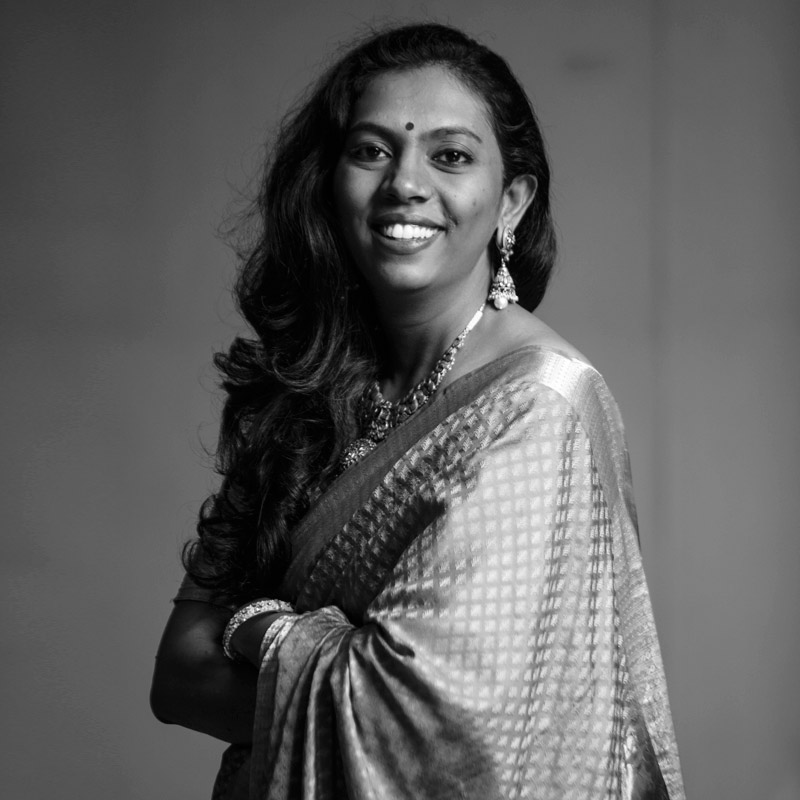
    Mumbai: In order to accelerate its ‘Customer-First’ approach, Zee Entertainment Enterprises Ltd. (ZEEL) has announced that Prathyusha Agarwal will take on the mantle of the Chief Consumer Officer for the domestic broadcast business. In this new role, Prathyusha will continue to report into Punit Misra, CEO, Domestic Broadcast Business, ZEEL.

    Having successfully handled important consumer-led initiatives that brought business transformation and resulted in brand and viewership growth, in this new role Prathyusha will be responsible for embedding a ‘customer first’ culture and thinking in all aspects of the broadcast business. This role stems from the company’s strategy of winning in many Bharats and Prathyusha will lead this effort, working closely with business leaders in conceptualising and driving the new workflows, processes and systems to ensure a strong consumer focus across all aspects of the business.

    Punit Misra, CEO, Domestic Broadcast Business, Zee Entertainment Enterprises Ltd., said: “The needs of our consumers are dynamic and ever-evolving. Over the last few years, across all functions and teams in the domestic broadcast business, we have embarked on a journey towards making consumer/customer centricity a key strategic priority for us. While this structural change may be seen as a simple merging of the marketing and the strategy and insights functions, our vision is much larger than that. We endeavour to create this new function as an epicentre for driving consumer/customer centricity across the organisation.”

    This epicentre will serve the following two purposes:

    (1) Reshape the conventional thinking of the marketing and strategy & insights functions to create a more holistic approach to listening and communicating with consumers and help content teams with insights that fuels great content.

    (2) Embed the concept of consumer centricity across the organisation and work in close coordination with all functions to help them develop their own consumer-driven agenda.”

    “Prathyusha has been instrumental in leading and successfully implementing several customer-centric initiatives and under her dynamic leadership, we believe the new function will meet the dynamic needs of the consumer in a fast-paced world,” he further added.

    Prathyusha Agarwal said: “Our viewers are evolving at a pace never seen before, and the only way to win their hearts is to be fully tuned in and translate this understanding into compelling offerings. We need to break the wall and all the layers between viewers and creators to build a seamless soul to screen storytelling and connecting conversations with our consumers and customers. I am honoured and thrilled to take on this new role and build our customer centric ZNA that is factful in decision making and mindful of the viewer’s perspective in everything we do.”

    Under her leadership, the team will strengthen the television business’ capability to anticipate, understand and meet the needs of its consumers. Prathyusha will be instrumental in driving consumer centricity as the core philosophy of the business capturing the mind and choices of the consumers to fuel the business through data and insights, translating into tangible propositions across all the complex delivery touchpoints.

  • INOX deploys Dolby Multichannel Amplifiers

    INOX deploys Dolby Multichannel Amplifiers

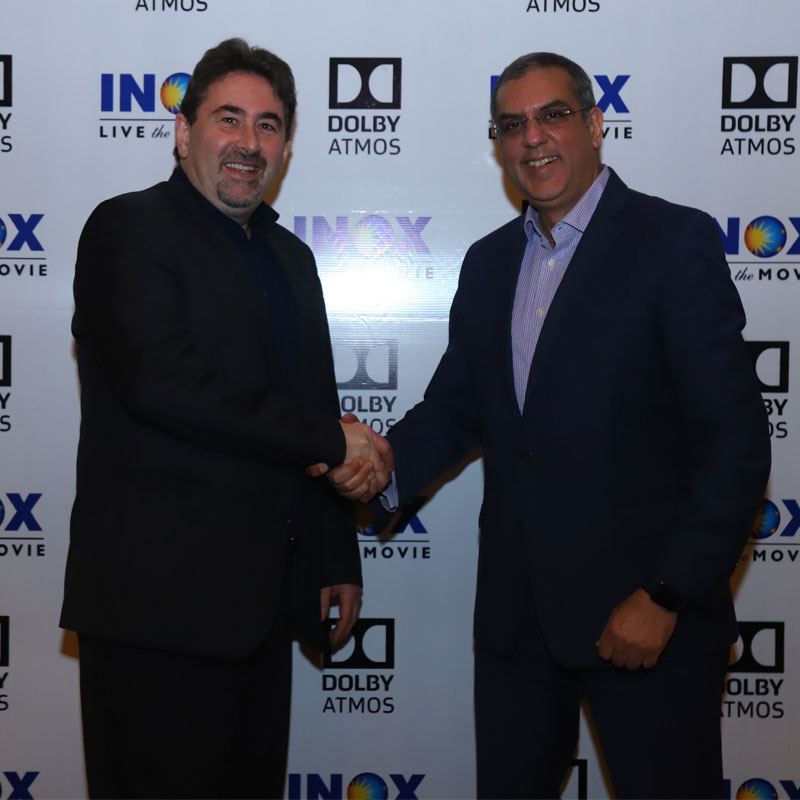
    MUMBAI: Cinema chain INOX Leisure Limited (INOX) today extended its strategic partnership with Dolby, a leader in immersive entertainment experiences to provide the best in class cinema solutions. With Dolby Atmos screens already present at INOX multiplexes across the country, INOX today announced that it will be deploying Dolby’s latest and best in class Dolby Multichannel Amplifiers (DMA). In the process, INOX will be the first Indian cinema chain to acquire the versatile DMA.

    The DMA’s are D Class digital amplifiers which have a smaller footprint that can save a lot of rack space and hence real estate, air conditioning and power consumption. Using DMAs in the audio chains escalates audio reproduction without distortion making the experience better than best. These new-generation amplifiers also bring other benefits like ease of connectivity, less cabling, robust design, built-in redundancies for uninterrupted playback, ability to monitor the health of the amplifiers over central NOC, and also the ability to compensate for a failed speaker till replacement, ensuring consistent and high-end experience for patrons what they expect from INOX.

    INOX has been extremely aggressive in pioneering cinema technologies into the country in order to enhance the cinema-viewing experience of its patrons. A testimony INOX’s technology focus is INOX Megaplex, the world’s first cinema with six different cinema viewing formats. Located at Inorbit Mall, Mumbai, INOX Megaplex houses IMAX, Samsung Onyx LED, ScreenX, MX4D and INSIGNIA formats. INOX also offers Laser Projection and Dolby Atmos experience to its patrons.

    INOX Leisure Ltd CEO Alok Tandon said: “Technology is the cornerstone of our business strategy, and cinema sound plays an extremely critical part in the overall cinema-viewing experience. I am delighted to share that we are further strengthening our association with Dolby with the acquisition of Dolby’s multi-channel amplifier. As we become the first cinema chain in the country to use these versatile amplifiers, we are all set to be more energy-efficient, cost-efficient and space-efficient. We are proud to pioneer one more technology intervention into the country with this deployment.”  

    Friedrich Deininger, Sr. Director, Cinema Sales, EMEA and India, Dolby Germany GMBH, said that Dolby offers a full range of imaging, content management, and accessibility solutions to give audiences an immersive cinema experience with 700+ Dolby Atmos Screen installed or committed in India and over 700+ Dolby Atmos titles in six Indian languages.

    INOX, amongst India’s largest multiplex chains, offers 146 multiplexes and 614 screens in 68 cities.

  • Optimystix appoints Rajesh Bahl as director and group CEO

    Optimystix appoints Rajesh Bahl as director and group CEO

    MUMBAI: Optimystix, the leading production house in both Fiction and Non-Fiction programming, appointed Rajesh Bahl as the Director and Group Chief Executive Officer.

    In his role as Director & Group CEO, Rajesh will not only be responsible for Optimystix’s growth strategy but will also help the company accelerate its next phase of growth and transformation from a bespoke TV production company to creating and producing digital content and venturing into feature film business.

    "Till date our focus as a company has been in growing our TV production business which has shown credible growth YOY and now to create  more significant value and harness the growth across 3 big content spaces i.e. TV, OTT & Feature Films we need someone to guide us strategically and be the torchbearer of our next round of growth. In order to reimagine and reinvent Optimystix I have invited Rajesh Bahl to lead this initiative for us," said Optimystix Entertainment chairman and managing director Vipul. D. Shah.

    Bahl is a senior M&E & Digital business leader with over 20 years of experience of being at the helm in globally acclaimed media companies, namely Times Group, Star TV, Eros International, Universal Music Group and Sony Music, and has been instrumental in establishing their digital & content businesses.

    “I am very excited to join hands with Optimystix at this time when the demand for premium content is on massive upsurge and is being consumed by various audience segment across screens, across platforms, across languages, across genres and across story-telling formats which in turn is fuelling demand from the TV broadcasters, OTT services, and feature film business alike. This presents a great opportunity for Optimystix to expand businesses furthermore”, said, Bahl.

    Before joining Optimystix Rajesh Bahl was the Founding CEO, of Times Studio, A Times of India Group (BCCL) entity where he played a pivotal role in setting up Times Studio business. Under his leadership Times Studio grew from 0-60+ member team, produced few marquee original shows for MX Player and have executed many digital video campaigns for multiple brands and advertisers.

    In his previous stint as the COO at Eros International, he overlooked the development and digitization plans of the digital arm of Eros International. He successfully built and launched www.erosnow.com, India’s first premium OTT service and was involved in driving the product, content & marketing strategy for the same apart from being responsible for feature film marketing. 

  • Ali Hussein promoted to CEO at Eros Now

    Ali Hussein promoted to CEO at Eros Now

    MUMBAI: Ali Hussein has been elevated to the post of chief executive officer (CEO) at Eros Now, the digital arm of Eros International PLC. Hussein joined the organisation as chief operating officer in 2018.

    His experience spans over 15 years in the media entertainment and digital space. Ali has been an entrepreneur and board advisor to Discovery Networks and other startups in the media and technology domain. The media professional has updated about his recent promotion on Linkedin.

    He was associated with organisations such as Google, Viacom 18 and Hungama where he has held key positions. His expertise comes from complex mandates across mobile marketing, content syndication and distribution.

  • Enterr10 appoints Joy Chakraborthy as CEO

    Enterr10 appoints Joy Chakraborthy as CEO

    MUMBAI: Enterr10, the media, and entertainment company, has appointed Joy Chakraborthy as its CEO.

    Before joining Enterr10, Chakraborthy has been part of Network18 as president revenue and Forbes India as CEO.  He quit Network18 in November 2018. 

    The veteran executive commenced his career in 1993 as senior manager response at Times Group.

    After his six years stint at the company, he joined Star India as EVP and served the company for about five years.

    Chakraborthy then joined Zee Entertainment Enterprises Ltd in 2005 as an executive director—revenue and niche channels. After six years of his experience with ZEEL, he joined TV Today Network as the CEO.

    In 2012, he joined Bennett Coleman and Co. Ltd. (Times Group) as director. He worked there for about three years and then joined Network18.

  • Madison Group CEO Vikram Sakhuja on TRAI tariff order, Ekam & media landscape

    Madison Group CEO Vikram Sakhuja on TRAI tariff order, Ekam & media landscape

    In a highly VUCA media world, over I’m going to attempt to answer the question of what’s in store for media in the near future. Today 11000 TV and radio advertisers, over two lakh print advertisers, 1500 OOH advertisers and 300 large – 2 lakh long tail online advertisers think long and hard about how to spend their marketing budgets.

    On one hand, it costs 30-40 crore to do a significant national launch, advertising on IPL can exceed a 100cr for some advertisers. A YouTube masthead or a TOI jacket costs excess of a crore, a 10-day OOH plan in Mumbai can cost over a crore. Yet an average advertiser spends under five crore a year on TV, two crore on OOH and lakhs on other mediums. At the top, there are only 12 advertisers with spends more than 500 cr. At a brand level, an equal number (12) spend more than 100 crore.

    For all of them, budget management boils down to making trade-offs between mediums and media objectives. By mediums I mean TV, print, radio, OOH, digital, cinema, and media objectives: reach, frequency, SOV, weeks on air, advertising size and “impact vs regular” inventory.

    How media shapes in the future will depend on how advertisers, agencies and media owners use different mediums across these fundamental media objectives.

    Reach: When it comes to reach we have close to 200 mn TV homes but only a handful of advertisers – large FMCG, political parties and telecom that reach both urban and rural. Even within urban most aggressive plans reach about 70% of TV homes once/month and about 45% three times.

    Byron Sharp amongst other media pundits says that reach is most important, yet at an India level we are reaching less than half. Question to ask is whether that 60% reach overall urban better or 95% reach among a particular market.

    Frequency: At a campaign level, TV typically operates at a 3-5 frequency, online at 7-8, print at 1 or 2. Yet paradoxically as consumers we often see the same ad perhaps three times in an hour while watching a movie or a game. Question to ask here is do we truly understand the concept of media frequency?

    SOV: Most advertisers track SOV/SOM closely as they find that competitive spends have a bearing on their business. Best way to get a client to spend is to tell them that their competitor is spending. Fact is media salience does drive brand choice but do we need to do it over a campaign or a financial year.

    ACD: TV copy length is coming under a microscope even as print sizes are increasing. Digital has expanded the ad range from 6” to long-form video. Rather than approach copy length by the medium question is one of optimizing the effectiveness and efficiency of creative length (typically using analytics).

    Impact vs. regular: Impact unquestionably helps cut clutter and build awareness. Used well it builds equity. However, it comes at a premium. New advertisers hoping to make a quick mark in the Indian market opt for an impact heavy strategy, while legacy marketers approach impact more judiciously. Question to my mind is do brands have an impact strategy?

    WOA: Often the variable that is traded off most. It is felt that it is better to have a campaign that is noticed over an always-on one. Indeed, we have only a few brands who are always-on on TV, display, social, search, performance; but most TV and all print, OOH, radio, cinema activity is typically sporadic and behind specific marketing initiatives. Why is WOA not given more importance?

    Current thinking has carved the pie across TV – 38%, print – 32%, digital – 19% (search 6%, display/video 7% and social 6%) OOH – 5.5% and radio – 3.5%.

    How will this media scenario change in the near future? If the future follows the past we will see the following:

    TV will be the base medium for building awareness and consideration. More TV channels will continue to launch, rate/10” will not increase and may even fall. Fragmentation will lead to an increase in CPRP. CPRPs within a genre will be competitive. Reach will be precious. Overall it will cost more to reach less. There will be the occasional super Premium Impact program that becomes a “tribal moment”.

    The power of others seeing the same thing as you, in the same room and across India at the same moment, cannot be overstated. If I see a Dominos RCB spot during IPL, and I discuss it with a friend who I can safely assume has seen it, a certain legitimacy is created that is called Cultural Imprinting.

    Digital Video will grow on the back of OTT, YouTube, Jio, MX Player, ShareIt and other video consumption and sharing platforms. Digital video has two roles: on advertising, the TV vs. digital video debate will net out at one complementing/supplementing, rather than replacing the other. On content, video will have an amazing run limited only by a brand’s ability to embrace content assets.

    Social will grow on the back of great psychographic targeting and delivery of outcomes and again grow proportionate to brand’s ability to create content based assets.

    Search will grow but more modestly as CPC’s go up and the ROI on search reduces

    Print will have a bumpy ride. It will remain a medium for a call to action and announcement of new news unless it reinvents itself. Categories will put it more under the scrutiny of effectiveness than any other medium. Comparisons will inevitably be with digital. Newspapers will struggle to balance yield with outlays.

    Digital display will grow but less than video. Here the contextual, performance oriented, rich media, tech-enhanced nature will lead to banners winning the battle versus print. Voice will emerge as a display medium

    Radio and cinema will grow as outlays remain modest and local marketing importance grows. OOH will gain from traffic count measurement that is now available at least in Madison and also grows. Put this way, if nothing changes, one could see similar trends in the next t years as we have seen in PMAR 2018. In 2021 we could well see digital being the second most dominant medium.

    But I think an alternative more exciting scenario is possible. This, however, is predicated on the occurrence of three disruptor events and two changes in how advertisers market their brands.

    · Disruptor events are TRAI channel pricing, digital data measurement, and data privacy

    · Marketing changes are true integrated marketing and increased localisation

    Disruptor events

    TRAI channel tariff order

    When TRAI channel tariff order is enforced, channel availability per home will reduce from approx. 350 Channels to 100+50. So, today most GEC channels have 90%+ distribution and about 35% weekly reach. After TRAI these channels could land up having 30% distribution and 30% reach.

    Reality is that an average home watches 16 channels. It is just that with so many more available there is surfing and some snacking and reach extension. Once these extraneous channels go out we will see individual channel reach reduce, ATS go up, and overall fragmentation will reduce. More channels will also go FTA, but carriage fees will also increase. There will be moreexperimentation with consumers opting in and out of channels on a monthly basis.

    Today there is a high degree of substitution possible between channels. In a post TRAI world, we will need a combination of channels to build reach and no two channels will be completely substitutable. Life will also be more dynamic. Using past four week data to predict the next four weeks will become challenging. It is a good time for a media planner to make a difference.

    Digital measurement

    The most accountable medium does not have a measurement currency. We don’t have a currency on digital AdEx, no currency that tells us about viewability and viewership/listenership. Sure, we are fed data by publishers, and we also have our own tags that we track, but there is no industry currency. Ekam was supposed to be one and huge amounts were spent to keep the infrastructure going, but for completely manmade reasons this has not emerged. If it comes we will get a currency on digital viewership and an official read on integrated reach between at least TV and digital video.

    This can redefine the 27000 cr video+ (23500+3500) industry.

    I believe TV and OTT have the common lean back consumer habit to viewing which will lead to a lot of crossover advertising between the two platforms. I also think the OTT content ecosystem will allow advertisers the deal structuring that we used to do with private producers in the DD era.

    This will also allow a narrowcast of a broadcast medium. We can choose markets and genders or ages and cut some wastage.

    Data Privacy

    As a consumer who owns my data will have a profound bearing on how the digital marketing evolves.This is not a current issue in India but is a simmering one in more developed digital economies.

    The detractors say that global digital media giants have the power and ability to manipulate our behaviour as well as profile us if they control our data. The supporters say having consumer data has led to contextual marketing, psychographic marketing and programmatic marketing that has made messaging to consumers more relevant. Indeed, these are powerful tools for any marketer that goes a long way in improving targeting and explaining how media works.

    As a marketer it would be a shame to lose this tool. But with great power comes great responsibility. It is obvious that data needs to be anonymised. That is a given. The crux of the issue lies in internalising the difference between targeting and profiling. It is ok to target me, but please don’t profile me. The difference is subtle but significant. If we cross the line, there is a danger of the entire digital media juggernaut crashing.

    Two marketing practices will impact the way we spend

    Act truly integrated

    We have talked integrated marketing plans for decades but we still act in silos. Sometimes an idea binds the media together, but is this integrated?

    There is a term called consumer journey or path to purchase that tracks a consumer from the time the trigger for the category happens to when purchase and post purchase happens. In this journey the potential media touchpoints are when the consumer is engaged in the activity of listening, viewing, reading, searching, shopping, socialising, learning or gaming. What brands can do with media at these touch points is the opportunity to get consumers to see us, think about us, experience us, buy us and share their views about us.

    Today over 90% of a brand’s marketing budget is involved in getting ads to be seen. As they move to other aspects of the marketing funnel, how the money is spent will change dramatically.

    Biggest catalyst to that will be CPT (or CPM). Today we evaluate a TV plan in CPRP, print in rate/sqcm, radio in rate/10”, OOH in rate/site, digital in CPT or CPO, etc. This needs to move to an apple to apple CPT. Over this we can add outcomes and measure CPO.

    Increased localisation

    We need to factor India’s heterogeneity much more into our marketing plans than we do currently. We approach plans as urban vs rural, 8 metro vs rest of India urban, HSM, 4 southern states, Maharashtra and West Bengal, and on socio economic basis through an increasingly NCCS AB skewed classification. Way forward is for brands to fine tune their battlegrounds. From spray and pray to seek and prey. We have several examples over the years like Ghadi, Santoor, Thums Up, etc that have built dominant regional positions.

    So, what’s in store for media in the near future is essentially harder working outcome based marketing. Brand budget growth follows an arithmetic progression while demands from marketing forces increase at a geometric progression. The following six forces will shape the advertising spend market.

    1. Expansion of marketing funnel: We used to make trade-offs between Mediums and Media Objectives (R/F/SOV/WOA/ACD/Impact). This was largely about getting consumers to see an Ad. Now we will additionally make trade-offs between getting them to see, explore, experience, buy and share across the journey. If that happens TV will lose relatively and all others will gain.

    2.Integrated Reach will continue to be critical: More media touchpoints will be required to get reach. Marketers will seek it in an integrated manner. Campaigns will maximize reach and optimize frequency across media. CPT will become the common currency that equates the cost of an impression across media.

    3. Greater Localisation: it will become increasingly impractical and inefficient to market to one India. Additionally, the trade-offs between markets will become sharper than our current P1, P2 classification. Greater digitisation and channel selection will lead to more localisation. TV will be used as a local medium more than it ever has. Digital, OOH, radio, the cinema will work in combination better than they work in a silo. Print will need to redefine its value to a local marketer and will find a huge role.

    4. Integrated Reach:, CPT, and greater localisation will lead to more intelligent media selling. All Mediums will have a role. From selling Media like onions and potatoes, there will be a need to find brand building solutions. In the near though not immediate future, media in India will get truly integrated as smart devices get connected in what we know as IOT.

    5.Data and technology will revolutionise targeting: We will increasingly target geographically, psychographically, contextually and behaviourally. We will increasingly retarget sequentially with customised messaging. Any medium with digital backbone leverage this capability.

    6.We will decode how media works: Increasingly through a combination of marketing analytics and real-time attribution, we will understand what sequence of Media drives consumer behaviour for each category

    (The author is Madison Group CEO Vikram Sakhuja. The views expressed here are his own and Indiantelevision.com may not subscribe to them)
  • Star India elevates Kevin Vaz as CEO of regional entertainment channels

    Star India elevates Kevin Vaz as CEO of regional entertainment channels

    MUMBAI: Star India has promoted Kevin Vaz as CEO of regional entertainment channels. The regions include Maharashtra, Bengal, Tamil Nadu, Andhra Pradesh, Telangana, Kerala and Karnataka.

    Previously, Vaz was CEO of South entertainment channels. He has spent 22 years serving Star India. Before heading the entertainment channels in Southern market, he was the business head of English cluster. In 2015, he was roped in to head the youth and entertainment channel, Channel V.

    Vaz, who has also worked as Star India’s president ad sales, became head of English channels (FX, Fox Crime, Star World, Star World HD, Star World Premiere HD, Star Movies, Star Movies Action) and Star Jalsha and Jalsha Movies in March 2013.

    Star India has a very large bouquet of regional entertainment channels which includes, Star Jalsha, Star Pravah, Jalsha Movies, Maa Movies with their HD versions, Maa Gold, Maa Music to name a few.

    Regional channels are outpacing many other genres in terms of growth and all large broadcasters have or are planning to enhance their regional channel bouquets. Most are entering markets not with just a GEC, but with a combined offering across entertainment, movies, kids and music.

    In FY18, however, the ad expenditure on Hindi GECs declined by 9 per cent while the regional channels saw a spike of 5.4 per cent, outlining the overall growth of the regional market in India, according to KPMG in India’s Media and Entertainment report 2018.

    According to FICCI 2018 Re-imagining India’s M&E sector report, the top 10 channel genres accounted for 47 per cent of total ad volumes. Of these, 30 per cent of all ad volumes were on Hindi channels, while the balance 17 per cent were from Tamil, Telugu and Bangla.

  • Netflix CFO David Wells to quit

    Netflix CFO David Wells to quit

    MUMBAI: After a 14-year stint in the company, Netflix chief financial officer David Wells plans to step down. Since 2010 Wells served as the CFO, at a time when Netflix started to see its growth. However, he will leave after helping the company choose his successor.

    The search for new CFO will include both internal and external candidates. In post-Netflix life, Wells intends to focus more on philanthropy.

    “After discussing my desire to make a change with Reed [Hastings, Netflix’s chairman and CEO], we agreed that with Netflix’s strong financial position and exciting growth plans, this is the right time for us to help identify the next financial leader for the company,” Wells said.

    He was one of the key members who helped Netflix during its aggressive international expansion as well as to up its $8billion content spend through a debt-fuelled fund. During his tenure Netflix’s subscriber numbers went up from 23.6 million during the first quarter of 2011 to more than 124 million as of the second quarter of 2018.

    “David has been a valuable partner to Netflix and to me. He skillfully managed our finances during a phase of dramatic growth that has allowed us to create and bring amazing entertainment to our members all over the world while also delivering outstanding returns to our investors,” Netflix CEO Reed Hastings said.

  • No action against CBS CEO Les Moonves yet on sexual misconduct allegation

    No action against CBS CEO Les Moonves yet on sexual misconduct allegation

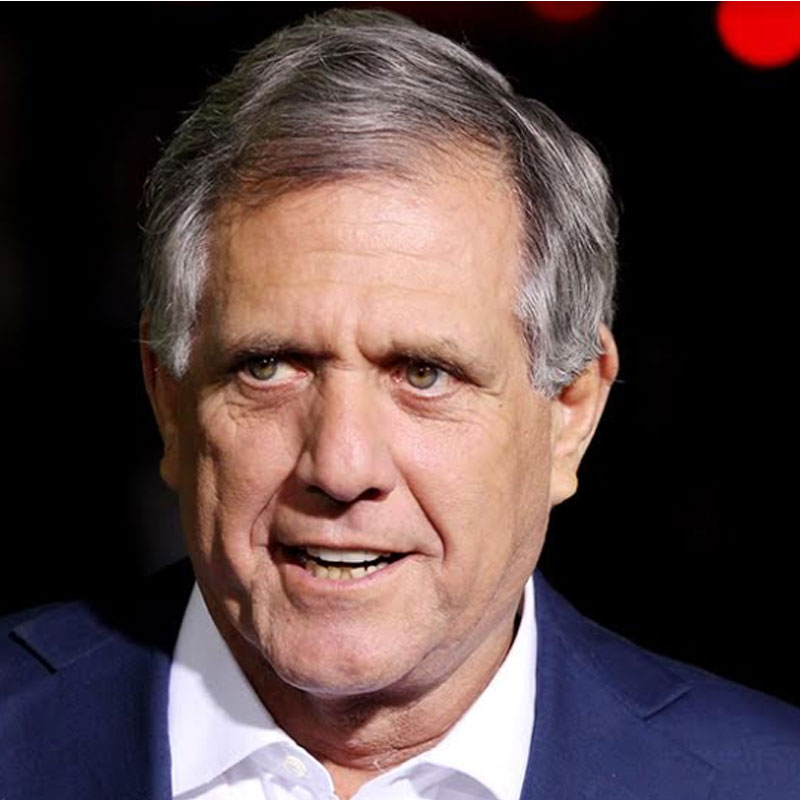
    MUMBAI:  US Network CBS has not yet taken any legal action against CEO Leslie Moonves as its board of directors investigates claims of sexual misconduct against the media titan. On Monday, the company board meeting said that it is in the process of selecting outside counsel to conduct an independent investigation.

    The New Yorker recently released an expose detailing sexual misconduct which was claimed from half a dozen women against Moonves. The allegations come as CBS is at the centre of a very public legal dispute with Shari Redstone and her National Amusements for control of the company.  It was a decision by the board to force Moonves to take a leave of absence. Meanwhile, the investigation is being viewed as a win for Redstone who is trying to merge CBS and Viacom.

    CBS ad sales chief Jo Ann Ross expressed her support for Moonves on Twitter last week, “My experience with him on a professional and personal basis has never had any hint of the behaviour this story refers to,” Ross said on Twitter on Friday night in response to The New Yorker article, which includes sexual misconduct allegations against Moonves by six women, including actress Illeana Douglas.

  • Mercedes-Benz India appoints Martin Schwenk as new MD and CEO

    Mercedes-Benz India appoints Martin Schwenk as new MD and CEO

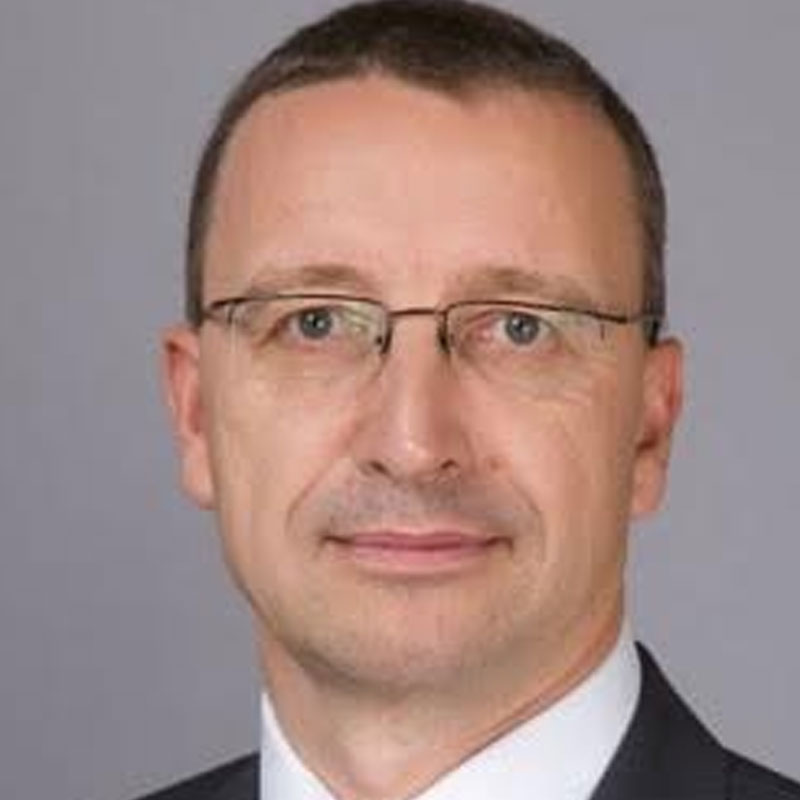
    MUMBAI: Mercedes- Benz has appointed Martin Schwenk as the new managing director and chief executive officer for Mercedes-Benz India. Schwenk, who is currently the chief financial officer of Beijing Mercedes-Benz Sales Service Co Ltd in China, will take over from Roland Folger from 1 November. Folger will be taking over the role of managing director, sales and marketing, Thailand and Vietnam, and will also be the CEO of Mercedes-Benz Thailand.

    On his appointment, Schwenk said, “Having worked across in different countries and functions, I am extremely excited for my forthcoming responsibility to head the dynamic India market. India’s rich cultural diversity, the young population, the diverse customs, different languages and topography together with its importance as a future economic powerhouse; makes it a compelling market to grow the business. It is a privileged opportunity for me to head the business of the most iconic and successful luxury motoring brand, in one of the most vibrant markets in the region. With my experience across various business divisions, I am looking forward to pursuing the ‘Indian story’ further and make the foundation of Mercedes-Benz even stronger in India. We have a fantastic winning team comprising our people and investors with proven records, and I am eager to be part of this winning team,” as quoted by Financial Express.

    The new MD has been working with this company for more than 12 years. Schwenk joined Mercedes- Benz in April 2006 as the head of finance and controlling East London Plant. Schwenk began his career at Daimler in 1992, through the Mercedes-Benz Trainee Programme, has an engineering degree from the University of Stuttgart. 

    Also Read:

    Mercedes-Benz India to excite with fascinating festive campaigns

    Mercedes Benz S-Class arrives through airport OOH ads