Tag: Centre

  • Govt blocks several social media handles circulating fake/inciting content

    Govt blocks several social media handles circulating fake/inciting content

    Mumbai: The government has blocked several social media handles for allegedly circulating “fake and inciting” content, said minister of state for IT Rajeev Chandrasekhar.

    “Taskforce on safe and trusted internet at @GoI_MeitY at work. Handles that tried to push fake/inciting content on Twitter, YouTube, Facebook, Instagram, have been blocked,” tweeted Chandrasekhar on Saturday. 

    The minister said owners of such accounts are also being identified as per law, and the action taken by the platforms will also be scrutinised. According to media reports, the government has suspended as many as 73 Twitter handles, and four YouTube video posts.

    Last year in February, the government had notified Information Technology (Intermediary Guidelines and Digital Media Ethics Code) Rules, 2021 (IT rules 2021) which came into effect on 26 May. The stringent rules were designed to make social media platforms accountable to end-users, and take down any offensive content following a complaint, and assist in investigations.

    The rules also recommend a three-tier mechanism for the regulation of all online media portals and publishers, over-the-top (OTT) platforms, and social media intermediaries. According to them, each significant social media company with over 50 lakh users is required to appoint a chief compliance officer, a nodal contact person for 24×7 coordination with law enforcement agencies, and a resident grievance officer. All three should be resident Indians and their details be put on the company’s website.

  • No exemption for mainstream media from new IT rules, says MIB

    New Delhi: The ministry of information and broadcasting has refused to grant an exemption to the digital news content of mainstream television channels and print media from the ambit of the new IT Rules, 2021 and asked all the digital news publishers and the OTT platforms to comply with the new rules without any misapprehensions.

    Asserting that the rationale for bringing the websites of the organisations under the ambit of the law is well-reasoned, the ministry said, making an exception of the nature proposed “will be discriminatory to the digital news publishers who do not have a traditional TV/print platform.”

    The order dated 10 June provides clarification to digital news publishers, publishers of online curated content or OTT platforms, and associations of digital media publishers who had requested the government for an exemption under the new rules, highlighting that they are already “sufficiently regulated.”

    “Since the code of ethics requires such digital platforms to follow the existing norms/content regulations, which are in vogue for the traditional print and TV media, there is no additional regulatory burden for such entities,” the ministry stated, “Accordingly, the request for exempting the digital news content of such organisations from the ambit of digital media rules 2021 cannot be acceded to.”

    The ministry also took note of the fact that traditional TV and print media are already registered with the government either under the Press and Registration Books Act or the Uplinking and Downlinking Guidelines of 2011, and added, that they can request the same self-regulatory bodies to serve as the Level II of the self-regulatory mechanism. But, before that, they need to ensure consistency with the Digital Media Rules, 2021, it added.

    The Information Technology (Intermediary Guidelines and Digital Media Ethics Code) Rules 2021 that into effect on 26 May recommend a three-tier mechanism for the regulation of all online media. Under the rules, the digital publishers are required to take urgent steps for appointing a grievance officer, if not done, and place all relevant details in the public domain. “They also need to constitute self-regulatory bodies through mutual consultation so that the grievances are addressed at the level of publishers or the self-regulating bodies themselves,” the ministry said. More than 500 publishers have already submitted their details in the requisite format, it added. 

    The News Broadcasters Association (NBA) which had earlier sought exemption from the new IT rules, issued a statement on Friday stating that all current and prospective members have fully complied with the requirements of new rules.
     

  • Making all efforts to comply with new IT media guidelines, says Twitter

     New Delhi : US tech giant Twitter on Monday said that it has assured the government that it is making every effort to comply with the new IT media guidelines. The microblogging site said it has already shared an overview of the progress with the government.

    A Twitter spokesperson said that the company has been and remains deeply committed to India and serving the vital public conversation taking place on the service and will continue its constructive dialogue with the Indian government, reported ANI.

    “We will continue our constructive dialogue with the Indian government,” the spokesperson added. According to media reports, Twitter has sought more time in wake of the pandemic situation in the country.

    Union ministry of electronics and information technology (MeitY) had on Saturday issued ‘one last notice’ to Twitter Inc asking it to immediately comply with the new IT rules, failing which it could face stern action and lose exemption from liability under section 79 of the IT Act, 2000.

    According to the ministry, the US company has not informed about the details of the chief compliance officer. The resident grievance officer and nodal contact person nominated was not an employee of Twitter Inc in India, as required by rules. Furthermore, the office address of Twitter Inc shared by the company was that of a law firm in India, which was also not as per rules.

    The new IT (Guidelines for Intermediaries and Digital Media Ethics Code) rules, 2021 came into effect on 26 May, but Twitter has refused to comply with the provisions of these Rules, the government said.

    The rules recommend a three-tier mechanism for regulation of all online media. As per the rules, each significant social media intermediary is required to appoint a chief compliance officer, a nodal contact person for 24×7 coordination with law enforcement agencies and a resident grievance officer. All three should be resident Indians.

    Meanwhile, Facebook on Monday named Spoorthi Priya as its chief grievance officer on it’s website and shared her email ID. Google and WhatsApp have already shared the details of their chief grievance officers as per the rules.

    India is a major market for global digital platforms. As per data shared by the government, India has 53 crore WhatsApp users, 41 crore Facebook subscribers, 21 crore Instagram clients, while 1.75 crore account holders are on Twitter.

  • Govt serves ‘one last notice’ to Twitter to ‘immediately’ comply with IT rules

    New Delhi: The government on Saturday issued ‘one last notice’ to Twitter Inc asking it to immediately comply with the new IT rules, failing which it could face stern action and lose exemption from liability under section 79 of the IT Act, 2000. This essentially means that the platform could be held responsible for content posted by the users.

    “The provisions for significant social media intermediaries under the Rules have already come into force on 26 May and it has been more than a week but Twitter has refused to comply with the provisions of these rules,” the ministry of electronics and information technology (MeitY) wrote to Twitter’s deputy general counsel, Jim Baker on Saturday.

    According to the ministry, the US company has not informed about the details of the chief compliance officer. The resident grievance officer and nodal contact person nominated is not an employee of Twitter Inc in India, as required by rules. Furthermore, the office address of Twitter Inc shared by the company is that of a law firm in India, which is also not as per rules.

    Twitter’s refusal to comply with the rules demonstrated its “lack of commitment and efforts towards providing a safe experience for the people of India on its platform,” it said. The ministry highlighted that the US tech giant has been operational in India for over a decade and “it is beyond belief that it has still doggedly refused to create mechanism that will enable the people of India to resolve their issues on the platform in a timely and transparent manner and through fair processes, by India based, clearly identified resources.”

    Though with effect from 26 May, “consequences follow” given Twitter’s non-compliance with rules, however, the ministry wrote, as a “gesture of goodwill”, it is giving Twitter Inc one last notice to immediately comply with the rules, failing which it will be liable for consequences as per the IT Act and other penal laws of India.

    The new IT (Guidelines for Intermediaries and Digital Media Ethics Code) rules, 2021, recommend a three-tier mechanism for regulation of all online media. As per the rules, each significant social media intermediary is required to appoint a chief compliance officer, a nodal contact person for 24×7 coordination with law enforcement agencies and a resident grievance officer. All three should be resident Indians.

    The intermediaries are also required to prominently publish on their website, app or both, the name of the grievance officer and his/her contact details as well as the mechanism by which a user or a victim may make a complaint. The grievance officer would be required to acknowledge the complaint within 24 hours and resolve it within 15 days from its receipt. The government has also asked the significant social media intermediaries providing services primarily in the nature of messaging “to enable identification of the first originator of the information.”

  • SC asks Centre to create regulatory mechanism for electronic media

    SC asks Centre to create regulatory mechanism for electronic media

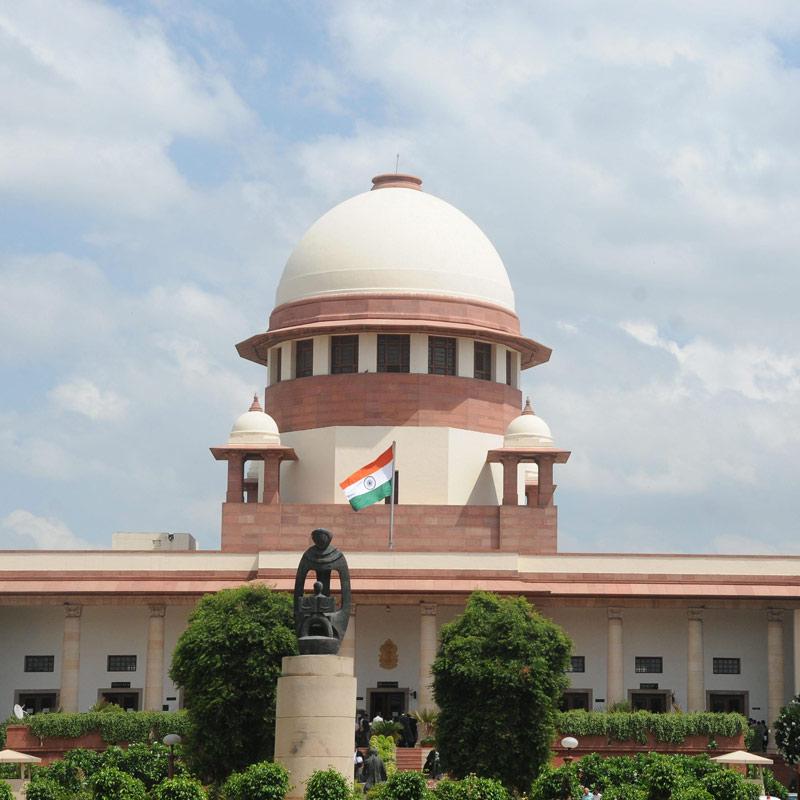
    New Delhi: Supreme Court asked the Centre to file a fresh affidavit dealing with mechanism to regulate electronic media under the Cable TV Network Act while hearing the pleas filed by Jamiat Ulama-I-Hind and others alleging that a section of the media was spreading communal hatred over Tablighi Jamaat congregation during the onset of pandemic. It also expressed displeasure over the Union government’s affidavit in the same case.

    A bench headed by CJI S A Bobde said that the Centre should consider setting up a regulatory mechanism to deal with such content on TV. It sought to know from the Centre about mechanisms available for it under the Cable TV Network Regulation Act.

    The apex court asked the government to create and apprise it of the mechanism. “We want to know as to what is the mechanism to deal with these contents on television. If there is no regulatory mechanism then you create one. Regulation cannot be left to organisation like NBSA.”

    Solicitor general Tushar Mehta on behalf of the Centre replied that it has ample powers to regulate contents of TV channels but takes a very cautious approach, as right to free speech as a fundamental right is available to media.

    The court then asked the solicitor general to create a mechanism for addressing grievances against fake news circulated by TV channels and media, if none such is available currently. “What is shown in TV channels is of great consequences for the country,” it said.

    The ministry of information and broadcasting, in its affidavit filed on 13 November, had informed the Supreme Court that the petition against communal reporting of Tablighi Jamaat incident was based on "vague assertions" and news reports published by certain fact check websites, and the same cannot be relied upon to contend that entire media was spreading communal disharmony.

    The plea before the top court sought directions to the Centre to stop dissemination of fake news and take strict action against the section of the media spreading bigotry and communal hatred in relation to the incident.

  • SC seeks Centre’s response on regulating OTT platforms

    SC seeks Centre’s response on regulating OTT platforms

    KOLKATA: It seems that when it comes to self-regulation, OTTs have a tough long road ahead, as the supreme court has sought the centre's response on a public interest litigation (PIL) for regulating these platforms by an autonomous body.

    According to a PTI report, a bench of the apex court comprising chief justice S A Bobde and Justices A S Bopanna and V Ramasubramanian has issued notices to the central government, the ministry o information and broadcasting (MIB) and internet and mobile association of India (IAMAI) on the possibility of setting up a proper body for monitoring and management of content across OTT and digital media platforms.

    The plea was filed by advocates Shashank Shekhar Jha and Apurva Arhatia. The petitioners have requested the court to order the government to constitute an autonomous body to monitor and regulate online video content. The petition added that the board should be headed by an IAS officer and have members from various fields.

     “With cinema theatres unlikely to open anytime soon in the country, OTT/Streaming and different digital media platforms have surely given a way out for the filmmakers and artists to release their content without being worried about getting clearance certificates for their films and series from the censor board,” the plea stated.

    The PIL has claimed that lack of legislation governing those platforms is turning out to be more prominent with several incidents.    

     According to the petitioners: “The government is facing heat to fill this lacuna with regulations from the public and the Judiciary; still the relevant government departments have not done anything significant to regularise these OTT/Streaming Platforms.”

    None of the OTT/streaming platforms including Netflix, Amazon Prime, Zee5, and Disney+Hotstar have signed the self-regulation provided by MIB since February 2020, the plea said.

    However, the government recently stated it is not under the process of framing laws for these platforms. It added that the matter may be looked into afresh when more clarity emerges in international jurisdictions.

  • Indians most optimistic about ageing: Ipsos-Centre for Ageing Better Survey

    Indians most optimistic about ageing: Ipsos-Centre for Ageing Better Survey

    MUMBAI: According to a new global survey by Ipsos in partnership with Centre for Ageing Better, Indians are most optimistic about Ageing, across all the 30 markets covered in the survey. At least 73 per cent said they are looking forward to ageing; India bucks global trend of pessimism towards ageing, close on the heels areTurkey (67%) and Poland (62%), the other two markets bullish on ageing. While most markets are not looking forward to ageing, at the bottom of the heap are Hungary (7%) and Japan (10%), that are least optimistic about ageing.

    How old is old?

    For Indians, hitting 62 years makes one old. But for Saudis and Malaysians, 55 years is the onset of old age.  For majority of the markets polled, 60s is old age (for US, China, UK, Japan too). For Spanish people only when one is pushing 74 years, can be considered old. 

    What makes Indians optimistic about Ageing?

    While 45 per cent Indians worry about getting old and half of Indians polled also feel that there is a general seen a lack of respect towards the elderly, despite these roadblocks most Indians are confident that they can cruise through their old age. 

    How?

    For most Indians confidence stems from choosing a healthy lifestyle – at least 76% Indians are confident that they will be fit and healthy in their old age. Further, 73% Indians feel that one can prepare for old age. Interestingly, across the 30 markets polled, there was consensus on what steps one can take to prepare for the sunset years: staying healthy and exercising (60%), eating a healthy diet (59%), saving for adequate pension (51%), avoiding smoking (45%), having a friend circle (44%), having a sport or hobby (44%), avoiding alcohol (36%), healthy  relationship with a partner (36%), learning new skills (35%), keeping active in local community, adapting home (17%) and moving to a home suitable for the elderly (16%).

    But when it came to actual practice, respondents across the 30 markets felt that for old age, the priorities should be avoiding smoking (45%), eating a healthy diet (43%), avoiding too alcohol (40%), exercising (39%), being in touch with friends (39%), good relationship with partner (35%), learning new skills (32%), play a sport (31%), save for a pension (28%) etc. 

    There is disparity between the two.  

    Majority of Indians (63%) are also harping on technology to ease old age for them. 

    “With increase in life expectancy and support of healthcare and technology, Indians are looking forward to excitements of the second innings of life” says Parijat Chakraborty, Head of Ipsos Public Affairs, India.        

    It’s also about striking a chord with people of all age groups. Half of Indians polled claim that they have friends who are 15 years older than them and 40 per cent claim they have friends 15 years younger than them.  So, a significant number feels it fits in.  

    43 per cent Indians polled feel that media too can be somewhat credited with providing a positive view of ageing by showing it as exciting and with potential to do new things. 31% Indians on the contrary blame media for presenting a grim and depressing view of ageing, while the remaining 26 per cent were undecided. 

    “The middle class has consciously planned for the future to cushion themselves from the challenges of sunset years, both in terms of financial planning and altering of lifestyle. There is also the need for social connect with relatives and friends in the Indian culture,” added Chakraborty.  

    Should young care for the old?

    Across most of the 30 markets covered, predominant view that emerged was that the young should care for the old. Interestingly, at least 75% Indians endorsed this view. China was at the top with 82 per cent spouting it. The Japanese and South Koreans had few espousing this view, these two markets were placed lowest in the pecking order, tied at 23%.       

    Across all 30 markets, Ipsos looked at some of the Merits and Demerits of getting old.

    Top merits that emerged were – more time with family/ friends (36%), more time for hobbies (32%), more time for holidays and travel (26%), giving up work (26%), being financially secure (20%), having a slower pace of life (20%), less stress (17%), being wiser (14%), more peace and quiet (13%), more time for home and garden (11%), being more experience (10%), being able to help others (10%), having good memories (8%), among others.   

    And demerits? 

    Not having enough money to live on (30%), losing mobility (26%), losing memory (26%), being unable to do things they once could (22%), losing family/ friends through death (20%), being in pain (20%), being lonely (19%), losing independence (18%), dying (16%), losing hearing/ sight (13%), being treated badly (9%), being bored (7%), being more susceptible to crime (6%), having to give up work (5%), being left behind by technology (5%) etc.   

    The study also explored the popular monikers that go with old age?

    Across the 30 markets polled some of the top associations for old age was a mixed bag!
    The terms chosen were – wise (35%), frail (32%), lonely (30%), respected (25%), unfairly treated (23%), respectful (23%), kind (21%), sad (15%), poor (13%), happy (12%), well educated (12%), hard-working (11%), ethical (10%), community oriented (9%), selfish (5%), arrogant (5%), work centric (4%), rich (3%), lazy (3%) and materialistic (3%).   

    A significant 40 per cent of Indians polled felt that the elderly has political clout. 

    Anna Dixon, Chief Executive of the Centre for Ageing Better, said: 
    There are tremendous opportunities that come from longer lives, yet just one in three people worldwide say they are looking forward to their old age. This is perhaps not surprising given the prevailing narrative across the globe is one of decline, frailty, ill-health and loneliness. These negative experiences are not inevitable.  We must improve our workplaces, our housing, our health and our communities to enable more of us to age well. Changing our own and society’s attitudes to later life is an essential first step

  • Films Division shorts in cinema halls: Centre mulling revival

    Films Division shorts in cinema halls: Centre mulling revival

    NEW DELHI: All cinema halls may soon have to screen the news features produced by the Films Division, sources in the Information and Broadcasting Ministry said.

    As a first step, the Government had earlier this year waived the 1% rental charged by Films Division in lieu of supplying public services awareness films including news features to facilitate exhibition of such films in the cinema halls of the country.

    These sources told indiantelevision.com that provisions have been kept in the proposed amendments to the Cinematograph Act 1952 to empower the Central Government to issue directions so that such films may get adequate opportunity of being exhibited.

    Meanwhile, Films Division sources told indiantelevision.com that a beginning had already been made and almost all the PVR theatres were showing shorts that went on for just around three to four minutes. However, the aim to revive the practice prevalent around two decades earlier was to show a news feature by the Division before the main feature film commences.

    At one stage, some private filmmakers had gone to court saying that there was no reason for only Films Division films being shown. As a result, cinema halls had stopped screening of the Division films. However, the Supreme Court ultimately ruled over a decade earlier that theatres should show films of relevance to society irrespective of who has made it. But, cinema halls have been reluctant to show these films.

    As a result, the Films Division appealed to the ministry to take decisive steps to ensure that the films – like those on the Swachhta Campaign or other ongoing programmes of the government should be shown. It is learnt that cinema owners have said that they will generally not accept films that are more than three minutes long, and therefore the Centre may step in to make this mandatory.

  • Films Division shorts in cinema halls: Centre mulling revival

    Films Division shorts in cinema halls: Centre mulling revival

    NEW DELHI: All cinema halls may soon have to screen the news features produced by the Films Division, sources in the Information and Broadcasting Ministry said.

    As a first step, the Government had earlier this year waived the 1% rental charged by Films Division in lieu of supplying public services awareness films including news features to facilitate exhibition of such films in the cinema halls of the country.

    These sources told indiantelevision.com that provisions have been kept in the proposed amendments to the Cinematograph Act 1952 to empower the Central Government to issue directions so that such films may get adequate opportunity of being exhibited.

    Meanwhile, Films Division sources told indiantelevision.com that a beginning had already been made and almost all the PVR theatres were showing shorts that went on for just around three to four minutes. However, the aim to revive the practice prevalent around two decades earlier was to show a news feature by the Division before the main feature film commences.

    At one stage, some private filmmakers had gone to court saying that there was no reason for only Films Division films being shown. As a result, cinema halls had stopped screening of the Division films. However, the Supreme Court ultimately ruled over a decade earlier that theatres should show films of relevance to society irrespective of who has made it. But, cinema halls have been reluctant to show these films.

    As a result, the Films Division appealed to the ministry to take decisive steps to ensure that the films – like those on the Swachhta Campaign or other ongoing programmes of the government should be shown. It is learnt that cinema owners have said that they will generally not accept films that are more than three minutes long, and therefore the Centre may step in to make this mandatory.

  • MoF assures that GST will be a game changer for M&E and subsume service tax, entertainment tax & VAT

    MoF assures that GST will be a game changer for M&E and subsume service tax, entertainment tax & VAT

    NEW DELHI: In a major relief to the media and entertainment industry, two senior officials of the Finance Ministry assured the captains of the sector that VAT, service tax and entertainment tax would be subsumed in the proposed Goods and Services Tax.


    Terming GST as a game changer, Revenue Special Secretary Rashmi Verma said the rate was being worked out but she reiterated that it would be one and uniform for the entire country.


    Member Service Tax and GST V S Krishnan added that Infosys had been given the task of creating a special portal for GST collections and the progress was good.


    He said that three processes under way were in the public domain and the stakeholders and citizens could react. As all these were drafts, changes could still be made.


    These were the rate of taxation, the law relating to GST, and the technology. The fourth relating to returns would be put in the public domain today itself. Technology  was being taken care of by Infosys.


    He added that after GST came and the government got time to review its progress, it could be improved over time.


    They were responding to remarks made by some industry leaders on the second and final day of the two-day Big Picture summit organized by the Confederation of Indian Industry.


    Sector representatives included Farokh Balsara of Ernst and Young, Film Federation of India Vice President Ravi Kottarakara, Hinduja Ventures whole time Director Ashok Mansukhani and Zee Network’s legal expert Avnindra Mohan. A P Parigi, advisor to the Chairman of Network 18 moderated the session.


    Verma added that the problem of share of centre and states would be sorted out by the Ministry and need not worry the M and E industry which will just have to pay a single tax.


    There will be slabs, but that would be restricted to just two – higher and lower, she added.


    She said bringing the Centre and 29 states on one table had been difficult but most problems had been ironed out.


    The work of the portion of the state was being worked out but the citizens need have no doubt that he will have to pay just one tax. For the citizen, the apportioning was only of academic interest.


    She said there may be some tax levied by some local bodies in some states, but this would be between half per cent to two per cent. While ways were also being found to sort out this problem, it was clear that this would only relate to the manufacturing industry.


    She also clarified that the GST would apply both to services and goods.


    The M and E industry would benefit as the multiplicity of taxation would vanish.


    The entire information will be out on a GST portal by the third week of November, she said. The transitional problems were being worked out, she added.


    Answering a point made by one of the earlier speakers who asked whether the M &  E sector was being treated at par with sinful industries, she said this was not so. The only sinful industries for the Government were cigarettes and alcohol.


    Parigi suggested creation of a separate secretariat with representatives of industry and bodies like the CII.