Tag: Central government

  • MIB invites comments on the guidelines of accessibility standards for disability audiences.

    MIB invites comments on the guidelines of accessibility standards for disability audiences.

    Mumbai: MIB (Ministry of Information and Broadcasting) issued a notification concerning section 29, section 42 of the Rights of Persons with Disabilities Act 2016. MIB asked for comments or feedback from general people on the announcement of a new mandate for content access to persons with disabilities.

    Mandate asked the government to take appropriate measures and initiatives for  accessibility for content, films, and universal access for promoting interest and preserving human rights. The government issued guidelines for accessibility standards in the public exhibition of feature films in cinemas for people with hearing and visual impairment.

    These guidelines are mandatory for cinema entities and theatres to follow from 10 January 2024. The film which is certified by CBFC ( Central Board of Film Certification) is mandatory to take this measure to promote global accessibility for the content.

    The focus of these guidelines is also on information and assistive devices needed by persons with disabilities to enjoy the content. The effective date is applicable from the date of the notification.

    The accessibility feature mandate depends on principles of health, education, human rights, fundamental freedom, availability, advocacy, and affordability. According to the mandate, films must arrange special shows for people with disabilities as prescribed in the notification. This film or content should enclose a subtitle, audio description, captioning, and technical specialties for the betterment of disabled persons.

    It is also mandatory for film producers to deliver two sets of films for certification to CBFC, one is for public view and the second is for accessibility features for disabilities. Film exhibitors are also entitled to provision accessibility features to disabilities. As per the mandate, providing a minimum of two pieces of equipment per 200 seats.

    As per the 2011 Census, Out of the total population, 2.21 per cent of the population is disabled out of which 19 per cent persons have vision disability and 19 per cent people with hearing disability in hearing. These new regulations will be inclusive of accessibility for social, and cultural well-being.

  • Trai recommends an apex body for data governance to promote data economy 

    Trai recommends an apex body for data governance to promote data economy 

    Mumbai: The Telecom Regulatory Authority of India (Trai) has advocated for an apex body for data governance and to guide India’s digital economy as soon as the government introduced the new Personal Data Protection Bill, 2022.

    Trai noted that a statutory body should be established at the centre, with suitable representation from the department of telecommunications (DoT) and the ministry of electronics and information and technology (MeitY).

    Trai, after receiving comments from stakeholders on the consultation paper, has finalised recommendations for the establishment of data centres (DCs), content delivery networks (CDNs), and interconnect exchanges (IXPs) in India.

    The recommendations were made by the telecom watchdog at a time when the government suggested creating a Data Protection Board to address data-related issues.

    Also Read: Government announces draft bill on personal data protection; proposes penalty of up to Rs 500 cr

    To manage all matters relating to data, including digitisation, monetisation, sharing, and storage, a top organisation known as the Data Digitisation and Monetisation Council (DDMC) would be established by either changing the current law or creating a new one.

    The authority recommends that trusted source procurement, which is applicable for licensees under Section 4 of the India Telegraph Act 1885, be made applicable for DCs (data centres) for security-sensitive equipment.

    It might happen very soon that DCs companies will have to source equipment from trusted sources only. The government has designated the National Cyber Security Coordinator as the body in charge of determining whether or not a source is trustworthy. In addition, the regulatory body has said that the government should define certain fiscal and non-fiscal incentives for the data centre sector. These incentives should be applicable to all the states while giving the states further flexibility to announce additional incentives.

    The regulator further suggested CDN players should be registered with the department of telecommunications through a simple online registration process. DCs hosting CDNs are connected to each other and the internet cloud via internet exchange points (IXPs).

    Trai has recommended bringing IXPs under a separate authorization in a unified licence that is much less onerous than internet service providers’ licence authorization.

    The authority also recommends that any entity that intends to provide IXP services in India can do so either under an ISP licence or UL-ISP authorization or under standalone UL-IXP authorization.

    The authority also recommends that all existing players, including NIXI, be brought within this licensing framework in a stipulated time not exceeding six months.

  • Government announces draft bill on personal data protection; proposes penalty of up to Rs 500 cr

    Government announces draft bill on personal data protection; proposes penalty of up to Rs 500 cr

    Mumbai: The ministry of electronics and information technology (MeitY) has formulated a draft bill, titled “The Digital Personal Data Protection Bill 2022.” In a press release published on Friday, the ministry invited feedback from the public on the draft bill. According to the statement, the draft is open for public comment till December 17.

    As expected to be presented in the next session of parliament, the purpose of the draft bill, as stated in the official statement from the ministry, is to provide for the processing of digital personal data in a manner that recognises both the right of individuals to protect their personal data and the need to process personal data for lawful purposes and for matters connected therewith or incidental thereto.

    In addition to this, the ministry has further stated that it has raised the penalty amount to up to Rs 500 crore for violating the provisions proposed under the draft bill. The draft bill, released in 2019, proposed a penalty of Rs 15 crore or four per cent of the global turnover of an entity.

    The proposed bill comes in place of the Data Protection Bill, which was withdrawn by the ministry in August this year. The draft proposes to set up a Data Protection Board of India, which will carry out functions as per the provisions of the bill.

    “The Digital Personal Data Protection Bill”

    The Digital Personal Data Protection Bill frames out the rights and duties of the citizen (Digital Nagrik) on the one hand and the obligations to use collected data lawfully of the data fiduciary on the other.

    In an explanatory document issued by the MeitY, seven principles around the data economy have been listed on which the bill is based:

        The first principle is that organisations must use personal data in a way that is legal, fair to the individuals involved, and transparent to individuals.

        The second principle of purpose limitation is that the personal data is used for the purposes for which it was collected.

        The third principle of data minimisation is that only those items of personal data required for attaining a specific purpose must be collected.

        The fourth principle of accuracy of personal data is that reasonable efforts are made to ensure that the personal data of the individual is accurate and kept up-to-date.

        The fifth principle of storage limitation is that personal data is not stored perpetually by default. The storage should be limited to such a duration as is necessary for the stated purpose for which personal data was collected.

        The sixth principle requires that reasonable safeguards be put in place to prevent the unauthorised collection or processing of personal data. This is intended to prevent personal data breaches.

        The seventh principle is that the person who decides the purpose and means of processing personal data should be accountable for such processing.

        These principles have been used as the basis for personal data protection laws in various jurisdictions. The actual implementation of such laws has allowed the emergence of a more nuanced understanding of personal data protection wherein individual rights, public interest, and ease of doing business, especially for startups, are balanced.

    Financial penalty:

    “If the board determines at the conclusion of an inquiry that non-compliance by a person is significant, it may, after giving the person a reasonable opportunity of being heard, impose such a financial penalty as specified in Schedule 1, not exceeding rupees five hundred crore in each instance,” stated the draft.

    Other obligations included are:

        The draft bill has proposed a graded penalty system for data fiduciaries that will process the personal data of data owners only in accordance with the provisions of the act.

        The same set of penalties will be applicable to the data processor — which will be an entity that processes data on behalf of the data fiduciary.

        The draft has proposed a penalty of up to Rs 250 crore in case the data fiduciary or data processor fails to protect against personal data breaches in its possession or under its control.

        The draft has also proposed a penalty of Rs 200 crore in case the data fiduciary or data processor fails to inform the board and data owner about the data breach.

    Furthermore, in the draft issued by the MeitY, there is a provision to allow entities to transfer the personal data of a citizen outside the country in cases where the processing of personal data is necessary for enforcing any legal right or claim, the performance of any judicial or quasi-judicial function, the investigation or prosecution of any offence, or the data owner is not within the territory of India and has entered into any contract with any person outside the country.

    “The central government may, after an assessment of such factors as it may consider necessary, notify such countries or territories outside India to which a data fiduciary may transfer personal data,” it added.

  • Centre approves amendments in FM Radio Phase-III Policy guidelines

    Centre approves amendments in FM Radio Phase-III Policy guidelines

    Mumbai: The central government has approved the amendments to certain provisions contained in the policy guidelines on the expansion of FM radio broadcasting services through private agencies (phase-III), referred to as the private FM phase-III policy guidelines.

    The decision was taken in a cabinet meeting chaired by Prime Minister Narendra Modi.

    The three-year window for restructuring FM radio permissions within the same management group throughout the licensing duration of 15 years has been eliminated by the government in order to move in this direction.

    The government has also agreed to remove the 15 per cent national cap on channel holdings, which has been a long-standing demand of the radio industry.

    Furthermore, as part of the FM radio policy’s simplification of financial eligibility norms, an applicant company can now participate in bidding for ‘C’ and ‘D’ category cities with a net worth of just Rs 1 crore, as opposed to Rs 1.5 crore previously.

    These three amendments will help the private FM radio industry fully leverage economies of scale and pave the way for further FM radio and entertainment expansion in tier-III cities across the country.

    This will not only create new job opportunities but will also ensure that music and entertainment are accessible to the general public in even the most remote parts of the country through FTA (free-to-air) radio media.

    To improve the ease of doing business in the country, the government has focused on simplifying and rationalising existing rules in order to make governance more efficient and effective, so that the benefits reach the common man.

  • Former SC judge Ashok Bhushan appointed as NCLAT chairperson

    Former SC judge Ashok Bhushan appointed as NCLAT chairperson

    Mumbai: The central government on Friday appointed retired Supreme Court judge Ashok Bhushan as chairperson of the National Company Law Appellate Tribunal (NCLAT).

    The post of NCLAT chairperson has been vacant since March 2020. Justice Bhushan has been given a term of four years or until he attains the age of 70 years, whichever is the earliest.

    He has been associated with several landmark judgments, including Ram Mandir, Covid-19 management, and registration of migrant workers.

    The central government has also approved the appointment of Justice Ramalingam Sudhakar as the president of the National Company Law Tribunal (NCLT) for five years or till he attains the age of 67 years, whichever is the earliest.

    Sudhakar was former chief justice of Manipur high court.

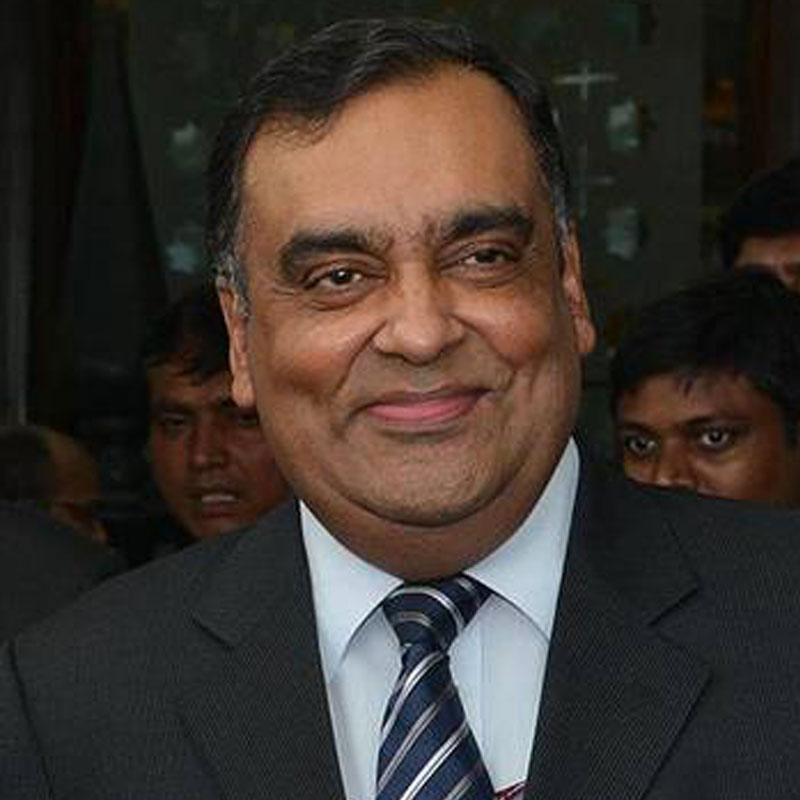
  • Centre appoints Yashvardhan Kumar Sinha as new CIC

    Centre appoints Yashvardhan Kumar Sinha as new CIC

    MUMBAI: Former diplomat and central information commissioner Yashvardhan Kumar Sinha has reportedly been appointed as the country’s next chief information commissioner (CIC), two months after the position fell vacant.

    Media reported that 155 applications were received for the post of CIC.

    The decision to appoint Sinha was taken after a meeting of the selection panel headed by prime minister Narendra Modi on 24 October. However, Congress leader in the Lok Sabha Adhir Ranjan Chowdhury, who is also a member of the panel, has submitted a dissent note.

    The Opposition leader was against the shortlisting process, alleging a failure to follow the Supreme Court’s transparency guidelines, issued in a February 2019 case brought by RTI (Right to Information) activist Anjali Bhardwaj. Chowdhury also objected to the fact that journalist Uday Mahurkar had been shortlisted for a commissioner position although he was not on the list of applicants.

    Sinha was sworn in as information commissioner on 1 January 2019. He is a former diplomat who was appointed as high commissioner of India to the United Kingdom and Sri Lanka.

    The commission is the highest appellate authority under the right to information act, and consists of a panel including chief and up to ten commissioners. The commission has been headless twice this year, due to a two month delay in appointing the last chief Bimal Julka, and another two month period since he retired at the end of August. The commission has not functioned at full strength for almost four years, and currently has only five commissioners.

  • Multiplex Association of India expresses displeasure over decision to keep cinemas, multiplexes shut in Unlock 2.0

    Multiplex Association of India expresses displeasure over decision to keep cinemas, multiplexes shut in Unlock 2.0

    MUMBAI: On 1 June the government of India entered into unlocking by phases. As per Unlock 2.0 guidelines, offices, high streets, markets and shopping malls, airlines are opened but there is no relief for multiplexes. It continues to be included in the prohibited activities list.

    Today, Multiplex Association of India (MAI), under the aegis of Federation of Indian Chambers of Commerce and Industry (FICCI) issued an official statement expressing their disappointment over central government’s decision to keep cinemas and multiplexes shut even when the other business is opened up.  

    “At a time when a significant part of the economy is being opened up, including domestic travel, offices, high street, markets, shopping complexes, etc., the Multiplex Association of India (MAI) feels dismayed that cinemas and multiplexes continue to remain in the list of prohibited activities under the central government’s Unlock 2.0 guidelines. The association finds it highly demotivating and disheartening when in fact, cinemas and multiplexes can become an example of how social distancing guidelines and crowd control can be best exercised in a safe and planned manner. As compared to the unorganised retail and shops that have been opened up, multiplexes and cinema are part of the organised sector, playing hosts to ‘revenue paying’ customers only and hence, in a better position to limit crowds unlike marketplaces and deploy all the mechanisms and guidelines for crowd control and social distancing,” MAI states in the note.

    The body highlighted that the multiplex industry in India employs more than 200,000 people directly. It also points out that it is the backbone of the Indian film industry accounting nearly 60 per cent of revenues of film business. And directly providing  livelihoods to more than a million people – right from the spot boys to makeup artists, musicians, designers, technicians and engineers to cinema employees to directors and actors.

    The body also said that the lockdown has brought the entire industry to a standstill with losses mounting every passing day. It mentions that an early decision to allow cinemas to open up will only help the mobilisation of resources in the film industry’s ecosystem and would lead to gradual resurrection.

    It said that even after opening up, they anticipate at least three to six months before things return anywhere close to normal.

    It further read, “On one hand where programming of new content will take some time to kick in; movie buffs on the other hand are expected to take a cautious approach before returning to cinemas. These are real challenges that the industry will have to overcome and we believe together, with the support of the government, we will be able to overcome them.”

    Globally, countries like France, Italy, Spain, Netherlands, Austria, Hong Kong, UAE, US, etc. and more recently Belgium and Malaysia have opened cinemas.

    To which the MAI said, “Many countries around the globe have opened up cinema halls and multiplexes to the public with implementation of the highest degree of safety protocols and have seen a warm response by audiences. In effect, more than 20 major cinema markets around the world have started operating. MAI is of the firm belief that, there must be a start and the unlocking of cinemas in non-containment zones across India should be done post haste – there must be a beginning and an opportunity must be given to us, just like some of the other sectors.”

  • #WhereIsMyHome? on CNN-News18, RERA has some answers

    MUMBAI: Buying a house one day is a dream that most Indians have. CNN-News18, through a special campaign ‘#WhereIsMyHome?’ done by the channel last year had highlighted the plight of families from all across the country, who have been waiting for their home to be delivered for years. It is against this background that the Central Government has brought the Real Estate Regulation & Development Act (RERA) into force on 1 May 2017. The objective of the Act is to bring transparency and accountability to the real estate sector and is likely to bring tremendous relief to home buyers.

    Given this development, CNN-News18 is once again bringing back its special campaign ‘#WhereIsMyHome?’ This time, the campaign will focus on RERA and educate viewers about the Act through stories and case studies. The programming will also have stories which will question and expose the ‘Builder-Sarkar’ nexus along with cornering the builders to get answers from them on the same. Through the campaign, the channel will highlight stories of corruption in various development authorities which leads to a delay in the construction process and ultimately results in late deliveries.

  • ‘Inappropriate content’ on TV & radio to be regulated

    MUMBAI: The Indian Government plans to establish a body to regulate the content broadcast on television and radio channels.

    In the backdrop of escalating concern of over-regulating and gagging of free speech by the Central Government, the government is now considering regulation of television and radio channels against what is being termed as ‘inappropriate content’.

    The Central Government has decided to establish a grievance redressal mechanism against objectionable content that is broadcast on TV news and entertainment channels, and FM and community radio, the Asian Age reported.

    This would mean that radio stations and television channel which were following a self-regulatory mechanism could now be held liable for complaints against their content filed by the public.

    If a member of the public has a complaint regarding certain content broadcast over radio or television, s/he can lodge a complaint with the district magistrate (DM) or the police commissioner (chairmen of the district-level monitoring committee), according to a government directive accessed by the paper.

    People are free to register their complaints online at pgportal.gov.in, or directly send their grievances to the union information and broadcasting ministry.

    In January 2017, the Supreme Court had directed the government to establish a mechanism for redressal of complaints against “contents of private TV channels and radio stations and accord due publicity to the measures to enable citizens approach it with their grievances.”

    The Programme and Advertising Code of the government prohibits the broadcasting of certain type of content, including anything that “offends and is against ‘decency’, contains criticism of friendly countries, contains attacks on religion or communities, is obscene or defamatory, encourages or incites violence, encourages superstition, denigrates women or affects the integrity of the nation.”

    It was reported in February 2017 that action was taken in 52 cases of television and two of radio in the past three years for violation of the Code. The minister of state for information and broadcasting Rajyavardhan Rathore had said the action in most cases was limited to apology scrolls, or switching off channels for a brief period.

    Rathore had said the Supreme Court had, on 12 January 2017, advised the Government to formalise the complaint redressal mechanism including the period of limitation within which a complaint can be filed. The court also said the concerned statutory authority which shall adjudicate upon the same including the appellate and other redressal mechanisms, leading to a final conclusive determination.

    As and when there is a prima facie case of violation by private satellite TV channels and private FM channels regarding content aired by them, the matter is placed before the IMC for its consideration/recommendations. Thus, IMC functions in a recommendatory capacity.

    Apart from this, the Ministry had earlier issued directions to States to set up District level and State level Monitoring Committees to regulate content telecast of local TV channels carried on Cable TV Networks.

    AlsO Read :

    Press regulation not called for, says Modi

    SC to MIB: Get mechanism to deal with complaints on TV, radio shows

    Govt warning to TV channels on b’cast norms breach

    Govt admits centralised content monitoring of TV and Radio ‘non-workable’

  • MIB: Check permission of ads using emblems & important names, Paytm, Jio apologise

    MUMBAI: The Department of Consumer Affairs sought clarification from Paytm and Reliance Jio regarding use of the photograph of the prime minister in their respective full page advertisement contravening the ‘prior permission’ stipulation in such cases under ‘The Emblems and Names (Prevention of Improper Use) Act, 1950’.

    Paytm and Reliance Jio apologised for their inadvertent mistake. Further, based on a request from the Department of Consumer Affairs, Ministry of Information and Broadcasting has issued an advisory to print medium to check-up the permission/authority from Competent Authority before issuing any advertisement wherein the Emblem and Names Specified under the act are mentioned.

    Section 3 of ‘The Emblems and Name (Prevention of Improper Use) Act, 1950’ stipulates that ‘no person shall, except in such cases and under such conditions as may be prescribed by the Central Government, use, or continue to use, for the purpose of any trade, business, calling or profession or in the title of any patent, or in any trade mark or design, any name or emblem specified in the Schedule or any colourable imitation thereof without the previous permission of the Central Government or of such officer of Government as may be authorized in this behalf by the Central Government.’ A committee is in existence in Department of Consumer Affairs for inter-alia examining proposals regarding prior approval stipulation under ‘ the Emblems and Names (Prevention of Improper Use) Act, 1950’.

    This information was given by the minister of state for consumer affairs, food & public distribution C.R. Chaudhary in written reply to a question in Rajya Sabha.