Tag: Censorship

  • Will MIB crack the whip on online content: Experts debate

    Will MIB crack the whip on online content: Experts debate

    KOLKATA: It's been an oft debated issue over the past few years: how does one keep a tab on free as a bird, digital sector – OTT and digital news platforms? With the government bringing it under the regulatory oversight of the ministry of information and broadcasting (MIB) many a conservative who has complained about the content on streaming services may well heave a sigh of relief. But it is  exactly this which is creasing the brow of many a digital executive as they wonder now  if their creative freedom is about to be curtailed with the leash of a draconian censorship law.  But experts believe there is no reason to panic at the moment.

    They say that so far, the matter of digital content regulation was neither here nor there, dangling between the MIB and ministry of electronics and information technology (MEITY). The government’s move was aimed at drawing lines and clearly defining what comes under whose ambit. According to industry experts, MEITY has less knowledge about content and was also not very active in the sphere.

    “There is certainly a need for some kind of regulation. If self-regulation is adopted, exercised, and disciplined, that would have been ideal. That’s what the industry had signed up for some time back. Putting everything under censorship would be one extreme step which could be very difficult for the industry to work on as the OTT segment is a very different business in terms of content, infrastructure, investment, and challenges,” said PwC India media, entertainment & sports advisory partner a& leader Raman Kalra.

    He went on to add that there would be a need for the government to work in very close consultation with the various stakeholders in the industry and arrive at a middle ground. “You can’t have a completely unregulated environment. On the other hand, you can’t have a very tightly controlled censorship driven framework,” he quipped.

    Elara Capital VP – research analyst (Media) Karan Taurani conjectured that the ministry may be formulating a framework for regulating the OTT space but that may not be very anti-digital in nature.

    Since the industry cannot be left unregulated, the government’s gazette notification will ensure that the entire media ecosystem will be aligned in terms of processes and overview under MIB, commented former SonyLiv head and Kurate Digital Consulting’s Uday Sodhi.

    “It is still early days to predict the impact. I think it has done the re-categorisation and recognised OTT as a proper medium and therefore put it under MIB. This is the right way to go about. It basically integrates the entire content ecosystem whether it is entertainment content or news, whether it is digital or TV,” he added.

    In terms of censorship, Sodhi was of the view that change in ministry will not change the Centre’s take on the matter, which has been a hot button issue for a while now. But he believes that MIB will not impose any censorship, rather it will follow the self regulation model in traditional media.

    On the subject of investment in the OTT sector, Kalra stated that it will be affected if – and only if – there is a heavy regulatory environment. The harder it becomes to create a good content funnel, the slower will be the growth of the sector. However, he qualified his statement by saying that it’s still early days. On the other hand, Taurani claimed this will not discourage global OTT giants from investing, or impact the streaming sector negatively in a big way.

    “We look forward to working with the ministry to implement our industry's self-regulation efforts. As responsible content creators, we want to ensure this act not only takes cognisance of the nature of content being released, but also ensures that we safeguard creativity in this rapidly growing sector,” MX Player CEO Karan Bedi clarified.

    On a slightly different note, another senior media professional added that the move is aimed more at the news segment. The good part, he said, is that MIB will now be able to keep a check on fake news and foreign companies’ control over news determination. But he cautioned against the misuse of power as well. Things will get sticky from a political point of view if the action turns out to be ‘A vs B.' However, the ministry will need a piece of huge machinery if it really tries to monitor every piece of news content.

    With an increasing number of services  getting into streaming –  and some have  content which can  be construed as crossing the line of decency by a sensitive India today – it behooves the mainline streaming players to quickly come up with a self regulatory mechanism which is acceptable to the MIB.  Also, those streamers who have not signed on the dotted line, need to arrive at an agreement with those who have.  So far the fledgling sector's efforts to come up with self-regulation under the IAMAI have not  really excited the regulator.

    Advertisers, agencies, and  entertainment and news broadcasters have –  in their time – got together, buried their differences  and drawn up mechanisms which have kept audiences, and the government  satisfied.  OTT and digital outlets need to keep a picture in their minds: being forced to run to the censor board for every piece of content that they produce, should they fail to get a self regulatory code in place. That's a nightmare no OTT  executive would like to go through.

  • Defence ministry says armed forces-themed movies, shows need its NoC

    Defence ministry says armed forces-themed movies, shows need its NoC

    MUMBAI: Censorship by any external regulatory body is something streamers and viewers in India are averse to. But there is at least in one area where they might have to yield to clipping scissors: how they depict the defence and armed forces in their shows and films. The Indian ministry of defence (MoD) has written to the Central Board of Film Certification directing production houses to get the former’s clearance for any show the story line of which features the armed forces or is themed around them before putting it out for viewing to the public.

    The letter – signed by the MoD’s undersecretary of state Sudershan Kumar additionally to the MeiTV and the I&B ministry – states that some “shows and films are distorting the image of the Indian army….they may also be advised to ensure that any incident which distorts the image of defence forces or hurts their sentiments may be prevented.”

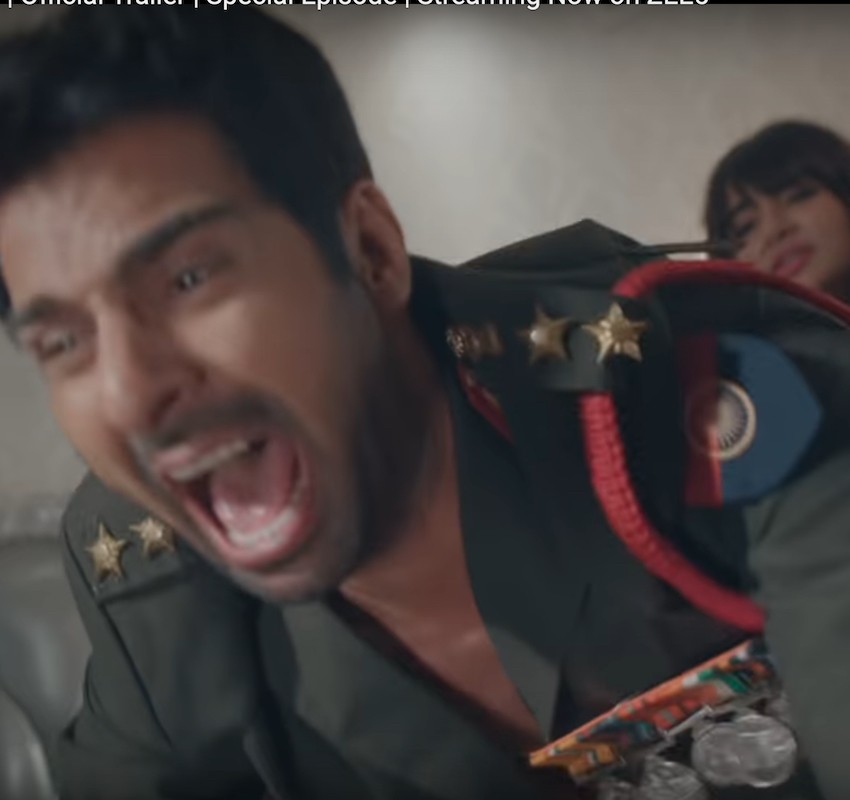
    The MoD letter makes special reference to the depiction of “Indian army personnel and military uniform in a distorted manner in “XXX – Uncensored Season 2” and urges producers to acquire a no objection certificate from it before releasing shows on the defence on their platforms.

    XXX Uncensored Season 2 is available on ALT Balaji and has been facing protests from certain groups for the manner in which a woman character forces “a man to wear the Indian Army uniform, which has the national emblem on its flaps, and then tearing it.”

    The MoD says it too has received several complaints.

  • Regulations 2016: Of DeMon challenges, changing goalposts & rampant litigation

    Regulations 2016: Of DeMon challenges, changing goalposts & rampant litigation

    The regulatory regime in 2016 not only continued to struggle keeping pace with fast-marching technology (4G is passé, 5G is being talked in some countries), but lack of consensus amongst stakeholders on major issues meant that litigation was rampant, thus leading to changing milestones. It was also about the government trying to enforce censorship via the backdoor and, hence, despite the best of intentions, only average dividends accrued to the media and entertainment sector in India, which is still described as a market with huge potential, but also a challenging place to do business.

    The biggest policy (that ultimately turned into a regulatory challenge) initiative of 2016 — some would say the biggest hiccup — was PM Modi’s demonetisation bomb aimed at unleashing a surgical strike on black money and parallel economy in the country that, according to an earlier government narrative, made the poor poorer and gave a fillip to corruption. Debatable long term gains of such a move, notwithstanding, the media industry immediately felt the heat of cash crunch.

    As collections from the ground dropped for LCOs, it affected the MSOs too, though many big MSOs insisted that making high-value currency notes illegal from November 9, 2016 could act as a catalyst for LCOs to make their business more transparent.

    From an earlier estimate of Rs. 600 crore or Rs. 6 billion loss to the media and advertising segments owing to demonetisation, loss estimates ballooned to almost Rs 300 billion towards the end of the year when most corporate adspends were slashed owing to low on-ground collections. FMCG companies led this trend and are likely to do so the in the last quarter of the 2016-17 financial year too. The cascading effects on all segments made them yelp with pain.

    Demonetisation also made the telecoms and broadcast carriage regulator the Telecom Regulatory Authority of India (TRAI) scurry to issue guidelines to facilitate the government push towards a cashless economy. For example, reduction of the ceiling tariff for the use of unstructured supplementary service data (USSD)-based mobile banking services from Rs 1.50 to Rs.0.50 and amendment to the mobile banking (quality of service) regulations to increase the number of stages from 5 to 8 per USSD session.

    Though the government’s reluctance to interact with the media directly continued throughout the year as government representatives, led by PM Modi, relied more on social media to communicate with the country at large, like many regimes in the past this government too attempted to curb media freedom. The Ministry of Information and Broadcasting (MIB) directive to NDTV India, on suggestions from an inter-ministerial committee, to shutter for a day as a penalty for breaching content code on issues related to national security was one such example.

    The government initially tried to justify the move saying national security was compromised by NDTV India, a Hindi news channel, but ultimately MIB buckled under pressure from a large section of the media frat and populace in general to go in for a face saver and the directive was kept in abeyance. However, the message couldn’t have been louder and clearer to not only the media, but also the critics: don’t underestimate the government’s resolve to crack the whip even though the Constitution grants Indians certain freedom of expression and free media be damned.

    However, it would be unfair to criticise the government for doing nothing except increasingly crack the whip. As part of overall reforms, the government did liberalise FDI norms for several sectors, including the media, in June. Foreign direct investment limits in broadcast carriage services like DTH, cable distribution, teleports, HITS, mobile TV, etc were allowed up till 100 per cent with certain caveats. Norms for FM radio broadcasts too were liberalised.

    Still, foreign or global media players didn’t start pouring money immediately in ops in India. Government data on FDI till September 2016 makes it clear that the media and entertainment sector was not amongst the top 10 sectors where foreign investment flowed in and its share was comparatively small despite liberalised norms and New Delhi’s attempts to further work on ease of doing business in India.

    The MIB did manage to shave off to an extent the time period taken to obtain a licence for uplink or downlink for TV channels and teleports, but failed on many counts to be proactive on developing issues (like controversial appointments in several MIB-controlled media institutions and attempted content regulation by non-authorised organisations), for example. Its reactionary approach complicated matters further.

    Widely criticised for over regulating the telecoms and broadcast & cable sectors, the TRAI stuck to its avowed and stated aim of attempting to create a regulatory regime that would reduce ambiguities and create a level playing field for all stakeholders.

    From trying to deal with issues in a piecemeal fashion (Net Neutrality being one) to smoothening the road ahead for the players via various guidelines and recommendations, TRAI, under chairman RS Sharma, has not shied away from confronting any bull (like Facebook) — some players, however, say it acted like a bull in a China shop.

    Whether it was the issue of Net Neutrality or zero tariffs offered by telcos for certain services or tariffs, interconnect and quality of services in the broadcast carriage sector or pushing MSOs on digital rollout or suggesting free limited data to rural India to give a fillip to the digital economy or cracking the whip on mobile phone call drops, or interoperable boxes for DTH and cable TV services, the TRAI has been trying to walk the tight rope between regulations and industry and political lobbying.

    But it must be agreed that TRAI has done less of flip-flops compared to organisations like the MIB or ministry of telecommunications and stuck on its stated route to regulation. It also has been talking straight. For example, TRAI could not have been more apt when Chairman RS Sharma told indiantelevision.com in a year-end interview that the regulator has to step in only when industry stakeholders fail to resolve issues amongst themselves. Because the industry has consitently been disastrous on managing this and thrives on ambiguities and rampant litigations, the regulator has had to time and again had to step in to remove doubts, even if that means minimalistic regulations, Sharma opined.

    On cue, it seems, towards the fag end of the 2016, Star TV and Vijay TV moved the courts against draft TRAI regulations on tariff, interconnect and quality of services, pleading the regulator could not hold sway in areas where already established domestic and international laws are there. Till further hearing later this month, the Madras High Court directed TRAI to maintain the status quo.

    With the digitisation goalpost shifted to March 2017 it is to be seen whether MIB can push through some ongoing reforms and withstand pressures arising out of demonetisation and from political allies.

  • Regulations 2016: Of DeMon challenges, changing goalposts & rampant litigation

    Regulations 2016: Of DeMon challenges, changing goalposts & rampant litigation

    The regulatory regime in 2016 not only continued to struggle keeping pace with fast-marching technology (4G is passé, 5G is being talked in some countries), but lack of consensus amongst stakeholders on major issues meant that litigation was rampant, thus leading to changing milestones. It was also about the government trying to enforce censorship via the backdoor and, hence, despite the best of intentions, only average dividends accrued to the media and entertainment sector in India, which is still described as a market with huge potential, but also a challenging place to do business.

    The biggest policy (that ultimately turned into a regulatory challenge) initiative of 2016 — some would say the biggest hiccup — was PM Modi’s demonetisation bomb aimed at unleashing a surgical strike on black money and parallel economy in the country that, according to an earlier government narrative, made the poor poorer and gave a fillip to corruption. Debatable long term gains of such a move, notwithstanding, the media industry immediately felt the heat of cash crunch.

    As collections from the ground dropped for LCOs, it affected the MSOs too, though many big MSOs insisted that making high-value currency notes illegal from November 9, 2016 could act as a catalyst for LCOs to make their business more transparent.

    From an earlier estimate of Rs. 600 crore or Rs. 6 billion loss to the media and advertising segments owing to demonetisation, loss estimates ballooned to almost Rs 300 billion towards the end of the year when most corporate adspends were slashed owing to low on-ground collections. FMCG companies led this trend and are likely to do so the in the last quarter of the 2016-17 financial year too. The cascading effects on all segments made them yelp with pain.

    Demonetisation also made the telecoms and broadcast carriage regulator the Telecom Regulatory Authority of India (TRAI) scurry to issue guidelines to facilitate the government push towards a cashless economy. For example, reduction of the ceiling tariff for the use of unstructured supplementary service data (USSD)-based mobile banking services from Rs 1.50 to Rs.0.50 and amendment to the mobile banking (quality of service) regulations to increase the number of stages from 5 to 8 per USSD session.

    Though the government’s reluctance to interact with the media directly continued throughout the year as government representatives, led by PM Modi, relied more on social media to communicate with the country at large, like many regimes in the past this government too attempted to curb media freedom. The Ministry of Information and Broadcasting (MIB) directive to NDTV India, on suggestions from an inter-ministerial committee, to shutter for a day as a penalty for breaching content code on issues related to national security was one such example.

    The government initially tried to justify the move saying national security was compromised by NDTV India, a Hindi news channel, but ultimately MIB buckled under pressure from a large section of the media frat and populace in general to go in for a face saver and the directive was kept in abeyance. However, the message couldn’t have been louder and clearer to not only the media, but also the critics: don’t underestimate the government’s resolve to crack the whip even though the Constitution grants Indians certain freedom of expression and free media be damned.

    However, it would be unfair to criticise the government for doing nothing except increasingly crack the whip. As part of overall reforms, the government did liberalise FDI norms for several sectors, including the media, in June. Foreign direct investment limits in broadcast carriage services like DTH, cable distribution, teleports, HITS, mobile TV, etc were allowed up till 100 per cent with certain caveats. Norms for FM radio broadcasts too were liberalised.

    Still, foreign or global media players didn’t start pouring money immediately in ops in India. Government data on FDI till September 2016 makes it clear that the media and entertainment sector was not amongst the top 10 sectors where foreign investment flowed in and its share was comparatively small despite liberalised norms and New Delhi’s attempts to further work on ease of doing business in India.

    The MIB did manage to shave off to an extent the time period taken to obtain a licence for uplink or downlink for TV channels and teleports, but failed on many counts to be proactive on developing issues (like controversial appointments in several MIB-controlled media institutions and attempted content regulation by non-authorised organisations), for example. Its reactionary approach complicated matters further.

    Widely criticised for over regulating the telecoms and broadcast & cable sectors, the TRAI stuck to its avowed and stated aim of attempting to create a regulatory regime that would reduce ambiguities and create a level playing field for all stakeholders.

    From trying to deal with issues in a piecemeal fashion (Net Neutrality being one) to smoothening the road ahead for the players via various guidelines and recommendations, TRAI, under chairman RS Sharma, has not shied away from confronting any bull (like Facebook) — some players, however, say it acted like a bull in a China shop.

    Whether it was the issue of Net Neutrality or zero tariffs offered by telcos for certain services or tariffs, interconnect and quality of services in the broadcast carriage sector or pushing MSOs on digital rollout or suggesting free limited data to rural India to give a fillip to the digital economy or cracking the whip on mobile phone call drops, or interoperable boxes for DTH and cable TV services, the TRAI has been trying to walk the tight rope between regulations and industry and political lobbying.

    But it must be agreed that TRAI has done less of flip-flops compared to organisations like the MIB or ministry of telecommunications and stuck on its stated route to regulation. It also has been talking straight. For example, TRAI could not have been more apt when Chairman RS Sharma told indiantelevision.com in a year-end interview that the regulator has to step in only when industry stakeholders fail to resolve issues amongst themselves. Because the industry has consitently been disastrous on managing this and thrives on ambiguities and rampant litigations, the regulator has had to time and again had to step in to remove doubts, even if that means minimalistic regulations, Sharma opined.

    On cue, it seems, towards the fag end of the 2016, Star TV and Vijay TV moved the courts against draft TRAI regulations on tariff, interconnect and quality of services, pleading the regulator could not hold sway in areas where already established domestic and international laws are there. Till further hearing later this month, the Madras High Court directed TRAI to maintain the status quo.

    With the digitisation goalpost shifted to March 2017 it is to be seen whether MIB can push through some ongoing reforms and withstand pressures arising out of demonetisation and from political allies.

  • “Reaching out to the mass is our biggest challenge”: ASCI’s Benoy Roychowdhury

    “Reaching out to the mass is our biggest challenge”: ASCI’s Benoy Roychowdhury

    MUMBAI:  Step outside your home and there is hardly a place where you can’t spot an advertisement — bus stops, public transports, and of course, the hoardings.  At home it reaches us through the glaring television screen or through melodious jingles via radio waves, in the newspapers and newspaper inserts, in magazines and leaflets. Many advertisers know us on a first name basis and communicate with us through SMS and WhatsApp forwards. Given their all-encompassing nature, there is no shortage of ads that claim everything and anything under the sun and  prey on gullible consumers.


    In spite of disagreements and disapprovals on certain advertisements, people hardly raise their voice against such ads assuming it is beyond their power – a fact that poses a challenge to the Advertising Standards Council of India (ASCI)


    Need to be better known:


    While ASCI commands considerable credibility amongst the industry operators, there is a growing need for it to be better known as an organisation. “Today pretty much all of the industry knows us. The large advertisers, the big companies who deal with us know how we function. The issue lies with the lay consumers who are directly affected by rogue and misleading advertisements,”says  HT Media executive director and recently appointed ASCI chairman Benoy Roychowdhury.


    “Often people come across something offensive or false, but aren’t informed enough to take action against it. When they see something offensive, they question themselves ‘what to do about it? Most of them are unaware of a body that protects their interests against advertisers, without drawing them into court litigations, etc.  I think informing them about ASCI and encouraging them to actively use our help to address misleading advertisements is our biggest challenge at hand,” Roychowdhury admits.


    ASCI is already taking action to redress the situation by reaching out to the consumer digitally.


    Roadmap for maximum reach:


    Considering the fact that gaining popularity is ASCI’s biggest challenge, Roychowdhury shares the regulatory body’s plans to launch a campaign to spread awareness of ASCI and its functions. “We are working on an advertising campaign, which we plan to put in place in the next few months. The purpose is to reach out to consumers and tell them what to do when they see some offensive advertising and familiarising them with how ASCI functions,” shares Roychowdhury.


    He also adds that the agencies on board with ASCI will contribute to the concept and execution of the ad campaign ASCI is about to launch.  With 2015 being the thirtieth year of ASCI’s operation, the organisation wants to send out a message through the campaign about how it has been working to protect consumers and what it has to offer.  “In fact, five or six years ago, we did a similar campaign with a popular television actress with the tagline, ‘Jhoot bole kauwa kaate’”, Roychowdhury recollects.


    “The second step in ASCI’s roadmap is to make it easier for consumers to reach out to ASCI and lodge their complaints. A vital step in this process was to put out an ASCI app that enables consumers to immediately share their grievances with us. Today, we have also started receiving a bulk of our complaints through emails as well, and we are also looking at other modes of communication with consumers like Whatsapp etc.,” shares Roychowdhury. His contention is that if the process to lodge a complaint becomes complicated, consumers are likely not to reach out to ASCI.


    While conventional media like print and broadcast are going steadily, it is the digital media that is growing rapidly. “Hence we need to focus on ad campaigns on the digital platform as well,” he asserts. Following this directive, the organisation has upped its ante in the social media sphere in the last one and half years. “We are taking part in more online discussions and expanding our engagement with people through various social networking sites like Facebook, Twitter, LinkedIn etc. as well,” he adds.


    Digital India- an edged sword: Native advertising


    While technology and digitisation has brought ASCI closer to the consumer, it has also the paved way for new marketing initiatives by advertisers using different mediums and tools that makes it harder for the self-regulatory body to implement its guidelines.


    “Digital is great for ASCI as 15 percent of our complaints are digitally sent to us now. Our app allows you to take a photograph of the advertisement you want to complain about and send us through the app.  10 percent of our digital presence is through this app. To that extent digital is something great,” Roychowdhury reveals.


    ASCI does not find any major problem in dealing with digital advertisers since the body believes in accepting and evolving with the society. “The real issue is that digital advertising is giving way to these so called native advertising, most of which is content driven. They fall into this grey area between content and advertising. We need to develop norms for them as we as a body do not pass any comment on content, unless it is offensive and obscene to the public,” he says.


    While consumers have predominantly complained about TV Commercials, ASCI has also seen an increase in the complaints against digital advertisements rising from 5 percent  in 2013-14 to 11 percent in 2014-15. The challenge is also to identify an advertisement from user uploaded content, and differentiate between advertorial and editorial.


    Reassuring consumers, Roychowdhury further adds, “Thankfully there are people ahead of us in the curve in other countries like Advertising Standards Authority (ASA) in UK. We are examining their rules and bylaws to figure how to incorporate them in India. Also the sheer size of the digital space is so vast that it becomes difficult to monitor each sphere of it.”


    Censorship of advertisement:


    Apart from mitigating issues about misleading advertisements, ASCI also has the additional responsibility to look out for advertisements that hurts people’s sentiments. Several consumers complain about vulgar and obscene advertisement to ASCI. But unlike film and television content, advertisements don’t go through a censorship screening.


    Explaining the knowhow behind the process, Roychowdhury says, “We don’t pre-screen advertisement in India. Every channel has its own set of rules and regulations that the advertiser has to adhere to. Moreover, ASCI being a self-regulatory body can only provide an advertising advice when a certain advertiser approaches them with questionable content, which is not binding on them. Having said that, most of the suggestions given by us have been upheld by advertisers and have worked to their advantage.”


    The parameters of judging whether an ad is offensive and vulgar are changing with times as society moves ahead and becomes more progressive. “There was a time when airing lingerie ads was unthinkable and now we don’t even flinch at them,” Roychowdhury compares. “Therefore the question of offensive content is a subjective matter and the norms keep evolving.”


    “When a council member looks into such ads they take into consideration if it can cause grave or widespread offence. An ad can cause grave offense to an individual, while others will be fine with it. Secondly, we judge an advertisement based on the product it is selling. If it is for lingerie or a condom, then the advertisement’s content needs to be taken in that light. On the other hand, we will raise an eyebrow to a car advertisement having unnecessary skin show,” he explains.


    Industry support:


    Being a self-regulatory body comprising of all four sectors connected with Advertising — advertisers, agencies, media including broadcasters and the press and others like PR agencies, market research companies, the organisation enjoys support and reverence from its stakeholders.


    “The specific reason behind why you have a self-regulatory body is because before moving the court, here is an option to settle the issues as per industry guidelines. It is challenging at times to keep our stakeholders on the same page, but if they are reminded of the option they have apart from ASCI – moving the court or going to the government, they clearly prefer us. Going to the government is a terrible option as it takes time due to bureaucratic involvement and secondly it comes at a hefty price. Whereas, ASCI addresses the issues without having to employ fancy lawyers or going through a tedious process,” explains Roychowdhury.


    While Chowdhury doesn’t cringe at the idea of going to the court if any party has been given a court notice, as ASCI isn’t above the court, going by industry behaviour, advertisers tend to settle intra-industry disputes through ASCI.


    “Most advertisers see us a far better option than going for either litigation or moving any other government body.” But the picture is completely different when it comes to the masses, the consumers who are directly affected by misleading advertisements.


    Industry dispute:


    “Lately we have observed a number of broadcasters using ASCI mails to settle their own personal score with rivals”. Roychowdhury makes it very clear that ASCI is strongly against such usage of their notices and mailers that are not included in their press releases meant for the public.


    “It’s not like we are carrying out any business behind closed doors. All the decisions we make are available through our press releases on our website and people are free to go over it. But picking specific details to carry out their rivalry is uncalled for,” he says.


    Out of the 1877 advertisements complained against during the year, 71 were received from industry regarding misleading advertising or unfair competitive advertising. Of these, 58 were upheld, as per ASCI’s CCC analysis report.


    “We are here to promote self-regulation among advertisers, so intra-industry disputes are more than welcome at ASCI. Because the resolution takes less time thanks to our fast track mechanism for intra member complaints, we are a more preferred mode to address their grievances. What we do discourage is going to the media with individual decisions to settle personal or industry rivalry. In the long run it doesn’t benefit the industry. In fact we don’t entertain queries on such issues,” he shares.


    While health and teleshopping remain an issue for ASCI to tackle, Roychowdhury informs that education has emerged as a sector that gives way to rogue advertisement.


    Biggest offenders:


    A majority of the advertisements against which complaints were upheld fall under the educational sector (439), followed by the healthcare sector (297) and medical services clinics (271).


    “This year we also see emergence of complaints against advertisements in the automotive (69) as well as the telecom sector (58). There have been other complaints against leadership claims of media (Channels/Publications), teleshopping advertisements promising magical results and real estate advertisements as well,” Roychowdhury informs.


    Surprisingly, he doesn’t find any issues with Ayurvedic and herbal product advertisers. “Ayurvedic remedies form a very respectable section of Indian traditions. ASCI doesn’t discourage advertisement of such products, as long as they don’t make unnatural claims like pills that reduce weight in a  jiffy and Ayurvedic products that cure cancer, AIDS  etc,” he says.


    Overall, ASCI has been able to achieve close to 90 per cent compliance, which is a good figure considering ASCI is a self-regulatory body. With the backing of regulatory agencies such as the MIB as well as the DCA, Roychowdhury hopes that this number will go up in the coming year.

  • Government won’t interfere in media: Prakash Javadekar

    Government won’t interfere in media: Prakash Javadekar

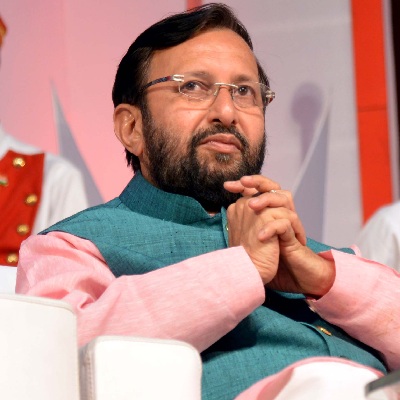
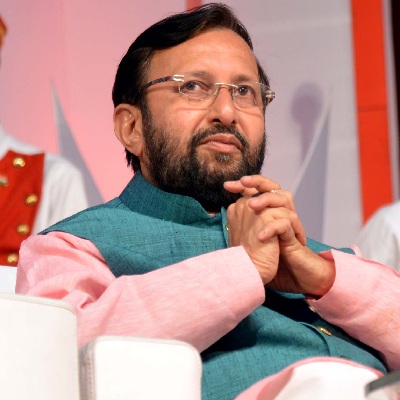
    MUMBAI: The new government has always been questioned about the freedom of media in the country. Responding to a question in the Rajya Sabha, Information and Broadcasting Minister Prakash Javadekar said that the government is committed to protecting the independence of the press, reports PTI.


    However, he also reiterated that freedom comes with responsibility and so media needs to look at itself by its own mechanisms. But what is needed is ‘improvement’ in these mechanisms with penal consequences for irresponsible reporting.


    As far as social media is concerned, Javadekar said that though there is a need to evolve a mechanism for regulating it, it comes under the information and technology law.


    Recently, two Telangana channels were blocked by MSOs- ABN Andhra Jyoti and TV9. On Javadekar’s query the state government said that it had nothing to do with the blocking. Asserting that media is independent, he said that MSOs can’t resort to such censorship. If the Ministry comes to know of any such case, it is empowered to take action.

  • No plans to impose censorship or regulate social media: Javadekar

    No plans to impose censorship or regulate social media: Javadekar

    NEW DELHI: Information and Broadcasting Minister Prakash Javadekar has said that there were and are no plans to impose any censorship on social media or to regulate any programmes beamed through social media.

    The Minister told the Parliament that the Communication and Information Technology Ministry has given an assurance in this regard.

    Social media has become an important tool that is also being used by government departments to reach out to the people. Although he highlighted that section 69A of the Information Technology Act 2000 allows blocking of any videos or information affecting society in the interest of public order.


    Earlier in the month of May, Javadekar had urged all central Ministries to disseminate their policy initiatives through the Communication Hub under the existing New Media Wing of his Ministry.


    Firmly believing in prolific use of social media, the Minister wrote to his cabinet colleagues for utilising the hub as a one-stop place for social media outreach.

    In his letter, he said each Ministry or department may liaise with the New Media Wing which will cater to all its needs such as disseminating information through packaging and placing of content, wider reach through variety of tools and response management.


    He said the two-way interaction envisaged in this endeavour would provide a 360 degree communication approach to the government and hence, help in last man connectivity. 

    He said the directive was in adherence to the vision of Prime Minister Narendra Modi, who wanted to use the social media platforms extensively for transparency and better governance. 

  • NDTV 24×7 appoints Soli Sorabjee as channel ombudsman

    NDTV 24×7 appoints Soli Sorabjee as channel ombudsman

    MUMBAI: The times aren’t doing so well for news channels; and to present the facts without any bias is of utmost importance to many.

    Hence, to constantly keep a check on its editorial NDTV 24X7 has appointed an ombudsman to regulate the content on the channel.

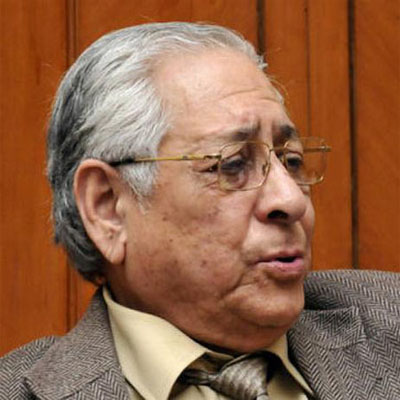
    Former attorney general of India Soli Sorabjee has agreed to come on board as an ombudsman who will provide independent perspective on the coverage of the channel as well as investigate into complaints by viewers. It is also a first such initiative by a news channel.

    NDTV editorial director and president of the Ethics Committee Sonia Singh said, “Every day, we in the media face new editorial challenges regarding journalistic boundaries and we are delighted that Sorabjee will, with his unchallenged integrity, be able to provide much needed insight and advice.”
        

    A new link has been created called www.ndtv.com/soli to address the issues. Speaking on his appointment NDTV Group vice chairperson KVL Narayan Rao said, “Soli Sorabjee is an independent, highly respected, highly regarded legal luminary, with years of experience in handling issues relating to freedom of expression and freedom of the press and censorship. We are delighted he has agreed to be the Ombudsman for NDTV.”

    As a jurist he has argued several cases of constitutional importance in HCs and SCs particularly relating to freedom of press, censorship etc.

    NDTV Group CEO and executive director Vikram Chandra added, “NDTV has always been committed to the highest standards of integrity and balance in its news coverage and we have now decided to take that one step further by appointing an independent Ombudsman who can adjudicate on any issues that may come up in the future.”

    We at indiantelevsion.com feel that Sorabjee with his experience may just be beneficial to the channel.