Tag: Celebrity endorsement

  • Shah Rukh rules screens, but celeb ads lose steam in IPL 18

    Shah Rukh rules screens, but celeb ads lose steam in IPL 18

    MUMBAI: Hindi cinema’s beloved Badshah may have remained the king of cricket screens, but the age of celebrity ads during the IPL has started to cool. According to a TAM Sports report analysing all live matches of IPL 18, the share of celebrity-endorsed commercials dipped by 13 per cent from last season, marking a strategic shift among brands embracing broader creative bets.

    This year, celebrity-endorsed ads comprised 53 per cent of total ad volumes during live matches, down from 59 per cent in IPL 17. Non-celebrity-backed commercials, often grounded in concept-led or product-first storytelling, took the remaining 47 per cent slice — a six-point jump year-on-year.

    Film actors led the celebrity endorsement race, accounting for 50 per cent of ad volumes, while sports personalities made up 32 per cent. In contrast, film actresses featured in just 18 per cent of celebrity-led ads, and TV actors barely registered at 0.16 per cent.

    Despite the overall dip, Shah Rukh Khan continued to reign, claiming eight per cent of all celebrity ad volume share in IPL 18 — a solid, if slightly faded, follow-up to his 13 per cent haul from IPL 17. He was trailed by Ananya Panday (seven per cent), Laksh Lalwani (six per cent), and sporting stalwarts like M.S. Dhoni (five per cent) and Ajay Devgn (five per cent).

    Among sports celebrities, M.S. Dhoni once again led the charge with a 17.3 per cent share, followed by Rohit Sharma (13.6 per cent), Suryakumar Yadav (9.5 per cent), Yashasvi Jaiswal (6.4 per cent), and Mohammed Siraj (6.4 per cent). Notably, IPL 18 saw fewer overall and sports celebrities endorsing brands — dropping from 75+ and 35+ in IPL 17 to 60+ and 15+ respectively.

    The food and beverage (F&B) segment proved irresistible for celebrity endorsements. Two of the top five ad categories belonged to F&B: pan masala and biscuits. The other three categories that dominated celebrity tie-ins were e-commerce gaming, financial institutions, and paints. Collectively, these top five segments accounted for 67 per cent of all celeb-endorsed ad volumes.

    Among advertisers, Sporta Technologies, Parle Biscuits, Vishnu Packaging, Playgames24x7, and RSH Global took the lion’s share, collectively clocking 53 per cent of all celebrity-backed ad space.

    As brands rethink ROI in a cluttered media landscape, the 2025 IPL season shows a noticeable shift toward diversified and cost-conscious strategies — with star power still potent but not quite the only currency.

  • Manushi Chhillar becomes face of Wella Professionals, marking a bold leap in brand expression

    Manushi Chhillar becomes face of Wella Professionals, marking a bold leap in brand expression

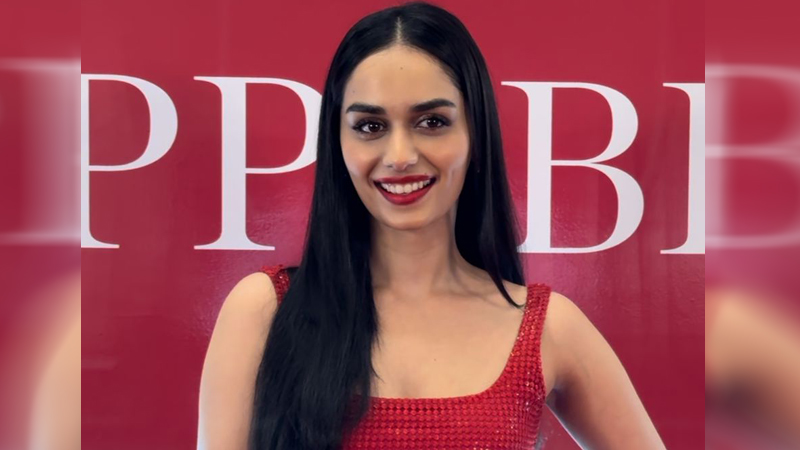
    MUMBAI: Wella Professionals has appointed Manushi Chhillar as its new brand ambassador for India, signaling a dynamic new chapter for the heritage brand. The announcement was made during the grand finale of TrendVision 2024-25, a creative summit that brings together the best of hair artistry and fashion.

    The collaboration marks Wella’s return to celebrity endorsements after years, aligning with a shift towards bolder, transformational branding. Chhillar, known for her elegance and fierce individuality, now embodies the brand’s core values of fearless self-expression, transformative beauty, and artistic excellence.

    “This marks the beginning of something legendary. Manushi represents a new wave of beauty, modern, bold, and unapologetically expressive. With her as the new ambassador of Wella Professionals, we bring our vision to life: to inspire stylists to create and consumers to embrace what’s new. Everyone dreams of change, but very few dare to make it happen. Together, we will encourage people to take that leap”, said Wella India and south Asia GM Pravesh Saha.

    The partnership underscores Wella’s ongoing mission to empower stylists while pushing boundaries in the hair industry. With over 140 years of legacy and innovation, Wella Professionals continues to shape trends through vibrant colour solutions and high-performance care. The brand now aims to strengthen its footprint in India through storytelling that resonates with the modern Indian consumer’s aspiration for change.

    The announcement comes on the back of Wella’s top ranking in the 2023 Salon Hair Care Study published by Kline, which placed the brand at number one globally in the hair colouring products category.

    Chillar’s association with Wella is expected to catalyse a fresh wave of engagement, both with stylists and consumers. Her rise from Miss World 2017 to a fashion-forward public figure has embodied resilience, evolution and grace—values that align with the ethos of Wella Professionals.

  • Denver and Mahesh Babu redefine success in new TVC ‘Poise Meets Power’

    Denver and Mahesh Babu redefine success in new TVC ‘Poise Meets Power’

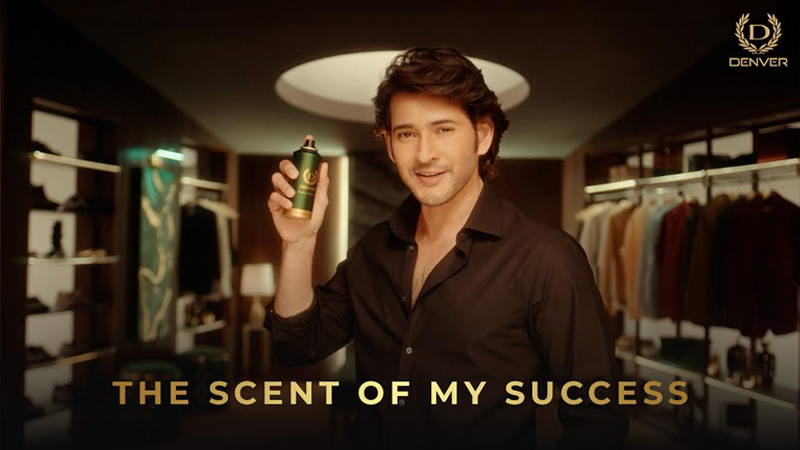
    MUMBAI: Denver has unveiled its latest television commercial (TVC) featuring none other than Mahesh Babu, the embodiment of grace and success. In this striking new extension of the brand’s iconic ‘Success Should Not Go to Your Head, But Your Heart’ campaign, Denver once again champions the belief that true success is built on character, integrity, and humility.

    The campaign isn’t just another glossy ad—it’s a bold statement. In an age where ‘success’ is often flaunted like a flashy badge, Denver flips the script. It reminds us that real triumphs are silent, steady, and steeped in substance. With Mahesh as its face, Denver positions itself as the fragrance of men who lead with dignity and confidence—without arrogance.

    The TVC showcases Mahesh, often hailed as the ‘Prince’ and ‘boss of blockbusters’, exuding effortless charm and quiet confidence. His journey from humble beginnings to becoming one of India’s most celebrated actors mirrors Denver’s rise as a frontrunner in men’s grooming. Much like Mahesh’s composed and charismatic presence, Denver’s fragrances captivate not with noise, but with authenticity and undeniable appeal.

    Mahesh’s association with Denver isn’t just an endorsement; it’s a shared philosophy. Since 2019, the superstar has embodied Denver’s values of excellence, hard work, and humility. His presence in the campaign isn’t about celebrity—it’s about credibility. When Mahesh speaks, people listen. And when he wears Denver, it isn’t just about smelling good—it’s about carrying success with dignity.

    The campaign positions Denver as the go-to fragrance for men who refuse to choose between ambition and ethics. It celebrates the modern man—the dreamer, the doer, and most importantly, the gentleman. Chivalry, respect, and humility are not outdated—they are the hallmarks of true success. In a world obsessed with accolades, Denver shifts the focus back to values.

    “Success isn’t just about fame or power; it’s about staying true to your roots, working hard, and leading with humility,” says Mahesh as he unveils the campaign.

    HSPL MD & chairman Saurabh Gupta echoes the sentiment, “Success is not a trophy—it’s a testament to character. Our campaign reflects the belief that true gentlemen never forget where they come from, no matter how high they rise. Mahesh Babu’s association with Denver continues to amplify our commitment to elevating the essence of leadership, ambition, and grounded values.”

    As Mahesh leads Denver’s latest charge, the brand cements itself as the ultimate symbol of refined success. This campaign isn’t just about making an impression; it’s about shaping a lifestyle. Because in the end, success isn’t counted in trophies—it’s measured in the values that define every step of the journey.

  • 28 per cent share of the ads’ telecast on TV was endorsed by celebrities: TAM AdEx Report

    28 per cent share of the ads’ telecast on TV was endorsed by celebrities: TAM AdEx Report

    Mumbai: TAM AdEx has released its half-yearly report on Celebrity Endorsement from January – June’ 23. According to the report, in Jan-Jun’23, 28 per cent share of the ads’ telecast on TV was endorsed by celebrities. Film stars contributed more than 80 per cent of advertising during Jan-Jun’23, followed by sports personalities and television. Stars, who contribute 11 per cent and 6 per cent, respectively.

    As per the index growth of celebrity-endorsed ads for the last three years, in comparison to the period of Jan-Jun’21, celebrity endorsements witnessed a 21 per cent growth in share during Jan-Jun’22, and an 11 per cent growth in share during the same period in 2023. However, when comparing the celebrity endorsement figures from Jan-Jun’23 with those of Jan-Jun’22, there is a decrease of 10 per cent.

    When it comes to celebrity-endorsed ads by sector, more than 50 per cent of the ads endorsed by celebrities fall under the top three sectors and more than three-fourth of the ads fall under the top seven sectors. The food & beverages sector was on top during Jan-Jun’22-23.

    With gender dominance split in the top two sectors, during Jan-Jun’23, the top two sectors, namely Food & Beverage and Personal Care/Personal Hygiene were dominated by commercials backed by male celebrities (65 per cent) and female celebrities (71 per cent), respectively.

    Talking about the category of ads endorsed by celebrities, four out of the top 10 categories were from Food & Beverages sector. The top 10 categories accounted 39 per cent share of celebrity ad volumes whereas Toilet/Floor Cleaners was the top category with eight per cent share of celebrity ad volumes in Jan-Jun’23. Ecom-Gaming (33 celebrities) was the top category for which maximum celebrities from different professions endorsed brands under it followed by the Spices category (27 celebrities).

    Amongst the list of the top 10 most visible endorsers of Jan-Jun’23, Akshay Kumar was the most visible star, with an average visibility of 31 hours per day across all channels, followed by Amitabh Bachchan with 21 hours per day through TV sponsorships. There were equal no. of male and female celebrities in the top 10 list.

    As per the top 10 celebrities endorsing quantum of brands in Jan-Jun’22 vs. Jan-Jun’23, in Jan-Jun’23, seven of the top 10 celebrities, including Amitabh Bachchan, Alia Bhatt, Virat Kohli, Kareena Kapoor, Sourav Ganguly, Ajay Devgan, and Kiara Advani sponsored more firms than in Jan-Jun’22. Three out of the top 10 celebrities were from the sports profession.

    Amongst the top 10 celebrity couples endorsing in Jan-Jun’23, more than 40 per cent ads were endorsed by the top three celebrity couples – Akshay Kumar/Twinkle Khanna (29 brands), Amitabh Bachchan/Jaya Bachchan (40 brands) and Anushka Sharma/Virat Kohli (33 brands).

  • 28 per cent share of the ads’ telecast on TV was endorsed by celebrities: TAM AdEx Report

    28 per cent share of the ads’ telecast on TV was endorsed by celebrities: TAM AdEx Report

    Mumbai: TAM AdEx has released its half-yearly report on Celebrity Endorsement from January – June’ 23. According to the report, in Jan-Jun’23, 28 per cent share of the ads’ telecast on TV was endorsed by celebrities. Film stars contributed more than 80 per cent of advertising during Jan-Jun’23, followed by sports personalities and television. Stars, who contribute 11 per cent and 6 per cent, respectively.

    As per the index growth of celebrity-endorsed ads for the last three years, in comparison to the period of Jan-Jun’21, celebrity endorsements witnessed a 21 per cent growth in share during Jan-Jun’22, and an 11 per cent growth in share during the same period in 2023. However, when comparing the celebrity endorsement figures from Jan-Jun’23 with those of Jan-Jun’22, there is a decrease of 10 per cent.

    When it comes to celebrity-endorsed ads by sector, more than 50 per cent of the ads endorsed by celebrities fall under the top three sectors and more than three-fourth of the ads fall under the top seven sectors. The food & beverages sector was on top during Jan-Jun’22-23.

    With gender dominance split in the top two sectors, during Jan-Jun’23, the top two sectors, namely Food & Beverage and Personal Care/Personal Hygiene were dominated by commercials backed by male celebrities (65 per cent) and female celebrities (71 per cent), respectively.

    Talking about the category of ads endorsed by celebrities, four out of the top 10 categories were from Food & Beverages sector. The top 10 categories accounted 39 per cent share of celebrity ad volumes whereas Toilet/Floor Cleaners was the top category with eight per cent share of celebrity ad volumes in Jan-Jun’23. Ecom-Gaming (33 celebrities) was the top category for which maximum celebrities from different professions endorsed brands under it followed by the Spices category (27 celebrities).

    Amongst the list of the top 10 most visible endorsers of Jan-Jun’23, Akshay Kumar was the most visible star, with an average visibility of 31 hours per day across all channels, followed by Amitabh Bachchan with 21 hours per day through TV sponsorships. There were equal no. of male and female celebrities in the top 10 list.

    As per the top 10 celebrities endorsing quantum of brands in Jan-Jun’22 vs. Jan-Jun’23, in Jan-Jun’23, seven of the top 10 celebrities, including Amitabh Bachchan, Alia Bhatt, Virat Kohli, Kareena Kapoor, Sourav Ganguly, Ajay Devgan, and Kiara Advani sponsored more firms than in Jan-Jun’22. Three out of the top 10 celebrities were from the sports profession.

    Amongst the top 10 celebrity couples endorsing in Jan-Jun’23, more than 40 per cent ads were endorsed by the top three celebrity couples – Akshay Kumar/Twinkle Khanna (29 brands), Amitabh Bachchan/Jaya Bachchan (40 brands) and Anushka Sharma/Virat Kohli (33 brands).

  • GUEST ARTICLE: How to stay competitive in the growing world of influencer marketing

    GUEST ARTICLE: How to stay competitive in the growing world of influencer marketing

    Mumbai: If you reflect ten to twelve years, affiliate marketing was a reliable method of reaching your target audience on the internet. Traditionally, affiliate publishers and web portals were the primary channels through which brands competed for customers. Trends, however, are subject to cyclical changes, aren’t they?

    Nowadays, brands are looking for influencers who can promote their products on social media. The effectiveness of influencer marketing was questioned five or six years ago, but now brands are willing to pay a lot to connect with the right influencers through agencies.

    According to our experience with affiliate marketing and influencer advertising, influencer marketing is a mixed form of affiliate marketing and celebrity endorsements. Influencers are now able to leverage their power through the creation of engaging brand-centric content. As part of our mission, we strive to connect with like-minded customers and to provide them with a better customer experience.

    Powerful influencer platforms

    Curated newsletters have taken off over the past few years. It’s common for business influencers to promote articles through newsletters on social media like Twitter and LinkedIn. You’ll likely come back for more as you read.

    Eventually, you’ll gain trust in the sources of information in the content, and their words will be able to influence you. When they promote a product or service, a buyer might buy it. You should send out newsletters and blog posts.

    The old ways of marketing can’t get you brand awareness anymore. Be sure to take advantage of influencers who are influencing your target audience.

    Get an edge on your competition with influencer marketing. To help you start influencing people with your products and services, here are some tips:

    • Ensure your influencers are legit

    Influencer marketing follows the same principles as other forms of marketing. Getting to know your audience members is key to providing anything of value to them.

    Make sure you segment your target audience based on their interests. Pick influencers who can attract those people instead of those whose reach will do it. Any relationship you have with an influencer should be based on relevance. 

    If you pick an influencer with a similar target audience to your brand, you’ll be able to reach the right people. Consumers 92 per cent of the time trust you as an authoritative source and recommend you to friends and family. Many followers of influencers consider their videos, photos, and posts to be endorsements.

    • Make your influence niche-specific

    Marketing with influencers can reach millions, but you won’t get as much for your money as with other “mass” marketing strategies.

    Try looking for smaller influencers and followers instead of big ones. It’s often more likely that they have engaged and dedicated fans. Their communication should also be tailored to the audience and generate responses.

    Many brands use this approach. This campaign wasn’t designed to maximise ROI but to expand the brand’s social footprint, which can pay off financially.

    • Mix your content correctly

    You can reach different audiences with influencer marketing, just like with content marketing. Make sure you’re not just using Instagram and Snapchat for short-form content. These platforms don’t just have viewer influence; you shouldn’t rely on them exclusively.

    See if long-form content offers you more opportunities instead. By using sites like Medium, you can find the right balance rather than focussing on one type of content exclusively. A platform like medium lets your audience dig deeper into topics than Snapchat and Instagram.

    Curating your marketing collateral is always a good idea, and a good collection provides various content. You can further the discussion with pictures, videos, articles, and even emails.

    • Make give-aways free and valuable

    No one can deny that people love freebies. Ensure your influencers are hosting giveaways so your target audience will be attracted to your content.

    It will help to encourage participants to follow your account and comment on your posts, and it may get more engagement. Customers will return to your business after sampling your products and getting to know your brand.

    37 per cent of the time, consumers buy stuff based on recommendations from social influencers. The social proof of influencers is one of the reasons consumers trust them. There is a chance these strategies will boost sales, so they are worth a shot.

    Conclusion

    A marketer’s arsenal of marketing strategies is growing more powerful with the use of influencers. It will help if you learn how to use it properly to be able to use it effectively. It takes considerable time, effort, and research to identify the right influencer to promote your brand. Once you have achieved the proper balance for your bottom line, it may be a divine match.

    The author of the article is PDP Media founder and CEO Raushn Jha.

  • Misleading ads: Govt moots proposal to penalise celeb endorsers

    Misleading ads: Govt moots proposal to penalise celeb endorsers

    NEW DELHI: “Strongly feeling” that misrepresentation of a product, especially a food product should be taken very seriously considering the influence of celebrities and high net worth individuals or companies, a Parliamentary Committee has proposed stringent provisions to tackle this as well as to fix liability on endorsers/celebrities.

    In its report on the Consumer Protection Bill, which was introduced in Parliament last year in August, the Parliamentary Standing Committee on Consumer Affairs said the existing laws are not deterrent enough to discourage manufacturers or publishers from using celebrities for misleading advertisements.

    However, a Group of Ministers that met yesterday here to debate the regulatory initiatives was undecided. Some of the ministers, according to government sources, were not sure how some provision of the Bill, if enacted into a law, could actually enforce penalties relating to celeb endorsers.

    The Parliamentary Committee has recommended that for first time offence, the offender may be penalized with either a fine of Rs 10 lakh and imprisonment up to two years or both, for second time offence a fine of Rs 50 lakh and imprisonment for five years, and for subsequent offences, the penalties may be increased proportionately based on the value of sales volumes of such products or services.

    At the outset, the Committee noted that several eminent public personalities or celebrities who are honoured with National Awards such as Padma Shri, Padma Bhushan and Bharat Ratna for excelling in various walks of life are often engaged as brand ambassadors for promoting various products and services.

    Such personalities are deployed to make advertisements “that are often misleading by making unrealistic claims” and consumers tend to believe such advertisements promoted by eminent personalities or celebrities blindly.

    However when the unfair trade practices are exposed, the celebrities are quick to disassociate themselves with the products/companies they were hitherto representing.

    The Committee wanted the definitions relating to misleading, false and objectionable advertisements under the provision 2 (41) (f) of the relevant Act to be clearly defined so as to avoid any ambiguity by evolving suitable code in this regard to be followed by the advertisers before releasing the advertisement in the print and electronic media.

    It agreed with the proposal of the Department of Consumer Affairs (DCA) that the words ‘electronic intermediary’ should have the same meaning as defined in Section 2 (i) (w) of The Information Technology Act 2000.

    The Committee said the words “endorsement” had not been included in the body of the Bill. In order to make the provisions of the Bill more inclusive, the Committee suggested that the DCA should insert a clause to incorporate the word “endorsement” in the definition of the Bill at the appropriate place(s). The word ‘endorsement” should also be clearly and comprehensively defined so as to leave no room for any misinterpretation and ambiguity, the panel observed.

    DCA proposed that definition of an advertisement may be modified to make it more comprehensive and modified as following: “2(1) `advertisement’ means any oral or written audio or visual publicity, representation or pronouncement made by means of any light, sound, smoke, gas, print, electronic media, internet or website and includes any notice, circular, label, wrapper, invoice or other documents”

    Secretary DCA informed the parliamentary panel that celebrities/VIPs supporting and advertising products without knowing anything about it has been taken care to a certain extent. In the unfair trade practices this concept has been included by making it clear that misleading advertisement is also an unfair trade practice. The definition of unfair trade practice clearly sets out what constitute unfair trade practice, including misleading advertisement.

    The Secretary stated that “when megastar Amitabh Bachchan endorses a product or Ms Hema Malini says ‘buy Kent RO’, rural people will feel that that RO must be very good because she is endorsing it. It is because the film stars or sportspersons nowadays have a certain level of credibility”.

    The Committee noted that in its 26th Report, it had envisioned a progressive instrument and urged the DCA to strengthen the (relevant) Act to enable effective interventions for consumer protection. The recurring theme in consumer protection has been the need to deploy effective measures to prevent unfair trade practices.

    Consumer markets for goods and services have undergone profound transformation since the enactment of the Consumer Protection Act in 1986. The modern market place contains a plethora of increasingly complex products and services. The emergence of global supply chains, rise in international trade and the rapid development of e-commerce have led to new delivery systems for goods and services and have provided new opportunities for consumers. Equally, this has rendered the consumer vulnerable to new forms of unfair trade and unethical business practices.

    Misleading advertisements, tele-marketing, multi-level marketing, direct selling and e-tailing pose new challenges to consumer protection and will require appropriate and swift executive interventions to prevent consumer detriment. There is a need for an executive institution, to make interventions when necessary, including through class action, to counter unfair trade practices. Simply put, there is need to modernise the Act to address the myriad and constantly emerging vulnerabilities of the consumer in the market economy extant.

  • Misleading ads: Govt moots proposal to penalise celeb endorsers

    Misleading ads: Govt moots proposal to penalise celeb endorsers

    NEW DELHI: “Strongly feeling” that misrepresentation of a product, especially a food product should be taken very seriously considering the influence of celebrities and high net worth individuals or companies, a Parliamentary Committee has proposed stringent provisions to tackle this as well as to fix liability on endorsers/celebrities.

    In its report on the Consumer Protection Bill, which was introduced in Parliament last year in August, the Parliamentary Standing Committee on Consumer Affairs said the existing laws are not deterrent enough to discourage manufacturers or publishers from using celebrities for misleading advertisements.

    However, a Group of Ministers that met yesterday here to debate the regulatory initiatives was undecided. Some of the ministers, according to government sources, were not sure how some provision of the Bill, if enacted into a law, could actually enforce penalties relating to celeb endorsers.

    The Parliamentary Committee has recommended that for first time offence, the offender may be penalized with either a fine of Rs 10 lakh and imprisonment up to two years or both, for second time offence a fine of Rs 50 lakh and imprisonment for five years, and for subsequent offences, the penalties may be increased proportionately based on the value of sales volumes of such products or services.

    At the outset, the Committee noted that several eminent public personalities or celebrities who are honoured with National Awards such as Padma Shri, Padma Bhushan and Bharat Ratna for excelling in various walks of life are often engaged as brand ambassadors for promoting various products and services.

    Such personalities are deployed to make advertisements “that are often misleading by making unrealistic claims” and consumers tend to believe such advertisements promoted by eminent personalities or celebrities blindly.

    However when the unfair trade practices are exposed, the celebrities are quick to disassociate themselves with the products/companies they were hitherto representing.

    The Committee wanted the definitions relating to misleading, false and objectionable advertisements under the provision 2 (41) (f) of the relevant Act to be clearly defined so as to avoid any ambiguity by evolving suitable code in this regard to be followed by the advertisers before releasing the advertisement in the print and electronic media.

    It agreed with the proposal of the Department of Consumer Affairs (DCA) that the words ‘electronic intermediary’ should have the same meaning as defined in Section 2 (i) (w) of The Information Technology Act 2000.

    The Committee said the words “endorsement” had not been included in the body of the Bill. In order to make the provisions of the Bill more inclusive, the Committee suggested that the DCA should insert a clause to incorporate the word “endorsement” in the definition of the Bill at the appropriate place(s). The word ‘endorsement” should also be clearly and comprehensively defined so as to leave no room for any misinterpretation and ambiguity, the panel observed.

    DCA proposed that definition of an advertisement may be modified to make it more comprehensive and modified as following: “2(1) `advertisement’ means any oral or written audio or visual publicity, representation or pronouncement made by means of any light, sound, smoke, gas, print, electronic media, internet or website and includes any notice, circular, label, wrapper, invoice or other documents”

    Secretary DCA informed the parliamentary panel that celebrities/VIPs supporting and advertising products without knowing anything about it has been taken care to a certain extent. In the unfair trade practices this concept has been included by making it clear that misleading advertisement is also an unfair trade practice. The definition of unfair trade practice clearly sets out what constitute unfair trade practice, including misleading advertisement.

    The Secretary stated that “when megastar Amitabh Bachchan endorses a product or Ms Hema Malini says ‘buy Kent RO’, rural people will feel that that RO must be very good because she is endorsing it. It is because the film stars or sportspersons nowadays have a certain level of credibility”.

    The Committee noted that in its 26th Report, it had envisioned a progressive instrument and urged the DCA to strengthen the (relevant) Act to enable effective interventions for consumer protection. The recurring theme in consumer protection has been the need to deploy effective measures to prevent unfair trade practices.

    Consumer markets for goods and services have undergone profound transformation since the enactment of the Consumer Protection Act in 1986. The modern market place contains a plethora of increasingly complex products and services. The emergence of global supply chains, rise in international trade and the rapid development of e-commerce have led to new delivery systems for goods and services and have provided new opportunities for consumers. Equally, this has rendered the consumer vulnerable to new forms of unfair trade and unethical business practices.

    Misleading advertisements, tele-marketing, multi-level marketing, direct selling and e-tailing pose new challenges to consumer protection and will require appropriate and swift executive interventions to prevent consumer detriment. There is a need for an executive institution, to make interventions when necessary, including through class action, to counter unfair trade practices. Simply put, there is need to modernise the Act to address the myriad and constantly emerging vulnerabilities of the consumer in the market economy extant.

  • Consumers prefer entertainment marketing versus traditional forms: survey

    Consumers prefer entertainment marketing versus traditional forms: survey

    MUMBAI: A longitudinal survey conducted by Hollywood Branded Inc. to measure brand, agency and consumer perception of tactics used in entertainment marketing campaigns, and the effectiveness of entertainment marketing as a form of advertising, showcases that 51 per cent of consumers purchase products after the brand is featured in TV or film product placement, and 43 per cent purchase after exposure to celebrity endorsement campaigns. Over 1,300 individuals responded to the 48 question survey, and the data provides insight into the most effective entertainment marketing tactics currently in use.
     
    Significant survey findings included:
     
    72 per cent of brands and agencies use entertainment marketing in their current marketing mix, whereas 52 per cent of marketers say that TV is the most utilized platform, followed by digital. Film is used by 29 per cent of marketers, celebrities by 23 per cent, music by 20 per cent and gaming by 11 per cent. Meanwhile, as per the survey 85 per cent of marketers state that entertainment marketing works to boost sales. Almost 98 per cent of consumers report noticing product placement in television and film and 80 per cent of consumers favour product placement and see it as a form of ‘organic’ marketing.
     
    51 per cent of consumers make cognizant decisions to purchase after seeing product in a TV show or feature film. Whereas celebrity influences 43 per cent of consumers.
     
    “The majority of consumer respondents indicate receptiveness to entertainment marketing, and express a preference for this form of advertising over traditional advertising as long as it is kept organic and natural in approach,” explains Hollywood Branded Inc CEO Stacy Jones.
     
    Additional findings of the survey signify that social media engagement is the preferred measurement by marketers of campaign success. The majority of agencies measure return on investment based upon digital analytics and conversion rates, followed to a lesser extent by estimated impressions. As to future implementation, marketers state that entertainment marketing budgets will increase in 2015 more than any other area of marketing, based on past success of the tactics.


    Entertainment marketing has become a commonplace practice used for brand advertising, with reported consumer and marketer data demonstrating positive influence on consumer sales.
     
    Within the survey, consumer majority state receptiveness to the practice, when kept organic and natural in approach. Consumer response also indicates a preference for entertainment marketing versus traditional forms of advertising as it shows product usage in a natural setting.
     
    The survey results support entertainment marketing as an effective marketing tactic for brand marketers to influence consumer sales.


  • Who is the most valuable celebrity brand in India?

    Who is the most valuable celebrity brand in India?

    MUMBAI: A flip through various channels and one can see film stars and cricketers selling chocolates to balms to the consumers.
    There is no doubt that celebrity brand endorsements have come a long way in the country over the past three decades. As television spread to the masses and Doordarshan found its way into several homes in the country, companies and advertisers were quick to tap the new medium, giving several memorable advertisements to consumers, that some would say did more for the stars than they did for the brands.

    Over the last decade, the celebrity endorsement space has evolved significantly. Not only have new mediums of advertising sprung up (internet, digital media and social networks), but also “celebritydom” is no longer limited to just Bollywood stars and cricketers. The Indian Premier League, Pro-Kabaddi League and Indian Badminton League have given several new sports stars in addition to our Olympians, Asian and Commonwealth Games medal winners and World Champions.

    American Appraisal, an independent global firm providing valuation and related advisory services for business, financial, legal and tax purposes, has  launched the first edition of ‘Waiting for the Encore’, a concise report on India’s most valuable celebrity brands.

    The report tries to answer a few questions. Who is the most valuable celebrity brand in India? More importantly, how can one assess the value of a particular celebrity’s brand?

    The baadshah of Bollywood, Shah Rukh Khan, tops the brand chart and is valued at $164.9 million, leaving behind the legend, Amitabh Bachchan. The shenshah stands at number 13 with $28.4 million while Indian cricket team captain MS Dhoni ranks higher than other Khans at number 3 and valued at $71.9 million.

    “While the youth brigade of Indian celebritydom ranks high on the popularity scale, brand values remain highest for celebrities who have stood the test of time. Brand Shah Rukh, valued at over $160 million, is here to stay,” says American Appraisal vice president Kapil Bellubi.

    The report goes on to highlight that the top 15 celebrities generated over Rs 11 billion in endorsement fees in 2013-14 alone. Celebrities themselves are no longer just using brand endorsements as something to bridge an income gap between films and games. A significant proportion of a celebrity’s annual income, close to 50 per cent to 75 per cent, is generated through brand endorsements.

    It goes on to report that celebrities understand that being affiliated with brands like Coke or Pepsi means that their images and likenesses may be associated with Coke or Pepsi whose reach even to the remotest part of the country can be more valuable to the celebrity than the fee that they hope to receive. Similarly, youth-centric iconic brands like Levis, Guess and luxury brands like Rado, Tissot or Louis Vuitton command immense brand presence and celebrities are normally happy to be associated as brand ambassadors for even a fraction of their normal fees. Alcohol and tobacco brands provide the best compensation, though A-Listers tend to steer clear of promoting these brands mainly on account of the potential for negative publicity.

    The report states that viewers have higher recall for celebrity endorsed brands and associated credibility were the most compelling reasons for running a celebrity campaign.