Tag: Celebrities

  • Celebrities leverage their online brand value with Twitter’s BlueRoom

    Celebrities leverage their online brand value with Twitter’s BlueRoom

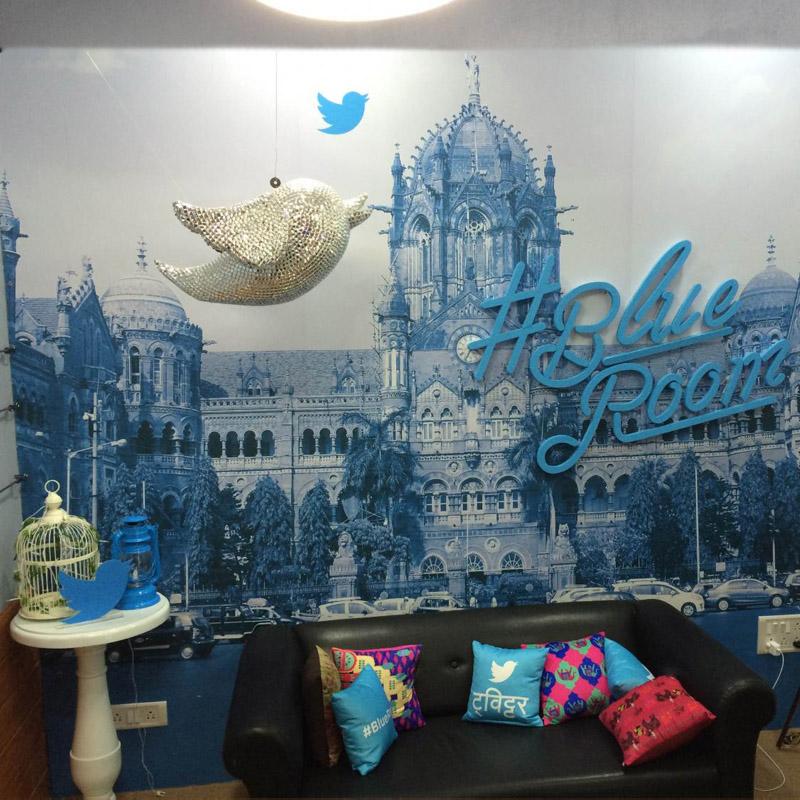
    Mumbai: Twitter taught us how to spill our hearts online in just 140 characters and now it is teaching celebrities to do the same through one on one interactions with their fans, The social media giant has finally gone public with its much awaited feature, #BlueRoom. Continuing its service of bringing fans and celebrities together, the platform has introduced Blue Room in India that allows fans to interact with their favourite celebs not only through tweets but in real life as well.

    “The #BlueRoom is a special spot to host interviews, Q&As, performances and more, so you can expect to see a even more of your favourite sports stars, film and TV talent, and music artists direct from the #BlueRoom,” read twitter India’s official blog announcing the launch.

    It’s here! A sneak peek of Twitter India’s #BlueRoom — stay tuned this week as we bring you @video & more…pic.twitter.com/2VrUJpEaQH

    In a world which is ruled by likes, favorites and shares, it is essential for celebrities to keep their online popularity up. Blue Room also gives an opportunity to celebrities to increase their online presence and interact with their fans in a more connected way.

    “Any kind of initiative is good news for celebrities as it puts them directly in accessible range of audiences, which is extremely important in this digital age. Whether it is music album launches or any kind of announcements, we see more and more celebrities choosing social media and other digital platform to relay such informations to their fans. If you are not interacting with your fans through facebook or Twitter you are losing out on a lot of fanbase,” shared popular celebrity management agency CAA Kwan founding partner Indranil Das Blah.

    In terms of brand value as well, it is important for celebrities to maintain their online presence and leverage it with fan engagements. “More and more brands are looking at the digital space for marketing themselves. And therefore naturally looking out for a digital footprint to grow. It helps to have a brand ambassador who has a digital footprint in place already,” pointed out Blah.

    Blue Room may have gone public only now but several actors, musicians, chefs, CEOs and sports stars have already tried out the Blue Room at twitter’s office in India. Actors Kalki Koechlin (@kalkikanmani) and Karan Tacker (@karantacker) kicked off some of the first @video Q&As in the #BlueRoom using #AskKalki and #AskKaran.

    Several excited fans sent out questions to the actress, some even asking her to carry out funny challenges as well:

    Look who’s joining us in the #BlueRoom very shortly! Tweet your questions to #AskKalki & @kalkikanmani will reply https://twitter.com/kalkikanmani/status/735353594875105280 …

  • Celebrities leverage their online brand value with Twitter’s BlueRoom

    Celebrities leverage their online brand value with Twitter’s BlueRoom

    Mumbai: Twitter taught us how to spill our hearts online in just 140 characters and now it is teaching celebrities to do the same through one on one interactions with their fans, The social media giant has finally gone public with its much awaited feature, #BlueRoom. Continuing its service of bringing fans and celebrities together, the platform has introduced Blue Room in India that allows fans to interact with their favourite celebs not only through tweets but in real life as well.

    “The #BlueRoom is a special spot to host interviews, Q&As, performances and more, so you can expect to see a even more of your favourite sports stars, film and TV talent, and music artists direct from the #BlueRoom,” read twitter India’s official blog announcing the launch.

    It’s here! A sneak peek of Twitter India’s #BlueRoom — stay tuned this week as we bring you @video & more…pic.twitter.com/2VrUJpEaQH

    In a world which is ruled by likes, favorites and shares, it is essential for celebrities to keep their online popularity up. Blue Room also gives an opportunity to celebrities to increase their online presence and interact with their fans in a more connected way.

    “Any kind of initiative is good news for celebrities as it puts them directly in accessible range of audiences, which is extremely important in this digital age. Whether it is music album launches or any kind of announcements, we see more and more celebrities choosing social media and other digital platform to relay such informations to their fans. If you are not interacting with your fans through facebook or Twitter you are losing out on a lot of fanbase,” shared popular celebrity management agency CAA Kwan founding partner Indranil Das Blah.

    In terms of brand value as well, it is important for celebrities to maintain their online presence and leverage it with fan engagements. “More and more brands are looking at the digital space for marketing themselves. And therefore naturally looking out for a digital footprint to grow. It helps to have a brand ambassador who has a digital footprint in place already,” pointed out Blah.

    Blue Room may have gone public only now but several actors, musicians, chefs, CEOs and sports stars have already tried out the Blue Room at twitter’s office in India. Actors Kalki Koechlin (@kalkikanmani) and Karan Tacker (@karantacker) kicked off some of the first @video Q&As in the #BlueRoom using #AskKalki and #AskKaran.

    Several excited fans sent out questions to the actress, some even asking her to carry out funny challenges as well:

    Look who’s joining us in the #BlueRoom very shortly! Tweet your questions to #AskKalki & @kalkikanmani will reply https://twitter.com/kalkikanmani/status/735353594875105280 …

  • Celebrities & brands in 2015: The changing dynamics

    Celebrities & brands in 2015: The changing dynamics

    MUMBAI: Celebrities and brands go hand in hand and so do celebrities and controversies! No sooner has a celeb publicly said something even remotely scandalous, blasphemous, startling or offensive knowingly or unknowingly than a controversy has erupted… one which doesn’t take too much time to snowball into a “grave national issue” to be discussed on prime time across news channels! 


    And 2015 was one such year that saw many a celebs facing the wrath of the common man for putting their foot in their mouth on more occasions than one. Be it Shah Rukh Khan, Aamir Khan, Salman Khan or Aishwarya Rai Bachchan, they’ve all had their moment in the spotlight and for all the wrong reasons. When a controversy breaks, after the celebrity, the next thing that gets affected is either their unreleased movie or the brands that they endorse.


    Last year was a significant year when it comes to celebrity endorsements. While there weren’t any path breaking innovations, a few memorable campaigns like Tanishq Divyam’s Diwali campaign featuring Deepika Padukone and her family, Shah Rukh Khan’s Yepme campaign and Ranbir Kapoor in Saavn’s TVC commercial kept up the excitement quotient. There’s no denying the fact that an ad’s reach becomes tenfold when a celebrity gets onboard. From automobiles, life insurances to washing powders and vests — there’s not a single category left that hasn’t yielded to star power. But it was not all merry in endorsement land as several cases of endorsements gone wrong popped up in 2015.


    Brand endorsements that went wrong:


    Interestingly, while it is hard to name any celebrity brand campaign that stood out in 2015, one can easily name the ones that made it to the headlines for all the wrong reasons. We saw Aishwarya Rai Bachchan being hurdled with racial discrimination allegations for her Kalyan Jewellers ad.


    That aside, one of the biggest example would be Nestle’s Maggi, which came under the radar over permissible amount of lead in it. Several celebrities who had promoted the brand in the past, especially Madhuri Dixit and Amitabh Bachchan had to face the wrath of netizens for endorsing a brand that may have been harmful.


    So what do we take home from these instances of endorsements gone wrong (if they are)?


    “Not to ride on media wave and add to mass hysteria,” says KWAN Entertainment and Marketing Solutions CEO and MD Anirban Das Blah. “A lot of all the so called controversial brand endorsements we saw in 2015 were more of a media cook up than a real issue. Moreover, almost all of them had nothing to do with the celebrities, who endorsed the product.”


    Acknowledging the moral responsibility of a celebrity in carefully choosing the brands they endorse, Blah simply asks, “If a certain product is considered harmful for consumption, aren’t the dealers and shopkeepers who sold it for so many years equally or more responsible?”


    According to Blah’s observation, celebrities do their research with whatever information is available to the public. Unless one is expecting them to conduct their own lab test, one can’t really point a finger at them for supporting a brand they know to be true. “I also feel that the media needs to be more responsible in how it reports these issues instead of riding on the power of social media trends and ignoring the facts,” he adds.


    However, it is not always the celebrities who are at the far end of the stick. We saw the flip side of the relationship when, spurned by Aamir Khan’s public statement, several netizens took to social media to boycott his biggest endorsed brand of 2015 – Snapdeal. The Rs 30 crore deal, which took Aamir Khan to the fifth spot in the Forbes list of celebrities as per brand value, came under trial when several threatened to boycott the online shopping portal if the brand didn’t ‘snap’ its relationship with the star.


    Madison Mates CEO Darshana Bhalla, who handled the deal between Snapdeal and Khan, shares her take away from the entire incident. “In a situation like that of Snapdeal and Aamir Khan, the brand has got to hand hold. If they are distinctly sure of the communication, which came with having Aamir Khan on board, then even if there are ups and downs either from the brand’s side or the celebrity’s side, they have got to stay on. Because it is after a lot of analysis that the two parties have embarked on their journey together.”


    While Snapdeal issued an official statement saying that it was neither connected nor played a role in comments made by Aamir Khan in his personal capacity, at the end of the day, their association survived the storm.


    Changing ball game:


    What’s changing the game is undoubtedly the emergence of digital as an advertisement platform. A clear shift from the traditional to the digital medium has been seen and more so in 2015. More and more brands are moving from plastering vanilla deals through electronic and print media to YouTube and social networking sites like Facebook, Twitter, and Instagram for their trend value.


    What does that imply for celebrity endorsements? Multi-platform entertainment management company, Exceed CEO Uday Singh says that it offers a sea change in the way endorsements are looked at.


    “Earlier we used see celebrities at several on-ground activation events. Getting a big star onboard generally would guarantee several hundred footfall for the events. But times have changed now. Now instead of on-ground activation, online activations are being preferred. If a brand can get an Amitabh Bachchan onboard, who has one of the highest number of followers on social media, a single message from him can reach millions of people. The beauty further lies in the fact that the result is instantaneous and measurable,” Singh explains, adding that he finds the current changes in the advertisement sphere quite exciting.


    When asked if the standard for hiring a star to communicate a message for a brand would eventually depend on their social media traction, Singh says, “The parameters aren’t that singular. There are more than one or two factors, which marketers and brand managers consider when signing a deal with a celebrity. The person has to stand for something and has to be relatable to the brand’s target group.”


    Seconding Singh, Bhalla adds, “Between 2014 and 2015, the industry saw a slight paradigm shift in how advertising is treated. We noticed a unique focus on multiple platforms viz-a-viz electronic and print ads that we were so used to. Digital and mobile phones have made advertising more personal and targeted. The rapid growth of e-commerce has also led to an increased traction on digital platforms. Stress is given on content and brands are opting for a more narrative approach to their brand communication that emotionally connects consumers with the products. This opens a huge opportunity for celebrity endorsements. Celebrities have an advantage when it comes to forming those bonds and connecting with consumers emotionally,” she says.


    Celebrity or not, the 30 second TVC formula is a dying breed, says Blah. The advertising world is fast moving to digital and soon mobile will outdo television in terms of reach. Bhalla says, “The growing need to have a personal connect with consumers will lead brands to take the celebrity approach as well.”


    Noticing the shift in the way a brand endorsement is approached, Blah adds, “Gone are the days when actors were required to fit into a type cast to be able to join the brand wagon. Where action heroes would address certain brands, while actresses would represent glamorous products. Today, endorsements are not strategic calls but a tactical necessity on the part of the marketers to retain their USP, and celebrities are nothing more than the models who act in the TVCs, albeit with a larger reach that the marketer needs.”


    The number game:


    What exactly is a successful celebrity campaign? Is it by its content, how many calls the brand’s sales teams get after the campaign, or by how long people retain an ad in their memory.


    “While talking about a good campaign done with a celebrity, we are often caught analysing the creative input and the content, which is a subjective matter, if you ask me. Creatively appealing or not, ultimately what matters is how much a particular campaign and a star’s presence has helped the brand achieve its communication target. In short, how many sales call they receive,” Bhalla puts across straightforwardly.


    With relevance as the key, the profit and loss effect of an ambassador over a brand is the ultimate judge of that celebrity’s brand value. Going by that formula, Bhalla acknowledges that Snapdeal has worked really well for Aamir Khan, not to mention it was one of the highest grossing endorsement deals of the year worth approximately Rs 30 crore.


    Perhaps it has to do with the actor preferring to sign at least a year or two long contracts, instead of per day deals like most celebrities. “Ranbir Kapoor and Aamir Khan are two celebrities, who prefer to sign long term campaigns and only come onboard with a brand with brand communication in mind. This also puts them on the top of the list of highest paid celebrities for endorsements,” Bhalla says.


    An executive from a celebrity brand management company shares on condition of anonymity that if one were to break up these two actors’ endorsement fees on a per day basis, Aamir Khan can charge up to Rs 3 – 4 crore per day for an endorsement, while Ranbir Kapoor can ask for Rs 2.5 – 3 crore.


    “The high rates don’t necessarily effect a celebrity’s net earnings from endorsements. While Aamir and Ranbir charge a ton for a single endorsement, they are not onboard with too many brands,” says Blah.


    On the other hand, actors like Shah Rukh Khan, who recently reclaimed his top rank in the Forbes list of Indian celebrities in terms brand value in 2015, may be working with over 25 brands at a time. Sources share that SRK commands anything between Rs 2 – 3 crore as his per day endorsement fee.


    While Blah asserts that SRK seldom strikes a long term deal with a brand, Singh begs to differ. “There is a certain charm about Shah Rukh Khan for which brands can’t leave him. His long term association with Videocon shows that the actor must be doing something right for them to be carrying on with him. Even brands like Tag Heuer, which have recently signed Ranbir Kapoor for one of their promotions, are still continuing with their contract with Shah Rukh Khan. He is undoubtedly the king in the endorsement world in India,” stresses Singh.


    Going by the figures shared by a source, who works closely with the stars, SRK, Aamir and Ranbir are closely followed by Salman Khan with a per day endorsement fee of Rs 2 – 2.5 crore. On the other hand, cricketers Virat Kohli and MS Dhoni, actors Deepika Padukone and Akshay Kumar all charge in the range of Rs 1.2 crore approximately, followed by Katrina Kaif and Kareena Kapoor at Rs 1 crore. Endorsement fees of actors like Shahid Kapoor, Farhan Akhtar and Priyanka Chopra fall in the Rs 75 lakhs per day range.


    While the Khans continue to lead the number game, even though the year wasn’t the best for the Dabangg hit-maker, industry experts unanimously agree that Akhtar emerged as the new face of endorsement for several brands in 2015.


    “He has carved a niche market for himself as an urban man in a scenario where every other actor is either too young or has too much mass appeal. Brands looking for a man of credibility to communicate for their premium products, have only so many options to choose from. This was a market initially led by Saif Ali Khan, and now Farhan Akhtar is doing amazing well for similar products like Asian Paints and Chivas,” says Blah.


    Another new kid on the block to watch out for, says Singh, is Varun Dhawan. “The boy has chosen his films very carefully. While he has done roles that strike a chord with a masses, he has also appealed to the niche market. Starting with 2015, one can look forward to seeing him in several brand campaigns in the upcoming year as well.”


    When it comes to newcomers and new faces, 2015 has been a busy year for the likes of Alia Bhatt, Kriti Sanon, Shraddha Kapoor and Jacqueline Fernandes says Blah, adding that these ladies will continue to command television screen time, visibility through OOH campaigns as well as digital footprints in 2016 as well.


    Over all, experts foresee an exciting year ahead for celebrity endorsements albeit with their share of controversies.


    As long as India remains a country that is driven by visual communication for quick and effective reach, celebrity endorsements will continue to dominate the advertising space, be it electronic, print or digital.
  • Miley Cyrus’ home robbed again

    Miley Cyrus’ home robbed again

    MUMBAI: Miley Cyrus’ Los Angeles home was robbed on 16 December 2014. According to prosecutors, a large quantity of her and her brother’s property was stolen from the 22 year old American singer and actress’ Toluca Lake home.


    The alleged thief, Rusty Edward Sellner was arrested on Monday for the offence and entered pleas for the same. However, he was pleaded not guilty when the case went to court on Wednesday.

    The Los Angeles police department’s north Hollywood division is investigating the alleged burglary.


    Sellner will face a preliminary hearing at the Los Angeles county superior court, van nuys branch on 20 January 2014. He could face up to seven years and eight months in state prison if convicted.


    Sellner has previous convictions for burglary and evading arrest.


    This is the second burglary for Cyrus in less than a year and a third time in two years that her home has been targeted by thieves.


    In May, thieves broke into her San Fernando Valley home and took clothes, purses, jewelry and a 2014 Maserati that was later abandoned. An Arizona couple went to prison for that break-in.


  • ETV Marathi ups the ante with ‘Zhunj Marathmoli’

    ETV Marathi ups the ante with ‘Zhunj Marathmoli’

    MUMBAI: ETV Marathi is all set to take viewers on a road trip during which 14 celebrities will be assigned cultural tasks to prove their Maharashtrian-ness. Starting 26 May at 9:00 pm, the channel hits the highway with Zhunj Marathmoli that will travel to 12 cities in the state with Shreyas Talpade as host.

    A co-production of Ramesh Deo Productions (RDP) and Logical Thinkers, the 26-episode show has already canned around 14 episodes in seven weeks. Tracking districts across Vidarbha, Konkan, Marathwada, Amravati and Khandesh, Zhunj Marathmoli will see two cultural tasks being executed by the contestants per episode. One participant will be eliminated every week and there will be two or three wild-card entries as well.

    Zhunj took more than six months of ideation while every one-hour episode takes two to three days of shooting and nearly a week of post production. 78 people from RDP are travelling with the participants and Talpade along with four Scarlett Red cameras and six GoPro cams.

    Says RDP producer Abhinay Deo, “In a very simple format, we are trying to show the stories of the 14 participants and Talpade as well as the region where we are shooting through each episode.”

    Comparisons with other shows have already begun but Deo says that once people see the first episode, they will know for themselves. The locations either depict specific cultures or are task or production-friendly. “In season one, we just about cover a third of the state and it will take three seasons for almost full coverage,” says Deo.

    Promotions for the show are taking place in stages. After the first teaser look, the show song was launched on the digital platform. A live Facebook video chat with Talpade has been arranged for next week. The show being youthful, disproportionately higher focus is on digital. Outdoor marketing has for now been fixed in Mumbai while the rest of Maharashtra is on the cards. The creative for the campaign is done in-house and planning executed by Vizeum.

    Budgets for the show, sources say, are approximately Rs 25 lakh to Rs 30 lakh per episode, putting the worth of the whole project at a whopping Rs 6 crore to Rs 8 crore. Ten-second ad slots are being sold for Rs 50,000, which is 30 per cent higher than ETV Marathi’s other flagship programme, Kon Hoeel Marathi Crorepati (KHMC) went for. Lunar footwear has come on board as associate sponsor while the hunt for a title sponsor is on.

    “The Marathi TV space is hugely undervalued. So we are investing in shows to get that up. A show like this couldn’t have been done by us last year but after successfully doing KHMC, we have proved ourselves,” says Viacom18 EVP and ETV Marathi business head Anuj Poddar.

    Talpade has the task of coming up with instant dialogues while the shooting is on. “This show is unlike a studio recorded show. Here, you have to know what exactly your contestants are feeling. For me, that’s my zhunj (fight). Only if someone is getting distracted and we have to get them back on track do I get a pointer or else, it is totally unscripted,” he says.

    For the celebrities Pandaharinath Kamble, Megha Sampat, Swapnil Bhutkar, Arti Solanki, Vikram Gaikwad, Hemlata Bane, Satish Dede, Parag Kanhere, Tyagraj Khandilkar, Deepti Devi, Megha Dhade, Ruchi Savaran, Manisha Kelka and Abhijit Thakur, it boils down to ‘aata mateech tharvel kas’ or ‘the land will decide our worth’.

  • LS elections: Mumbai shows the finger

    LS elections: Mumbai shows the finger

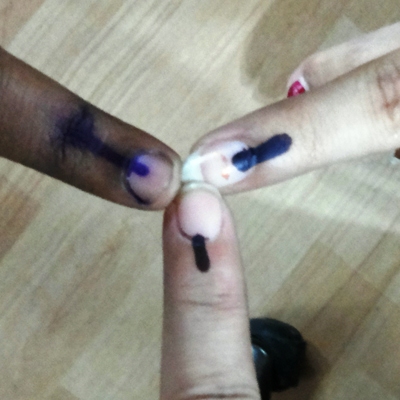
    MUMBAI:  It’s been 20 days since the largest democracy in the world started polling. Half of the country has already undergone the process while a few more wait eagerly to get inked.


    These elections unlike the others in the past are different. Thanks to the role media played this time around. Political parties of course didn’t leave any medium to woo people to vote for them. From television to online, their presence was and still is everywhere. What is more interesting is that even television channels – general entertainment as well as youth – along with print told people to step out and vote.


    In the sixth phase of polling, Mumbai, the financial capital of the country, was supposed to make a difference. Today almost 18 crore voters from whooping 117 constituencies, which comprised 11 states and one Union Territory went out for polling. 


    While Bihar witnessed 60 per cent voter turnout, Jharkhand-63.4 per cent, Madhya Pradesh-63 per cent, Assam-71 per cent, Puducherry-82 per cent, West Bengal- 81.42 per cent, Uttar Pradesh-58 per cent, Rajasthan-59 per cent, Chhatisgarh-65 per cent and Tamil Nadu saw a 73 per cent voter turnout. The six constituencies of Mumbai witnessed the lowest voter turnout amongst the lot- 53.1 per cent.


    And this after all the efforts taken by both the television channels and the brands, who went out and out to woo the voters of the city. 

    While the celebrities stepped out of their comfort zones and happily got clicked with their inked fingers, it was the common man of the city, who did not show up in the polling booth, and not like it was expected. The only saving grace, that by the end of the day, the city had recorded a 53.1 per cent voting turnout.   


    Looks like in the city of dreams, many didn’t want to wake up from their sleep and go out in the scorching heat. And this, even after most companies including a few media houses were shut as it wanted people to vote.


    Though, many in the city may rejoice over the better performance as compared to the last Lok Sabha polls, reality is that an even better voter turnout was expected from the city. And it is perhaps, the lowest amongst the states that have cast their votes so far.


    Somehow the city and its citizens that don’t get tired of cribbing, doesn’t cast its vote. The reason (educated) some feel is that what difference will it make? For them, the policies made by the government are made for the poor and the rich and the middle class is bound to suffer no matter who comes to power.


    While there are still a few who want to vote but couldn’t find their names in the list. They are tired of the officials and the process. A few also feel that at least in Mumbai, the political connect is missing. “The old style of campaigning has been taken over by twitter and electronic media, and so that personal touch is missing,” says an executive from the media house, who couldn’t vote since his name was not in the list.


    In fact if a few have to be believed, one entire housing society, which comprises some 8,000 plus houses in the North West part of Mumbai, could not find their names in the voting list. “They have lost so many votes by this,” adds a source from the industry.


    But at least some did go out and get inked.


    When we contacted RK Swamy BBDO chairman & MD, Srinivasan K Swamy, he said, “Yes, I did vote. I got to understand that many names were taken off the voter list from various booths. These were people who have voted in the past. Though they had their voter’s ID card they weren’t allowed to cast their vote.”


    Colors CEO Raj Nayak too showed off his inked finger but feels that today people have become insensitive and selfish. “It’s all about ‘I, me, myself’. They won’t make the effort to vote but then they will be laid back and criticise the government. I don’t think any other country in the world can have such a smooth process of voting such as in India. The staff is courteous and the police do their job well. It hardly takes time to go and cast your vote!”


    Curry-Nation founder Priti Nair mentioned, “Frankly, I thought there was huge buzz about voting this time and genuinely thought a lot more professionals are all enthusiastic about voting. I am quite shocked at this turn out.”


    DDB MudraMax OOH, Retail and Experiential president Mandeep Malhotra said, “Yes I did cast my vote and I am really sad on the turnout. While Bollywood and cricket celebrities did show up on the polling booth, where were the others? It is sad to see that this is how the city responds to a once in a five year event.”


    Samyak Chakravarthy of Operation Black Dot feels that though slowly the turnout did improve but the youth turnout was still less in comparison to the total size of electorate per booth, “and this is worrisome.”


    He along with his team through the initiative Operation Black Dot tried motivating people, especially the youngsters to go and fulfill their duty. Many youth icons too supported the initiative.


    May be the next time the city goes out for voting, more push and initiatives will be needed to get the city voting: How about taking the electoral machine to each house? Is the Election Commission listening?

  • Where Advertising Can’t, Content Can: Vinit Karnik National Director, Sports and Live Events of GroupM ESP

    Where Advertising Can’t, Content Can: Vinit Karnik National Director, Sports and Live Events of GroupM ESP

    Marketers for brands, consumer products, retail chains, media and entertainment are struggling to redefine and reinvent “advertising” for a new generation of empowered consumers.

    Media proliferation and fragmentation is making it harder to reach consumers with traditional formats of “interruption” advertising. New technologies, media platforms and consumer behaviors are affecting every aspect of traditional marketing and thereby dramatically impacting marketing effectiveness.

    There is a strong need to create “engagement” advertising models with digital at the core which will facilitate more sophisticated, powerful and profitable connections between brands, content creators and their target audiences….

    There is a strong need to create “engagement” advertising models with digital at the core which will facilitate more sophisticated, powerful and profitable connections between brands, content creators and their target audiences.

    Internationally, the content-commerce partnership evolution is gathering momentum. Brand entertainment partnerships are changing the rules of developing creative campaigns, marketing and advertising planning and production.

    In response to these challenges, GroupM India launched GroupM ESP to help brands harness the power of content based solutions by activating the power of movies, music, sports, live, celebrities and characters.

    GroupM ESP specialises in evaluating, negotiating, developing, activating and measuring strategic content platforms and partnerships around movies, music, sports, celebrities and characters. Uniquely positioned at the intersection of the media and the sports and entertainment industries, the ESP teams focus on developing innovative content strategies and solutions with a digital core that embed advertiser’s brands in consumer passion points using multimedia leverage and multifaceted partnerships.

    GroupM ESP also works closely as a high end consultant with clients and rights owners to help create and own multi-media content assets of long term value and their exploitation through media distribution, marketing, licensing and retailing to build deeper and more valuable connections with consumers.

    The Indian entertainment and sports market, the largest in the world by size, offers advertisers and their brands, unique and multiple passion points to reach and engage target audiences with profitable and proven content solutions, embracing all the learnings from traditional media and advertising. New technologies and new channels incorporating licensing need to be harnessed creatively using insights with marketing ROI rigorously quantified.

    The Indian entertainment and sports market, the largest in the world by size, offers advertisers and their brands, unique and multiple passion points to reach and engage target audiences…

    The GroupM ESP content team comprises more than 50+ specialists (the largest for any advertising or media agency in India) has been providing end-to-end solutions for over a decade now. Known for its transparent dealings, easy and preferred access to content and talent (International, National and Regional), GroupM ESP is also able to seamlessly deliver the benefits of parent GroupM media volumes, relationships and specialist units backed by robust systems and processes. All this has been recognised through more than 50 awards at various industry and company platforms.

    Through its high profile alliances and partnerships with content creators, rights owners and talent across every domain and geography, the GroupM ESP team is able to offer expanded capacity and capability to handle complex projects smoothly.

    As we move from a decade of “Airing” to “Sharing”, digital needs to be at the core of any marketing program and the GroupM ESP team is adequately equipped to impart a strong digital dimension in all its projects. An in-house ESP digital team backed by the parent GroupM resources ensures that solutions are digitally centered and executed.

    More than 100 advertisers in India have benefited from their association with GroupM ESP.

  • Cinema activation gets active, brands cash-in

    A giggling gang of girls queues up at the popcorn counter at a plush multiplex, discussing a high-profile celebrity split.Cash in hand, they also have their eyes glued to the LCD screen above the counter which is looping a TVC of the show ‘Popcorn News‘ on Zoom. While the girls decide on caramel, salted and spicy flavours for popcorn, the TVC announces a new flavour of popcorn – ‘Bollywood Masala,‘ a show which gives the latest gossip on the glamour circuit.

    Call it smart positioning or an imaginative touchpoint with the target audiences, brands today are using the multiplex foyer for a array of activities. From kiosks to LCD displays, promotional leaflets to opinion polls, cine advertisers are slowly creating communication points in line with a film‘s release.

    The Trend

    The growth in the number of multiplexes across the urban landscape, coupled with hoards of consumers flocking to these destinations for their weekend dose of entertainment gives brands the advantage of interacting with their target audiences. This trend is gradually taking shape across the country and media experts are bullish about its prospects.

    “Brands are trying to coincide their promotional activities with the release of films just to cash in on the footfalls. It is typically centred around the weekend, when the occupancy levels are higher at the multiplexes,” says P9 Integrated CEO Navin Shah.

    Says DGM cinema activation Abhijeet Thakar, who created multiplex activation during the recent Yashraj Films release Jhoom Barabar Jhoom, “People spend an entire day at malls and cineplexes on weekends, since it‘s a great place to hang-out. Under cinema activation, direct interaction is possible between the brand and the consumer through a touch-and-feel experience. A lot of merchandise can also be given away in the process to our consumers.”

    ICI Paints had promoted its Velvet touch range of paints during the release of big-budget releases like Kabhi Alvida Na Kehna and Salaam-e-Ishq wherein along with distributing promotional merchandise, a contest was also run. Winners had the opportunity to get their homes painted in ICI Deluxe Velvet touch paints.

    “The on ground activities at multiplexes have helped us in getting additional branding for products through sampling and converting customers into using our product. Post the activity, we‘ve experienced about 30 per cent growth in Gujarat and 55 per cent growth in Delhi both of which are our cream markets,” says ICI Paints marketing manager Rajat Johri.

    Adds Zoom Television head marketing Shiv Kumar, “Multiplex activation is part of the media today, which is allowing us to create an engagement model with the consumer. Compared to the traditional medium, here we are tailormaking the brand communication message in tune with our target audience.”

    Non-traditional media on the rise

    A natural spin-off in the increase of cinema activation has been due to the clutter for advertising on television. Lintertainment communications director Harshad Bhagwat states, “On television, ad avoidance levels have gone up as high as 70 per cent since audiences generally tend to switch channels during an ad. Brands are therefore looking at alternate mediums for gaining more visibility.”

    The platform for associating with films at multiplexes comes hardly as a surprise considering the popularity of cinema in the country. Multiplex activation is on the rise with the mushrooming of malls and multiplexes all over the country. “We have slowly reduced our dependency on other mediums like television and radio in our marketing plan. We‘re currently devoting about 7.5 per cent of our marketing budget on cinema activation,” says Johri.

    Kumar says that Zoom is currently devoting about 15 per cent of its marketing budget for cinema activation and the numbers are expected to rise.

    Why cinema?

    Part of this trend can be attributed to the growth of cinema into a more organized sector than it was before. “Producers are now seeing results. It‘s becoming a more legitimate business with more accountability coming in through multiplexes on aspects like occupancy and footfalls amongst others,” offers Shah.

    Agrees Johri, “Earlier, monitoring the degree of visibility that the brand garnered through cinema activation was difficult. But now we have a count of the number of footfalls and we receive reports of auditorium occupancy. Things have become more professional.”

    It also offers certain ‘spikes‘ during the year, wherein brands can plan in advance. “The Diwali season is a peak period when we see big-budget releases and occupancy levels are higher. We are looking to invest in such big releases of the year,” says Johri, whose range of paints will cash in on Karan Johar‘s and Kareena Kapoor‘s releases this year. Both the stars incidentally are their brand ambassadors.

    Largely though, brands building up activation models around a film‘s release are often treated as an event. “Cinema is a religion in India and the footfalls during big releases are extremely high during the weekends. We‘re trying to use their presence in the multiplex foyer to take the brand communication forward,” says Thakar.

    CalvinKare‘s Spinz range of deodarants are positioned around the theme of dance and youth. In their recent activation, patrons for Jhoom Barabar Jhoom were asked to match steps with two dancers dancing to the title of songs from the film. P9 Integrated, which executed the campaign, says the response was excellent. CalvinKare product manager Sanghamitra Rath agrees, “We‘ve used cinema activation for the first time and the response has been very good. We‘re using this campaign in different metros across the country.”

    Range of brands investing

    The genre of brands using cinema activation has seen a sea change over the last few years. “Earlier you had the liquor, colas and two-wheelers using the activation very effectively – both on-screen and off-screen. Now we have a range of products right from FMCG goods and consumer durables that undertake sampling and merchandising exercises at multiplexes,” says Shah. Lately, however, a lot of media brands are entering the foray as well. “Radio stations, TV channels, news channels and even satellite radio like Worldspace are increasingly making use of the medium,” he adds.

    Furniture line Godrej Interio recently involved themselves in multiplex activation, wherein the complete range of Godrej Interio office and kitchen furniture was put up on display. An official from Godrej Interio stated, “We‘ve tried to make the best out of a big film‘s release. Our target audiences are present here in the multiplex and they would be interested in checking out our new range of furnitures.”

    Measuring results

    But how do agencies really measure the effectiveness of cinema activation? Is there a recording medium which is reliable to ensure the number of people that have seen the communication message of the brand ?

    Thakar says, “There is no defined measuring medium as with television. Statistics are measured by the reports of the occupancy of the auditorium. Multiplex owners are a main source of information on strategic placements in the multiplex. We also send our independent teams who conduct a research on high-traffic areas in the multiplex.”

    Bhagwat, however, states, “Advertisers are still hesitant to use this medium because unlike television, there is no reliable measuring medium. Therefore we‘ve set up our own team at Lintas, called Intellect, which will study how strategically we can place brands under cinema activation.”

    Shah has a different point of view. He says, “Cinema activation is more of experiental medium, hence conventional forms like eyeballs, reach frequency and cost per thousands would not be the correct yardstick to measure the medium. However, I believe tangible results are still available and efficacy of the medium is high.”

    Engagement and experience with target audiences

    Brands however agree on getting a direct interactive platform with their target audiences, thanks to cinema activation. Rath says, “We‘re doing a lot of sampling activities wherein our main Sec A 15+ audiences are regular patrons at the movies.”

    Multiplexes are also high catchment areas for the product sampling. “Audience profiles are such who are more open to trying out new products, giving feedback and information on user preferences and telling us about their consumption habits. Moreover they have the purchasing power,” says Thakar. “Therefore extensive database collection is done due to our interaction, which further adds on the measurability of the medium,” he adds.

    The marketability factor

    But what determines a marketer‘s inclination towards a particular film? “It‘s the marketability,” says Shah. Elaborating, he adds, “Star cast is another crucial factor but the legacy of the producers to use brand activations is also important. Cinema activation offers an alternate revenue stream for them as well, apart from the box office collections and a host of movie rights.”

    Bhagwat says that multiplex owners have also benefited from cinema activation since, it offers them a revenue source just in case the film‘s collections are not impressive. “At the multiplex, fortunes change every Friday. Through cinema activation, exhibitors have a back-up just in case the film‘s collections are not up-to-the mark,” he says.

    A recent example of smart activation was for the film Cheeni Kum wherein samples and an information booklet of Sugar Free was distributed along with the movie tickets. “It was a smart move, considering that during the interval patrons in the auditorium can look into the booklet and read about the product,” says an analyst. “Due to the sampling, people looked forward to seeing the product placement in the film as well,” he says.

    The future

    Cinema activation is among the several marketing opportunities that that producers are willing to engage in. “Producers are keen to pocket the table profit before a film‘s release. This includes marketing, theatrical, overseas and music rights. This helps marketers bring in a number of brands like it happened for Krissh, wherein over 10 brands were brought on-board for the film,” says an industry observer.

    Marketers, therefore, are expected to bank on the marketability of the film to help brands benefit out of it. The reason why brands are likely to invest more in the medium is the cost-efficiency of the medium. Group M general manager content and entertainment Rajeev Berry says, “Brands are looking at reaching the consumer in a cost-efficient and impactful manner. With big budgets and big stars, cinema is getting bigger in this country and brands would want to establish a synergy with these films.”

    Even cine advertisers who are involved in on-screen activation are looking to involve themselves in off-screen activation in the coming days. QMedia business group manager Ashish Mathur for QCine advertising which worked on blockbuster Sivaji says, “I feel that a combination of activation and on-screen activity can work wonders for a brand. A great example is the award winning HSBC activation clubbed with the on-screen advertising done by Ogilvy Action.”

    By the scheme of things, multiplex activation seems to be a new entry into the media plan for marketers. With the growth in retail and burgeoning size of the movie business, footfalls are likely to increase in multiplexes. However, what remains to be seen is whether brands and advertisers can make cinema activation more engaging and experiential through innovative activities rather than mere kiosks or displays in showcasing promotional material.

    Moreover, with stringent measuring techniques more inroads are expected into analysing whether cinema activation helps translate into sales and branding growth, rather than mere sampling. The customer‘s activity will determine the success of cinema activation.