Tag: Celebrities

  • Bar Council warns lawyers & firms to refrain from using celebs and peddling on social media

    Bar Council warns lawyers & firms to refrain from using celebs and peddling on social media

    MUMBAI: India’s top legal regulator has launched a blistering attack on lawyers who peddle their services through social media and celebrity endorsements, declaring the practice as tasteless as a barrister in trainers.

    The Bar Council of India (BCI) has issued a stern rebuke to advocates who have been flaunting their legal prowess on digital platforms, particularly those enlisting Indian cinema  stars and “influencers” to hawk their services like common snake oil salesmen.

    “The profession of law, deeply rooted in public trust and ethical standards, is fundamentally distinct from commercial business ventures,” thundered the BCI in its proclamation. The regulator appears particularly vexed by self-styled “legal influencers” who dispense dubious advice on everything from matrimonial disputes to taxation without proper credentials.

    The council’s crackdown follows a landmark ruling by the Madras high court in July 2024, which emphasised that advocacy is meant to be a noble profession driven by societal service rather than commercial motives. The judgment specifically targeted online platforms like Quikr India and Just Dial, stripping them of protections under the Information Technology Act’s safe harbour provisions.

    The BCI’s diktat prohibits lawyers from:

    * Using screen actors or celebrities to promote legal practices
    * Erecting promotional banners at religious or cultural events
    * Dispensing legal advice on social media platforms
    * Any activity that might be construed as “solicitation” under Rule 36

    The strictures apply not just to individual barristers but to firms, companies and business process outsourcing operations that engage “in pith and substance” in the practice of law.

    Legal eagles who have been strutting their stuff online now face the prospect of disciplinary action if they fail to promptly remove their digital swagger. The BCI appears determined to ensure that the only thing going viral in the legal profession is respect for its ancient traditions.

    In an era when even the most solemn professions have succumbed to the temptations of digital marketing, India’s legal watchdog is making it clear: justice cannot be sold with a swipe to the right or left.

  • Amitabh Bachchan is the most recognised celebrity in India, says report

    Amitabh Bachchan is the most recognised celebrity in India, says report

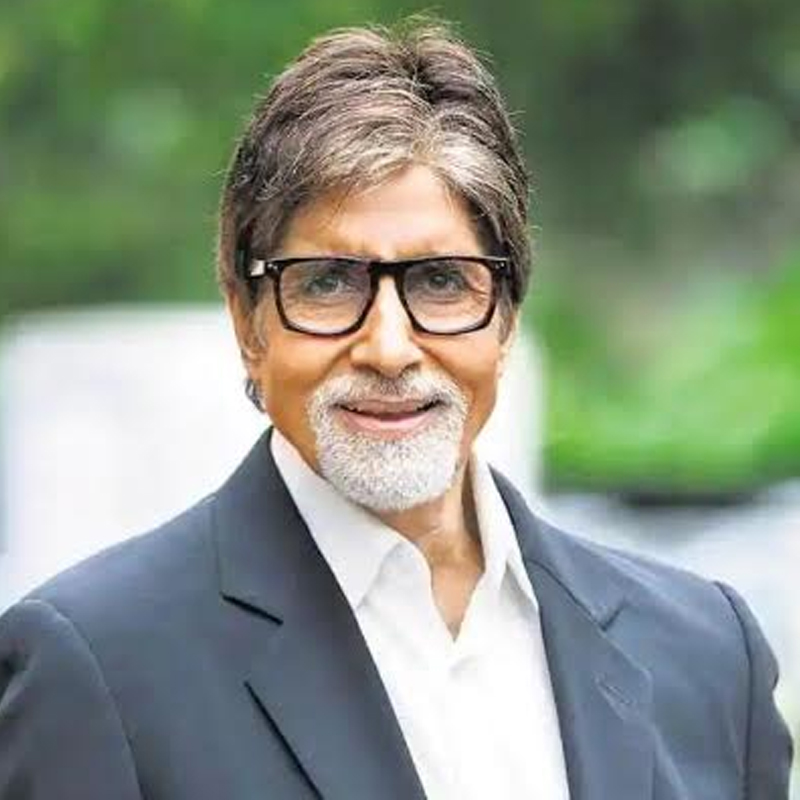
    Mumbai: Hansa Research’s Brand Endorser Report has ranked Amitabh Bachchan as the most recognised celebrity in the country with a very high all-India rank. He is ahead of favourites who are younger and probably more active in their fields, such as MS Dhoni, Virat Kohli, Akshay Kumar, Shah Rukh Khan, and Salman Khan.

    The celebrities are tracked on various metrics like likability, social media influence, perception, marketing potential, recognition, etc., which make up their final BE Score. With the highest score in the all India rank BE score, Bacchchan was ranked third in the West and North Zones, ninth in the South Zone and eleventh in the East Zone.

    The Brand Endorser is a comprehensive report of intensive research conducted across 36 Indian cities. According to the research, Bachchan has the highest-ever recognition score of 92 per cent, making him the most well-known personality in the nation. He is seen as a global personality who is self-made, relatable, influential, energetic, fit, as well as sophisticated and reliable. He is a fascinating brand ambassador for a variety of products because of these features.

    Commenting on the significance of the report, Hansa Research chief executive officer Praveen Nijhara said, “Our study Brand Endorser is a holistic and comprehensive assessment of the value that an endorser brings to a brand. The study aids marketers to take informed decisions and improve the overall return of investment (ROI) in celebrity engagement.”

    As the “Shahenshah” of Bollywood, he has a strong presence and mark in Uttar Pradesh, Rajasthan, Punjab, Maharashtra, and Gujarat.

    At the age of 79, Amitabh Bachchan is one of the most ubiquitous personalities, endorsing various brands, providing voiceovers with his trademark baritone, acting in diverse Indian & Hollywood films, and hosting one of the longest-running game shows on Indian television.

  • MyGlamm becomes presenting sponsor of Koffee with Karan season 7

    MyGlamm becomes presenting sponsor of Koffee with Karan season 7

    Mumbai: The leading direct-to-consumer beauty brand, MyGlamm comes on board as the presenting sponsor for season seven of the reality talk-show Koffee with Karan. The brand has also launched a new campaign #GlammUpLikeAStar with brand ambassador Shraddha Kapoor leading the way on creating celebrity inspired makeup looks.  

    With this collaboration, MyGlamm wishes to inspire women to glamm up like their favourite Bollywood celebrities.  

    As presenting sponsor, MyGlamm will be creating a MyGlamm Zone at the show where the celebs will indulge in fun and gaming sessions making it more entertaining for the viewers. Furthermore, viewers can participate by downloading the MyGlamm App and playing quizzes and getting a chance to win complimentary makeup products. The brand has partnered with a large network of influencers to bring alive the celeb looks of the week and can experience makeovers across our select stores in India.    

    MyGlamm’s association with the new season of Hotstar Special’s Koffee with Karan is the brand’s step towards tapping all sides of the glamour industry by reaching out to its core target audiences. The brand stands tall with its belief to keep on introducing exciting innovations to achieve its single, focused goal – to make looking glamorous and effortless.

    Speaking on this collaboration, The Good Glamm Group beauty and FMCG brand CEO Sukhleen Aneja said, “We are thrilled to announce our collaboration with the iconic Koffee with Karan Season 7. MyGlamm is a brand that empowers women to create their own glamour by taking inspiration from their favourite Bollywood stars. With this collaboration, we aim to further our endeavour to democratise beauty at a whole new level. As the largest DTC beauty brand in India, MyGlamm creates innovative and personalised beauty products by understanding from women their beauty needs and then working with the finest global labs to create extensive formats, textures and colours that have high-efficacy, made with good-for-you ingredient and are toxin-free and cruelty-free.”

  • GUEST COLUMN: How talent agencies bridge gaps between brands and celebrities

    GUEST COLUMN: How talent agencies bridge gaps between brands and celebrities

    Mumbai: Celebrity endorsements saw a 44 per cent rise in 2021 as opposed to 2020, according to the data released by AdEx India, a division of TAM Media Research. As per the report, 27 per cent of the overall ad volume share on TV were celebrity endorsements last year while the remaining 73 per cent were non-celebrities ads. Of this, film stars together added more than 80 per cent share of advertising during 2021 followed by sports persons and TV stars that added 13 per cent and three per cent share respectively.

    Balancing the interests of a brand and a celebrity can be challenging to such a large extent that sometimes a collaboration that may on paper look most organic would not necessarily materialise. This is where the expertise of the agencies comes into play to bridge the gap between the brand and the celebrity.  Whilst there is no right answer to this or not even a straight answer to this question, the right approach is to break down the questions: what is the brand looking for, and which celebrity is currently best aligned with this ideology? In simple words how do they both benefit from this association?

    There are various factors to consider in a proposition like this that lead to a successful collaboration ranging from price points to organic compatibility to rebranding and both the brand and the celebrity need to be dealt with sensitively on each point.

    The biggest advantage today is that brands have understood that there is no standardised price point in today’s dynamic entertainment landscape. Each deal has different deliverables and hence standard prices will never work. The biggest reason why standard prices will not work is the ever-changing brand equity of an artist. The artist should have the liberty to change their price points as and when they want. And honestly, brands understand this aspect as for them also it’s all about ROI – so they know before investing what is the worth of the celebrity they are signing.

    Endorsements are also becoming extremely dynamic, it is not only limited to ambassadors or large advertising campaigns but are changing their landscape with the influx of time spend on social media. Ecom-media/ent/social media as a category saw the maximum celebrity from different profession endorsed brands under it. The category ran ads featuring over 44 celebrities. This was followed by ecom-gaming with 40 celebrities. Edible oil and building materials/systems category tied at the third place with 25 celebrities while aerated soft drink claimed the fifth spot with 20 celebrities under its belt as per the TAM report.

    The process will always remain the same, the core concept behind any deal will usually never differ. The only difference would be turnaround times between the ranges of celebrities when we close our campaigns and the price points that would depend on the brand equity that they bring to the table; the higher the brand equity of the celebrity, the higher the price point. This is in no way a reflection of their importance for the deal or the brand but simply to find the perfect fit for the brief. They all have a role to play – it’s just the reach and popularity that play a huge role in determining prices.

    Having said this, every endorsement deal starts with the basics, there is no set formula or standard brief to attach the right celebrity to the brand and its message and ethos. Transparency on all fronts is key in making sure that neither the brand nor the celebrity gets the shorter end of the stick, be it from what each party needs and wants and trying not to compromise but understanding the brief so well that everyone wins. An honest conversation with both parties will always get the job done. 

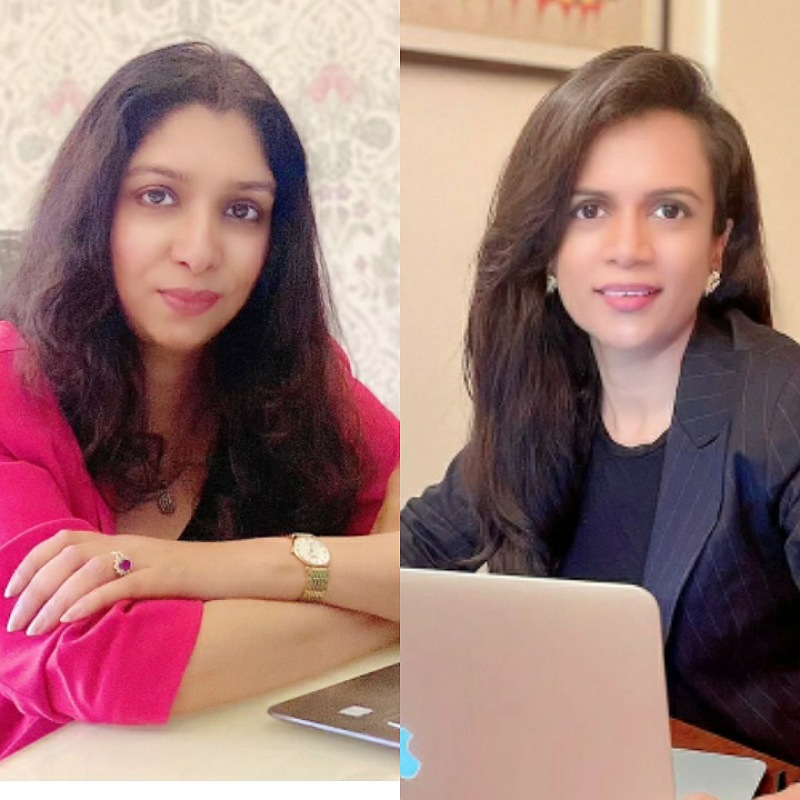
    (About Author: Sonya V Kapoor and Amrita Mendonza are M5 Entertainment founders)

  • Health OK taps celebrities & influencers for its digital campaign

    New Delhi: Health OK, a multivitamin and minerals tablet from the house of Mankind Pharma, has launched an extensive digital campaign featuring celebrities and popular influencers.

    The brand has collaborated with various celebrities including Harbhajan Singh, Harshvardhan Rane, Abhinav Bindra, Prince Yuvika Narula, Ranvijjay Singha to make consumers aware of the benefits of ‘Health OK’ multivitamin and mineral tablets. The idea is to establish a stronger presence across the nation by leveraging influencers as one of the catalysts while maintaining a greater focus on other mediums as well, said the company.

    Health OK has also partnered with Marathi actors like Adinath Kothare, Siddharth Chandekar, Shashank Ketkar; Shine Shetty for the Kannada audience; Nikhil Siddhartha for the Telugu audience, and Makapa Anand for the Tamil audience. All the influencers have posted about the benefits of the product on their respective social media platforms.


    Mankind Pharma, general manager, sales and marketing, Joy Chatterjee, said, “In the last few months, we have noticed a great response in our sales number for Health OK. Our aspiration for this brand is to make the last person living in the remotest areas aware of this product. With this campaign, we intend to expand the reach of the product and consume it because it builds the overall immunity and energy which is quite essential during such times.”

    Health OK was incorporated in the OTC category in March this year due to the demand and need for multivitamin products in the category. Going forward, the brand said it will roll out new campaigns and will keep investing in the marketing channels to connect well with the audience.

  • This Diwali, Lay’s features quirky questions on its packets to engage with customers

    This Diwali, Lay’s features quirky questions on its packets to engage with customers

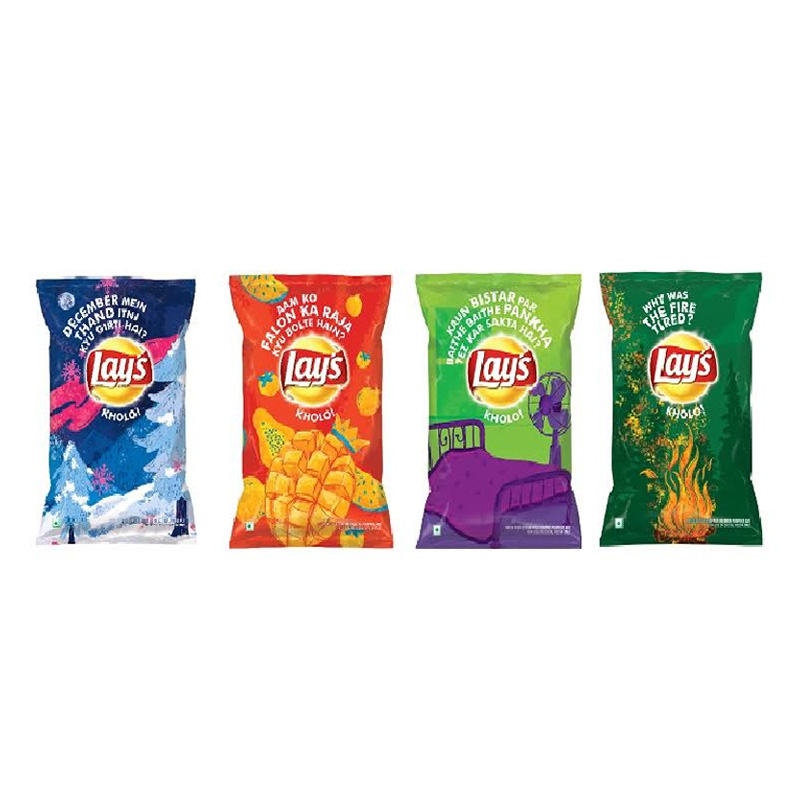
    NEW DELHI:  Adding joy and cheer to the upcoming festive season, Lay’s, one of India’s leading potato chip brands, unveiled a fun and quirky #LaysKhol campaign. As part of this campaign, 18 special limited-edition Lay’s Kholo packs featuring an intriguing question on each pack with a quirky answer given inside the pack have been shared with celebrities, influencers, and friends of Lay’s.

    The festive campaign comes at the back of recent PepsiCo India and Airtel announcement of the special initiative to offer up to 2GB of free data for the customers. The first phase of the #LaysKhol campaign featured popular cricketers including Virender Sehwag donning his special Baba Sehwag Avatar, Shikhar Dhawan, Yuzvendra Chahal, Brett Lee, Harbhajan Singh, and Rahul Tewatia. In the four-part video series, cricketers engaged in fun, quirky and laughter-inducing dialogues that not only engaged the cricket fans but also drove conversations in a clutter-breaking way.  

    PepsiCo India senior director and category head – foods Dilen Gandhi said, “During the festive season, consumers seek entertaining and light-hearted content. Building on this insight, our new campaign #LaysKhol features a unique brand association with popular cricketers, celebrities, and budding influencers, who are seen creating engaging and enjoyable content. Through the multi-channel campaign, our objective is to target brand fans, drive engagement, and deepen regional penetration. We’re confident that FAN’s of LAY’S will like the LAY’S Kholo pack memento crafted to add a little more fun and make their experience special.”

    The activity has so far received an overwhelming response from the netizens and has garnered significant mileage for the brand with more than 1600 organic posts and stories leading to over 3.58 million engagement on social media.

  • Badshah’s fake views controversy highlights influencer marketing inadequacies

    Badshah’s fake views controversy highlights influencer marketing inadequacies

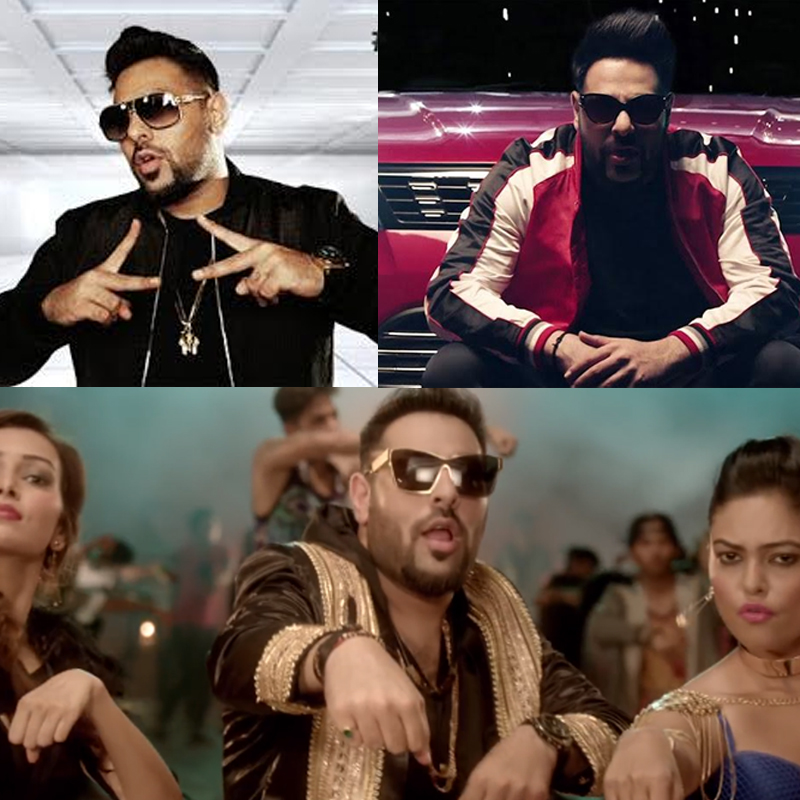
    NEW DELHI: Bollywood rapper Badshah has come under scrutiny for allegedly buying fake views for one of his music videos. This has, once again, opened up the debate on the ‘fake followers’ strategy prevalent in the social media landscape and how celebrities and influencers are highly involved in this practice.

    According to media reports, Badshah confessed that he had purchased around 7.2 crore views for Rs 72 lakh to set a world record for the most-viewed YouTube video in the first 24 hours. He had claimed that the music video for 'Pagal Hai' was watched 75 million times on the first day of its release, beating previous records set by Taylor Swift and the Korean boy band BTS. However, the claim was rejected by Google.

    Monk Media Network assistant vice president Pranav Nair explains, “In this scenario, he's paid to get more numbers on his content and not a brand's. So, from a brand management perspective, one can accept the fact that he's investing money to grow his metrics on social media.”

    The issue has come at a time when digital consumption spiked in the lockdown period and advertisers are spending a hefty amount on influencer marketing. As per reports, influencer marketing is seen as one of the fastest-growing categories in the Rs 21,000 crore digital advertising space.

    Buying fake followers is the unpalatable side of the digital marketing industry and the way brands invest in followers for reach, reflects how deep the problem is. Brands that take decisions based on one post or just the number of followers will see reality when the ROI hits them.

    Lets Influence founder Bhawna Sethi opines, “The major issue faced by brand managers is that it's not possible to dissect every single profile they are planning to collaborate with. Hence, big brands prefer hiring influencer marketing agencies as they have expertise in a specific service, industry, audience, channel, etc., and can help them avoid collaborating with such fake profiles.”

    Nair advises that brands should not collaborate with such an influencer as it cuts the organic reach of the brand, which is one of the reasons why brands collaborate with influencers.

    In recent times, many in-house tools have been launched to help identify fake followers, their percentage share and the impact of engagement. However, the rampant problem of vanity metrics, bots and others in the digital domain still lingers. A lot of celebrities have also been a part of it and measures are needed to control the growing menace.

    Sethi says, “While working with celebrities, we realised that more than being a part of it, celebrities are victims of this. There are many instances when they engage with agencies for paid promotions and aren't even aware that the followers joining them are not real people. It won't be right to say that they bought fake followers with full awareness.”

    Badshah has also been associated with brands like Pepsi, Yamaha, Hitachi, Mahindra and OPPO. This incident is likely to have an impact on his associations. It has also led to many people unfollowing his social media accounts.

    MAD Influence founder and CEO Gautam Madhavan says, “It's very disheartening for the viewers to know first that their favourite celeb has bought fake followers and on the other hand, agencies like us won't also promote such celebs in suggesting to various brand campaigns. Thus, they lose the brand credibility and the money too.”

  • Celebrities share their special moments with friends through Amazon Prime Video’s #ShotsofFriendship campaign

    Celebrities share their special moments with friends through Amazon Prime Video’s #ShotsofFriendship campaign

    The recently launched Amazon Original Series Four More Shots Please! Season 2 continues to win hearts with their latest Twitter campaign #ShotsOfFriendship, an innovative opportunity for friends to immortalize their friendship with just a tweet. Inspired by the unapologetically flawsome girl gang, the special initiative aimed at bringing friends closer and cherish those everlasting memories, especially during the current times of social distancing.

    The campaign received an overwhelming response with over 750 tweets generating over 21.5 MM impressions within just a few days, with a star-studded response to the campaign from actors such as Soha Ali Khan, Neena Gupta, Mandira Bedi, Sanjeeda Shaikh, Shehnaaz Gill, Adah Sharma, Priya Malik, Kirti Kulhari, Bani J, Maanvi Gagroo, Gauhar Khan, ace standup comedian Sumukhi Suresh, popular Indian author Durjoy Datta, social media star Janice Sequeira and radio sensation RJ Malishka.

    The fond memories shared by audiences and viewers alike via tweets are now being published in a first of its kind virtual coffee-table book, available on www.shotsoffriendship.com.

    All episodes of Amazon Original Series Four More Shots Please Season 2 are now available on Amazon Prime Video.

    STAR-STUDDED #SHOTSOFFRIENDSHIP:

    Soha Ali Khan

    Neena Gupta

    Mandira Bedi

    Sanjeeda Shaikh

    Shehnaaz Gill

    Adah Sharma

    Janice Sequeira

    Priya Malik

    Kirti Kulhari

    Bani J

    Maanvi Gagroo

    https://twitter.com/IamKirtiKulhari/status/1252226082855505920

    RJ Malishka

    https://twitter.com/mymalishka/status/125292679523550822

    Gauhar Khan

    Durjoy Datta

    Sumukhi Suresh

    Four More Shots Please! Season 2 will join the thousands of TV shows and movies from Hollywood and Bollywood in the Prime Video catalogue, including Indian produced Amazon Original series such as The Family Man, Mirzapur, Four More Shots Please!(Season 1 and 2),Inside Edge and Made In Heaven, and award-winning and critically acclaimed global Amazon Original series including Tom Clancy’s Jack Ryan, The Boys, Hunters, Fleabag and The Marvelous Mrs. Maisel, all on Prime Video, which is available at no extra cost for Amazon Prime members. The service includes titles available in Hindi, Marathi, Gujarati, Tamil, Telugu, Kannada, Malayalam, Punjabi and Bengali.

    Prime members will be able to watch all episodes Four More Shots Please! Season 2 anywhere and anytime on the Prime Video app for smart TVs, mobile devices, Fire TV, Fire TV stick, Fire tablets, Apple TV, Airtel, Vodafone, etc. In the Prime Video app, Prime members can download episodes on their mobile devices and tablets and watch anywhere offline at no additional cost. Prime Video is available in India  at no extra cost to a Prime membership for just ₹999 annually or ₹129 monthly, new customers can find out more at  www.amazon.in/prime and subscribe to a free 30-day trial.

  • Are celebs killing their brand by endorsing too many products?

    Are celebs killing their brand by endorsing too many products?

    MUMBAI: How often do we come across an ad that features a Bollywood celebrity? Maybe, a lot, and it is mostly driven by people’s affinity for seeing their favourite celebrity on television, outside of movies.

    The brand value added by a celebrity to the product is immediate and palpable. When a celebrity signs an endorsement deal with a company, an element of legitimacy is suddenly attached to the product simply because of the power of the name backing it up. Even though viewers enjoy watching their favourite celebs on screen advertising products, more often than not, the message becomes a little too much about the celebrity rather than the product itself. 

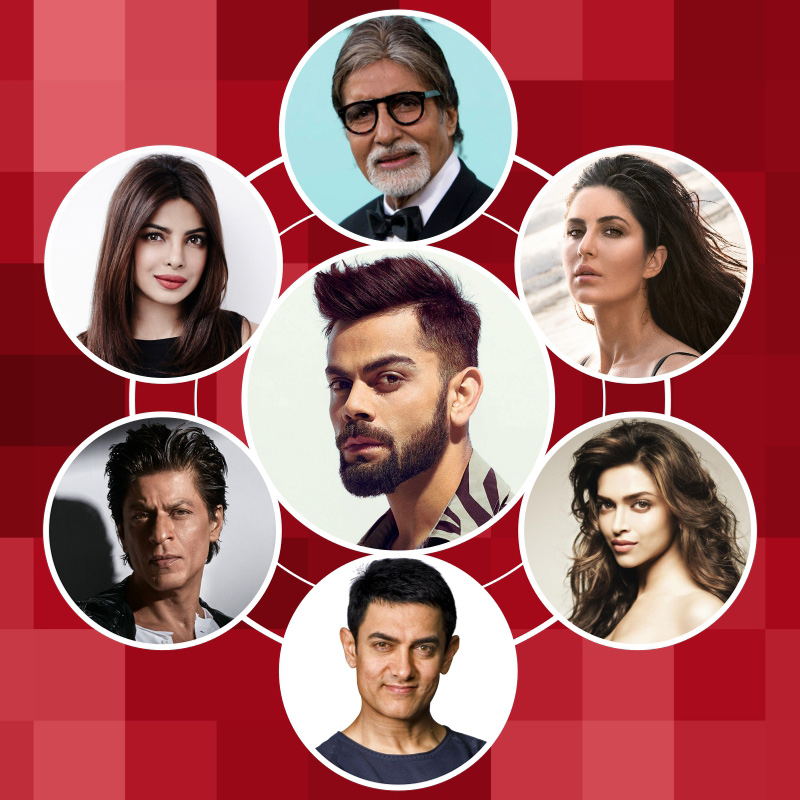
    Today, there are numerous celebrities endorsing multiple brands. Two such popular celebrities are Amitabh Bachchan and Shah Rukh Khan, who endorse multiple brands across a range of categories from fashion, food and beverage, consumer products and others. 

    public://AMITABH-BACCHAN-COLLAGE.jpg

    Does a celebrity’s association with several brands reduce his brand equity? It is quite likely that their endorsements may not resonate as well when the same face woos them with the goodness of everything–from biscuits to oil to a direct-to-home connection to chocolates. The case is similar is for female celebrities. Deepika Padukone promotes Coca-Cola, L’Oreal, Venus and Axis Bank while Katrina Kaif backs Mango Slice, Veet, Pantene and Lux.

    But the question here is whether these celebrities actually consume or use the products that they endorse. Highly unlikely is the quick answer.

    Although the Advertising Standards Council (ASCI) has laid down guidelines for celebrity endorsements, not much seems to be followed in the industry. The ASCI’s guideline for celebrity endorsement states:

    a) Testimonials, endorsements or representations of opinions or preference of Celebrities must reflect genuine, reasonably current opinion of the individual(s) making such representations, and must be based upon adequate information about or experience with the product or service being advertised.

    b) Celebrity should do due diligence to ensure that all description, claims and comparisons made in the advertisements they appear in or endorse are capable of being objectively ascertained and capable of substantiation and should not mislead or appear deceptive.

    Celebrities that do not abide by these guidelines have to pay a fine of Rs. 20 lakh or more according to the current limit for appearing in a single advertisement or a campaign or per year, whichever is more. 

    public://SHAHRUKH-KHAN-COLLAGE.jpg

    But the celebrity ad world isn’t entirely about the money after all and not every celebrity wants the limelight all the time. Some are picky about the brands they associate themselves with. Cricketer Virat Kohli and Bollywood actor Aamir Khan are paragons for this endorsement phylosophy. 

    According to a recent report by corporate advisers Duff & Phelps, Kohli is India’s most valuable brand surpassing even Shah Rukh Khan who held the title since 2014. While the early glamour may have pushed Kohli to advocate Pepsi and Fair & Lovely Men, he eventually decided to move away from these brands. He was signed up as the brand ambassador for Pepsi in 2011 but refused to renew the contract, which ended in April 2017, saying at the time that he would not ask people to consume something that he himself does not. Kohli said, “The things that I’ve endorsed in the past—I won’t take names—but I feel that I don’t connect to [the brands] anymore. If I myself won’t consume such things, I won’t urge others to consume it just because I’m getting money out of it.”

    Many saw his move as a sign of a man who believes in himself and someone who has invested his mind, heart and body in his role as a leader in society. “I want to give something to people that I use myself. One of the reasons I decided not to sign Pepsi is that I have undergone a lifestyle change. It might have been big money for me and a very lucrative deal but I opted out as we need to have some thought behind the products we promote and we must understand that people trust us,” he added. He no longer endorses fairness creams or products of that genre since equating success with skin fairness goes against his values.

    It is no coincidence that the number of celebrity endorsements has gone up in recent years. A 2015 study by Nielsen found that famous faces work best on millennials and gen Z– the two generations most likely to spend the most compared to their predecessors and with aims of having a topnotch lifestyle.

    In 2014, Bachchan had also cut off ties with Pepsi after 16 long years of commitment, when a young girl asked him why he promoted a product her teacher branded as ‘poison’. Bachchan, having realised the impact on the minds of people, even urged his son Abhishek and daughter-in-law Aishwarya Rai Bachchan to be careful about their ties.

    Studies have shown that consumers have better brand recall of products backed by celebrities. Celebrity backing adds awareness, trust and familiarity–important objectives for marketers to achieve. People believe that by using products their favourite celebrities endorse, they will be able to emulate their lifestyle.

    Similarly, Aamir Khan has been known to be picky about which products he wants to endorse. Although the actor was associated with Coca-Cola, Godrej, Titan Watches, Tata Sky, Toyota Innova, Samsung, Monaco Biscuits in the past, he decided to move away from products that he does not believe in and does not consume himself. 

    The actor witnesses backlash after his intolerance comment in 2016 and the uproar impacted his endorsed brand Snapdeal that bore the brunt with more than 7 lakh customers uninstalling the app. Soon after the incident, Khan was removed as the India brand ambassador for Incredible India and was replaced by Bollywood actress Priyanka Chopra. The actor did not have any endorsements for nearly two years as brands did not want to associate themselves with negative publicity. 

    The actor was recently announced as the India and Pakistan brand ambassador for Chinese handset maker Vivo, which many see as his big come back. Brands of Desire CEO Saurabh Uboweja believes that Khan, as a brand, doesn’t need comebacks to make his point. “He is a brand in every way and on the contrary, it is a big opportunity for Vivo to establish itself as a mainstream brand,” he says.

    While the over exposure does harm the brand equity of celebrities in the long term, being selective with endorsements is beneficial to the star as well as the brands.

    Also Read :

    Pepe Jeans launches India centric ad with Siddharth Malhotra

    The ins and outs of femvertising

    The influence of influencer marketing

    Kohli brand driving on the up

    Gender stereotyping remains the template for weight-loss ads

  • Celebrities must do due diligence before endorsing products: ASCI

    MUMBAI: Celebrities have been deployed by marketers to add credibility to their brand offering. These celebrities however have a huge responsibility to ensure that the products they endorse or feature in, are true to the claims made in those advertising messages.

    Advertising Standards Council of India (ASCI) has developed a set of guidelines to protect consumers’ interest while encouraging celebrities and advertisers to refrain from endorsing misleading advertisements. At a time when the Consumer Affairs Ministry is intending to review the Consumer Protection Act and may have a provision to deal with misleading advertisements featuring celebrities, these guidelines by ASCI could serve as a good reference for advertisers.

    The Advertising Standards Council of India is a self-regulatory organisation for the advertising industry to promote, maintain, monitor and uphold fair, sound, ethical and healthy principles and practices of advertising for the protection of interest of consumers and the public.

    The following guidelines would help while creating advertisements featuring celebrities or involving celebrity endorsements:

    * Celebrities, for the purpose of this guideline, are those people who are from the field of Entertainment and Sports and would also include other well-known personalities like Doctors, Authors, Activists, Educationists, etc. who get compensated for appearing in advertising.

    * All advertisements featuring Celebrities should ensure that it does not violate any of the ASCI code in letter and spirit. Celebrities are expected to have adequate knowledge of these Codes and it is the duty of the Advertiser and the Agency to make sure that the Celebrity they wish to engage with is made aware of them.

    * Testimonials, endorsements or representations of opinions or preference of Celebrities must reflect genuine, reasonably current opinion of the individual(s) making such representations, and must be based upon adequate information about or experience with the product or service being advertised.

    * Celebrity should do due diligence to ensure that all description, claims and comparisons made in the advertisements they appear in or endorse are capable of being objectively ascertained and capable of substantiation and should not mislead or appear deceptive.

    * Celebrities should not participate in any advertisement of a product or treatment or remedy that is prohibited for advertising under:

    I. The Drugs & Magic Remedies (Objectionable Advertisements) Act 1954 as updated from time to time ( Link for preliminary guidance http://lawmin.nic.in/ld/PACT/1954/A1954-21.pdf and http://drugs.kar.nic.in/node/136.html) or

    II. The Drugs & Cosmetic Act 1940 and Rules 1945: (Schedule J) as updated from time to time (Link for preliminary guidance http://www.cdsco.nic.in/writereaddata/2016Drugs and Cosmetics Act 1940 & Rules
    1945.pdf and http://www.indianhealthservices.in/schedules/Schedule_J.pdf ) or

    III. A product which by law requires a health warning “…..is injurious to health” on its packaging or advertisement.

    * If the Celebrity either directly or through the concerned Advertiser/Agency chooses to seek Advertising Advice from ASCI on whether the advertisement potentially violates any provisions of the ASCI code or not and if the Advertisement is developed fully following the Advertising Advice provided by the ASCI, then the Celebrity would be considered as having completed due diligence. However, ASCI’s Advertising Advice will not be construed as pre-clearance of the Advertisement.

    Commenting on the new guidelines, ASCI chairman Srinivasan K. Swamy said, “Celebrities have a strong influence on consumers and are guided by the choices they make or endorse. It’s important that both celebrities and advertisers are cognizant of the impact and power of advertising and therefore make responsible claims to promote products or services. It is in the interest of advertisers / ad agencies as well as celebrities to be aware of these guidelines and be sensitized to this issue to avoid violations.”

    The ASCI’s guidelines help in ensuring that claims made in advertising are not misleading, false or go unsubstantiated. Advertisers following these guidelines will protect the interests of the consumers, especially for products or services, which can cause serious financial loss or physical harm.