Tag: CDN

  • Hotstar, powered by Akamai, establishes high online viewership during India-England series

    MUMBAI: Hotstar, one of India’s leading premium video streaming platform, leveraged Akamai Technologies, Inc., a global leader in content delivery network (CDN) services, to establish several new online viewership records on its platform for live sporting events during the recently concluded India-England series. On the second One-Day International (ODI) held on the 19thof January, more than 25 million users watched the match on the platform, accounting for a majority of the Internet traffic from India on that day. The viewership peaked at more than 3 million concurrent viewers on the platform during the final T20 match of the England series, establishing a new high in the Asia Pacific region.

    India’s emergence as the world’s second largest smartphone market[2] is reflected in the dramatic growth in traffic witnessed by Hotstar, backed by Akamai’s Intelligent Platform, which saw more than 75 percent of viewers streaming the match from mobile networks.

    Hotstar, an Akamai customer since its launch in February 2015, delivers millions of hours of sporting and general entertainment content backed by Akamai’s Media Delivery Solutions every week.

    “We are seeing dramatic growth in our viewership every month, including in cricket. As millions of new users embrace Hotstar as a way of life, the platform is seeing new highs in sports viewership as well. As data costs fall dramatically, and users increasingly look to their mobile as the primary screen, we are starting to see the emergence of Hotstar as the primary destination in cities with more than a million in population. This trend will accelerate in the next few months, especially during IPL, and we rely on Akamai’s solutions to ensure that we are able to scale in line with this vertical growth in demand,” said Ajit Mohan, CEO, Hotstar.

    “Globally, the smartphone is becoming a key instrument to viewing live sporting events. We saw a significant majority of users accessing content via mobile for this ODI between India and England, making it the largest audience for a sporting event on the Akamai Platform, in Asia. Hotstar is truly leading the change in this paradigm shift in India, and we are proud to partner with Hotstar to bring new features and innovations to provide an unparalleled end user experience,” said Parimal Pandya, Vice President, Media, APJ, Akamai Technologies.

    As the Internet becomes faster and more accessible in India, brands can expect app downloads and usage to surge. Per a recently released App Annie report[3], Android users in India spent close to 150 billion hours on apps in 2016, leading app usage in the world. Indian users also downloaded apps over six billion times, surpassing America, the previous world leader.

  • “We expect to grow with the OTT ecosystem in India” – Verizon Digital’s Kyle Okamoto

    “We expect to grow with the OTT ecosystem in India” – Verizon Digital’s Kyle Okamoto

    The $132.1 billion US telecom giant Verizon Communications provides communications and entertainment services over mobile broadband and the US’ premiere all-fiber network, and delivers integrated business solutions to customers worldwide. More than that that it operates America’s most reliable wireless network, with 113.2 million retail connections nationwide.

    In his letter to shareholders in the latest annual report Verizon chairman & CEO Lowell McAdam wrote: “Our strategy for continued growth  and profitability is straightforward:  deliver great wireless and wireline  services over our superior networks, develop new business models in platforms such as video and the Internet of Things, and create incremental revenue opportunities in applications and  content.”

    And that’s exactly what its offshoot Verizon Digital Media Services, the next-generation digital media platform,  sought to do when it announced a partnership with Bharti Airtel Limited India’s largest telecommunications services provider. The partnership saw it launch points of presence (PoPs) in four cities in India: Mumbai, Chennai, Bangalore and New Delhi, marking Verizon’s significant investment into expanding throughout the country, leveraging Airtel’s digital infrastructure as a gateway to India.

    Indiantelevision.com had a conversation with Verizon Digital Media Services VP of Technology, Kyle Okamoto, on what this partnership means, what it entails, and how Verizon will foray further into India.

    Excerpts:

    Why did you have to set up the four POPs in India? Why not three or two? And what is exciting you about the country? And what did you have to innovate on while setting up the POPs in India?

    We care about quality and performance. Given the infrastructure and network topology of India, only one or two or three POPs would not achieve the levels of performance that we want to provide to our customers.  The country is important to our customers and growing quickly. Innovation was mainly around performance optimizations regarding network routing utilizing Any case, in addition to the specific SSDs we used to maximize our cache efficiency for better quality.

    We want to be among the top three CDNs in India and for that we needed to invest. Which we have done.

    How much of an investment has gone in – into hardware and software?

    Millions. There was investment from a capital perspective, operational perspective, the data centre and in hardware  and software.  We had to do everything navigating keeping India’s infrastructure in mind.

    Over what period of time were the POPs set up? And who did the design, engineering and setting up? Who’s maintaining the POP now?

    Months of time was spent working out the arrangement with Airtel, while the physical provisioning of the POPs only took a couple of weeks. We did the design and engineering and worked with Airtel on the installation, configuration , testing and optimization.  Our engineers made multiple trips. And on the initial deployment which included the unboxing of the hardware and cabling.  Verizon Digital Media Serivces and Airtel work together on the maintenance and monitoring in terms of data center and network. Ours is a collaborative partnership.

    What does your partnership with Airtel entail from both sides? And what does it allow each of you to do? Airtel can sell your services to other content companies? Your other solutions?

    Verizon Digital Media Serivces and Airtel work together on the maintenance and monitoring in terms of data center and network. The four PoP installations mark Verizon Digital Media Services’ significant investment into expanding throughout the country, leveraging Airtel’s digital infrastructure as a gateway to India. This partnership will ensure that content on the Verizon Digital Media Services platform can be accessed by digital media consumers in a fast, seamless and reliable way and will improve the experience for users in India.

    The launch of these strategic PoPs marks the beginning of a strong partnership between Verizon and Airtel Business and further cements our commitment to providing consumers in India, one of the fastest-growing markets for digital media consumption, with exceptional services and quality. This also allows us to offer amazing quality to our customers and to the consumers in India.  Airtel enjoys network efficiencies, improved quality, lowered costs and the ability to monetize content traffic.

    And yes, we can have conversations with each other on sales too. If a customer comes to us to work in India, we can forward them to Airtel and likewise.

    What kind of capacity have you built up through your POPs? How much of it is being utilised?

    We have built a significant amount of capacity to serve our customers and have prepared for a significant amount of growth. Additionally, we have built our POPs to handle very large customer spikes without affecting any other customers, i.e. gaming or live events or sports or software downloads. We have overbuilt significantly as India is a fast growing market and we wanted to prepare for the future. We are currently using only 2-5 per cent of the capacity we have built so far.

    What benefits have the Verizon-AOL/Yahoo acquisitions brought to the company and how will Yahoo’s presence in India benefit you?

    As Verizon chairman &  CEO Lowell McAdam had previously mentioned, the AOL acquisition enhances Verizon’s strategy of providing a cross-screen connection for consumers, creators and advertisers. The Yahoo acquisition will put Verizon in a highly competitive position as a top global mobile media company, while also helping to accelerate a revenue stream in digital advertising.  It also enables a wider stack and set of services to our digital media customers enabling creative monetization opportunities.

    How do you see your presence in India evolving?

    We expect to grow with our customers as they continue to offer amazing OTT experiences to their consumers.

    Will we see you offering your OTT end to end solutions in India? Do you see opportunity in this space in India?

    We already offer our customers a wide array of digital media solutions including our end-to-end Video Lifecycle Solution that covers the entire supply chain from content to consumer monetization. We do see India as a source of growth moving forward as more and more companies move to OTT and as infrastructure continues to improve. We also have a solution which allows us to build an OTT app in three days for our clients; and we have always met that challenge.

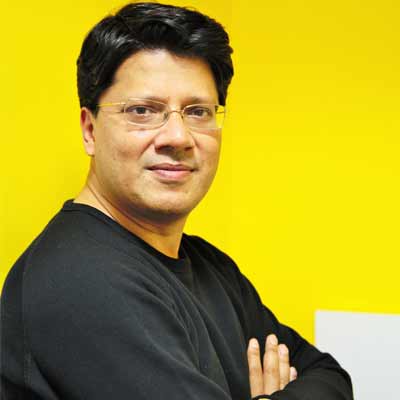
     

  • “We expect to grow with the OTT ecosystem in India” – Verizon Digital’s Kyle Okamoto

    “We expect to grow with the OTT ecosystem in India” – Verizon Digital’s Kyle Okamoto

    The $132.1 billion US telecom giant Verizon Communications provides communications and entertainment services over mobile broadband and the US’ premiere all-fiber network, and delivers integrated business solutions to customers worldwide. More than that that it operates America’s most reliable wireless network, with 113.2 million retail connections nationwide.

    In his letter to shareholders in the latest annual report Verizon chairman & CEO Lowell McAdam wrote: “Our strategy for continued growth  and profitability is straightforward:  deliver great wireless and wireline  services over our superior networks, develop new business models in platforms such as video and the Internet of Things, and create incremental revenue opportunities in applications and  content.”

    And that’s exactly what its offshoot Verizon Digital Media Services, the next-generation digital media platform,  sought to do when it announced a partnership with Bharti Airtel Limited India’s largest telecommunications services provider. The partnership saw it launch points of presence (PoPs) in four cities in India: Mumbai, Chennai, Bangalore and New Delhi, marking Verizon’s significant investment into expanding throughout the country, leveraging Airtel’s digital infrastructure as a gateway to India.

    Indiantelevision.com had a conversation with Verizon Digital Media Services VP of Technology, Kyle Okamoto, on what this partnership means, what it entails, and how Verizon will foray further into India.

    Excerpts:

    Why did you have to set up the four POPs in India? Why not three or two? And what is exciting you about the country? And what did you have to innovate on while setting up the POPs in India?

    We care about quality and performance. Given the infrastructure and network topology of India, only one or two or three POPs would not achieve the levels of performance that we want to provide to our customers.  The country is important to our customers and growing quickly. Innovation was mainly around performance optimizations regarding network routing utilizing Any case, in addition to the specific SSDs we used to maximize our cache efficiency for better quality.

    We want to be among the top three CDNs in India and for that we needed to invest. Which we have done.

    How much of an investment has gone in – into hardware and software?

    Millions. There was investment from a capital perspective, operational perspective, the data centre and in hardware  and software.  We had to do everything navigating keeping India’s infrastructure in mind.

    Over what period of time were the POPs set up? And who did the design, engineering and setting up? Who’s maintaining the POP now?

    Months of time was spent working out the arrangement with Airtel, while the physical provisioning of the POPs only took a couple of weeks. We did the design and engineering and worked with Airtel on the installation, configuration , testing and optimization.  Our engineers made multiple trips. And on the initial deployment which included the unboxing of the hardware and cabling.  Verizon Digital Media Serivces and Airtel work together on the maintenance and monitoring in terms of data center and network. Ours is a collaborative partnership.

    What does your partnership with Airtel entail from both sides? And what does it allow each of you to do? Airtel can sell your services to other content companies? Your other solutions?

    Verizon Digital Media Serivces and Airtel work together on the maintenance and monitoring in terms of data center and network. The four PoP installations mark Verizon Digital Media Services’ significant investment into expanding throughout the country, leveraging Airtel’s digital infrastructure as a gateway to India. This partnership will ensure that content on the Verizon Digital Media Services platform can be accessed by digital media consumers in a fast, seamless and reliable way and will improve the experience for users in India.

    The launch of these strategic PoPs marks the beginning of a strong partnership between Verizon and Airtel Business and further cements our commitment to providing consumers in India, one of the fastest-growing markets for digital media consumption, with exceptional services and quality. This also allows us to offer amazing quality to our customers and to the consumers in India.  Airtel enjoys network efficiencies, improved quality, lowered costs and the ability to monetize content traffic.

    And yes, we can have conversations with each other on sales too. If a customer comes to us to work in India, we can forward them to Airtel and likewise.

    What kind of capacity have you built up through your POPs? How much of it is being utilised?

    We have built a significant amount of capacity to serve our customers and have prepared for a significant amount of growth. Additionally, we have built our POPs to handle very large customer spikes without affecting any other customers, i.e. gaming or live events or sports or software downloads. We have overbuilt significantly as India is a fast growing market and we wanted to prepare for the future. We are currently using only 2-5 per cent of the capacity we have built so far.

    What benefits have the Verizon-AOL/Yahoo acquisitions brought to the company and how will Yahoo’s presence in India benefit you?

    As Verizon chairman &  CEO Lowell McAdam had previously mentioned, the AOL acquisition enhances Verizon’s strategy of providing a cross-screen connection for consumers, creators and advertisers. The Yahoo acquisition will put Verizon in a highly competitive position as a top global mobile media company, while also helping to accelerate a revenue stream in digital advertising.  It also enables a wider stack and set of services to our digital media customers enabling creative monetization opportunities.

    How do you see your presence in India evolving?

    We expect to grow with our customers as they continue to offer amazing OTT experiences to their consumers.

    Will we see you offering your OTT end to end solutions in India? Do you see opportunity in this space in India?

    We already offer our customers a wide array of digital media solutions including our end-to-end Video Lifecycle Solution that covers the entire supply chain from content to consumer monetization. We do see India as a source of growth moving forward as more and more companies move to OTT and as infrastructure continues to improve. We also have a solution which allows us to build an OTT app in three days for our clients; and we have always met that challenge.
     

  • Le Eco’s Atul Jain: It’s not just marketing, it’s creating an entire ecosystem

    Le Eco’s Atul Jain: It’s not just marketing, it’s creating an entire ecosystem

    MUMBAI:  A late entrant in the market, Chinese smartphone and screen manufacturer LeEco, previously called LeTv, has already created waves with its aggressive approach for the Indian market, and has given existing players like Xiaomi and Samsung a run for their money. Industry insiders unanimously agree that LeEco has disrupted the entire smartphone business in the country, and perhaps even redefined it. After launching its first product in India in January 2016, the company has already broken all records for online smartphone sales and bagged the ‘online top-selling’ tag for its flagship product Le 1s, having sold over 200,000 Le 1s in just 30 days!

    And why not? The company has set itself a target to be the number one online smartphone player in the next five months. It doesn’t take a scientist to guess that a feat like that would be impossible without a sound and efficient marketing strategy to back the brand with. Ask LeEco India Smart Electronics Devices COO Atul Jain about what the secret is behind the brand’s success and he says “It’s the ecosystem that we create.”

    As per Jain, the ecosystem LeEco strives to create in India works on four different parameters – devices (smartphones and screens), content, cloud and platforms.

    “For now we have introduced our devices in the form of the smartphones that boast of breakthrough technology supported by disruptive pricing. We are also working on building the ecosystem and will be able to provide the same from quarter two (Q2) onwards of coming financial year,” says Jain. The brand also plans to enhance its screen presence by bringing in what it calls a ‘super TV’ by Q2.

    On the content side, LeEco has already partnered with over-the-top content provider YuppTV led by Udaynandan Reddy and the Sunil Lulla led Eros International. “We are striving for many more partnerships with Indian media houses in the upcoming months,” Jain reveals. “We are also looking at building a huge content library, be it through partnerships, acquisition or self-produced content,” he adds. It is to be noted that the company has presence in the media in China through Le Movies, its own production house.

    “From a cloud network perspective, we have already introduced content distribution networks (CDNs) in Delhi and Mumbai, and are looking to expand it to ten more cities. LeEco already has 650 CDN networks through the cloud across the world,” explains Jain. “This is in compliance with LeEco’s Chinese model of strengthening its delivery network to boost the smartphone business and maximise profit.”

    Jain shares that outside China, India and the US are the top two biggest markets in focus for LeEco for this financial year. “We have plans for other APAC countries like Indonesia, Singapore and Malaysia, but our biggest business expansion is going to happen in India and the USA.”

    Entering the market this late and establishing a formidable presence wasn’t an easy task for the Chinese technology giant. “We were quite unknown in India even six months ago. To create the awareness around the brand was the biggest challenge. The go to market strategy, setting up a team here, were some of the initial challenges.” Jain explains that instead of being bullish about a strict marketing plan, they kept their eyes open for what the consumers wanted, understanding their needs and translating that into products. “In our case we looked at bill of materials (BOM) pricing and that was very attractive for the consumers. “That becomes very critical when you market to a new place. Secondly, we paid attention to creating awareness about the brand through all the media available to us, and that was relevant to the product, that is, social, digital, and even offline presence through retail stores,” he says.

    Perhaps the biggest boost to sales was the flagship campaign ‘LeEco Day’, wherein consumers enjoyed extremely lucrative offers and prices on the smartphone. It must be noted that several other smartphone brands, including Freedom 251 also went the ‘disruptive’ prices route to meet a completely different and disappointing end.

    Explaining LeEco’s mass media plans, Jain says, “LeEco is also looking at being present in radio, and television advertising isn’t ruled out either. While a substantial chunk of the company’s marketing spends are directed towards digital, moving forward Le Eco will have good spends in television and print as well. Around 30 to 40 percent of the brand’s marketing spends would be towards digital, and the balance split between print, OOH and television.”

  • Le Eco’s Atul Jain: It’s not just marketing, it’s creating an entire ecosystem

    Le Eco’s Atul Jain: It’s not just marketing, it’s creating an entire ecosystem

    MUMBAI:  A late entrant in the market, Chinese smartphone and screen manufacturer LeEco, previously called LeTv, has already created waves with its aggressive approach for the Indian market, and has given existing players like Xiaomi and Samsung a run for their money. Industry insiders unanimously agree that LeEco has disrupted the entire smartphone business in the country, and perhaps even redefined it. After launching its first product in India in January 2016, the company has already broken all records for online smartphone sales and bagged the ‘online top-selling’ tag for its flagship product Le 1s, having sold over 200,000 Le 1s in just 30 days!

    And why not? The company has set itself a target to be the number one online smartphone player in the next five months. It doesn’t take a scientist to guess that a feat like that would be impossible without a sound and efficient marketing strategy to back the brand with. Ask LeEco India Smart Electronics Devices COO Atul Jain about what the secret is behind the brand’s success and he says “It’s the ecosystem that we create.”

    As per Jain, the ecosystem LeEco strives to create in India works on four different parameters – devices (smartphones and screens), content, cloud and platforms.

    “For now we have introduced our devices in the form of the smartphones that boast of breakthrough technology supported by disruptive pricing. We are also working on building the ecosystem and will be able to provide the same from quarter two (Q2) onwards of coming financial year,” says Jain. The brand also plans to enhance its screen presence by bringing in what it calls a ‘super TV’ by Q2.

    On the content side, LeEco has already partnered with over-the-top content provider YuppTV led by Udaynandan Reddy and the Sunil Lulla led Eros International. “We are striving for many more partnerships with Indian media houses in the upcoming months,” Jain reveals. “We are also looking at building a huge content library, be it through partnerships, acquisition or self-produced content,” he adds. It is to be noted that the company has presence in the media in China through Le Movies, its own production house.

    “From a cloud network perspective, we have already introduced content distribution networks (CDNs) in Delhi and Mumbai, and are looking to expand it to ten more cities. LeEco already has 650 CDN networks through the cloud across the world,” explains Jain. “This is in compliance with LeEco’s Chinese model of strengthening its delivery network to boost the smartphone business and maximise profit.”

    Jain shares that outside China, India and the US are the top two biggest markets in focus for LeEco for this financial year. “We have plans for other APAC countries like Indonesia, Singapore and Malaysia, but our biggest business expansion is going to happen in India and the USA.”

    Entering the market this late and establishing a formidable presence wasn’t an easy task for the Chinese technology giant. “We were quite unknown in India even six months ago. To create the awareness around the brand was the biggest challenge. The go to market strategy, setting up a team here, were some of the initial challenges.” Jain explains that instead of being bullish about a strict marketing plan, they kept their eyes open for what the consumers wanted, understanding their needs and translating that into products. “In our case we looked at bill of materials (BOM) pricing and that was very attractive for the consumers. “That becomes very critical when you market to a new place. Secondly, we paid attention to creating awareness about the brand through all the media available to us, and that was relevant to the product, that is, social, digital, and even offline presence through retail stores,” he says.

    Perhaps the biggest boost to sales was the flagship campaign ‘LeEco Day’, wherein consumers enjoyed extremely lucrative offers and prices on the smartphone. It must be noted that several other smartphone brands, including Freedom 251 also went the ‘disruptive’ prices route to meet a completely different and disappointing end.

    Explaining LeEco’s mass media plans, Jain says, “LeEco is also looking at being present in radio, and television advertising isn’t ruled out either. While a substantial chunk of the company’s marketing spends are directed towards digital, moving forward Le Eco will have good spends in television and print as well. Around 30 to 40 percent of the brand’s marketing spends would be towards digital, and the balance split between print, OOH and television.”

  • Zeop deployes Broadpeak to improve video delivery

    Zeop deployes Broadpeak to improve video delivery

    MUMBAI:  Broadpeak, a leading provider of content delivery network (CDN) technologies and live and video-on-demand (VOD) servers for cable, IPTV, OTT, hybrid, and mobile TV operators worldwide, today announced that Zeop, the first and leading fiber operator based on the French island of Reunion, has deployed Broadpeak solutions to improve video delivery. Using a combination of Broadpeak’s BkS400 cache servers and BkM100 CDN manager, Zeop can cost-effectively distribute VOD content via a content provider located in France, while providing an exceptional quality of experience (QoE) and quality of service (QoS) to end users.


    “Recently, we wanted to offer subscribers a wider choice of content. Under standard video delivery architecture, this would have been extremely challenging in terms of the transit and CDN-as-a-service costs incurred. We needed an optimized video delivery solution,” said Zeop CTO Martin Vigneau. “Broadpeak’s video caching technology dramatically reduces our transit and contribution link costs, allowing us to deliver a wider range of popular video content at a fraction of the cost of traditional CDN methods, while providing a better quality of experience and service.”


    Broadpeak pre-provisions popular video content in a local cache server, located in the operator’s network in Reunion. Each time an end user requests video content, it is directly streamed by the BkS400 local server, without needing to reach the content provider’s origin server. The technology is deployed on virtual machines, optimizing Zeop’s costs even further.


    Broadpeak’s BkS400 servers deliver video content via adaptive bit rate (ABR) technology, guaranteeing a high level of video quality. The presence of a local cache removes any latency that could take place between the origin server and the edge network. This mechanically benefits the QoS, and also the QoE, since higher video profiles will be streamed more often. Broadpeak’s BkS400 server offers broad format support (e.g., Apple HLS, Microsoft Smooth Streaming, Adobe HDS, and MPEG-DASH) so that operators can deliver video content anytime, anywhere, on any device. Zeop is also delivering content in the Microsoft Smooth Streaming format.


    Broadpeak’s cache servers also collect analytics about end user sessions, allowing Zeop to identify trends in audience behaviors. Zeop can monitor a full range of statistics related to video streaming, including bit rate per source, cache status percentage (e.g., cache hit, cache miss), requests per second, average time to serve, and HTTP status codes per second. By employing a solution with sophisticated analytics, the operator can provide detailed information to marketing, operations, and support teams to assist them with strategic decision-making.


    “Using Broadpeak’s solution, Zeop can now negotiate with other content providers to offer a wider choice of content to their subscribers,” said Broadpeak CEO Jacques Le Mancq. “Broadpeak’s solution also enables Zeop to interface with other CDN service providers and deliver content in a wide range of ABR formats to address all growing consumer demand for high-quality video content on every screen. The end results are lower video delivery costs, more flexibility, and a better QoS and QoE for end users.”

  • IOL Broadband, India selects MagnaQuest for IPTV

    IOL Broadband, India selects MagnaQuest for IPTV

    MUMBAI: MagnaQuest has announced that its Convergent Customer Management and Billing (CMB) solution, MQSubscribeT has been selected by IOL Broadband, India for its subscriber billing, inventory and customer care operations. This contract encompasses IOL’s service deployments on their own network and deployment of Content Delivery Network (CDN) for MTNL and BSNL.

    An official annoucement states, integrations with network elements for provisioning, rating and billing of multiple services delivered over IP. MQSubscribeT to be used to bill value added services like video on Demand, VoIP services over its IP network, apart from the billing of regular services.

     
    IOL has launched IPTV services including broadcast TV, video on demand, broadband Internet, as part of its CDN project with MTNL. IOL intends to launch such services in several cities in India. MagnaQuest would work on all IOL deployments in India.

    MQSubscribeT will support IOL’s projected subscriber growth and launch of new value added services. To start with MQSubscribeT would be deployed integrated with SeaChange’s Video on Demand middleware chosen by IOL, adds the release.

     
    MagnaQuest managing director Vijay Debbad said, “I am glad that we have bagged the first project in the emerging domain of IPTV. The specialized knowledge we gained over the experience of implementing solutions for Triple Play services including Video and Data and VoIP domains, has enabled us to get here. We look forward to a very long association with IOL Broadband.”

    MagnaQuest is exhibiting its Convergent Customer Management and Billing solution, MQSubscribeTM and its capability to handle IPTV billing and mediation during IPTV World Forum, London on 5-7 March.

  • Time Broadband to manufacture Amino IPTV boxes in India, plans to raise $70 million

    Time Broadband to manufacture Amino IPTV boxes in India, plans to raise $70 million

    MUMBAI: Time Broadband Services Pvt. Ltd. (TBSPL) plans to raise $70 million for manufacture of IPTV set-top boxes (STBs) and expansion of its content delivery network (CDN).

    The company has exclusively tied up with UK-based Amino Communications Ltd. to manufacture AmiNET125 H.264 AVC (MPEG-4, Part 10) compliant STBs in India. TBSPL will have the rights to sell these STBs in India, Middle East and parts of East Africa. The benefit of manufacturing these STBs in India will be to bring the cost below $100.

    “This is a significant development for us as India is a potentially big market for IPTV. We have manufacturing arrangements also in China and Taiwan,” says Amino Communications Ltd. vice president/general manager Roy Kirsopp.

    TBSPL, which has already raised $10 million and got a further $5 million from Dimensions Group, will raise a further $35 million in its second round of funding. This will be towards expanding the CDN for IPTV.

    “We are in talks for second round of investment and have got term sheets. We hope to tie up the funds by February-March,” says TBSPL managing director and CEO Sujata Dev.

    Another $35 million will be raised through sister company Broadband Tech Pvt. Ltd. for manufacture of STBs. The company is in talks with three consumer electronics companies for this. “We are negotiating with three state governments for getting subsidy. We are in talks with consumer electronics companies for the financing and manufacture of the STBs,” says Dev. The company is looking at Kolkata, Chennai or another city to set up the manufacturing facility.

    Amino has been paid an upfront amount of $1 million. “We have guaranteed Amino $10-12 million over 18 months. Dimensions Broadband UK has committed a $7 million exposure for this,” says Dev. The contract involves a fixed license fee and a royalty to Amino on the STBs sold.

    The AmiNET125 STB is designed on the DaVinci SoC chip from Texas Instruments and is integrated with Kasenna middleware and Verimatrix content protection.

    “The deal will enable TBSPL to execute mass deployments of our “MY TIME” IPTV package. STBs play the most critical role in the IPTV business.

    This relationship with a leading industry partner like Amino would further strengthen TBSPL in establishing the business matrix in the Indian market, capable of providing a total end-to-end CDN solution to telecom operator partners intending to launch IPTV,” says Dev.

    Adds Kirsopp: “We see opportunity in India, China and South America. This deal validates our licensing model where we tie up with local partners for local manufacturing.”

  • MTNL to expand IPTV service by 74 channels

    MTNL to expand IPTV service by 74 channels

    MUMBAI: State-owned telecom major MTNL has added 74 channels after the initial launch of 26 free-to-air channels, earlier this month as part of its IPTV (Internet Protocol Television) service. 

    MTNL had signed a deal with Time Broadband Services and its Israeli partner Optibase to develop and handle the content delivery network for its IPTV services.

    The state-owned telecom provider recently launched IPTV services, through Time Broadband, utilizing Optibase’s IPTV MGW 5100 platforms for its digital IPTV head-end operation at the company’s network operating centre, according to an official statement.

    Time Broadband will have Israel-based Infogate Online as its middleware vendor while Verimatrix Inc will provide content protection solutions. The digital headend will be from Optibase. 
    Together with Time Broadband, Optibase is enabling the launch of the IPTV services in Delhi.

    Service provider, Time Broadband is geared up to deploy IPTV services on both TV & PC delivery, through network and internet service providers across the country. 

    Following the initial deployment of Optibase MGW 5100 IP video head-ends providing 26 channels of Telco-grade streaming, Optibase will now be supplying an additional 74 channels, totaling 100 MPEG-4 Part 10 H.264/AVC channels.

    “During the initial deployment, Optibase demonstrated their extensive IPTV know-how relating to H.264 AVC. We were impressed by the quality of the Optibase solution and the superior level of service. Therefore we decided to select the Optibase MGW 5100 integrated digital head ends for the full-scale commercial launch,” said Time Broadband Services’ MD Sujata Dev.

    Optibase CFO Danny Lustiger stated, “We are delighted with the success of our first installation of Time Broadband at MTNL Delhi Network and look forward to a long-term collaboration with our globally eminent CDN partners, driving the large scale deployment of IPTV in India.”

    IPTV is a system wherein digital quality television service is delivered to consumers using broadband connections.

  • Cisco Systems to acquire Arroyo Video Solutions

    Cisco Systems to acquire Arroyo Video Solutions

    MUMBAI: US-based internet networking player Cisco Systems has announced a definitive agreement to acquire privately-held Arroyo Video Solutions, Inc., a leading provider of next-generation solutions for on-demand television and related consumer services.

    Under the terms of the agreement, Cisco will pay approximately $92 million in cash. The acquisition is subject to various standard closing conditions, including applicable regulatory approvals and is expected to close in the first quarter of Cisco’s fiscal year 2007, ending 31 October, 2006.

    The integration of the Arroyo platform into the Cisco IP-NGN (Next Generation Network) architectural framework will help enable carriers to accelerate the creation and distribution of network delivered entertainment, interactive media and advertising services across the growing portfolio of televisions, personal computers, mobile handsets and emerging media capable devices in our increasingly connected lives, informs an official release.

    “The entertainment industry is going through a major shift while consumer desire for personalized on-demand service is on the rise. The industry is quickly evolving from pure video-on demand to anything-on-demand with any content delivered to any end device. Cisco’s next generation network strategy offers service providers the ability to make this vision a reality,” Cisco senior vice president and general manager Michelangelo A. Volpi. “With the addition of Arroyo’s innovative software, which offers flexibility in content delivery, service providers will be in a position to serve content how, when and where consumers want it.”

    Joining Cisco from Arroyo will be a team of technical industry leaders. This team includes Drew Major, an original founder of Novell and industry icon recognized for his expertise in network operating systems, distributed systems and content delivery networking (CDN). Also joining is Paul Sherer, former chief technology officer at 3Com and key contributor to a broad portfolio of networking patents and technologies. Arroyo was founded in 2002 and has 44 employees based in California and Utah, the release adds.

    Upon close of the transaction the Arroyo team and product portfolio will be integrated into the Cisco Cable & Video Initiatives Group, within the Service Provider organization led by Volpi.