
Tag: CDAC

  • Digitisation to offer great opportunity for advanced services, says CDAC

    Digitisation to offer great opportunity for advanced services, says CDAC


    MUMBAI: With the new government focusing on connecting every village with broadband and digitisation of analog cable TV, Centre for Development and Advanced Computing (CDAC) has come up with a number of opportunities for advanced interactive services.

    Set up in 1988, CDAC already provides a number of products and services catering to a large market ranging from health care systems, datawarehousing, multimedia and multilingual technologies, networking solutions to technical consultancy, training and e-governance solutions.

    The company set up a Graphics and Intelligence based Script Technology (GIST) group soon after its origin which built the Indian Language Computing Solutions. Porting of Indian languages onto the video medium with subtitles, this technology is being used by tickers and banners on TV stations, news channels, cable operators, etc.

    Now with the onset of digitisation in India, CDAC-GIST is coming up with new services to broaden the reach of channels by supplementing content in local languages.

    Speaking at Broadcast India conference, CDAC- GIST technical officer Shubhanshu Gupta said, “Digitisation has offered us a great opportunity for advanced services that will offer the viewers day to day information as and when it comes. Our main aim is to enrich the experience of Indian viewers in the grassroot level.”

     “Multilingual subtitle and caption will address the viewers with diverse linguistic background. We plan to transfer television into a multi-lingual university and provide a solution to educate the country in the most cost-effective way. The device will do sub-titling for national as well as some private channels.” he added.

    The company is also planning to facilitate distance learning, public information and alerts, health education on television.

    With a lot of education content already online on various platforms available for e-learning, CDAC will provide a way to re-use the content and disseminate it through television.

    “Our technology will provide the already available content on television through set top boxes. It would also include test whose results could be given to UGC for evaluation and analysis,” revealed Gupta.

    “We also propose getting information regarding the diseases, new medicine, and latest news in the health sector on television with the press of a button to improve the quality of healthcare in the country and keep the citizens more informed,” he added.

    Recently, Doordarshan launched a new channel, DD Kisan, dedicated to farmers, as an extension to their daily programme, Krishi Darshan. It provides full time updates on the latest news on farming. Gupta reckoned that CDAC-GIST will enable interactivity on the programmes.

    “Our technology will give the farmer all relevant information like local market prices, weather information etc in their local languages to help enhance the reach and to incentivize them to use the channel more,” he opined.
    “We are also doing pilot of our Language Independent Programme Subtitles (LIPS) on air digital at four Doordarshan metro DD centres to proliferate Indian language through broadcast media,” he adds.

    LIPS Live technology has made it possible to subtitle movies and programs in Indian languages. Several products like MOVE CG 2001 simplify the titling of video programs with high resolution aesthetic fonts.  

    Another CDAC product MultiPrompter is a solution for teleprompting in Indian languages for TV channels that are mushrooming in the Indian subcontinent.

    CDAC also helped government in launching the bharat domain name in devanagri script covering several languages including Hindi, Bodo, Dogri, Mailthali, Marathi, Konkani, Nepali and Sindhi.

    If a person from Maharashtra opens the website, the home page will automatically open in Marathi while if a person from Tamil Nadu tries, it will open in Tamil, he reveals.

    C-DAC has also helped in establishing standards such as ISCII, Unicode, ISFOC, etc. for Indian language applications on computers and electronic media. It is also working for standardization of W3C (Languages on Web), Internationalized Domain names, Governance, linguistics formats, storage, input, display fonts, etc.

    C-DAC was set up to built Supercomputers in context of denial of import of Supercomputers by USA. Since then C-DAC has been undertaking building of multiple generations of Supercomputer starting from PARAM with 1 GF in 1988.

    It set up National Centre for Software Technology (NCST) in 1985 that initiated work in Indian Language Computing around the same period.

    Similarly C-DAC started its education & training activities in 1994 as a spin-off with the passage of time and it grew to large efforts to meet the growing needs of Indian Industry for finishing schools.
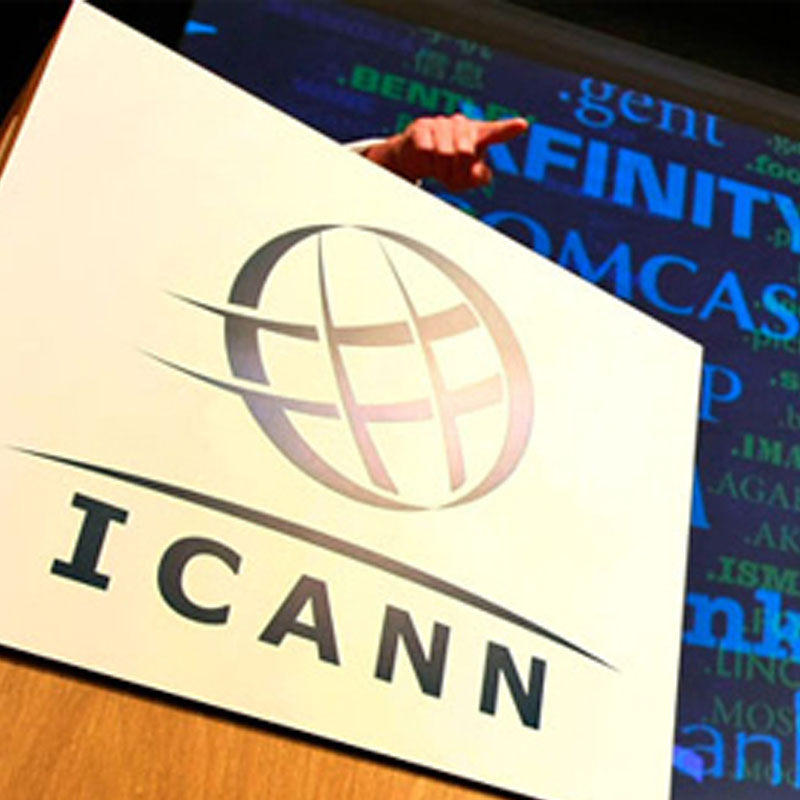

     

  • ICANN & CDAC to establish Center of Excellence to thwart cyber attacks

    ICANN & CDAC to establish Center of Excellence to thwart cyber attacks

    NEW DELHI: Coordination plans for the creation of a Center of Excellence in Domain Name System Security in India are to be put together by the Internet Corporation for Assigned Names and Numbers (ICANN) in partnership with the Center for Development of Advanced Computing (CDAC).

    The Center of Excellence is expected to work alongside ICANN security staff to design research projects intended to solve critical Domain Name System (DNS) security issues, such as thwarting cyber attacks. The center is also envisioned to be home to a state-of-the-art research laboratory to evaluate and test security solutions.

    In the presence of Communications and Information Technology Minister Kapil Sibal, ICANN president and CEO Fadi Chehadé and CDAC DG Dr. Rajat Moona today signed a letter of intent regarding the building of the center during a signing ceremony at the ‘Internet, Mobile & Digital Economy Conference’ (IMDEC) organised by FICCI in association with the Ministry. The theme of the conference was ‘Internet to Equinet: Empowering A Billion Online’.

    Sibal said India is fully committed to freedom of expression to work towards creating equality of opportunity, and there is a need to create systems for encouraging free flow of information, moving away from the traditional idea that knowledge is a personal asset.

    He said that the way forward is to take the consensual approach where all the stakeholders including the government will have an equal say while deciding the institutional framework. Creating an inter-governmental group is not a solution because governments will have their differences. Besides, the industry forms the crux of cyber space and without them feasible policy cannot be conceived.

    Sibal said the spread of internet and technology is creating awareness among people; they now know of the public services that are available to them, and this was leading to the development of a transparent society.


    Speaking about the relevance of the centre, Chehadé, said, “This center will play a central role in ensuring the security and stability of the Domain Name System. The Internet has become one of the world’s most valued resources and it is deserves nothing less than full global cooperation and collaboration in developing concrete solutions to combat threats to the DNS.”

    Nehchal Sandhu, Deputy National Security Advisor to the Government, said equal, unrestricted, affordable and sustainable access to ICT are needed to give equal opportunity to the people of India. Equal opportunity means democratic, transparent, collaborative and participatory way of knowledge sharing.

    M F Farooqui, Secretary in the Department of Telecommunications, said internet and telephony are interconnected and people at the bottom of the pyramid can be empowered by granting them access to these tools. The National Optical Fibre Network tends to provide connectivity to 600 million people by 2020, which would open new choices for people.

    J Satyanarayana, Secretary, Department of Electronics & IT, Ministry of Communications & IT, Government of India, said, “We are always in doubt when accessing the internet whether whatever is being shared is visible to someone else far off. We need to dispel this fear, which is associated to the internet.”

    He said, “Last week, the Union Cabinet approved the National Policy on Universal Electronic Accessibility that recognizes the need to eliminate discrimination on the basis of disabilities as well as to facilitate equal access to electronics and Information and Communication Technologies (ICTs). It is a step towards shifting emphasis from internet to equinet.” He added that the policy will facilitate equal and unhindered access to electronics and ICT products and services by differently-abled persons (both physically and mentally challenged) and to facilitate local language support.

  • ICANN & CDAC to establish Center of Excellence to thwart cyber attacks

    ICANN & CDAC to establish Center of Excellence to thwart cyber attacks

    NEW DELHI: Coordination plans for the creation of a Center of Excellence in Domain Name System Security in India are to be put together by the Internet Corporation for Assigned Names and Numbers (ICANN) in partnership with the Center for Development of Advanced Computing (CDAC).


    The Center of Excellence is expected to work alongside ICANN security staff to design research projects intended to solve critical Domain Name System (DNS) security issues, such as thwarting cyber attacks. The center is also envisioned to be home to a state-of-the-art research laboratory to evaluate and test security solutions.


    In the presence of Communications and Information Technology Minister Kapil Sibal, ICANN president and CEO Fadi Chehadé and CDAC DG Dr. Rajat Moona today signed a letter of intent regarding the building of the center during a signing ceremony at the ‘Internet, Mobile & Digital Economy Conference’ (IMDEC) organised by FICCI in association with the Ministry. The theme of the conference was ‘Internet to Equinet: Empowering A Billion Online’.


    Sibal said India is fully committed to freedom of expression to work towards creating equality of opportunity, and there is a need to create systems for encouraging free flow of information, moving away from the traditional idea that knowledge is a personal asset.


    He said that the way forward is to take the consensual approach where all the stakeholders including the government will have an equal say while deciding the institutional framework. Creating an inter-governmental group is not a solution because governments will have their differences. Besides, the industry forms the crux of cyber space and without them feasible policy cannot be conceived.


    Sibal said the spread of internet and technology is creating awareness among people; they now know of the public services that are available to them, and this was leading to the development of a transparent society.


    Speaking about the relevance of the centre, Chehadé, said, “This center will play a central role in ensuring the security and stability of the Domain Name System. The Internet has become one of the world’s most valued resources and it is deserves nothing less than full global cooperation and collaboration in developing concrete solutions to combat threats to the DNS.”


    Nehchal Sandhu, Deputy National Security Advisor to the Government, said equal, unrestricted, affordable and sustainable access to ICT are needed to give equal opportunity to the people of India. Equal opportunity means democratic, transparent, collaborative and participatory way of knowledge sharing.


    M F Farooqui, Secretary in the Department of Telecommunications, said internet and telephony are interconnected and people at the bottom of the pyramid can be empowered by granting them access to these tools. The National Optical Fibre Network tends to provide connectivity to 600 million people by 2020, which would open new choices for people.


    J Satyanarayana, Secretary, Department of Electronics & IT, Ministry of Communications & IT, Government of India, said, “We are always in doubt when accessing the internet whether whatever is being shared is visible to someone else far off. We need to dispel this fear, which is associated to the internet.”


    He said, “Last week, the Union Cabinet approved the National Policy on Universal Electronic Accessibility that recognizes the need to eliminate discrimination on the basis of disabilities as well as to facilitate equal access to electronics and Information and Communication Technologies (ICTs). It is a step towards shifting emphasis from internet to equinet.” He added that the policy will facilitate equal and unhindered access to electronics and ICT products and services by differently-abled persons (both physically and mentally challenged) and to facilitate local language support.