Tag: CCI

  • Tamil Nadu Film Exhibitors Association imposed penalty by CCI

    Tamil Nadu Film Exhibitors Association imposed penalty by CCI

    NEW DELHI: The Competition Commission of India (CCI) has imposed a penalty of Rs 41,393 on the Tamil Nadu Film Exhibitors’ Association (TNFEA) (now known as Tamil Nadu Theatre Owners’ Association).


    The penalty has been imposed in respect of information filed by Reliance Big Entertainment (RBE) alleging contravention of the provisions of Section 3 and 4 of the Competition Act.


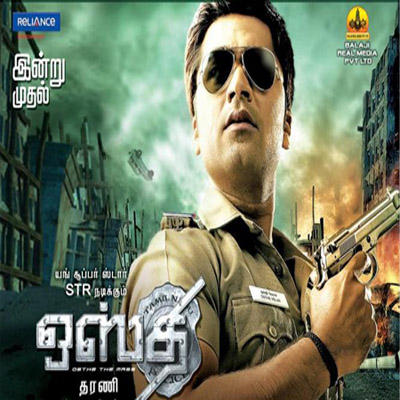
    RBE alleged that it was entitled to distribute a film titled Osthe in Tamil language that was a remake of Hindi film Dabbang. However, TNFEA boycotted this film with an effort to secure a claim of its members against a third party Sun TV.

    CCI in its investigation concluded that the decisions and conduct of TNFEA in respect of the boycott against the film Osthe and other films dealt by Sun TV were in contravention of the provisions of Section 3 (3) (b).


    The penalty of Rs 41,393 has been imposed at 10 per cent of the average turnover of the Association for the relevant last three years. This penalty is to be deposited within 60 days of receipt of this order.


    The CCI has also directed TNFEA to cease and desist from indulging in such anti-competitive conduct in future.

  • Andhra Pradesh Film Chamber tops list of defaulters with CCI

    Andhra Pradesh Film Chamber tops list of defaulters with CCI

    Actor Aamir Khan and the Film Distributors Association of Kerala figure in the list of defaulters prepared by the Competition Commission of India which has now decided to initiate suitable and appropriate steps to recover the penalties.


    The Andhra Pradesh Film Chamber of Commerce tops the list with a penalty of Rs 12,89,735 while Khan owes a sum of Rs 1 lakh and the Kerala body owes Rs 1,27,718.


    The list has names of parties on whom penalties were imposed when the cases by them were dismissed or there was no appeal by them.


    The Telengana Telugu Film Distributers Association (Rs One Lakh) also figures from the world of entertainment in the list if defaulters.


    CCI could initiate prosecution under Section 42(3) of the Competition Act for not complying with the orders of the Commission and follow-up reference to Income Tax Department could be made for action on recovery certificates already issued to these entities.

  • The curious case of CCI’s TAM Media investigation

    The curious case of CCI’s TAM Media investigation

    MUMBAI: The TV ratings tornado that had struck the industry a couple of months ago has died down and it appears as if even the same has happened with the TAM Media investigation being conducted by the Competition Commission of India (CCI). Of course the CCI will deny it, but, it does seem so.


    The deadline for the responses to the queries sent out to media industry stakeholders by the CCI was 18 July.


    “We had received the questionnaire by the enquiry committee of CCI on 18 July. The responses to which were sent to them on the same day. After that we have not received any update from CCI,” informs a highly placed official in Prasar Bharati.


    It may be recalled that the CCI had started the investigation post a complaint filed by Prasar Bharati against the audience measurement agency for anti-competitive practices in November last year. The complaint was filed under section 4 of the Competition Act 2002, which pertains to abuse of a dominant position by a market player.


    “We are still in the process of collecting data from the stakeholders. The matter is still being investigated,” informs a source from the CCI. The body has asked for an extension to collect the data. “There is a provision to extend the time frame and we are seeking extensions to ensure a proper investigation,” adds the source who refuses to comment any further on the investigation.


    It was in late June, this year that the CCI had started sending out notices to key players in the media and entertainment industry seeking information on TAM in order to ascertain whether there was any case to be made against it. The notice sent by CCI was just the first step to find out what reported “wrongs” was TAM Media doing.


    When Indiantelevision.com contacted TAM for its comment on the same, a TAM representative responded by say, “We have decided not to comment on the investigation.”


    With CCI not yet completing the first step of investigation, how long will the body take to come out with its final verdict? Or are more pressing matters taking up its attention? “You can’t forget, things such as these have a process and take time,” says a media observer. “Don’t be surprised if a damning report against TAM emerges closer to the time of the ratings launch under BARC next year.”

  • IndiaCast-Disney distribution JV gets CCI nod

    IndiaCast-Disney distribution JV gets CCI nod

    MUMBAI: The Competition Commission of India (CCI) has green lighted the channel distribution joint venture between IndiaCast Group and The Walt Disney Company India as it feels that the combined might will not adversely harm competition in the marketplace.

    The decision is not surprising as the cobbling together of TV18 Group and Disney channels for distribution across analogue and digital platforms is not the biggest consolidation the industry has seen. Media Pro Enterprise India, the joint venture between Zee Turner and Star Den, is by far the largest in size with a bouqet of 78 television channels housed under one roof.

    “We did not expect the IndiaCast-Disney deal to get roadblocked by CCI. The Zee-Star merger is far bigger and combines the two leading media houses in India,”a media analyst said.

    In its order, CCI said the transaction is “not likely to have an appreciable adverse effect on competition in India”.
    The CCI has cited a reason for this. “After the combination, IndiaCast would discontinue its aggregation tie-up with Sun Distribution Services and accordingly the market share of channels which would be aggregated by IC would be less than that of IndiaCast,” the order said.

    UTV Global Broadcasting, a Walt Disney subsidiary that broadcasts nine TV channels in India, had filed a notice seeking approval for the 26 per cent stake buy in IC Media with CCI on 24 January.

    The deal would see UTV Global Broadcasting, part of The Walt Disney Company India, acquiring a 26 per cent stake in IC Media Distribution Services, a part of Network18 Group, which is a distribution JV between Network18 and TV18.

    The yet-to-be-named JV will distribute 35 channels from the TV18, Viacom18, Disney UTV and A+E Networks, making it the second largest distribution company in terms of bouquet of channels after Media Pro Enterprise India.

    IC Media is a wholly-owned subsidiary of IndiaCast Media Distribution, which is into the business of aggregation of television channels broadcast by TV18 Broadcast, Viacom18 Media and certain other broadcasters.

    “It has been stated in the notice that the Disney Group and the IndiaCast Group shall grant exclusive licence to IC to distribute their television channels,” the CCI order said.

    “It has also been stated in the notice that post-combination, UTV Global Broadcasting and IndiaCast would cease their aggregation business in India as they now propose to carry out the business of providing the service of aggregation in India through IC (Media) by way of the proposed combination,” the order added.

  • CCI issues cease & desist order against NIMPA

    CCI issues cease & desist order against NIMPA

    MUMBAI: The Competition Commission of India (CCI) issued an order on Monday against Northern India Motion Pictures Association (NIMPA) directing it to cease and desist from indulging in anti-competitive conduct.

    According to a press release, the order has been issued in a case filed by Shri Ashtavinayak Cine Vision against NIMPA and other film associations alleging inter alia contravention of the provisions of sections 3 (anti-competitive agreements) of the Competition Act, 2002.

    The Commission found NIMPA‘s practices of pressuring the distributors to settle the monetary disputes with its members to be in contravention of the provisions of Competition Act.

    The Commission also directed NIMPA to file an undertaking regarding compliance of its order within a period of 30 days from the receipt of the order.

    As NIMPA was already directed by the Commission in earlier cases to suitably modify its Articles of Association (AoA), rules and regulations and remove the condition of compulsory registration of films as a pre-condition for release, the Commission did not find it necessary to pass similar directions again in the present case.

    The Commission also did not find it appropriate to impose any penalty upon NIMPA in light of the facts and circumstances of the present case.

  • Vishwaroopam’s DTH premiere on 2 Feb, after theatrical release

    Vishwaroopam’s DTH premiere on 2 Feb, after theatrical release

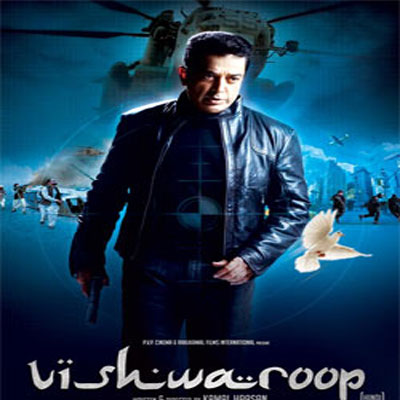
    MUMBAI: After buckling under pressure from theatre owners, Kamaal Haasan‘s spy thriller Vishwaroopam is all set to premiere on direct-to-home (DTH) platforms on 2 February, almost a week after the theatrical release.

    The Hindi version of Vishwaroopam will be released on 1 February across India. The Tamil and Telugu versions of the film will be released on 25 January as announced by the actor earlier.

    "While the original DTH premiere was on a Thursday (January 10) and hence inconvenient for most, I am now releasing it on a Saturday at the end of the first week of release (January 25) which will be on February 2," Haasan said in a statement.

    The trilingual action film was earlier supposed to premiere on DTH on 10 January a day before the theatrical release on 11 January which met with fierce resistance from a section of theatre owners who saw the move as an attack on their livelihood.

    The protest by cinema owners in Tamil Nadu, who had also urged the Tamil Nadu CM J Jayalalithaa to intervene, had Haasan change his mind.

    The actor and film-maker had also moved the Competition Commission of India (CCI) against certain theatre associations for restricting the release of his film.

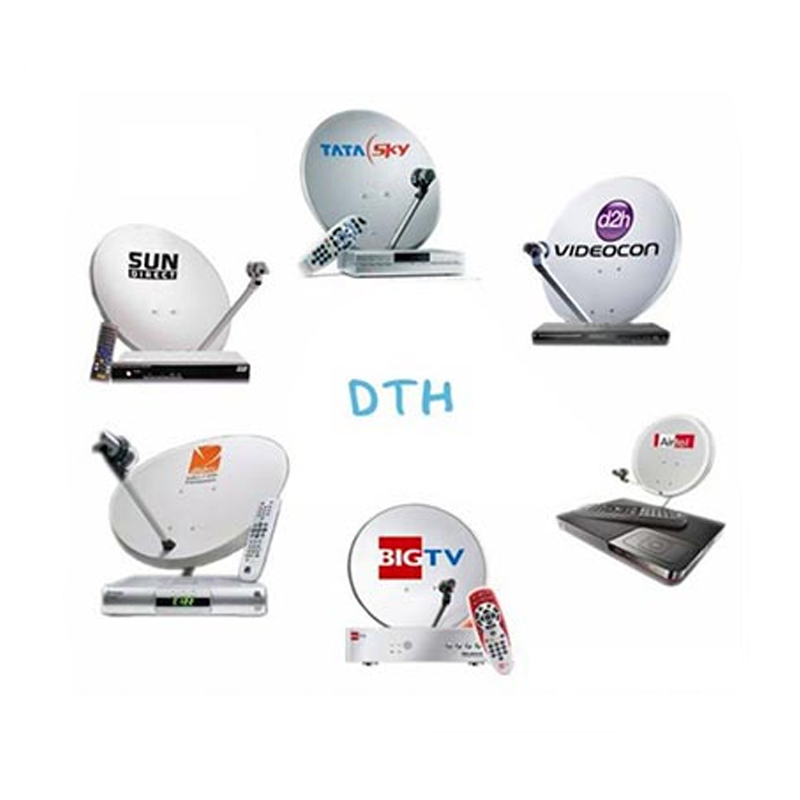
    However, Haasan did not reveal the name of DTH operators who will telecast the movie. Haasan‘s production had earlier signed a deal with all the six DTH operators to air the film.

    "I will announce the names of my DTH partners who will be involved in this endeavour soon," he said.

  • Haasan approaches CCI in Vishwaroopam release row

    Haasan approaches CCI in Vishwaroopam release row

    MUMBAI: Actor and film maker Kamal Haasan has moved the Competition Commission of India (CCI) against certain theatre associations. Haasan alleged that these bodies restricted the release of his film Vishwaroopam report the Press Trust of India.

    A senior official from CCI told PTI, “”We have received a complaint from Kamal Haasan (related to Vishwaroopam)…We are likely to take a call on the issue next week.” The complaint has been filed by Haasan‘s production house Rajkamal Films International.

    Meanwhile, Haasan has virtually ruled out the premiere of his film Vishwaroopam on the Direct-to-Home (DTH) platform ahead of its release in theatres. He has reportedly admitted a ‘change of mind‘ on proceeding with his controversial decision that had met with stiff resistance from a section of exhibitors.

    “I have changed my mind on having the premiere (on DTH platform ahead of releasing it in theatres). I will discuss (with DTH partners) on how close or far to release date (will be a DTH show),” he said.

    Hassan observed that he had taken into account suggestions from many to consider the ‘good health‘ of Tamil cinema industry before going ahead with his decision.

    “Many had requested me to take into consideration the good health of the industry and proceed with DTH. It is my primary duty to make it happen,” he said after consulting with exhibitors and theatre owners here.

    He also said that talks were on with DTH players on the issue but declined to divulge on the matter. “They have been kind to me. Will say later when the film will come on DTH,” he said.

    Haasan said the film will be released in Tamil and Telugu on 25 January as announced earlier but its Hindi release will be finalized only after further talks with industry associates.

    The tech-savvy actor-filmmaker‘s decision to have a premiere of his much anticipated trilingual action film on DTH caused ripples in the multi-million rupee Tamil cinema industry, with a section of theatre owners deciding to boycott the film.

  • CCI upholds YRF’s deals with single screens

    CCI upholds YRF’s deals with single screens

    NEW DELHI: Ajay Devgn Films has received a setback with the Competition Commission of India (CCI) ruling that Yash Raj Films‘ (YRF) agreements with single screen exhibitors was not in contravention of the Competition Act.

    The CCI said the agreements entered into in July/August by YRF with single screen theatres were not anti-competitive.

    In its petition, Ajay Devgn Films had pointed out that during the release of Salman Khan-starrer ‘Ek Tha Tiger‘ on 15 August, YRF and its distributors had taken an undertaking from single screen theatres that they would also exhibit the film ‘Jab Tak Hai Jaan‘ by the same producer during Diwali.

    Ajay Devgn Films alleged that it was laid down that any single screen theatre which did not agree to exhibiting ‘Jab Tak hai Jaan‘ would not get to screen ‘Ek Tha Tiger‘.

    CCI was also informed that some single screen theatres did not agree to the YRF‘s condition.

    The Commission said, “The act of booking theatres by a distributor for its two films simultaneously when the theatre owners have the liberty either to agree or not to agree, is not a restraint on the freedom of business of theatre owners. The theatre owners can wait for other films and can refuse to book their theatres simultaneously for two films. Even otherwise, the non significant position held by the single screen theatres does not cause any adverse effect on the competition.”

    Furthermore under the Act, tie-in arrangements per se are not violating of section 3(4)(a) of the Act.

    “If many high ticket mega starrer films compete with each other to be released only on the occasion of festivals, the choice lies with the theatres and each theatre is at liberty to book its theatre even in advance and it cannot be said that this had appreciable adverse effect on the market. The subject of appreciability is of huge practical importance for competition,” it added.

    The Commission said according to its information, even single screen theatres in some of the states are further sub-divided in category A, category B and category C and the distributors discriminate between these categories and do not allow release of new films in category B or category C theatres and only choose category A theatres.

    ‘Thus the market of exhibition of new films on single screen theatres in the context of this case is not of enough significance to cause an appreciable adverse effect on the competition. Even otherwise, the market cannot be restricted to any particular period like Eid or Diwali and the market has to be considered a market available throughout the year.‘

    Justice S N Dhingra and members H C Gupta, R Prasad, Geeta Gouri, Anurag Goel, and M L Tayal said Ajay Devgn Films did not place on record data either of market share or of economic strength to show how the opposite parties were dominant in the proposed relevant market on the basis of above stated guiding factors.

    It was argued by the counsel for the informant that the opposite parties were dominant because Yash Raj Films was a big banner production house and had a big name and had given several blockbuster films.

    But the Commission said, “No enterprise can be considered dominant on the basis of big name. Dominance has to be determined as per law on the basis of market share, economic strength and other relevant factors stated under Section19 (4) of the Act.”

    The Commission said it was unable to accept ‘such a narrow approach‘ while determining the relevant market. A large number of movies are released in India every year. In Bollywood itself, 107 and 95 films were released in 2011 and 2012 (till now) respectively. Out of this, Yash Raj Films produced only two to four films each year. ‘This cannot be said to amount to dominance even in the Bollywood industry, leave aside film industry in India.‘ Therefore, the claim of Ajay Devgn Films that Yash Raj was a dominant player in the film industry in India cannot be accepted, it said.

    Ajay Devgn Films had alleged that the YRF agreements were in violation of section 3 as well as section 4 of the Competition Act. It submitted that ‘Ek Tha Tiger‘ was released at the time of Eid and ‘Jab Tak Hai Jaan‘ is to be released at the time of Diwali.

    ‘This grievance of the informant arose because the informant feared that he would not get enough theatres for his own film ‘Son of Sardar‘ because of the agreement of single screen theatres with the opposite parties at the time of releasing Ek Tha Tiger. Ajay Devgn Films contended that the agreement between the opposite parties and the film exhibitors for exhibition of the two films together amounted to contravention of section 3(4)(a), 3(4)(b) and 3(4)(d) as well as contravention of section 4(2)(a).

  • ‘Break even will take five to six years for new franchises’ : GroupM ESP managing partner Hiren Pandit

    ‘Break even will take five to six years for new franchises’ : GroupM ESP managing partner Hiren Pandit

    Bigger, better, richer. That is what the franchises hope the Indian Premier League (IPL) will grow into year after year.


    In an interview with Indiantelevision.com’s Ashwin Pinto, GroupM ESP managing partner Hiren Pandit talks about the vast revenue opportunities that are waiting to be tapped as the IPL grows into a sporting spectacle.


    Excerpts:

    How is GroupM ESP involved with the IPL this time around?
    We do deals with franchises on behalf of our clients. There are logos on T-shirts and also innovations that have not been done before. We create revenue opportunities for the client as well as the franchise. This is in the form of licensing and merchandising.

    Are franchises able to fetch better rates this year with the economic situation somewhat improving?
    Keep in mind that last year local activation could not take place due to the shift to South Africa. This year, some amount of rationalisation has taken place. There is measurement in place. You know whether you should pay Rs100 or Rs 150. Most team sponsorships have been sold.

    In terms of local revenue, how will franchises fare this year as per your calculations?
    It will increase by around 20 per cent for each franchise. Revenues on T-shirts are anywhere from zero for Bangalore (The UB Group uses its own brands) to Rs 400 million for Kolkata. Delhi and Chennai will each earn Rs 330 million. Mumbai, Rajasthan and Punjab will individually earn Rs 300 million. Hyderabad will earn around Rs 200 million. The big difference is the logo on the right chest which will add Rs 30-50 million in revenue. Licensing and merchandising is just starting to happen. So this will take time to grow.


    Kolkata will get hit in terms of gate receipts as the two large stands that seat the most number of people is being reconstructed. Mumbai’s matches will happen in the CCI and DY Patil. Ahmedabad should boost Jaipur’s gate receipts. I, however, do not know the extent to which Dharamshala as a venue will help Punjab. The question that remains is Hyderabad. There needs to be some clarity on where the matches will be played.

    If you include the central pool, how much revenue will franchises earn?
    It will be a 25 per cent growth overall. Each franchise will earn $12-14 million from the central pool. The local pool will contribute around $8-10 million. Revenues from theatres, YouTube and Colors will also kick in. This will add a certain amount but it will not be dramatically different.

    Will Hyderabad’s revenues be hit due to the venue being shifted?
    I am not so sure that Hyderabad sponsorships will get hit as it depends on TV exposure. On the back of that, activation will be done. In-stadia activity, though, will be hit. But licensing and merchandising may stay unharmed. It depends on the kind of deals that they will do. It remains to be seen how much revenues come from ticketing.

    Franchises will see a 25 per cent growth overall. Each franchise will earn $12-14 million from the central pool. The local pool will contribute around $8-10 million. Revenues from theatres, YouTube and Colors will also kick in

    Is there a danger of sponsorship getting cluttered?
    From what we gather, the number of brands on IPL was 40 in the first season and 68 in the second. We expect the number to touch 80 in the third season. It is clutter but since it is at home, clients can do more activation. There needs to be innovation done by companies in terms of their campaigns. You cannot do what was done earlier unless you are sure that it will stay fresh. It needs to be different. Just keeping a logo on the T-shirt is not enough.

    Could you give me a couple of examples where team sponsors have successfully leveraged the IPL?
    Idea Cellular did something different with the Mumbai Indians in the second season. Their users could have conversation with players. Wrigleys did something different by associating with all teams. Vodafone did the Zoozoo campaign which was a wake up call to competition. Sprite did the unique ‘Seedhi Baat, No Bakwaas‘ campaign with Kolkata.

    What is the key to a successful licensing and merchandising campaign?
    Both parties have to make money. The distribution platform has to be solid and give access to all potential buyers. Under licensing and merchandising, the franchisee gets a flat amount and then a share on revenues – depending on sales. It will be a slow burner, though. And it will not kick in from day one. A substantial amount of promotions will be needed.


    Licensing and merchandising is different from having a logo on a T-shirt. People are still struggling to figure out what is the difference between advertising and licensing and merchandising. These two categories are separate but are getting mixed up. That actually helped Wrigleys who did a smart number on franchises. They did a partnership at a low cost and signed up most franchises for three years. From what I understand, Wrigleys can now milk the value of its deals to such an extent that franchises feel that they did not get the value that they were looking for. I don’t think that Wrigleys shares revenues of its products. Franchises now realise that the deal might have been a mistake for them.

    Have the franchises got it right on ticket pricing?
    I assume that they would have learnt from the first season. They will know what works and what does not. You need to analyse in detail what was done in the first season – what was right and what was wrong. If they have not done that the same mistakes will be made again. You also need to do activities to make fans come to the stadiums. The in-stadia experience will be far better this time. Catering is centrally managed. There are now turnstiles and so the number of people entering and leaving can be checked.

    Will the break even period elongate for the new franchises as the IPL has set a fourfold increase in base price?
    The revenue opportunities have grown. The break even position, however, depends on how one manages costs and the revenue generation potential of a city. Some cities will perform better than others. But generally, it will take five to six years for the new franchises to break even. The time taken to break even is also a question of how innovative can the new owners be in generating revenues. Local revenues should rule over the earnings from the central pool. Anybody who can do this will have a model that will set themselves up to making money that would justify the price tag.

    Who has fared the best in this area so far?
    The closest that anybody has come to achieving a great model is Kolkata. The fact that Shah Rukh Khan has lent himself to his sponsors like Nokia and Sprite has worked. He has extracted more revenues as a result. So instead of charging Rs 40 million, this franchise can charge Rs 70 million. Other teams also have values but I am not so sure that they are using it to their maximum potential. No franchise is optimising local sponsorship the way that they should.


    Also, keep in mind that with more teams coming in, costs and revenues will go up. The impact will be felt across the board. Player costs, travel and stadium maintenance costs will rise. Sponsorship revenues will also go up. All this has to be taken into account by whoever is bidding.

    Another issue is that current franchises will be allowed to retain some key players even after the third season. This could limit the pool of payers who are available to the new franchises. How do you see things panning out?
    A middle ground will have to be found. This is a sticky issue. On one hand, you have India Cement saying that since they have invested in Dhoni and have built their team around him, he must be retained. Otherwise the team’s value will be affected. On the other hand, the new franchises need to have a solid pool of players to pick from or else they might decide not to play. A balancing act will have to be performed by the IPL Governing Council.

    Rajasthan Royals has tied up with other cricket clubs globally. Is this the trend for the other franchises as well?
    If you have world class players who can play in different countries and fill a stadia, then it forms another revenue stream. The IPL guidelines state that Rajasthan Royals cannot play against Kolkata in, for instance, England. So by doing this kind of a tie up, they avoid that situation. Events can take place all over and more money flows in. There is an opportunity here.
    Do you see the IPL playing out well in cinema theatres?
    This year it will be a tried and tested concept. The concept looks very impressive. You will have high definition which makes a big difference. The 16:9 screen size will allow you to see more ground. This is the summer and people might want to go to an air conditioned place and enjoy it together. It is about the quality of experience. If it is good, then word of mouth will spread.

    How important is the YouTube deal in spreading the IPL brand globally?
    It is fantastic on two levels. In India, you can sit in the office and watch matches. It is a question of bandwidth. I would expect people to avail of the highlights package for matches that happen between 4-7 pm the next day. Then there is the Indian diaspora who want to watch the IPL but have no access.


    The question is how YouTube is going to monetise the IPL property. Will YouTube become pay for international markets? Today they have said no. They can continue to say no if there is enough ad support.

    The Champions T20 League got off to a slow start. Where do you see it going from here?
    I was surprised that it got off to such a slow start. But if people thought that the Champions Twenty20 League would do as well as the IPL, then they were wrong. The IPL and Champions League are about clubs. The club culture has not yet come in the country. It will take time. The second reason is that the three Indian teams did poorly in the Champions League. The interest among audiences fizzled out.


    The franchises and the IPL need to start developing a club culture. Nobody says that they want to go for an IPL match to see a particular franchise play. They simply go for great cricket. That has to change. You need to create a fan base that is passionate about the team per se, even if it comes last. Franchisees need to invest money in creating a club culture.

  • Mumbai to host ATP tournament in September

    Mumbai to host ATP tournament in September

    MUMBAI: Following a calendar switch, Mumbai is becoming the second city in India after Chennai to host an ATP tournament. Mumbai replaces the $380,000 Vietnam Open in Ho Chi Minh City, tennis’ governing body said in a statement issued Monday.

    The Mumbai Open will take place between 25 September and 1 October and will be held at the The Cricket Club. Ahead of the event, the CCI will be renovated to include a new 3,500-seat Centre Court plus two match courts and two practice courts.

    Globosport India, promoted by doubles ace Mahesh Bhupathi, will be responsible for the marketing, management and promotion of the Mumbai Open.

    The big question of course will be who gets the telecast rights for this event. With Zee Sports making its presence felt and even Sahara getting into the sports broadcast game, expect another bidding war.

    The telecast rights of the $400,000 Chennai Open were awarded to Star Sports by IMG, which owns and organizes the tournament. IMG’s television division, TWI, was responsible for producing the programming for the Chennai Open.

    Till now the Chennai Open was India’s and South Asia’s only ATP event. It was hosted at the Nungambakkam Stadium in Chennai from 2 – 8 January and was telecast on Star Sports in the India sub-continent, including India, Pakistan, Bangladesh, Sri Lanka, Nepal, Maldives, and Bhutan.