Tag: CCI

  • Google says it prepared to open Play Store gates for real-money gaming in India

    Google says it prepared to open Play Store gates for real-money gaming in India

    MUMBAI: Google has told India’s competition watchdog it is finalising a business model to accommodate the country’s booming real-money gaming (RMG) sector, in a proposal that could see all permissible formats return to the Play Store. The Competition Commission of India (CCI), which is conducting an ongoing antitrust probe, has invited public comments on Google’s plan until 20 August.

    All India Gaming Federation (AIGF) chief executive Roland Landers  called the move “a timely and welcome step” toward a fairer and more transparent digital ecosystem. He noted that Google’s recognition of certificates issued by self-regulatory bodies such as the All India Skill Gaming Council (AISGC) would “empower responsible operators, support innovation, and ensure a safer experience for Indian consumers.”

    The AISGC, chaired by a former supreme court justice, has since 2018 applied a detailed legal and analytical framework to determine whether a game qualifies as one of skill under Indian law.

    AIGF, the country’s largest and oldest gaming industry body, said the proposal could lower entry barriers, level the playing field for smaller firms, and boost jobs and digital inclusion. The federation represents more than 120 members, including many MSME startups, who together serve over 40 crore Indian gamers and are collectively valued at more than $10 billion.

    If the CCI approves the plan, India’s gaming sector — long hobbled by inconsistent platform policies — could be set for a growth spurt.

  • Omnicom–IPG merger gets greenlight from CCI, ad world braces for a mega shake-up

    Omnicom–IPG merger gets greenlight from CCI, ad world braces for a mega shake-up

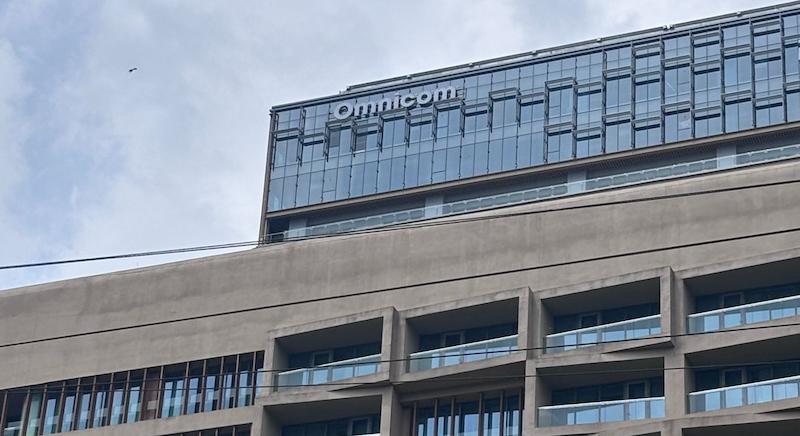
    MUMBAI: India’s competition watchdog has given a decisive thumbs-up to one of the biggest shake-ups in adland: Omnicom Group Inc.’s acquisition of sole control over The Interpublic Group of Companies, Inc. (IPG).

    The Competition Commission of India (CCI) has formally approved the merger, clearing the way for New York-based Omnicom to swallow IPG whole. The deal sees EXT Subsidiary Inc.—Omnicom’s Delaware-registered arm created for the transaction— merging with Interpublic group, followed by its vanishing in a legal sleight of hand, with IPG emerging as a wholly owned subsidiary.

    The green light marks a major milestone in the creation of an advertising, media and communications (AMC) colossus that will now tower over rivals in over 100 countries—including India.

    Both Omnicom and IPG have long had a robust presence in India, vying for dominance in marketing communications and media buying. With the merger officially sanctioned, expect ripples—if not tsunamis—across client portfolios, agency turf wars, and talent poaching strategies.

    Omnicom brings to the table a vast arsenal of brand advertising, CRM, media planning, PR and specialty comms across more than 70 nations. IPG counters with an 80-brand empire powered by 57,400 employees delivering everything from creative and data to experiential marketing.

    The merger has got the go-ahead in 10 of the 20 global markets it has a presence in, according to reports. And it will have a smaller market share in India than WPP Media. 
     

    The CCI website only has a partial copy of the merger  application uploaded while its clearance document has yet to be put up. 

    As the global titans fuse, the industry braces for impact—and reinvention.

  • CCI to crack the whip harder on anti-competitive cartels

    CCI to crack the whip harder on anti-competitive cartels

    MUMBAI: The investigation into alleged ad pricing collusion between  select ad agencies is just one of the proactive initiatives that the competition watch dog the Competition Commission of India (CCI) has been undertaking. Finance and corporate affairs minister Nirmala Sitharaman told the Lok Sabha  today that 35 cartel cases across various sectors over the past five financial years, up to 13 March 2025, have been under the CCI’s magnifying glass. And this is just a start:  with a sharper legal framework and global collaborations, the watchdog is stepping up its efforts to keep markets fair.

    She informed the house that the watchdog  has inked bilateral and multilateral agreements with competition authorities in Egypt, Mauritius, Japan, Brazil, Canada, Australia, the European Commission, Brics nations and the US Department of Justice. These pacts enable enforcement cooperation, subject to each country’s legal framework and resources.

    The Competition (Amendment) Act, 2023, introduced the ‘lesser penalty plus’ (LPP) framework under Section 46, offering incentives for cartel members to turn whistleblowers. The CCI (Lesser Penalty) Regulations, 2024, which replaced the 2009 rules, reward existing applicants who spill the beans on previously unknown cartels.

    To widen its net, CCI has also brought in the ‘hub-and-spoke’ mechanism under Section 3(3) of the Competition Act, 2002, ensuring that enterprises or individuals indirectly facilitating cartels are also held accountable.

    India has signed 14 free trade agreements (FTAs), some of which contain specific competition clauses to curb anti-competitive practices. CCI also has a dedicated division for market analysis and research, aimed at detecting unfair practices before they spiral.

    Enforcement is only part of the game. Over the last five years, CCI has held 1,446 advocacy programmes to educate businesses and policymakers on competition rules. By ramping up market studies and training initiatives, the regulator is working to sustain a fair and thriving business environment.

    With cartels under increased scrutiny and tougher penalties in place, competition in India’s markets is only set to heat up.

  • Indian antitrust watchdog raids global ad giants over alleged price collusion

    Indian antitrust watchdog raids global ad giants over alleged price collusion

    MUMBAI: India’s competition regulator has launched a surprise raid on several advertising behemoths, including GroupM, Dentsu and Interpublic Group, as well as a broadcasters’ industry body over allegations of price-fixing, sources with direct knowledge told Reuters on Tuesday.

    The Competition Commission of India’s officers descended upon roughly 10 locations in Mumbai, New Delhi and Gurugram after initiating a case against the agencies and top broadcasters for allegedly colluding to fix advertising rates and discounts.

    The raids come at a pivotal moment for India’s advertising landscape, which is experiencing significant upheaval following the $8.5 billion merger between Walt Disney and Reliance’s Indian media assets.  This regulatory blitz also follows hot on the heels of Omnicom Group’s $13.25 billion all-stock acquisition of rival Interpublic Group in December, a deal that created the world’s largest advertising agency.

    According to one source who spoke to Reuters, the watchdog is investigating how advertising agencies allegedly conspire with certain broadcasters to fix advertising prices when selling to clients, including discussions around discounts. The allegations reportedly include concerns that certain broadcasters engaged in “collective action” to avoid offering discounts on advertising rates.

    The Indian Broadcasting &  Digital Foundation (IBDF), which represents heavyweight domestic broadcasters including billionaire Mukesh Ambani’s Reliance-Disney joint venture and Sony and Zee, has remained tight-lipped about the investigation.

    Representatives from GroupM (owned by Britain’s WPP), IPG Mediabrands and Japan’s Dentsu all declined to comment when approached by Reuters, as did the competition commission itself, which maintains a policy of not publicly disclosing details of enforcement actions or price collusion cases.

  • CCI approves Sony-Zee merger ‘with certain modifications’

    CCI approves Sony-Zee merger ‘with certain modifications’

    Mumbai: On Tuesday, the Competition Commission of India (CCI) announced the amalgamation of Zee Entertainment Enterprises (ZEE) and Bangla Entertainment (BEPL) with Culver Max Entertainment (CME), formerly known as Sony Pictures Networks India.

    The amalgamation has been approved “with certain modifications,” the commission said in an official release.


    According to a statement, CCI stated, “The proposed combination relates to (i) amalgamation of each of Zee and BEPL with and into CME; and (ii) preferential allotment of certain shares by CME to Sunbright International (earlier known as Essel Holdings), and Sunbright Mauritius Investments.”

    Also read: NCLT seeks shareholder nod for Zeel-Sony merger

    Commenting on this development, Sony Pictures Network India said “We are delighted to receive CCI approvals to merge ZEEL into SPN. We will now await remaining regulatory approvals to finally launch the new merged company. The merged company will create extraordinary value for Indian consumers and eventually lead the consumer transition from traditional pay TV into the digital future.”

    In December, Sony and Zee agreed to merge their television channels, film assets, and streaming platforms to form a powerhouse in a key growth market of 1.4 billion people, challenging rivals such as Walt Disney Co.

  • CCI approves Jio Cinema OTT and Viacom 18 Media merger

    CCI approves Jio Cinema OTT and Viacom 18 Media merger

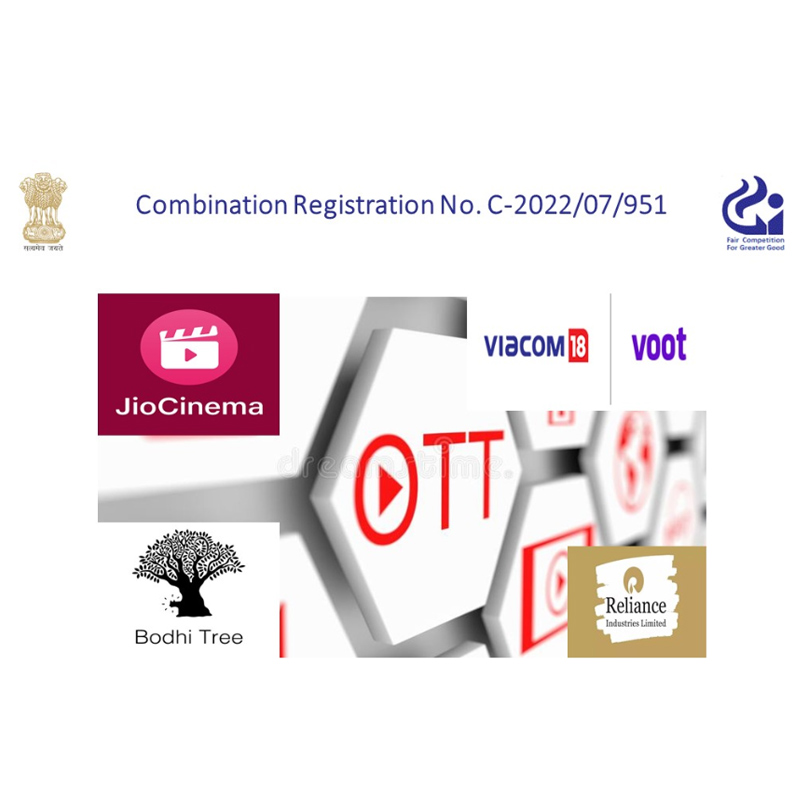
    Mumbai: The Competition Commission of India (CCI) approved the proposed merger of Jio Cinema OTT and Viacom18 Media on Monday.

    Following an investment by BTS Investment and Reliance Projects & Property Management Services, the CCI announced in a tweet on Monday that it had approved the merger of the Jio Cinema OTT platform with Viacom18 Media.


    In April, Reliance Industries (RIL) and Viacom18 announced a strategic partnership with Bodhi Tree Systems. According to an agreement signed, Bodhi Tree was obliged to invest Rs 13,500 crore in Viacom18, and Reliance Projects & Property Management Services, a wholly-owned subsidiary of RIL, was informed to invest Rs 1,645 crore in the broadcaster, forming one of India’s largest TV and digital streaming firms. As a result, Reliance’s popular Jio Cinema OTT app was transferred to Viacom18.

    Bodhi Tree Systems (BTS) is a joint venture between James Murdoch’s Lupa Systems and the former chairman of Star India and Disney India Uday Shankar.

    IT support services are provided by Reliance Projects & Property Management Services. Through its portfolio of channels and streaming service Voot, Viacom18 Media engages in the business of offering media and entertainment services.

    Deals that exceed a specific threshold require regulator permission, which keeps an eye on unethical commercial practices in the market.

  • Zomato-Blinkit deal: all one needs to know

    Zomato-Blinkit deal: all one needs to know

    Mumbai: Restaurant aggregator and food delivery company Zomato’s proposal to acquire quick commerce player Blinkit (formerly Grofers) will come up for board approval on 17 June 2022, when the company’s board meets to sign-off on the acquisition.

    The deal estimated at $700 million has likely dropped in valuation, stripping the online grocery firm of its prized unicorn status earned last year.

    The development emerged two months after reports on the merger deal via share-swap appeared. While the outlines of the deal are still being worked out, Zomato will acquire the shares of the quick commerce startup in an all-stock deal. As per the proposal, Blinkit investors will gain proportionate shares in the listed entity that amounts to a little less than 10 per cent stake in Zomato.  

    Softbank Vision Fund, the largest investor in Blinkit, is expected to come away with nearly four per cent stake in the food-tech company if the deal is closed.

    Once the board gives its approval, Zomato may not need the Competition Commission of India’s (CCI) nod to acquire the Softbank-backed startup, as it plans to make use of an exemption called ‘de-minimis’, which applies to companies of a certain size.

    In August 2021, Zomato received CCI’s go ahead for a $100 million investment in Blinkit for little over nine per cent stake.

    In its third quarter earnings call earlier in February, Zomato management said that it is aggressively growing in the quick commerce segment and will invest $400 million over the next two years in the category.

    Later in March, Blinkit signed a merger agreement with the food aggregator company. Speculations of the deal were doing the rounds in the news since Zomato first invested in the startup. The latest developments coincide with reports of Blinkit laying off staff and delaying vendor payments due to a cash crunch.

    The 10-minute grocery delivery market is expected to grow 15 times to reach $5.5 billion by 2025, as per consultancy firm RedSeer. Zomato has attempted to enter this space twice, dropping its plans due to the uncertainty caused by the pandemic. This latest move helps it gain ground over its arch-rival Swiggy.

    Both food aggregators – Zomato and Swiggy – had diversified into grocery delivery as a natural extension of food delivery, by launching the service on their existing apps. While Swiggy continues to offer its Instamart service, Zomato withdrew from grocery deliveries in September 2021 after burning cash to the tune of several millions. Its investment in Blinkit helps it reach scale in the quick commerce sector.

    There is no shortage of startups trying to be associated with the promise of quick delivery with players like Dunzo and Zepto in the mix. However, it was Blinkit (Grofers) that pioneered the 10-minute grocery delivery model.

  • Producers form joint action committee to fight unfair labour practices

    Producers form joint action committee to fight unfair labour practices

    Mumbai: The associations of content producers have come together to form an action committee called Media & Entertainment Producers Coordination Committee (MEPCC) to tackle unfair labour practices and issue guidelines to producers.

    The Indian Motion Picture Producer’s Association (IMPPA), Indian Film and TV Producers Council (IFTPC), Western India Film Producer’s Association (WIFPA), The Association of Advertising Producers (ASAP), and Akhil Bharatiya Marathi Chitrapat Mahamandal (ABMCM) have come under one umbrella and formed the action committee to ensure compliance with directions of Competition Commission of India (CCI) and Labour Commissioner.

    The producers’ primary grievances are the unfair labour practices and extortion under different garbs from the trade unions. It has barred trade union’s vigilance officers from visiting shooting locations under any circumstances.

    “The joint action committee will ensure full protection and security of all producers who make entertainment content. In case these producers face a disturbance in the work or shooting by trade unions, they have been advised to immediately file a police complaint in the nearest police station and also inform their association so that immediate action can be initiated against parties indulging in unfair labour practices,” it said in a statement.

    “The committee will also launch a new method of recruitment and selection of workers which will be unveiled soon,” it added.

  • Delhi HC dismisses WhatsApp, Facebook pleas against CCI order

    Delhi HC dismisses WhatsApp, Facebook pleas against CCI order

    New Delhi: The Delhi high court on Thursday dismissed the plea filed by Facebook and WhatsApp challenging the Competition Commission of India (CCI) order directing a probe into its controversial new privacy policy. The court said it found no merits in the petition and refused to quash the CCI probe.

    The CCI had launched an investigation into WhatsApp’s updated privacy policy on 24 March, amid the raging debate over users’ data and privacy on social media platforms. The antitrust body had taken a prima facie view that the messaging app’s new terms of use are in contravention of India’s Competition Act. 

    WhatsApp and its parent company Facebook had challenged the CCI's order through two separate petitions, and the court had decided to reserve its judgement during a hearing on 13 April.

    According to CCI,  WhatsApp's new privacy policy would lead to excessive data collection and "stalking" of consumers for targeted advertising to bring in more users and is therefore an alleged abuse of dominant position. On the other hand, the two social media platforms had contended that when the top court and the Delhi high court were looking into the privacy policy, then CCI ought not to have intervened in the issue. They also argued that the CCI's decision was an abuse of the commission's suo motu jurisdiction. WhatsApp also told the court that private conversations continued to be protected by end to end encryption and the messaging app cannot read the texts or see the media files that people send each other.

    The controversial policy was initially expected to come into effect on 8 February but was later deferred to 15 May amid severe backlash from users. The app plans to make it mandatory for users to agree to its new data-sharing norms, a key point of which is allegedly sharing data from WhatsApp business chats with Facebook. 

    On 19 January, the CCI took suo motu cognisance of the potential impact of the policy and terms for WhatsApp’s users and the market. In its statement, WhatsApp had stated that it “remains committed to protecting people’s personal communications with end-to-end encryption and providing transparency about how these new optional business features work.”

  • CCI orders probe on WhatsApp’s new privacy policy

    CCI orders probe on WhatsApp’s new privacy policy

    NEW DELHI: The Competition Commission of India (CCI) has launched an investigation into WhatsApp’s new privacy policy, amid the raging debate over users’ privacy on social media platforms.

    The antitrust body has taken a prima facie view that the messaging app’s new policy is in contravention of India’s Competition Act. "…the Commission is of the considered opinion that WhatsApp has prima facie contravened the provisions of Section 4 of the Act through its exploitative and exclusionary conduct, in the garb of policy update,” said the order passed by the CCI, as reported by legal website LiveLaw.

    The development comes days after the Centre urged the Delhi high court to restrain the Facebook-owned platform from implementing its controversial new privacy terms, stating that the terms are not in alignment with 2011 IT rules.

    The controversial policy was initially expected to come into effect on 8 February but was later deferred to 15 May amid severe backlash from users. The app plans to make it mandatory for users to agree to its new data-sharing norms, a key point of which is allegedly sharing data from WhatsApp business chats with Facebook. Since there was no opt-out option, there were apprehensions about privacy which led people to migrate to alternate messaging apps, like Signal and Telegram.

    On 19 January, the CCI took a suo motu cognisance of the potential impact of the policy and terms for WhatsApp’s users and the market. In its statement, WhatsApp had stated that it “remains committed to protecting people’s personal communications with end-to-end encryption and providing transparency about how these new optional business features work.”

    According to media reports, CCI has pinpointed several other concerns with the new privacy policy, including aspects such as the “opacity, vagueness, open-endedness and incomplete disclosures” hiding the actual data cost that a user incurs for availing WhatsApp services.

    India is also the messaging app's biggest user base, with over 400 million users across the country. Union IT minister Ravi Shankar Prasad had also asserted that any digital platform must maintain the sanctity of personal communication and not infringe upon the rights of Indians who operate it.