Tag: CCC

  • Complaints against 789 ads upheld in Jan-March period: ASCI

    MUMBAI: The Advertising Standards Council of India (ASCI) processed 1,064 complaints against advertisements in the January-March quarter. Of these, 200 ads were withdrawn by advertisers on receiving intimation from the industry body. Of the remaining 862 that required further investigation, the self-regulatory body’s independent Consumer Complaints Council (CCC) upheld complaints against 789 advertisements.


    Education remains on top of the category of violations leaderboard with 337 cases, followed by healthcare with 250 cases, as per the latest complaints report released by ASCI for Q1 2021. A large number of complaints were also processed from the online gaming, food and beverages, and electronics & durables categories this quarter.


    The maximum number of complaints processed- 337 –from the education sector- were related to misleading claims where students were promised 100 per cent placements or of the advertiser claiming to be India’s top-ranked college/ institute.


    Expectedly, in healthcare, the majority of the 250 complaints against ads were mostly about fake claims of COVID cures or prevention.


    To make the online gaming space safer, the industry body had introduced guidelines for the e-gaming segment for Real Money Winnings last December. Subsequently, ASCI received 61 complaints mostly related to cricket gaming and rummy, including those against established brands.


    There were 47 complaints processed against food and beverage ads, many of them against claims around milk, milk products, bread, green tea, fish oil, as well as edible oils like sunflower.


    In the electronics, durable, and construction category, ASCI processed 32 complaints against ads across a range of brands, from air-conditioners to paints. The automotive category received 14 complaints, many of them related to two-wheelers as well as e-rickshaw advertisements.


    Complaints against 73 advertisements were not upheld as they were found to be adhering to the ASCI code.


    Consumer vigilance around gaming has increased after the release of related guidelines, noted ASCI secretary-general, Manisha Kapoor.

    “ASCI is working on more initiatives to ensure that advertising remains honest and decent and that consumers’ confidence in advertising is sustained. We also aim to raise consumer awareness to motivate them to report misleading claims. This would help safeguard their interests and encourage ethical advertising that benefits not just consumers but also honest advertisers”, Kapoor added.

  • Education, healthcare topped list of misleading ads in 2020: ASCI

    Education, healthcare topped list of misleading ads in 2020: ASCI

    MUMBAI: Advertising Standards Council of India (ASCI) has said that the third quarter of 2020 witnessed a surge in number of consumer complaints after an initiative driven quarter by the Ad industry regulator to increase consumer awareness.

    Between October and December, the ASCI team received 1,885 complaints originating from 1,230 advertisements, the regulatory body said in its Complaints Analysis Report – Q3 FY (2020-21). It noted that the Industry focused initiatives it led for consumer protection and streamlining of processes for effective self-regulatory practices had had a high impact.

    251 of the 1,230 advertisements were either withdrawn or amended by the advertisers on receipt of communication from ASCI. From the remaining advertisements, ASCI’s independent Consumer Complaints Council (CCC) upheld complaints against 902 advertisements. Of these, a whopping 582 or almost 65 per cent ads belonged to the education sector and 128 from healthcare, 64 from food and beverages, 25 from personal care, 99 from other categories. Complaints against 77 advertisements were not upheld as these advertisements were not found to be in violation of the ASCI code.

    Some of the key themes of false claims or code violations that emerged during the quarter October-December were:

    – Education ads with false claims of job guarantees, placements, etc.

    -Healthcare ads with false claims about Covid2019 cures and preventions advertising.

    Other complaints included those against brands issuing comparative advertisements while prominent cases against honey brands were also in the spotlight. During the third quarter, complaints regarding surrogate advertising also picked up post the IPL.

    In October 2020, ASCI introduced the Covid2019 advisory for advertisers, to protect consumers from being misled during the pandemic. Soon after, in November 2020, ASCI introduced guidelines for online gaming for “real-money winnings”, to protect audiences from risks associated with games involving real money. The guidelines received much appreciation and backing from the ministry of information and broadcasting. Earlier in 2020, the council had also introduced guidelines for usage of awards/rankings in advertisements by brands. Early September, it expanded its national Advertising Monitoring Service (NAMS) to add digital advertising to its suo motu screening. More than 3,000 digital platforms are being currently tracked by the regulatory body.

    The initiatives sparked conversations in the media, on social media and various other forums, which further helped drive consumer education and awareness. Additional impact of the constant buzz on various channels was the spike in the number of complaints processed by ASCI for the quarter.

    Overall in 2020, ASCI looked into 6,527 complaints that were registered against 3,315 advertisements, of which 2,357 were upheld. Education (1,062) and healthcare (827) topped the list for the year as well. Some of the numbers for other categories, 117 food and beverage advertisements were complained, 63 against personal care, 17 violations of guidelines for brand extension, 22 against real estate, 10 against visa and immigration services and 239 against ads from other categories.

    ASCI secretary general Manisha Kapoor said: “The third quarter of the financial year involved initiatives leading to positive impact on the industry and stakeholders. The quarter recorded the highest numbers in terms of complaints processing, compared to the previous two quarters which were a direct outcome of the pandemic. We hope to continue this momentum in the year ahead.”

  • ASCI releases guidelines on award referencing in ads

    ASCI releases guidelines on award referencing in ads

    MUMBAI: The Advertisement Standards Council of India (ASCI) has introduced guidelines for usage of awards/rankings in advertisements effective 1 February 2020.

    According to a press release, “Consumers are sometimes misled into believing that an award or ranking which is given to a brand, product, institute or service makes it superior and /or more authentic.”

    To ensure that their claims are not misleading, the guidelines will lend assistance to advertisers for the appropriate usage of reference to awards or rankings in advertising, the release said.

    It will also assist the advertiser to understand the rigour required for claim substantiation and pitfalls to avoid so that their claims pass the muster with ASCI’s Consumer Complaints Council (CCC).

    The council urged brands and services to ensure that the accrediting bodies involved in disseminating or presenting awards or rankings are authentic and credible to validate their claims in advertisements.

    Moreover, the guidelines are also applicable to all advertisers and would particularly be relevant for healthcare services and the educational sector which tends to use such superiority or leadership claims.

    In this regard, ASCI chairman Rohit Gupta said, “Claims such as ranking first in the state or in India, receiving an award for being the most trusted or award of excellence, listed in some book of world records etc. makes consumers believe that the product/service is recognized and trustworthy, whereas in some cases this may not be true.”

    He added, “The guidelines are a step towards ensuring that advertisers are cognizant of the serious impact of deceptive advertising and hence make responsible claims when referring to awards and rankings in their advertisements.”

    The council said, prospective students and parents easily fall prey to awards/ranking claims by institutes and coaching classes as they rely blindly on such claims. It added that a wrong choice directly impacts the quality of education and the future of children and has a financial implication.

    Citing an example of the health services sector, the council said, misleading claims about rankings and awards lure patients in choosing the service provider and could hamper patient health, quality of care received and result in financial losses.

  • ASCI UPHELD COMPLAINTS AGAINST 137 ADVERTISEMENTS OUT OF 344

    ASCI UPHELD COMPLAINTS AGAINST 137 ADVERTISEMENTS OUT OF 344

    Mumbai: During the month of October 2019, ASCI investigated complaints against 344 advertisements, of which 80 advertisements were promptly withdrawn by the advertisers on receipt of communication from ASCI. The independent Consumer Complaints Council (CCC) of ASCI evaluated 264 advertisements, of which complaints against 137 advertisements were upheld. Of these 137 advertisements, 89 belonged to the education sector, 29 belonged to the healthcare sector,  four to personal care,  two to the food & beverages sector, and 13 were from the ‘others’ category.

    In the CCC deliberations, the most common reason for upholding complaints was that the advertisements were misleading and exploited consumers’ lack of knowledge. This was followed by violations of ASCI Guidelines for Advertising of Educational Institutions and Programs. The other reasons for complaints to be upheld were superlative claims and unsubstantiated claims of having won awards.

    Among various advertisements that were examined, the CCC observed that a top cricketer celebrity was endorsing “Instant payment” claim being made by a well-known online platform for sale of second hand cars. An international automotive company, in their radio ad implied that consumers should not care for traffic rules hence showing a complete disregard for road safety. In the personal care category, a renowned personal care company founded by a beauty expert, mentioned SPF values that they could not substantiate by providing in vivo support data. A widely used sanitary napkin brand advertised its product to have long lasting cooling effect, which was unsubstantiated. Advertisements by hospitals offering IVF treatments were pulled up for making misleading claims regarding their success rates. An internet restaurant company’s claim of being the “World's largest internet restaurant company” was considered to be misleading in absence of relevant verifiable support data.

    The CCC also came across a significant number of advertisement pertaining to the education sector with the advertisers making unsubstantiated and superlative claims of being the most trusted, No. 1 or winning awards.

    Mr. Rohit Gupta, Chairman, ASCI said “Building on the momentum of the fine work done by the ASCI Secretariat in the past few years, for the year 2020 our resolve is to further strengthen the advertising ecosystem. This would be by means of new initiatives, enhanced processes and new guidelines that we plan to roll out in the coming months. These initiatives would not only benefit consumers but would also result in enhanced participation of industry members in effectively practising self-regulation in advertising.”

    DIRECT COMPLAINTS

    The advertisements given below were complained against by the general public or by industry members. Of the 149 advertisements complained against, 11 advertisements were promptly withdrawn by the advertiser on receiving communication from ASCI. For the remaining 138 advertisements, complaints against 12 advertisements were upheld by the CCC. Five advertisements belonged to the Healthcare sector and seven from the ‘Others’ category. 26 advertisements were not considered to be objectionable or in contravention of the ASCI code.

    Healthcare

    Following advertisements in the healthcare sector were found to be misleading that exploit consumers’ lack of knowledge and could lead to widespread disappointment in the minds of consumers.

    1.       Aanjan Path Labs & Allergy Testing Center: The print advertisement’s claim “Psoriasis, Stomach Ache, Diarrhoea, Sore Throat, Cough – The only option for allergy treatment is diagnosis” was misleading. The advertiser incorrectly mentioned all the above ailments to be of allergen nature whereas Psoriasis is an immune system disorder, allergy as a cause of abdominal pain and diarrhoea is very limited as only a minority of patients are affected by this (6 – 8% in children below 3 years & 3% of adults) and such pain and diarrhoea are mostly due to infections.  Further, sore throat and cough are also due to other reasons such as infections in majority of the cases. The claim “The only option for allergy treatment is diagnosis” was not considered to be valid.

    2.       Sangam Ayurveda (1 Shot Dandruff Killer): The advertisement’s claim on the product packaging “1 Shot Dandruff Killer” which was also the name of the product and had the corresponding symbol encircled “TM”, was not substantiated. The advertiser did not provide any product specific information such as copy of Product approval license and Product composition details, nor any scientific or technical rationale for the product claim, or copy of the application applied with trade mark registry. In absence of evidence of registered trademark, the product name is a claim which needs to be substantiated with robust anti dandruff efficacy data.

    Others

    The CCC found that the claims made in the following advertisements were misleading, exploit consumers’ lack of knowledge and can lead to widespread disappointment in the minds of consumers.

    1.       CARS24 Services Pvt. Ltd. (cars24.com): The advertisement’s claim “Get Instant Payment”, featuring cricketer MS Dhoni was considered misleading. It was observed that the advertiser offers both, an “instant payment” facility and a “deferred payment” facility for sale of cars. However, as per the FAQs provided by the advertiser if a customer avails the “instant payment” facility a fee of Rs. 1000 is levied. The advertisement creates an impression that every sale of car would be eligible for “Instant payment” which is not the case. Additionally there was no adequate evidence provided of the celebrities due diligence, hence violating ASCI’s Guidelines for Celebrities in Advertising as well.

    2.       Kia Motors India (Kia Seltos): The radio advertisement’s claims “He doesn’t play by the rules. He plays with them.” and “Inspired by the badass in you.” imply that one shouldn’t care about the (traffic) rules. It manifests a disregard for safety and encourages negligence.

    SUO MOTU Surveillance by ASCI FOR MISLEADING ADVERTISEMENTS

    The advertisements listed below were picked up through ASCI’s Suo Motu surveillance of Print and TV media through the National Advertisement Monitoring Services (NAMS) project. Out of 195 advertisements that were picked, 69 cases were resolved immediately wherein the advertisers confirmed that the advertisements were being withdrawn post receiving the complaints. Of the 126 advertisements examined by the CCC, complaints against 125 advertisements were upheld. Of these 125 advertisements, 89 belonged to the Education sector, 24 advertisements belonged to the Healthcare sector, four belonged to the Personal Care category, two belonged to the F&B category and six fell in the “Others” category.

    Education

    The CCC found that the claims made in following seven advertisements were misleading by exaggeration, exploited consumers’ lack of knowledge and could lead to widespread disappointment in the minds of consumers. A large number superlative claims were unsubstantiated. These advertisements also violated ASCI’s Guidelines for Advertising of Educational Institutions and Programs.

    1.       One Day World: The print advertisement’s claim “Most Trusted One Day Institute of North India” was not substantiated with any market survey data, or with verifiable comparative data of the advertiser’s institute and other similar institutes in North India, to prove that their institute is more trusted compared to all the others for providing training for the career courses claimed, or through a third party validation.

    2.       Nagaji Group of Institutions-Nagaji Institute of Technology & Management: The print advertisement’s claim “7 National & 3 International Award-Winning Institute” was not substantiated the advertiser did not provide copy of the ten award certificates, reference of the awards received such as the year, source, category, the basis of the awards and the details about the awarding bodies.

    Healthcare

    The CCC found that the claims made in the following eight advertisements were misleading that exploit consumers’ lack of knowledge and could lead to widespread disappointment in the minds of consumers. Several of these claims were misleading by exaggeration.

    1.       Urkid fertility Private Limited (Maa IVF): The print advertisement’s claim “Higher success rate” was not substantiated with any market survey data or with any verifiable comparative data of the advertiser’s centre and other IVF centres, to prove that they are have a higher success rate in IVF treatment, or through a third party validation.  The CCC was of the opinion that it is not possible for the advertiser to conduct a comparative study to generate claim support data for this superiority claim given the nature of the healthcare services sector and number of such IVF Centres.

    2.       Sri Krishna Clinic: The print advertisement’s claim “Successful treatment for piles, fistula, and fissure without operation with one injection” was not substantiated with supporting clinical evidence. The advertiser did not provide details of the medicines used in the injection and any details regarding their approval status by the regulatory authorities.

    Personal Care

    1.       Unicharm India Pvt Ltd (Sofy Cool Napkins): The television voice over claims, “Coolpad technology that gives long lasting cool feeling and keeps irritation free” and “India’s First Cool Napkins” were inadequately substantiated. The CCC did not agree with the Advertiser’s rationale that “Irritation Free” refers to “mental comfort.” The claim of the Product providing a “cool” feeling was not conclusively proven among majority of the users.  There is no support for the claim “long lasting cool feeling”.

    2.       Shahnaz Husain Group (Shahnaz Husain Total Care Day Long Sun Block-SPF 25): The print advertisement’s claim “SPF 25” was inadequately substantiated. It was observed that the advertiser produced a certificate of analysis of an in-house test report and excerpts of an external test report. The external test report indicated SPF value for the test product to be 25.2. The CCC were of the opinion that the SPF values are required to be conclusively proven for in-vivo situation.

    Food and Beverage

    1.       Sresta Natural Bio-Products (24 Mantra Organic) – The print advertisement’s claim “India’s #1 Organic Brand” was inadequately substantiated as the advertiser failed to provide latest data to substantiate the claim of no.1 organic brand. The advertiser provided a report of 2016, where they held a 37% of market share in the packed organic food in the market and 7.8% share in the packed organic beverages market. The CCC was of the opinion that due to the availability of more market players in the organic food sector, the advertiser ought to have provided latest data for this claim to be tenable.

    2.       Nirmal Traders Tea: The print advertisement’s claim “The Best Tea” was not substantiated with market survey data or any verifiable comparative data of the advertiser’s product and other similar tea products to prove that they are better than all the rest, or through an independent third party validation. Additionally, the second claim “Fresher and Gives More Pep” were comparative claims and were not substantiated with any verifiable comparison of the advertiser’s product and other competitor tea products to prove that their product performs better in terms of freshness and providing pep or through an independent third-party validation.

    Others

    The CCC found that the claims in the following six advertisements were misleading and exploited consumers’ lack of knowledge which could lead to widespread disappointment in the minds of consumers.

    1.       Rebel Foods: The print advertisements claim “World's Largest Internet Restaurant Company” was not substantiated. The CCC opined that news clippings provided by advertiser are not conclusive and reliable evidence for market leadership claim. The advertiser should have provided verifiable comparative data or market survey data of their company in terms of worldwide turn over or market share by value / volume and other similar internet restaurant companies to prove that they are the largest.

    2.       Shankus Water Park & Resort: The print advertisement’s claim “India’s First Water Park” was not substantiated with any verifiable comparative data of the advertiser’s park and other similar water parks in India, to prove that they are the first to introduce a water park in India, or through a third party validation. The second claim “Best Water Park of Gujarat by Gujarat Tourism” was also not substantiated with the copy of the award certificate, details of the awarding body, details of the criteria for granting the award, references of the award received such as the year, source, category, survey methodology, parameters considered, questionnaires used, names of other similar water parks that were part of the survey and outcome of the survey.

  • ASCI upheld complaints against 190 ads out of 334 in June 2019

    ASCI upheld complaints against 190 ads out of 334 in June 2019

    MUMBAI: During the month of June 2019, ASCI investigated complaints against 334 advertisements, of which 106 advertisements were promptly withdrawn by the advertisers as soon as they received communication from ASCI. The independent Consumer Complaints Council (CCC) of ASCI upheld complaints against 190 advertisements, out of 228 advertisements evaluated by them. Of these 190 advertisements, 112 belonged to the education sector, 40 belonged to the healthcare sector, 10 to personal care,  7 to the food & beverages sector, 5 to the media / broadcasting sector, 5 from consumer durables and 11 were from the ‘others’ category.

    The trend of advertisements featuring celebrities without observing guidelines for celebrities in advertising continued.  The CCC pulled up a renowned celebrity couple that endorsed an “Antibacterial” paint brand claiming it to be endorsed by the Indian Medical Association (IMA).  One of the bestseller water purifier brand featuring a Bollywood superstar claimed to instantly incorporate the benefits of copper in the purified water, equating it with water stored overnight in copper vessels. A well-known celebrity associated with cricket as well as a few cricket players endorsed a detergent product which had a misleading claim of it being consumers’ choice for its product quality. A claim endorsed by a famous cricketer for a gaming app being “India's Favourite Fantasy Cricket Game” was also not substantiated.

    Consumers were quite unhappy about condom advertisements being aired during family viewing hours, violating the advisory by the Ministry of Information and Broadcasting that requires such advertisements, not suitable for viewing by children, to adhere to watershed hours. ASCI via its Suo Motu monitoring pulled up over 100 misleading advertisements from the educational sector.

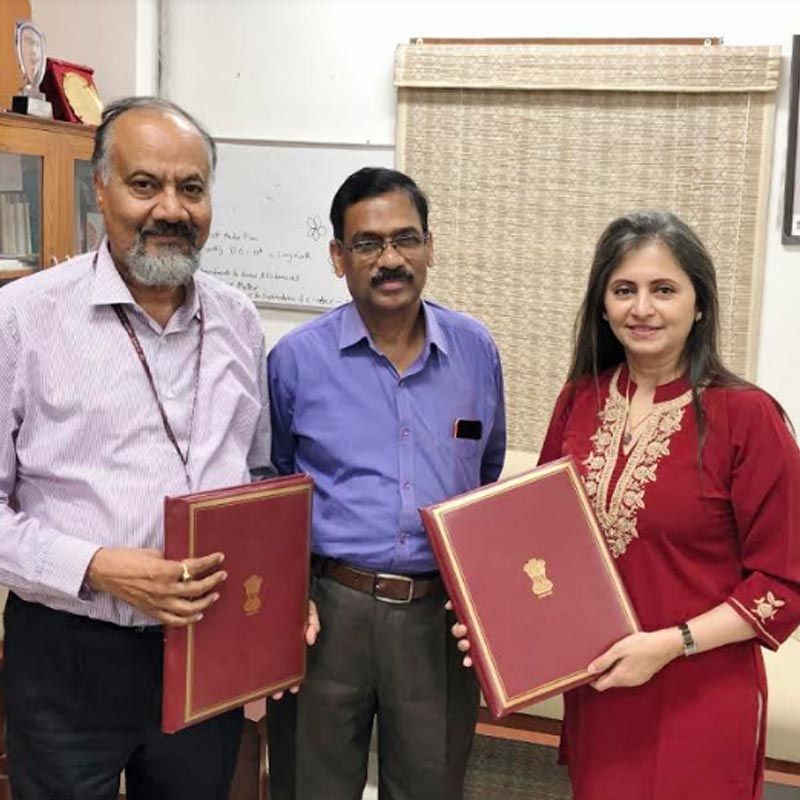
    In a recent development, the Department of Consumer Affairs (DoCA) renewed their MOU with ASCI, for the fifth consecutive year. Reacting on this update, ASCI secretary general Shweta Purandare said, “We are extremely happy with this development as this reiterates the government’s faith in the work done by ASCI over the years. What ASCI brings to the table is not just the unique expertise in dealing with complaints pertaining to misleading advertisements but also its suo motu capabilities to monitor a huge number of misleading advertisements in Television and print media. ASCI provides a very efficient mechanism for consumers as well as ensures prompt compliance from advertisers, thus reducing the burden on regulators to focus only on persistent violators.”

    In another significant development, a recent Delhi court judgement too has re-affirmed the remit of ASCI over non-members. All these developments, including renewal of ASCI’s MoU with DoCA, bode well to ensure “more governance” and for building a strong and cohesive ecosystem in the interest of consumers. ASCI is working closely with DoCA to ensure that this collaboration continues with the formation of the Central Consumer Protection Authority (CCPA).

    DIRECT COMPLAINTS

    The advertisements given below were complained against by the general public or by industry members. Of the 79 advertisements complained against, for 21 cases the advertisements were promptly withdrawn by the advertiser on receiving communication from ASCI. For the remaining 58 advertisements, complaints against 21 advertisements were upheld by the CCC, five from Media / Broadcasting sector, three each of the Food & Beverages sector, the Education sector, the Healthcare sector, Personal Care sector and four from the ‘Others’ category. 37 advertisements were not considered to be objectionable or in contravention of the ASCI code.

    Media / Broadcasting

    1. TV Today Network Ltd (India Today Television): The ad-mailer’s claim that “India Today Television No. 1 this Election” made a leadership claim under Single Event Reporting. However, the advertiser had chosen the audience segment as M22+A for this event, which as per BARC Guidelines cannot be a single NCCS segment with an age cut. This was viewed as impermissible use of BARC data. The CCC concluded that the headline claim is misleading by implication as the General Elections ran to several phases. 

    2. ARG Outlier Media (R Bharat): The advertisement’s claims, as translated from Hindi “Real No. 1 Channel” and “India’s No.1 Reporter” were not substantiated. The claim is misleading by exaggeration and implication. The sources for the leadership claims were not indicated in the Ad-mailer.

    Food and Beverage

    1. GlaxoSmithKline Consumer Healthcare Ltd (Horlicks): The CCC observed that in the website advertisement, the advertiser’s slogan “What you eat is not what you get” is juxtaposed with the text – “Horlicks has bioavailable nutrients which get absorbed in the blood and are carried to all parts of the body”. The CCC observed that this statement by the advertiser creates an impression in the consumer’s mind that the advertiser’s product is superior to food because it is bio available. The CCC also noted that juxtaposing "clinically proven" and "bio available nutrients" with other claims made, appears to be misleading because the submitted clinical trial does not unambiguously and fully support these claims. Hence the CCC concluded that advertisers claim of Horlicks having "bioavailable" nutrients” only exaggerates the concept of bioavailability as a gimmick by juxtaposing it with the tagline of “clinically proven” without providing any adequate supporting evidence of the trial of the actual product with reference to the “bioavailability” attribute claimed by the advertiser. The claim contravened ASCI Guidelines on Advertising of Food & Beverages.

    2. Amway India Enterprises Pvt Ltd (Nutrilite Traditional Herbs Range): The print advertisement’s claim “Certified Organic and DNA Fingerprinted herbs with the promise of Purity, Safety and Potency” was considered to be misleading by ambiguity and omission of the reference to the product containing extracts (and not whole herbs). The advertiser is not using the herbs as such in the product but is using their extracts whereas the advertisement headline presents the product range as “Nutrilite Traditional Herbs Range”. The second claim “1 Tulsi Tablet = over 100 dried organic leaves of Tulsi herb” was also not substantiated. The CCC was of the opinion that the word “herb” cannot be used synonymously with the word “extract”.

    Education

    1. NIIT LTD: The advertiser’s claim of “5000 Assured jobs”, is false and misleading by exaggeration, ambiguity and implication. The second claim, “50,000 Students Placed” was not also substantiated with authentic supporting data such as detailed list of students who have been placed through their Institute in the banking sector contact details of students for verification, enrolment forms and appointment letters received by the students, nor any independent audit or verification certificate. The advertisement violated the ASCI Guidelines on Disclaimers.

    Healthcare 

    1. Sun Pharmaceutical Industries Ltd (Revital H Woman): The advertiser’s claim “9/10 women felt energetic after using Revital H Woman” was misleading and inadequately substantiated. The CCC observed that this claim is based on a study done by an independent body, the Home Tester Club. It was noted that while the samples of the test product were couriered to 1000 sample respondents that met the eligibility criteria, there were only 604 members who completed the post-trial survey. The CCC noted that only those with a favourable disposition were allowed to complete the survey. The CCC did not consider the design of the questionnaire to be acceptable or reliable to generate claim support data as only one product was used for the purpose of survey, thus most likely creating bias in favour of the Product in the minds of participants / respondents of the survey. A comparative claim could have been a better approach. Most of the questions were “leading” which would elicit favourable answers for the Product. The advertiser picked only one answer instead of drawing over all conclusion from the data for the claim. This was considered to be distorting the data in order to mislead the consumer by omitting the overall conclusion of the survey.

    Personal Care

    1. Bajaj Consumer Care Ltd (Bajaj Almond Drops Hair Oil): The product claims to have “300% Vitamin E” as compared to unbranded sweet almond oil, based on independent lab test results. The CCC noted that the test report does not provide any details of the unbranded sweet almond oil. According to the CCC, the comparison should have been a like to like comparison i.e. ideally comparison with another branded almond hair oil which would also provide lesser variability in results and more specifically with other light hair oils. The subject matter of comparison was chosen in such a way so as to confer an artificial advantage upon the advertiser or as to suggest that a better bargain is offered than is truly the case.  The CCC concluded that the claim, “300% Vitamin – E” is misleading by ambiguity and implication that the said light hair oil is better than almond oil.

    2. Mankind Pharma Ltd (Manforce Cocktail Condom): The television advertisements aired on multiple channels by the advertiser contravened the the advisory of the Ministry of Information and Broadcasting dated December 11, 2017 that such advertisements can only be aired during the watershed hours i.e. post 10:00 p.m. till 6:00 a.m. The CCC observed that the advertisement ought to have been aired during the watershed hours as several intimate scenes between the male and female protagonists were inappropriate for family viewing, especially by children.

    Others         

    1. Asian Paints Ltd: The advertiser’s claims “Its anti-bacterial technology kills bacteria that enter the house”, “Kills all bacteria” “Asian Paints – The Anti-Bacterial Paint. Recommended by the Indian Medical Association” featuring celebrities Ranbir Kapoor and Deepika Padukone were not adequately substantiated.  The source and date of the studies used as the basis of the claims were not included in the disclaimer. The advertisement was misleading by ambiguity regarding the nature of germ kill and omission with respect to the required contact time. The TVC was misleading by implication that The Indian Medical Association (IMA) has endorsed the product, whereas, IMA had permitted the use of their logo for the “Asian Paints Silver Ion Technology” and not for the product as a whole. The advertiser did not provide any evidence showing that the celebrities had done due diligence prior to the endorsement. The advertisement violates ASCI’s Guidelines for Celebrities in Advertising and the ASCI Guidelines on Disclaimers.

    2. EUREKA FORBES LTD (Dr. Aquaguard NRICH ROs): The advertiser’s claim as translated from Hindi “Aquaguard ki nayi Active Copper technology de paani ko tambe ki shakti, instantly” (Aquaguard’s new Active Copper Technology instantly gives the power of Copper to water) “Tambe ki Shakti, Instantly” (“Power of Copper, Instantly”) featuring celebrity Madhuri Dixit Nene suggests that the product delivers benefits associated with the overnight storage of water in copper vessels, that too instantly. The Recommended Dietary Allowance (RDA) of Copper for adult men and women is 900 μg/day thus for any potential benefit from the presence of Copper, the total daily water intake should correspond to 15% of the RDA level.  However, the advertiser did not intend to associate the claims with any health benefits. Hence it was concluded that the use of the claim “Tambe ki Shakti, Instantly” is misleading by ambiguity and implication that the output water has benefits associated with Copper, since this was not conclusively established by the advertiser. Additionally, there was no evidence showing that the celebrity had done due diligence prior to the endorsement and was found to violate ASCI’s Guidelines for Celebrities in Advertising.

    SUO MOTU Surveillance by ASCI FOR MISLEADING ADVERTISEMENTS

    The advertisements given below were picked up through ASCI’s Suo Motu surveillance of Print and TV media via the National Advertisement Monitoring Services (NAMS) project. Out of 255 advertisements that were picked, 85 cases were resolved immediately wherein the advertisers confirmed that the advertisements were being withdrawn post receiving the complaints. Of the 170 advertisements examined by the CCC, complaints against 169 advertisements were upheld. Of these 169 advertisements, 109 belonged to the Education sector, 37 advertisements belonged to the Healthcare sector, seven belonged to the Personal Care category, five belonged to Consumer Durables, four belonged to Food & Beverage and seven fell in the “Others” category.

    Violation of ASCI’s Guidelines for Celebrities in Advertising.

    1. Fena (P) Ltd (Fena Superwash Powder): The television advertisement’s claim “No.1 choice of millions of consumers” featuring celebrities Preity Zinta, K L Rahul, and Ravichandran Ashwin was not substantiated with verifiable market survey data of the advertiser’s product and other competitor products among representative country wide population, or through a third party validation, to prove that they preferred Fena over other brands in the detergent / bar category.  Hence, the voice over claim having reference to the consumers’ choice for the product quality, is misleading.

    2. Times Internet Ltd (CricPlay): The print advertisement’s claim “India's Favourite Fantasy Cricket Game” featuring sportsman Gautam Gambhir was not adequately substantiated as there was no audited report or third-party validation for the claim. The CCC was of the opinion that star ratings alone are not necessarily a true reflection of a particular app being consumers’ “favourite” or it being preferred over others. Other important parameters such as inclusion of all leading apps across platforms and the actual downloads for each app per platform and whether the apps are paid or free were not provide by the advertiser.

    Education

    1. My Mission: The print advertisement’s claim “Assured success in constable exams” with respect to the courses mentioned, was not substantiated with verifiable supporting data of their students who achieved success in the constable exams. The claim assuring success is misleading.

    Healthcare

    1. Reckitt Benckiser Healthcare India P. Ltd (Ring Guard): The television advertisement’s claim as translated from Tamil “Gives relief from fungus in 7 days” was inadequately substantiated. The said claim when seen in conjunction with the visual of a “ring worm on the hand disappearing completely in 7 days”, implying cure, is misleading by gross exaggeration and implication. The advertiser acknowledges that the product only provides a symptomatic relief from “symptoms” of fungal infection. The CCC observed that as per visual presentation of the advertisement, a consumer is likely to interpret the claim that the product cures fungal infection. The TVC further shows the father, who is afflicted by fungal infection carrying the baby while the corresponding super refers to relief in seven days. Fungal clearance requires much longer treatment and portraying that the product cures fungal infection in seven days is encouraging an unsafe practice especially for a contagious condition. 

    2. Medlife International Private Ltd – Medlife: The print advertisement’s claim, “India's No.1 E-Pharmacy” was not conclusively proven with any verifiable comparative data. It was observed that the advertiser relies on the report by Frost & Sullivan on E-Pharmacy in India – An Exponential, to substantiate its claims. However the source of information in this report is the advertiser’s own blog, hence the report cannot reasonably be accepted as sufficient substantiation. The advertiser market share needed to be independently verified and other players shares like Netmeds, 1MG, Pharmeasy, Myra, CareOnGo and Pharmasafe have to be similarly assessed to ensure that no player has a larger share than the advertiser. 

    3. 1MG Technologies Private Ltd (1mg.com): The print advertisement’s claim “India's Largest Healthcare platform” was not conclusively proven and is misleading by exaggeration and implication. The source for the claim was not indicated in the advertisement.

    Personal Care

    1. Hindustan Unilever Ltd (Men’s Fair & Lovely): The television advertisement’s voice over claim as translated from Hindi, “Real instant fairness in just ten seconds after applying” was misleading by ambiguity and implication. The CCC observed that the “Instant fairness” benefit being referred to by the advertiser pertained to only a “fairer look” due to “coverage” properties of the product ingredient. The product is not capable of changing the skin’s inherent complexion instantly and hence use of the “instant fairness” terminology itself is ambiguous and misleading. The CCC was of the view that the word “asli” (real) means actual complexion.  Choice of such terminology to show a cosmetic effect was incorrect.

    2. Lotus Herbals Ltd (Lotus Sports Sunscreen): The television advertisement’s claim “SPF 100”, was inadequately substantiated. The advertiser did not provide any product specific information such as copy of Product approval license, product label, and Product composition details nor any scientific or technical rationale for the product claim. As per excerpt of the test report, the product was tested for in-vitro sun protection factor analysis and determination of PA rating as per COLIPA 2011 method. The CCC considered this claim support data to be inadequate and was of the opinion that the SPF values were based on in vitro test and the same benefit was not conclusively proven for in-vivo situation.

    Consumer Durables

    1. Bajaj Electricals Ltd (Bajaj Ceiling Fans): The television advertisement’s claim as translated from Marathi “India’s first anti germ fan that gives protection against 99.2 percent germs and dust” was inadequately substantiated. The CCC noted that the advertiser’s response and the test report was not exhaustive enough to explain the anti-germ substance used on fan, its concentration, for how many days/months/years this activity is maintained by the fan, contact time required for efficacy and impact of in-room variables on germ kill effect. The claim and the voice over, “India’s first fan with anti-germ technology which gets rid of germs and dust”, implies complete removal of dust and all type of germs, which are misleading by exaggeration.

    Food and Beverage:

    1. Rasna Private Ltd (Rasna Insta Energy): The television advertisement’s claim “Compared to other energy drink Rasna Insta has real fruit powder”, was not substantiated with verifiable comparative data of the advertiser’s product as compared to all other energy drinks on the real fruit powder content and is misleading. In the advertisement the ASCI Guidelines on Disclaimers were also violated as the disclaimer was not in the same language as the voice over.

    Others

    1. Sumix Baby Wear & Care: The television advertisement’s claim as translated from Malayalam “Made from 100% comp cotton gives relief from allergy” was misleading as the advertiser did not provide any substantiation for their product providing relief from allergy. It was observed that that while cotton clothing helps the skin breathe easily and is comfortable for a person suffering from allergy, it does not provide freedom from / cure to the allergy.

  • ASCI upheld complaints against 114 advertisements out of 206. 49 other advertisements promptly withdrawn, 43 were not objectionable

    ASCI upheld complaints against 114 advertisements out of 206. 49 other advertisements promptly withdrawn, 43 were not objectionable

    MUMBAI: During the month of April 2019, ASCI investigated complaints against 206advertisements, of which 49 advertisements were promptly withdrawn by the advertisers as soon as they receivedthe ASCI communication. The Consumer Complaints Council (CCC) of ASCI upheld complaints against 114advertisements out of 157advertisements evaluated by them. Of these 114 advertisements,59belonged to the education sector, 35 belonged to the healthcare sector, five to personal care,two to the food & beverages sectorand 13were from the ‘others’ category.

    The CCC observed that one renowned cricketer was endorsing a prominent brand for payment gateway, implying leadership claim and presenting the product as a “card” which was not substantiated and was misleading. A well known refrigerator brand’s claim of keeping vegetables fresh for up to 30 days was considered to be misleading. In one instance, “100% Genuine Medicines” claim by an online pharmacy was not substantiated with any verifiable supporting data such as a list of registered FDA approved pharmacies supplying the said medicines. A learning app was making a claim of millions of students learning from their app which was not substantiated. 

    A large number of complaints were pertaining to the education sector wherein the advertisers were making unsubstantiated claims of they being No. 1, winning awards or “100% placement” luring students.The CCC also came across a significant number of advertisement of hospitals and clinics making unsubstantiated claims about their services being the best, they being bestowed various awards or the hospitals being able to curevarious conditions ranging from infertility to piles, diabetes, HIV and Cancer.

    Mr D Shivakumar, Chairman, ASCI said,“Over the last three decades, we have worked on many fronts to ensure awareness and acceptance of self-regulation in advertising. More recently ASCI has launched its digital campaign “Self-Regulate before it is too late”, towards encouraging better industry participation for protecting self-regulation of advertising. It is important that advertisers work together with ASCI to build a strong and cohesive self-regulatory ecosystem to ensure that advertising stays trustworthy and independent of external controls.”

    HEALTHCARE: – 35advertisements complained against

    •    Direct Complaints (Threeadvertisements)
    •    Suo Motu Surveillance by ASCI (32advertisements)

    EDUCATION: – 59advertisementscomplained against

    •    Direct Complaints (Four advertisements)
    •    Suo Motu Surveillance by ASCI (55advertisements)

    FOOD AND BEVERAGES: – 2advertisementscomplained against

    •    Direct Complaints (Twoadvertisements)

    PERSONAL CARE: – 5advertisement complained against

    •    Direct Complaints (Threeadvertisement)
    •    Suo Motu Surveillance by ASCI (Twoadvertisements)

    OTHERS: – 13advertisements complained against

    •    Direct Complaints (Eightadvertisements)
    •    Suo Motu Surveillance by ASCI (Fiveadvertisements)

    DIRECT COMPLAINTS

    The advertisements given below were complained against by the general public or by industry members. Of the 70advertisementscomplained against, for 8 cases the advertisements were promptly withdrawn by theadvertiser on receiving ASCI communication.For the remaining 62 advertisements, complaints against 20 advertisements were upheld by the CCC of whichfour belonged to the Education sector,  threebelonged to Healthcare sector, threetoPersonal Care sector,two belonged to the Food & Beverages sector,  and eightto the ‘Others’ category.

    Education

    The CCC found that the claims made in following two advertisements were misleading by exaggeration and  exploited consumers’ lack of knowledge and lead to widespread disappointment in the minds of consumers. The advertisements also violated ASCI’s Guidelines for Advertising for Educational Institutions and Programs.

    1.    Toppr Technologies Pvt Ltd (Toppr Learning App): The print advertisement’s claim, “7 Million students are learning on Toppr” was not substantiated with authentic supporting evidence or with an independent audit or a verification certificate. 

    2.    LegalEdge Tutorials: The advertisement’s claim, “Crack CLAT in 55 Days” was not substantiated with verifiable supporting data. The claim “India’s Best Institute for CLAT” was not substantiated with any market survey data, or with verifiable comparative data of the advertiser’s coaching institute and other similar coaching institutes in India, to prove that it is better than the others in providing coaching for students for CLAT, or through an independent third party validation. 

    Complaints against advertisements of two educational institutes listed below wereUPHELD mainly because they mademisleading and unsubstantiated claims such as providing 100% job placement guarantee  OR claiming to be the No.1 in their respective fields.

    Goal Institute, 
    Mumbai College of Hotel Management and Catering Technology.

    Healthcare  

    Following advertisements in the healthcare sector were found to be misleading that exploit consumers’ lack of knowledge and could lead to widespread disappointment in the minds of consumers 

    1.    Meenakshi Mission hospital & research centre: The television advertisement’s claims (as translated to English), “Our Meenakshi Mission hospital, first laparoscopy treatment was done in world level”, “In 1993, world’s first laparoscopy treatment was done to remove lung and liver tumours” and “……. Always first, ……..” were not substantiated with verifiable data such as comparison with other hospitals worldwide to prove that they werethe first to perform laparoscopic surgery to remove lung and liver tumours, or any audited market survey data, or through a third-party validation. 

    2.    PharmEasy: The advertisement claim, “100% Genuine Medicines” was not substantiated with any verifiable supporting data such as a list of registered FDA approved pharmacies who have tie-ups with the advertiser and how the advertiser ensures that all medicines supplied are 100% genuine. 

    3.    Sharanya Avenue(Know health- Summer weight loss 2019): The advertisement’s claim, “Up to 10kgs in one month with dietician Neha…!”, was not substantiated their treatment procedure for weight reduction nor did they provide evidence of their customers who achieved the claimed results of over 10 kg weight loss regardless of their physiological status with dietician Neha.  Claim, “1000 plus satisfied clients” was not substantiated with supporting evidence of the clients who have been successfully treated at the advertiser’s clinic. Also the claim, “Top 3 Winner Awards” was not substantiated with copy of the award certificates, details of the criteria for granting the award, references of the award received such as the year, source and category, and details about the awarding body, and is misleading by omission of disclaimer to qualify the same.   

    Personal Care 

    1.    Hindustan Unilever Ltd (IndulekhaBringha Shampoo):It was concluded that IndulekhaBringha Hair Cleanser is not directly beneficial for hair growth like IndulekhaBringha oil. The advertisement called out benefits of Indulekha Oil and presented Indulekha Hair Cleanser as additional product.  The Hair cleanser product depicting mnemonic of hair root identical to that shown on the oil product pack and claiming “prevents hair fall” was therefore considered  to be misleading.  The disclaimer in fine print at the back of the package stating `hair fall due to breakage’, was in violation of ASCI Guidelines for Disclaimers.

    2.    Hindustan Unilever Ltd (Dove Intense Repair Shampoo & Conditioner): The advertisement’s claim, “New” was not substantiated for the product formulation. The new packaging used a theta sign (θ) on a red background where the word NEW is mentioned; However, it was not shown as to what aspect of the product is new anywhere on the front of the container. On the rear side of the pack, it has been mentioned that NEW refers to ‘New Pack and Formulation’.Furthermore, in the advertisement, although it has been mentioned the word NEW (Naya) means new pack & new formulation, there is nothing to indicate that in fact there is a new formulation. The advertiser did not submit any authentic and verifiable evidence comparing the composition of the old formulation of Dove Intense Repair and the re-launched version. Advertiser did not submit physical sample of the old products as well. It was concluded that the claim “New” was not substantiated for the product formulation and was misleading by implication. The advertisement also contravened ASCI Guidelines on claiming “New/Improved”. 

    3.    Lotus Herbals Ltd (YouthRx Anti-Ageing transforming crème): The advertisement claim, “Contains Ground breaking Gineplex Youth Compound derived from potent natural ingredients that are clinically proven to accelerate lifting and firming”, and “The potent active ingredients include ginseng which activates cell metabolism and boosts collagen production and ginger which has more than 40 antioxidants and milk peptide” were not substantiated with technical details, composition of the product and evidence of product efficacy. The claims are misleading by exaggeration.

    Food and Beverage

    The CCC found that the claims made in the following two advertisements were misleading that exploit consumers’ lack of knowledge and lead to widespread disappointment in the minds of consumers.

    1.    NESTLE INDIA LTD (NesPlus Multigrain Kokos): The advertisement’s claims, “Stays Crunchy even in warm milk” and “Jo RahegaGaramDoodh me bhiKadak” were supported with data that the product remains “crispy” for up to four minutes in warm milk. Reference to this time period was missing in the advertisement. The TVC and print advertisement was misleading by omission and ambiguity, andin contravention of ASCI Guidelines for Disclaimers.

    2.    United Breweries Ltd (Kingfisher Radler Bottle Artwork, Kingfisher Radler Lemon Can Artwork): The television advertisement’s claim, “100% natural”, is in violation of the FSSAI Notification dated 19th November 2018 (Schedule V), which refrains advertisers from using “natural” in the advertisement unless it meets certain criteria. As per the FSSAI Notification “Composite foods cannot be described directly or by implication as `natural’ but may be described as `made from natural ingredients’. Based on this observation, it was concluded that the claim, “100% Natural” for this composite beverage was misleading and is in contravention of the ASCI Code. 

    Others    

    The CCC found that the claims made in the following seven advertisements were misleading that exploit consumers’ lack of knowledge and lead to widespread disappointment in the minds of consumers. 

    1.    EUREKA FORBES LTD (Dr.Aquaguard NRICH range of ROs): The advertisement’s claim, “Optimum amount of Micronutrients” / “Balanced Copper in Every Drop” was unsubstantiated and misleading by implication. The product configuration is based on BIS Standards and not on RDA standards, therefore, claims are related to safety and not to nutrients. The claim “Get equivalent power of dry-fruits” was not adequately substantiated as the composition as well as the overall bioavailability and nutritional value of ROs and Dry Fruits products are not comparable. The claim “Equipped with most advanced Patented Technologies Active Copper Maxx, Biotron and Mineral Guard” was misleading by implication as the grant for the patent is still under process.

    2.    MastercardIndia: The television advertisement’s claim with celebrity MS Dhoni, “Bharat Ka Card”, implies leadership claim which was not substantiated, and is misleading by ambiguity. It was observed that while the advertiser has taken a stance that their Mastercard is a payment gateway, the visual in the TVC shows a physical card. Also it was observed that there was no evidence showing the Celebrity, Mr. M.S. Dhoni had done due diligence prior to the endorsement. There was a violation of Guidelines for Celebrities in Advertising.

    3.    Times Network Ltd (ET Now): The channel in their promos circulated the BARC data claim to be the No.1 channel starting 14th Feb 2019 during Week 6,7,8,9 & 10. The BARC advisory dated 31st January 2019 which was updated on 14th February 2019, was applicable during the period of the advertisement complained against. In the context of impermissible use of BARC data, the CCC concluded that the TV Promos contravened Chapter I.3 of the ASCI Code.

    4.    Paisabazaar Marketing and Consulting Private Limited:The advertisement’s claim, “2 minute mein loan approval” (“Loan Approval* in 2 minutes”) regardless of the disclaimer, “…..*Provisional Loan Approval in 2 minutes”, is misleading as the key operative word “provisional” is missing in the voice over itself. The claim, “Loan Approval in 2 Minutes “with the protagonist categorically stating “fatafat paisa aapke account mein”, implies that the money would be available in the person’s account as quick as in two minutes, whereas the actual fact is that the transfer of money could take upto ten days. Any normal Customer is bound to believe that the Loan will be approved in two minutes and amount will be credited almost immediately. The advertisement is misleading by ambiguity and implication.  

    5.    IPSIT Group (IPSIT Projects): The hoarding advertisement’s claiming, “Tax Free Homes* – *Free Stamp Duty Registration & GST” at Palghar was misleading. The free stamp duty registration and GST was available to customers who purchase the flat at the given rate and not at a negotiated rate. The terms and conditions for the offer were not readily available for the customer or on the advertiser’s website. 

    6.    Brandzstorm India Marketing Pvt. Ltd.  (Luxxuberance): The advertisement’s claim, “India’s first multi brand handbag and accessories store”  was not substantiated with any verifiable comparative data nationwide, of the advertiser’s store and other similar stores to prove that they are the first store in India that sells multi brand handbags and accessories. The claim is misleading by exaggeration.

    7.    Voltas Ltd. (Voltas Beko Refrigerator): The advertisement’s claim, “…tees din taksabziyaan fresh rahengi”, (Vegetables will remain Fresh up to 30 days) was not substantiated, and is misleading by ambiguity, implication, and exaggeration. The disclaimer in the advertisement talks of `specific vegetables’ remaining fresh which is contradictory to the voiceover and main message conveyed of keeping vegetables’ fresh, implying that all vegetables will remain fresh. Additionally the disclaimers in the TVC were not in the same language as the audio of the TVC (Hindi) hence contravened ASCI Guidelines for Disclaimers. 

    8.    RSPL Limited (*) (XpertDishwash Bar): TheYouTube and website advertisement claim, “Big Saver Pack” was misleading. The older “four bar” pack (sold as a 3+1 free) weighs the same as the new “3 bar” pack.Hence, there is no saving delivered by the new pack, and this claim misleadingby distortion of facts, as there is no saving delivered by the new pack. 
     

  • ASCI PROCESSES COMPLAINTS AGAINST 590 ADVERTISEMENTS, OF WHICH 558 WERE REGARDING MISLEADING CLAIMS

    ASCI PROCESSES COMPLAINTS AGAINST 590 ADVERTISEMENTS, OF WHICH 558 WERE REGARDING MISLEADING CLAIMS

    MUMBAI: In August and September 2018, ASCI investigated complaints against 590 advertisements. For 131 advertisements, the advertisers promptly ensured corrective action as soon as the complaints were received. ASCI’s Consumer Complaints Council (CCC) upheld complaints against 355 advertisements from a total of 459 advertisements evaluated by them.       

    Of the 355 advertisements wherein the complaints were upheld, 201 belonged to the education sector, 62 to the healthcare sector, 24 to the food & beverages category, 24 to personal care, seven violated BARC Guidelines  and 37 were from the ‘others’ category.

    The most common reason for upholding complaints were unsubstantiated claims in the Education sector such as providing “100% placement”, “guaranteed immigration”, “No.1”. This was followed by exaggeration of product efficacy and exploiting consumers’ lack of knowledge, violations of Guidelines for Celebrities in Advertising, BARC Guidelines, Drugs and Magic Remedies (DMR) Regulations. Many of the claims were misleading and likely to lead to widespread disappointment in the minds of consumers.

    Amongst various advertisements that were examined, the CCC observed that, a renowned celebrity was found endorsing a well-known air hostess training institute claiming to be “World’s No. 1 institute”. Another advertisement had a popular celebrity endorsing an anti-pimple product promising pimple free skin whereas this claim was inadequately substantiated and misleading by exaggeration. Furthermore, a famous celebrity couple endorsed a soap brand; the advertisement implies that the product has the effectiveness of turmeric whereas the mechanism of action is due to another antimicrobial ingredient. These advertisements contravened ASCI’s Guidelines for Celebrities in Advertising.

  • ASCI introduces ‘Independent Review Process’, appoints Justice Mudgal as chairman

    MUMBAI: The Advertising Standards Council of India (ASCI) has introduced an ‘Independent Review Process’. This procedure facilitates an independent mechanism to review the recommendations made by Consumer Complaints Council (CCC) if either the advertiser or the complainant is dissatisfied with such recommendations.

    The new Independent Review Process will have a chairman, who will be a retired Judge of the Supreme Court/High Court, assisted by the secretary general/chief complaints officer, along with the chairman or co-chairman who was involved in the CCC recommendation and a technical expert, where necessary. Currently, Justice Mukul Mudgal (Retd. chief justice of Punjab and Haryana, High Court) has been appointed by the self-regulatory organisation as the chairman for all Independent Review Process cases henceforth.

    ASCI has been rapidly progressing on various initiatives for upholding self-regulation in advertising, safeguarding consumers’ interest and partnering with various government bodies in restraining misleading advertisements. This has led to a substantial increase in ASCI’s responsibilities and work load. In this background, ASCI appoints Dr. CBS Venkataramana, IAS (Retd.), as the chief complaints officer (CCO), who will play a vital role in driving efficient complaint redressal and 360 degree stakeholder interactions.

    Serving as an Indian Administrative Service (IAS) officer for about 33 years, Dr. Venkataramana has undertaken several important assignments at the State Govt. and Central Govt. level. In his role as the CCO, Dr. Venkataramana will be responsible for managing complaint lodging, investigation, redressal and follow up processes for effective compliance of ASCI codes.

    Commenting on these initiatives, ASCI’s chairman Srinivasan K. Swamy said, “ASCI is constantly evolving and seeking effective measures to enable self-regulation in advertising and compliance to ASCI codes. The inclusion of the Independent Review Process mechanism creates transparency for both advertiser and complainant in further facilitating fair judgement of complaints. Further, the appointment of Dr. Venkataramana will go a long way in ensuring speedier and more effective complaint redressal process.”

    DETAILS: The Independent Review Process is applicable where the CCC recommendations are made after considering the response received from the Advertiser and on fulfilling the following conditions by the party seeking review:

    A written application, in the prescribed form, (available on the ASCI website) has to be submitted within 10 business days of the receipt of CCC recommendations.

    The application is accompanied by a non-refundable prescribed Fee plus applicable taxes.

    The Parties will be at liberty to provide additional information/material not submitted earlier together with the application as per (a) above. Additional information/material submitted by the complainant seeking a review will be sent to the advertiser who shall send his response to the ASCI secretariat in five business days from the date of receipt of such additional information/material.

    The advertiser seeking review confirms suspension of the offending advertisement, pending the Independent Review Process recommendations. By submitting the Independent Review Process application, it is understood that the advertiser shall accept and comply with the recommendations made by the Chairman of the Independent Review Process.

    The Independent Review Process meeting will be convened once in a Fortnight/Month. Both the complainant and the advertiser will be intimated as to the date, time and venue of the meeting at least 5 business days prior to the date of the meeting.

    Proceedings under the Independent Review Process are not adversarial or adjudicatory in nature and hence parties may be represented in the meeting by their company officials only.

    The Chairman of the Independent Review Process, after hearing both parties, will give his/her recommendations within two business days thereafter. In case, additional information or clarification is required from either party or the technical expert, the Chairman may, as per his/her discretion, continue the hearing on another convenient date.

    In the event either of the parties do not wish a personal hearing, the Chairman of the Independent Review Process may complete the review based on the additional information/material submitted and his/her findings would be conveyed over email to both the parties within a period of 2 business days.

    Independent Review Process shall not be applicable in case of ex-parte CCC recommendations. However, Re-examination of such recommendations will be undertaken by the CCC on payment of prescribed fee plus applicable taxes (which at the discretion of ASCI maybe reduced/ waived off in deserving cases) and adhering to the conditions laid down in clause (a) (d) & (e) above.

  • Healthcare products lead in ASCI norms breach, 143 complaints upheld

    MUMBAI: Healthcare products, followed by education category, led in breaching various norms set by Advertising Standards Council of India (ASCI) on advertisements and getting  hauled up for the same in the month of January this year, according to an official statement from the advertising self-regulatory body.

    ASCI yesterday noted that its Consumer Complaints Council (CCC) upheld complaints against 143 out of 191 advertisements. Out of 143 advertisements against which complaints were upheld, 102 belonged to the healthcare category, 20 to the education category, followed by seven in personal care category, six in the food & beverages category and eight ads from other categories.

    Some of the big companies and products pulled up by ASCI include Apple, Amul, Qi Lifecare Pvt. Ltd, Nivea India, HUL, Standard Chartered Bank and Coca-Cola India.

    HEALTHCARE

    The CCC found the following claims of 102 advertisements in healthcare products or services to be either misleading or false or not adequately/scientifically substantiated and violating ASCI’s norms. Some of the healthcare products or services advertisements also contravened provisions of the Drug & Magic Remedies Act and Chapter 1.1 and III.4 of the ASCI code.

    Complaints against the following advertisements, amongst others, were upheld:

    1. Proyurveda Lifescience Pvt. Ltd. (Max ARTHO Capsules, Oil and Gel): The advertisement’s claims that it “helps in protecting joint cartilage by reducing degeneration” and “helps in treating the root cause of joint pain” were inadequately substantiated and are misleading by implication.

    2. Nurture Health Care (Medora Capsules): The advertisement’s claim (in Marathi) as translated into English — “Medora capsules deliver weight reduction without any lifestyle changes” — was not substantiated with evidence of product efficacy and is misleading by exaggeration. 

    3. Qi Lifecare Pvt. Ltd. (Qi Spine Clinic): The advertisement’s claim, “new treatment approach helps 50-year-old achieve complete recovery from 12 years of chronic back pain”, was inadequately substantiated. It was considered that the testimonials did not constitute reliable objective evidence and did not entitle the advertiser to make very broad claims made in the advertisement regarding surgery-free recovery.

    Consumers were likely to understand that the testimonial was genuine representation of complete recovery from chronic back pain by the advertised treatment alone and was representative of the results that could be generally achieved by taking the treatment. Also, since the physiotherapy treatment approach is well established, calling it “new” was considered to be misleading. Further, the claim, “India’s first back pain specialist”, was not substantiated with comparative data versus other similar clinics providing similar treatment to prove this claim.  Also, the claims are misleading by exaggeration.

    4. Shree Maruti Herbal (Stay On Power Capsules): The advertisement’s claim — “clinically 99.99 per cent efficacy proven power capsules” — was not substantiated with clinical evidence of product efficacy.  Also, the claim when read in conjunction with the text in the body copy of the advertisement and product visual is misleading by implication that the product, which as per pack declaration is “herbal supplement for men”, is for improvement in their capacity for sexual pleasure.

    It was noted that this medical product is being presented as an “amazing gift”, which people could exchange for Diwali among friends, and considered to be misleading by ambiguity and a manifestation for a disregard for safety while consumption of the product could encourage negligence. It was further concluded that the advertisement gives a false impression regarding the true character of the medicine and is in breach of the law as it violated the Drugs & Magic Remedies Act (DMR Act).

    EDUCATION:

    The CCC found claims in the advertisements by 20 different advertisers were not substantiated and, thus, violated ASCI guidelines for advertising of educational institutions. Hence, complaints against these advertisements were upheld. Some of the upheld cases are the following:

    1. Vidyamandir Classes: The advertisement’s claim — “cash reward worth (Rs) 2 crore (Rs 20 million)” — was not substantiated with supporting evidence of students who have received cash worth Rs. 2 crore.  Also, the claim (“scholarship up to 100 per cent”) was not substantiated with authentic supporting data such as evidence of 100 per cent scholarships availed by students. The claims were found to be misleading by exaggeration.

     2. Cadd Centre India Private Ltd. (Cadd Centre-Ce): The advertisement’s claims (“First Time Ever In India! 1000 Jobs In 100 Days For Cadd Quest Participants” and “Job Guarantee For 1000 Students”) were not substantiated with verifiable support data such as detailed list of students who have been placed through its institute, contact details of students for independent verification, enrolment forms and appointment letters received by the students, nor any independent audit or verification certificate. The claims are likely to mislead students into believing that the institute is providing permanent jobs.

    PERSONAL CARE

    1. Nivea India P. Ltd. (Nivea Protect & Care Deodorant): The print advertisement has visual of Nivea crème super-imposed on the deodorant can image and claims were considered to be misleading by ambiguity and implication that several other major ingredients (and not only fragrance) of Nivea Crème were added to the deodorant product. The front of the pack claim (“with Nivea Crème ingredients”) accompanied by a visual of cream, and back of pack claim of “with precious Nivea Crème ingredients” is likely to mislead the consumers that Nivea Protect & Care Deodorant has several major skincare ingredients of Nivea Crème. The pre-dominant common element of both the products is the Nivea fragrance. These claims are misleading by ambiguity.

    2. Richfeel Health & Beauty Pvt. Ltd.: The advertisement showcases pictures of results of both pre and post treatment. It was noted that the advertiser did not provide its response specific to the claims/visuals objected to, nor did it provide photographic evidence to prove that the pictures shown in the advertisement (pre and post treatment) are demonstrating the real benefit achieved through the treatment. It was concluded that the efficacy being depicted via images of before and after the treatment are false and misleading by gross exaggeration. Without this evidence, addition of any disclaimers was not considered acceptable.

    3. Hindustan Unilever Limited (Rin Antibac): The advertisement’s claim (“Presenting new Rin Antibac with Ayurvedic extracts removes germs”), accompanied by visuals implying sterile clothes, was not substantiated and is misleading by implication and exaggeration as the advertised product does not have the property to provide germ protection in wear conditions. As clothes will be exposed to different environments, they would be contaminated and would carry germs. Both the claims, that is germ inhibition/sterile clothing in wear conditions and provided only by the advertised product (i.e. other detergent not providing similar benefit), were not substantiated.

    FOOD & BEVERAGES

    1. S.V.Fruit (Go Green Frozen Fruits): It was concluded that while the advertised product may be carbide free, claiming it to “protect from cancer” is misleading by exaggeration.

    2. Gujarat Co-Operative Milk Marketing Federation Ltd. (Amul Butter): The advertisement refers to butter being a rich source of Vitamin A and further states that “eat milk with every meal and live every day, worry-free”. It was considered the latter part of the statement was misleading by implication and encouraging excessive consumption of butter, which may not be advisable from a health point of view.

    3. Coca-Cola India Pvt. Ltd. (Thums Up): The advertisement showcases a rider performing a wheelie on normal streets and traffic conditions amongst a few people.  This is contradictory to the disclaimer made in the advertisement — “the actions are for representational purposes alone and must not be copied by viewers”.  It was concluded that though the overall advertisement is not objectionable, regardless of the disclaimer, the specific visual showing the stunt performed by the rider (wheelie) in normal traffic and/or in presence of bystanders and public encourages dangerous practices and encourages a disregard for safety and negligence.  

    OTHERS

    1. Standard Chartered Bank (Standard Chartered credit card): The advertisement claims that “get up to 10 per cent extra cash back on all spends with your Standard Chartered credit card”. It was considered to be false and misleading by ambiguity as the cash back being offered is limited to Rs.10, 000.

    2. Apple India Private Limited (Apple): The advertisement’s text states that “the amazing iPhone 7 is here”, but shows an image of iPhone 7 Plus variant, which is misleading by ambiguity and implication.  While the advertiser may have a logo/trademark with “iPhone7”, by omission of any reference to the word “series” in the advertisement text and in absence of any visual of iPhone 7 variant, it was concluded that the advertisement is likely to mislead consumers about the product advertised and its corresponding features.

    3. Opera Software Asa (Opera Mini): The advertisement’s claim — “saves data cost up to 90 per cent while browsing” — was not substantiated with supporting data and is misleading by exaggeration.

     ASCI is a self-regulatory organization for the advertising industry to promote, maintain, monitor and uphold fair, sound, ethical and healthy principles and practices of advertising for the protection of interest of consumers and the general public. Established in 1985, ASCI’s role has been acclaimed by various government agencies like the Department of Consumer Affairs (DoCA), Food Safety and Standards Authority of India (FSSAI) and Ministry of AYUSH.

    ASCI and its Consumer Complaints Council (CCC) deal with complaints received from consumers and industry against advertisements that are considered as false, misleading, indecent, illegal, leading to unsafe practices, or unfair to competition and in contravention of the ASCI code for self-regulation in advertising.

    The full list of companies/adverts hauled up by ASCI for breach of norms could be found here.

  • Hathway rebrands in-house channels

    Hathway rebrands in-house channels

    MUMBAI: Hathway Cable and Datacom Limited has given a new dimension to some of its key channels through a rebranding move that includes new packaging and graphics of the five new channels launched earlier this year.

    Hathway CCC is now ‘CCC’, Hathway Movies & Hathway Entertainment is now H-Flicks 1 and H-Flicks 2, respectively, and Hathway Shoppee is now ‘H-Mart’ while H-Tube retains its identity with a new, trendy feel.

    Earlier this year, in April, Hathway launched four channels — DJAY, Lamhe, Home Theatre and Marathi Talkies followed by Divine during the Ganapati festival, thus, strengthening its portfolio of in-house channels. With this rebranding exercise, the platform now has a line-up of movies, music, spiritual and a consumer-centric channel which offers diverse content to its subscribers with the right mix of localisation.

    Commenting on the rebranding efforts, Hathway Cable and Datacom video business president Tavinderjit Panesar stated, “Our continuous efforts to streamline and create a robust portfolio of Hathway channels has seen another step forward with the refreshing of our key channels — CCC, Flicks 1, Flicks 2, H-Tube and H-Mart with the right degree of positioning and vibrancy. We firmly believe in making this as a true differentiator in the industry and build a value proposition for our subscribers.”

    All these channels will be available on a pan-India basis with Flicks 1 and Flicks 2 offering regional and local content for specific regions.

    With digitization and growing consumer demand, the cable segment sees a big opportunity in providing differentiated & value-for-money content. With this rebranding, Hathway now has a unique, potent offering of 10 major in-house channels available for its subscribers unlike some of its competitors.