Tag: CBS Corp

  • Competing with Google & FB on free side and with Netflix and Amazon on subscription — Hotstar CEO Ajit Mohan

    One of the early movers in the Indian over the top (OTT) space, Hotstar – – part of the Twenty First Century Fox-owned Star India – has been setting a scorching pace for itself. In a nation where high data costs made customers wary of consuming content when on the move, it displayed a voracious appetite for acquiring them. Today, its massive subscriber base equals or surpasses the total subs of all the VOD services in Asia and rivals that of the big boys in the US.

    It has also been aggressive in its content strategy – paying top dollar for movies and TV series from  top notch Hollywood studios as well as for sports telecast rights.

    21st Century’s Fox’s leaders – the Murdoch brothers Lachlan and James – along with the Star India management led by Uday Shankar and Sanjay Gupta – are quite bullish that the investments being poured into Hotstar are well worth it and should bear fruit, sooner than later. Estimates are that around $500 million has so far been pumped into the VOD service.

    The man in the hotseat at Hotstar has been the US returned executive Ajit Mohan who has been steering it right from day one three years ago. With single minded focus, he has been at his task of building a robust product and a team that helps it remain so.

    The publicity shy Mohan was one of the Indian VOD leaders who had a one on one with Indiantelevision.com founder, CEO and editor in chief Anil Wanvari at the highly successful  second VIDNET OTT conference in Mumbai two weeks ago.  Excerpts from the conversation:

    First of all, I would like to start by congratulating you on your CBS Showtime deal. Tell me little more about it?

    If you look at what we have built on Hotstar premium we feel pretty proud. I think we have built a fairly distinctive subscription service which in many ways I think compares to the best in the world.  I am not sure that there is any platform worldwide that brings together the best studios for American TV shows and movies. With Hotstar Premium we have HBO, Fox and Disney movies exclusively. And we thought that the only missing piece was Showtime. So we have done an exclusive partnership with  Showtime to both bring the Showtime brand and also the best of their marquee shows  to India on Hotstar.

    I think it really completes our offering. We have built a free service that has scaled up dramatically in the past two and half years or so. Now we are kind of applying some of the same rigor and aggression on P remium as well.  From the content proposition point of view I feel pretty good about how it  looks like.

    What will we get to watch? What kind of shows and will it be on same day and date?

    It is. One of the promises we have as pat of the English part of Premium is that all the TV shows will be aired at the same time as  the US. That’s true for HBO, Fox and it will be true for Showtime as well. Billions, one of their best shows will be on Hotstar and Twin Peaks too. Overall, I think it’s a pretty exciting roster.

    I think more than any individual shows what I am excited about is that both HBO and Showtime in the US have created these fabulous premium pay TV propositions on the back of really redefining what a high quality  American show looks like. I think  by bringing them together on the same platform, what we are essentially saying when it comes to English content there really is no need to look beyond Hotstar Premium. Not in terms of other services.  Or not in terms of torrents, which is still a meaningful source of competition for us.

    We will now start investing in educating the market where there is a substantial number of users who have an affinity to English who are spending a lot of time – especially the younger demographic – digging up for content on torrents. And very often they don’t get good quality versions. They don’t get it on time.Or they get It dubbed or subtitled in a language that is not familiar.

    Now the reality is that as a consumer in India you don’t need to have  to go through the pain. It may be difficult for them to understand the richness of the proposition that is  on offer today. Now when you compare it to consumers in any other part of the world today; the Indian consumer has probably the best deal.  Rs 199 per month only…I don’t think price is a  challenge anymore. So I think it’s more about creating  awareness.  And I think there is still a segment – especially in the younger demographic – who believes it’s cool to pirate. And I am sure that philosophy will be carried by a lot of people. For most people,  it is just creating awareness that there is a serious ease of getting almost every show that you want on Hotstar Premium at a price that is quite affordable. And that is what we are going to invest in on the back of the Showtime deal and what we already have on Premium. And taking it to a mass market in a way that’s not been done in this country before.

    So will you have Hindi sub titles? Or in any other languages?

    Currently, it’s English subtitles. I think the fundamental  point you are making is improving accessibility, can dramatically expand the audience for English TV shows or movies in India. Hollywood has shown that with dubbing. The direction we are moving is to make it accessible by subtitling in multiple languages which you will see over the next few months.

    How are you doing on the app download front?

    We have crossed 300 millions downloads and we are seeing downloads across all operators. Wifi.  Jio obviously has  had a tremendous impact on the ecosystem in terms of expanding access to mobile broadband and increasing affordability. Two things stand out over the last nine months when Jio has had this massive disruption. One is that video has  benefited disproportionately. For us what the last two years -and the last year in particular – has really established is the bet that we made if data was not a constraint,  people will gravitate towards  long-form content including on a mobile. That  what we saw in the early stages of the ecosystem , people consuming short form clips, user generated content  – that it did not represent the truth. It was not the end state; it was the beginning of the market.  That has really played out  And you see that in the data, the time spent time..the watch time on video  has grown disproportionately to social media.. And by multiple factors. And Hotstar has grown – disproportionately to any other video platform.

    300 million I don’t think somebody else has this kind of numbers in the world.

    I think Jio has been an enabler. But more and more you are seeing that for sieving out where consumers are going, both in terms of adoption and in terms of watch time. I think data is an enabler. My sense is that the more people have access to 4G, the cheaper data gets – a high quality propostion like Hotstar that has both the content proposition and is compelling as well  and we are seriously investing in technology to keep improving the consumer experience. I think that combination is quite powerful.

    We are seeing that in the numbers which are substantive. One of the numbers that stands out for us is that just on the Google Playstore globally we crossed 100 million downloads a couple of months ago. From what we know, only Netflix has done that globally outside of Hotstar and may be in the entertainment space, Spotify. And it does feel like even being in one market in India, I think  the scale of what we are seeing clearly compares to the best in the world.

    I believe this should be a moment of pride for the country as well that in the mobile ecosystem that we are blazing the trail in terms of what can be done. And for us, we really think of ourselves as “we are not replicating models that have happened in other parts of the world. We are truly creating a template for what a mobile centric business could look like which would be relevant in any market.”

    How many of these are active?

    In the month of May and June 2017, we crossed more than 100 million active users

    How would you define these actives?

    Somebody coming and spending meaningful time at least once a month. The reality is almost everyone who comes to Hotstar comes multiple times a month. And very often multiple times a day. But a monthly active way is a good way to look at it as it a common measure for looking at adoption across the ecosystem. And all our 100 millions actives are unique.

    Some of the OTT players are distinguishing between monthly active users and uniques.  

    Digital is an interesting space where is there is no common measurement system in place and that equally applies to Facebook, Youtube or Hotstar. It makes sense to have a common measurement that is consistent. To the extent that  we know how to identify  unique users, their presence on devices, not everyone logs in. It’s not the same login across Hotstar, Facebook, Google  – all of those still remain. But We are seeing more than 100 million users coming to Hotstar.

    Are you still in the consumer acquisition mode or you have passed that. In what phase are you?

    I think we are going to be in a perennial growth mode for a long time because of two reasons: I think that’s the kind of company we want to build. The proposition is so exciting,  it’s relevant for more than 100 million users.

    Second, the context of India where as more people get access to  data… one of the things that we are convinced is the primary use case for getting people getting online can be video and Hotstar.

    The next 100 million or the first 500 million to go on digital in India.. we think mobile video and especially around the entertainment proposition that we have.. more than search, social media or ecommerce we can be the beach head. Because people love stories and it’s relevant for  a larger number of people. From that point of view I don’t think we are going to stay away from focusing on growth for a long time. I think we can be the primary use case for bringing people online in India.

    But your customer acquisition cost are going up or down?

    I think costs are going down. It’s a two and half year old platform now; there is a lot equity of the Hotstar as a brand. Once you reach a certain scale and have broken through I think the organic momentum starts kicking in. We are in the stage where it feels like growth is happening with far less effort than two years ago. Having said that it looks exciting to look for the next100 million users..and the next 100 million users after that.

    It’s not in an optimization mode, it’s in growth mode and in growth mode our focus is all three:  adoption of new users, it’s watch time and the third is revenue.

    I think for a uniquely consumer internet company we believe there is a virtuous cycle between consumer adoption, engagement and revenues.  We don’t see  it as competing, we see it as going together.  

    Varun (HotStar head of product and engineering EVP) said in some conference that he would like get some billion minutes. Correct me if am wrong?

    A year ago in APOSTech in Shanghai Varun had articulated this ambition of crossing a billion minutes a day in watch time. I don’t think we have said this publicly but we have crossed that  number a few times  in the past couple of months.  

    How has the playground has changed since you were here last year. What do you seeing? Your tech is keeping up or you have to spruce up your tech. You invested in Zapr to get some analytics in place. What has changed?

    Three things in my mind have changed.

    We have made significant movement in the past 12 months.  I think we have hired 60 engineers just in the last nine months. I think we are looking at doubling that number in the next six months.

    We have the clarity that we can build something unique in India and compete with some of the best global tech companies. It comes with building our own technology muscle.

    Second, if you look at the consumer internet space with lot of actions across e-commerce, fin-tech and our own media space, we have been quite thoughtful in building a deep bench in leadership. The past 12 months have been marked by a significant bulking up of our leadership capacity in Hotstar.

    Third big change that has happened as a result of that there is starting to be  a bit of a separation in terms of services that are standing out from an adoption, engagement and scale point of view – and clearly that’s happening.

    The last 12- 15 months have seen the launch of whole bunch of new services in OTT and a lot of them have very interesting propositions. They are occupying interesting positions in the market …some fairly niche but if I step back and think about it what we are proud of at Hotstar is we are breaking away when it comes to  serious scale and engagement.

    And for me it looks like we are competing with Google and Facebook on the free side which is all about its large scale,  ad supported and big numbers. And on the other front its subscription, which is still nascent, much smaller audience at the moment, we are competing with Netflix and Amazon Prime. At Hotstar, we have two sorts of vertical, one is the free ad supported business and the subscription business where we are facing two different sets of competitors.

    But I believe the ad supported services, IPL got you good revenues from two partners Vivo and Maruti. Agencies have told me its Rs 20 crore per head.

    I think we did okay.

    But that is serving out well in the terms of revenue.

    One of things is clear to advertisers and that’s a big movement in the last 12-24 months especially at a time when there have been a lot of issues around  brand safety that came up in the UK. I think two things are showing up I think most advertisers started to recognizing that the Hotstar proposition is unique. In most parts of the world high quality on demand content on streaming is completely behind the paywall. Therefore it’s not available for brands to advertise on like you can’t advertise on Netflix in US.

    So Hotstar represents a unique opportunity on digital where for the longest time advertisers could only reach audience through user generated content or short clips whereas on HotStar you get premium content which is very different from most streaming business models.

    Second thing that the advertisers started recognizing the power of its engagement. I think it different when you reach an audience when they are scrolling and checking something on social media for 30 seconds or when watching a 40 second clip. It’s a very distracted audience. So even when you presumably get scale and you get metrics like video views what you are not getting is real engagement that comes with long form content. There is a reason why television helped build brands for 50-60 years. It was because people spent time deeply immersed into stories. And that’s the proposition we offer on Hotstar.

    Sports is driving you plus Hollywood. You kind of have tip toed away from originals unlike what Amazon Prime or Netflix are doing?

    I feel I keep answering this question but for whatever reason people don’t want to embrace the answer – especially my peers. Sports is big on Hotstar.  Sports is less than 15 per cent of our total watch time. It’s definitely played a meaningful role for us.

    But TV shows and movies are much larger on Hotstar. The proposition of Hotstar at least for consumers is  that they know that Hotstar is beyond cricket or sports. On originals, almost everything we have is exclusively on Hotstar on digital. Right from the early stages we believe in the power of exclusive content. Which is why Game of Thrones, a Star Plus show is all exclusively on Hotstar. The originals bandwagon was started by the people who did not have the enough content. I am not sure why Hotstar with the most compelling  content portfolio in the world would want to get on the same bandwagon.

    Why is Republic TV  there on your platform?

    …..For more of the interview click and watch the video  link below

  • Sumner Redstone pushes for CBS-Viacom merger

    Sumner Redstone pushes for CBS-Viacom merger

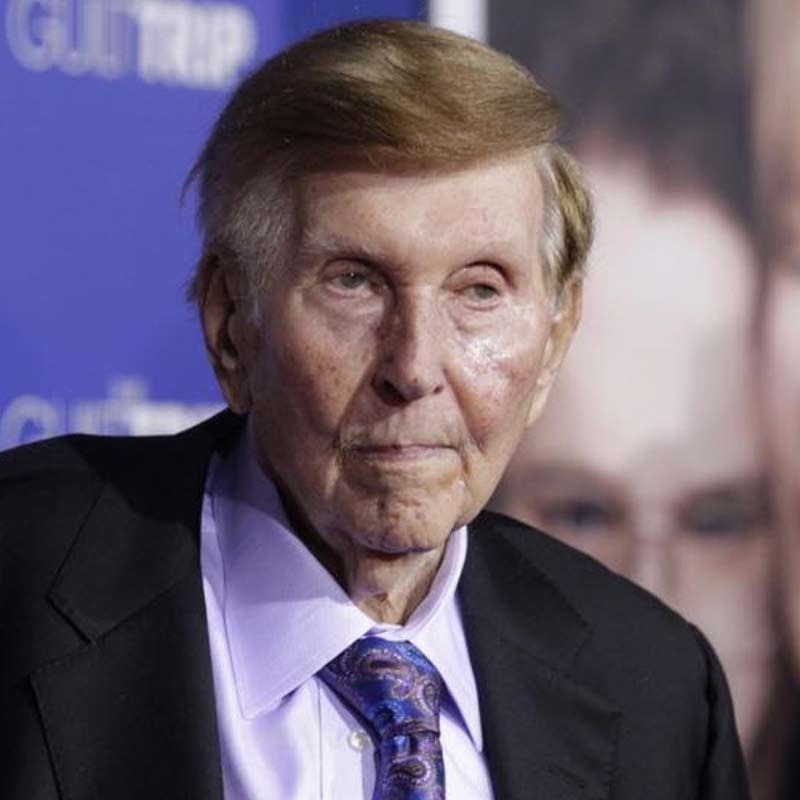
    NEW DELHI: The maverick Sumner Redstone, not letting age dim any of his business acumen, is at it again. Earlier this week he sent a strong message to investors and potential takeover tycoons that he favours a merger of American media companies CBS Corp and Viacom Inc.

    Redstone-family controlled National Amusements, the company that owns 80 per cent of voting shares in CBS Corp and Viacom Inc, on Thursday proposed a merger of the two entities saying it would not support the acquisition of either media company by a third party or surrender its control of either firm.

    National Amusements in a letter to both companies’ boards conveyed that a merger would “offer substantial synergies that would allow the combined company to respond even more aggressively and effectively to the challenges of the changing entertainment and media landscape,” a Reuters report, based on information from Bengaluru and New York centres, said, adding both companies acknowledged receipt of the letter.

    Redstone had split CBS from Viacom 10 years ago as investors saw CBS as a slow-moving company catering to an older audience, while Viacom, whose networks include Nickelodeon and MTV, was considered more youthful. But CBS shares have outperformed those of Viacom over the last five years.

    According to the Reuters report, Shari Redstone, Sumner’s daughter and an owner of National Amusements, has favoured recombining CBS and Viacom under the leadership of CBS Chief Executive Officer Leslie Moonves.

    But for a deal to happen, the Redstones will have to assure Moonves he will have full autonomy over the combined entity, Reuters said basing their observations on unnamed sources.

    Industry speculation that the two companies might come together again increased in recent weeks after the Redstones prevailed over a power struggle that resulted in the departure of Viacom Chief Executive Officer Philippe Dauman.

    CBS’s management and independent directors “will take appropriate actions to evaluate what is in the best interest of the company and its shareholders,” a representative told Reuters. Viacom said it expected its board to form a special committee of independent directors to consider this offer.

    In its letter, National Amusements said the optimal deal would be an all-stock transaction giving holders of each company shares in the combined entity of the same class they currently own.

    Any transaction would require the approval of both boards. Sumner and Shari Redstone will not vote on the deal as directors of Viacom and CBS or participate in deliberations, according to the letter. David Andelman, a CBS director, also will not participate in the process, the Reuters report stated.

    It is within National Amusements’ rights to refuse considering any other acquisition of either company, two lawyers familiar with the matter said on Thursday.

    In India, Viacom Inc has a joint venture with Mukesh Ambani-controlled Network18 group christened Viacom18 that oversees TV channels like MTV, Nick and Hindi language entertainment channel Colors.

  • Sumner Redstone pushes for CBS-Viacom merger

    Sumner Redstone pushes for CBS-Viacom merger

    NEW DELHI: The maverick Sumner Redstone, not letting age dim any of his business acumen, is at it again. Earlier this week he sent a strong message to investors and potential takeover tycoons that he favours a merger of American media companies CBS Corp and Viacom Inc.

    Redstone-family controlled National Amusements, the company that owns 80 per cent of voting shares in CBS Corp and Viacom Inc, on Thursday proposed a merger of the two entities saying it would not support the acquisition of either media company by a third party or surrender its control of either firm.

    National Amusements in a letter to both companies’ boards conveyed that a merger would “offer substantial synergies that would allow the combined company to respond even more aggressively and effectively to the challenges of the changing entertainment and media landscape,” a Reuters report, based on information from Bengaluru and New York centres, said, adding both companies acknowledged receipt of the letter.

    Redstone had split CBS from Viacom 10 years ago as investors saw CBS as a slow-moving company catering to an older audience, while Viacom, whose networks include Nickelodeon and MTV, was considered more youthful. But CBS shares have outperformed those of Viacom over the last five years.

    According to the Reuters report, Shari Redstone, Sumner’s daughter and an owner of National Amusements, has favoured recombining CBS and Viacom under the leadership of CBS Chief Executive Officer Leslie Moonves.

    But for a deal to happen, the Redstones will have to assure Moonves he will have full autonomy over the combined entity, Reuters said basing their observations on unnamed sources.

    Industry speculation that the two companies might come together again increased in recent weeks after the Redstones prevailed over a power struggle that resulted in the departure of Viacom Chief Executive Officer Philippe Dauman.

    CBS’s management and independent directors “will take appropriate actions to evaluate what is in the best interest of the company and its shareholders,” a representative told Reuters. Viacom said it expected its board to form a special committee of independent directors to consider this offer.

    In its letter, National Amusements said the optimal deal would be an all-stock transaction giving holders of each company shares in the combined entity of the same class they currently own.

    Any transaction would require the approval of both boards. Sumner and Shari Redstone will not vote on the deal as directors of Viacom and CBS or participate in deliberations, according to the letter. David Andelman, a CBS director, also will not participate in the process, the Reuters report stated.

    It is within National Amusements’ rights to refuse considering any other acquisition of either company, two lawyers familiar with the matter said on Thursday.

    In India, Viacom Inc has a joint venture with Mukesh Ambani-controlled Network18 group christened Viacom18 that oversees TV channels like MTV, Nick and Hindi language entertainment channel Colors.

  • Viacom’s Sumner Redstone & Philippe Dauman see compensation cuts in 2015

    Viacom’s Sumner Redstone & Philippe Dauman see compensation cuts in 2015

    MUMBAI: Viacom Inc executive chairman Sumner Redstone received an almost 85 per cent cut in his pay for the 2015 fiscal in the light of his ailing health.


    Redstone, who is 92 years old, was paid $2 million in salary in Viacom’s 2015 fiscal year, according to a company filing Wednesday with the Securities and Exchange Commission. In comparison, he was paid $13 million in salary, bonuses and other perks in 2014.


    As was reported earlier by Indiantelevision.com, a shareholder has filed a lawsuit in which it was alleged that Redstone was incapable of continuing to run the company.


    On the other hand, Viacom CEO Philippe Dauman also saw a cut in his pay. In 2015, he received compensation of approximately $36.9 million, which was 17 per cent lower from his 2014 compensation of $44.3 million. On the other hand, Dauman drew a $4 million salary last year. His bonus dropped 30 per cent to $14 million as compared to $20 million in 2014.


    In a statement to explain the drop in compensation, Viacom said, “Mr. Redstone’s salary was unchanged in fiscal 2015. He became ineligible to receive a bonus beginning in fiscal 2015, and has not been eligible to receive an annual equity award since fiscal 2012.”


    However, the company did not give any specific reasons for the cut in pay and compensation.


    While Redstone is Viacom’s controlling shareholder, he holds about 80 per cent voting shares of Viacom and CBS Corp through his family investment vehicle – National Amusements.


    According to the lawsuit filed in Delaware by Viacom shareholder E.F. Greenberg, Redstone received $169 million in executive compensation for his role at Viacom from 2012 to 2014. In addition, he also receives compensation for his role as CBS executive chairman.

  • Viacom’s Sumner Redstone & Philippe Dauman see compensation cuts in 2015

    Viacom’s Sumner Redstone & Philippe Dauman see compensation cuts in 2015

    MUMBAI: Viacom Inc executive chairman Sumner Redstone received an almost 85 per cent cut in his pay for the 2015 fiscal in the light of his ailing health.


    Redstone, who is 92 years old, was paid $2 million in salary in Viacom’s 2015 fiscal year, according to a company filing Wednesday with the Securities and Exchange Commission. In comparison, he was paid $13 million in salary, bonuses and other perks in 2014.


    As was reported earlier by Indiantelevision.com, a shareholder has filed a lawsuit in which it was alleged that Redstone was incapable of continuing to run the company.


    On the other hand, Viacom CEO Philippe Dauman also saw a cut in his pay. In 2015, he received compensation of approximately $36.9 million, which was 17 per cent lower from his 2014 compensation of $44.3 million. On the other hand, Dauman drew a $4 million salary last year. His bonus dropped 30 per cent to $14 million as compared to $20 million in 2014.


    In a statement to explain the drop in compensation, Viacom said, “Mr. Redstone’s salary was unchanged in fiscal 2015. He became ineligible to receive a bonus beginning in fiscal 2015, and has not been eligible to receive an annual equity award since fiscal 2012.”


    However, the company did not give any specific reasons for the cut in pay and compensation.


    While Redstone is Viacom’s controlling shareholder, he holds about 80 per cent voting shares of Viacom and CBS Corp through his family investment vehicle – National Amusements.


    According to the lawsuit filed in Delaware by Viacom shareholder E.F. Greenberg, Redstone received $169 million in executive compensation for his role at Viacom from 2012 to 2014. In addition, he also receives compensation for his role as CBS executive chairman.

  • Q3-2015: Cable Networks & Broadcasting revenues pull down CBS Corp revenue 3.3%

    Q3-2015: Cable Networks & Broadcasting revenues pull down CBS Corp revenue 3.3%

    BENGALURU: CBS Corporation (CBS) reported a 3.3 per cent decline in revenue to $3,257 million in the quarter ended 30 September, 2015 (Q3-2015, current quarter) as compared to the $3,367 million reported for the corresponding year ago quarter. Revenue pulled down because of decline in revenue of two of its four segments – Cable Networks; and Broadcasting, which saw declines of 15.6 per cent and 6.2 per cent respectively in Q3-2015 as compared to Q3-2104.


    CBS’s other segments-Entertainment and Publishing saw revenue growths of 1.1 per cent and two per cent respectively, but not enough to prevent the YoY slide in revenue.


    From the type perspective, CBS’s Advertising revenue and Content Licensing & Distribution revenues declined by 4.3 per cent and 8.3 per cent respectively, while Affiliate and Subscription fee revenue increased 9.2 per cent.


    CBS Total Operating Income for Q3-2015 increased 12.7 per cent to $753 million in the current quarter as compared to $668 million in the corresponding year ago quarter.


    “Thanks to the strength of our great content, CBS continues to have a winning hand,” said CBS executive chairman Sumner Redstone. “Les and his team are capitalising on all of the opportunities before us, and I’m confident they are setting the company up for continued, long-term growth.”


    “During the third quarter, we once again grew our profit and EPS while continuing to increase our investment in content and new distribution services,” said CBS president and CEO Leslie Moonves. “I’m particularly pleased with the gains we’re seeing in network advertising, including underlying ad growth in the third quarter and even better pricing here in the fourth. Plus, having sold less inventory in the upfront, we stand to benefit throughout this television season as we sell our #1 network in a very robust scatter marketplace. Add to that CBS’s broadcast of Super Bowl 50 in February and the upcoming presidential election, you can see why we feel very good about advertising in 2016. At the same time, our non-advertising revenue continues to grow even faster, led by retransmission consent and reverse compensation, which were up 50 per cent in the third quarter and are well on their way to exceeding $1 billion next year. Looking ahead, as viewers increasingly want to access and pay for content in new ways, we see continued increases in subscription revenue from our in-house over-the-top services at CBS and Showtime, as well as those from outside distribution partners. The good news is, no matter how quickly the industry changes — from big bundles to ‘skinny’ ones to a la carte — CBS is positioned to succeed.”


    CBS says that lower YoY revenues in Q3-2015 primarily reflect the timing of television licensing sales and decreases in lower-margin revenues, including the non-renewal of a sports contract and lower pay-per-view revenues. Revenues for Q3-2015 benefited from growth in underlying network advertising, as well as 9 per cent higher affiliate and subscription fees, including a 50 per cent increase in revenues from retransmission consent and CBS Television Network-affiliated television stations.


    The company says that YoY increase in operating income in the current quarter reflects growth in high-margin affiliate and subscription fee revenues, which were offset by lower profits from television licensing.


    Segment numbers


    Entertainment (CBS Television Network, CBS Television Studios, CBS Global Distribution Group, CBS

    Interactive, and CBS Films)


    Entertainment revenues in Q3-2015 rose to $1.93 billion as compared with $1.91 billion for the same prior-year period, primarily reflecting a 55 per cent increase in affiliate and subscription fees. Network advertising revenues were up one per cent despite the broadcast of fewer sporting events on the CBS Television Network. Content licensing and distribution revenues decreased three per cent, primarily reflecting the timing of television licensing sales.


    Entertainment operating income for Q3-2015 of 2015 was $339 million, up 12 per cent YoY from $302 million, driven by growth in higher margin revenues, which were partially offset by an increased investment in programming and digital distribution initiatives says CBS.


    Cable Networks (Showtime Networks, CBS Sports Network, and Smithsonian Networks)


    Cable Networks revenues for the current quarter were $526 million compared with $624 million for Q3-2014, which included significant domestic streaming sales of Dexter and Californication and higher revenues from pay-per-view boxing events. An increase in affiliate and subscription fees, reflecting growth in rates and revenues from new digital distribution platforms, partially offset the decline.


    Cable Networks operating income for Q3-2015 was $246 million compared with $266 million Q3-2014, primarily reflecting the lower revenues. The decline was partially offset by lower programming costs that were mainly associated with pay-per-view boxing events.


    Publishing (Simon & Schuster)


    Publishing revenue for Q3-2015 was $203 million compared to $199 million for Q3-2014. Digital revenues represented 25 per cent of Publishing’s total revenues for Q3-2015. Bestselling titles included The Survivorby Vince Flynn and Kyle Mills and Plunder and Deceit by Mark R. Levin, as well as the continued success of the Pulitzer Prize-winning 2014 release, All the Light We Cannot See by Anthony Doerr.


    Publishing operating income of $43 million for Q3- 2015 increased two per cent from $42 million in the

    Q3-2014, primarily reflecting the revenue increases.


    Local Broadcasting (CBS Television Stations and CBS Radio)


    Local Broadcasting revenue was $638 million for Q3-2015 as compared to $680 million in Q3-2014. CBS Television Stations YoY revenues declined as a result of the benefit to 2014 from the midterm elections and the broadcast of fewer sporting events on CBS in 2015. Growth in affiliate fees partially offset the decline. CBS Radio revenues decreased six per cent, reflecting several non-comparable items, including fewer stations and lower political revenues, as well as continued softness in the radio advertising marketplace.


    Local Broadcasting operating income for Q3-2015 was down 9 per cent to $174 million from $192 million in Q3-2014, primarily because of the revenue decline, which was partially offset by the recent cost-cutting measures CBS put in place.

  • Mipcom keynotes celebrate power of the great story

    Mipcom keynotes celebrate power of the great story

    CANNES: Taking the cue delivered by CBS Corp. president and CEO Leslie Moonves at yesterday’s opening day main keynote, today’s keynotes harked on quality content as becoming ever more critical in a digitally enabled world.

    United Artists CEO Paula Wagner and NBC Entertainment NBC Entertainment & NBC Universal Television Studio co-chairman Ben Silverman both stressed on how important quality content would be in a world of infinite choice.

    Wagner pointed out how global box office receipts of American movies were worth $ 26 million last year, a growth of 11 per cent CAGR. Not surprisingly, more than two thirds of revenues from the movie business came from international markets.

    Wagner pointed to the days of the captive consumer being over and which in turn necessitated ever higher spends on marketing and distribution. 

    Wagner, who with business partner Tom Cruise reached a deal last November with Metro-Goldwyn-Mayer to take over United Artists, said her studio was committed to promoting original and daring commercial projects that would have one key underpinning – great storytelling.

    Wagner made it clear though that these were business propositions so there had to be clarity on the finacial aspects of any project that UA would undertake.

    Creativity with financial discipline would determine their business model, Wagner stated.

    Following on her talk on the movie business was Silverman who declared that his network was committed to and believed strongly that what would work was content built for the global market.

    Silverman cited the Bourne movies as an example of cinema that has an international outlook in terms of cast and shooting locations. He pointed to how that kind of international outlook was also coming into his network’s shows with more characters from the UK, India, Japan, China, etc having important roles in the shows that were being green lighted as well as those already on air.

    As did Wagner, Silverman also noted how important it was to help foster creative vision and ensure the servicing of creative voices.

  • Viacom asks YouTube to remove unauthorized clips

    Viacom asks YouTube to remove unauthorized clips

    MUMBAI: YouTube, the online video sharing site from Google faces yet another controversy as Viacom asks the website to remove more than 100,000 unauthorized clips from its hugely popular video-sharing site.

    Viacom has been through several rounds of talks with YouTube and Google but has not managed a breakthrough as far as ‘filtering’ or ‘revenue sharing’ for clips and video is concerned.

    Viacom said in a statement that after several months of talks with the website “it has become clear that YouTube is unwilling to come to a fair market agreement that would make Viacom content available to YouTube users.”

    Viacom has repeatedly negotiated with YouTube and Google to deliver on several “filtering tools” to control unauthorized video from appearing on the site.

    Although the company is asking YouTube to take the clips down, it has not taken legal action.

    Under federal copyright law, online services such as YouTube are generally immune from liability as long as it responds to takedown requests. But the legal lines blur when another user posts the same video.

    YouTube said in a statement that it would comply with the request from Viacom and said that it cooperates “with all copyright holders to identify and promptly remove infringing content as soon as we are officially notified.”

    In November, YouTube had agreed to delete nearly 30,000 files after the Japan Society for Rights of Authors, Composers and Publishers complained of copyright infringement.

    Some media companies such as CBS Corp. and General Electric Co., NBC Universal have made deals to allow YouTube to use video clips from their programming. But the site is yet to agree over ways to get compensated for the use of their copyrighted material.

    Universal Music Group had threatened legal action for copyright infringement and piracy of music videos. It later reached a licensing deal with them last year.

    Despite Viacom’s problems with YouTube, the company’s MTV Networks division reached a licensing deal last year with Google that allows the search company’s video service to use clips from MTV and its sibling networks under a revenue-sharing agreement.

  • CBS Corp to sell Paramount Parks to Cedar Fair for $1.24 billion

    CBS Corp to sell Paramount Parks to Cedar Fair for $1.24 billion

    MUMBAI: CBS Corporation will be selling its Paramount Parks operation to Cedar Fair, L.P. for $1.24 billion in cash. The transaction is subject to customary conditions, including regulatory and other approvals, and is expected to close during the third quarter.

    The company announced its intention to divest Paramount Parks on 26 January.
    “We’re very pleased with the value we received from the sale of this terrific asset. I want to thank the management and employees of Paramount Parks for their contributions to the parks division and to CBS Corporation,” said CBS Corporation president and CEO Leslie Moonves.
    Commenting on the new deal, Cedar Fair LP chairman, president and CEO Dick Kinzel said, “The five properties we are acquiring fit very well with our existing parks and there is very little overlap.”

    The company said that, the combined operations will generate almost $1 billion in annual revenue from about 25 million customers.

    CBS, which inherited the theme-parks after splitting from parent Viacom Inc. in December, said that it would sell the resorts because they did not fit with its broadcasting focus. This acquisition however, will boost Cedar Fair to become one of the world’s largest regional amusement park operators. Paramount Parks will remain in full operation throughout the divestiture process, informs an official release.

    Paramount Parks’ assets include Great America, Carowinds, Kings Island, Kings Dominion and Canada’s Wonderland.