Tag: CBS

  • Media mogul Sumner Redstone passes away at 97

    Media mogul Sumner Redstone passes away at 97

    Mumbai: Sumner Redstone, the influential US media mogul who owned CBS and Viacom, passed away at the age of 97, as confirmed by his family on Tuesday. Redstone had been a central figure in the entertainment industry for decades, serving as chairman of the board of directors for both CBS and Viacom until stepping down in 2016 due to declining health. His resignation followed internal family disputes over the companies’ control, with his family maintaining a majority stake.

    In late 2019, CBS and Viacom were merged into one entity, managing some of the most well-known television networks and film studios in the world, including CBS, MTV, Comedy Central, Nickelodeon, Showtime, and Paramount Pictures. This consolidation placed the company in the same league as other major U.S. media corporations such as Disney, Time Warner, and 21st Century Fox.

    Born Sumner Murray Rothstein in Boston in 1923, Redstone changed his surname in 1940 to Redstone. He graduated from Harvard University and served in U.S. military intelligence during World War II. In 1954, he joined his father’s business, which he later transformed into National Amusements, one of the largest cinema operators in the United States.

    Redstone survived a near-fatal fire in 1979 and went on to play a pivotal role in shaping the media landscape throughout the 1980s and 1990s. He fought fiercely to gain control of Paramount Pictures and later took over Viacom, which owned MTV and CBS. Viacom and CBS merged in 2000 but split again in 2006.

    Redstone’s remarkable career left an indelible mark on the entertainment industry and his legacy continues through the companies he built and reshaped.Sumner Redstone

  • Paramount Global get $11 billion buyout offer from Apollo Global

    Paramount Global get $11 billion buyout offer from Apollo Global

    MUMBAI: Even as the dust is settling on the $517 million Viacom18 television stake sale deal between Reliance and US media behemoth Paramount Global, comes the news that the latter itself is the target of a a buyout offer. The Wall Street Journal has reported that private equity firm Apollo Global Management, has made a $11 billion offer to the buy the film and television studio. 

    This is not the first acquisition offer that a reluctant controlling shareholder Shari Redstone has received. Earlier, the David Ellison-controlled production company Skydance Media had  proposed to buy Paramount parent National Amusements and fuse it with his firm as a whole. Skydance had bid in excess of $4 billion for a 70 per cent stake. Ellison’s offer – which plans to keep all the studio  assets but sell off the rest – is still on the table.

    Paramount Global’s assets include Paramount Pictures, broadcaster CBS, Viacom cable networks including MTV as well as PlutoTV. The media conglomerate has a current valuation in excess of $7.7 billion. 

    Earlier this month, Paramount’s chief financial officer Naveen Chopra had dismissed any move towards selling the company at a Morgan Stanley media conference. “From management’s perspective, we are focused on execution. And we believe the continued execution of our plan will unlock value. We’re very conscious of the fact that our job as management is to create value for all of our shareholders…To the extent that there are other alternatives, we’ll be diligent about exploring them,” he had said. 

    The company has been grappling with the changing dynamics of content consumption under CEO Bob Bakish. In its latest quarter overall revenue shaved six per cent year-on-year to $7.64 billion, worse than an expected $7.9 billion. TV media revenue and filmed entertainment revenues respectively fell 12 per cent to $5.17 billion and 31 per cent to $647 million. The saving grace was direct to consumer revenues which rose 34 per cent to $1.87 billion.

    “Our disciplined execution and strong content offering drove our results in 2023, as we continue to evolve our business for profitable growth in 2024 and beyond. In Q4, Paramount+ revenue increased 69 per cent,  direct to consumer adjusted Operating income before depreciation and amortization (OIBDA) improved for the third consecutive quarter, and we now expect to reach domestic Paramount+ profitability in 2025 – a significant milestone,” Bakish had told shareholders at the time of the earnings release. “Looking ahead, we continue to be focused on maximizing the return on our content investments and scaling streaming, while transforming the cost base of our business. And I couldn’t be more thrilled with the early momentum we’ve had across every platform in 2024, demonstrating the power of our strategy and assets.”

  • Banijay celebrates 25 years of Survivor

    Banijay celebrates 25 years of Survivor

    MUMBAI: Banijay is celebrating 25 years since the adventure reality format, Survivor, debuted in Sweden in September 1997. The milestone achievement follows the format’s most successful year-to-date last year, with 25 productions in 2021.

    Survivor tests the spirit of a group of ordinary, yet extraordinary people who are marooned, with little more than the clothes on their backs and their own animal cunning. As they catch their own food, build their own shelter and order their own society, castaways must compete in increasingly difficult tests of strategy and guile.

    Ranked the Best Reality Show Of All Time (Variety), Survivor, the format which is created by Charlie Parsons, has been commissioned in 50 territories and is one of the most loved and watched formats around the world. The anniversary follows the recent announcement that Survivor will return to the UK in 2023, with Remarkable Entertainment (part of Banijay UK) producing the series for BBC One and BBC iPlayer. Other recent comebacks for the format include Brazil, Norway, Bulgaria and Romania, with all-new first-time adaptations in Mexico and Serbia, as well as an upcoming launch in Canada (French).

    Banijay global head of content operations Lucas Green said, “Survivor has all the elements of a hit format combining jeopardy, reality, strategy and adventure. Whilst each version is unique to its territory, every Survivor season celebrates the core values of this much-loved show. It has been honed through hundreds of seasons of expertise and is head and shoulders above the countless copycats which never quite stand up to the test. We are proud to produce the original – and in our view the best – adventure reality format on television. Most of all, we give thanks to those hard-working production teams around the world, with whom we celebrate this distinguished anniversary.”

    Amongst the hugely successful iterations around the world are the U.S., which is the longest-running version with season 44 confirmed and more than 7.5 million viewers tuning in to the most recent season on CBS; The Netherlands, which has aired every year since 2000; the hugely popular French series, which will air its 29th season next year; and the originating market Sweden, which recently aired its 21st run of Expedition Robinson. The format also enjoys successful companion shows, all-star spin-offs and celebrity versions.

    Survivor has created iconic moments over the last 25 years. These include an Israeli contestant meeting his child for the first time via video link at the Tribal Council, a player voting off her mum so she could progress in series 29 in the US, a proposal between two All Star contestants in the US. There was even a visit to the beach from Ivanka Trump in the Italian production, in heels and a sequinned dress!

  • Global TV advertising market reached $278 billion in 2020

    Global TV advertising market reached $278 billion in 2020

    Mumbai: The global television advertising market reached a value of $278 billion in 2020, according to ResearchAndMarkets.com’s latest report titled ‘Television Advertising Market: Global Size, Share, Revenue Statistics, Research Report & Forecast 2021-2026’. Looking forward, the publisher expects it to exhibit moderate growth during the next five years.

    Television represents one of the most popular and widespread forms of media worldwide with around 1.6 billion households having one or more television sets. The prevalence of television makes it a preferred choice for advertisements for both large and small businesses. It also offers advertisers the ability to use motion, colour and audio to send a strong and persuasive message to the audience. The audio-visual effects also help in creating a long-lasting and emotional impact depending on the services and audience of the advertisement.

    In spite of the competition from new media platforms, television is expected to remain as the largest advertisement segment. Moreover, the increasing penetration of television in emerging markets such as Latin America, Eastern Europe, Africa, Middle-East, China and India is also expected to drive the television advertisement market in these regions, thereby facilitating the overall growth globally, according to the report.

    It has segmented the market on the basis of service type. Currently, terrestrial TV networks dominate the market accounting for the majority of the total global share. Terrestrial networks are followed by multi-channel and online television segments. Online television currently represents the fastest growing segment. The report has also segmented the market on the basis of industry, listing the key industries which are actively using television advertising.

    The study has further analysed the market on the basis of key regions. North America currently represents the largest region for television advertising. Other key regions include Asia-Pacific, Western Europe, Latin America, Eastern Europe and Middle-East and Africa. The report has also analysed the competitive landscape of the market. Some of the key global players operating in this market are CBS, Comcast, News Corporation, Viacom and Cox Communications.

    The report provides a deep insight into the global television advertising industry covering all its essential aspects ranging from macro overview of the market to micro details of the industry performance, key market drivers and challenges, recent trends, Porter’s five forces analysis, television advertising pricing models, margins in television advertising and more.

  • 2019: The year industry got hit in the gut

    2019: The year industry got hit in the gut

    MUMBAI: The year of churn. Gut-wrenching churn like the industry has never experienced before. That’s how the media and entertainment history books will describe the year 2019. CEOs of media companies had to develop cast-iron stomachs to see it through.

    “We are struggling to just survive,” said a CEO of a leading news broadcaster to indiantelevision.com. “I am praying that I can see through the next 12 months with my head above the water.”

    In the backdrop of an impending global recession sparked off by the trade spat between two presidents – the US’ Donald Trump and China’s Xi Jinping – and the dreaded Brexit chaos under Boris Johnson, the industry had to deal with the cautious mind state that crept into the business on account of the slowdown. Add to this the lending phobia that has become endemic in the banking system, courtesy the implosion of a few financial institutions and banks. Net result: cash evaporated in the economy, leaving many organisation cash strapped.

    The year started with a new TV pricing order which was finally enforced, sending the pay TV broadcast, cable, satellite industry into a tizzy. While welcomed by all, the manner in which it was rolled out was questioned as the distribution fraternity, for the most part, was not geared up for it.  Subscribers vanished. What were considered important genres once were hit by an earthquake that saw ratings plummet. Niche regional language channels suddenly raced to the numero uno spot, thanks to the fact that they were free to air.

    Mergers shook the landscape globally, including India, as the year 2019 and were all set to hit the Indian landscape as the year was ending with Mukesh Ambani having parleys with Sony to merge with his TV18 and Viacom18 venture. Disney went through with the execution of its merger globally with Fox reflected in India in the form of Star absorbing Disney India. Unlike the rest of the world where Disney was the primary driver of the union. Viacom merged with CBS in a deal that could have repercussions worldwide. The promoters of Zee Entertainment Enterprises bit the bullet on ownership, in order to pay off hungry creditors. They chose to sell their equity and retain a minority position, and paid off creditors through the proceeds but keep India’s largest indigenous broadcast network in play amongst the top three.  Free to air channels flourished and blossomed, even as the pay TV sector groaned under the changing paradigm brought about by the new tariff order. However, the entire pay TV sector acknowledges openly that the NTO is the best way forward for the entire industry. On the advertising front, WPP sold 60 per cent of its stake in Kantar to Bain Capital.

    2019 will be noted as the year when advertisers tightened the noose on promotional spends, what with consumer off-take slowing down. Almost every category of product witnessed reduced or stagnant custom.

    The top agencies also splurged to improve their digital expertise. Havas Group acquired UK management consultancy Gate One, UX agency Think Design, and digital agency Langoor.

    It was the year of elections – both at the centre and in different states. But strangely for the news channels, the advertising dollars did not shower on them as expected.

    A relatively insipid festival season meant that not enough cars were driven out of the showroom; not enough consumer – both fast-moving and durables – were bought like it used to be. Estimates were that the advertising industry would have grown at around the pace of the economy.

    Cricket, cricket – it was the year of cricket. 2019 witnessed a host of high-end cricket events rolling outright from the World Cup to the IPL to India’s tours domestically and internationally. And of course, they sucked in a fair bit of ad spends, across Star and Sony.

    But optimism continued to run high as channels continued to hit uplink stations and playout facilities. The Epic group launched a free to air channel and was in line to introduce more. Zee TV was also pacing the sidelines with its new regional language offerings.

    On the distribution front, Airtel flirted with the acquisition of DishTV, which was still recovering from the indigestion it suffered following its swallowing loss maker Videocon d2h. Tata Sky on its part emerged as the satellite platform, which knew where it was headed thanks to the strong leadership, which has instituted discipline in its deal making with content providers and a very strong customer orientation.  The distribution platforms started pushing devices which in turn had the streaming services installed in a bid to retain consumers.

    Streamers gathered steam as the platforms swore to spend big on churning out eye-popping content, even as they continued to focus on customer acquisition and retention. And they tossed around money for productions like a gambler with a winning streak on the casino floor, giving birth to a new breed of producers, creators who let loose cutting edge content, much to the delight of a select bunch of OTT viewers.  Following in the footsteps of their global brethren, the Indian streamers as well acquired or commissioned producers to create exciting local shows. Global leaders in turn had to reorient their pricing strategies and introduce low level value packs in line with that of the Indian OTTs and more suitable to Indian incomes.

    On the people front, the year witnessed upheaval of sorts. The bad economic clime apart, which led to companies focusing on productivity, saw head counts falling. Then there was the merger pressure, which led to attrition. Estimates are that almost 2,500 media executives lost their jobs in 2019.

    Senior executives said sayonara to their companies. Amongst the high profile departures included: Raj Nayak, CEO of Colors, Sunil Lulla at Balaji Telefilms, Sanjay Gupta at Star India, Sunil Nair at Alt Balaji, Ashok Venkatramani at Zee Media, Barc India CEO Partho Dasgupta,  Sneha Rajani at Sony Pictures Networks, Uday Sodhi at SonyLiv, Nikhil Gandhi at Zoom, among several others. 

    Other executives got reappointed: Punit Goenka as the head honcho of Zee Entertainment for the next five years (despite the fact that he – along with his brother Amit and father Subhash Chandra – is a minority shareholder today), and Jawahar Goel as the chief at Dish TV India.   Even as the year was ending, Uday Shankar found a real cool way to fill the mighty big shoes of Sanjay Gupta. He handed over the entire TV operations of Star Disney to his long time regional language colleague K Madhavan, while temporarily retaining control of Hotstar. Apparently, a senior executive with long experience in both television and streaming is slated to be announced as the new Hotstar lead very soon, if insider info is to be believed. Voot hired a new CEO in Gourav Rakshit, who filled in a seat which had been left vacant with the departure of Gaurav Gandhi in 2018.

    Dentsu Aegis Network found a new India CEO in Anand Bhadkamkar as incumbent Ashish Bhasin moved to Singapore to lead as APAC CEO. Its daughter company SVG Media suffered a big human loss with the untimely demise of its CEO Anurag Gupta. Erstwhile COO Deven Dharamdasani was promoted to the vacant post.

    Most of the TV executives are making a beeline for the digital world. Examples: Sanjay Gupta towards Google, Sunil Nair towards Firework, Nikhil Gandhi as Byte Dance boss.

    While 2019 left a lot to be desired for those in the business, executives are hoping that 2020 will prove to be closer to being a twenty-twenty year.

  • MX Player becomes the only platform in India to host the most popular and longest running telenovela – ‘The Bold and the Beautiful’

    MX Player becomes the only platform in India to host the most popular and longest running telenovela – ‘The Bold and the Beautiful’

    MUMBAI: With its vast library of in-demand content, MX Player has been catering  to over 175 Mn Monthly Active Users.  Now, the world’s largest local video player and India’s leading streaming platform is stepping up efforts to serve English speaking viewers by acquiring rights to feature one of the most popular and longest running TV show in America – ‘The Bold and the Beautiful’.

    As part of its content acquisition deal with BBL Distribution, the show that is watched by around 35 million viewers in over 100 countries will now feature on MX Player, making it the only platform in India to host the show.

    Running for over 32 years, The Bold and the Beautiful has made history around the world and is now in India for audiences to binge watch at their convenience on MX Player. The show has completed over 8000 episodes and has remained relevant to its fans and viewers even today. Portraying the lives of the Forrester family and their fashion house, Forrester Creations, it delves into the life of the wealthy family and how love affairs, scandals, and betrayals affect each of the family members and their relationships with each other.

  • CBS, Viacom merge to form ViacomCBS Inc

    CBS, Viacom merge to form ViacomCBS Inc

    MUMBAI: US-based media and broadcasting companies, CBS and Viacom, have announced the news of a merger into Viacom CBS Inc. While Viacom will hold approximately 39 per cent of the shares, CBS will own about 61 per cent on a fully diluted basis.

    The all-stock merger creates a combined company with more than $28 billion in revenue, as suggested by media reports.

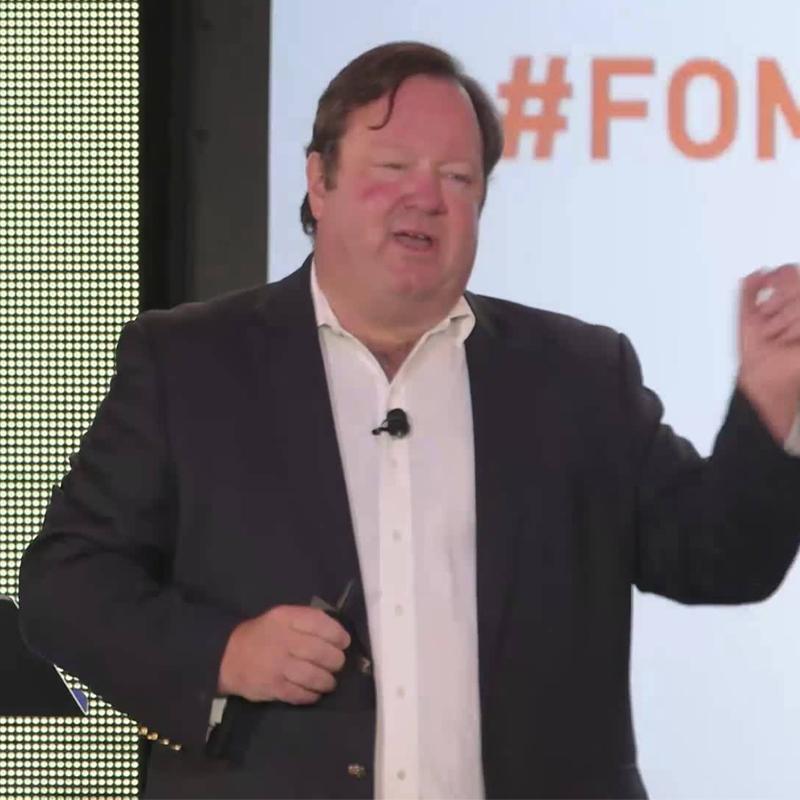
    Erstwhile CEO of Viacom, Bob Bakish will lead the new entity as president and CEO.

    Media proprietor and chairman & CEO of CBS Joseph Ianniello will continue in his role.

    Other key employments include Christina Spade as executive VP and chief financial officer, and Christa D’Alimonte as executive VP, general counsel and secretary.

    The board of directors will consist of 13 members: six independent members from CBS, four independent members from Viacom, the president and CEO of ViacomCBS and two National Amusements designees. Shari Redstone will be appointed chair.

    Bakish said, “Today marks an important day for CBS and Viacom, as we unite our complementary assets and capabilities and become one of only a few companies with the breadth and depth of content and reach to shape the future of our industry. Our unique ability to produce premium and popular content for global audiences at scale—for our own platforms and for our partners around the world—will enable us to maximise our business for today, while positioning us to lead for years to come. As we look to the future, I couldn’t be more excited about the opportunities ahead for the combined company and all of our stakeholders—including consumers, the creative community, commercial partners, employees and, of course, our shareholders.”

    Ianniello said, “This merger brings an exciting new set of opportunities to both companies. At CBS, we have outstanding momentum right now—creatively and operationally—and Viacom’s portfolio will help accelerate that progress. I look forward to all we will do together as we build on our ongoing success. And personally, I am pleased to remain focused on CBS’s top priority—continuing our transformation into a global, multiplatform, premium content company.”

    Vice chair of the boards of directors for CBS and Viacom Shari Redstone said, “I am really excited to see these two great companies come together so that they can realise the incredible power of their combined assets. My father once said ‘content is king,’ and never has that been more true than today. Through CBS and Viacom’s shared passion for premium content and innovation, we will establish a world-class, multiplatform media organisation that is well-positioned for growth in a rapidly transforming industry. Led by a talented leadership team that is excited by the future, ViacomCBS’s success will be underpinned by a commitment to strong values and a culture that empowers our exceptional people at all levels of the organisation.”

    The combined entity will house a portfolio of consumer brands, including CBS, Showtime, Nickelodeon, MTV, BET, Comedy Central and Paramount Network, as well as one of the largest libraries of IP, spanning every key genre and addressing consumers of all ages and demographics. This library comprises 140,000-plus TV episodes and 3,600-plus film titles. The combined company will also have more than 750 series currently ordered to or in production.


  • No action against CBS CEO Les Moonves yet on sexual misconduct allegation

    No action against CBS CEO Les Moonves yet on sexual misconduct allegation

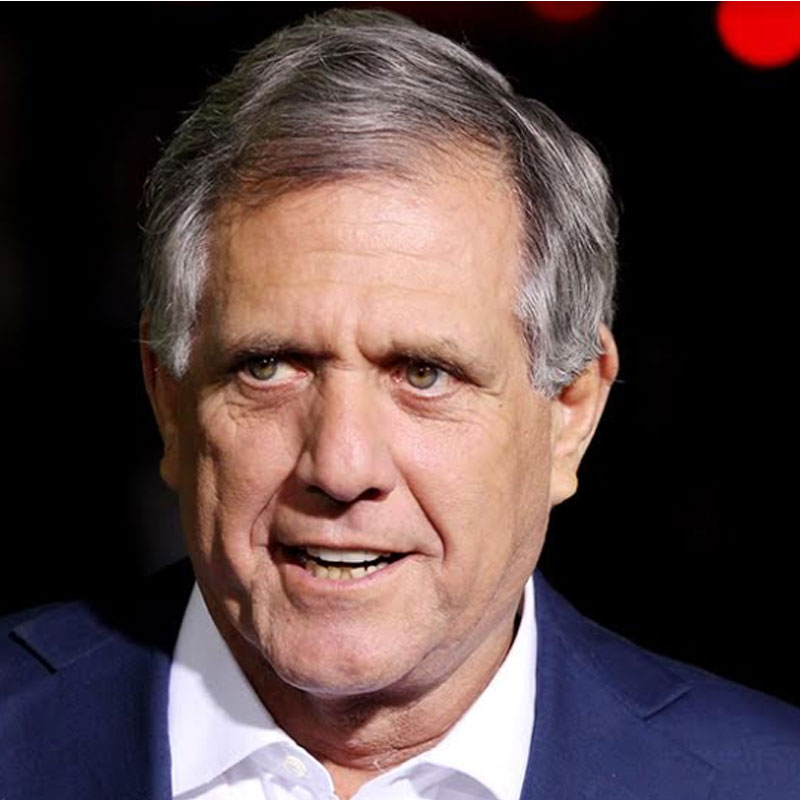
    MUMBAI:  US Network CBS has not yet taken any legal action against CEO Leslie Moonves as its board of directors investigates claims of sexual misconduct against the media titan. On Monday, the company board meeting said that it is in the process of selecting outside counsel to conduct an independent investigation.

    The New Yorker recently released an expose detailing sexual misconduct which was claimed from half a dozen women against Moonves. The allegations come as CBS is at the centre of a very public legal dispute with Shari Redstone and her National Amusements for control of the company.  It was a decision by the board to force Moonves to take a leave of absence. Meanwhile, the investigation is being viewed as a win for Redstone who is trying to merge CBS and Viacom.

    CBS ad sales chief Jo Ann Ross expressed her support for Moonves on Twitter last week, “My experience with him on a professional and personal basis has never had any hint of the behaviour this story refers to,” Ross said on Twitter on Friday night in response to The New Yorker article, which includes sexual misconduct allegations against Moonves by six women, including actress Illeana Douglas.

  • Merger talks on the anvil once again for CBS, Viacom

    Merger talks on the anvil once again for CBS, Viacom

    MUMBAI: Coming on the heels of the Fox-Disney merger, CBS Corporation and Viacom Inc are inching toward formally exploring a corporate reunion of the two halves of the Redstone media empire.

    According to a Variety.com report, there is less opposition within CBS this time around compared to the last attempt by CBS/Viacom vice chairman Shari Redstone to bring the two companies back together in the fall of 2016. The early rumblings are that CBS would acquire Viacom in an all-stock transaction.

    There are still big hurdles to clear in terms of valuation for Viacom, given the systemic concerns around its lower-profile U.S. cable networks, but there is also an understanding that the media landscape is changing fast and the potential for the two sides to work together on international growth initiatives provides rationale for a reunion. Viacom’s share price has also tumbled further during the past year, making a deal more attractive on a financial basis for CBS shareholders. As of Thursday, Viacom had a market cap of $13.8 billion, with shares closing at $33.61. CBS is valued at $22.7 billion, with shares closing at $59.27.

    Sources close to the situation emphasise that neither side has yet engaged bankers or advisers to hammer out an agreement. But CBS Corp. CEO Leslie Moonves and Viacom CEO Bob Bakish have had at least one discussion about the possibility of merging, according to a Reuters report Thursday.

    CBS and Viacom were first brought together in 2000 by Sumner Redstone, now chairman emeritus of both firms. The two were split up again in January 2006 out of Sumner Redstone’s frustration with a sagging stock price.

    Also Read :

    Disney to buy 21st Century Fox assets for $52.4 billion

    With Star India, Disney emerges as India’s largest M&E firm

    Sudhanshu Vats on Viacom18’s growth strategy and why data analytics is key

  • Most TV execs can’t sell streamlined multichannel ads, rely on homegrown tech: Study

    Most TV execs can’t sell streamlined multichannel ads, rely on homegrown tech: Study

    MUMBAI: Most TV companies are unprepared for advanced TV, a research has revealed.

    SintecMedia Survey finds that 69 per cent of TV media executives admitted their inability to sell streamlined multichannel advertising, while 59 per cent rely on homegrown technology.

    SintecMedia, a leading provider of broadcast and digital management software, has announced the results of a research study of TV media executives and agency media buyers about the future of TV, problems facing media companies, and how media companies plan to manage advanced TV advertising and delivery.

    The study includes results from a survey in partnership with MediaPost as well as interviews with executives from market-leading companies including Charter Spectrum Reach, Hulu, Scripps Network, and Turner.

    Fifty-nine per cent of TV media companies rely on homegrown technology to sell their inventory, a fact that will make it difficult for companies to adapt as advanced TV forces new technology and process into the advertising organization. The study also finds that the executives believe that their companies are unprepared for changes. Less than one third, 31 per cent believe that their company has what they need to sell digital and linear TV in a single streamlined process.

    SintecMedia is also a software partner for brands including NBCU, CBS, ABC, AT&T, STARZ, Star India, Seven Australia and Sky. SintecMedia and MediaPost surveyed TV executives, digital executives and agency media buyers.

    TV media executives, the study reveals, are not aligned with media buyers about several key advanced TV elements. While TV executives believe that TV ratings metrics will become the standard for multichannel and advanced TV advertising, agencies believe that the impression will become the significant metric. What’s more, TV companies feel confident that the TV department will take on more digital sales while agencies believe that digital will take on more TV sales.

    The study finds that demand for advanced TV inventory is founded on fast transactions, easy delivery and big scale. Technical and organizational friction within TV companies creates barriers that could frustrate media buyers looking for easy ways to buy audience-targeted campaigns from TV companies, potentially giving digital companies like Facebook and Google a window of opportunity.

    TV companies are, however, in a good position to grab market share in advanced TV if they can overcome technical and operational hurdles quickly.

    “TV companies and digital companies are both vying for advanced TV market share, with widely varying business models. The future of TV requires a profitable combination of quality content, multichannel distribution and ad sales built on a flexible, centralized technology stack. This strategy empowers the media company to control their transactions and make decisions quickly,” said SintecMedia CEO Lorne Brown.

    “Our research shows that many TV executives are facing critical trade-offs to reap small rewards from compromised projects now compared to more ambitions strategic initiatives that ensure that they preserve their control and profitability in the future,” Brown added.