Tag: CBFC

  • Changes in archaic Cinematograph Act can be expected soon

    Changes in archaic Cinematograph Act can be expected soon

    MUMBAI: Aptly titled, “Cuts So Deep: Are We Sacrificing Creativity at the Altar of Morality?”, one of the sessions on the first day of FICCI Frames 2014 spoke about those ‘cuts’ in the films that leave a deep mark in the memory of the filmmakers. Most of the times, these cuts suggested by the Central Board of Film Certification (CBFC) doesn’t even make sense to the people who were involved creatively in the making of the film.


    The debate, in the presence of esteemed guests like Sudhir Mishra, Ramesh Sippy, Ravi Kottarakara, Kajol and the newly appointed CEO of CBFC Rakesh Kumar, highlighted many issues that filmmakers are grappling with because of the guidelines stated in the archaic Cinematograph Act of 1952.


    However, the film industry is pinning its hopes on the new government for amendments to the Cinematograph Act.

    At the session, the filmwallahs brought to the fore how the guidelines push them back by many years by not giving them the freedom that’s actually their right.


    “When a director shoots a scene, he envisions it in a certain way. If there’s a smoking scene, an atmosphere is created with that. When it is cut, the shot loses its charm,” remarked Mishra while putting across an example.


    Another major issue discussed was that of a scroll on the frame showing smoking, sex scenes etc for which filmmaker Anurag Kashyap has even gone to the court and the matter is still pending in the court.


    Another point that came up during the discussion was of giving ‘A’ certificate to certain films based on real issues that need to be promoted all across, while some films just because they come from ‘bigger’ banners are passed with U or U/A even when they have ‘bold’ scenes.


    To deal with all this, a committee headed by Justic Mukul Mudgal is travelling across the country to take suggestions from the film fraternity across India, the audiences and all the other stakeholders involved.

    While Rakesh Kumar from CBFC was left in a fix with complex questions being posed to him, Film and TV Producers Guild of India CEO Kulmeet Makkar came to his rescue by stating that the industry needs to be patient for a little more time. “Since the revised guidelines have already been formed, we may expect things to change pretty soon,” said Makkar, also revealing that 18 of the suggestions discussed in Chennai have already been accepted.
     

    It seems the film industry can soon hope for better days ahead.

  • CBFC set to become more liberal

    CBFC set to become more liberal

    NEW DELHI: Even as it wants the government to approve a late-night slot for adult-rated films on satellite television, the Central Board of Film Certification has asked the Information and Broadcasting Ministry (I&B Ministry) to amend the existing Cinematograph Act 1952 and introducing more certification categories such as UA-15 (nobody under 15 can watch the film) as opposed to the broader and the often-violated UA (universal viewing in the presence of an adult).


    In a statement issued by eminent danseuse and CBFC Chairperson Leela Samson, members should be debarred from serving more than two consecutive terms.


    The statement issued after a meeting with senior officials in the Ministry including Joint Secretary (Films) Raghvendra Singh, Samson said cine-literate members who have been recommended by the CBFC chairperson should be taken on the examining committee’s advisory panel, the first set of people that certifies films.


    A Ministry official told indiantelevision.com that it would examine the recommendations and take an early decision as it was keen to move the amendments to the 1952 Act and has already placed a version of the amendments on the website of the Ministry.


    However, the chances of any changes are unlikely in the immediate future since the election code may come into force and in any case the Government is keen to pass some anti-corruption bills in the coming session.


    She said the CBFC delegation told the Ministry officials that the recommendations should be taken “seriously so that we can have more cinema savvy and informed people who view and certify films.”


    Another recommendation is for organising workshops to guide new advisory panel members in the process of certification.


    Samson said the aim of the meeting was to urge a more progressive attitude towards certifying films in India, moving away from the concept of censorship to that of certification.


    She said the meeting had gone over “some radical recommendations” that were “likely to see far-reaching changes in the way films are certified” if accepted and implemented.


    The immediate reason for the meeting – which was held even as the Ministry is giving a final shape to the amendments to the 2952 Act – appears to be the recent suggestions by new CBFC chief executive officer Rakesh Kumar for stricter censorship. This had led to several statements from different quarters and led to some tension between the Board and some conservative members of an examining committee.


    “This Board has always interpreted certification guidelines in the most sensitive, liberal and progressive way, reflecting the rapidly maturing sensibilities of our audiences,” she said in the statement. “However, several roadblocks have prevented it from implementing this changed outlook. To resolve this situation, we have today given a list of recommendations to the Ministry.”


    She said censorship must be replaced with certification, and the Board’s job is to give the film its appropriate certificate rather than suggest cuts.


    Her opponents and some private litigants have filed public interest litigations in various courts against the Board and believe that CBFC must act as the custodian of public morality and must, if necessary, trim scenes of sex, violence, profanity and vulgarity.


    Earlier, the Board had initiated a few measures to make the transition towards certification, such as organising state-level film orientation workshops and a festival titled Cut Uncut to discuss the history and ramifications of censorship.


    Within the Board, the move towards certification, which is distinct from censorship, has resulted in the contentious decision to certify films with a UA or an Adults only certificate with either zero or minimal cuts. But this has led to some controversy.


    Observers also said that a lot would depend on the government that will come into power after the elections as some members were political appointees. 


    A spokesperson for the Film Federation of India said on phone from Mumbai that the industry was in favour of a more liberal form of certification, particularly in view of the new media.

  • Bombay HC asks board to reconsider certification of Bhansalis film

    Bombay HC asks board to reconsider certification of Bhansalis film

    MUMBAI: The Bombay High Court on Wednesday directed the appellate tribunal of the Central Board for Film Certification (CBFC) to reconsider the U/A certification given to Sanjay Leela Bhansali’s recently released film, Goliyon Ki Rasleela – Ramleela.


    An observation was made by the Division Bench of Justices V M Kanade and M S Sonak that the CBFC did not apply its mind while granting certification to the film. The court was acting on a petition filed by Sandeep Shukla, a member of the Congress and vice-president of Shree Maharashtra Ramleela Mandal. The mandal organises Ramleela every year during Navratri at Azad Maidan. Shukla claimed that the film’s title is misleading and the contents have hurt the religious sentiments of followers of Hindu deity Ram and Hanuman.


    The court asked the CBFC to consider whether the guidelines of the Cinematograph Act were followed before granting certification to the movie. “Utmost care has to be taken by the board in such cases and ensure that the guidelines are followed and that there are no violations,” said the court.


    Although the board tried to convey to the court that the guidelines were followed in their view, the judges were not satisfied and said that there has been non-application of mind. The judges said that the


    board did not apply its mind while granting certification to Bhansali’s movie. They also noted that the CBFC has to be careful in the future while issuing certification to movies.


    The petition was filed against director and producer of the movie Sanjay Leela Bhansali, the Production Company, Eros International Media Limited and the CBFC, which granted the film a U/A certificate on 1 November. The court also directed the CBFC to see if any content of the movie or its title has violated any fundamental rights of citizens as alleged by the petitioner and disposed of the petition.


    According to the petition, the term ‘Ramleela’ has been historically associated with the plays depicting the life of Ram. Since the movie is based on a love story and not on the conventional meaning attributed to ‘Ramleela’, the petitioners claimed that the producers are “deliberately and intentionally” using the term for commercial success.
    “The commercial exploitation of the word ‘Ramleela’ amounts to infringement. The defendants cannot be allowed to misuse the same for their commercial venture,” the petition stated.

  • CBFC gets CEO in Railways’ Rakesh Kumar

    CBFC gets CEO in Railways’ Rakesh Kumar

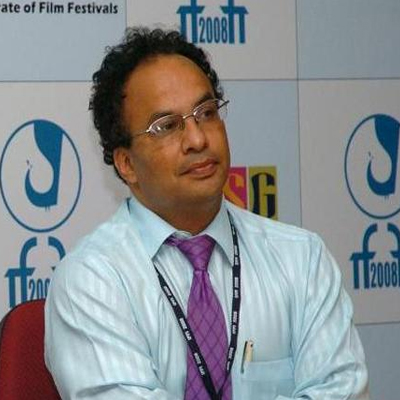
    MUMBAI: The Censor Board of Film Certification (CBFC) has finally found its CEO.  Rakesh Kumar, who is currently a senior Divisional Personnel Officer in the Indian Railways Personnel Service (IRPS) in Vadodara has been chosen as the new CEO for three years. He steps into the shoes of former CEO Pankaja Thakur, who completed her three year term on 20 September 2013.


    Press Information Bureau (PIB) Mumbai director Manish Desai had been given additional responsibility as CEO following Thakur’s departure. The CBFC had been CEO-less for almost a decade and had been run by its chairpersons until Thakur joined in 2010.


    Kumar was selected after a long process for which the CBFC received many applications. About five to seven officials were shortlisted to be interviewed by the Ministry of Information and Broadcasting and CBFC chairperson Leela Samson.


    Kumar is on a Central Stopping Deputation, which means he will be on deputation to the CBFC for three years, and after that he may resume his current job. According to official sources, the appointment order came in yesterday and Kumar is set to join within a fortnight.

  • CBFC asks to cut short the kiss in Ram Leela

    CBFC asks to cut short the kiss in Ram Leela

    MUMBAI: Their sizzling chemistry on-screen has been making news since last many days. And actor Ranveer Singh has been quite kicked about the steamy kissing scene with co-actor Deepika Padukone in their upcoming Ram Leela that has been a talk of the town of late.


    But it seems the scene hasn’t gone down well with the Central Board of Film Certification (CBFC). A recent newspaper report suggests that the Board has asked filmmaker Sanjay Leela Bhansali to chop the scene by almost 50 per cent to get a U/A certificate.


    It’s obvious that the filmmaker isn’t too happy with the CBFC directive but is not left with many option as he would like to get a U/A certificate for his film

  • Allahabad High Court declines to act on Bhansalis Ramleela as it has not been certified

    Allahabad High Court declines to act on Bhansalis Ramleela as it has not been certified

    The Lucknow bench of the Allahabad High Court has said it is not appropriate to pass any directions to the Central Board of Film Certification at this stage because the Board has not taken any decision on the matter so far.


    The Bench of Justice Imtiyaz Murtaza and Justice Devendra Kumar Upadhyaya said the film has not yet been certified for public exhibition as required under Section 4 of the Cinematograph Act 1952 and hence the process of certification has not yet concluded.


    It said that at the time when CBFC examines the film for issuing certificate for public exhibition, it is expected that the Board will act in accordance with the provision of Cinematograph Act and other related laws.


    The Court order came on a writ petition against Sanjay Leela Bhansali’s film Ramleela on allegations that the title has religious connotations and hurts the religious sentiments of Hindus.


    Social activist Nutan Thakur said in the petition that the film slated for release on 15 November calls itself Ramleela of bullets. The official trailer of the film “shows abusive language and intimate scenes between Ranveer Singh and Deepika Padukone which are far away from the religious connotation the word ‘Ramleela’ carries”.


    The petitioner had prayed for immediate change of the name of the film and banning of Promos or non-grant of a certificate by the CBFC if the producer does not do so.


    Directed by Bhansali and produced by him and Kishore Lulla (Eros International), the film is loosely based on William Shakespeare’s ‘Romeo and Juliet’ but set in violent times. It stars Ranveer Singh, Deepika Padukone, Supriya Pathak, Richa Chadha, and Priyanka Chopra as guest artiste in an item number.
    Bhansali has said he is paying an ode to his mother’s name with this film.

  • PIB’s Manish Desai becomes interim CEO CBFC

    PIB’s Manish Desai becomes interim CEO CBFC

    MUMBAI: The Central Board of Film Certification (CBFC) is soon to see a change of face. 20 September was outgoing CEO Pankaja Thakur’s last day in office. PIB Mumbai Director Manish Desai has been roped in to oversee the board till the time a new CEO is appointed. He has taken charge of the CBFC from today.
    Manish Desai

    The government had issued notice in national newspapers calling candidates to apply for the post. Once the due process of going through the applications and interviews is completed, the ministry of information and broadcasting will approve the successor to Thakur which could take some time. Till then, Desai will hold additional charge as CEO while continuing with his responsibility as director of PIB (Mumbai). He, however, is not one of the applicants for the post.

    Talking about the dual post, Desai says: “Since the two offices are not far off I will try to do justice to both by managing my time.”

    Thakur took charge of a post that had been kept vacant for nearly ten years in 2010. Before that it was the chairpersons who overlooked the CBFC. Thakur has faced severe criticism from the film fraternity for her decisions but has also received support from certain parts of the industry. Leela Samson is the current chairperson of the CBFC.

  • CBFC says no decision on giving ‘A’ certification to all dance numbers

    CBFC says no decision on giving ‘A’ certification to all dance numbers

    NEW DELHI: The Central Board of Film Certification has clarified that it has not taken any decision to certify all dance numbers in films with an ‘A’ Certificate, and they will be examined on a case-to-case basis.

    In a statement, CBFC Chairperson Leela Samson ‘unambiguously’ clarified that no such decision had been taken or was being contemplated.

    She said the guidelines governing certification of films, trailers, or any part thereof, simply state that they will be certified depending on the age-group of audiences that they are suitable for. Hence, dance numbers too will continue to be examined purely on a case-to-case basis to see whether they are suitable for a U, UA, or A certificate.

    The statement, she said, was in response to reports for the last few weeks in the media and within the film industry that the Central Board of Film Certification (CBFC) has adopted a rule to certify all dance numbers with an ‘A’ certificate.

  • Local organizations or states cannot ban film certified by CBFC, Tewari

    Local organizations or states cannot ban film certified by CBFC, Tewari

    NEW DELHI: The central government reiterated in Parliament today that a local organization cannot ban a film if it has a problem with the content of that film and has to approach the Central Board for Film Certification in redressal.

    Information and Broadcasting Minister Manish Tewari stressed that state governments have the power to regulate cinemas under Constitution‘s entry 33 in List II, subject to the exclusive power of the Central Government for certification (entry 60, List I).

    Referring to cases where films had been banned or held up by state governments, Tewari said the film ‘Viswaroopam‘ was not banned but delayed by executive orders under section 144 of Criminal Procedure Code in Tamil Nadu. In 2011, the film ‘Dam 999‘ was banned by Tamil Nadu while ‘Aarakshan‘ was banned in Punjab, Andhra Pradesh and Uttar Pradesh.

    The Minister said Article 19(2) of the Constitution provides for reasonable restrictions imposed by Law on the freedom of speech and expression.

    The exclusive power of certifying films for public screening rests with the Central Board of Film Certification as mandated by the Cinematograph Act, 1952.

    Executive orders of State Governments, at times, also orders issued under various State laws relating to Cinema made under Entry 33, List II of the Seventh Schedule to the Constitution of India, regulate public screening.

  • UTV Challenges I and B Ministry’s directive on non-smoking scrolls in films

    UTV Challenges I and B Ministry’s directive on non-smoking scrolls in films

    New Delhi: Delhi High Court on Monday sent notices to the Information and Broadcasting and Health Ministries and the Central Board of Film Certification (CBFC) following a petition by the producers of the Bollywood film Heroine.

    The petition by UTV Software Communication, which has produced the Kareena Kapoor-starrer (slated for release on 21 September), has challenged the I&B Ministry for imposing the mandatory condition of displaying a “static” anti-smoking message during smoking scenes in the film.

    Justice Rajiv Shakdhar sought responses of the respondents by 10 September and directed the CBFC to watch the film and file its report in a sealed cover before the next date of hearing.

    The petitioner sought quashing of the I&B ministry‘s 2 August letter imposing the condition on filmmakers to display the “static” anti-smoking message during smoking scenes.

    The petitioner has urged that the CBFC should issue the certificate for the release of the film without any conditions.

    The filmmaker said that the I&B Ministry has in its letter issued on 2 August requested the CBFC to advise filmmakers to ensure “a 20-second anti-smoking message as approved by the Health Ministry with voice over of the actors who are seen smoking in the film to be displayed at the beginning and in the middle (after interval) of the film.”

    The ministry had issued the letter pursuant to its 27 October 2011 notification in terms of the Cigarettes and Other Tobacco Products (Prohibition of Advertisement and Regulation of Trade and Commerce, Production, Supply) Rules.

    The petitioner alleged that in addition to this, the ministry imposed another condition: that “a static anti-smoking message be displayed for the duration of smoking scene in the film”, and urged the court to get these conditions removed as it will distract the audience from the main script.