Tag: CBFC

  • Censor Board stalls release of PNC’s ‘Mastizaade’

    Censor Board stalls release of PNC’s ‘Mastizaade’

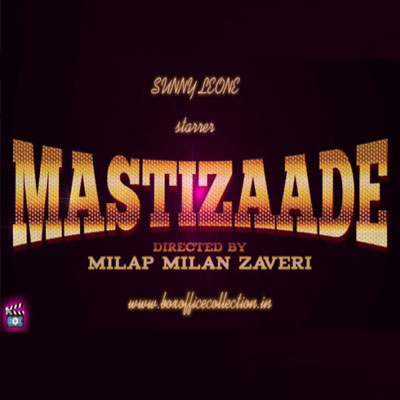
    MUMBAI: The Central Board of Film Certification (CBFC) has stalled the release of Pritish Nandy Communications’ (PNC) forthcoming comedy film titled Mastizaade due to its explicit content.


    Directed by Milap Zaveri and starring Sunny Leone in a double role, the movie also stars Tusshar Kapoor, Vir Das and Riteish Deshmukh in a special appearance. It has been co-written by Mushtaq Sheikh and Zaveri.


    The CBFC and the Film Certification Appellate Tribunal have not cleared Mastizaadeso far, which was initially slated to release on 1 May, 2015.


    PNC has informed the Bombay Stock Exchange (BSE) that it is taking appropriate steps to resolve this issue in the quickest possible manner.

  • CBFC gets Rs 7.12 crore during 2014-15, even as Govt stresses on its autonomy

    CBFC gets Rs 7.12 crore during 2014-15, even as Govt stresses on its autonomy

    NEW DELHI: Even as the government says that the independence of the Central Board of Film Certification (CBFC) is guaranteed in the Cinematograph Act, 1952 and it will not interfere in its working, the CBFC is totally dependent on the Information and Broadcasting (I&B) Ministry as far as its budget goes.


    The I&B Ministry provides funds to the Board under Non-Plan and Plan allocations.


    During 2014-15, the CBFC’S Non-Plan estimated budget allocation was Rs 7.01 crore, which was revised to Rs 7.12 crore. The estimated Plan allocation was Rs 2 crore, which was revised to Rs 70 lakh.


    With the recent differences between CBFC members and its chairperson Pahlaj Nihalani, the members are looking at the Ministry for help as they and the chairperson are appointed Section 3 of the Cinematograph Act, 1952.


    Interestingly, the Section also says in clause (3) that the other terms and conditions of service of the members of the Board shall be such as may be prescribed. 


    The other sections are clear that the Board will consist of a chairman and not less than 12 and not more than 25 other members appointed by the Central Government.


    Furthermore, the Section says, “Chairman of the Board shall receive such salary and allowances as may be determined by the Central Government, and the other members shall receive such allowances or fees for attending the meetings of the Board as may be prescribed.”

  • “CBFC should examine a film’s message & not ban it due to some scenes”: Paresh Rawal

    “CBFC should examine a film’s message & not ban it due to some scenes”: Paresh Rawal

    NEW DELHI: In the wake of fingers being pointed at the current Central Board of Film Certification (CBFC) chairman Pahlaj Nahalani’s questionable decisions regarding many a films that have come up for release recently, veteran actor Paresh Rawal has said that the message of a film and not some shots here or there should come in for scrutiny before the CBFC.


    Rawal said that every film may contain one or two scenes that may hurt someone, but what has to be seen is whether the message sought to be conveyed by the film is meaningful. He felt that the work of the CBFC was a thankless job.


    Referring to protests held outside film theatres, often by persons who had not even bothered to see the concerned film, Rawal said this was sad. He added that even the communal divides in the country often occurred because of misinformation.


    Denying reports that his latest film Dharam Sankat Mein had been shown to some religious leaders to get their approval, he said it would be a “dangerous trend if a film is shown to extra-constitutional authorities.”


    Rawal, who was in the Capital for promoting the film along with actor Annu Kapoor, said: “Even a serious message if conveyed lightly manages to make an impact.”


    Replying to a question posed by Indiantelevision.com about the run-of-the-mill comedies that he acts in along with some meaningful cinema, he said that it should not be forgotten that it was the money made from those so-called trashy comedies, which helped him take serious cinema even at fees far lower than he would otherwise get.


    Rawal revealed that he was making the biopic on Narendra Modi under his own banner. He said that films on Modi had been made in Gujarati, but never in Hindi. The movie is slated to go on floors in August.


    He also said a sequel to OMG was underway with him, Akshay Kumar and Mithun Chakraborty.


    Rawal informed that he loved serious cinema and therefore his most memorable films were Sardar, which was a biopic on Sardar Vallabhbhai Patel, Road to Sangam, and OMG – Oh my God.


    Hailing from the theatre background, Rawal had never planned his career in cinema when he came on the big screen in 1984.


    Answering a question, he said that he had cut down the number of films he would do to three or four a year, after become a Member of Parliament. However, he said he was an actor first, then an MP. Rawal also informed that his perspective about Parliament had changed since he became an MP.


    Stressing that the country faced problems because there was no ‘Manav Dharam’ or ‘Rashtra Dharam,’ Rawal said that if people loved their country, there would have been no need for the Government to announce programmes on Swachh Bharat or sanitation.


    Agreeing to his point of view, Kapoor said that problems like rape etc. were not confined to India, but Indians themselves often talked about them as if they were ashamed of being Indian but did little to stop these crimes. He said Manav Dharam should be uppermost. He added that while there was freedom of speech, why did people resort to freedom of action.


    When asked about simultaneously acting in comedy and serious films, he said that every theatre person learnt to have a ‘switch on, switch off’ quality and therefore he has no problem going from the set of light film to that of a serious one.


    Speaking about the message that their latest film conveys, Kapoor said, “We are sure that you’ll learn something from this film and the message it gives is of ‘humanity’ and that of all religions, humanity is the biggest religion.”


    Directed by Fuwad Khan and produced by Sajjad Chunawala, Dharam Sankat Meinis a remake of the 2010 British comedy film The Infidel and also stars Naseeruddin Shah.


    The story revolves around a character named Dharam Pal, played by Rawal, who faces the dilemma of choosing between two religions and goes through identity crises when he discovers that what he believed himself to be was actually born to a Muslim family.


    The film is slated for release on 10 April.

  • CBFC took unilateral decision to put list of offensive words on hold: Rathore

    CBFC took unilateral decision to put list of offensive words on hold: Rathore

    NEW DELHI: The Parliament was informed on 13 March that the list of 28 “objectionable and abusive” words suggested for banning from Indian films by Central Board of Film Certification (CBFC) chairman Pahlaj Nahalani was held back. This, because a need was felt to consult on the same with people from different sections of society.


    Minister of State for Information and Broadcasting Rajyavardhan Rathore told the Lok Sabha today that the decision in this regard had been taken by the Board in a meeting on 23 February.


    The Minister also said that the list of objectionable words circulated by Nihalani on 12 February this year had been compiled by regional offices of the CBFC in 2003.


    Meanwhile, a Ministry official told Indiantelevision.com last month that any decision in this regard may have been taken at the level of the Board or by its chairman, who had issued the list leading to protests from some members.


    Rathore had earlier said, “CBFC under the Ministry certifies films for public screening in accordance with the Cinematograph Act, 1952 and Cinematograph (Certification) Rules, 1983. Section 5B of the Cinematograph Act, 1952 provides principles for guidance in certifying films. Guidelines for certification of films notified under the Cinematograph (Certification) Rules lay down among other things that CBFC shall be guided by the following principles in this regard: (i) human sensibilities are not offended by vulgarity, obscenity or depravity; and (ii) such dual meaning words as obviously cater to baser instincts are not allowed.”


    In a circular to the producers’ association and regional officers, the Board had last month listed several “objectionable words” that are being used in films and directed its regional officers to ensure a ban on the list of cuss words. It also aimed to seek more conformity from directors and scriptwriters on cultural matters and political correctness. It also said Mumbai should be used in place of Bombay.


    The list led to a Twitter war of words, where some members said Nihalani had taken the decision unilaterally.


    However, Nihalani told Indiantelevision.com that he was within his rights to issue the list as he was only using the powers given to him under the Cinematograph Act and was only referring to words that the Certification Guidelines do not allow.

  • No role in CBFC’s decision to put list of offensive words on hold: I&B

    No role in CBFC’s decision to put list of offensive words on hold: I&B

    NEW DELHI: Even as the Central Board of Film Certification (CBFC) has put on hold the list of 28 “objectionable and abusive” words to be banned from Indian films, the Information and Broadcasting Ministry has denied any role in this.


    A Ministry official told Indiantelevision.com that any decision in this regard may have been taken at the level of the Board or by its chairman Pahlaj Nihalani, who had issued the list, leading to protests from some members.


    Interestingly, in reply to a question in the Rajya Sabha in this regard on 24 February, Minister of State for I&B Rajyavardhan Rathore had said, “CBFC under the Ministry certifies films for public screening in accordance with the Cinematograph Act, 1952 and Cinematograph (Certification) Rules, 1983. Section 5B of the Cinematograph Act, 1952 provides principles for guidance in certifying films. Guidelines for certification of films notified under the Cinematograph (Certification) Rules lay down among other things that CBFC shall be guided by the following principles in this regard: (i) human sensibilities are not offended by vulgarity, obscenity or depravity; and (ii) such dual meaning words as obviously cater to baser instincts are not allowed.”


    Interestingly, the Minister refrained from making a comment on the list issued by Nihalani.


    Meanwhile, it is learnt that Nihalani will be meeting Ministry officials in New Delhi in the next few days.


    Earlier in a circular to the producers’ association and regional officers, the Board listed several “objectionable words” that are being used in films and directed its regional officers to ensure a ban on the list of cuss words. It also aimed to seek more conformity from directors and scriptwriters on cultural matters and political correctness. It also said ‘Mumbai’ should be used in place of ‘Bombay’ in films.


    The list led to a Twitter war where some members said Nihalani had taken the decision unilaterally.


    However, Nihalani told Indiantelevision.com that he was within his rights to issue the list as he was only following the powers given to him under the Cinematograph Act and was only referring to words that the Certification Guidelines do not allow.


    It is learnt that during a several-hours-long meeting of CBFC in Mumbai earlier this week, several members of the board opposed the move to impose such a ban. It is understood that status quo would be maintained and the list will be put on hold, the source said.


    The letter by Nihalani directed its regional officers not to issue certificates to films, which use these words, which are abuses in Hindi and English, and it has also been specified that double meaning words, violence against women and glorification of bloodshed should not be allowed.

  • After much controversy, ‘MSG’ becomes ‘The Messenger’

    After much controversy, ‘MSG’ becomes ‘The Messenger’

    NEW DELHI: Following controversy over the film, which was cleared by the Film Certification Appellate Tribunal, self-proclaimed Saint Gurmeet Ram Rahim Singh Insan’s much hyped film has been renamed MSG – The Messenger


    The film was initially named MSG: Messenger of God, and had reportedly provided the fuel to the mass resignations from the Central Board of Film Certification (CBFC) whose members had alleged interference from the Government.


    The new name was revealed in a tweet sent by Gurmeet Ram Rahim Singh Insan himself, clarifying that the film had been cleared by the CBFC with a new name. 


    He said the film is targeted at cleansing the worldly evils that have plagued society recently and threatened to corrupt it. It develops an insight into the exploration of spirituality with the entertainment factor remaining intact.


    A first in its kind, the film has been trending all over social media creating a huge interest. The music with most songs sung by Singh has become an instant hit after its release online through the trailers and promos.


    Slated or release on 13 February, the film has been produced by Hakikat Entertainment Pvt. Ltd., co-directed by Saint Gurmeet Ram Rahim Singh Insan and Jeetu Arora Insan with and music directed by Saint Gurmeet Ram Rahim Singh Insan.


    At the release function last month of the music, Singh who is head of Indian social-spiritual welfare organization Dera Sacha Sauda, had said that he would be using the earnings from the film for the betterment of the community. He will support a new research initiative for Thalassemia patients and also donate most of the proceeds towards research on HIV.

  • CBFC mulling online methods to expedite film certification process: Nihalani

    CBFC mulling online methods to expedite film certification process: Nihalani

    NEW DELHI: Even as the Central Board of Film Certification (CBFC) is facing flak on social media for asking singer Mihir Joshi to beep the word ‘Bombay’ from the lyrics of one of his songs from the album ‘Mumbai Blues;’ the newly appointed chairman of the Board – Pahlaj Nihalani is clear on his stance as far as certification goes. 


    Speaking to Indiantelevision.com, Nihalani said that one of the major tasks that he faced before him was to ensure speedy clearances of films submitted to the Board. “We will be looking at using more online methods to expedite this process with the least interference in the work of the film’s producer. The process will include introduction of an online ‘tatkal’ system to expedite the process of clearing films. The online system will be adapted to ensure that the board functions in a completely transparent manner and films can get certificates without much hassles,” he said. 


    What’s more, Nihalani, who has been appointed in an honorary capacity for three years from 18 January, also said that he would tender his resignation if he was unable to enforce the censorship guidelines while certifying films. “The guidelines don’t permit the use of vulgar or abusive language that I have seen in many films and it will be my attempt to stop the use of such language,” he stressed.


    He went on to add that while people on the CBFC changed and the society as a whole was assuming a different profile with a greater population of younger people, Indian cultural values remained as strong as ever and would continue to guide him. 


    He urged filmmakers to use their freedom of expression, but “do not rape free expression.”


    Nihalani said that while trailers of adult films were not being shown on television channels, he was conscious of trailers of films certified with U/A certificates being shown even during day time.


    “It is unfortunate that YouTube and other media are also being used for showing films, since it makes it easier for filmmakers to use filthy language. Stars on live shows on television are using abusive language but this is a matter that should be dealt with by the Inter-Ministerial Committee of the Information and Broadcasting Ministry,” he said.


    A matter that concerns Nihalani is that both social media channels and television channels were being seen by people of all ages.  

    Nihalani is also of the opinion that there was urgent need to amend the Cinematograph Act in view of the newer forms of screens coming up. “Although an amendment was contemplated by the previous government and put on the website, there may be need for greater change in view of fast advancements of technology,” he said.


    In India, there have been cases galore when political or social bodies turn vandals and take to the streets opposing certain films that were already certified by the CBFC. Nihalani stressed that as per the Courts, “there should be no interference once a film has been cleared by the Board.”


    When queried about the suggestion by actor and former chairperson Anupam Kher to permit adult films in late night hours on TV, Nihalani said, “This is a matter of policy relating to TV channels and it does not fall in the ambit of the CBFC.”


    According to him, certain suggestions were being formulated, which will then be sent to the government.


    Speaking about his priorities as the new CBFC chief, Nihalani said, “We need to request the Centre to implement the recommendations of the Justice Mudgal committee, which was set up in 2013 after the government felt the need to update the Cinematograph Act, 1952, in the wake of a controversy over the release of the Kamal Hasan starrer Vishwaroopam.”


    Along with Nihalani, nine other members were appointed to the Board recently in the wake of the erstwhile chief Leela Samson resigning. The new members are Mihir Bhuta, Prof. Syed Abdul Bari, Ramesh Patange, George Baker, Chandra Prakash Dwivedi, Jeevitha, Vani Tripathi Tikoo, S Ve Shekhar and Ashoke Pandit. Nihalani said that the Ministry was also working towards filling vacancies in the Board.


    Referring to the ‘mass resignations’ by Samson and other members, he said that their term had in any case ended several months earlier and they were continuing on extension pending new appointments.


    Nihalani is a Hindi film producer since the 1980s, who produced his first film Hathkadi in 1982, starring Sanjeev Kumar, Shatrughan Sinha and Reena Roy. His last film titled Khushboo released in 2008. He was also the President of Association of Motion Pictures and TV Programs Producers for 29 years until 2009.


    Claiming that he had made 24 films of which none had faced any censor problems, Nihalani said that he had taken a break from film-making in recent years. However, one of the films he is currently making is under production, while two others were in the planning stage.

  • CBFC mass exodus: 13 members follow Samson; say action not related to ‘MSG’

    CBFC mass exodus: 13 members follow Samson; say action not related to ‘MSG’

    NEW DELHI: Even as the government accepted Leela Samson’s resignation as chairperson of the Central Board of Film Certification (CBFC) following the controversy over the film ‘Messenger of God’ (MSG), made by and starring Dera Saccha Sauda head Gurmeet Ram Rahim Singh, 13 other members have put in their papers.


    The film has already been cleared by the Film Certification Appellate Tribunal (FCAT).


    In a letter, the members – M K Raina, Arundhati Nag, Ira Bhaskar, Lora Prabhu, Pankaj Sharma, Rajeev Masand, Anjum Rajabali, Nikhil Alva, Mamang Dai, Sekharbabu Kancherla, Shaji N Karun, Shubhra Gupta and TG Thyagarajan – have said that since the time that they first joined the Board, they had been seeking critical changes, which were imperative if the functioning of the CBFC has to be reformed.  


    The term of most of these members and Samson had ended in May, but they had been given extensions to continue. While some members said they had tendered their resignations around six months earlier, they were unanimous while talking to Indiantelevision.com that the resignations had no connection with the film ‘Messenger of God’.


    The members’ letter said, “In spite of sending numerous recommendations and appeals, and having several meetings with the secretaries and senior officials of the ministry, and even one with an earlier Minister, not a single positive step has been taken by the Ministry.”


    The CBFC members claimed that the “Advisory Panel continues to be filled up with people of questionable credentials appointed directly by the Ministry, without taking the Board’s recommendations into account.” No funds have been released for conducting orientation workshops for the panel members, they said, adding that officers from other departments, who have no understanding or experience in cinema are appointed as officials.


    They also claimed that there are several positions in the regional offices that do not have regular appointments.


    “There has been no board meeting for the last one year for us to discuss developments and make recommendations, as we were told that there are no funds to organize it. It seems that the CBFC Board is not required at all,” the letter said.


    “It is our firm position that given the cavalier and dismissive manner in which the CBFC is treated by government, it is impossible to perform this duty with even a modicum of efficacy or autonomy. We also object to the way in which the Chairperson has been treated by the Ministry, which we feel has been humiliating for us all,” the letter said.


    Asked about the clearance by FCAT, Samson said, “Yes, it is a mockery of CBFC. My resignation is final. I have informed the Information and Broadcasting Ministry secretary Bimal Julka.”


    While she did not specifically refer to the reported clearance to the film, Samson alleged “interference, coercion and corruption of panel members and officers of the organisation who are appointed by the ministry.”            


    Refuting these allegations, the government had yesterday said that it has always maintained a distance from the entire process of film certification.


  • CBFC has powers to issue multiple certificates on various versions of films

    CBFC has powers to issue multiple certificates on various versions of films

    NEW DELHI: The Delhi High Court has been informed that the Central Board of Film Certification can issue multiple “certifications” with respect to various versions of a film. 


    In its affidavit filed before a bench of Chief Justice G Rohini and Justice R S Endlaw, the Information and Broadcasting Ministry said the certificate is issued on the content as and when it is changed while being shown on TV channels. 

    The submission was in reply to a public interest litigation opposing issuance of universal certificates to an adult movie after deletion of some contents. The petition was also against the practice of conversion of ‘A’ films into ‘U/A’ and ‘U’ to enable their telecast on TV channels. 

    “Provision of the Cinematograph Act and Rules clearly provide for multiple certifications being issued with respect to various versions of one particular film.


    “Under the Cinematograph Act, the certification is done of the content and when there is change in content, recertification is required and is done,” the Ministry said. 

    The CBFC “has absolute power to certify films and it is also a competent authority to entertain applications seeking certificate of films which are altered by way of deletion/addition of certain scenes/dialogues.” 

    The plea was filed by Edara Gopi Chand, vice-president, Media Watch-India through advocate Gaurav Kumar Bansal. 

    The petitioner said children and adolescents are exposed to ‘adult’ film material like drug use, adultery, extramarital affairs, ribald comedy, intimate scenes of romance and sexuality, ‘item songs’ with vulgar lyrics and dance sequences, scenes involving rape and other heinous acts against women, films with extreme violence, films of horror and thriller genres etc. 


    “The adverse impact of such content on the impressionable minds of children and adolescents is well-established by various research studies at national and international levels. By such exposure, the due right of minors to be protected from harmful/age-inappropriate media content is being violated,” the plea said. 

  • I&B asks TV channels to show censor certificates before airing movie trailers

    I&B asks TV channels to show censor certificates before airing movie trailers

    NEW DELHI: All television channels need to show the censor certificate before telecasting any film or movie trailer, the Information and Broadcasting Ministry has clarified.


    The Ministry has reiterated its advisory sent on 6 January 2011 in this connection.


    Any further violation of the programme code may attract strict penal provisions as detailed in Section 20 of the Cable Television Networks (Regulation) Act 1995 and as provided under the Uplinking/ Downlinking Guidelines.


    The Ministry said it had come to its notice that a number of TV channels continue to telecast films without displaying Central Board of Film Certification (CBFC).


    The notice said: “It has also been noticed that channels are sometimes showing trailers of new films without showing CBFC. Showing films/film trailers without CBFC is a violation of the cinematograph Act, 1952 as enshrined in Rule 6 [l] (n) of the Cable Television Networks Rules 1994 which also provide that no film or film song or film promos of film trailer or music videos or music albums or their promos, whether produced in India or abroad, shall be carried on cable service unless it has been certified by the CBFC.”


    The Ministry therefore has advised all TV channels again to display the CBFC before telecast of any film/film trailer which is clearly visible to the viewers.


    They have also been advised to strictly follow Rule 6 (1) (n) while showing any film, song, film promo, music video, music albums or their promos.