Tag: CBFC

  • MIB invites comments on the guidelines of accessibility standards for disability audiences.

    MIB invites comments on the guidelines of accessibility standards for disability audiences.

    Mumbai: MIB (Ministry of Information and Broadcasting) issued a notification concerning section 29, section 42 of the Rights of Persons with Disabilities Act 2016. MIB asked for comments or feedback from general people on the announcement of a new mandate for content access to persons with disabilities.

    Mandate asked the government to take appropriate measures and initiatives for  accessibility for content, films, and universal access for promoting interest and preserving human rights. The government issued guidelines for accessibility standards in the public exhibition of feature films in cinemas for people with hearing and visual impairment.

    These guidelines are mandatory for cinema entities and theatres to follow from 10 January 2024. The film which is certified by CBFC ( Central Board of Film Certification) is mandatory to take this measure to promote global accessibility for the content.

    The focus of these guidelines is also on information and assistive devices needed by persons with disabilities to enjoy the content. The effective date is applicable from the date of the notification.

    The accessibility feature mandate depends on principles of health, education, human rights, fundamental freedom, availability, advocacy, and affordability. According to the mandate, films must arrange special shows for people with disabilities as prescribed in the notification. This film or content should enclose a subtitle, audio description, captioning, and technical specialties for the betterment of disabled persons.

    It is also mandatory for film producers to deliver two sets of films for certification to CBFC, one is for public view and the second is for accessibility features for disabilities. Film exhibitors are also entitled to provision accessibility features to disabilities. As per the mandate, providing a minimum of two pieces of equipment per 200 seats.

    As per the 2011 Census, Out of the total population, 2.21 per cent of the population is disabled out of which 19 per cent persons have vision disability and 19 per cent people with hearing disability in hearing. These new regulations will be inclusive of accessibility for social, and cultural well-being.

  • 52nd edition of IFFI calls for entries for Indian Panorama

    52nd edition of IFFI calls for entries for Indian Panorama

    New Delhi: The 52nd International Film Festival of India (IFFI) has announced a call for entries for Indian Panorama, 2021. Indian Panorama is a flagship component of the International Film Festival of India (IFFI) under which the best of contemporary Indian films are selected for the promotion of film art.

    The 52nd edition of IFFI will be held in Goa from 20 to 28 November.

    The last date to submit applications online is 12 August and the last date of the receipt of the hard copy of the online submitted application, along with other requisite documents is 23 August. A set of guidelines have to be followed while submitting films for the 2021 Indian Panorama, said the organisers on Monday.

    The date of CBFC or completion of production of the submitted film should be during the last 12 months preceding the festival – 1 August 2020 to 31 July 2021. Films not certified by CBFC and produced within this period can also be submitted. All films must carry English subtitles.

    Indian Panorama was introduced in 1978 as part of the International Film Festival of India to promote Indian Films and its rich culture and heritage through Indian films. The Indian Panorama has ever since been completely devoted to showcasing the best of the Indian films of the year.

    The aim of the Indian Panorama, organised by the Directorate of Film Festivals, ministry of information and broadcasting is to select the feature and non-feature films of cinematic, thematic, and aesthetic excellence, for the promotion of film art through the non-profit screening of these films in international film festivals in India and abroad, Indian Film Weeks held under Bilateral Cultural Exchange Programmes and Specialised Indian Film Festivals outside cultural exchange protocols, and special Indian Panorama festivals in India.

  • IFFI Preview Committee includes film certification panel members

    IFFI Preview Committee includes film certification panel members

    NEW DELHI: A 40-member preview committee with Vivek Agnihotri as the convenor has been set up to continue the process of shortlisting of films for the International Film Festival of India 2017 being held in November this year.

    Indiantelevision.com had reported yesterday that the preview committee for shortlisting films for IFFI which had already seen around 150 films had also been dissolved. These changes have coincided with Smriti Zubin Irani taking on additional charge of the information and broadcasting ministry after M Venkaiah Naidu resigned.

    The preview committee not merely shortlists films from all entries received, but recommends films for competition section which will then be seen by the International jury, and for the Country Focus section of the Festival.

    IFFI, which is considered as one of the top ten film festivals of the world will be held from 20 to 28 November at Panaji in Goa.

    The festival is organised by the Directorate of Film Festivals of the Information and Broadcasting Ministry in collaboration with the Entertainment Society of Goa (ESG) on behalf of the state government.

    A four-day Film Bazaar will also be organized from 20 November by the National Film Development Corporation (NFDC).

    Generally most members of the preview committee are from Delhi as the process of shortlisting takes more than a month and the preview is done at one of the auditoriums in the Sirifort complex in the capital.

    Furthermore, the names of members are not revealed to prevent any external influences.

    However a majority of the members this time are from different parts of the country and this will entail infrastructural arrangements including travel and stay of the members. Only a handful of members are from Delhi.

    The list reveals that the names have been shortlisted on the recommendations of the Central Board of Film Certification and regional certification panels and many are members of CBFC and regional panels. Furthermore, just a few members have exposure to international cinema.

    The Preview Committeee now comprises:

    1.

    Vivek Agnihotri

    2.

    Khalid Mohamed

    3.

    Aarti Bajaj

    4.

    Ramesh Patange

    5.

    Naresh Chander Lal

    6.

    Narendra Kohli

    7.

    Saibal Chatterjee

    8.

    Abhimanyu Singh

    9.

    Bhawana Somaaya

    10.

    Jeevitha Rajasekhar

    11.

    Gautami Tadimalla

    12.

    Nitesh Tiwari

    13.

    G.S. Bhaskar

    14.

    Pallavi Joshi

    15.

    Aniruddha Roy Chowdhury

    16.

    Raja Krishna Menon

    17.

    Siddharth Kak

    18.

    Bela Segal

    19.

    Tarun Katial

    20.

    Abhishek Basu

    21.

    Hrishitaa Bhatt

    22.

    Abhishek Jain

    23.

    Santwana Bordoloi

    24.

    Bhaskar Hazarika

    25.

    Pradip Kurbah

    26.

    Dominic Megam Sangma

    27.

    Maipaksana  Haorongbam

    28.

    Zuala Chhangte

    29.

    Dr. Sachidanand Joshi

    30.

    Dr. Bharat Gupt

    31.

    Nirmala Sharma

    32.

    Rathi Vinay Jha

    33.

    Parvathi Menon

    34.

    Rajesh Kumar Singh

    35.

    Anil Rastogi

    36.

    Punit Asthana

    37.

    Ajay Malkani

    38.

    Bhumenjoy Konsam

    39.

    Sangee Dorjee Thongdok

    40.

    Lavlin Thadani

    ALSO READ :

    IFFI 2017: Noted filmmakers to head steering & technical panels

    Cannes delegates apprised of opportunities in Indian film industry

  • CBFC reconstituted, majority from film & theatre fraternity

    NEW DELHI: After bringing in the adman and lyricist Prasoon Joshi and showing filmmaker Pahlaj Nihalani the door, the Central Board of Film Certification has been reconstituted — with the entry of the actress Vidya Balan and the renowned filmmaker T S Nagabharana, among other.

    The 12 members brought in include — the filmmaker and Padma Shri recipient Naresh Chandra Lal from Andaman and Nicobar Islands, known for his film ‘Gandhi – the Mahatma’ — which spread the message of clean environment and cleanliness, and the renowned director Vivek Agnihotri.

    An official announcement said the Board was being reconstituted under section 3(1) of the Cinematograph Act 1952 read with rule 3 of the Cinematograph (Certification) Rules 1983.
    The new members join with immediate effect for a period of three years or until further orders, whichever is earlier.

    Other members include the Tamil and Telugu actresses Gautami Tadimalla and Jeevitha Rajasekhar, the Bharatya Janata Party activist and actress Vani Tripati Tikoo, the theatre director Waman Kendre who headed the National School of Drama in Delhi, and the film and television dialogue writer Mihir Bhuta.

    The renowned Shillong-based author and concert pianist Neil Herbert Nongkynrih, Padma Shri awardee and Hindi author Narendra Kohli, and the ideologue of Rashtriya Swayamsevak Sangh Ramesh Patange who edits the Marathi weekly ‘Vivek’ have also been appointed to the Board.

  • TV content: Madras HC seeks Centre’s clarification on regulatory mechanism

    TV content: Madras HC seeks Centre’s clarification on regulatory mechanism

    NEW DELHI: Joining issues with a petition presently being heard by the Supreme Court on a similar matter, the Madras High Court yesterday directed the federal government to clarify on the existing regulatory setup governing contents aired by television channels in India.

    The first bench comprising Chief Justice Indira Banerjee and Justice M Sunder gave this direction to assistant solicitor general Su Srinivasan, who appeared for the central government, during the hearing of a public interest litigation (PIL) to stop telecast of Tamil reality show ‘Bigg Boss’, hosted by actor Kamal Haasan on Vijay TV, part of Star India, according to a report filed by PTI from Chennai.

    The matter has been posted for further hearing on August 18, 2017.

    Earlier, senior counsel P S Raman, who appeared on behalf of the actor and anchor of the TV show, submitted that there were two bodies to regulate the channels. One was the Broadcasting Content Complaints Council (BCCC), a self-regulatory body headed by a retired Supreme Court judge and the other was ministry of information and broadcasting (MIB), the PTI report quoted Raman as telling the local high court.

    BCCC is a self-regulatory body set up by the Indian Broadcasting Foundation, an industry organisation that has a large number of TV channels as its members. Though there’s no formal content regulatory body in India on the lines of American FCC or the UK’s Ofcom or Singapore’s MDA, IBF’s self regulatory body takes up complaints relating to TV content. Separately, the content code, part of India’s Cable TV Act (enforced by MIB) outlines broad guidelines for TV content.

    The PTI report stated that petitioner Saravanan has alleged that in the reality show Haasan played with emotions and behaviour of female contestants, which he termed vulgar and obscene. He further submitted that to protect Tamil culture and tradition and in the interest and welfare of the general public, the telecast of the show must be stalled immediately.

    “The dress code and behaviour of female contestants on the show are very vulgar and obscene making my family members and me uncomfortable in watching the programme. Also, the reference to ‘cheri’ (slum) behavior, made by a participant to describe the behaviour of another contestant, greatly hurt downtrodden people,” the petitioner said.

    Meanwhile, the Supreme Court is hearing a similar case and has enquired from the central government whether it has a proper mechanism in place to regulate TV content.

    Outgoing film certification (CBFC) chief Pahlaj Nihalani, dubbed nationalist and ultra-conservative by a section of content producers and audience alike, in a media interview had urged the government to extend CBFC’s jurisdiction to oversee television shows too.

    ALSO READ:

    Govt formalising TV & radio complaints’ redressal mechanism

    SC to MIB: Get mechanism to deal with complaints on TV, radio shows

    Awarded adman Prasoon Joshi is new CBFC chief, Pahlaj Nihalani exits

  • Sony can air ‘Danish Girl’ on TV as Tribunal reverses CBFC order

    MUMBAI: Sony Pictures is now free to telecast ‘The Danish Girl’ on television.

    The Film Certification Appellate Tribunal (FCAT) has ordered the Censor Board to grant certification to the British-American film for viewing on TV channels, by reversing the Board’s directive against airing the film on television.

    The FCAT observed the film shows the “travails and sufferings of a husband who struggles to find his own identity, believing that he should be a woman.” “His wife empathises with him, remaining by his bed side all through his sex reassignment surgery in the 18th century,” it said.

    The Central Board of Film Certification (CBFC) had approved the film for a theatrical release in January 2017 and granted it an A certificate. In March, however, the CBFC refused U/UA certification to the film necessary for a film to be telecast on TV channels, saying that the film should be viewed only by “mature adults”, Hindustan Times reported.

    Based on by David Ebershoff’s fictional novel, the 2015 biographical romantic drama film directed by Tom Hooper is loosely inspired by the lives of Danish painters Lili Elbe and Gerda Wegener. The film features Eddie Redmayne as Elbe, one of the first known recipients of the reassignment surgery. 

    Citing a Supreme Court decision that granted recognition of gender identity to the transgender community by acknowledging the existence of the ‘third gender’, the FCAT chaired by Justice Manmohan Sarin reversed the CBFC’s decision.

    Sony Pictures had, in their appeal, showed television shows revolving around similar subjects. Seeking U/UA certification, they had also offered 14 cuts in scenes and dialogues to make the film eligible for the small screen viewers.

    Sony cited the examples of films such as Milk, The Brokeback Mountain, Boys Don’t Cry and D Train, and stated that these movies had been approved for telecast on Indian television after grant of U/UAcertificate. The production house, similarly, referred to shows such as Shakti-Ek Ehsaas Ki and The Big F that were being telecast on different channels.

  • Steps to encourage ease of doing film business under way

    NEW DELHI: Information and broadcasting secretary Ajay Mittal has said the Ministry has initiated a series of measures to promote ease of doing business and reiterated government’s commitment to work closely with the film industry.

    Mittal was speaking at a function where megastar Amitabh Bachchan inaugurated the new office premise of the Central Board of Film Certification (CBFC) in Mumbai yesterday.

    A number for film personalities including former CBFC Chairman Anupam Kher, Ramesh Sippy, Raveena Tandon, Sonu Sood, Pritish Nandy, Manmohan Shetty, Gajendra Chauhan, Kiran Shantaram, Mukesh Sharma were among those present.

    CBFC, which had been functioning from the Bharat Bhavan in the White House Complex on Walkeshwar Road since 1950s, was facing severe space constraint against drastic increase in work load.

    Mumbai, being the centre of the Hindi, Marathi, Bhojpuri and Punjabi film industry, accounts for nearly 60% of all certification work of CBFC. During 2015-16, it certified over 11,000 films of various duration including 787 Indian feature films and 690 foreign films for theatrical release in India.

    Faced with an acute space constraint, lack of parking facility for visitors, CBFC moved a proposal for allocation of space in the Films Division Complex for a modern, digitally enabled office. It may be recalled that the online film certification system of CBFC was launched by Information & Broadcasting Minister M Venkaiah Naidu in New Delhi last week.

    Ramesh Sippy welcomed the online film certification system saying it would facilitate quicker certification of films.

    The Civil Construction Wing of Prasar Bharati has refurbished the new office, which houses the chambers of the Chairman, CEO as well as the Mumbai Regional Office. CBFC, besides its own preview facilities, can now utilize additional preview theatres of Films Division as well to quicken the process of film certification.

    The Films Division Complex now houses the offices of Films Division, Children’s Film Society of India, CBFC and also the upcoming National Museum of Indian Cinema, which is expected to promote synergy among different institutions of the I &B Ministry.

  • Oscar-winning ‘Danish Girl’ unsuitable for TV despite theatrical release, Sony expresses regret

    NEW DELHI / MUMBAI: The Oscar-winning Hollywood film The Danish Girl, which had been released in theatres in the country in January 2016 with an ‘Adults only’ certificate and no cut, has been denied its television premiere in India on Sony Le PLEX HD channel.

    A Central Bureau of Film Certification (CBFC) source said that TV channels are generally not permitted to screen films with ‘A’ certificate, but can apply for a fresh certificate whereby some scenes found offensive can be sliced and the film screened with a ‘U/A’ certificate.

    The internationally-acclaimed film’s theme is loosely based on the story of Lili Elbe, a 1920s painter who was born into a man’s body as Einar Wegener and underwent the first gender confirmation surgery in the world.

    The CBFC source said this theme was unsuitable for viewing by the Indian TV audience, particularly children. As to why the route of suggesting cuts was not recommended to the rights-holders or the TV channel, the source said that it was difficult to edit a film when the subject itself is so controversial and unsuitable for TV viewing.

    The film had been slated for telecast on Sunday evening, and the Sony Network channel Sony Le PLEX HD sent out a tweet apologising for being unable to telecast the film as the necessary certification had not been received. But, the channel promised to keep up efforts to get the certification and inform the viewers. Even as it regretted any inconvenience caused.

    The Danish Girl is a 2015 British-American biographical romantic drama film directed by Tom Hooper, based on the 2000 fictional novel of the same name by David Ebershoff and loosely inspired by the lives of Danish painters Lili Elbe and Gerda Wegener.

    The film stars Eddie Redmayne as Elbe, one of the first known recipients of sex reassignment surgery. Others in the film are Alicia Vikander, Ben Whishaw, Sebastian Koch, Amber Heard, and Matthias Schoenaerts.

    On its Twitter handle, Sony stated:

    Sony Le PLEX HD‏ @SonyLePLEXHD  Mar 24

    We know how much you wished to watch The Danish Girl this Sunday & regret the inconvenience caused. We thank you for your constant support.

    Also Read:

    CBFC won’t ‘chill’; Pan Bahar ‘Bond’ ad banned

    No plans to regulate TV content through CBFC: MIB


  • No middlemen in film certification process anymore

    NEW DELHI: The Indian Government has said that it has obviated the role for intermediaries/ agents in the existing as well as new online certification system.

    Minister of state for information and broadcasting Rajyavardhan Rathore has told the Parliament that the online system is user-friendly, and will be accessible to all the applicants.

    The Central Board of Film Certification (CBFC) certifies films in accordance with Cinematograph Act, 1952 and the Rules and the Guidelines made thereunder.

    CBFC is in an advanced stage of setting up the online film certification system which is likely to be made operational very soon.

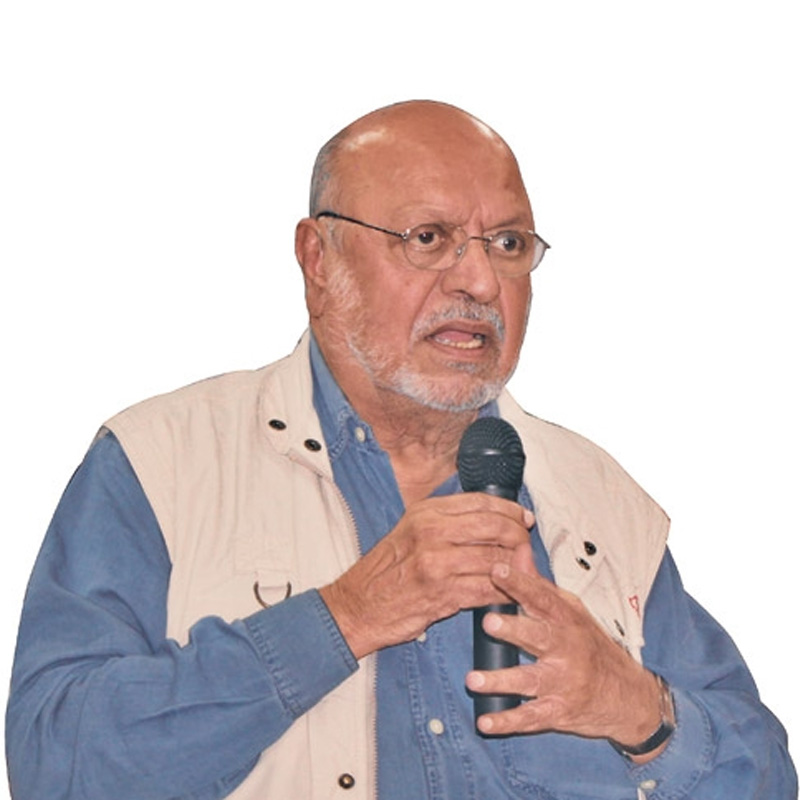
    (Meanwhile, the government is still studying the two reports on film certification submitted by the Shyam Benegal Committee, a ministry source told indiantelevision.com.)

  • Govt defends UA certificate to ‘Jungle Book’ (3D)

    Govt defends UA certificate to ‘Jungle Book’ (3D)

    NEW DELHI: Even as it is still studying the recommendations of the Shyam Benegal Committee on film certification, the Government has justified the U/A certification to the English film “Jungle Book” (3D).

    The minister of state for information and broadcasting Rajyavardhan Rathore said in reply to a question in the Parliament that, though it was a children’s film, the Examining Committee of the Central Board of Film Certification judged it in its entirety from the viewpoint of its overall impact and felt that being in 3D technology, some of the visuals and sound effects could be scary for children below 12 years.

    Therefore, the film was recommended for “UA” certificate – universal viewing with parental guidance for children below 12 years. Similar grading was given for this film – “Parental Guidance” – in countries such as Australia, Canada, the U.S., the U.K., New Zealand, South Korea, Singapore, and the Philippines.

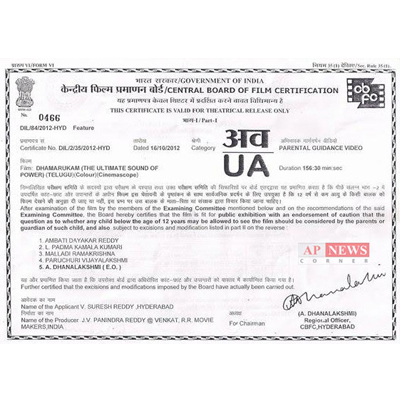
    CBFC certifies films for public exhibition in accordance with the Cinematograph Act 1952, Cinematograph (Certification) Rules, 1983 and guidelines issued thereunder.The Board issues certificates under the categories ‘U’, ‘UA’, ‘A’ or ‘S’ as applicable in accordance with Section 5A of the Cinematograph Act.