Tag: CBeebies

  • “With digitisation, CBeebies can manage on subscription model & stay ad-free”: BBC Studios’ Ryan Shiotani

    “With digitisation, CBeebies can manage on subscription model & stay ad-free”: BBC Studios’ Ryan Shiotani

    MUMBAI: Earlier this month, BBC Studios, a global content company, announced the re-launch of its popular children’s channel, CBeebies, in India after a long hiatus of eight years. For the uninitiated, the channel had discontinued its operations in November 2012. CBeebies aims at helping preschoolers learn while they are playing. The programme schedule in India consists of entertaining and interactive series and offers a mix of new and landmark, high-quality, UK-produced programmes to educate and entertain BBC's youngest audiences.

    Riding on the back of globally-known content as well as a better distribution platform in the country through digitisation, the channel hopes to attract eyeballs this time. In a special interaction with indiantelevision.com, BBC Studios south and southeast Asia SVP and GM Ryan Shiotani speaks at length about the channel's content strategy, marketing plan and much more.

    Edited Excerpts:

    With so much digital content at everyone’s disposal, is it wise to launch a TV channel for a niche audience?

    Our approach with CBeebies is both digital and linear medium. As a brand, we are looking at safe, fun and educational content. No doubt preschoolers or audiences, in general, are consuming more content on digital and in fact, more content is made for digital platforms. However, in India, TV is still a very important medium and it is a great way to reach audiences all across the country. As of now, CBeebies is available on 33million+ homes. We feel it is important to be on television as well as on digital.

    You are going ad-free with the channel. How are you planning to monetise it?

    In the time of lockdown, we are happy to provide a safe, ad-free, educational entertainment channel for preschoolers on pay TV. We also know that parents, in particular, are busier than ever and the lockdown has impacted everybody’s life. As far as monetisation is concerned our channel is based on a subscription model. For us being ad-free is important for Cbeebies brand, we believe that now it is possible to manage on a subscription-based model.

    We have a very strong distribution team in the form of BBC Global News. They are distributing Cbeebies to the linear channel across India. I think the subscription model is viable now as compared to three years ago where digitisation has still not happened and everybody was working on the carriage fee model. The TRAI rate for CBeebies channel is Rs 4 for the BBC bundle and Rs 5 for CBeebies a la carte.

    You are launching at a sensitive time. Do you think you will manage to get enough eyeballs?

    I think one of the major challenges at the moment is in terms of marketing. Normally with children’s brands, we look at on-ground events, on-ground activations and live shows in malls which is currently not possible. Our plan on marketing is to do promotions through social media and reach the possible target audience. Apart from that press is something which is very important, we are looking at conducting interviews with parenting publications.

    You have shows like Teletubbies in your kitty already, which drive a huge nostalgic value that is also the trend these days. Do you think these will manage to get you an audience?

    Our programming on CBeebies is a mix of both classic and new content. The classic shows like Hey Duggee, Go Jetters, Sarah and Duck, Thomas & Friends and Teletubbies are loved and remembered by parents. I do think that these well-known brands and characters will help parents and their pre-schoolers into the channel. Parents are generally active to search content places for their pre-schoolers. Definitely there will be new content but we are looking more into classic contents so that the parents can also relive their memories with their pre-schoolers.

    Apart from that, classic content does have a value that we have especially witnessed during the times of Covid2019. In these unprecedented times viewers do enjoy something that is familiar and comforting. In India, mythological shows are trending because of the nostalgia factor. On linear channels, parents and preschoolers can discover new shows and characters.

    Apart from that, what is your content strategy? Are you planning to create new shows or acquire rights from other studios?

    Cbeebies is the number one children's channel in the UK. It is the most-watched channel for kids under the age of five or six. It means there is going to be a constant supply of quality content for preschoolers and it is developed with keeping a child’s development in mind.

    We are fortunate that we have a strong content pipeline for preschoolers coming from UK Cbeebies channel and with that strong pipeline from the UK we scheduled a channel to be able to deliver the positioning through learning.  So, there will be a mix of content on the channel that may deliver basic information about science. We also have an adventurous series called Go Jetter, that teaches basic concepts of Geography and famous landmarks for e.g., one episode will talk about the Great Barrier Reef and the other could be about Taj Mahal.

    Language is another area of focus where there is a show named Yakka Dee in which there is an animated character called Dee teaches new words in every episode. The content itself covers a wide range of documented and historical series. In addition to the variety of genres that are covered, what is important to us is that we have a mix of animation and live-action. Kids do enjoy animation but they also like seeing adults on screen.

    Have you planned to get onboard Indian writers/producers?

    At the moment we have a show that teaches us about animals, landmarks, food of India but we don’t have a series produced by Indian writers. It is something that we will be looking at in the future but not now. We do want to look at how we can work with Indian producers to create content that reflects India and also travels around the world. I think in today's time children are open to different cultures and stories around the world. We do know that in India there is a huge animation and production sector.

  • VOOT Kids partners with BBC Studios CBeebies

    VOOT Kids partners with BBC Studios CBeebies

    MUMBAI: Viacom18 Media Pvt. Ltd’s digital arm Viacom18 Digital Ventures has gone live with India’s most inclusive kids’ entertainment and fun learning OTT application, VOOT Kids, featuring popular content from BBC Studios’ CBeebies.  

    Catering to the digitally native kids’ ecosystem, VOOT Kids is all set to redefine entertainment and learning through a diverse and multi-genre content offering across Watch, Read, Listen and Learn segments. Further expanding the entertainment experience in the kids’ category, VOOT Kids, the all-new fun edutainment platform, has engaged with iconic brands including BBC Studios’ CBeebies, to fortify its rich content library by licensing some of their most popular shows that bring to life the engaging world of fun and learning. 

    The premium pre-school content on VOOT Kids, including award-winning series fromCBeebies, will provide young viewers with an immersive experience of learning while they have fun. Offering the most pedagogically advanced learning and edutainment content, CBeebies is a globally
    well-known and trustworthy brand with a wide range of shows, produced by developmental experts to promote imaginative play, social interaction, language skills and educational values.

    With its vast and multi-varied genre of content, VOOT Kids’ content slate (WATCH section) will now include much-loved titles from CBeebies, including the BAFTA and Emmy award-winning series, Hey Duggee, alongside other titles like Go Jetters, Dinopaws, Mr Bloom’s Nursery, Old Jack& Boat Rockpool Tales and CBeebies’ fabulous collection of bedtime stories.

    Speaking about VOOT Kids and the content from BBC Studios, VOOT Kids business head Saugato Bhowmik said, “With VOOT Kids our endeavor is to create a superior curated platform that brings together a prudent mix of fun and learning. Our diverse and expansive content library and games are a great way for parents to infuse meaningful and fun learning opportunities into the daily lives of kids, largely interested only in entertainment.”

    He further added “Kids love positive stories and adorable toons and the addition of CBeebies shows is sure to add significant diversity and value to our vast content slate.”

    Commenting on the recently signed content licensing agreement with Viacom18 Media, BBC Studios  South and South East Asia Sales Director Stanley Fernandes said, “We are pleased to be partnering with VOOT Kids to bring some of CBeebies’ favourite programmes back to Indian
    audiences. CBeebies is known worldwide for its impressive content line up, with programmes specially designed by developmental experts to promote imaginative play, social interaction, language skills, and educational values. Along with VOOT Kids, we are aiming to make screen time
    meaningful for kids, so that it is entertaining, engaging and enriching.”

    With over 5000+ hours of content consisting of children’s all-time favorite Indian and International shows like Dora the Explorer, Oswald, Motu Patlu, Peppa Pig, Chhota Bheem, Ben10, Barbie Dreamtopia ,  diverse  book titles , immersive  audio books and fun learning games, VOOT Kids is  all set to offer a dynamic and inclusive experience of fun, learning and entertainment.
     

  • BBC Earth will help grow nascent factual entertainment space in India, feels Beebs

    With over 20+ years of experience across the media business in multiple countries and functions, BBC Worldwide SVP and GM SE and South Asia Myleeta Aga is the mastermind behind driving content, format and digital sales of the commercial arm. David Weiland, as EVP, BBC Worldwide Asia, is responsible for all of BBC’s businesses in Asia, stretching from India to Japan and China to Indonesia. Together, the duo is responsible for all the various businesses of BBC Worldwide in Asia.

    Soon after the launch of its BBC Earth channel in India in partnership with Sony Pictures Networks India, the two Beebs execs, in a tete-a-tete with Indiantelevision.com’s Megha Parmar in Mumbai, discussed at length the future strategies of BBC Worldwide in Asia, Sony BBC Earth channel, infotainment genre and the digital eco-system in India, apart from other aspects of the business. Edited excerpts from the interview:

    As SVP and GM SE and South Asia at BBC Worldwide, what are the various challenges in these diverse markets, Myleeta?

    It’s a great opportunity. BBC Worldwide is a content company and we look for different ways to share our content based on what our market and the consumers within it want. So, in this market, our primary business happens in production, in content sales and, of course, the JV with Sony Pictures Networks India (SPNI). But, in South-East Asia (SEA), our primary business is in our linear channels and the BBC Player. These are both new areas for me. I am looking at some of the channels but not all across the markets. At the moment, I know some of the markets but about others I am still learning. So, there is a good mix of things that I have not done and am familiar with. However, I feel, I can hit the ground running. Every market in SEA is also different and unique.

    What is BBC Worldwide strategy for India and Asia?

    Myleeta: We have always taken a content approach in whatever we do. We have some iconic TV content that we sell to platforms and are increasingly selling more to digital OTT platforms. I am very much looking at that and building fan bases, maintaining them for our key program brands like `Doctor Who’ and `Sherlock’. Our production side too is doing very well. We have a full raft of productions in progress over the next one year. We are doing fiction, non-fiction, digital and branded content. So, we are working on building a full circuit production house and all of it is through a team that is built within the company. We are producing fiction, non-fiction, drama, etc and I think we have an expertise in all these genres now. Our production is very stable.

    David: We have made a change in the SEA market in the last 18 months where we launched BBC Earth, which effectively added to our portfolio. In terms of linear channels, we have BBC News, CBeebies, BBC Sport and we shut down BBC Entertainment. Certainly, in SEA we have launched a drama channel BBC First and a factual entertainment channel BBC Brit Digital. We have also launched BBC Player. I am a strong believer of linear channels. They are going to stay here and India is a proof of that. In this market you have linear channel launches all the time and there is still lot of space for growth. We want to continue in that way and also have a digital service that compliments and adds to it.

    As you have launched BBC Earth in India, what do you think about the infotainment genre here and what will the likely response to such a product?

    Myleeta: Unless we had seen a big opportunity for BBC earth, we would have not entered into a partnership with Sony. I think the factual entertainment genre has been very stagnant. I have seen Discovery’s growth 20 years ago from now when I was a part of it and there has been nothing disruptive, distinctive in the factual space for a really long time. So, I think BBC Earth will be welcomed by the audiences in India. The content is spectacular. The factual entertainment space in India is very nascent and there is a lot of room for it to grow.

    But, is it profitable in India? Do you see there is space for more players in the factual entertainment genre in India and how will BBC Earth differentiate itself from others?

    Myleeta: Yes, I think so. The genre is profitable in India. I am sure Sony will do a brilliant job in making our channel to profitability. There is still place for few more players in the space. Quality of storytelling is our biggest strength.

    David: We have launched this brand in a number of other markets and what we have observed is that the infotainment genre describes it quite well. What I think is that people are migrating towards reality-type genre and the premium factual entertainment space is being left behind a bit. I think we are filling that. And, when we look at the new type of technology that we are bringing into the genre, accompanied with new types of storytelling, it is really interesting. The other thing, particularly about young people, is that they are becoming more urban citizens obsessed with technology and have lost touch with what is happening here. Interestingly, the millennials are concerned about the Earth, state of the planet, science, and actually want to find a place where they can understand or connect emotionally with everything— but in a different way. BBC Earth’s content will be positive, young and will build an emotional connect to open people’s eyes.

    How is the channel fairing in 39 other markets?

    David: We have BBC Earth channels in South-East and North Asia. We launched it a year ago. We have been number one in four of the 12 months and in the other months we have been number two or three. The day we launched the channel was when we articulated our desire to be in the top three in the factual set and we are certainly doing it around the world. I think we have found that the brand and the content connect with the viewers.

    What’s the next launch about and when?

    David: We don’t have any concrete plans in the short term, but we are always looking at opportunities. Having this partnership in India will make us talk with Sony and others to figure out if there is anything else we need to do. We are quite agnostic in terms of our route to a market. It could be through licensing our content to one company or launching our own services or creating our services in partnerships. We look at all those opportunities, while remaining focused on our key brands. We have leadership abilities in three or four genres — premium factual, premium drama to some degree, pre-school kids and mass scale factual entertainment. We are focused and I think one should be in this global media environment.

    Content is crucial for any platform or channel’s success. Do you think that broadcasters in India are too content-driven?

    Myleeta: Yes, I do. I think the interpretations of content and perhaps the way they look at it maybe is different. They are all looking to win audiences through their content mix. I don’t think it’s a market where, for example, a brand like Star Plus will be able to attract audience, if they don’t have a hit show running.

    What do you think about the digital eco-system in India? How different is it in the global market?

    David: Digital space in India is certainly evolving. It is a challenge in terms of making money in SVoD service because you have to look at people’s desire and willingness to pay, apart from other issues like the level of piracy, price points in the Indian market and the fact that consumers are habitual to a single service that is not comprehensive. What might happen is that the market will get to the level where pay TV is today wherein you pay one bill and get a range of channels in the linear space. Why can’t it happen in the digital space? You pay one person and get a variety of apps. There are some interesting developments going on in this space. The model of Amazon channels in the US is worth looking at. On top of your (Amazon) Prime membership, you can add on additional services.

    Does BBC plan to launch an OTT platform in India?

    David: In the short term, no. But we don’t want to rule out anything. We have launched BBC Player in SEA. It is an authenticated on-demand service, which we have launched with our pay TV partners in Singapore and now in Malaysia. It offers linear channels and is downloadable for 30 days. We have also launched several other brands on the service. BBC First and Brit are now available on digital only. In the US, we have partnered with ITV to launch a British-focused SVoD OTT service called BritBox. In the UK, we have the BBC iPlayer, which is the longest catch-up service and is constantly being developed. There are many more markets in the world where we can completely run a payment-led OTT direct consumer service.

    I think there are opportunities where we can partner with telcos or platforms and we are open to that. India is a market we are looking at and studying, but don’t think we will ever launch a pure direct to consumer OTT in India due to several reasons. There are not many who have done it in India. There are technological issues — broadband roll-out is not that advanced and mobile network is not strong enough. Video and downloading content is a challenge except in certain metros. Still, BBC will be much more interested in doing a partnership with someone.

    As a production house, what is a more profitable business — pushing your content through different platforms or starting something of your own and put all the content there?

    Myleeta: We do both in SEA. We have content on our Player in Malaysia and Singapore but that does not mean we are not selling it to other digital OTT platforms.

    David: In some markets, it’s more profitable to do business to business deals, while in some others, it’s more profitable to license content to third parties. We are a content company with a difference — different from some of our global and US competitors. For them it becomes more challenging to think in a different way. We have always been a diversified business. We have different teams. The TV licensing team says `I must sell the show to a third party platform’. But, I have my BBC Player too. That team says `No, I want to put the show on the service too’. Now, I have to decide which one makes more sense. It’s good to have such choices.

    How important is audience measurement data for BBC?

    Myleeta: A small group of broad audience entertainment channels anywhere in the world are driven by numbers. That is because of the advertising revenue they depend on, which in return is dependent on eyeballs. As you get into more specialist areas, the brand becomes important as well. It’s not that you don’t need the numbers. But you can also look at the new segment of audience you are serving and how the brand resonates with that segment to attract advertisers that want a slice of that specific segment. I think our brand does resonate with advertisers of premium categories. So, I think the BARC numbers will be important for us, but won’t be everything.

    Digital rollout of Indian cable TV services is scheduled to be completed this March-end. Do you think this will boost the TV business in India?

    Myleeta: It will deliver more addressability. We are talking about being able to measure and recover revenues that get lost in the eco-system. So, will it suddenly change the ratings structure? No. But, will it increase revenue for platforms, which in turn will ease the burden of carriage fees on broadcasters? Yes.

    David: It’s a unique market and this (digital addressable services) serves it very well. There is nowhere TV is more entrenched than in India. Businesses here have liked it (digitization). But, I think, overtime it is going to get more in line with the rest of the world.

    BBC is like an old warhorse. What, according to you, does audience in India perceive BBC as?

    Myleeta: BBC Worldwide is the commercial arm of the BBC, a public service organization. The news channels and the journalistic organizations within the news channels are totally independent. BBC Worldwide only commercializes the channels, which is sales and distribution functions for the channel. But the channel is run independently. When we see BBC in this market and outside of the UK, one of the markets where the BBC brand resonates most is India. I think we all remember listening to World Service radio. So, we have been around for a long time. When people think of BBC, they think of news, both radio and TV. BBC Worldwide operates much more on the commercial side.

  • BBC Worldwide to provide 600 hours of content to Amazon India

    BBC Worldwide to provide 600 hours of content to Amazon India

    MUMBAI: BBC Worldwide announced a licensing deal with Amazon that will give Amazon Prime members in India access to over 600 hours of factual and pre-school content from BBC.

    “In the last year or so, we have seen digital consumption in India increase exponentially. We are very excited to be partnering with Amazon Prime Video India to satisfy viewers’ demands for quality, premium programmes from the BBC,” said BBC Worldwide SVP and GM Myleeta Aga.

    Indian subscribers to Amazon Prime Video now have access to CBeebies programs, which have never been broadcast before in India, including Clangers, the pink, long-nosed, inventive and lovable mouse-shaped creatures who live on a little blue planet, out in the starry stretches of space, not far from Earth; Dinopaws, an animation series about the delightful adventures of a trio of very young, inquisitive dinos; and Hey Duggee, the animated series narrated by award-winning comedian Alexander Armstrongo.

    Subscribers to the service will also able to watch award-winning and highly-rated BBC factual programs such as Gandhi, The World’s Weirdest Weapons, and The Genius of Inventions.

    Amazon Prime Video India director and country head Nitesh Kripalani added, “We are pleased to work with BBC Worldwide to avail premium quality pre-school and documentary programmes to our Prime Video customers. We are very humbled by the positive response from customers to Prime Video and we are confident that the BBC’s programmes will resonate with customers. We look forward to a long and fruitful relationship with BBC Worldwide.”

  • BBC Worldwide to provide 600 hours of content to Amazon India

    BBC Worldwide to provide 600 hours of content to Amazon India

    MUMBAI: BBC Worldwide announced a licensing deal with Amazon that will give Amazon Prime members in India access to over 600 hours of factual and pre-school content from BBC.

    “In the last year or so, we have seen digital consumption in India increase exponentially. We are very excited to be partnering with Amazon Prime Video India to satisfy viewers’ demands for quality, premium programmes from the BBC,” said BBC Worldwide SVP and GM Myleeta Aga.

    Indian subscribers to Amazon Prime Video now have access to CBeebies programs, which have never been broadcast before in India, including Clangers, the pink, long-nosed, inventive and lovable mouse-shaped creatures who live on a little blue planet, out in the starry stretches of space, not far from Earth; Dinopaws, an animation series about the delightful adventures of a trio of very young, inquisitive dinos; and Hey Duggee, the animated series narrated by award-winning comedian Alexander Armstrongo.

    Subscribers to the service will also able to watch award-winning and highly-rated BBC factual programs such as Gandhi, The World’s Weirdest Weapons, and The Genius of Inventions.

    Amazon Prime Video India director and country head Nitesh Kripalani added, “We are pleased to work with BBC Worldwide to avail premium quality pre-school and documentary programmes to our Prime Video customers. We are very humbled by the positive response from customers to Prime Video and we are confident that the BBC’s programmes will resonate with customers. We look forward to a long and fruitful relationship with BBC Worldwide.”

  • CBeebies re-commissions ‘The Furchester Hotel’ series from Sesame Workshop

    CBeebies re-commissions ‘The Furchester Hotel’ series from Sesame Workshop

    MUMBAI: CBeebies and Sesame Workshop will be bringing back The Furchester Hotel series once again as it has been re-commissioned for a 50×11 minute run, plus a double length Christmas special.

    Joining the family and checking into the hotel will be special guests from Sesame Street, Big Bird, Count Von Count and the Martians.

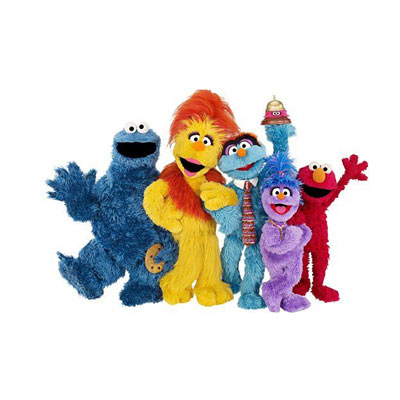
    The Furchester Hotel is a series for three – six year-olds set in the ‘almost’ world-class hotel run by a close-knit family of cheerfully chaotic monsters. As guests arrive at the hotel they are greeted by monster owner Funella Furchester, her loving husband, Furgus Fuzz, and their daughter, the unflappable Phoebe Furchester-Fuzz. The Furchesters are joined by Elmo, Phoebe’s cousin who is on an extended visit and Cookie Monster, who has landed his dream job as room service and dining room waiter. Completing the ensemble is Isabel, a furry bell monster – guests won’t get any attention until she dings to announce their arrival!

    New episodes of The Furchester Hotel, which goes into production at MediaCityUk in May, will feature more music, more creative problem solving, and more physical comedy than ever. Expect slapstick, farce, doors opening and closing, revolving doors revolving, and lifts going up and down and back up again. With storylines including an Aquarium Suite for fish guests, a visit from Vidal Raccoon – famous fur cutter, and The Great Furchester Bake-off!

    The Furchester Hotel has been commissioned by CBeebies controller Kay Benbow and is a co-production between CBeebies and Sesame Workshop.

    Speaking about the series Benbow says, “The partnership between CBeebies and Sesame Workshop is really special as we both share core values of producing fun, high quality, innovative programming for a younger audience that children love and parents trust. And I can’t wait to Welcome Big Bird to Salford!”

    “We’re so excited that The Furchester Hotel will be welcoming new guests on CBeebies for seasons three and four. It’s a thrill to coproduce new entertaining and educational episodes of this furry and funny series that we know children around the world love,” adds Sesame Workshop SVP and GM international media business Maura Regan.

    The Furchester Hotel is a co-production between CBeebies and Sesame Workshop. The second series of The Furchester Hotel will go into production in May for 14 weeks in the studio and will be transmitted on CBeebies later in the year.

  • CBeebies re-commissions ‘The Furchester Hotel’ series from Sesame Workshop

    CBeebies re-commissions ‘The Furchester Hotel’ series from Sesame Workshop

    MUMBAI: CBeebies and Sesame Workshop will be bringing back The Furchester Hotel series once again as it has been re-commissioned for a 50×11 minute run, plus a double length Christmas special.

    Joining the family and checking into the hotel will be special guests from Sesame Street, Big Bird, Count Von Count and the Martians.

    The Furchester Hotel is a series for three – six year-olds set in the ‘almost’ world-class hotel run by a close-knit family of cheerfully chaotic monsters. As guests arrive at the hotel they are greeted by monster owner Funella Furchester, her loving husband, Furgus Fuzz, and their daughter, the unflappable Phoebe Furchester-Fuzz. The Furchesters are joined by Elmo, Phoebe’s cousin who is on an extended visit and Cookie Monster, who has landed his dream job as room service and dining room waiter. Completing the ensemble is Isabel, a furry bell monster – guests won’t get any attention until she dings to announce their arrival!

    New episodes of The Furchester Hotel, which goes into production at MediaCityUk in May, will feature more music, more creative problem solving, and more physical comedy than ever. Expect slapstick, farce, doors opening and closing, revolving doors revolving, and lifts going up and down and back up again. With storylines including an Aquarium Suite for fish guests, a visit from Vidal Raccoon – famous fur cutter, and The Great Furchester Bake-off!

    The Furchester Hotel has been commissioned by CBeebies controller Kay Benbow and is a co-production between CBeebies and Sesame Workshop.

    Speaking about the series Benbow says, “The partnership between CBeebies and Sesame Workshop is really special as we both share core values of producing fun, high quality, innovative programming for a younger audience that children love and parents trust. And I can’t wait to Welcome Big Bird to Salford!”

    “We’re so excited that The Furchester Hotel will be welcoming new guests on CBeebies for seasons three and four. It’s a thrill to coproduce new entertaining and educational episodes of this furry and funny series that we know children around the world love,” adds Sesame Workshop SVP and GM international media business Maura Regan.

    The Furchester Hotel is a co-production between CBeebies and Sesame Workshop. The second series of The Furchester Hotel will go into production in May for 14 weeks in the studio and will be transmitted on CBeebies later in the year.

  • Nickelodeon acquires BBC’s new ‘Teletubbies’ series for US

    Nickelodeon acquires BBC’s new ‘Teletubbies’ series for US

    MUMBAI: Nickelodeon has acquired the exclusive US broadcast and on-demand rights for the new Teletubbies series for broadcast on its Nick Jr. channel.


    Nickelodeon has also taken all 365 classic Teletubbies episodes from the original series for Noggin, its new mobile subscription service for preschoolers. The series has been commissioned by CBeebies in the UK.


    DHX Media, an international player in the creation of content for families and children licensed the show to Nickelodeon.


    DHX Media SVP distribution Josh Scherba said, “There has been overwhelming international interest in the new Teletubbies series, and appetite for the classic episodes remains exceptionally strong. With Nickelodeon on board for the US, as well as CBeebies in the UK and further deal announcements pending, we are building incredibly strong foundations for the next-generation Teletubbies.”


    The timeless, unique and much-loved Teletubbies are re-imagined for a new generation in 60 brand new episodes for 2016, starring costume characters Tinky Winky, Dipsy, Laa-Laa and Po. With rewarding rituals, sound play, and physical comedy, new-generation Teletubbies will build upon many familiar and beloved features of the original series, but offer some exciting and surprising new developments too. With the Teletubbies landscape replaced and replicated by a beautiful, detailed model that will be enhanced via CGI, there will be freedom to apply large doses of creative imagination to Teletubbies stories. The wonderful new world of the Teletubbies will resonate with young preschoolers, reflecting child development and learning in a stimulating and contemporaneous manner.


    Teletubbies first launched in March 1997 and became one of the most successful global children’s brands of all time. It has reached over one billion children to date and the original episodes have aired in over 120 territories in 45 different languages. It was the very first western pre-school property to air on China’s CCTV reaching an audience of 300 million children.

  • CBeebies programming block to launch on BesTV New Media in China

    CBeebies programming block to launch on BesTV New Media in China

    MUMBAI: UK pubcaster The BBC‘s commercial arm BBC Worldwide has announced a deal with Chinese new media company BesTV to launch a CBeebies branded block on their multi screen platform.

    The deal, announced at the opening day of the Shanghai TV Festival, is the first collaboration between a UK kids content provider and BesTV New Media.

    Commencing this year, the deal will see over 20 million of BesTV‘s new media subscribers, who have access to CBeebies‘ preschool programmes like ‘Teletubbies‘, ‘Sarah And Duck‘, ‘Baby Jake‘ and ‘Andy‘s Wild Adventures‘ as a VOD service. Young learners and parents will be able to enjoy CBeebies programmes via BesTV‘s multi-screen service – through IPTV, Connect TV, OTT, tablets, and mobile.

    This will be the first launch of CBeebies as a brand in China. BBC Worldwide VP and GM Greater China Pierre Cheung said, “We have a long term relationship with BesTV, who have been acquiring our BBC documentaries and drama since 2008. We are extremely excited to work with them again to launch the CBeebies brand, and look forward to working with them to promote our award-winning preschool brand in China.”

    BesTV New Media VP Zhangyue said, “Family subscribers are our target users, and the deal with BBC Worldwide to provide CBeebies branded programmes on BesTV is important to us. It gives our viewers and subscribers opportunities where families can come together in front of the TV to spend quality time together.”

    “CBeebies provides a range of pre-school programming designed to encourage learning through play in a consistently safe environment – attributes that we at BesTV agree and believe in as well. With this deal, we have upped the ante on our international preschool offering,” he adds.

  • ‘India is the only market where we pay carriage fees for our channels’ : BBC Worldwide Channels, Asia senior VP, GM, Mark Whitehead

    ‘India is the only market where we pay carriage fees for our channels’ : BBC Worldwide Channels, Asia senior VP, GM, Mark Whitehead

    BBC Worldwide, the commercial arm of BBC, has decided to shut its two channels in India. This will mark the closure of BBC Entertainment and CBeebies from 1 December and reflects the difficulties that niche channels have in growing their business in an analogue cable TV driven market.


    In an interview with Indiantelevision.com‘s Ashwin Pinto, BBC Worldwide Channels, Asia senior VP, GM, Mark Whitehead explains why.


    Excerpts:


    BBC Entertainment was refreshed last year. What went wrong?
    The nature of the Indian market for pay-TV channels make the economics of running channels very challenging at this time. We have reluctantly concluded that we need to close our channels.


    Could you talk about the carriage costs that had to be incurred versus revenues that were earned?
    India is the only market where we pay carriage fees for our channels. We can’t go into commercially sensitive detail on our revenues.


    BBC Worldwide was talking to platforms like the One Alliance. Why did talks fall through?
    We did not choose to comment on speculation at the time and I’m sure you will understand that we won’t be doing that now.


    Was the decision to exit part of the overall cost re-structuring exercise that is going on?
    This decision has nothing to do with the overall restructuring of BBC Worldwide. We took the difficult decision to close the channels for commercial reasons.


    Some of the reasons included the uniquely challenging pay TV market in India and the delays to digitisation.


    ‘India is a uniquely challenging market and decision to withdraw CBeebies and Entertainment is not part of an Asia-wide view

    Didn‘t BBC Entertainment have an edge over competition as it covered three genres – entertainment, factual and lifestyle?
    Both channels – BBC Entertainment and CBeebies – have been exceptionally well received by the Indian audience. However the uniquely challenging pay TV market in India made the economics of running them very difficult at this time.


    CBeebies was ad free. Is running an ad free channel in India unviable at the moment?
    Advertising is currently a major source of revenue for pay TV channels in India. Without that revenue we found it unviable to run CBeebies in India at this time.


    Having said that isn‘t this the wrong time to exit given that the digitisation process has just started with Mumbai, Delhi already switching off analogue signals?
    Digitisation has been slow and the long term impact on the economics of running a channel is unclear at this stage. If those economics improve with digitisation, we will reconsider launching the channels.


    Is BBC Worldwide Channels looking more carefully at the cost structure across Asia and are you exiting other markets to an extent?
    India is a uniquely challenging market and our commercial decision to withdraw the CBeebies and Entertainment was not part of an Asia-wide review. We have no plans to close channels in any other markets at this time.


    There have been a lot of changes in the BBC such as a new DG and COO. How will this affect the functioning of the channels business?
    The international Channels business is part of BBC Worldwide, the commercial arm of the BBC.


    BBC Worldwide has a strong focus on international markets, and our channels business remains an important part of that strategy for growth. We have a clear leadership structure running the channels business with David Weiland as acting Managing Director of Channels and I (Whitehead) running the Asia business.


    Is there the chance that BBC might re-enter India in 2015 when digitisation is complete?
    We believe India is an exciting market and in the event of changes in the options available to us, we would certainly consider re-launching our non-News channels in the market.


    BBC Worldwide remains committed to India, where BBC World News – the BBC’s international news and current affairs television channel – continues to be available across the market, along with the bbc.com and bbchindi.com websites, BBC Hindi radio and Global India, a new primetime programme produced by BBC Hindi TV which launched on five ETV channels this month.


    In addition, BBC Worldwide operates a TV production business, a content syndication business and Lonely Planet in India. BBC Worldwide is also evaluating the potential for a number of digital initiatives which have been successfully developed in other markets. BBC Entertainment programmes will also continue to be available on other channels in India – both terrestrial and cable, as well as digitally on our YouTube channel.