Tag: CBBC

  • UK based broadcaster BBC plans to build ‘digital-first’ focused services

    UK based broadcaster BBC plans to build ‘digital-first’ focused services

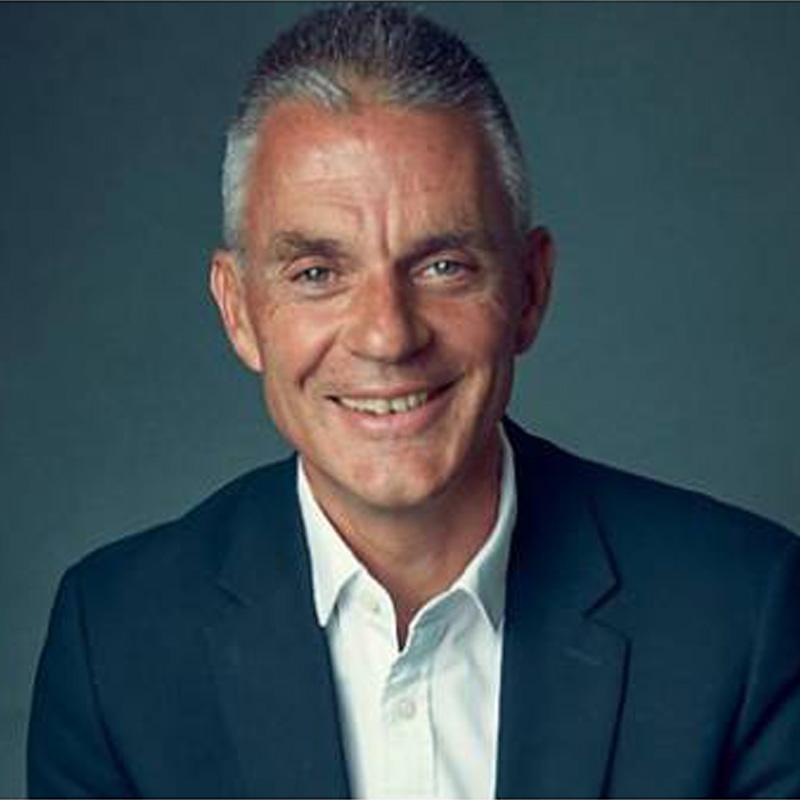
    Mumbai: UK pubcaster BBC director-general Tim Davie shared his plan to build a “digital-first” British Broadcasting Corporation (BBC). The plan will see the broadcaster prioritising its apps and websites over traditional broadcasting channels, said in a company statement.

    In the statement, BBC revealed closing its children-focused channel CBBC and art-skewing BBC-Four including slashing 1,000 jobs over time while putting more investment into digital services like iPlayer.

    Davie also said, “Quite simply, the success of our online services is the success of the BBC over the next five years. Each needs to be in the top two or three in their market in the UK, with our online services growing globally too.”

    Elaborating on iPlayer he said, “Today, iPlayer reaches less than 50 per cent of BBC viewers on average per week. Our ambition is to grow this to 75 per cent. We’ll do this by re-allocating significant amounts of money every year into video that delivers on iPlayer, across a broad mix of genres.”

    “We will propose to Ofcom to expand boxsets and archive, to have more BBC series available on demand. And we want to ensure that news and current affairs is as important to iPlayer as it is on broadcast, which means new on-demand content and formats to build new audience habits.”

    “We will continue to personalise iPlayer to make it much more relevant to every age group and different parts of the UK.”

    While speaking about budget slashing he said, “What we are laying out today is a £500 million plan for the next few years. This is made up of two things: £200 million a year of cuts which are necessitated by the two-year licence fee freeze. This represents the majority of our £285 million a year challenge by 2027-28. £50 million of this £200 million is already baked into our current budgets. The rest is delivered by stopping things and running the organisation better where we can. Then there’s a further £300 million a year which is about moving money around the organisation and delivering additional commercial income. This means that we are not just cutting money everywhere but making choices where to invest.”

    He also said that the plan is not to simply deploy flat savings targets across every department but to act more deliberately. “Focussing resources on frontline areas where we can maximise the value we deliver to those that pay for us.”

    Davie is clear that the future is digital. “The market challenge is clear. Though broadcast channels will be essential for years to come, we are moving decisively to a largely on-demand world. Today around 85 per cent of the time people spend with the BBC is with linear broadcasts. Too many of our resources are focused on broadcast and not online. And less than 10 per cent of our usage is signed in, so we can’t offer a properly tailored service, unlike all our global competitors. If we do not respond faster to these changes we will cede too much ground to those who are not driven by public service values.”

    “The vision is simple: from today we are going to move decisively to a digital-first BBC. We have a chance to do something that no-one else is doing: build a digital media organisation that makes a significant positive impact, culturally, economically and socially. A global leader driven by the search for truth, impartiality, outstanding creativity, and independence.”

    So what will happen to linear broadcast with the enhanced focus on digital? “As we move money into digital, we will inevitably have to spend less on linear distribution. But we will do this with great care – our big channels will be popular for the next decade, at least, and they are incredibly powerful.”

    Davie added: “We do plan to stop scheduling separate content for Radio 4 Long Wave, consulting with partners, including the Maritime and Coastguard Agency, ahead of the closure of the Long Wave platform itself. 5Live on medium wave will also close no later than December 2027, in line with a proposed industry-wide exit from the platform.”

    “Over time we expect to consolidate and share more content between services, and expect to stop broadcasting some of our smaller channels on linear. This will include services like BBC Four, CBBC and Radio 4 Extra. But we won’t do this for at least the next three years because for the moment they are still delivering value to millions of viewers and listeners, at low extra cost.”

    He further said that when it comes to network TV, the UK pubcaster will reduce the volume of hours commissioned a year by around 200. “We’ll still offer thousands of originated hours and a very broad range, but fewer hours will mean we are not constantly thinning programme budgets.”

    “We will focus our money where we are distinctive and more uniquely BBC. We will make tough choices about titles which may be performing on linear but are not doing enough to drive viewers to on-demand. A number of them will be cancelled this year. Importantly, higher-impact content will attract more investment from third parties to make our money go further.”

    “And while we will continue to play a vital role in classical music in this country, we must be realistic about the resources we use. We will continue to support the classical music sector, invest in Radio 3 and improve our educational impact. However, we will look to reduce licence fee funding in our performing groups – preferably by looking for alternative sources of income where possible.”

    In terms of news one of the things he mentioned was that putting digital first applies just as much to its international news services. The world service he pointed out is critical to the BBC, and its growing digital reach means bigger impact with audiences, more brand value for the BBC and the UK, and bigger opportunities for commercial growth.

    “Broadcast services will continue to play a vital role but unfortunately the licence fee settlement means that we cannot offer every service on all the platforms we do today. So we propose to move some of our broadcast radio and television services off linear where digital provides the better future route to audiences. This builds on the model we’re already using in Latin America and parts of Europe. Of course, we will protect broadcast services where that’s likely to remain the best way of reaching people in the long term.”

    He said that the government’s commitment to extend its £94 million annual funding for the world service for a further three years is very welcome. But he also noted that UK licence fee funding for the world service, which has been around £254 million in recent years, is now running at over £290 million including world news – a level that is unsustainable following the licence fee settlement.

    “We will set out plans in the coming weeks for how we will initially reduce licence fee spending on the World Service by around £30 million by the start of 2023/24, while protecting the full breadth of languages.”

    “At the same time, our strategic review will identify the right longer-term model for a digital-first world service and lay out a strong case for more investment from the government over the coming years. This case for a strengthened world service is compelling but we can only expect UK licence fee payers to fund so much.”

    One of the challenges in digital is that on the tech front there is work to be done. “Around 30 million UK adults come to BBC online on average per week, and 200 million globally on digital platforms. We are now up to over 45 million UK accounts, with over 25 million signed in monthly. But we have much work to do to be a leading-edge player in functionality, user experience and data.”

    “We’ve already begun investing more in product development, with an extra £10 million this year. From 2025 we expect to be investing up to an additional £50 million per year, transforming our level of personalisation and our use of real time data, and making our services as easy to use as possible.”

    “In news, we will fully roll out and continuously improve the new News app as a signed-in experience. We will grow our live news pages and transform the quality, prominence and impact of local news.”

    “In sounds, we will continue to improve our on-demand music offer. We will showcase some of the best non-BBC podcasts from British creators and host more of our podcasts on sounds first, before distributing more widely. We want to deliver local and network news better across Sounds and ensure we are securing distribution in connected cars.”

    He concluded by saying, “This is our moment to build a digital-first BBC. Something genuinely new, a Reithian organisation for the digital age, a positive force for the UK and the world. Independent, impartial, constantly innovating and serving all. A fresh, new, global digital media organisation which has never been seen before. Solely driven by the desire to make life and society better for our licence fee payers and customers in every corner of the UK and beyond. They want us to keep the BBC relevant and fight for something that in 2022 is more important than ever. To do that we need to evolve faster and embrace the huge shifts in the market around us.”

    “I believe in a public service BBC for all, properly funded, relevant for everyone, universally available, and growing in the on-demand age. This plan sets us on that journey.”

  • ‘Quality storytelling’ and ‘diversity,’ the key areas channels and platforms look for

    ‘Quality storytelling’ and ‘diversity,’ the key areas channels and platforms look for

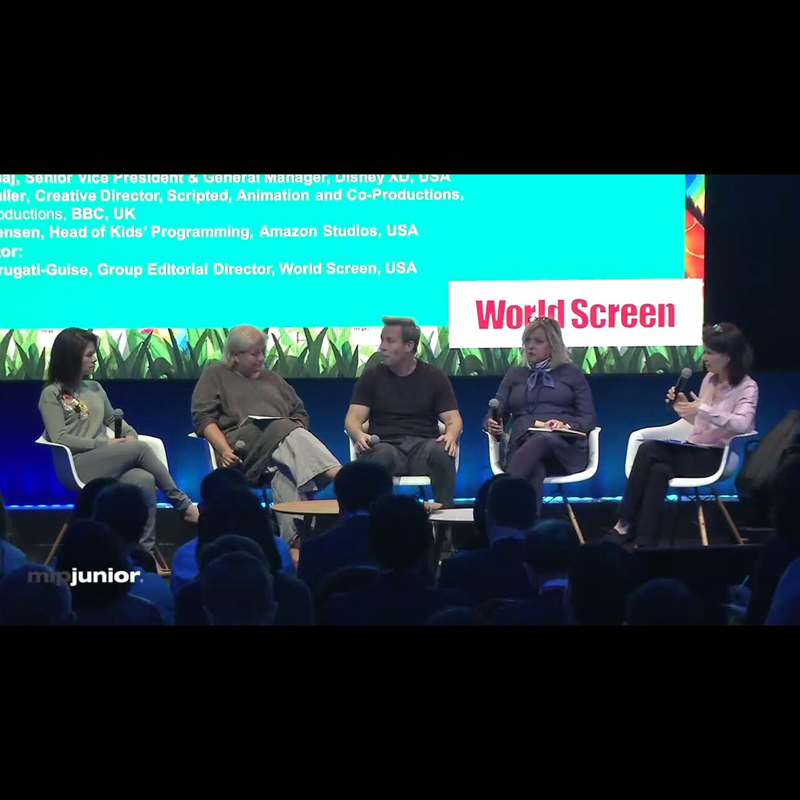
    CANNES: It’s long been a question in the minds of content creators and distributors: “What do channels and platforms want?” With the advent of digital, the confusion has just increased as the content working on linear programming might not be suitable for the non-linear one. To address this was the session at MIPJunior with four programming executives from around the world who in a lively discussion spoke about acquisition trends and offered their perspectives on how to spot hit shows and offer content to young viewers on multiple platforms.

    The speakers included: CANAL+ Group director of Youth unit Laurence Blaevoet, Disney XD SVP and general manager Marc Buhaj, CBBC Productions creative director, scripted, animation and co-productions Sarah Muller and Amazon Studios head of kids’ programming Tara Sorensen.

    With Amazon entering the digital media platform quite late after its competitors it was necessary for it to stand out and to do so, it focused on pre-school curriculum. “On our platform, we encourage kids to stop, reverse programs and keep going back and forth,” said Sorenson. CBBC on the other hand focuses on older children as well. Explained Muller, “We have content right from hard hitting documentaries to sports coverage to original drama and animation series.”

    “If you ask me how different is Disney XD from Disney, let’s start by saying that they are two different names,” laughed Buhaj. “Disney XD is more of a laboratory where we try things out with the content. Primarily it was focused on boys, but now there’s a focus on girls too.”

    All the panelists agreed that while looking for content, quality storytelling is what they search for. CANAL+’s theme is universal and is mostly on love and friendship whereas BBC co-produces shows only for the UK market, which later might become international hits, for instance *Harry Potter. Disney on the other hand finalises the shows after listening to all the ideas from various partners. Any content that has good quality and can be transcended into humour works well. Buhaj accepted that they never thought kids would enjoy *High School Musical* but eventually the key to its success was the way it was executed.

    And the key to have a successful show is “diversity”. Muller said: “At BBC, the success of a show lies in both the front and the centre. Behind the scenes work is equally important as writers from different backgrounds have different set of stories.”

    Buhaj added that they work hard to get variety in their content. It is important to be interesting whereas Sorensen mentioned how the show *American Girl’s is women-led – the director, writer, all are women and though it was the director’s first project, they were ready to take the risk which took off quite well due to the fact that the audience could connect with it.

    And finally the panelists revealed what each of them is looking for at MIP. Amazon Studios is hunting for content with a unique perspective and is also thinking about adult customers. Sorenson is definitely not looking for short form content (more than 11 minutes would do) and reality programming. Blaevoet mentioned that while pitching for your content, one should have creative content and be passionate about it and have fun while pitching. With a great story, Buhaj says he would like if the seller turns the table around by asking them “Why Disney would be good partner for us?” Lastly, Muller goes on to mention that it’s necessary to do your research and understand what you are pitching to whom.

  • ‘Quality storytelling’ and ‘diversity,’ the key areas channels and platforms look for

    ‘Quality storytelling’ and ‘diversity,’ the key areas channels and platforms look for

    CANNES: It’s long been a question in the minds of content creators and distributors: “What do channels and platforms want?” With the advent of digital, the confusion has just increased as the content working on linear programming might not be suitable for the non-linear one. To address this was the session at MIPJunior with four programming executives from around the world who in a lively discussion spoke about acquisition trends and offered their perspectives on how to spot hit shows and offer content to young viewers on multiple platforms.

    The speakers included: CANAL+ Group director of Youth unit Laurence Blaevoet, Disney XD SVP and general manager Marc Buhaj, CBBC Productions creative director, scripted, animation and co-productions Sarah Muller and Amazon Studios head of kids’ programming Tara Sorensen.

    With Amazon entering the digital media platform quite late after its competitors it was necessary for it to stand out and to do so, it focused on pre-school curriculum. “On our platform, we encourage kids to stop, reverse programs and keep going back and forth,” said Sorenson. CBBC on the other hand focuses on older children as well. Explained Muller, “We have content right from hard hitting documentaries to sports coverage to original drama and animation series.”

    “If you ask me how different is Disney XD from Disney, let’s start by saying that they are two different names,” laughed Buhaj. “Disney XD is more of a laboratory where we try things out with the content. Primarily it was focused on boys, but now there’s a focus on girls too.”

    All the panelists agreed that while looking for content, quality storytelling is what they search for. CANAL+’s theme is universal and is mostly on love and friendship whereas BBC co-produces shows only for the UK market, which later might become international hits, for instance *Harry Potter. Disney on the other hand finalises the shows after listening to all the ideas from various partners. Any content that has good quality and can be transcended into humour works well. Buhaj accepted that they never thought kids would enjoy *High School Musical* but eventually the key to its success was the way it was executed.

    And the key to have a successful show is “diversity”. Muller said: “At BBC, the success of a show lies in both the front and the centre. Behind the scenes work is equally important as writers from different backgrounds have different set of stories.”

    Buhaj added that they work hard to get variety in their content. It is important to be interesting whereas Sorensen mentioned how the show *American Girl’s is women-led – the director, writer, all are women and though it was the director’s first project, they were ready to take the risk which took off quite well due to the fact that the audience could connect with it.

    And finally the panelists revealed what each of them is looking for at MIP. Amazon Studios is hunting for content with a unique perspective and is also thinking about adult customers. Sorenson is definitely not looking for short form content (more than 11 minutes would do) and reality programming. Blaevoet mentioned that while pitching for your content, one should have creative content and be passionate about it and have fun while pitching. With a great story, Buhaj says he would like if the seller turns the table around by asking them “Why Disney would be good partner for us?” Lastly, Muller goes on to mention that it’s necessary to do your research and understand what you are pitching to whom.

  • BBC takes tough measures to address editorial breaches

    MUMBAI: UK pubcaster BBC is to take a package of tough measures to address the discovery of further serious breaches of editorial standards across some areas of programmes and content.

    The breaches, which were revealed following a BBC-wide search of around one million hours of output since January 2005, were reported by BBC director general Mark Thompson to the BBC Trust. He announced the new measures in response to demands for action from the Trust.

    The measures include a total suspension of all competitions. Phone-related competitions on BBC television and radio ceased at midnight, and interactive and online competitions will be stopped as soon as possible.

    An unprecedented programme of editorial training focussing on the issue of honesty with audiences will also be implemented. All 16,500 programmes and content staff will attend a new mandatory training programme, safeguarding trust, from Autumn. It will emphasise the absolute imperative to understand and comply with all of the BBC’s values and editorial standards.

    Thompson said, “Nothing matters more than trust and fair dealing with our audiences. The vast majority of the 400,000 hours of BBC output each year, on television, radio and online, is accurate, fair and complies with our stringent editorial standards.”

    “However, a number of programmes have failed to meet these high standards. This is totally unacceptable. It is right that we are open with the public when we have fallen short and that we demonstrate that we take this very seriously indeed. The behaviour of a small number of production staff who pass themselves off as viewers and listeners must stop. We must now swiftly put our house in order.”

    He added, “Our values and our editorial guidelines must take precedence over everything else. There is no excuse for deception. I know the idea of deceiving the public would simply never occur to most people in the BBC. We have to regard deception as a very grave breach of discipline which will normally lead to dismissal. If you have a choice between deception and a programme going off air, let the programme go. It is far better to accept a production problem and make a clean breast to the public than to deceive.”

    The DG also outlined to the BBC Trust further measures in addition to the suspension of phone-related competitions and the unprecedented editorial training programme, in response to public concern over breaches of editorial standards.

    In some cases, editorial leaders will be asked to stand back from their duties, pending reviews of why it took so long for a number of historical incidents to come to light.

    The BBC will revise the standard contracts both for BBC staff and BBC suppliers and make changes to ensure that responsibility for upholding the BBC’s editorial standards and consequences of breaching those standards are understood by everyone.

    Steps will be taken to ensure that promotional materials, such as launch tapes, trails and publicity materials meet the same standards that the BBC expects from its broadcast output.

    A separate communication programme is to be started for independent producers who work with the BBC. The programme of action announced on 29 May 2007 following concerns over the use of premium rate telephony at the BBC will continue.

    “We intend to invite ITV, Channel 4, five and all other leading UK broadcasters to join us in a workshop focusing on training and editorial standards across the industry. Our first priority will remain putting our own house in order,” Thompson said.

    Thompson updated the BBC Trust on six further instances in which production staff have passed themselves off as genuine viewers or listeners, or invented a fictitious winner, which had been uncovered since his original report to the Trust in May.

    Comic Relief, transmitted on Friday 16 March 2007 on BBC One: In a section of the appeal programme, viewers were invited to donate money to Comic Relief and were informed that by calling in they could win prizes which belonged to a famous couple. The first two callers taken on air gave incorrect answers. The other waiting callers were lost and a third caller was heard on air successfully answering the question. This caller was in fact not a viewer but a member of the production team.

    TMi, transmitted on 16 September 2006 on BBC Two and CBBC: Following a production problem with a live competition, viewers were led to believe that a member of the audience was involved and won a competition open to the public. In fact, the caller was a member of the production team. The programme team failed to seek proper advice before running the competition.

    Sport Relief, transmitted on 15 July 2006 on BBC One: Viewers were led to believe that a member of the public was involved in and won a competition open to the public, whereas the caller was in fact a member of the production team. The BBC has found evidence that this action was planned as a contingency in advance and that the physical infrastructure of the competition meant that it would have been impossible for it to be run as was described on air, and warnings about potential difficulties in conducting the competition were ignored. This incident was not referred up nor was it declared to a BBC audit in March.

    Children in Need, transmitted on 18 November 2005 on BBC One Scotland: In a segment called Raven:The Island in the BBC’s Children in Need appeal’s Scotland broadcast in 2005, viewers were led to believe that a phone-in competition, open to the audience, had been won by a viewer, when in fact, due to a communications breakdown, the names of callers were not forwarded to the production team and the name of a fictitious winner was read out on air.

  • BBC launches a kids magic reality hunt in the UK

    BBC launches a kids magic reality hunt in the UK

    MUMBAI: UK pubcaster the BBC’s kids chanel CBBC is launching a reality hunt to find The Sorcerer’s Apprentice.

    A boarding school set deep in the heart of the English countryside will become the home of magical adventure.

    14 scholars will be picked from auditions taking place across the UK. The successful applicants are then whisked away to magic school where they will have 18 days of intense training by top professional magicians.

    While the apprentices make the transformation from novice to magician, the children watching will also get to brush up on their own sorcery skills. In an accompanying series the magic mentors will give away some of their hottest secrets in step-by-step guides so children can learn how to perform magic tricks to amaze their family and friends at home.

    The apprentices will be schooled in the history of magic and folklore, the latin for casting spells, chemistry, card tricks and also look after resident magic animals. As their knowledge and skills progress they will be taught the art of illusion.

    At the end of each week, the children will compete, performing their magic in front of a live audience and the Sorcerer himself. The Sorcerer’s Apprentice, being made for CBBC by independent production company Twenty Twenty, will be shown later this year.

    CBBC creative director Anne Gilchrist said, “The Sorcerer’s Apprentice is going to be a great event for CBBC. Children of all ages are fascinated by magic and this show will inspire and amaze in equal measures.”

  • BBC uncovers ‘Junior Spooks’ HD series

    BBC uncovers ‘Junior Spooks’ HD series

    MUMBAI: The BBC has revealed the cast of its new high-definition children’s spy series from the maker of Spooks, Kudos Film and Television.

    MI High (10×30′) follows a high–ranking MI9 agent, played by Danny John Jules (Red Dwarf), as he establishes a ring of undercover agents in an inner-city high school, at a time when threats to UK national security are at an all-time high, asserts an official release.

    The series is the first Children’s BBC (CBBC) series to be filmed in HD and follows the broadcaster’s last children’s show, The Magician’s House, adds the release.

    Newcomers Bel Powley, Moustafa Chousein-Oglou and Rachel Petladwala star as Daisy, Blane and Rose, the highly trained spies who juggle school work with saving the world. They are joined by guest stars Robert Llewellyn, Rula Lenska, Alex Ferns and Steve Furst.

    CBBC head of drama Jon East said, “Filmed in HD – a first for CBBC – with jaw-dropping stunts and high-tech wizardry, MI High brings the quality of Spooks to a children’s drama.”

    The series is due to transmit in early 2007 on CBBC, as well as being shown as part of the BBC’s 12-month HD trial, available to viewers with HD services.

  • Nick, CBBC competing for channel of the year at the Bafta Awards

    Nick, CBBC competing for channel of the year at the Bafta Awards

    MUMBAI: The British Academy of Film and Television Arts (Bafta) has announced the nominees for the British Academy Children’s Film and Television Awards. The show takes place on 26 November, 2006.

    CBBC, CBeebies, Nickelodeon UK and Nick JR UK are competing for the channel of the year trophy. For film of the year the nominees are The Choronicles Of Narnia: The Lion, The Witch And The Wardrobe, Harry Potter And The Goblet Of Fire, Pirates Of The Carribean: Dead Man’s Chest and Wallace And Gromit: The Curse Of The Were-Rabbit.

    For best entertainment show the nominees are The Basil Brush Show, Raven, Top Of The Pops Reloaded and Tricky TV – Vanessa

    In addition children below the age of 16 can vote for their favourite film. The nominees include Cars,
    Chicken Little and The Chronicles Of Narnia.