Tag: Cashback

  • Axis Bank launches ‘Dil Se Open Celebrations’ with festive discounts

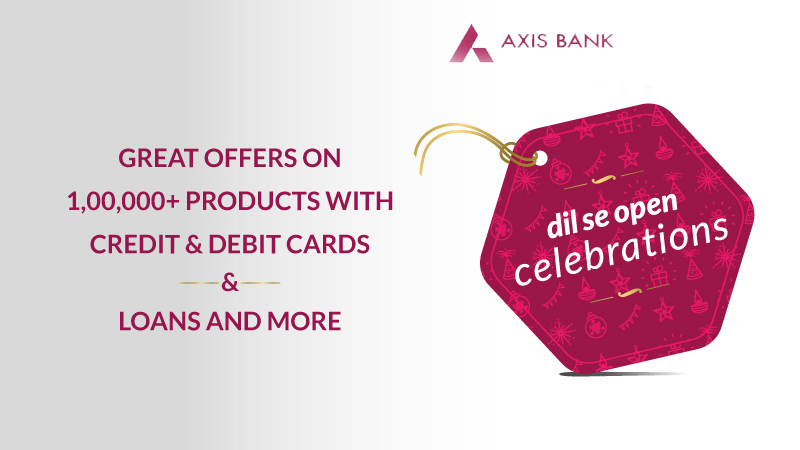
    Axis Bank launches ‘Dil Se Open Celebrations’ with festive discounts

    Mumbai: Axis Bank, one of India’s leading private sector banks, has launched its ‘Dil Se Open Celebrations’ festive campaign, offering exciting discounts across e-commerce, lifestyle, electronics, travel, dining, and groceries for its cardholders. Through the Bank’s Grab Deals platform, customers can access additional cashback offers on over 50 top brands and Indian e-commerce platforms.

    Axis Bank cardholders can enjoy discounts of up to 25 per cent on leading brands across various categories. These include shopping partners such as Amazon, Flipkart, Max Fashion, and Myntra, as well as electronics from brands like Samsung, Xiaomi, and Reliance Digital. Luxury lifestyle products from COACH, HUGO BOSS, and Michael Kors are also available with these offers. Dining and grocery deals can be availed from partners such as Blinkit, EazyDiner, and Swiggy.

    For customers planning travel this season, instant savings are available through partners like Cleartrip, MakeMyTrip, and Yatra. Shoppers on Flipkart can enjoy an additional 5 per cent cashback on all purchases, while customers on Axis Bank’s Grab Deals platform can earn up to Rs. 3,000 cashback.

    The campaign will run until 6 October 2024, with the possibility of extension until Dussehra.

    In support of the campaign, Axis Bank will launch a multimedia initiative under its “achhai kabhi rukni nahi chahiye” narrative, promoting good deeds throughout the year, not just during festivals. The upcoming phase will focus on Navratri and Diwali, and introduce achh.ai, an AI-based portal to help customers find festive offers and inspire acts of goodness.

    Axis Bank, president & head of cards & payments, Sanjeev Moghe said, “We are excited to partner with some of the most esteemed brands this festive season to provide our customers with the best of options and offers. Our aim is to add to the festive fervour and joy with great deals and discounts across shopping, luxury lifestyle, travel, dining and grocery. We hope our customers really enjoy and make the most of the benefits – discounts, cashbacks etc. to have a memorable festive season.”

    https://grabdeals.axisbank.com/

    https://www.axisbank.com/grab-deals/online-offers?bankingchannel=Credit-Card

    https://www.youtube.com/playlist?list=PLfpiltb3lWvsVePgdBWTGWjZMajUjZFE3

  • Earn, burn, repeat: The power of ‘Earn and Burn’ loyalty programs

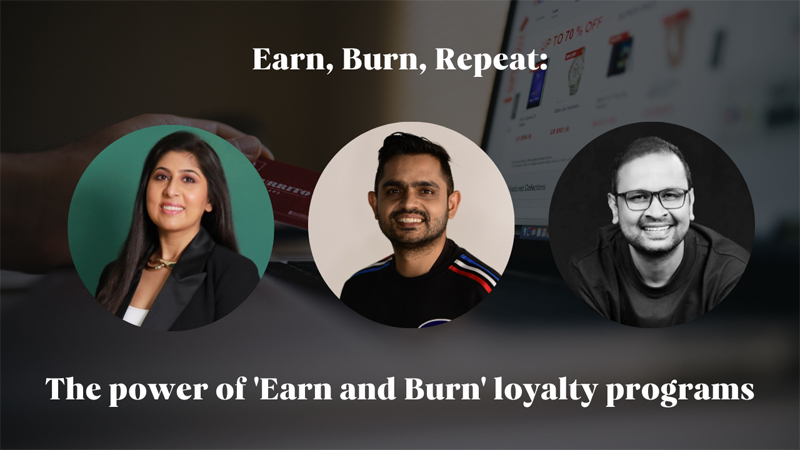
    Earn, burn, repeat: The power of ‘Earn and Burn’ loyalty programs

    Mumbai: In an ever-evolving digital world, driving customer loyalty is crucial for business success. One effective strategy is the “earn and burn” loyalty program. This simple yet effective approach rewards customers with loyalty points for each purchase they make, which they can then redeem for exclusive rewards, discounts, and other perks.

    Also known as point-based transactional programs, Earn and Burn encourages repeat business by offering tangible benefits for customer engagement. From supermarkets and hotels to e-commerce and fitness centers, various industries have adopted this model to enhance customer retention, gather valuable data, and gain a competitive edge.

    To know more about this loyalty program, Indiantelevision.com has gained insights from some of the visionaries on:

    1   How has the concept of ‘Earn and Burn’ loyalty programs evolved and its difference from other loyalty program models such as tiered membership or cashback rewards?

    2   How has technology played a role in facilitating the earn and burn process today compared to earlier implementations?

    3   What challenges has your company faced in implementing and managing earn and burn programs, and how have they addressed these challenges?

    Thriwe co-founder and chief strategy officer Swati Sharma

    There has been a distinct change in the traditional ‘Earn and Burn’ loyalty program models, and today it offers more innovative benefits. Initially, these programs only awarded points for purchases. Today, they also reward actions like followings on social media and writing reviews, which fosters significant engagement.

    These programs promote quicker point redemption, benefiting businesses. Earn and Burn programs are simpler than tiered memberships that offer increased rewards based on spending levels – such as silver, gold, and platinum tiers. They emphasise personalisation, repeat visits, and quick point redemption with various options tailored to different demographics and regions, rather than cashback programs that merely return a percentage of spending with limited reward options.

    In short, the focus of Earn and Burn programs has shifted from merely earning points to enhancing engagement and incorporating gamification.

    Technology has transformed the ‘Earn and Burn’ programs. Purchases and activities are now tracked through digital transactions and apps, granting points instantly. Customers can even earn rewards for social media followings and reviews! With data, one can tailor promotions and rewards to the consumer preferences, and mobile apps make redeeming points easy. This transformation makes the entire process faster, smoother, and more personalised.

    I can tell you that implementing an ‘Earn and Burn’ program is an exciting act. The rewards must be appealing enough to drive point accumulation, but not so luxurious or exclusive that they go unused. Detailed customer data is crucial for optimizing the program and is required to be collected from the start. Simplicity is significant because a complicated program could be off-putting. Advanced security is also necessary to protect against hackers. By offering lucrative rewards, implementing clear communication, data analysis, and advanced security, an Earn and Burn program can be mutually beneficial for both the customers and the merchants.

    Tagglabs founder Hariom Seth

    The earn-and-burn loyalty program is the one with the little barrier to entry. This is one of the oldest loyalty programs that has existed. Initially, this was simple with customers receiving points for their purchases which could be later redeemed for a discount. Now it is not just used in retail but by airlines, and hotels and are customised to suit each sector. With the advent of data analytics loyalty programs have become extremely sophisticated. In the case of earn and burn this reward system is being made more interactive and easier to redeem using data analytics. This loyalty program is deepening the company’s customer relationship by individualising the reward system and making it more customer-centric.

    Earlier, spending money to earn points and to redeem them only once a threshold of points was achieved leading to low customer engagement. Also, in the age of instant gratification, this loyalty program was considered slow since the customers had to wait for a certain number of points to accumulate for them to redeem. Currently, data analytics, gamification, and AI is being used in various loyalty programs. This enables the creation of ecosystems for the customer where they can track and redeem their loyalty points across various platforms.

    POP founder Bhargav Errangi

    In a recent dive into my own Gmail, I uncovered a fascinating world of loyalty programs—38 to be exact. As a loyalty practitioner, I pondered on the dynamics that make these programs truly impactful.

    Surprisingly, despite a cumulative value of Rs 15K (and a potential unicorn status if we include CRED), the majority of these programs struggle to capture my attention. Why? The answer, in my humble opinion, lies in the challenge of redemption restrictions.

    Most programs tie redemption to their own brand, necessitating an intricate dance across 35 different brands for over 50 transactions worth Rs. 2.82Lacs(Hope my better half is seeing this ?) to maximize the value. A daunting task, to say the least! The true gems in my loyalty journey? Programs offering freedom to redeem across multiple brands.

    In this clutter of loyalty initiatives, I found myself an active participant in only three programs: my credit card provider, an airline, and a major e-commerce player—each sharing the common thread of flexible redemption options.

    The heart of the matter? Customers engage with what resonates and provides real value. The overload of transactions and the cognitive load of managing multiple programs are genuine hurdles. The lesson here is clear: simplicity, flexibility, and relevance are the cornerstones of a successful loyalty program.

    As a customer, I crave programs that align with my preferences and respect my bandwidth. Albert Einstein might have excelled at complex theories, but in the loyalty landscape, simplicity reigns supreme.

    At POP, we are not trying to keep things simple, be it the way customers earn and burn coins or the value comprehension of the program. Customers when shopping don’t have time or mental bandwidth to look for loyalty points, hence it’s important to ingest the program at various touchpoints so customers can easily understand the value of the program before they have made the buying decision. This is what can create impact rather than programs that integrate the redemption only once the customer has reached the checkout, where the decision to buy is already made and the delta in impact is much less.

    The journey of POP has been nothing less than a steep climb as not only are we battling the solutions from incumbents but also the bias that brands for their own currency rather than an ecosystem one. But we have been able to create strong inroads going brand by brand convincing them on the model and have been able to gather support from 150 brands including likes of Mcaffience, Myfitness, Adil Qadri, Bacca Bucci, Anveshan, Two Brothers Organic Farm, Powergummies, epigamia, etc.

  • Ed-tech, OTT platforms bring about 30% of our revenue: GoPaisa’s Ankita Jain

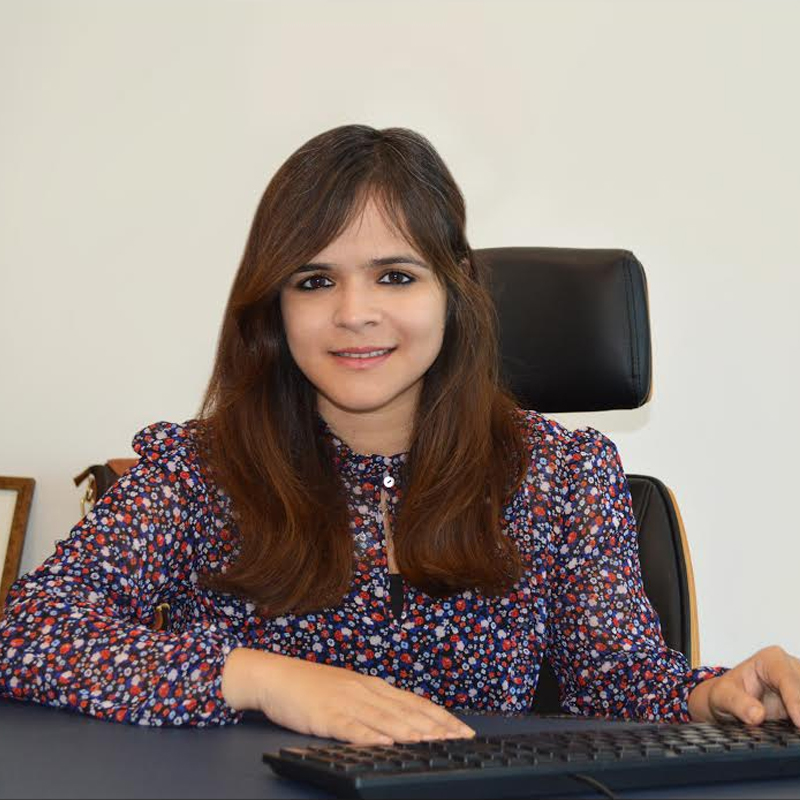
    Ed-tech, OTT platforms bring about 30% of our revenue: GoPaisa’s Ankita Jain

    One of the early players in the cashback and rewards category functioning within the e-commerce space in India, product and offer aggregator platform GoPaisa.com was co-founded by the husband-wife duo of Aman Jain and Ankita Jain in 2012. The bootstrapped start-up has come a long way, with the platform currently recording more than three million user interactions daily. For online retailers, the platform acts as a massive ground for the promotion of their products and related deals. With an association of over 1,000 brands across categories, GoPaisa.com has already distributed over Rs 50 crore plus as cashback over the years.

    Having co-founded GoPaisa at the young age of 23, Jain was awarded the tag of the Youngest Female Entrepreneur, in addition to bagging the ‘Unconventional Women entrepreneur of the Year’ award for her fresh marketing perspectives and take on traditional norms of media as CMO. The brains behind the brand’s popular ‘Don’t be a Kaddu’ TV campaign that emphasised its core philosophy of “Why wait for discounts when you can get Cashback every time you shop”, Jain has always sought to go beyond demographics in defining and engaging consumers, in context with the brand proposition. The app already flaunts a portfolio of reputed brands including Amazon, Flipkart, Myntra, Ajio, OnePlus, mamaearth, Oneplus, 1mg, Norton, etc., and is present across key categories like BFSI, Fashion, Medicines, Grocery, Personal care, travel, digital products. Her ultimate dream is to make GoPaisa synonymous with ‘shopping’.

    ‘Bridging the gap between a solution and a seeker’ is a concept that always intrigued Jain. Expanding further on this premise, the scope for a more user-friendly platform that also enables extra income for users was identified. And thereof was born the couple’s new baby- the deal-sharing platform, Earnly. The latest entrant in the E-commerce space aims to eliminate all the technical challenges of affiliate marketing, by introducing an easy-to-use platform tailored to users who want to earn extra money by sharing curated online retailer deals.

    IndianTelevision’s Anupama Sajeet had an in-depth chat with GoPaisa CMO & cofounder Ankita Jain about the growth of GoPaisa during the pandemic, the company’s new platform, Earnly, and what it plans to achieve through micro-influencer marketing.

    Edited excerpts…

    On the GoPaisa business model

    We started back in 2012 when e-commerce was at a nascent stage. We had a tough task explaining our business model when we approached brands, for they would demand to know ‘what is it that our marketing agencies cannot do, that you can’. It is all about performance marketing- we only charge for sales, as we realise that at the end of the day it’s the conversion that matters. It’s not about the number of clicks or traffic, for these are fictitious by nature, and until and unless it leads to conversion it is of no use.

    Eventually, it became easier with big brands coming onboard- first was Snapdeal then we had Flipkart and Amazon. We work on a ‘cost per converted unit’ basis with the brands, which could differ from brand to brand. For some brands, the converted unit could mean the actual sales transaction. For some others, the premium paid or a credit card dispatched could be the converted unit, instead of sales.

    On the impact of the pandemic on consumer behaviour

    Our total traffic has gone up in the aftermath of the pandemic. Another major difference that I noted during this phase is the trend of adoption of new brands, unlike pre-pandemic, where people were hesitant and more comfortable with their ‘safe’ purchases from known brands like Parachute or Dove. The pandemic has changed that. Especially in tier-3, tier-4 markets, consumer behaviour has changed drastically. They have come online and are open to experimenting – ready to try new products from relatively newer brands like, say, a mamaearth’s onion hair oil or a beard cream from Beardo, which previously did not have penetration in these markets. The learning curve of the customer has been phenomenal and the entire gamut of D2C brands post-pandemic is the result of this.

    Since we work with all these brands, we completely know where the trend is now shifting. We closed the financial year with Rs 15 crore revenue. We are growing 15-20 per cent month-on-month. So based on sheer numbers we have performed quite well in the last year and a half.

    Also, there is this whole new category of products that has sprouted during the pandemic- digital products. By that, I mean the ed-tech platforms, OTT platforms, which comprise 30 per cent of our revenue. Right now our top five categories would be medicines, digital products, electronics, and furniture.

    On the marketing & advertising media mix adopted by the digital-centric brand

    Influencer content marketing has always been a major part of the Gopaisa marketing plan, along with the traditional digital advertising through Google, Facebook, etc. We did a small trial campaign on TV and then we went ahead with a marketing split of 50-50 between TV & digital mediums. Initially, we did TV advertising for three years, mostly during the festive season, so that we are assured of ROI on it. I wouldn’t say the ROI that we got on TV was bad. That’s also the reason why we plan to get the TV back in our marketing mix this quarter itself. But print and radio not so much.

    On the platform’s consumer demographics

    Our audience age group usually ranges from 18 to 34 years, with the core being from 24 to 34 years. Till last year 60 per cent of our consumers were from metros and 40 per cent were from non-metro cities. However, now the skew is towards non-metro. This is more so after we initiated regional marketing assignments, where we tied up with local micro-influencers from different regions and different languages like Kannada, Tamil, Telugu, Gujarati, Marathi for influencer marketing. That’s when we began seeing increasing returns from the tier 3, tier 4 towns.

    On influencer marketing & the idea behind Earnly

    As a policy, we did not approach the big influencers, instead, we tried the local influencers with a limited following. These influencers had high relatability and also had the tracking factor of their audience. We saw that the reach of these micro-influencers was phenomenal. But still, they did not make money. Because the branding deals only went to the top five per cent, and brands do not grant marketing budgets to micro-influencers.

    So how can they make money? And that is how we arrived at the idea of Earnly. With this new platform, they can actually commercialise their marketing efforts. And they rightfully ought to, for they make good sales through their video promotions of deals etc. When people see individuals like themselves, from a similar stratum of society or having a similar mindset, they buy due to the relatability aspect. Hence, we want to open up our entire gamut of 1,500 brands to these kinds of influencers with Earnly.

    On the USP of Gopaisa & Earnly platforms

    While competition has always been there in this space, our USP has been to work from an analytics angle. With advanced analytical tools, advertisers now have the freedom to pay for achieved results. We also understand the fact that we cannot be bombarding the customer with all 1,500 odd brands. So, for us to understand our customer is very important. Hence, we work a lot on our data analytics, which helps us to give the right offer to the customer at the right time. For that, we capture all the footprints that he/ she makes while or before making a transaction. So, ours is a very analytics-driven approach. And that is why our customer loyalty is high. Gopaisa has amassed 3.5 million subscribers as of today and with Earnly, we plan to cross 30,000 to 40,000 users by the end of this quarter.

    On the challenges ahead for the new e-commerce platform

    For three months, Earnly was in a Beta stage and we have already onboarded a thousand plus influencers to the platform, so the response has been really good. Right now, our main challenge is how fast we can spread the word. We have some campaigns going live on Earnly with big brands going on right now, and we are doing a lot of barter deals, where we can get the micro influencers’ costs for the product covered. We have negotiated with the brands such that the entire product cost, and commission- in cases when sales happen- is paid for by the brand so that there are zero investment charges for the influencer.

    It is said that 21 days is what it takes to build a habit. So in terms of consumer behaviour shift to shopping online- habit formation has happened. Because people are just too used to it plus the advantages of the price and the convenience of not having to step out. More so, one’s everyday routine requirements- it has shifted from offline to online, which is a major shift in consumer behaviour and which is here to stay I think.