Tag: Casbaa

  • MIB, TRAI allay industry fears on sat capacity leasing & content regulations

    MIB, TRAI allay industry fears on sat capacity leasing & content regulations

    MACAU: Indian government officials on Tuesday used an international platform of CASBAA Convention 2017 here to allay some of the industry fears on regulatory challenges involving satellite capacity leasing on foreign satellites and possible content regulations, while stating the country strives to be vibrant, living up to PM Modi’s stated policy of ease of doing business.

    “The improvement in India’s ease of doing business global ranking to 100 is not just eyewash. It represents real changes,” Ministry of Information and Broadcasting (MIB) secretary NK Sinha said here, adding that though general talks with the department of space and Indian space agency ISRO were continuing to ease policy restrictions for Indian customers to lease capacity on foreign satellites, a meeting on some specific issues were yet to take place.

    “Prime Minister Narendra Modi’s mantra is perform, reform, transform,” Sinha said stressing on the message that efforts were on to remove bottlenecks to doing business in India’s thriving broadcast and cable sectors and that technology was critical for both communications and content.

    Telecom Regulatory Authority of India (TRAI) chairman RS Sharma chipped in to state the regulatory body had recommended to the government to adopt an open sky policy. “These (ISRO issues) are not issues of principle, but of operation,” he added.

    “The issue also affects broadband provision. To ensure affordable broadband in rural areas, India will need to use satellites to provide this (service),” Sharma elaborated, adding that TRAI was presently studying stakeholders’ comments on its consultation paper on ease of doing business in the broadcast sector “to resolve the matters raised” by the industry.

    The two top Indian regulatory officials involved in matters of broadcast and media were responding to a question from the audience on whether they were aware that it was increasingly becoming challenging for Indian customers (like broadcasters, Vsat and teleport operators, for example) to lease capacity on foreign satellites in the wake of a maze of clearances and paperwork sought by ISRO.

    It must be clarified here that though TRAI has been repeatedly suggesting an open sky policy related to satellite capacities (both C and KU bands), the nodal ministry governing ISRO was yet to take an official stand on the regulatory body’s recommendations.

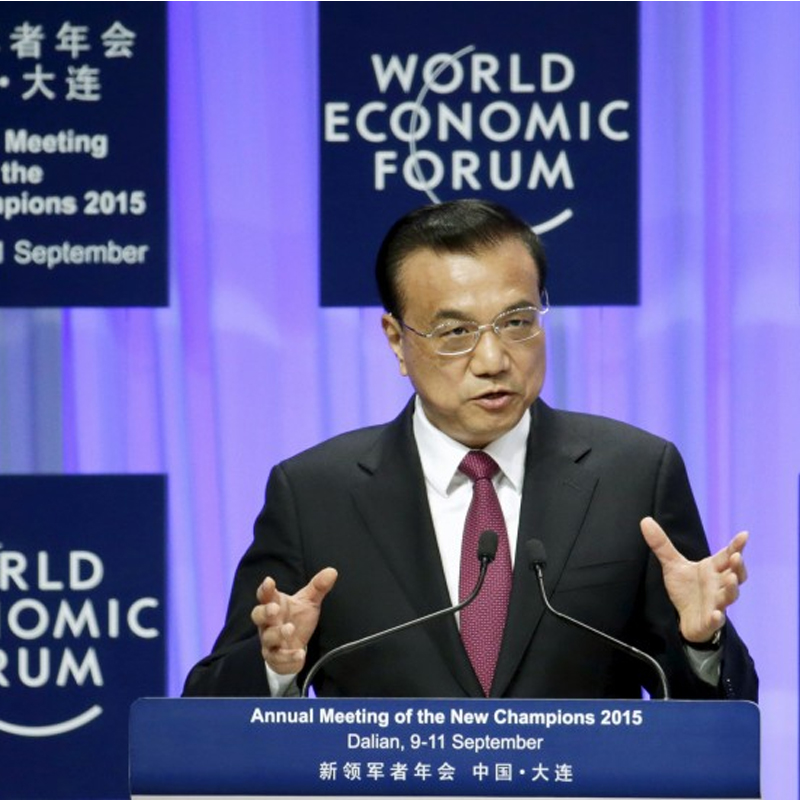
    public://CASBAA-RS_Sharma.jpg

    In what would — or could — bring smiles on the faces of many in the Indian broadcast and content business, the top MIB official also batted for self-regulation as a way forward, hinting that irresponsible behavior from stakeholders, however, would not be tolerated.

    “Happy with (present) self /co-regulation. Future will be self-regulation. The volume of content is going to explode exponentially. It will not be possible to pre-check each bit of data (but) citizens must be responsive and responsible,” Sinha said responding to another audience query on whether the government proposed to bring in a content regulatory body.

    At present, both the News Broadcasters Association and Indian Broadcasting Foundation have frameworks for self-regulation governing their member-companies. However, there are many out of the 800+ licensed TV channels that are not members of these industry organisations.

    He further pointed out that there needs to be a mechanism to ensure self-regulation comes back on track if it “strays”, though “pre-certification” didn’t look to be the future.

    Earlier speaking at a session themed `View From India’ on Tuesday, both Sinha and Sharma gave a snapshot of the Indian broadcast and media industry to a primarily international and Indian audience at the ongoing three-day CASBAA Convention 2017 here. They highlighted that India thrives as the second largest TV market with  183 million TVHH, 900 TV channels, 310 FM radio stations, 60,000 LCOs, 1,500 MSOs, 360 broadcasters, expanding reach of Doordarshan’s FTA DTH service, multiple DTH platforms, one HITS and several IPTV platforms, apart from OTT services.

    The chief of TRAI, which regulates the carriage and tariff segments of the broadcast sector and delivery platforms, in his address said the industry had grown at the rate of 15 per cent CAGR for the last five years and is projected to grow a shade less at 14 per cent for the next five years.

    While skirting a direct reference to TRAI’s new tariff regime for the broadcast and cable sectors being legally challenged by some industry players and presently being debated in Indian courts, Sharma mentioned the regulatory body had announced a framework that was “fair, transparent and non-discriminatory”.

    “Centralised distribution audits will ensure all broadcasters get audit information. This will reduce the burden on distributors and broadcasters,” he highlighted as an example of its regulatory fairness vis-a-vis multiple audits of customers being presently done draining human and financial resources of stakeholders.

    Dwelling on the ambitious multi-million Indian rupee national fibre optic network project or Bharat Net, Sharma said it was now a public-private venture not only for broadband, but also for delivering TV services. “Come, analyse and invest in the Indian broadcast sector,” he exhorted the global investment and media community.

    ALSO READ:

    MIB reverts to earlier norms of seeking nod from ISRO on uplink/downlink of TV channels

    MIB secy Sinha, Viacom18 CEO Vats to speak at CASBAA convention in Nov

  • CASBAA forms ‘Coalition Against Piracy,’ hires content protection veteran Neil Gane

    CASBAA forms ‘Coalition Against Piracy,’ hires content protection veteran Neil Gane

    MUMBAI: CASBAA has announced the formation of the Coalition Against Piracy (CAP), a major initiative to coordinate industry resources in the fight against rampant content theft.

    It has appointed Neil Gane, an industry veteran in content protection, as the general manager of CAP. Gane will direct CAP enforcement actions to disrupt, diminish and dismantle pirate enterprises across the region.

    The CAP includes leading video content creators and distributors in Asia. Members are: beIN Sports, CASBAA, The Walt Disney Company, Fox Networks Group, HBO Asia, NBCUniversal, Premier League, Turner Asia-Pacific, A&E Networks, Astro, BBC Worldwide, Media Partners Asia, National Basketball Association, PCCW Media, Sony Pictures Television Networks Asia, True Visions, TV5MONDE, and Viacom International Media Networks.

    CASBAA chief policy officer John Medeiros said, “One of CASBAA’s primary missions is to bring our members together to join the global fight against content theft. That’s what we are doing in establishing the CAP. CAP will focus on addressing the growing threat of illicit streaming devices (ISDs) and apps, which facilitate massive piracy of movies, sports, TV series and other creative video content. This does great harm to the content creation and distribution industries in Asia, as well as the millions of people who work in the creative economy around the world.”

    Gane said, “The Asia Pacific region has some of the worst rates of online piracy in the world.” Formerly with the Hong Kong Police, he has worked on content protection issues for more than a dozen years. He noted that the unprecedented growth in delivery of legal creative content over global broadband networks is being undermined by a surge in the sale of TV boxes with pre-loaded infringing applications.

    Online video and broadband distributions have the potential to be a massive economic growth engine in Asia with analysts forecasting market growth of more than 20 per cent over the next five years, benefiting consumers and creators of quality video content within Asia and around the world. But, this growth potential is threatened by piracy.

    In the past two years, there have been many new roll-outs of online content services across the Asia Pacific region, by existing players as well as new ones. Unfortunately, the likelihood of success for legitimate online content suppliers is severely reduced by online access to pirated content, resulting in the expectation of many consumers to get “something for nothing.”

    “The prevalence of ISDs across Asia is staggering. The criminals who operate the ISD networks and the pirate websites are profiting from the hard work of talented creators, seriously damaging the legitimate content ecosystem as well as exposing consumers to dangerous malware”, said Gane.

    Medeiros said, “Current legal frameworks are not adequate to handle this newly-enabled crime.” “Consumers are offered huge content bundles from overseas as if they were legal. But, receiving stolen content is wrong, and the fundamental purpose of an ISD network – with an innocent-looking box as its home node – is to monetise this redistribution of content without any recompense to those who worked to produce it.”

    “This is a highly organised transnational crime,” agreed Gane, “with criminal syndicates profiting enormously at the expense of consumers as well as content creators.”

    Mitigating the piracy threat requires international cooperation, added Medeiros, and CASBAA has established CAP to provide added support for the content and distribution companies in the worldwide fight against piracy. CAP intends to join hands with similar initiatives underway in other parts of the world, including with the newly-formed Alliance for Creativity and Entertainment (ACE) and in Europe where a separate coalition of broadcasters and content creators initiated by BBC and the Motion Picture Association has made great strides in information sharing and coordination.

    CASBAA CEO Christopher Slaughter said, “We are excited about the launch of CAP in Asia to enhance collaboration between different segments of the industry – distributors, aggregators, and creators – and to complement the other country-specific and global initiatives in place and starting to show results. Collaboration is key and we look forward to the success of this new program.”

    CAP will be launched officially at the forthcoming CASBAA Convention 2017, 6-8 November, at Studio City Macau, as a highlight of its robust policy and anti-piracy conference track.

  • MIB secy Sinha, Viacom18 CEO Vats to speak at CASBAA convention in Nov

    MIB secy Sinha, Viacom18 CEO Vats to speak at CASBAA convention in Nov

    MUMBAI: Regional multichannel TV and digital video trade body CASBAA has announced the key themes (and workshop programme) for the CASBAA Convention 2017 to be held in Macau, from 6-8 November.

    The line-up for the convention has been designed “to capture the urgent issues facing our industry at a time of the most dynamic market changes seen in more than 20 years,” said CASBAA CEO Christopher Slaughter.

    CASBAA represents 100 corporations across 20 markets in the Asia-Pacific, from China to Australasia, Japan to Pakistan and encompassing over 623 million Pay-TV subscribers and 2.5 billion broadband connections (source: MPA).

    The full implications of the digital video revolution are at the top of the convention’s agenda, including solutions to the potentially devastating impact of digital piracy, the on-going opportunities presented by local, regional and global OTT platforms and the challenges arising from the mountains of detailed digital data now being assessed by broadcasters, carriers, technology vendors and advertisers alike.

    “The blue-chip list of Pay-TV operators, content creators, broadband carriers, investors, sponsors and regulators attending the convention guarantee unrivalled access to the Asia Pacific Pay-TV and Digital Video decision makers,” said Slaughter.

    In the meantime, through a series of ‘Masterclass’ panels and presentations, the convention programme will deliver:

    – Real-time case studies focused on the crucial battle against on-line piracy, including a few “Wins!”
    – A fresh look at the best performing business models for Pay-TV
    – Deep-dive presentations on the vital security technologies and regulatory “fixes” under debate across Asia Pacific and around the world
    – Close examinations of the new ecosystems and revenue streams now available for the monetisation of emerging digital video markets
    – New insights on the impact of soon to be launched broadband satellite services across Asia

    Plus Understanding the Viewer: a series of closely moderated conference sessions shedding fresh light on the complex worlds of digital media and programmatic advertising.

    The key speakers at the convention include:
    – Samuel Scott, Columnist, The Promotion Fix @ The Drum
    – Hosi Simon, Global General Manager, VICE Media
    – NK Sinha, Secretary, MIB, Government of India
    – Dr Ros Lynch, Director, Copyright & IP Enforcement, UK Intellectual Property Office
    – Sudhanshu Vats, Group CEO, Viacom18
    – Birathon Kasemsri Na Ayudhaya, Chief Content and Media Officer, True Corporation
    – Jeremy Butteriss, Managing Director for Global Partnerships, APAC, Google

  • Prasar Bharati, Dish TV, Star, Zee and BES bat for KU-band open-sky policy

    Prasar Bharati, Dish TV, Star, Zee and BES bat for KU-band open-sky policy

    NEW DELHI: A number of stakeholders in the Indian broadcast and satellite industry, including the country’s first DTH service provider Dish TV, Star India, Zee, the pubcaster Prasar Bharati, and industry organisations such as Broadband India Forum and CASBAA are batting for an open-sky policy relating to KU-band transponders.

    The reason for this support for an open-sky satellite policy is rooted in the need for increasing KU-band transponder capacity. The allotment of KU-band transponder on foreign satellites is regulated by the country’s space agency Indian Space and Research Organisation (ISRO) when it is unable to provide space on Indian satellites to domestic customers.

    While Dish TV does not see “any justification” in the closed-door or regulated policy regime followed for KU-band transponder capacity, Star India is of the opinion that absence of such a policy is limiting DTH platforms’ capacity to provide additional services. Though Prasar Bharati, managers of Doordarshan and All-India Radio, gets preference on Indian satellites, it has also supported an open policy.

    “At present, KU-band is permitted for HITS, DTH, uplinks and DSNGs/VSATs. These applications should be enabled for open-sky policy, which will allow the broadcasters/DTH operators to negotiate long-term contracts. As satellite life is 15-17 years, operators give benefit in long-term contracts to the extent of 50 per cent,” Dish TV has said, adding that, at present, ISRO executes only three-year contracts.

    According to Star India (its parent 21 Century Fox has a minority in DTH operator Tata Sky), “With the introduction of new satellite TV channels, DTH operators require more KU-band capacity with footprint over India to enable to uplink all such channels on such DTH platforms… (but), owing to the lack of open-sky policy in KU-band, DTH platforms are restricted to provide limited value-added services. The open-sky policy for DTH will unlock such value-added services and enable viewers to consume such immersive and interactive content.”

    Why is this clamour for an open-sky policy regarding KU-band transponder?

    At present, any request for additional KU-band capacity on foreign satellites to expand business by Indian customers is hampered as they are unable to negotiate directly, and have to go through ISRO’s commercial arm Antrix that acts as a gate-keeper and, after a deal is concluded with a foreign satellite for KU-band transponders, also charges a commission.

    This happens when ISRO is unable to provide space on Indian satellites, which are increasing in number but have failed to keep pace with the demands of the domestic companies. Incidentally, there is no restriction on leasing C-band transponder capacity on a foreign satellite.

    “For DTH services, acquisition of KU-band transponder capacity is highly regulated and is done through an intermediary (Antrix that is a government organisation). As a result, there has been considerable delay in acquiring KU-band transponders…and also due to non-availability of adequate transponders, DTH service-providers are unable to chalk out their business plans. This is necessitated as the current procedures are fraught with restrictive practices,” said Broadband Forum India, an industry organisation comprising member-companies providing services via satellites.

    Hong Kong-based Asian industry body CASBAA, pointing that it has been seeking a “less restrictive policy” for KU-band for over a decade, has said a PwC-researched paper for it mid-2016 concluded that the policy for KU-band was “in effect a very restrictive satellite policy as presently operated in India,” which “artificially suppress(es) demand, which in turn leads directly to a reduction in growth, profits, and therefore lower tax revenues.”

    Though the bogey of national security is often raised when liberalisation of satellite policies are talked about, CASBAA, while discounting such fears, suggested following medium-term policy tweaks to ease KU-band capacity crunch, which were also listed out by some other stakeholders too:

    i) ISRO/Antrix can regularly publish a list of pre-cleared satellites and operators who are permitted to supply transponders to the Indian market. Indian DTH operators should be free to negotiate and contract capacities directly from them.

    ii) An efficient procedure can be established for DTH operators to obtain security clearance from ISRO before contracting the transponder capacity directly from foreign satellites.

    iii) Contracting for incremental capacity or extending the contracts of existing suppliers can and should be completely left for DTH operators without any need to seek additional, duplicative approvals from ISRO/Antrix. DTH operators would need to keep the ISRO updated with the contracted capacities and contract durations.

    The issue of freeing up KU-band transponder lease regime has been discussed for years, but its gaining momentum as the present PM Modi-led government in New Delhi has been talking about furthering economic liberalization and easing norms for doing business in India.

    Broadcast Engineering Society (BES), a government organisation, too is in favour of  an open-sky policy. “Keeping in view the growing number of TV channels and their carriage on various platforms, it has become inevitable for the government to go for an open-sky policy for KU-band,” BES stated, adding technological advancement and growth of HD channels, apart from experimental 4K services, has necessitated this.

    The stakeholders were expressing their views on KU-band satellite capacity vis-à-vis an open-sky policy as part of a consultation process initiated by sector regulator TRAI on ease of doing broadcast business in India. Incidentally the regulator has been recommending in vain an open-sky policy for several years now.

    ALSO READ :

    ISRO stresses on indigenization; TRAI for Open Sky policy

    ISRO’s ‘South Asia Satellite’ to carry 12 ku-band transponders

    Could India blocking ABS’ FTA TV signals lead to breach of ITU norms?

    MIB: No DPO request for infra sharing, DTH ops’ transponder demand up

  • 14 pc Singaporeans use illicit TV boxes, at malware risk: Casbaa-sponsored study

    14 pc Singaporeans use illicit TV boxes, at malware risk: Casbaa-sponsored study

    MUMBAI: Despite major growth in the number and range of legal online content choices available to them, recent studies have found Singaporeans to be among the top consumers of pirated online content around the world.

    A new consumer research study released by research company, Sycamore, at a Casbaa-sponsored event further examined online piracy behaviour within Singapore and found several striking trends:

    • Almost half the population admit to having engaged in online piracy, with 39 per cent stating they currently illegally stream (OTT / VoD) or download movies, TV shows or live sports channels.

    • Illicit Streaming Devices (TV boxes) are changing the face of piracy in Singapore, with 14 per cent of Singaporeans admitting to currently using an illicit streaming device.

    • Seventy-four per cent of active pirates recognise that accessing pirated content puts them at greater risk of getting viruses, spyware and other malware. In fact, the risk of malware was the primary reason (40 per cent) cited by those who said they had stopped pirating for their change in behaviour, followed by recognition that there were now more legal options available (37 per cent).

    • Sixty-eight per cent of Singaporeans recognise that pirating movies, TV shows or sporting events is stealing or theft, with almost a third agreeing that blocking of sites which profit from pirated content would be the most effective means of reducing online piracy.

    The Sycamore study combined qualitative and quantitative methodologies. This included a survey of 1,000 respondents in Singapore, weighted to be representative of the population, plus a further 300 users of illicit streaming devices, to better understand the details of their behaviours.

    “The implications of these results are significant”, commented CASBAA’s chief policy officer John Medeiros. “Admitted usage of TV boxes which provide illegal access to TV series, movies and live sports events is much greater in Singapore than in other developed markets, such as the US and the UK. While these numbers are already concerning, they rely on the candour of respondents and undoubtedly underestimate the true scale of the problem.”

    These findings point to an equally worrying trend in the Singaporean market. Despite the fact that two-thirds of Singaporeans agree that piracy is stealing, the study revealed that nearly three quarters of the population consider piracy to be a normal or typical behaviour.

    “The notion that piracy is something that everybody does nowadays turns it into a socially acceptable behaviour”, said Sycamore Research director Anna Meadows. “Numerous studies have shown that what we perceive others to be doing has a far stronger influence on our behaviour than what we know we ‘ought’ to do. People know that they shouldn’t really pirate, but they continue to do so because they believe those around them do as well. Interestingly, even among active pirates, almost a third agree that authorities should be able to take more action to deter piracy.”

    Those Singaporeans who admitted to actively streaming or downloading pirated content admitted that the primary incentive behind their behaviour is that it costs nothing to pirate. An overwhelming 63 per cent of respondents answered that their decision to pirate was motivated by the desire to access content for free. “On the other hand”, said Meadows, “there are few perceived downsides to piracy. Whilst the risk of devices being infected with viruses or malware is understood, it is underweighted. In the face of the benefit of free content, people appear to discount the risks, as the idea of getting something for nothing is so psychologically powerful.”

  • CASBAA CEO Christopher Slaughter steps down

    CASBAA CEO Christopher Slaughter steps down

    MUMBAI: CASBAA has announced that following five years’ service as the Association’s chief executive officer Christopher Slaughter is to step down, effective 31 December. Slaughter will continue as CEO through the remainder of the year while a search is carried out for his successor.

    “The Board deeply appreciates Chris’s stewardship of the Association over the past five years. He has spearheaded structural reform of the organisation, created new events, and delivered on CASBAA’s aim to represent, inform, and connect its membership. We are grateful for his service to the membership and the industry,” said CASBAA board chairman Joe Welch.

    “It has been a tremendous privilege to work so closely with some of the most inspiring leaders of Asia’s multi-channel TV industry, both on the Board and among CASBAA’s members. In addition, it has been an honour to serve alongside the passionate and dedicated staff in the Executive Office. My time at CASBAA has given me a unique perspective on what has been a transformational period in the industry,” said Slaughter. “I want to express my deep appreciation to the Board for this fantastic opportunity over the past five years.”

    Slaughter was appointed as the CEO of CASBAA in October 2012, and had previously served as Convention Director in 2004. Before joining CASBAA, Slaughter held leadership roles in global and regional production, research, and news organisations: APV, The Yankee Group, CNBC, & Asia Business News.

  • Comment: War on online video piracy, which matters, is here for India to fight

    Comment: War on online video piracy, which matters, is here for India to fight

    “There’s only one war that matters. And it is here”.

    So reads the caption of HBO’s official trailer for the blockbuster sixth episode of ‘Game of Thrones’ season seven that is scheduled to be aired next week. Even as Daenerys Targaryen’s Unsullied Army took up position outside the walls of King’s Landing, the online leaks of the TV series continued with unfazed pirates threatening not only to up the ransom figures, but also breach more episodes—Khalessi and dragons, notwithstanding.

    But the caption of the trailer does resonate with the Indian media and entertainment (M&E) industry as well as the government and policy-makers. The war that matters – the battle against online pirates — is certainly here and worth fighting for.

    As the online video market grows around the globe, India being no exception, so has the fear of online piracy and loss of revenues to content owners.

    The leak of an episode of GOT that recently happened in India, courtesy Prime Focus Tech, Indian host broadcaster Star India’s technology vendor, brought to the fore that the menace is closer home and will grow in coming days. And it happened just in the week – or after Hotstar – started a high decibel media campaign  urging  viewers to stop downloading torrents and go for originals on the streaming VOD service. The comnsumer – it seemed – was cocking a snook at its suggestions, though the leak happened through its vendor-partner. 

    Earlier, it was primarily the Indian film industry that was battling online pirates through John Doe court orders and blocking of some websites. But now, it seems, the whole entertainment industry needs to come together with policy makers to put up a joint front against piracy. More importantly, admission of the fact that the scourge has arrived on Indian shores and will spread in the coming years more aggressively, will only help drive anti-piracy initiatives.

    It’s not that initiatives against piracy are not taking place, but they are individual acts. “There are various industry bodies operating in the M&E sector in India and since there can’t be divergent views on tackling piracy, it’s high time a single coalition is formed by all industry stakeholders in partnership with government, which will help align business interests in a common mission,” said Viacom18 Media group general counsel and company secretary Sujeet Jain, one of the industry execs at the forefront in the fight against piracy.

    Why the fight against online piracy is imperative and India must start taking counter measures to safeguard against revenue losses?

    Sample some figures. Singapore-based market research firm Media Partners Asia (MPA) recently estimated that the Indian online video industry generated approximately $ 230 million in total sales in 2016 and could reach approximately $340 million in 2017. Online video revenues, including net advertising and subscription fees, will grow at a 21 per cent CAGR across the Apac region between 2017 and 2022, climbing from US$17.6 billion in 2017 to US$46 billion by 2022, MPA reported.

    Data revenues across fixed and mobile networks in Apac will reach $318 billion by 2022 and average mobile broadband penetration will reach 73 per cent per capita by 2022 versus 59 per cent in 2017, with some of the biggest growth coming from India, Indonesia, the Philippines, Thailand and Vietnam.

    Indian regulator TRAI’s figures state till May-June this year India had 282 million wireless and 18.33 million wired broadband subs.

    While acknowledging the potential of the Indian online video market and its weaknesses for breaches, a TV exec, on the condition of anonymity, pointed out that lack of cohesion and unity is stopping various industry associations to come together under one umbrella for anti-piracy activities. The need for finances to keep such an initiative afloat is an impediment too.

    For example, a body called Copyright Force was announced last year with much fanfare with few Indian and foreign industry associations promising to collaborate on anti-piracy measures. But, recently a senior government official in the Ministry of Commerce, which oversees IPR-related policy-making, told indiantelevision.com that he had not heard about Copyright Force, but some individual media companies were in regular touch.

    Writing a blog on the need to uphold IPR, Viacom18’s Jain very aptly had pointed out programs such as Digital Bharat may not achieve the  desired results if online piracy is not curbed as IPR enforcement for the M&E industry was no less important than IP assets emerging from innovations and R&D from other sectors and for India to be globally successful, it must ensure safeguards against IPR breaches.

    While the government admits India is a big and complex market, officials also point out efforts are on to evolve an ecosystem where IPR is respected  and online piracy is arrested, if not totally demolished as even more developed markets are finding it difficult to plug such loopholes – leakage of GOT episodes from various parts of the globe being an example.

    A senior government official also told indiantelevision.com that the Commerce Ministry is in touch with organizations like the Ministry of Information and Broadcasting, Ministry of Electronics and IT and Ministry of Law to amend some of the existing relevant legislations (The Cinematograph Act, 1952, the IT Act and the Copyright Act, for instance) to update them in the modern context.
     
    However, the government also expects the Indian M&E industry and related industry associations to give it exhaustive and cohesive feedbacks and suggestions to help framing of futuristic legislations to fight piracy and uphold sanctity of IPRs. Probably, such a united approach is not coming forth from the industry, even while piecemeal suggestions are being given to the government.    

    That raises another question: how is the issue of IPR piracy is being sought to be addressed in other parts of the world?

    The UK has PIPCU or the Police Intellectual Property Crime Unit, which is funded by the Intellectual Property Office and run by the City of London Police to combat this criminality, with a special focus on offences committed online. Australia has a controversial, but stringent law against piracy. In Asia, various countries have different standards, but collaborate with media associations like Hong Kong-based CASBAA to crack down on pirates through jointly funded legal recourse and high-pitch anti-awareness campaigns.

    In June this year, 30 global content creators and on-demand entertainment companies launched an industry coalition called Alliance for Creativity and Entertainment (ACE) dedicated to protecting the dynamic legal market for creative content and reducing online piracy.The worldwide members of ACE include Amazon, AMC Networks, BBC Worldwide, Bell Canada and Bell Media, Canal+ Group, CBS Corporation, Foxtel, Grupo Globo, HBO, Hulu, Lionsgate, MGM, Millennium Media, NBCUniversal, Netflix, Paramount Pictures, Sky, Sony Pictures Entertainment, Studio Babelsberg, STX Entertainment, Twentieth Century Fox, Univision Communications Inc., Village Roadshow, The Walt Disney Company and Warner Bros Entertainment Inc with Star India being the lone Indian member.

    A spokesperson of ACE told indiantelevision.com that though it’d welcome more Indian companies (apart from Star), it has no India-specific initiative on its agenda at the moment. One wonders why not? Certainly ACE with its money and influencing power – some of its supporters do have large business exposure in the Indian market – can contribute a lot in terms of international practices that could help the Commerce Ministry in framing and pushing more effective anti-piracy measures; the existence and contribution of TIPCU or Telengana Intellectual Property Crime Unit or Maharashtra’s online Cyber  crime division, notwithstanding.

    If, according to MPA, India, Japan, Australia, Korea and Taiwan will emerge as the markets (apart from market leader China) with the most scale in online video revenues and distribution, can the pirates be far behind back home?

    Jain conservatively estimated large and medium sized pirate networks in India can generate between $2-6 million per annum, but another Indian M&E industry exec said the loss due to piracy could be in high double digit millions of dollars. Incidentally, the Indian government doesn’t have a figure of revenue losses due to online piracy. If it has, that figure hasn’t been made public.

    So, if there’s one war that the Indian M&E industry and the government need to take cognizance of – it’s already here – it could very well be the fight against online piracy.

    Certainly, piracy cannot be bandied as an achievement of the government’s much touted Make In India and/or Made In India programmes.

    ALSO READ :

    Indian online video to grow to US 1.6 bn at 35 percent CAGR by 2022

    MPA forecasts Asia Pacific online video opportunity at US$35 billion by 2021

    FICCI Frames ’17: Maharashtra to form IP crime unit to fight online piracy

    Online pirates beware, Copyright Force on way

  • Taiwan digital video still underperforming

    MUMBAI: A key meeting of government officials, political leaders, industry regulators, business heads and international and local experts in Taipei has called for removal of investment constraints in the multichannel video industry, and increased attention to online piracy, as the Taiwan market reshapes itself as an all-digital (and often mobile) regional communications hub.

    Participants in the meeting, convened by regional industry body CASBAA on June 22nd, heard that a major hurdle blocking further development of the Taiwan digital video industry is the rigid application of the “No state/No party ownership” rule prohibiting any “government official, political party, or elected official to invest, directly or indirectly”, in cable system operators. ** The meeting heard that the rule is interpreted to prohibit acquisition of cable equities by companies where their corporate parents, several levels up, have even a single share owned by a government entity.

    “Because of these rigid restrictions, only introduced in 2005, urgently needed mergers between telecom carriers (fixed-line and mobile) and cable TV operators have proved almost impossible,” said CASBAA CEO Christopher Slaughter at the end of the meeting.

    Slaughter added that the “No state/No party” investment rule flies in the face of global industry experience over the past 20 years. “This is preventing Taiwan from enjoying the most compelling aspects of the twenty-first century media revolution,” he said.

    Proliferation of online piracy networks were cited as another major problem.

    Representatives of start-up OTT operators trying to market bouquets of programming to Taiwan consumers observed they faced huge obstacles, as long as pirate networks based offshore were free to steal the programs and distribute them for free. They warned that the development of innovative, indigenous Taiwan programming was at risk.

    Earlier points made during the packed agenda for the 130 Taiwanese government and media-industry decision makers included lively discussion of pay-TV pricing issues (the basic tier programming package is tightly controlled) and the desire of the government to promote broadcast of more Taiwan programming.

    By Y/E 2017, online video in Taiwan should attract 15 per cent of US$120 billion in revenues accrued by TV/telecoms industry from traditional free-to-air TV, pay-TV and OTT services, according to research house MPA.

    In the meantime, the rising level of mobile broadband penetration in Taiwan is benefitting cable TV and IPTV operators such as the dominant state-owned telco Chunghwa Telecom as they develop their own local-language, multiscreen services.

    No longer limited to traditional TV viewing, Taiwan’s mobile broadband subscribers are downloading apps and logging-in to pay-TV programming of all kinds. The largest group of OTT followers in Taiwan are young women aged 18-34, some 42 per cent of the total. Together with 18-34 year-old males, almost 70 per cent of OTT subscribers are “binge” viewers.

    While the CASBAA meeting was generally upbeat, warnings of the cost of revenue leakage i.e. piracy) were a recurring theme. “The hugely damaging level of content piracy is not only holding back growth of both traditional pay-TV and innovative OTT offerings, but also the overall economic development of Taiwan as a whole,” said CASBAA chief policy officer John Medeiros.

    “Living with massive revenue leakage from piracy while blocking sufficient investment in the digital economy, Taiwan is falling behind its natural potential as a regional communications hub,” added Slaughter.

    (** 
The island of Taiwan and its 23 million people are served by 61 cable operators, 36 of which are controlled by five Multi-System Operators, plus 25 smaller independent providers. As of Y/E 2016, the five MSOs controlled 73% of Taiwanese cable subscriptions.)

  • OTT driving Taiwan multichannel video: CASBAA study

    MUMBAI: A new study by regional pay-TV industry group CASBAA shows that overall access to multi-channel video services of all kinds in Taiwan is being bolstered by a mobile video market now accounting for 92 per cent of all individuals.

    According to the CASBAA study (to be discussed on 22 June during the “Taiwan in View 2017” conference in Taipei), with 15 locally established OTT platforms (as opposed to cross-border pirate services delivered from illegal off-shore servers) the largest group of OTT followers in Taiwan are young women aged 18-34, some 42 per cent of the total. Together with 18-34 year-old males, almost 70 per cent of OTT subscribers are “binge” viewers.

    The fast-rising level of mobile broadband penetration is benefitting cable TV and IPTV operators as they develop their own multiscreen services. No longer limited to traditional TV viewing, Taiwan’s mobile broadband subscribers are downloading apps and logging-in to pay-TV programming of all kinds.

    With access to fully digitized networks (95 per cent of Taiwan’s 5.2m cable TV subs) Taiwan’s pay-TV platforms now offer value added services such as VoD, interactive music and games, along with newly sophisticated EPGs, PVRs and the promise of Augmented Reality and Virtual Reality services.

    In line with the Netflix model, local pay-TV platforms are also bundling their own content with that of non-domestic program providers, developing exclusive content and packaging that appeals to younger consumers. Meanwhile, according to CASBAA, complex government constraints on cable TV investment under Taiwan’s ownership rules continue to hold back the industry. (These preclude any minimal state ownership (no matter how indirect) in pay-TV – but not telcos. The result is that “convergent” investment is difficult.)

    “The complicated rules on investment, along with a hugely damaging level of content piracy, are not only holding back the growth of the local pay-TV market but also the overall economic development of Taiwan as a whole,” said CASBAA chief policy officer John Medeiros.

    “Living with massive revenue leakage from piracy while blocking sufficient investment in the digital economy, Taiwan is falling behind its natural potential as a regional communications hub,” said CASBAA CEO Christopher Slaughter.

  • 80k illicit streaming consumers lost connections in Asia, CASBAA says

    80k illicit streaming consumers lost connections in Asia, CASBAA says

    MUMBAI: Tens of thousands of consumers of illegal TV services in Asia have lost their connections in recent weeks, as enforcement action against networks operating through illicit streaming devices (ISDs) picks up speed. Asian regional pay-TV association CASBAA applauded recent police actions in Thailand and Malaysia, which resulted in takedowns and arrests of operators of ISD networks.

    “The criminal syndicates selling ISDs have defrauded many consumers into believing their services were legitimate,” said CASBAA Chief Policy Officer John Medeiros. “They are not. And anyone buying an illicit IPTV box takes the risk of losing their money without warning when the network is taken down.”

    After the Thai raids, an estimated 50,000 consumers in Singapore, Hong Kong, Vietnam, Indonesia and other places all lost service, despite having pre-paid substantial amounts for “Expat.tv” services. The enforcement action that shut down the service led to the arrest of two British nationals and one Thai citizen, as well as the seizure of a considerable amount of equipment.

    In Malaysia, police estimated that 30,000 consumers were receiving service from a syndicate illegally retransmitting programming from Astro channels. Six men were arrested in raids in Kuala Lumpur and Johor.

    CASBAA CEO Christopher Slaughter said the TV industry — including creators of all genres of TV content as well as leading distribution companies like Astro, PCCW, and True Visions – are determined to keep up enforcement actions against ISD networks. “It’s important for consumers to understand that if a bouquet of TV programming offered on a box seems “too good to be true”, then it probably is not legitimate,” he said. “Money invested in an ISD is at risk of loss at any time.”

    Consumers also risked infection with malware when they attach ISDs, with their dodgy apps, to home networks, warned Medeiros. “Researchers in the UK have found ISD boxes importing viruses that could allow hackers access to all devices on home networks. This could result in the theft of personal data, credit card fraud or even being held to ransom. It’s only a matter of time before this problem hits consumers in Asia, too.”

    “Legitimate, licensed TV services are a far more reliable and more secure way to obtain programming.”