Tag: CAS

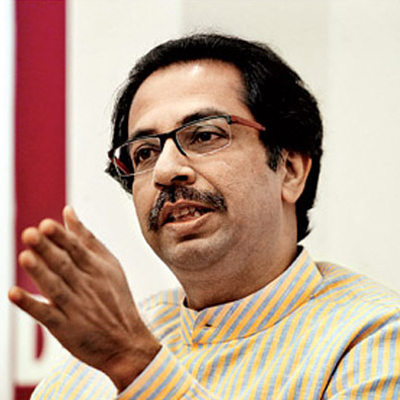
  • ‘Higher price cap than Rs 5 would have allowed us to play within that float’ : Anuj Gandhi – SET Discovery president

    ‘Higher price cap than Rs 5 would have allowed us to play within that float’ : Anuj Gandhi – SET Discovery president

    SET Discovery has been riding high on the wave of ICC cricket for over four years. Having the ICC Championship and World Cup in a single year, the company is targeting a 40 per cent growth in turnover to end 2006-07 at Rs 4.5 billion.


    In an interview with Indiantelevision.com’s Sibabrata Das, SET Discovery president Anuj Gandhi talks of the challenges digital cable faces and how the distribution scenario would shape up in future to impact the pay-TV broadcasting business in India.


    Excerpts:

    Are you happy with the way Cas has rolled out so far?

    We are terribly disappointed. The multi-system operators (MSOs) were not fully prepared. Their systems were not in place and there weren’t enough set-top boxes (STBs). Some operators were even providing boxes without smart cards.

    MSOs say broadcasters created an uncertain environment till the end by approaching the courts. Isn’t it true that they got very little time for actual preparedness?

    There was enough indication that Cas would happen. We were challenging the pricing and not introduction of Cas. Broadcasters signed their contracts with the MSOs on time. Some local cable operators (LCOs) who were against Cas, moved the courts but could get nothing in their favour. If Cas has to take off, this blame game has to stop. All the stakeholders have to play their role.

    Is it a case of low consumer demand for boxes?

    That is a separate issue and, if need be, can be tackled with different marketing schemes. We are in a situation where the MSOs aren’t quite ready. There is lack of information flowing into us, the subscriber forms have not been filled up, and in some Cas markets analogue signals are available of popular general Hindi entertainment channels in prime time.

    Why then couldn’t this market substantially move to direct-to-home?

    DTH is more expensive. It has a higher entry price and there is no big subsidy on the STBs. Besides, DTH operators took time to service this market. With cable operators not capitalising heavily on Cas, we have lost an opportunity to create a build up for a massive ramp up in demand for STBs at the time of the World Cup.

    Will the World Cup drive a 40 per cent penetration in STBs as predicted by some positive analysts?

    We see the World Cup acting as a catalyst and expect the STB penetration to touch 45-50 per cent in the Cas markets. Only when we reach that level can all the stakeholders make money. Already DTH service providers Tata Sky and Dish TV have announced their schemes for the World Cup. MSOs should also be sorting out their issues and coming out with a plan for the big event.

    Is SET Discovery targeting a revenue of Rs 4.5 billion in 2006-07 on the back of the World Cup?

    We have set an aggressive target this year and are going to hit it. We will benefit from key cricketing events like the ICC Champions Trophy and the World Cup. Besides, we had cricket on Ten Sports. For the first time, we would be capturing revenues from DTH as we signed up Dish TV and Tata Sky during the year.

    Will Cas affect the business?

    In the overall scenario, Cas has a very limited number of cable and satellite homes. Besides, Cas has come into effect only in the last quarter of the fiscal.

    Do you see broadcasters dropping prices of their weaker channels in a bid to push sale of STBs?

    With a price cap on a la carte channels at Rs 5, it won’t make business sense to further drop rates. The whole justification for this is to have higher volumes. But we could have got the current levels of box penetration with a more liberal pricing.

    DTH growth for the last six months has been as we had expected. It is only digital cable numbers which have been disappointing

    Are you suggesting a price ceiling but at a higher rate?

    This would have allowed us to play within that float. We could have weighed the weaker channels, observed their relative strengths in the marketplace, and come up with a differential pricing while staying competitive. The whole subscription model at Rs 5 doesn’t give us scope for such pricing play and is unfair to niche channels. There is precious little that content providers can do and dropping prices would be bad for the MSOs as well. Besides, we haven’t yet got any billing data from the MSOs on the Cas subscribers to chalk out a strategy.

    Are you planning to take any action as the deadline has crossed?

    It should have come to us by 15 February, but we haven’t received any information from them yet. If we don’t get any feedback from them in the next few days, we will issue them notices as specified by the Telecom Regulatory Authority of India (Trai) in order to safeguard our interests.

    Trai is trying to push for voluntary Cas. How do you think this can speed up in other parts of the country?

    Digitisation is a reality but will take a while to happen. Cas has been a learning process and we have to evolve a phase-wise strategy for digitalisation. We have to fix a sunrise and a sunset date where we have to give adequate time taking into account availability of boxes, prices and investments by MSOs.

    MSOs are saying that broadcasters should be more understanding and not ask for more subscribers in voluntary digitalisation as the collection of money from the LCOs doesn’t improve. Isn’t entering into commercial agreements between MSOs and broadcasters crucial for the success of voluntary Cas?

    The analogue and the digital markets have to be distinguished. The MSOs can’t argue that they can’t recover money and so can’t pass it on to us. Then how will broadcasters make money from voluntary Cas? There has to be some incentive for broadcasters to push for digitalisation.

    In the newly notifuied Cas market, we are seeing a three-MSO play. Do broadcasters welcome such a strong wave of consolidation?

    There shouldn’t be a problem so long as the business is transparent. If there was one monopoly player emerging in the cable TV distribution arena, then it would have concerned us. Besides, the market is large enough for other players to emerge. And the independent operators who have aligned with the MSOs would continue to remain as franchisees. We don’t see them disappearing from the chain.

    Will carriage spread to new towns where Tam has expanded its reach?

    It is too soon to say how carriage will impact in Tam’s new panel. A lot will depend on how the channels are getting affected. The market has more or less stabilised. Broadly, however, as ratings towns get added, carriage will move there. But I don’t see budgets of broadcasters towards carriage really bloating. What would happen is that they would be picking and choosing the places where they want better placement and carriage.

    When do you see DTH significantly contributing to the kitty of the pay-TV broadcasters?

    It will take DTH a while for getting those numbers. But it has certainly started impacting the business because MSOs are having to think twice before blacking out channels so that they don’t upset their subscribers. And DTH growth for the last six months has been as we had expected. It is only digital cable numbers which have been disappointing, but we will soon see that changing too.

    SET Discovery will have no cricket to play with in the next fiscal while in the GEC space, Sony TV is dropping in ratings. How tough will it be for the company to post growth?

    Cricket, no doubt, is a big play in India. In a MSO market, you can still do with no big impact hitting us. But when you go down into the interiors, this is the only driver. We have grown rapidly for over four years on the back of cricket. We will try to maintain what we have and ask for realistic increases. But we have no channel as such that will make carriage on cable networks a problem; there is strength in our bouquet.

  • TDSAT adjourns hearing as Nimbus approaches SC

    TDSAT adjourns hearing as Nimbus approaches SC

    NEW DELHI: The Telecom Disputes Settlement and Appellate Tribunal (TDSAT) today adjourned its hearing in the case by sports broadcaster Nimbus challenging the Telecom Regulatory Authority of India (Trai) direction to its channels Neo Sports and Neo Sports Plus to reduce their subscriber price.

    The adjournment till the second week of next month came after TDSAT was informed that Nimbus had filed a petition in the Supreme Court challenging the Delhi High Court order fixing Rs 37.25 as bouquet price for the two channels.

    Earlier on 22 January, the High Court had dismissed an application by Nimbus and upheld the Trai order of 11 January fixing Rs 37.25 as bouquet price for the two channels. The order of the High Court had also made it clear that Nimbus could recover its cost at the rate of Rs 58.50 if its appeal before the TDSAT was accepted. The Trai order had also asked Nimbus to charge Rs 5 per channel in the areas covered by Conditional Access System (Cas).

    Nimbus contended that Trai can fix the rates only under Section 11(2) of the Trai Act after due hearing to the concerned broadcaster, and not arbitrarily under Section 13 (2).

  • CAS REVIEW: MSOs claim adequate STB stocks, admit consumer order slowdown

    CAS REVIEW: MSOs claim adequate STB stocks, admit consumer order slowdown

     NEW DELHI: Multi-System Operators have told the sector regulator that there is no shortage of STBs anywhere in the country, but admit that there has been a slow-down of consumer orders, for which the MSOs themselves and broadcasters need to make various changes in their strategies.

    “None of the players, neither the cable operators, nor the broadcasters, not even us, have been reading the consumers’ minds, and we better take care of that from now,” a senior official of one MSO told indiantelevision.com today.

    Meanwhile, although these are “early days”, the trend that has emerged as a result of data analysis of customer choices as expressed in the forms submitted (for those who have opted for Cas in Delhi and Mumbai) “is bound to create major upsets in the market, especially in how the media buyers look at where to put their monies,” the official said.

    This was in the offing since the early days of Cas implementation, and the announcement could cause a mild to heavy temblor in the market.

    Meanwhile, cable operators here reported also that in some pockets people were not taking STBs because of regional preferences. In the predominantly Bengali neighbourhood of Chittaranjan Park, a fairly posh colony, many have stayed with the Bengali FTAs and decide to hang on to whatever rest they are getting in the FTA basic tier package (Rs 77, plus taxes).

    Likewise, in the Nepali dominated Vasant Gaon area and for people in RK Puram, where there is a predominance of South Indians from various states, it has been noted that since their most popular regional channels are FTAs, they have stayed away from STBs, Roop Sharma, president of Cable Operators Federation of India told this correspondent.

    None of the three MSOs approached in Delhi by this correspondent so far have divulged the clear analysis, saying that the Telecom Regulatory Authority of India (Trai) has asked for these and they can reveal the data only after reporting to it.

    But it is known by now that most of those who have taken the STBs have opted for a la carte and not packages or bouquets. “This clearly shows that the Indian customer knows its mind far better than we had anticipated,” sources admitted.

    CUSTOMERS IGNORED: In the soul searching process, media experts are now saying that the slowdown has been because of various reasons, primarily ignoring the customer.

    First, the DTH players promised to supply boxes and dishes but could not do so on time. In the first instance, they gave dishes but not the STBs. Then, they gave prepaid boxes, so when the month was over, the streaming was disconnected. Then, people started comparing that this never used to happen with the “cablewallahs”, who would wait till you paid and not disconnect.

    In fact, the “facelessness” of the DTH players, who operate through the BPOs, have been one reason for people in chunks getting put off by them, though it is a fact that DTH players have scored heavily in the bordering areas of Delhi proper by giving attractive prices to housing colonies.

    At the same time, MSOs admit that they too had failed to gear up to the search in the first 14 or 20 days of Cas implementation. “The packages that we gave did not meet the needs of the consumer,” said one MSO spokesperson.

    “We also did not make a clear statement on what package a cable home having two or more TV sets would get as discount, and no clear policy emerged in the beginning, and the packages were arbitrarily decided by us,” he added.

    Analysis and feedback from ground level fitters from cable operators show that due to this, most families set a budget for themselves as per their pockets, and decided to take channels they wanted, which is why they chose a la carte.

    This has caused major changes in the viewership patterns, and a lot of “myths” of TRP supremacy claimed by channels could come for a shake up, media experts aver.

    FENCESITTERS APLENTY: Data analysis shows that a lot of people are sitting on the fence, so far as fresh demand for STBs is concerned.

    As reported by indiantelevision.com earlier, MSOs say that there could be some kind of pace picking up with the World Cup cricket coming up, but they hold that much more than a global sporting event has to be looked into for the “second phase of Cas rollout” to be successful.

    MSOs have told broadcasters to tie-up with them to push for boxes. They have made several proposals so far on this with the major broadcasters.

    Though a recent seminar in Mumbai generally held that availability of STBs would be crucial for success of Cas and would rake in the moolah for all the players, reports emanating suggest that there is no shortage of boxes.

    All three MSOs, WWIL, Hathway as well as Incablenet have ample number of boxes, “which we have informed Trai about”.

    “We have told Trai that there is an urgent need for MSOs and broadcasters to tie up and create packages that are of substance to the consumers, which will be in their own best interest,” the official said.

    As of now, however, there is no such consensus emerging on a market that is there for the taking.

  • STB availability key to Cas success

    STB availability key to Cas success

    MUMBAI: Availability of set-top boxes (STBs) is one of the key concerns for the successful roll out of conditional access system, speakers at a workshop on “Cas and Digital CATV” said here today.

    Cable operators should not only look at the price of the boxes but also the quality of features it offers as there is revenue to be earned from the consumers. “While what is being pushed now in India is basic boxes, there is need also to go in for middleware that enables enhanced facilities. The important question to be asked is what the boxes can do. Cable operators will be able to, after all, earn revenues from features like video-on-demand and gaming,” said Technosat managing director Irshad M Contractor.

    The Dubai-based company is prepared to set up a manufacturing facility in India if the demand for STBs pick up. Technosat has boxes ranging from basic to premium features on MPEG-2 and is currently conducting trials on MPEG-4.

    Though multi-system operators (MSOs) are currently importing boxes, several manufacturers in India are keen to come up with local production facilities. “We are introducing 4-5 flavours of STBs that are fully developed in India. The boxes will have personal video recorder (PVR) and digital video recorder (DVR). We are integrating the encryption system with Conax. We are also in talks with other Cas technology providers,” said Surbhi Broadband general manager sales P C Mishra.

    The two-day workshop, which concluded today, was organised by Satellite & Cable TV (SCaT) magazine and attracted over 250 delegates. The focus was on facilitating cable operators to make the transition from analogue to digital cable. The issues covered ranged from digital headends to billing solutions for Cas.

    Speaking on digital headends for simulcasting digital video broadcasting – cable (DVB-C), Peter Batt of Teleste said there was need to offer on demand TV and other value-added services. The third generation headends improved footprint and power consumption while offering unicast/multicast video services and triple play. But the fourth generation IP-centric headend for DVB-C and IPTV combined everything and offered “ultimate flexibility.”

    Earlier SCaT editor and executive director Dinyar Contractor said Headend-In-The-Sky (HITS) would mean rapid digital and Cas roll out as it would reach out to the smallest and far flung last mile operators (LMOs). Even as Cas made it unviable for LMOs to set up a digital Cas headend and offer a large pay bouquet, HITS offered several advantages to them.

    “The transmodulator cost is as low as Rs 2000 per channel and the LMOs can assemble their own, local basic tier. It is economically attractive if the Telecom Regulatory Authority of India (Trai) permits nationwide Cas,” he said.

    SCaT chairman Sudeep Malhotra spoke on uplink and downlink policies, elaborating on the regulatory framework prescribed for the different genres of channels such as news and sports. “There are 164 Indian channels licensed to be uplinked from India. The channels that are registered and allowed to be downlinked into India amount to a total of 54 channels,” he said.

  • Trai not for mandated Cas in rest of India

    Trai not for mandated Cas in rest of India

     MUMBAI: The Telecom Regulatory Authority of India (Trai) feels Cas (conditional access system) should roll out voluntarily rather than be mandated in other parts of the country.

    “We may think of mandatory Cas for the larger metros but in other parts of the country it may not be the best way forward. We haven’t, though, made up our mind on this. We have constituted a small group representing all the stakeholders to suggest on how to take voluntary Cas forward. We realise that Cas has gained momentum and wouldn’t like to miss on that opportunity,” said Trai advisor M C Chaube while speaking at a workshop on “Cas and Digital CATV,” organised by Satellite & Cable TV (SCaT) magazine in Mumbai.

    With some cable operators continuing to transmit unencrypted signals in the Cas areas, the broadcast and cable sector regulator intends to come down heavily on them.

    “We are aware that there are still slippages and there are complaints that encryption have not taken place in some areas. We are going to take action against this as it is at the core of Cas,” said Chaube.

    Reacting to a suggestion from the three multi-system operators (Wire & Wireless India Ltd, Hathway Cable & Datacom and Incablenet) that Cas should be opened up to the other areas of Mumbai, Delhi and Kolkata by April, Chaube said the process needed a certain run-up time. “Cas is not just about three MSOs. The smaller MSOs should be given time to prepare for laying out the digital infrastructure. Consolidation is bound to happen as digitalisation requires deep pockets, but as a regulator we shouldn’t have such a time frame in mind that makes it difficult for the smaller MSOs,” he added.

    Trai would relook at such areas like pricing and a la carte issues in the middle of this year. “We are going to revisit at some of these decisions and take a call whether appropriate adjustments are needed. We would be examining such issues as similar pricing for all genres of channels, a la carte offerings and Rs 77 on free-to-air (FTA) channels,” Chaube said.

    The seeding of set-top boxes (STBs) would touch 500000 in a week’s time out of an estimated cable and satellite home of 1.2 million in the Cas belt. “The average penetration would be 40 per cent. Kolkata is seeing slow offtake because regional channels are popular and they are in FTA mode. Our aim is not to see that boxes are sold but to offer consumers choice through Cas,” Chaube clarified. The penetration percentage though will be clearer when figures are available on the number of homes that have more than one TV sets.

    The next stage of progress would be when consumer forms return to the MSOs and they are fed into the subscriber management system (SMS).

    In case of voluntary Cas, the crucial element was for the broadcasters and MSOs to enter into commercial agreements, he added.

    In a panel discussion, WWIL MD Jagjit Kohli pointed out that Trai should come out with some regulatory framework to facilitate voluntary Cas and Headend-In-The-Sky (HITS). “Broadcasters may not support voluntary Cas. So it would be essential for Trai to define some rules as the momentum for digitalisation should not be lost,” he added.

    Hathway Cable & Datacom MD and CEO K Jayaraman pointed out that cable operators in non Cas areas should be ready to adopt digitalisation which has grown much faster in India than what was being initially preicted.

    Incablenet head Ravi Mansukhani said the seeding process has been successful and the next step for MSOs would be to stop free access of pay channels in phases.

  • ETV Bangla to become pay channel in Kolkata CAS areas

    ETV Bangla to become pay channel in Kolkata CAS areas

     MUMBAI: v, a free-to-air channel owned by Ushodaya Enterprises, is to be converted to an encrypted (pay) channel in the areas covered by Conditional Access System (Cas) in Kolkata from 1 March.

    The Bengali entertainment channel had gone pay in other parts of the country from 1 February and has been priced at Rs 10 as reported earlier by Indiantelevision.com.

    The Telecom Regulatory Authority of India today issued an order to this effect, thus updating recent press releases placing the details of maximum retail prices fixed by the broadcasters in respect of CAS areas on the basis of the reporting done by them in terms of clause 7 (ii) of the Tariff Order of August 31 last.

    A press release said that the change had been made as the Authority had been informed when it issued its Tariff Order that the channel which was then encrypted would be made free-to-air in some of the notified areas.

    Earlier last month, two channels for children – the Pogo channel distributed by Zee Turner Limited and Toon Disney in English and in Tamil distributed by Star India – were made free-to-air channels in the areas covered by CAS in Chennai.

    Trai has accordingly updated its list of channels with the charge per channel.

    Even as demand is yet to pick up for Cas set top boxes offered by various MSOs (multi-system operators) with the more affluent residents in South Delhi preferring the DTH (Direct to Home) option, cable operators have begun charging Rs 77 plus taxes to those who are receiving FTA channels through cable. Some operators have added additional cable channels which carry films from Bollywood.

    The Zee Group had offered its Galaxee box and the Incablenet has offered its box for a special offer of Rs 1800 and Rs 1500 respectively, covering the box and around 100 channels for the whole of 2007, if consumers make up their minds within the month of January 2007. However, consumers preferred to take to the DTH systems offered by the Star-Tata owned Tata Sky or Zee-owned Dish TV both of which have also been offering attractive packages.

  • Cas workshop on 12 February in Mumbai

    Cas workshop on 12 February in Mumbai

     MUMBAI: While the first phase of Cas (conditional access system) rolled out on 1 January, the Indian cable TV industry is now looking at headends outside these areas in smaller cities and towns which are now keen to transition to an era of structured organizations and revenues that digital cable provides.

    Several large cable TV headends countrywide now plan to install digital headends.These new headends require a complete technology shift To facilitate the transition, Satellite and Cable TV magazine is organizing a workshop on “Cas and digital CATV” at the Hyatt, Sahar International Airport, Mumbai on 12 and 13 February.

    The workshop will have a round table discussion on Cas roll out by WWIL MD Jagjit Singh Kohli, Hathway Cable & Datacom MD and CEO K Jayaraman, Incablenet head Ravi Mansukhani and Trai representatives.

    Additional sessions will have international speakers from SIMAC Netherlands, Teleste Finland, Rover Italy, Telemann Korea as well as leading industry players such as NDS, Magnaquest, Catvision and others.
     

  • Cisco offers debt to cable operators, pushes Scientific Atlanta STBs

    Cisco offers debt to cable operators, pushes Scientific Atlanta STBs

    MUMBAI: Cable operators dry of cash for digital implementation can now look forward to Cisco Systems, Inc. The global networking equipment and network management giant is willing to finance cable operators in India as it sees opportunity in riding the digital cable wave to push its set-top boxes (STBs).

    There is a catch, though: operators will have access to the loan only if they use STBs from Scientific Atlanta, the company that Cisco acquired to bulk up on businesses that cater to consumers.

    The debt will be provided through its wholly owned subsidiary company, Cisco Capital.

    Cisco has approached several small and medium-sized operators in the Cas (conditional access system) areas, offering a variety of financing options. “We are willing to provide soft loans to cable operators which can be paid over a period of time. This way we can push our digital end-to-end solutions including headend, encryption system and boxes,” says a source in the company.

    The loan size will depend upon the credit worthiness of the operator and the funding will be made available in phases. “We won’t be funding the cable network in one go, but infuse it in several doses,” says the source.

    Cisco realises how tough it will be to evaluate the health of the cable networks. “Most of them do not have proper documents and it is difficult to rate their creditworthiness,” the source adds.

    Among the cable operators Cisco has initiated talks are Kolkata-based Manthan and JPR Network, an independent operator in Mumbai. But there are no takers yet.

    “We are more interested in equity than in debt. As we will have to subsidise the STBs, it will be very difficult to recover and repay the loan. The average revenue per user (ARPU) from Cas subscribers is also low. Besides, Scientific Atlanta boxes are more expensive than what is available in China and Korea,” says JPR Network promoter Raja Nadar.

    Cisco, however, believes its end-to-end digital solutions and the pressure cable operators face to put quality infrastructure in place will drive in good business. “There is just a 20 per cent difference between what we provide and what others are offering. But we have a better system and bridge an end-to-end requirement,” the source says.

    Rajan Raheja-promoted Hathway Cable & Datacom and Asianet are using the Scientific Atlanta headend, STBs and encryption system, the source adds. Hathway, in which Star has a 26 per cent stake, already has seeded Humax STBs and uses News Corp-owned NDS encryption systems.

    For Hathway, Scientific Atlanta is going to be a second supply vendor as the market for digital cable expands.

    Cisco acquired Scientific Atlanta so that it could tap the rapidly growing cable, satellite and IPTV markets across the world.

  • Ficci gears up for Frames convention

    Ficci gears up for Frames convention

    MUMBAI: Frames, the convention for the business of Indian entertainment organised by Ficci, will take place from 26 – 28 March in Mumbai.

    Business delegation from over 20 countries is expected for the event which is in its eight year. This year Italy is a partner country.

    The television track kicks off with a plenary session – Regulatory Framework for Entertainment Industry on the opening day.

    There has been a regular debate among various stakeholders on regulation. How much of regulation should be there? Should the content regulation be consistent across all delivery mediums such as TV, radio, films and print? Should there be a price regulation? Or the industry should be left to market forces to evolve on its own?

    With the boom of news channels, there will be a session on Changing face of News. In order to survive, news channels along with newsworthiness should have something different. Along with managing editorial content, the gatekeepers are also acting as brand managers.

    Viewers wanting a global perspective of television can attend Fresh TV around the World. This special session, now a regular item at the television trade events in Cannes, France Mip TV and Mipcom, presents the world’s freshest and most popular TV shows of the season, specially edited for Frames participants.

    This includes clips from the world’s most successful, innovative and most talked about TV shows. Based on the monthly The Wit Fresh TV Report which spots new shows launched in more than 30 markets worldwide, the presentation also covers the most creative trends in different programming genres.

    With Cas and DTH already introduced, Frames will have a Plenary Session on The Last Mile: Battle of reaching consumers. The challenge of retaining existing consumers is going to be tough. Are existing distributors well equipped to take up this challenge?

    Another plenary session examines the importance of content. Innovative marketing and promotional campaigns can be of little hope unless it is fuelled with winning content. Irrespective of platform, the key to success is high quality content. Can anybody afford to disagree?

    There will also be a focus on the Asian TV Market in a session. Asia has common cultural values thereby having huge potential of sharing content with countries like Sri Lanka, Pakistan, Nepal, and Singapore. How the trade of content can be further strengthened among these countries?

    The Film Track kicks off with the crucial topic of marketing and distribution. This has always been an integral part of the business plan for film producers. The success of a film no longer depends on just the content, storyline and the starcast, but also on how well the film is marketed. The successes of Krissh, Don and Dhoom 2 in India scenario are prime example.

    The session will discuss the new methods employed to get to the target audience especially in international markets. Another session looks at digital cinema. From Celluloid to digital …Indian multiplexes and stand alone theatres are adopting the digital technology. Earlier business models were driving the technological applications. The scenario is just the opposite now, it’s the technology driving the business of Indian Cinema. The digital technology is changing the way the movies are being watched…. What lies in the future?

    Another session examines whether remakes and sequels revisits the past or is it the result of intellectual bankruptcy. Indian films now have a lot of sequels and remixes. Sequels of Munnabhai, Krissh, Hera Pheri, Dhoom and remakes like Don and Umrao Jaan and their success has added a new dimension to the Indian film industry. Some see it as a case of intellectual bankruptcy. In the era of commercialisation does storytelling hold a chance?

    What makes popular cinema tick? Is there a magic formula for success at box office? Increasingly the taste and sensibilities of the Indian audiences are changing. This is reflected in the different genres of movies making box office history this year. Films like Dhoom 2, Krishh, Rang De Basanti and Munnabhai have generated mass hysteria. There is a radical change in the scripts, treatment and presentation. The changing trends of Hindi films will be looked at in a session.

  • Mumbai leads STB penetration, SEC A early adopters: Tam

    Mumbai leads STB penetration, SEC A early adopters: Tam

    MUMBAI: Of the three metros, Mumbai leads in Cas (conditional access system) adoption with a 25 per cent penetration in set-top boxes (STBs), according to a study by Tam.

    While Mumbai has 139000 subscribers buying STBs on a Cas home of 548000, Delhi has a 14 per cent penetration with 97000 out of 676000 homes opting for boxes.

    Kolkata is a clear laggard with a 10 per cent penetration, indicating significant differences in offtake across the three metros. Out of 409000 homes, 41000 subscribers have gone ahead and bought boxes.

    “Of the 1.63 million homes covered by the Cas footprint, 277000 homes had taken up a STB/DTH connection to access pay channels. Pay TV homes amounted to 17 per cent of the Cas-mandated area,” the study said.

    In the first week of January, Tam commissioned AC Nielsen to conduct a ‘Pay TV Homes’ estimation study in the Cas-mandated zones of Mumbai, Delhi and Kolkata. The fieldwork periods were 12-16 January in Mumbai, 11-15 January in Delhi and 11-16 January in Kolkata. The fieldwork mid-point was 14 January, Tam said.

    Tam further divided the zones into 100 sampling nodes, ensuring “adequate geographical coverage.” It conducted face-to-face interviews using a structured questionnaire. The interviewee was the decision maker pertaining to cable subscription. The sample size was 2250 respondents (750 per city).

    According to the study, an additional 198000 homes claimed to have subscribed but are awaiting installation of ‘pay TV services.’The ‘under served’ segments included 109000 (20 per cent awaiting installations) in Mumbai, 43000 (6 per cent) in Delhi and 46000 (11 per cent) in Kolkata.

    “Cumulatively, 475000 homes had subscribed comprising 29 per cent of the Cas-mandated homes,” the study said.

    There are 7.96 million cable homes across the three metros with 1.63 million (approximately 21 per cent) falling under the Cas-mandated zones. Mumbai has 3.25 million cable homes while in Delhi it is 2.61 million and in Kolkata 2.1 million.

    The highest offtake for the boxes is in the SEC A strata of Mumbai. Interestingly, the response by Mumbai’s SEC C is nearly on par with those from SEC A residing in Delhi and Kolkata There is zero demand from SEC D/E in Kolkata. “The offtake levels vary significantly across markets even at a SEC level. The highest offtake is observed in the higher SEC and it declines as one comes down the SEC ladder. Owing to the pre-dominant non-responsive lower SEC, the offtakes seem to have got dampened significantly,” the study pointed out.

    Despite low offtake in Kolkata, consumer awareness appeared to be higher than in Delhi and Mumbai. Consumers residing in Delhi appeared to be the least aware.

    While consumer awareness has significant ground to cover, price remained the pre-dominant reason for subscribers preferring to decide in favour of free-to-air (FTA) channels.