Tag: CAS

  • DD Freedish to acquire ByDesign’s CAS technology for MPEG4 expansion

    DD Freedish to acquire ByDesign’s CAS technology for MPEG4 expansion

    NEW DELHI: Doordarshan’s free-to-air (FTA) direct to home (DTH) service Freedish is planning to acquire Bangalore based ByDesign India’s conditional access system (CAS) so as to increase its channel offerings to 112 from the current 64 by the end of March 2016.


    In conversation with Indiantelevision.com, DD Director General C Lalrosanga said that the DTH player will switch over to MPEG 4 from the current MPEG 2 in two phases. “The first phase may begin by early next month,” he informed.


    Late last year, the Department of Electronics and Information Technology (DeitY) approved a proposal by ByDesign India to develop an Indian conditional access system. ByDesign was to receive a support amount of Rs 19.79 crore from DeitY to develop the new system in association with Centre for Development of Advanced Computing (C-DAC).


    The ByDesign model is totally indigenous and built for DVB-C setup. This CAS solution will enable broadcasters to control access to their services by viewers, and thereby enabling them to extend their business models to subscription based schemes.


    This will mean that the Freedish will become encrypted but will remain FTA. In addition to helping increase the number of channels on the platform, this will enable Freedish to gauge the exact number of households relying on Freedish as encrypted set top boxes (STBs) will only be available with authorised dealers.


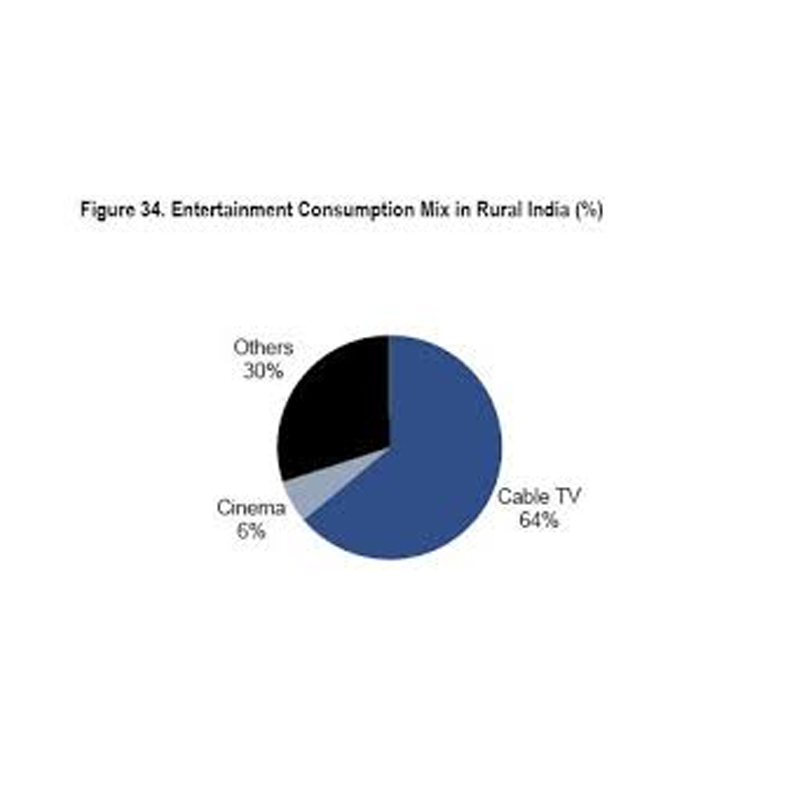
    Lalrosanga said that collection of rural data by the Broadcast Audience Research Council (BARC) India had shown that the claims made by Doordarshan about its reach were not erroneous. He said the BARC ratings had shown that both DD and Freedish had a tremendous reach in semi-urban and rural areas all over the country.


    Lalrosanga went on to add that many homes were gradually switching over to Freedish as they could then get their entire entertainment for a one-time fee of purchasing a dish, which cost as low as Rs 700 to Rs 1200.


    Prasar Bharati CEO Jawhar Sircar had said earlier this year that Freedish’s aim was to reach 112 channels within a year or so.


    At present, there is no vacant slot on Freedish since all channels that were on the platform and whose licences had expired have come back through the 24 e-auctions conducted over the past year.


    Interestingly, the two new entrants on the platform – Aaj Tak and Big Magic – are pay channels, which are being run as FTA on Freedish. DD sources said that the reference interconnect agreement signed by these two channels no longer carries any non-discriminatory clause as it refers to Freedish.


    Lalrosanga also added that DD was working towards bringing regional language films to the prime time slots over the weekend. Additionally, the pubcaster was actively thinking on the lines of a dedicated channel for children and young people. 

  • Dish TV considers deploying 15-20 million multi-layer CAS STBs over 5 years

    Dish TV considers deploying 15-20 million multi-layer CAS STBs over 5 years

    MUMBAI: The Jawahar Goel led Direct-to-home service provider Dish TV India is considering deployment of around 15-20 million Set Top Boxes(STBs) incorporating multi-layer condition access system (CAS) solutions over a period of 5 years and is hopeful of completing the selection process by December 2015. Adoption of multi-layer (CAS) will ward off potential security threats as well as enhance system efficiency going forward.


    Further, Dish TV is also toying with deployment of STB’s supporting card-less technology simultaneously. Currently, the DTH operator uses Conax card-based CAS from Nagra and plans to adopt simulcrypting technology going forward..


    Dish TV recently issued a request for proposal (RFP) to leading CAS vendors across the globe. Irdeto, Viaccess, Pace, Verimatrix, Cisco, Nagra, Nstv, Conax, Civolution-Nexguard, CRI and SMI are some of the vendors that have shown the interest. The company is currently evaluating all proposals received on a strict core security benchmark and shall select multiple partners keeping its business interests in mind..


    With more than 13 million subscribers Dish TV, a part of the Essel Group also provides digital cable television services through its cable distribution arm, Siti Cable (approx. 4 million subscribers). 


    Zee Entertainment Enterprise Limited (ZEEL) is the flagship company of the group, and beams more than 100 channels across the globe, through its direct to operator (DTO) arm.

  • TRAI to wait for final SC verdict before implementing tariff orders for C&S

    TRAI to wait for final SC verdict before implementing tariff orders for C&S

    NEW DELHI: The Telecom Regulatory Authority of India (TRAI) has said that amendments to its tariff orders issued on 1 October, 2004 and 21 July, 2010, which had been set aside by the Telecom Disputes Settlement and Arbitration Tribunal (TDSAT) earlier this month, would be subject to the outcome of the appeal filed by the regulator before the Supreme Court.


    The two amendments made by the TRAI to its tariff orders that aimed at preventing broadcasters from giving their channels directly to subscribers and putting commercial subscribers at par with ordinary subscribers were struck down by TDSAT on 9 March.


    TDSAT chairman Aftab Alam and member Kuldip Singh said the two amendments were “quite unsustainable and we are thus constrained to set aside the impugned amendment orders.”


    The amendments referred to the Telecommunication (Broadcasting and Cable) Services (Second) Tariff (Twelfth Amendment) Order 2014 dated 16 July, 2014 and the Telecommunications (Broadcasting and Cable) Services (Fourth) (Addressable Systems) Tariff (Fourth Amendment) Order 2014 dated 18 July, 2014 by which similar amendments were made in the Telecommunication (Broadcasting and Cable) Services(Second) Tariff Order 2004 dated 1 October, 2004 (relating to non-addressable or analogue systems) and the Telecommunication (Broadcasting and Cable) Services (Fourth) (Addressable Systems) Tariff Order 2010 dated 21 July, 2010 (relating to addressable systems) respectively.


    The Indian Broadcasting Foundation (IBF) and the Federation of Hotels and Restaurant Association of India had challenged the amendments as the commercial subscriber had been put at par with the ordinary subscriber and the tariff orders treat as equal groups of subscribers that are inherently unequal and are also so recognized in their different definitions in the tariff orders.


    In a press note today, TRAI said it had filed an appeal before the apex court and decided to hold its orders in abeyance ‘after duly considering the matter.’


    TRAI had issued the tariff orders – “The Telecommunication (Broadcasting and Cable) Services (Second) Tariff (Seventh Amendment) Order 2006″ dated21 November, 2006and the Telecommunication (Broadcasting and Cable) Services (Third) (CAS areas) Tariff (First Amendment) Order2006” dated 21 November applicable to commercial cable subscribers in the non-addressablesystem (non-CAS) and the CAS systems, respectively.


    Following an appeal, the Supreme Court had on 16 April, 2014 directed TRAI to look into the matter de-novo and within three months re-determine the tariff after hearing all the stakeholders’ contentions.


    The orders set aside by TDSAT on 9 March were the result of this re-examination.

  • DAS phases face problems; Parliamentary Committee asks Govt. to make amends

    DAS phases face problems; Parliamentary Committee asks Govt. to make amends

    NEW DELHI: Even as there are consistent delays on the Home Ministry’s part to examine security clearances for multi system operators (MSOs) and complaints of non-availability of reliable set top boxes (STBs), a Parliamentary Standing Committee has said suitable steps should be taken proactively to address the concerns of all the stakeholders in achieving the final phases of digitization within the envisaged time frame.


    The Committee in its recent report said that about 50 per cent of the further demand of 110 million STBs required under the final phases of digitization is likely to be met by the domestic manufacturers, which is certainly an encouraging proposition.


    Noting that the Telecom Regulatory Authority of India (TRAI) had found interoperability of STBs expensive and recommended financial interoperability, the Committee wanted to know the progress in getting inexpensive STBs as it had been informed that indigenous STBs would be made available in sufficient number.


    Regulations notified by TRAI provide an exit option for a subscriber to change the operator/platform for any reason. The Committee said it had also been informed that the Department of Information Technology had issued a Request for Proposal (RFP) for the development of an indigenous Conditional Access System (CAS) to make interoperability of STBs possible and an Indian CAS is expected to be ready in about a year’s time.


    The Committee noted the process of digitisation under Phase I and Phase II was not smooth as there was strong opposition from cable operators’ associations, non-acceptance of revenue sharing arrangements between cable operators and MSOs, and between MSOs and broadcasters, delay in filling of Consumer Application Forms, monopoly of few selected STBs manufacturers and service providers and opposition from some State Governments.


    It had been informed that the Task Force for the final two phases will provide policy direction and take stock of the progress on a regular basis in order to implement the final phases in a professional manner.


    The Committee noted that out of the four metro cities planned to be digital, digitization has been near total in Delhi, Mumbai and Kolkata. Chennai is yet to undergo the digital transition due to several pending court cases. Phase II of digitization was concluded by 31 March, 2013 in 38 cities spanning 14 states and one union territory. The Phase III and IV digitization process is now planned to be completed by December 2015 and December 2016 respectively.


    The Committee noted that during Phase I and Phase II of the Cable TV digitization, the indigenous manufacturers were able to supply only 15 per cent of the total requirement of STBs and the rest were imported from various countries, mainly from China. As a result, complaints were received about the poor quality of STBs, their non-compliance to BIS standards, and absence of service/repair centres for STBs.


    In this regard, to meet the growing demand of STBs in the country, the Ministry has reportedly taken a number of steps to promote the indigenous manufacturing of STBs, which include increasing import duty on imported STBs from five to 10 per cent, declaring STBs as a part of ‘Telecommunications Networks’ by the Department of Telecommunications on 30 June, 2014 and confirmation by the Department of Revenue on 13 August, 2014 by extension of the same under Sec 8(3) (b) of the Central Sales Tax, 1956 thus fulfilling the major demand of the indigenous STBs manufacturers for the creation of a level playing field vis-?-vis importers.


    Moreover, the Department of Electronics and Information Technology had made it mandatory for the STBs to be BIS compliant for safety certification with effect from January 2014. The Information Technology Department had also entered into a contract with a domestic company to develop CAS domestically vide its order dated 24 July, 2014, which would be made available to the domestic vendors at $ 0.5 as against the current value of $2 or more.


    The Committee also noted that in order to give time to the domestic manufacturers of STBs, the Government had extended the cut-off dates of digitisation, which for Phase III has been extended from 30 September, 2014 to 31 December, 2015 and for Phase IV from 31 December, 2014 to 31 December, 2016.

  • TRAI issues new tariff order to balance consumer rate and broadcaster demands

    TRAI issues new tariff order to balance consumer rate and broadcaster demands

    NEW DELHI: In a major initiative aimed at simplifying tariffs and meeting demands of consumers, the Telecom Regulatory Authority of India (TRAI) today issued a new tariff order which apart from fixing tariffs also amended the definition of addressable systems (DAS) as understood at present.
    The Telecommunication (Broadcasting and Cable) Services (Second) Tariff (Fourteenth Amendment) Order, 2015 said “addressable system” means an electronic device (which includes hardware and  its  associated  software)  or  more  than  one  electronic  device  put  in  an integrated system through which signals of digital addressable system can be sent in encrypted form, which can be decoded by the device or devices, having an activated Conditional Access System at the premises of the subscriber within the limits of authorisation made, through the Conditional Access System and the subscriber management system, on the explicit choice and request of such subscriber, by multi-system operator or DTH operator or IPTV operator or HITS operator  to the subscriber; and the expression “non-addressable system” shall be construed accordingly.
    The Order shall come into force on the date of its publication in the Official Gazette.
    The order also specifies that it will apply to specified states, cities, towns and areas notified from time to time and not the entire country.  
    The order has specified that if any new pay channel is launched or any free-to-air channel is converted to pay channel after the first day of January 2015, then the ceiling shall not apply if the new pay channel or pay channel converted from free-to-air to pay channel is provided on a standalone basis, either individually or as part of new, separate bouquet.The broadcaster shall declare the genre of its channels and such genre shall be either News and Current Affairs or Infotainment or Sports or Kids or Music or Lifestyle or Movies or Religious or Devotional or General Entertainment (Hindi) or General Entertainment (English) or General Entertainment (regional language).
    The rates of channels, referred to in the first proviso shall be similar to the rates of similar channels existing as on the date of such launch of new channel or such conversion of free-to-air channel into a pay channel and the ceiling of charges, specified under sub-clauses (a), (b) and (c) shall not, in any case, exceed by the rates of channels referred to in the third proviso.
    In case a multi system operator or a cable operator reduces the number of pay channels that were being shown on the date of coming into force of the Telecommunication(Broadcasting and Cable) Services (Second) Tariff (Fourteenth  Amendment) Order 2015, the ceiling shall be reduced taking into account the rate(s) of the channel(s) so removed. In the case of the commercial subscriber, for each television connection, the charges payable by the Ordinary cable subscriber under sub-clause (a), shall be the ceiling.

    If a commercial subscriber charges his customer or any person for a programme of a broadcaster shown within his premises, he shall, before he starts providing such service, enter into agreement with the broadcaster and the broadcaster may charge the commercial subscriber, for such programme, as may be agreed upon between them.
    The charges referred to in sub-clause (a) shall in no case exceed the maximum amount of charges specified in the Part I or Part II, as the case may be, of the Schedule annexed with this Order.”
    In determining the similarity of rates of similar channels referred to in the provisos below clause 3 above the following factors shall be taken into account:
    (i)  the genre and language of the new  pay or converted Free to Air  to pay channel; and
    (ii) the range of prices ascribed to the existing channels of similar genre and
    language in the price of a bouquet(s) and prices of bouquet(s) that exist.”
    Every broadcaster shall offer or cause to offer on non-discriminatory basis all its channels on a-la- carte basis to the multi system operator or the cable operator, as the case may be, and specify an a-la-carte rate, subject to provisions of sub-clause (2) of this  clause and clauses 3 and 3B, for each  pay channel offered by him.
    In case a broadcaster, in addition to offering all its channels on a-la-carte basis, provides, without prejudice to the provisions of sub-clause (1), to a multi system operator or to a cable operator, pay channels as part of a bouquet consisting only of pay channels or both pay and free to air channels, the rate for such bouquet and a-la-carte rates for such pay channels forming part of that bouquet shall be subject to the following conditions, namely:-
    (a) the sum of the a-la-carte rates of the pay channels forming part of such a bouquet shall in no case exceed one and half  times of the rate of that bouquet of which such pay channels are a part; and
    (b) the a-la-carte rates of each pay channel, forming part of such a bouquet, shall in no case   exceed three times the average   rate of a pay channel   of that bouquet of which such pay channel is  a part and the average rate of a pay channel of the bouquet be calculated in the following manner, namely:
    If the bouquet rate is Rs. ‘X’ per month per subscriber and the number of pay channels is ‘Y’ in a bouquet, then  the average pay channel rate of the bouquet shall be Rs. ‘X’ divided by number of pay channels ‘Y’:
    Provided that the composition of a bouquet existing as on the 1 day of December 2007, in so far as pay channels are concerned in that bouquet, shall not be changed: and nothing contained in the first proviso shall apply to those bouquets of channels existing on the first day of December 2007, which are required to be modified pursuant to the commencement of the Telecommunication (Broadcasting and Cable Services) Interconnection (Seventh Amendment) Regulation, 2014.
     
    If there is a bouquet, comprising of 10 channels of 3 broadcasters as per the following details.

    After  the  reconfiguration  the  bouquets  to  be  offered  by  the  individual broadcasters shall be as under:
    Broadcaster B shall offer the bouquet as per the following details

    Broadcaster C shall offer the bouquet as per the following details:

    While the Broadcaster A can offer channel 1 at a-la-carte rate of Rs. 2.”
    TRAI has aslo appended an Explanatory Memorandum which traces the history of discussions and orders over the last 11 years on its website trai.gov.in.

  • Govt does not have details of revenue generated by sale of CAS, DAS: Rathore

    Govt does not have details of revenue generated by sale of CAS, DAS: Rathore

    NEW DELHI: The Government has said that there was no provision under the present digital addressable system regulations or the Cable Television Networks (Regulation) Act 1995 for any assistance or relief to cable TV subscribers to buy set top boxes (STBs).

     
    Minister of State for Information and Broadcasting Rajyavardhan Singh Rathore has told the Parliament that the Ministry had assessed the requirement of STBs to be installed at the customer premises, based on Population Census 2011.

     
    Thus, a total of 140 million STBs were required to implement cable TV digitisation in the country. Out of this, 30 million STBs had already been installed under phase I and phase II and the balance 110 million are required to be installed in the remaining two phases which are under implementation.

     
    He said the Ministry does not make any assessment with regard to quantum of revenue generation arising out of sale of CAS and DAS.

     
    He said according to a notification issued on 11 November 2011 issued by the Ministry, digitisation of cable TV in India is to be completed in four phases. Phase I and phase-II of digitisation have already been completed.

     
    Phase III is to be completed by 31 December 2015 whereas phase IV is to be completed by 31 December 2016.


  • So who does DAS benefit and what does RIO have to do with it?

    So who does DAS benefit and what does RIO have to do with it?

    When the BJP government was last in power with Ms Swaraj at the helm of the MIB, the digitisation process was first mooted in its original form of CAS. The populist notion was to bring down cable prices with the false concept of pay for what you want, so pay less. But little did the government realise that the customer’s cable bill was so significantly subsidised because of ‘under declaration’ that the ‘spoilt’ consumer in the cheapest cable market in the world would either have to reduce his current offering by half or more or if he wanted the same channel line up, would actually have to pay twice as much!

    At that time, the broadcasters were resentful as reduced reach was imminent in an advertising driven market and for DPOs it was definitely not favourable as they would need to reduce the number of analogue channels to piggyback digital cable on some of the frequencies which was otherwise used for analogue channels. (This was because both digital and analogue had to be offered on the same network). And this reduction of analogue channels impacted their carriage potential and hence revenues.

    So who won? None of the key stake holders- broadcaster, DPO or consumer.

    So who does DAS in its new avatar benefit?

    Certainly not the consumer from his cable bill point which was the original populist premise. Sure, the DPOs and broadcasters, once the dust settles down. With the transparency of set top boxes and doing away with ‘under declaration’, the MSO can now collect from the ground higher revenues and hence a bigger chunk eventually to the broadcaster. (Cable revenues were significantly lower than DTH revenues even though cable homes far exceeded DTH homes.) Who else benefits? The government, for sure, by way of higher taxes.

    And the losers of course in the value chain would be no doubt the consumer now shelling out higher ARPUs. And of course the LCO who till now reigned king keeping the bigger chunk of collections.
    So what’s wrong with DAS?

    Fundamentally, the current consumer pricing structure, the RIO rates and the business model. If DAS was to benefit the consumer why is there no B to C model, why are there no retail prices with direct offers from broadcasters to consumers with pipeline commissions to DPOs. Why are RIO rates unrealistic? Why are DPOs free to do retail pricing? The problem is RIO is a regulatory created framework and broadcasters have maxed out after years of price freeze not knowing what to expect.  

    If DAS has to succeed then this whole pricing scenario has to be re-looked. How can the broadcaster market his product if the DPO controls retail pricing? Or given the RIO pricing (which will now be used as a basis for negotiation) will the broadcaster really allow the DPO to play the role of a wholesaler and buy in bulk and retail at attractive customer offerings significantly lower than RIO.

    When regulation hinders market dynamics, it creates more absurdities. Any consumer product needs an MRP. Packages or stand alone. RIO is definitely not helping this process. It’s best the two beneficiaries – the DPOs and the broadcasters finally come together, see eye to eye and work out what is the magical pricing so that packaging and pricing is offered by both and directly to the consumer. If the DPO truly acts as a wholesaler he can surely better any packages the broadcaster directly offers unless of course the broadcaster/channel can go it alone which no doubt will be the true test of content and certainly a success yardstick to measure addressability.

    So can the government bury RIO and keep the consumer in mind!  TV entertainment is mass and needs to be looked at (retailed) as a service similar to that of consumer products! Let’s have an MRP, let’s also have a distributor pricing better than MRP. There is scope for both models to co-exist- DPOs mixing it up and offering multi-broadcaster packages and broadcasters also retailing with negotiated discounts to DPOs for pipeline usage and payment gateway.

    A 100 million plus pay TV homes is a very robust subscription market!

    Lastly, with the BJP now back surely we hope they will complete what they chaotically started. With the honourable I&B Minister Arun Jaitley and MoS Rajyavardhan Singh Rathore now at the helm it certainly looks like MIB is priority and our industry will definitely be both in competent hands and in their cross hairs!


    (These are purely personal views of consultant Sanjev Hiremath and indiantelevision.com does not necessarily subscribe to these views.)

  • Germany’s Panaccess bets big on CAS in India

    Germany’s Panaccess bets big on CAS in India

    KOLKATA: Panaccess, a German-headquartered company for CAS, SMS, billing and VoD, aims to promote CAS in India. The company is not only betting on business from the remaining phases i.e. III and IV, but is also approaching the multi-system operators (MSOs) in phase I and II.


    “There is good scope for CAS, SMS and billing in the next phases. And a few existing clients want to replace with our CAS and hence, we are approaching the MSOs in phase I and II along with newer ones,” informs Panaccess sales consultant GK Viswanath.


    “We have commissioned our conditional access system, subscriber management system and billing for a MSO in Pondicherry,” he answers, when asked about the work executed in the country.


    The company, which is slated to open a service centre in Bengaluru by April 2015, has already established its products and services in 32 countries across the world. It serves as a single window for a set of secured and revenue protected suite of solutions that complements and adds revenue streams to existing and new cable TV and DTH operations.


    After April, the company will start visiting all the major MSOs and plans to advertise a lot more as well. “We participate in all the major cable TV exhibitions etc,” he states.


    On the problems MSOs face with existing CAS system, he says, “They can resolve the problems by replacing with our CAS i.e. SMS and billing which are built in. Hence, there is no need for MSOs to go any anywhere else for these facilities. Apart from this, we also provide with solutions through broadband services.”


    In the coming months, the company, which currently employees around 15 people in the country, plans to recruit a few more.  “Next fiscal will see at least 10 for sales and 15 for technical and five for backend and five demonstrator appointments,” he says.


    On the extended deadline of cable TV digitisation in India from 2014 to 2016, he comments, “There are some people who had already started manufacturing STBs indigenously; they are the ones which have been affected by this decision.”


    “We can coordinate with the MSOs those who are planning to go for headends or STBs. We hope to capitalise the market early,” he concludes.


  • IDOS 2014: How can the pay TV industry be made better?

    IDOS 2014: How can the pay TV industry be made better?

    GOA: India Digital Operators’ Summit 2014 kicked off at The Leela in Goa on 25 September. Opening the conference, Indiantelevision.com CEO and editor in chief Anil Wanvari and Media Partners Asia (MPA) executive director Vivek Couto gave a brief on the state of the TV nation and transition to the broadband digital economy.


    Wanvari highlights how the state of the industry was a few years ago and what it has become now after the advent of conditional access system (CAS) and digital addressable system (DAS). Content makers aka broadcasters have been demanding more revenue from the pay TV industry. While the capex and opex for them has been high, the return continues to be low. The MSOs and DTH operators have been investing to expand their headends and build subscriber base respectively. “While it is a good business now, the real question is if each one of us is willing to make it a great business?” he asks.


    In order to strengthen the business, Wanvari recommends a few suggestions that could help grow the industry. The first thing is to look at digitisation and pay TV with a changed mindset that it will be beneficial to all. The government could look at setting up a digitisation transition fund that will help educate, train, seed capital and reward people who follow the rules and ensure strict penalties for those who don’t.


    Subscriber management system (SMS) should be set up with correct details and billing of the services provided to customers. The government could also look at laying down minimum standard rules for set top boxes (STBs) to ensure quality control. His final suggestion is to leave pricing to the market rather than initiate 10 to 15 per cent price rise every now and then.


    Providing a glimpse into MPA’s study on the pay TV industry in India, Couto says that out of the 262 million households in the country only 162 million houses have a TV. In this, 27 million is taken up by the free to air service providers such as Doordarshan and Freedish while the rest comes under cable and satellite.


    Couto highlights that over Rs 32000 crore has been invested in digitisation since 2005 with a bulk of the investment coming from the DTH operators followed by the MSOs and LCOs since 2011. Out of this, over Rs 11000 crore in the last 24 to 30 months has been invested by MSOs and LCOs. “India offers scale but limited monetisation,” he says. What digitisation will do primarily is increase transparency, addressability, tax collection and employment. Over 120 million STBs are needed over 10 years and nearly 47 per cent share of the total market will come through broadband.


    The tiff between the three stakeholders continues with the LCOs fighting for revenue share, MSOs facing crash crunch and broadcasters worried about increasing carriage fees which the MPA report stated as having increased by nearly 14 per cent in Q1 FY2015.


    In terms of scale, India struggles as the country with the lowest average revenue per user (ARPU) but it has one of the best channel services. Couto says that it is time for the industry to move to retail pricing than stick to wholesale tariff because the competition will keep the prices low. The need of the hour is for MSOs and broadcasters to come together and design packages, incentivise upselling, indentify opportunities for sub segmenting and create new genres. The key to which lies in raising prices to consumers.

  • TRAI audits MSOs in Kolkata

    TRAI audits MSOs in Kolkata

    KOLKATA:  The Telecom Regulatory Authority of India (TRAI) will not allow any laxity in achieving complete digitisation in phase I markets. After issuing several directions to multi system operators (MSOs) operating in the region, the regulator has now decided to visit all the MSOs to inspect whether the DAS regulations have been maintained, technical issues have been resolved and CAS and SMS are in place.


    Industry sources reveal that the TRAI officials inspected the office of Kolkata based MSOs, 18 June onwards.  As part of this, the regulator checked if the details in the subscriber management system (SMS) were duly filled. It can be recalled that TRAI had, a few weeks ago, in a directive, asked the MSOs to keep their SMS updated and also start online pre-paid and post-paid billing facility.


    Sources indicate that while all the MSOs were prepared for this inspection, billing in the KM area with more than 32 lakh cable TV homes emerged as the biggest issue for some as customers were not paying as per the bill. “During the inspection, TRAI officials noted non-compliance of the provisions of the regulations by the service providers,” inform the sources.


    Siticable Kolkata director Suresh Sethia adds, “It is for the first time that TRAI officials came to our office for auditing. They checked our SMS, CAF, SAF and our agreement with the LCOs.”


    “The TRAI officials who visited the offices of the various MSOs in the region for two-three days, questioned them on the nitty-gritty’s of facts and information that were missing,” informs the source.