Tag: CAS

  • Sun TV to turn pay from 2 December; priced at Rs 12

    Sun TV to turn pay from 2 December; priced at Rs 12

    MUMBAI: Southern Indian broadcast powerhouse Sun TV Ltd will switch its flagship channel Sun TV to the pay mode starting 2 December.

    The channel has been tagged at a price of Rs 12 per month per subscriber for the cable operators to access the channel.

    The Kalanithi Maran promoted network is also likely to turn its Malayalam language entertainment channel Surya TV pay in the near future.

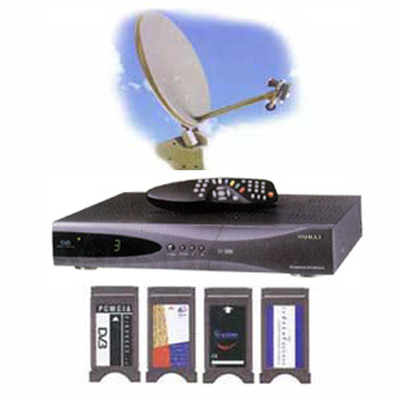
    At present, it has three pay channels – KTV, Sun News and Sun Music. But in Chennai, which is a conditional access system (CAS) market, the consumers can view the pay channels through a set-top box (STB). But all these pay channels are free-to-air.

    Ahead of the implementation of CAS in the southern zones of the three metros — Delhi, Kolkata and Mumbai — Sun TV accepted the Telecom Regulatory Authority of India (Trai) fixing a common price of Rs 5/- per channel per subscriber per month (excluding taxes).

    However, the pay channel price cap is not applicable in Chennai, which is already a CAS-driven market.

    The Sun TV scrip opened the trading day at Rs 1210.25 and closed at Rs1219.50 and touched a high of Rs 1249.

  • SaharaOne and Filmy accept CAS ceiling price of Rs 5

    SaharaOne and Filmy accept CAS ceiling price of Rs 5

    MUMBAI: Sahara One Media and Entertainment Ltd have let the 15 October deadline pass to inform sector regulator Telecom Regulatory Authority of India (Trai) the channel price fixed for the notified areas under conditional access system (CAS).

    The company, which manages general entertainment channel SaharaOne and movie channel Filmy, has acknowledged the ceiling price of Rs 5. 

    The two channels switched to the pay mode in September. 

    The regulator had set a common price on all pay channels directing that under CAS regime they will cost a maximum Rs 5/- per channel per subscriber per month (excluding taxes).

    Ahead of the deadline, most pay broadcasters including Star India, Set Discovery, ESPN Software, Raj TV Network, Sun TV, Udaya TV, Gemini TV limited, Ushodaya Enterprises Limited, B4U Television Network, Sun TV, Udaya TV and Gemini TV, British Broadcasting Corporation (BBC) and Zee Turner Ltd had agreed to the price and declared the charges of all the channels.

  • Industry tuned to CAS; pricing still vexed issue

    Industry tuned to CAS; pricing still vexed issue

    NEW DELHI: From “let there be voluntary CAS” to “if you must mandate CAS stay out of the pricing mechanism”. That could well sum up how the view of the broadcast sector in general to the prospect of the rollout of addressability has changed from the situation that existed back in 2003. 

    That was a recurring theme during the informed discussions that went on in the post-lunch session of the Indian Broadband Digital Networks Forum organised by Indiantelevision.com and Media Partners Asia in the capital yesterday. The two sessions – The Strategic Imperative: Consolidation & Convergence and Ground Realities: Content Distribution & Technology flowed seamlessly from one to the other taking further the cues that had been provided in the morning’s keynotes.

    Unless pricing was elastic, it was a non-sustainable business model not just for the pay channels but for the cable service providers as well, was the view expressed by Raghav Sahgal, CBO, Converse. Speakiing during the morning keynote, John Malone-controlled Liberty Media board member Shane O’Neill suggested that a better formula for the government to consider might be that the baseline or lifeline service (basic tier?) be given maximum spread while the rest should be left to the market to determine.

    Interestingly, that was the sentiment off the Orissa-based MSO Ortel Communications’ Jagi Mangat Panda as well. Said Panda, “CAS is important and necessary. But the regulator entering into pricing issues is unviable for long.” Mandate CAS but stay away from pricing, she offered. Panda also spoke of the need for a level playing field on issues like foreign investment similar to what the telcos enjoyed for all players in the broadcasty sector.

    ADAPT OR PERISH:

    Speaking on the issue of the shift to digital, HSBC Securities’ Sandeep Pahwa pointed out that “consolidation and building of scale is important but not a necessary recipe for success.” The ability to innovate according to the dynamics as determined by Indian situation was the critical factor, according to Pahwa. “Adapt or perish. The mantra is continual innovation,” Pahwa said.

    Another point that came through in the discussions was that in the move towards digital delivery, the real battle in the short to mid term would be between cable and DTH. “IPTV is a real challenge in an emerging market like India,” said Comverse CBO Raghav Sahgal.

    According to Pahwa, DTH will compete on reach (cable dark areas in particular) and service. However, where cable service providers have got it right, there is a clear advantage in their favour.

    WWIL’s JS Kohli said, “CAS is the trigger that will actually facilitate the move towards convergence.”

    Tata Sky’s Vikram Kaushik said while in the medium term quality of service would be the key differentiator that DTH offered, going forward, once transponder limitations haad been overcome some element of exclusivity would come into play. 80 per cent of programming will be across platform and 15 per cent will be exclusive, Kaushik said.

    Speaking on the content provider’s side Star India’s Paritosh Joshi said, “Star’s content for the mass audiences will remain the primary focus. We will look for opportunities – mobile in particular is something we’re particularly gung ho about. That’s something we’re already actively looking at.”

    “A marginal higher value consumer may exist and these we will address,” Joshi said.

    Speaking about the impact CAS would have Hathway MSO’s K Jayaraman said, “CAS is going to be painful in terms of investments required. If the first phase of CAS goes well then the funding is going to be a challenge.”

    Incable’s Ashok Mansukhani offered, “We need to put in a lot of money to upgrade ourselves as well as LCOs. We believe in 100 per cent transparency.”

    On the scope for IPTV, Tandberg Television’s Alan Delaney said, “There is plenty of space in the market for everybody.”

    Bharti Televentures’ Sriram TV was clear that staying out of content creation was the way to go for telcos. Said Sriram, “Focus on what you’re best at. Bharti has taken its learnings from the experiences of Singtel / Vodafone in the UK as examples of networks that went into too many areas and lived to regret the decision. Network convergence, device convergence and industry convergence is what we are looking at. Bharti has content tie-ups with all the pay channels.”

    HFCL’s Surendra Lunia, however, said, “We will evaluate according to opportunity.”

    Another problem for broadband is that technical skill sets need to be sorted out before value added services can be rolled out, said Jayaraman. This statement coming from the head of a cable MSO who has 100,000 registered users reflects on the difficulties that lie ahead for introduction of IPTV in particular.

    However, Mansukhani was more optimistic on that front: “It is a dynamic growth oriented business. Broadband adding significantly in the next three years.”

  • Chandra exhorts industry to sink differences

    Chandra exhorts industry to sink differences

    NEW DELHI: While exhorting broadcasting industry to sink differences for collective benefit, Zee Telefilms chairman and maverick media entrepreneur Subhash Chandra today posed several issues before the government and sector regulator, including level playing field vis-à-vis telecom companies.

    “Let us all work together for long term benefits as blaming each other will not help. Let us work in partnership,” Chandra appealed to various constituents of the industry while delivering a keynote address at the India Broadband Digital Networks Forum organized here by Indiantelevision.com and Media Partners Asia. 

    Citing the example of CAS, Chandra wondered if all the stakeholders felt that addressability is good for the industry, how come it hasn’t yet become a reality in India.

    “Simply because vested interests (including broadcasters and cable fraternity) worked against CAS’ implementation since 2003,” Chandra said.

    Though he sought a more liberal regulatory regime both in terms of pricing and policies in the presence of I&B secretary and Trai chief , he agreed with both of them that comparison of the Indian market with the likes of US and UK is uncalled for as the former has its own needs and peculiarities.

    “If we had followed the American model, it would have needed investments worth $ 150-200 billion to bring the cable TV market to a level it now enjoys in terms of penetration, revenue and employment generation in India,” Chandra said.

    Earlier, information and broadcasting secretary SK Arora in his keynote address made a fervent pitch for digitalization of broadcasting services, which is imperative to keep pace with global trends and changing business models of media companies.

    “In terms of size and magnitude, the potential of the Indian broadcasting industry remains…and it’s quite a challenge to identify the impact that emerging technologies would have on business models of companies,” Arora said.

    Pointing out that India needs to design its own “solutions” keeping in mind the socio-economic scenario (read good services at low prices), Arora said regulations would be guided by the principle that “consumer is king.”

    According to the government official, in the 11th Five-Year Plan, the work on which is presently underway, the government is attempting to address the issue of digitalisation through “public-private partnership.”

    “We are encouraging and nudging them (the industry players) to move towards digitalisation,” Arora said, adding the first phase of it is expected to be completed by 2010 coinciding with Delhi playing host to the Commonwealth Games.

    Concurring with Arora, Telecom Regulatory of India (Trai) chief Nripendra Misra said arrival of digital technology, which gives more choice to consumers, and rapid convergence of services like telecom, infotech and broadcasting were two major trends of the television industry.

    However, Misra admitted that unregulated growth and lack of addressability had thrown up its own problems for the broadcast and cable industry.

    In such a scenario, DTH and CAS will have far-reaching impact on the industry, Misra said.

    Unfazed by widespread criticism of some pricing diktats of Trai earlier, Misra said that the regulator’s endeavour is to spread level playing field for all and formulate policies that are based to encourage efficiency, financing, development and equality.

    Though he admitted various legal lacunae is hampering a move towards unified licencing (whereby one single licence would enable delivery of telecom and broadcast services) at present, he envisaged in future cable networks might provide telecom services and give competition to telecom companies.

    “Convergence is being seen as an opportunity (in India)…but any development globally has to be seen in the Indian context,” Misra said, adding Trai will be coming out soon with a consultation paper on IPTV again.

    Meanwhile, at the start of the event, Indiantelevision.com founder and editor-in-chief Anil Wanvari and MPA executive director Vivek Couto gave a snapshot of the Indian broadcast industry and the trends that have emerged over the last few years increasingly leading towards convergence.

    The morning session was attended by industry luminaries and senior government officials, including John Malone-controlled Liberty Media board member Shane O’ Neil.

  • Upscale hotels may have to pay more for pay channels

    Upscale hotels may have to pay more for pay channels

    MUMBAI: If an order issued today by the sector regulator gets implemented, pay broadcasters will now be able to charge “market rates” to more upscale hotels and big commercial establishments that access their channels.

    The Telecom Regulatory Authority of India (TRAI) has identified “hotels with ratings of 3 Star and above, heritage hotels and commercial establishments providing board and lodging and having 50 or more rooms” as falling within the category that “may not need tariff protection.”

    The regulator has grouped the rest of commercial establishments into the residual category and decreed that the same rules that govern ordinary cable subscribers will apply to them also, both in CAS and non-CAS areas.

    The Trai order has decreed that: “For commercial subscribers falling in the first category, there will be no ceiling on pay channel tariff. However, in order to ensure that the choice of individual channels is made available to these subscribers also in CAS areas, the draft amendment order has provisions for commercial subscribers falling in the first category in the form of mandatory offer of channels on a la carte basis with restrictions on the maximum retail prices of individual channel in relation to the prices of bouquets. The tariff for supply of set top boxes is also proposed to be regulated on similar lines.”

    Trai issued the order after the Supreme Court agreed with its argument that in order to ensure an orderly growth of the telecom sector in the country, it was necessary to have differential tariffs for commercial and non-commercial subscribers of conditional access system (CAS).

    Trai’s submission was in response to a petition filed by the Association of Hotels and Restaurants, which challenged an order of the Telecom Disputes Settlement and Appellate Tribunal (TDSAT) that upheld the dual rates.

    Trai has placed the draft Tariff Orders, both for CAS notified areas and non-CAS areas, along with a letter to stakeholders inviting comments by 10 November.

  • Pay channel rates: HC seeks government response

    Pay channel rates: HC seeks government response

    MUMBAI: The Delhi High Court has issued notice to the central government for its response to a petition filed by Star India challenging the Trai (Telecom Regulatory Authority of India) order capping pricing of pay channels at Rs 5 under conditional access system (CAS).

    The matter will come up for next hearing on 15 November. The court will examine whether Star’s fundamental right to do business in India stands affected by the price regulation.

    Star has the option to approach the Telecom Disputes Settlement and Appellate Tribunal (TDSAT).

    “Our writ petition has been admitted by the court and has been slotted for hearing on 15 November. We will only know then if our plea stands accepted or rejected,” says a Star India spokesperson.

    Senior advocate Mukul Rohatgi, appearing for Star, argued that the regulation of broadcasting was beyond Trai’s jurisdiction.

    Star had filed an appeal in the court, challenging the basis of Trai’s recent announcement on pricing for CAS. The matter came up for hearing today.

  • Trai launches ad campaign for CAS

    Trai launches ad campaign for CAS

    MUMBAI: The Telecom Regulatory Authority of India (Trai) has set the ball rolling for CAS (conditional access system).

    Not resting just on fixing the maximum rate of individual channels at Rs 5 per subscriber, the regulator has come out with an ad campaign to inform that pay broadcasters would have to provide their pricing within the ceiling by 12 October.

    “The reporting to Trai of prices of pay channels within the ceiling by broadcasters should be by 12 October,” the statement said.

    Trai has set a similar deadline for multi-system operators (MSOs) to inform the regulator about the tariff packages on their set-top boxes (STBs). The conclusion of commercial agreements by service providers should be reported to Trai by 15 Octoiber, the campaign said.

    The regulator has marked 31 December as the date for implementation of Cas.

  • ‘Trai has come up with the correct CAS economics’ : K Jayaraman – Hathway Cable & Datacom MD & CEO

    ‘Trai has come up with the correct CAS economics’ : K Jayaraman – Hathway Cable & Datacom MD & CEO

    The Telecom Regulatory Authority of India (Trai) has laid out a fertile ground for digital cable TV take off. The formula is simple: price everything low and large volumes will create a viable market dynamics.

    India has seen it in mobile phones. The lessons will repeat itself in the television industry. Despite the initial blip, the industry will correct itself and grow as at the centre of this pull of gravity rests the consumers.

    Broadcasters are not in tune with this logic. Their programming costs are rising. So why not let them have the freedom of pricing their products?

    The cable operators, along with the consumers, are in love with the a la carte pricing of pay chanels at a maximum of Rs 5. The multi-system operators (MSOs) feel that a new business model is being set.

    In an interview with indiantelevision.com‘s Sibabrata Das, Hathway Cable & Datacom managing director and CEO K Jayaraman argues how every stakeholder will eventually stand to gain. The a la carte pricing will make digital cable popular while the revenue share across the value chain has been “very accommodative.”

    Excerpts:

    Do you agree with what the Telecom Regulatory Authority of India (Trai) has fixed as the price and revenue share under conditional access system (Cas)?
    The regulator has come up with the correct economics. Consumers will have choice and at a real affordable cost. The a la carte pricing of channels at a maximum of Rs 5 in Cas areas will increase the penetration of set-top boxes (STBs) and drive in volumes. The revenue share allocation across the value chain is also very accommodative. Broadcasters will get 45 per cent share and have access to advertising revenues as well. While multi-system operators (MSOs) will have 30 per cent and carriage fee, local cable operators are also given a fair share with full revenue on the free-to-air (FTA) package and a 25 per cent share on pay channel revenues. Also, the government will get more tax revenues.

    Broadcasters complain that the maximum price of Rs 5 per channel is too low and doesn‘t take into account their high programming costs.
    When subscription becomes transparent, the rate has to be low. For digital technology to take off, we need such a price regulation. Let us face the reality: these are the consequences of a new environment and a change in business model. Besides, the price regulation is only for one year. Free market will prevail and price will be discovered eventually.

    With a la carte pricing, cable bills are expected to drop. How will falling ARPUs (average revenue per user) affect the cable companies?
    Nothing can be worse than the current model. But under Cas, we will, at least, have a legally sanctioned revenue, albeit lower. No doubt we will get a Hindu rate of return. But we will not have under-reporting of subscribers. We are happy that a proper business model is being set. Revenues Will grow once the business model settles. Everybody will be on the move. As consumers have choice, broadcasters will have to worry about pricing their channels correctly within a maximum of Rs 5. If they do that, then MSOs can also make money. We will have to focus on providing quality cable TV service. If we don‘t do that, we have competition from direct-to-home (DTH) service and will face threat of being wiped out.

    Cable companies will also have to subsidise the boxes. Do they have the resources to absorb subsidy costs and still scale up?
    All of us will have to be in investment mode because the business model is changing. The initial subsidy on each box will work out to Rs 1,500. This is the price we have to pay for a change in the business model. But this can be squared off once it settles down. The price of STBs will fall by 15-20 per cent with a surge in volumes. Cable companies will have to raise resources, either through debt or equity. For those who can‘t, survival will be tough. The telcos like Reliance Infocomm are waiting to step in. We should be prepared for a high volume, low margin game. Distribution, initially, is a volume business.

    Won‘t your traditional business from non CAS areas be a support?
    Yes, we will have other businesses to run: internet, non CAS placement fee, ad revenues from local cable channels. We will also have carriage fee from FTA channels in a CAS system. For cable companies to cover up their overhead and variable costs (STBs), they will have to do other related businesses.

    A la carte pricing will drive down our ARPUs. But we are happy that a proper business model is being set

    Like having a well-rounded revenue stream?
    If you are a composite cable company, you will survive. We will have to provide video, voice and data through a common pipe. Standalone players will have a tough time. We, for instance, are preparing to launch voice over internet protocol (VoIP) services by the last quarter of this year. Test runs are currently on. We are also be aggressively pushing digital cable TV in non CAS markets. We recently launched in Jalandhar, having rolled out our digital services earlier in New Delhi, Mumbai, Pune, Bangalore, and Hyderabad.

    Do you see DTH having a perceptional advantage over cable?
    DTH platform providers are well capitalised and have a more long term vision. Their ARPUs can also settle higher as they better their products. But they have a huge variable cost in occupying transponder space. Cable companies, in contrast, have already made the investments and have low operating costs. Of course, now they will have a variable cost towards procurement of boxes. But they have an existing relationship with customers and cable is two-way enabled. Digital cable can also offer more channels. Composite cable companies with focus on multiple revenue streams can effectively fight DTH.

    How are you planning to infuse capital to fund digitisation?
    We will raise Rs 1 billion as debt to fund the first phase of CAS The bulk of the investments will be towards subsidising the STBs. Funding will also be required in setting up VoIP and expanding broadband infrastructure.

    Is it a good time to acquire last mile operators?
    If cable companies have the resources, acquisition of last mile will make sense. In the CAS areas where you have an administered price regime for one year, the payback period will be longer. But once the price is market-based, then recovery will be faster as more channels come under the pay system and people start subscribing to them. Even in non CAS areas, acquisition will provide size upon which a digital platform can be built later. But in case of Hathway where we have limited resources, we would rather put the money in placing more STBs.

    Will Valuations of cable companies go up under CAS?
    CAS will bring some semblance of order into the business. But it is a long term roll out and needs cash flow. What is more important is that cable companies will attract capital, whether in the form of equity, debt or convertible bonds.

    Will there be a consolidation in the industry?
    Consolidation will happen wherever digitisation is required because of new technology and service requirements.

    Zee network‘s Wire & Wireless India Ltd (WWIL) is planning to launch a headend-in-the-sky (Hits) platform and has expressed intent to make inroads into south and western suburbs of Mumbai. Do you see territorial warfare among MSOs returning?
    Hits is right now viewed more as a fashion statement. We are delivering digital without having Hits. If it is necessary, then everybody will do it. As far as poaching of operators go, it is an open ground. Cable companies who focus on good service and have capital to create capacity will turn out winners. Competition is not a one-way street.

  • Hathway plans Rs 1 billion debt for CAS; VoIP launch by year-end

    MUMBAI: Rajan Raheja-promoted Hathway Cable & Datacom plans to raise Rs 1 billion as debt to fund the first phase of conditional access system (CAS). The multi-system operator (MSO) is also preparing to launch voice over internet protocol (VoIP) services by the last quarter of the year.

    “We will require an investment of Rs 1 billion for which we will be raising debt,” says Hathway Cable & Datacom CEO K Jayaraman.

    The bulk of the investments will be towards subsidising the digital set-top boxes (STBs). Funding will also be required in setting up VoIP and expanding broadband infrastructure. The company has tied up with telecom major Bharti for VoIP.

    “We are conducting test runs and expect to launch VoIP services by the year-end. MSOs will have to infuse capital in the changing business environment. On each STB, the subsidy works out to Rs 1,500,” says Jayaraman.

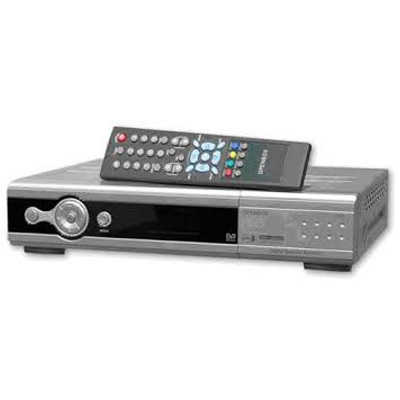
    The Telecom Regulatory Authority of India (Trai) has fixed the pricing of the boxes in the CAS areas. Cable TV service providers will have to offer digital STBs on a monthly rental scheme of Rs 30 and a refundable security deposit of Rs 999. There will be no payment for installation, activation charges, smart card/viewing card, repair and maintenance cost.

    The cost of the STBs including the smart card is around Rs 3,500. “Once we drive in volumes, the price of procuring these STBs should fall by 15-20 per cent,” says Jayaraman.

    Hathway will also be aggressively pushing digital cable TV in non CAS markets. The MSO launched its digital services in Jalandhar a few days back, having rolled it out earlier in New Delhi, Mumbai, Pune, Bangalore, and Hyderabad.

    “Starting with Jalandhar, we plan to roll out our digital services across Punjab over six months. In the first phase, 16 cities of Punjab will be connected by the end of this year,” Jayaraman says.

    The a la carte pricing of channels will increase the penetration of STBs in CAS areas, Jayaraman believes. “We expect a 80 per cent penetration if the broadcasters get the pricing right within a maximum of Rs 5 per channel,” he says.

  • Trai’ng hard but falling way too short

    Trai’ng hard but falling way too short

    Some like it; some don’t. But there’s no denying that the Telecom Regulatory Authority of India (Trai)-mandated pay channel prices in CAS areas (Rs 5 for all pay channels) is going to stir up much more than just a storm in the proverbial cup.


    It’s like those weekly village markets that are quite popular in India where the refrain is har maal paanch rupaiya mein (every product priced uniformly at Rs 5). The actual price may differ a bit, but the concept adopted by Trai is the same. Reason: low and uniform prices attract buyers.


    Faster the adoption of a technology like CAS, sooner more transparency will come into the Indian broadcast and cable industry, which has been plagued by massive under-declaration by cable ops
    _____****_____

    A low price entry point for a new technology — about which myths abound still for the general public — is certainly a good way of incentivising its quick adoption. And, faster the adoption of a technology like CAS, sooner more transparency will come into the Indian broadcast and cable industry, which has been plagued by massive under-declaration by cable operations and other such ills in the absence of any regulation.


    But in attempting to keep cable TV as a mass service —- which it is, anyway — and having the prices of all pay channels uniform, Trai has forgotten one important aspect of regulatory process: the cost factor while deciding tariff for a service.


    The real boom in the Indian cellular phone market came when players clipped price lines and made the whole process of acquiring a mobile phone connection so cheap and attractive that even a domestic hand found it hard to resist. Who can forget a certain Indian telecom player’s offer of a mobile phone connection with unlimited talk time for a certain period of time and the handset thrown in for Rs 500 under the Monsoon Hungama or monsoon bonanza scheme some time ago?


    Trai, which also oversees the telecom sector, may actually take pride in claiming that it facilitated massive growth in cellular phones in the country. The numbers say it all. There are more cellular phone connections in the country compared to fixed line connections. But broadcast industry cannot crow like its telecom counterpart.


    Though cable TV service, unlike some others like transport (especially capital intensive railway transport), cannot be categorized as a natural monopoly, the cost of putting together that service cannot be overlooked.


    In forcing an entertainment broadcaster to sell its product at a ridiculously low cost, Trai is trying to say Indian consumers don’t appreciate high quality production values.
    _____****_____

    Not as capital intensive as power or transport sectors, cable TV nevertheless does need investments to be made by all stakeholders of the value chain. By presuming that all types of content can be acquired comparatively cheap and revenue generated through volume sales (after all, India now boasts of 68 million C&S homes with all TV homes standing at 110 million), the regulator has highlighted its partial ignorance of how the broadcast business is conducted.


    Imagine the plight of Nimbus, for example, which has bought Indian cricket rights for over $ 600 million hoping that the content would help it to price its proposed channel at a premium. But now it would have no option but to price a pay channel at Rs 5 and look at rejigging the whole business model.


    There is no denying that the programming costs in the sports, movies and entertainment segments are higher than news or infotainment channels segment. In forcing an entertainment broadcaster to sell its product at a ridiculously low cost — when compared to the input costs of aggregating content — Trai, probably, is trying to say that Indian consumers don’t appreciate high quality production values and can be served shoddy work. Class comes with a price tag and the price decided by the regulator is unlikely to encourage quality.


    Could Trai have gone in for differential pricing for some genres of channels? Yes, of course it could have, and displayed a visionary flair in the process.


    But as long as regulators like Trai remain hostage to a government’s whims and fancies, it would always open itself to the criticism of pandering to politicians’ wishes, which are mostly based on populism.


    Still, there is no gainsaying that the last word on this tale is a long way away from being written. And, if the way the currents are flowing are anything to go by, it could well be on this critical point that Trai’s efforts to usher in the CAS era could fall flat!