Tag: Cartoon Network

  • Turner APAC appoints Vikram Sharma as VP of CNE

    Turner APAC appoints Vikram Sharma as VP of CNE

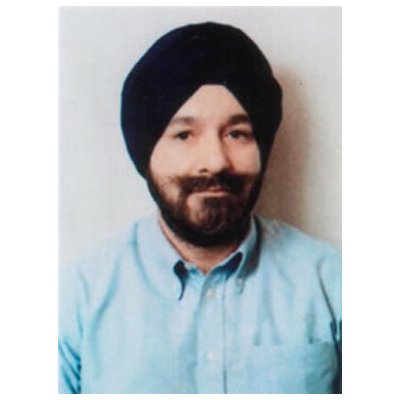
    MUMBAI: Turner Asia Pacific has appointed Vikram Sharma vice president of Cartoon Network Enterprises (CNE), its regional licensing and merchandising division.

    Sharma is tasked with driving sales across the whole region for its branded toys, apparel, home entertainment, publishing and lifestyle products, as well as live events and themed entertainment. He will join the network in March.

    His remit also includes the management of Tuzki, the digital IP and emoticon of choice in China and beyond. In South Asia, Turner acts as a representative for Warner Bros. Consumer Products.

    Major franchises and IP under CNE’s management from the Cartoon Network portfolio of shows including Ben 10, We Bare Bears, Adventure Time, The Amazing World of Gumball and The Powerpuff Girls, as well as Adult Swim’s Rick and Morty.

    EMEA President Giorgio Stock, who also spearheads Cartoon Network Enterprises for Turner internationally, will work closely with the CNE team in the Asia Pacific to maintain consistency and strategic direction for the business outside of the US.

    Before joining Turner, Sharma held various key positions in Disney across Asia including Singapore and India. He’s a proven commercial leader with successful stints in overall P&L management and in different aspects of sales and distribution, with a special focus on retail and franchise monetization. Most recently he led Disney’s consumer products business in Thailand, a key location for Turner’s CNE business.

    Also read:  Zee, Turner to work independently for subscription revenue

    Turner appoints IndiaCast as exclusive distribution agent

  • 9 exciting fundas from Kris!

    9 exciting fundas from Kris!

    MUMBAI: This year’s about to get more fun, more special and several times cooler with Cartoon Network! Kris, your very own superhero buddy from Cartoon Network’s ‘Roll No. 21’, is here with a fantastic new campaign – ‘Kris Ka Funda’ – all through from March to November. Meeting fans from Monday to Friday on Cartoon Network at 1pm, Kris will now bring to his young friends interesting tips, tricks and life hacks through this campaign. Culminating into Kris’s birthday on 14th November, ‘Kris ka Funda’ promises loads of fun and learning in equal measure!

    Kris has some incredible surprises up his sleeve! This March, when the exam fever soars, Kris will kick-start the campaign by giving simple and effective tips on combatting exam woes, powered by Britannia Treat, along with associate sponsors VIP Skybags, Cipla Activ Kidz Immuno Boosters, Mother Dairy (on-air), Kellogg’s Chocos and presented by Chupa Chups Lollipop (on-air). Similarly, each month will have the popular cartoon superhero reach out to his little fans with new tips and new fundas! Taking the excitement up a notch, Kris and his cool squad have chalked out an exciting journey to different cities across the country! Accompanying on-air promotions, these visits to various cities will give kids the golden opportunity to meet and greet their beloved Kris, and partake in fun activities in the malls, play amazing games and answer trivia to win some cool Cartoon Network gifts!

    To kickstart the mall visits, Kris and his friends from Roll No. 21 will be at Amanora Mall Town Centre in Karadi, Pune on Saturday, March 31, 2018.

    Don’t forget to watch Kris from Roll No. 21 only on Cartoon Network, every Monday to Friday at 1 pm. 

  • Cartoon Network wins big at FICCI 2018

    Cartoon Network wins big at FICCI 2018

    MUMBAI: Turner’s leading kids’ entertainment channel, Cartoon Network wins multiple awards at “FICCI Frames – Best Animated Frames (BAF) Awards 2018”. BAF awards stands for excellence in animation, visual effects and gaming and are considered as the most prestigious recognition for creative talent in this field.

    The Cartoon Network India team walked away with ‘Lamput’ winning in the best animated episode (Indian) category and ‘Roll No. 21- Kris Aur Ulta Pulta Time’ winning in the best animated film (Indian) category. Turner India was also nominated in a diverse set of categories at FICCI this year with ‘Andy Pirki’ for the Promo Film (Indian), ‘Bill Tony–Spicy’ for Animated Episode (International) and ‘Roll No. 21- Kris Aur Ulta Pulta Time’ for Animated Film (International).

    This is fourth year in a row that Turner original content has won at FICCI Frames. Cartoon Network’s short series ‘Lamput’ won the prestigious critics’ choice award as the best case study in the Animated Frames category in 2017. Cartoon Network won Best Animated Film for its Roll No. 21 – Kris in Bollywood in 2016 and Best Animated Film for Roll No. 21 – Ticket to Australia the year before.

    Always at the forefront in offering responsible yet engaging content, Turner India ensures to provide unparalleled family entertainment to its fans on Cartoon Network.

  • Japanese kids’ content going strong despite home-grown onslaught

    Japanese kids’ content going strong despite home-grown onslaught

    MUMBAI: The growth of Japanese anime in children’s television programming in India has been far more rapid and visible than other segments of television. It all started in 1990 when everyone grew up watching Rudyard Kipling’s original collection of series, The Jungle Book, which was a Japanese style animation series that couldn’t be missed on Sundays.

    Since then, there has been no turning back; the fascination for Japanese content in India has grown by leaps and bounds. It didn’t stop with Kipling’s Mowgli series, instead, there was another manga series called Avatar: The Last Airbender. Manga are hand-drawn by artists. Naruto, Naruto: Shippûden were among the known manga series that grabbed more traction from their fans.

    There was a time when Cartoon Network reigned supreme, which, for nine years, maintained its premier position by capitalising on the paucity of television entertainment for children. Animax India, a channel of Sony Entertainment, telecast Japanese anime shows before being shut down.

    Shemaroo Entertainment head-animation business Smita Maroo says that even today Japanese shows gets the eyeballs whereas Indian content is still not the order of the day. “The broadcasters still bombard the channels with Doraemon, Shinchan and Ninja Hattori among others. It’s not that they are rushing towards Indian content,” she says.

    Japanese animation made its entry in the programming line-up of channels with animation series such as Doraemon on Hungama, and Ninja Hattori on Nickelodeon. This was followed by a rush of animation series from Japan and the rest of Asia with shows such as Chibi Maruko Chan on Nickelodeon and Anpanman on Pogo (Nandi, 2012). Giving Doraemon a close competition is Crayon Shinchan, another manga-based anime. It’s among the top five shows for kids aged 2-14, competing with the likes of Chhota Bheem.

    According to some media reports, the market for manga has expanded and Japanese publishing houses, which were earlier reluctant fearing piracy, are showing interest to license more titles.

    Green Gold Animation VP-content sales Bharath Laxmipati said that Chhota Bheem, their original home-grown content was the game changer in the Indian industry because it gave confidence to the broadcasters that local shows can have a tremendous response. It broke the fascination for international shows that was also giving a wrong attitude. He says, “The core of a successful Indian show is the ability to tell stories. Japanese content is popular because they shared similar sentiments with Indians. But the difference is that Indian stories are written with the hero in mind but protagonists in Japanese content such as Doraemon, wherein the kid is not a hero but finds help from a robot, so the main character is the robot Doraemon. Oggy and the Cockroaches from France wasn’t famous until Shahrukh Khan, Sunny Deol and other Bollywood actors gave their voices to the show.”

    He further adds that there are two ways of writing styles, where Chhota Bheem is all about courage, bravery, respect for elders, friendship and all the positive cultures that we have in our Indian culture. “Doraemon was created during the 70s and 80s and were picked up by the broadcasters because they had to fill in the programming, so there’s a different approach between theirs and ours,” he says.

    Maroo says that kid’s content syndication is only for topical reasons but beyond that, the channels want to create their own content and focus on their 2-3 properties. She further added, “In terms of Chhota Bheem and Motu Patlu being famous nowadays, both the shows don’t come on the same channel, so the channel’s overall ratings still comes from other shows.

    According to Maroo, acquiring Japanese content is definitely cheaper than production. Agreeing with Maroo, Laxmipati says, “Anything that is made for the own territory is far more expensive than syndicated content.”

    According to the reports, animation production is expensive in comparison to a general entertainment channel show with the former requiring Rs 10-20 lakh an episode against Rs 7-8 lakh for the latter. 

    “Producing episodes for 2D and 3D for 11-22 minutes would cost Rs 10-20 lakh or even above, depending on the number of characters, background and many other factors. The initial episodes are way higher than even Rs 20 lakh,” adds a media professional.

    Another media professional, however, gave a higher estimate. “Any top show’s production value is between Rs 30-50 lakh. Good content has to be produced at such cost. If we talk about producing for outside, the production cost will be up to Rs 1 crore per episode.”

    The trend of today is to produce home-grown content. The concept of producing original content started in 2008 with Chhota Bheem. Later Nickelodeon India produced Motu Patlu as its home-grown IP show in 2012. Not only this, the year 2017 kick-started a new channel called Sony Yay that completely focused on producing its own IP shows.  

    The supply of India-produced shows is very limited compared to the unlimited growth of Japanese content and other foreign language cartoons. Since Japan has 15-20 years of headstart over India, its library is massive. In 2016, Cartoon Network had 91.61 per cent foreign shows; Pogo had 82.67 per cent while Disney had 60.61 per cent shows from abroad. 

    When asked whether it is easier to attract advertisers for syndicated content as opposed to original content, Maroo commented, “If syndicated content has already got a track record, it would be easier to pick advertisers, because new shows will take time to deliver.”

    She further said that kids will like any content that the channels feed them. With the growth of digital, both TV and digital will co-exist and kids will shift their likeness towards a particular medium or content whatever they find interesting.

    Also Read :

    Original Indian kids’ animation content is the need of the hour

    Kids today watch more animated content than ever


  • 20 years later, ‘The Powerpuff Girls’ still breaking stereotypes

    20 years later, ‘The Powerpuff Girls’ still breaking stereotypes

    MUMBAI: Home-grown animation is finally finding its way to Indian kids’ TV channels but the fact remains that most of the cartoons are predominantly male-oriented. Whether it is a storyline revolving around boys or about a male protagonist, the number of stories about girls is limited. Indian channels are replete with examples such as Chhota Bheem, Pokemon, Doraemon, and Popeye (wherein Olive Oyl is constantly in the need of being rescued).

    One show, which has been the bastion of Cartoon Network (CN) for more than two decades, is The Powerpuff Girls. Produced by Cartoon Network Studios with Nick Jennings as executive producer and Bob Boyle as co-executive producer; it has earned more than $2.5 billion in retail sales in its lifetime. The cartoon was dubbed in various languages such as Japanese, Korean, Brazilian Portuguese, European Portuguese, Finnish and Danish.

    It was in 1995 when the heroic girls got their first animation showcase on a programme called What a Cartoon! Only in 1998 did The Powerpuff Girls get taken seriously with the final episode concluding on 25 March 2005. Blossom, Bubbles and Buttercup weren’t merely cartoons but an image of women empowerment to every girl on the planet. The popularity soared among girls who could finally connect with avatars that represented their inner ambitions of making the world a better place.

    Come February, the network is celebrating its 20th anniversary with the global rollout of new episodes, events and products that will continue till 2019. The fourth sister, Bliss, will also return throughout the year.

    In most shows around that time, and even now, male characters were given the more masculine qualities like strength, valour, courage and the tag of being the ‘rescuer’ while the females were restricted to roles of the humble daughter or girlfriend or a side character (Misty in Pokemon, Shizuka in Doraemon). The transformed world hasn’t impacted these characters from being named as ‘all-time favourites’. The vast differences in the personality traits between the strong, funny, deceitful, greedy, smart, charming male characters against the humble, soft-spoken, dependent female characters frame the plot of these shows.

    Today efforts are being made to show female characters without the sexism implicit of earlier times. The cases in point are Merida from Brave, Princess Elsa from Frozen and Princess Riley from Inside OutKim Possible was also a groundbreaking show aired in 2002-2007 that showed the life and adventures of a teenage girl.

    Kids imitate what they see and especially characters they fall in love with. These early-age behaviours mould their adulthood as well, making it a strong case for producers to create a balance and indulge in enforced role-reversal.

    Also Read:

    NICK & Motu-Patlu films most watched kids channel & programme in BARC week 13

    Kids today watch more animated content than ever

  • Kids genre grows on TV despite digital onslaught

    Kids genre grows on TV despite digital onslaught

    MUMBAI: There was no dearth of excitement in the kids’ entertainment space in 2017. Despite the digital onslaught, original content producers grew from strength to strength, keeping children enthralled on television. TV viewership grew during the year even as doomsayers predicted that the end of the good old box was nigh.

    Among the major events of the year, Toonz India Media Group struck a deal with ReachMe.TV in the US to enable streaming of Toonz TV through the latter’s mobile web platform. Green Gold Animation signed a deal with Netflix for creating a spinoff of popular character Chhota Bheem for snippets of Mighty Little Bheem.

    Here’s a look at what each channel did this year.

    Disney

    A favourite among young adults, the Disney channel is known for television programming for children through original series, movies and third-party programming. This year witnessed top-level corporate reshuffling. The company promoted Amit Malhotra as the country head for Singapore and Malaysia. Earlier, Malhotra was the general manager for media networks, responsible for businesses across all functions in the media networks in Southeast Asia (SEA). Abhishek Maheshwari was elevated to country head (India).

    There were reports that Doordarshan was in talks with Disney for kiddy content in evening slots. Disney also launched a three-week campaign for merchandise, celebrating the spirit of sisterhood, featuring two young daughters and how the Frozen sisters inspired them in their day-to-day lives.

    Furthermore, Disney’s sister channel—Hungama—came up with Chacha Bhatija who go on a new adventure in the second movie.

    Turner

    Turner India creates and manages the sales, distribution and marketing of entertainment brands in India and South Asia, including CNN International, Cartoon Network, Pogo, Toonami, HBO and WB.

    It turned out to be a fruitful year with great deals and partnerships. Turner India was successful in imparting a larger-than-life feel to its characters through a tie-up with Amaazia, an upcoming amusement park in Surat. The park is owned and operated by Gujarat-based Rajgreen group. Scheduled to open in 2019, the park will serve as a medium for Turner’s kids channel Cartoon Network (CN) to launch new products and conduct ‘meet and greets’ with its animated characters. Out of the four sections in Amaazia, only the theme park is branded by CN. The rest are a water park, family recreational hub, and serviced apartments and retail shopping area.

    Apart from having a chase comedy in the bouquet, Pogo came up with another indigenous slapstick comedy show for its fans. Focussing more on home-grown content, Tik Tak Tail was the chase comedy that it experimented with in September and then came the slapstick show Andy Pirki. It also announced the launch of a brand-new show, Grizzy and the Lemmings. Moreover, Cartoon Network came up with the fifth and sixth parts of Oggy and the Cockroaches.

    Discovery Kids

    The channel announced a deal with IM Incorporated, a London-based content distribution company, to premiere Sunny Bunnies in India. Angry Birds Sing the Blues came up for the first time in Indian television in a series format.

    Nickelodeon

    This year, Nickelodeon came up with the Halo Movement—a new year-round pro-social initiative celebrating kids who are helping and leading others. In terms of viewership, too, the channel has done pretty well for itself. In week 50 of Barc data, the channel was ranked number one with 127600 impressions (000s) sum. Another important event was the Nickelodeon Kids’ Choice Awards 2017, which honoured the best in the world of entertainment across film and television.

    Sony Yay

    On 18 April 2017, Animax Asia was replaced by Sony Yay. While the former focussed on serving young adults, Yay concentrated on children of all ages. Animax was handed over to SonyLiv.

    The channel is building local characters to monetise and launched four original shows Guru AurBhole, Sab Jholmaal Hai, Prince Jai aur DumdaarViru, and Paap-o-Meter and it holds the IP rights for all of them. The channel also associated with ‘animals matter to me’ to make Diwali ‘pawsome.’

    Although 2017 wasn’t an eventful year, there were plenty of nuggets of action with the latest entrant, Sony Yay, throwing its hat into the ring and fighting it out with the existing players in the kids genre. We will have to wait and see how channels gear up to take on the growing trend of digital in 2018 and whether OTT adds significant value for kids.

  • Chilaka’s roller coaster ride from engineering to animation

    Chilaka’s roller coaster ride from engineering to animation

    MUMBAI: Who would have thought that the person holding a master’s degree in computer science from a prestigious US University would commit to the lesser known field of animation and return to his homeland? And yet today, Rajiv Chilaka stands redeemed for a choice he made nearly 17 years ago.

    India’s most successful animation company was the entrepreneurial venture of this man who runs the show with his elder brother Srinivas. The founder and CEO of Green Gold animation, Chilaka moved over from engineering to studying animation at the Academy of Art University, San Francisco in 2000 after giving three gruelling years to a job as a software engineer.

    The inspiration came to him after watching his first animated film – The Jungle Book. It gave rise to a spree of movie and cartoon watching such as Spiderman, Tom and Jerry, etc. Chilaka knew he wasn’t a great artist so he took engineering as a career. The final switch came when, during one of his slow boring days as a librarian, he read Walt Disney’s book where he spoke of the power of entertaining kids and not considering money as a driving force. He decided that if not art, he could at least tell great stories.

    While studying his post graduate degree in the US, Chilaka applied to learn animation but without a scholarship, he had to cough up a whopping $20,000 as fees each semester. His brother refused to lend him money and advised him to finish his masters, work for a few years and give wings to his animation career. Chilaka was convinced.

    When Chilaka broke the news about setting up Green Gold Animation to his family, he instantly got the maternal support but not surprisingly, his father was adamantly against it. Needing his father’s blessings, Chilaka managed to persuade him with the business plan, which he himself felt was a pathetic one.

    He flew back to India and settled in with his parents in their new house, an option his father gave him understanding the difficulty he might face in finding his own accommodation and paying rent initially. With four to five employees, his journey began.

    If today India still lacks great animators, imagine the situation back in 2000. Chilaka says that they had to train everyone who joined. Everything was work, even if it was as simple as a business card or brochure. He even purchased a digital camera to look tech savvy. What he ensured was good quality work at a feasible budget leading to a happy client and no complaints. 
    The company came close to shutting nearly 25 times in the eight years in between. They had worries – expensive orders or unpaid dues and one by one dejected employees started moving out when he couldn’t pay them on time.
    The real tipping point came years later in 2008 when Chhota Bheem first got airtime on Pogo. Ten days before it went on air, Chilaka’s new office was gutted by a fire and a big potential investor developed cold feet while the lenders demanded their dues. “It was a brand new building which we built so luckily no one moved into it. We were going to move in three days later,” Chilaka says. Everything was damaged – the interior, centralised AC office and it was not just the loss of money but also of time and efforts. “But a lot of vendors supported and understood that we were in trouble. Turner didn’t panic and supported us instead,” he adds.

    Recently, Chilaka added another feather to his cap, with the newly launched service studio-Golden Robot Studio with Samir Jain, Chand, Ritesh and Abhishek. “Right now we have 120 team members and we have planned to add another 70-80 people in the team,” he reveals.

    The challenge now was to orient people to the new culture of being self-sufficient and creating original IPs. “It was also difficult for the employees to join a new startup company, but all the employees are happy working here and of course the brand name of Green Gold helped as everyone wanted to work for us,” says a joyful Chilaka.

    His latest home-grown IP shows include Kalari Kids, a show that rediscovers Kalaripayattu, a lost martial art form of Kerala. With the purpose to educate through entertainment, the animation studio is making an exclusive series for Amazon Prime. Green Gold also sealed a deal with Netflix to digitally broadcast Mighty Little Bheem—a spinoff of its popular character Chhota Bheem.

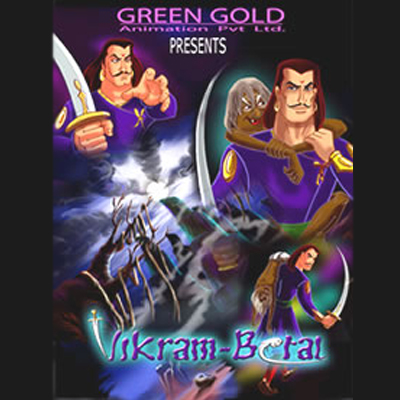
    The series created by Green Gold Animation are Vikram Betal in 2004, Bongo on DD National (2004–2006), Krishna on Cartoon Network (2006–2007), Krishna & Balram – Cartoon Network (2009), Chhota Bheem – Pogo TV (2008), Chorr Police – Disney XD (India) (2009–2012), Mighty Raju – Pogo TV (2011), Luv Kushh – Disney XD (India) (2012–2014), Discovery Kids (India) (2015-2016), Arjun: The Prince of Bali – Disney Channel India (2014–2016) and Kalari Kids.

    In 2018, Green Gold will premiere two theatrical releases – Chhota Bheem Kung Fu Dhamaka and a tentative title for a mythological movie—Mahiravana. Both films are likely to be launched during the summer. Chilaka refused to speak on the other shows which are still in pilot stage.

    For the torchbearer of Indian animation, we hope his pot of gold never runs out!

    Green Gold, Amazon Prime put Kerala martial art on the map
    Green Gold’s golden Mumbai launch

  • Colors Infinity, Comedy Central gain highest OTS in genres: Chrome DM

    Colors Infinity, Comedy Central gain highest OTS in genres: Chrome DM

    MUMBAI: With growth of 2.22 per cent, the English GEC genre marked the highest opportunity to see (OTS) among all categories in week 46 of Chrome Data Analytics & Media. In this category, Colors Infinity gained the highest OTS with 47.7 per cent and Comedy Central was the second most benefitted in terms of OTS with 46.2 per cent in six metros.

    OTS is the actual census-based percentage connectivity of a channel spread across 81 million homes.

    The sports genre ranked second in the gainers category with growth of 1.49 per cent OTS on an all-India including 1L+ market basis. DD Sports gained the highest OTS with 94.7 per cent whereas Star Sports 2 gained the second slot on the list with 81.3 per cent OTS.

    The third position in the gainer’s list of OTS was grabbed by the Religious genre with a growth of 1.31 per cent OTS on an HSM (Hindi-speaking market) excluding 1L market basis. In this category, OTS of Sanskar was leading the genre with 92.9 per cent whereas Aastha stood second with 91.6 per cent OTS.

    Business news genre stood in fourth position in the list with 1.06 per cent growth in which Zee Business lead with 85.5 per cent whereas CNBC Awaz grabbed second position with 83.4 per cent OTS in six metros.

    Last but not the least, the fifth position in gainers list is taken by the English news genre with a growth of 0.31 per cent. In this category, Rajyasabha TV topped the OTS chart with 94.5 per cent whereas Loksabha TV was the second topper with 94.4 per cent in six metros.

    Among the losers, Kids genre was the most affected genre with a drop of 1.61 per cent OTS on an all-India including 1L market basis with Nickelodeon topping the chart with 88.1 followed by Cartoon Network with 84.2 per cent OTS.

    The Youth genre recorded a fall of 0.81 per cent OTS on an HSM excluding 1L market basis. In this category, MTV grabbed highest OTS with 90.8 per cent followed by Channel V with 88.8 per cent OTS.

    Infotainment reserved the third position in the losers list with a drop of 0.50 per cent. History TV 18 and NGC bagged the top two positions with 90.1 per cent and 90.1 per cent, respectively, on an all India including 1L market basis.

    Music took the fourth position in the losers list with a drop of 0.32 per cent. In this category, Sony Mix got first position with 90.1 per cent and 9XM reserved the second position with 88.7 per cent OTS on an HSM excluding 1L market basis.

    Last among the losers was the Hindi movies genre that stood at the fifth position with a fall of 0.26 per cent OTS with Max leading the chart with 94.3 per cent, followed by Star Gold with 93.4 per cent OTS on an HSM excluding 1L market basis.

  • Turner India & Rajgreen Group launch theme park worth Rs 450 cr

    Turner India & Rajgreen Group launch theme park worth Rs 450 cr

    MUMBAI:  Turner India is giving a larger-than-life feel to its characters. A new amusement park in Surat – Amaazia – is the result of a partnership between the broadcaster and Rajgreen group of companies.

    Scheduled to open in 2019, the park will serve as a medium for Turner’s kids channel Cartoon Network (CN) to launch new products and conduct ‘meet and greets’ with its animated characters. Out of the four sections in Amaazia, only the theme park is branded by CN. The rest are a water park, family recreational hub and a service apartment and retail shopping area.

    Australia’s Sanderson Group was the dealmaker between the two and even conceptualised and designed the park. DDB Mudra has designed the park’s logo. Expecting Surat to turn into a metro city by next year and considering its purchasing power as well as the diamond and marketing hub, Turner India managing director Siddharth Jain says they were bound to pick this location.

    Characters such as Ben 10, The Powerpuff Girls and Adventure Time will be the attractions. “India is a priority market for Turner and our partnership with Rajgreen Group will enable millions of Cartoon Network fans to interact and have fun with their favorite characters like never before,” Jain said.

    The family entertainment destination will host 33 theme-based attractions as well as 20 unique water-slides, using state-of-the-art technology. Designed to be an immersive entertainment destination, the park will be spread across an expansive 61,000 square metre area.

    The Rs 450 crore park, entirely funded by the Rajgreen Company is tied to Turner for 10 years. Amaazia aims to attract approximately a million visitors in its first year of operation. It is also expecting to grab the attention of visitors from Mumbai, Ahmadabad and Udaipur.

    Commenting on the announcement, Rajgreen Group chairman Sanjay Movaliya said, “We are excited to collaborate with Turner India in our development of Amaazia. Our audience today is well-travelled and exposed to global entertainment venues. Our aim is to create a similar experience closer home via our association with a hugely popular global brand like Cartoon Network.”


  • Kids will be excited to own contemporary merchandise that reflects sophisticated storytelling in animation, says Turner CNE exec

    Kids will be excited to own contemporary merchandise that reflects sophisticated storytelling in animation, says Turner CNE exec

    MUMBAI: India – Gear up to relive your childhood! Take along your favourite Powerpuff Girls for a coffee break, or make your workstation adventurous with the ladies’ man, Johnny Bravo. Cartoon Network Enterprises, the licensing and merchandising arm of Tuner International India, is all set to bring back the golden age of cartoons with Cartoon Network Retro merchandise, reminiscent of iconic characters like Johnny Bravo, Powerpuff Girls, and Dexter that have stood the test of time.

    Speaking on the new partnerships forged by Cartoon Network Enterprise, Anand Singh, Sr. Director – Cartoon Network Enterprises, South Asia, Turner International India, said, “We are delighted to bring to our fans the nostalgic era of cartoons, with some cool and exclusive Cartoon Network Retro merchandise. These cartoon characters make for great family co-viewing experience and have transcended several generations. Their timelessness is what translates into great demand for them even now. We are sure that not only will the 90s kids love this collection, but also that the new generation would be excited to own contemporary merchandise that reflects sophisticated storytelling in animation. We’re thrilled to bring the Cartoon Network Retro collection for the Indian fans.”

    Recognizing the inherent global appeal of classic cartoons and their long-standing bond with the viewers, the brand-new Cartoon Network Retro collection which includes T-shirts, shoes, mugs, badges, posters, flipflops, mobile covers and much more will be cherished by true blue fans.