|
|||||
|
What is the local content strategy adapted by the channel to attract viewers and more so encourage co-viewing (kids & parents together)?
Although, traditionally, kids‘ channels are perceived to cater to only to children, the latest findings of Cartoon Network New Generations , our proprietary research, shows that a majority of parents (three out of every five parents) watch television with their kids; morevover, cartoons are their most preferred genre after serials. Our strong portfolio of shows such as Tom and Jerry, Ben 10, Oggy and the Cockroaches, Chhota Bheem, etc. cross age limits and appeal to parents as well. What kind of numbers are you generating in terms of viewership and what kind of audiences and from where? www.cartoonnetworkindia.com and www.pogo.tv are the top two kids‘ websites in the country with a million unique viewers. What is the competitive landscape like? Who are the main viewers (age, urban, non-urban, etc)? What are the initiatives and plans you have to promote merchandise along with highlighting the scope for partnering with a retailer?
Cartoon Network Enterprises has licensee partnerships across all key merchandising categories such as toys, games, apparel and accessories, publishing, back to school, gifts and novelties, sporting goods, confectionary and home video amongst others. We also have significant business coming in from promotional licensing where we partner with large FMCG companies to offer free character branded give aways on purchased goods. Today, Ben 10 franchise is the number one boys action property in India that has sold over 950,000 units of toys and counting. Apart from these traditional categories, we have successfully leveraged our business by launching innovative products to keep up with the trends in the market. Some of these include, digital video-ebooks based on the popular Ben 10 series and M.A.D. Let‘s Doodle! School graded art and craft books and M.A.D Live classes based on the successful show M.A.D. (Music Art Dance). Taking this engagement to a new level, we recently brought an international stage show called ‘Ben 10 Live: Time Machine‘ to India. The show gave kids the opportunity to see their favourite superhero and his aliens live on stage and the audience response was phenomenal. As far as partnering with retailers is concerned, currently our products are sold across traditional, modern retail channels as well as through school clubs and fairs. We have excellent relationship with individual retail chains built on a solid win-win philosophy. While the retail chains are able to provide the requisite infrastructure, we have the unique ability to create branded experiences and environments to engage with our consumers. We actively do in-shop promotions, retail activations, and meet and greet events.
How big is the broadcast advertising market and what is the share of the kids‘ genre? Which categories spend the most on advertising on your channel? Which companies spend the most money? Are there any new emerging spenders? What does advertising on such channels offer to these advertisers? Any trends and insights you can share for the same? Kids are the primary decision-makers when it comes to certain categories, like chewing gum, candies etc. Kids form key influencers on other categories. They have a say on almost all household purchase decisions be it televisions, computers, mobiles, automobiles etc. This is apart from regular household consumption items like oral care, ketchup, ready to eat snacks etc.
As a result, advertisers come to the channel to target kids, both as primary consumers as well as key influencers. Apart from this they can reach the parents. A large number of advertisers like FMCG, durables are coming in to target the parent – FMCG for the mothers, durables for the fathers. This is the area of new growth for the kids genre. At Turner, we believe in selling solutions to customers that can be leveraged across multiple media. Our properties work extremely well for clients on TV as well as beyond TV, and clients increasingly see the benefit of the same. For example: *With Johnson & Johnson BandAid, we offered a promo licensing deal of Chhota Bheem, the most popular kids‘ character. This deal offered the brand online presence on our websites, sponsorships and was topped off with a school contact program across six cities tapping over 500,000 students.
*HP printers partnered with Rob, the iconic host of POGO‘s M.A.D. show, to conduct customised workshops and an event that was promoted on both kids channel through attractive vignettes.
*GlaxoSmithkline‘s Horlicks continues to partner with Cartoon Network, to create customised exam videos giving children tips on studying for exams. This is the third year in a row that we have been working with them.
|
Tag: Cartoon Network
-

Kids TV channels seek to service adults too
-

Why Pogo and CN got a ratings spike in TAM week 18
MUMBAI: Week 18 of TAM Media Research’s weekly TV ratings monitor turned up a surprise for Turner International India which runs the kids channels Pogo and Cartoon Network.
Pogo notched up 183 GRPs (4-14 all C&S homes), the highest GRPs for any kids channels in the past seven years. Cartoon Network (CN) on its part also reported high GRPs of 134 placing it at the number 2 spot. They also grabbed a combined near 50 per cent of the viewership share of the kids channel genre – Pogo had a share of 28.7 per cent and Cartoon Network of 21.1 per cent. This data was provided to indiantelevision.com by a channel.
What happened? What got it those unexpected numbers at a time of an intense focus on cricket courtesy the IPL and when the GEC genre has been losing ratings and viewer share?
“The kids genre on the whole did really well in week 18. The summer vacations are on and kids are home from school,” explains Turner senior director & head of kids vertical south Asia Krishna Desai. “Also, Chota Bheem did very well for us on Pogo. We had Chota Bheem’s birthday celebrations in week18 which ran through the week like previous years. On 1 May, we premiered the movie ‘Chota Bheem and The Crown of Valhalla’ which also contributed to the record setting GRPs.”
“Kids like to watch marathons of two to three of their favourite shows. Increasing the frequency of these shows leads to higher viewership for the channel,” adds Turner vice president ad sales south Asia Juhi Ravindranath.
Juhi says the high viewership despite, the kids channel genre and pricing for it needs to be looked at with a different set of eyeglasses.
“The kids channel genre accounts for approximately six per cent of overall viewership (CS 4+ All India). In terms of revenue share, it is around 2.5 to three per cent,” she highlights. “So yes, it is definitely underpriced as a genre. If one looks at the past few weeks’ data, Pogo and CN are ranked at number 11 and number 12 respectively in terms of viewership amongst all channels. Unfortunately the rates commanded by the genre are not at par. However, year on year, there is growth in effective rates for the genre. We are, however, pushing for very aggressive rate hikes this year and are seeing success.”
She says her team is increasingly getting aggressive on bringing in non-traditional advertisers to hoick revenues. “While kids form the core audience, any household with kids would also see substantial viewership coming from parents. For example, Pogo and Cartoon Network would be ahead of most news channels in the male 15+ target group. Categories like computers, telecom and other durables are forming areas of growth for us. Apart from this, we are actively using non-FCT areas like licensing of our characters, vignettes, on-ground events and our online websites to help us drive revenues.”
Will week 19 of TAM’s ratings see Pogo and CN maintaining the tempo? Desai says the team is gung-ho about this. “We put in our best, however, we leave to the kids’ audience the rest,” he ends with a smile.
-
Focus creates online edutainment platform for kids
MUMBAI: While kids are increasingly spending time online there aren‘t many platforms that offer content tailor made for them. It is to fill in this need gap that advertising and digital media agency Focus Circle Group is looking to fill.
Focus has launched Worldoo (worldoo.com), a unique platform that offers a blend of entertainment and education from the most popular content from a kid‘s world of interest, through an interactive experience.
Worldoo, according to Focus, is an ‘Ever-evolving Online Ecosystem‘ for kids in the 6-12 age bracket. The aim of Worldoo is to offer kids an interactive experience.
Worldoo has around 16 content partners including ZeeQ, Cartoon Network, Shemaroo, Sony Pictures and National Geographic. Kids can consume the content from their world of interests and earn virtual currency (Stars) by doing so. Stars are earned depending on the amount of content they consume.
Focus Circle Group MD Monish Ghatalia reveals that the site took two and a half years to create. The company has invested Rs 90 million and is hoping to achieve a break-even in three years.
“Our promise is to deliver something new, always. So far 600 kids have registered. We have invested Rs. 90 million and expect to breakeven within three years. We have a revenue sharing arrangement deal with our content partners for ads. Worldoo is an audience focused engagement platform for brands on the internet. With conventional activation mediums, it is challenging for brands to reach out to a large chunk of target audiences at a single point, and even more difficult to sustain the engagement,” he explains.
Ghatalia adds, “We are confident that Worldoo will provide an edge for brands, to engage with the right target audience. It offers the right platform for brands to achieve much more than just impressions and clicks. Worldoo creates engaging experiences for kids as it offers activities, interaction and content, all in one place. Our aim in doing content deals was to have content that imparts both excitement and education, all in a single platform.”
There are seven content sources (landmarks) in the site including Game Den that has games segmented by genre. Companies like ZeeQ and Cartoon Network have their own landmark within Worldoo.
Ghatalia adds that the second phase for the company starts in a few months time. That is when it will look to be available on digital devices like the mobile as well. It will also have regional content. By the end of the year it could have 50 content partners. “We are looking to create content on our end as well. There will be comics, stories, games. The vision for us is long term and we want to touch upon diverse aspects that concern kids.”
Turner International India VP ad sales South Asia Juhi Ravindranath commenting on the content partnership with Worldoo said, “At Turner, our aim has always been to push the boundaries and deliver innovative and entertaining content/experience across various platforms. Worldoo is a unique idea and we are happy to partner with Focus in a bid to create the right brand experience for consumers.”
ZeeQ programming head Aparna Bhosle noted that technology is central to consumption of content. “content consumption is becoming increasingly multi-platform. TV, internet and the mobile phone should together allow greater opportunities to watch your favourite show at any time in any place and on any device. It is keeping this in mind that ZeeQ are excited about partnering with an innovative concept like Worldoo. It is a mechanism through which our shows can be sampled via the internet.”
Shedding light on the ad strategy Worldoo head experience and brand Harsh Wardhan Dave said, “Advertising for kids online has always been restricted to banners, contest pages, micro sites. There is no innovation in this space in terms of customer engagement. The launch of Worldoo is a very proud moment for us, as we fill this gap for brands to think out of the box and create a real life engagement with kids through our digital platform. With all of this we are about digital engagement and not just digital marketing.”
He adds that since Worldoo has a blend of social and engagement, brands can live with kids in Worldoo. Kids can follow brands, make friends with them, get tips from brands etc. Also creatively, they can seamlessly become a part of a user‘s journey as the brand can be present while kids spend their time in their world. For example a breakfast brand can place a bowl of cereals in a Kids Home at Worldoo or a car brand can be driving through the roads of Worldoo and more such tailor made innovations.”
He added that the aim of Worldoo is to reassure parents who are unsure of what their kids are looking at online. “The pre-launch research conducted by IMRB gave us immense confidence that what we are creating is the need of the hour. Kids research told us liked the website as they get so many things in it. They are excited about the various types of games that are there. According to mothers the site has everything that a child needs and so there is no need for their children to go anywhere else. Mothers also feel that it the site is good as only kids will be there.
“So children will interact with other children of their age. Mothers also feel that the point system will give children some business sense, about how to earn for themselves and then spend wisely. 1/3rd of mothers feel that the site is for 13-15 year olds. More than 80 per cent of mothers surveyed feel that Worldoo is an edutainment site. Our research also showed that Google is favourite site for kids followed by Cartoon Network, Facebook, Yahoo and National Geographic”.
What is interesting about this survey is that two iconic kids brands Disney and Nickelodeon both ranked below National Geographic.
The content that Worldoo offers includes:
– Games from miniclip, the gamebox, zapak.
– Cartoons from Cartoon Network and Chota Bheem
– Animals and Environment and Conservation from National Geographic and JeffCorwinConnect.
– Movies and Trailers from Warner Bros., Shemaroo, Sony Pictures, Reliance Big Flix.
– Edutainment from ZeeQ,
– Books and Comics include Amar Chitra Katha, Crosswords, Landmark, Dreamland, Britanica Books, Robinage, Champak.
– International destination includes Sentosa. -

Cartoon Network, Pogo launch on Sri Lankan IPTV platform Peo TV
MUMBAI: Sri Lankan IPTV provider Peo TV has inked a carriage deal with Cartoon Network and Pogo.
The channels bring series such as ‘Ben 10‘ and ‘Scooby Doo‘ to even more viewers and fans on the island nation. Both channels are available in English.
Turner International India senior director network and content distribution, South Asia Troy Lobo said, “Sri Lanka is a key market for Turner and we are happy to announce this strategic move to strengthen our presence here. The ever-evolving kids’ entertainment genre has huge potential in Sri Lanka, allowing us partner with SLT PEO TV to broadcast both Cartoon Network and Pogo.”
SLT VisionCom CEO Malraj Balapitiya said, “We are excited to launch Cartoon Network and POGO – the two leading kids’ channels dedicated to young viewers. The launch is in response to our viewer preferences, which we at SLT PEO TV pay a lot of attention to. Every audience segment is important to us and we thrive in providing a varied choice to every single member of the family.”
-

Turner, NCTC reach deal
MUMBAI: US broadcaster Turner Broadcasting and NCTC have reached a long-term distribution agreement.
The renewal grants NCTC members continued access to Turner‘s portfolio of networks including CNN, TBS, TNT and Cartoon Network. Financial terms were not disclosed.
Under the terms of the agreement, Turner‘s portfolio of networks including CNN, HLN, TNT, TBS, Cartoon Network/Adult Swim, Turner Classic Movies (TCM), truTV, CNN International, CNN en Espa?ol and Boomerang will continue to be carried by NCTC‘s nearly 1,000 independent cable operator members across the US.
As part of the deal, NCTC members will have rights to carry a myriad of entertainment, kids, news, sports and young adults programming, as well as on-demand content that is available across the Turner networks, including award-winning news and information from CNN, marquee sports programming such as the NBA and NCAA® Division I Men‘s Basketball Championship, TBS‘s ‘Conan‘ and TNT‘s ‘Rizzoli and Isles‘ and ‘Falling Skies‘ and Cartoon Network‘s ‘Regular Show‘ and ‘Adventure Time‘.
Turner Broadcasting System president of sales, distribution and sports David Levy said, “The extension of our comprehensive renewal agreement with the NCTC highlights the growing value of the Turner portfolio and drives home our commitment to deliver marquee content to their customers. We‘re proud to continue our long relationship with the NCTC and the viewers they serve.”
-
Zeel plans to invest Rs 1 bn in edutainment channel ZeeQ
MUMBAI: Zee Entertainment Enterprises Limited (Zeel) plans to invest Rs 1 billion over three years in its edutainment channel ZeeQ which launches on 5 November.
Targeted at the 4-14 age group, Zee Q will be the 32nd channel from Zee network and mark its entry into the fast growing Indian kid’s broadcasting market.
The bilingual channel will have 70 per cent content in Hindi and 30 per cent in English. Zee Q will be a pay channel and have a mix of home produced and acquired content.
Zeel MD & CEO Punit Goenka said, “Zee as a group stands by its principle of improvement of human capital and so is the initiative ZeeQ. It is a step ahead in fostering the curiosity amongst children through fun and entertainment.”
The channel will also draw synergy from Zee Group’s education business, Zee Learn. “During production and acquisition of content, we took into consideration the learnings from the 18 years that Zee Learn Limited has been interacting with as many as 300000 students, parents and teachers across India. And this has helped us make its edutainment content engaging and relevant to the needs of Indian children,” Goenka said.
Zee Learn Design Head (Communication/IT/Content & Academics) Subhadarshi Tripathy has been named as the business head of the channel.
“Zeel will invest close to Rs 100 crore (Rs 1 billion) of money that will be pumped in primarily into content, people, and marketing,” Tripathy tells Indiantelevision.com.
Tripathy was confident that the channel will break-even in five years. “We will break-even in five years,” affirms Tripathy.
“The content is divided into two parts. The animated content is for the age group between 4-7 years. The second part of the content is locally produced and tailor-made for Indian kids for the 8-14 age group,” said Tripathy.
Indiantelevision.com had earlier reported that Zee would be launching a kids channels called Zee Q.
Tripathy said subscription income is important since the channel has decided not to show cola or junk food ads. This will limit Zee Q‘s advertiser pool but the objective is to gain the confidence of parents that nothing on the channel will have negative impact on kids.
“We have a nutritionist on board who tells us what we can take and what we can’t. That’s phenomenal because we won’t have ads that harm child’s safety. We will stay away from cola or processed food ads,” said Tripathy.
The content strategy for Zee Q is simple: to make it fun and educative at the same time. However, it will be a tough road ahead for Zee Q as it will be pitted against well-entrenched kids broadcasters like Cartoon Network, Disney, and Nick who currently enjoy loyalty of the age group that Zee Q is eyeing.
The broadcaster will air four hours of original content daily which includes three to three and half hours of animated content and one hour of locally produced live action shows. Going forward, half of the original content will be local productions which have been commissioned.
“We acquired content that is good to go for about six months which includes three and a half hour acquired and one hour of produced content which will eventually become 50-50 once the produced shows start coming in,” he added.
Some of the shows on Zee Q include specially produced programs like: Teenovation , a show in association with The National Innovation Foundation about Children innovators who display brilliance and create utility items for problems they see around them; Wordmatch — a National level Hindi game show for children, which enhances their knowledge of English spelling, word usage, sentence construction and vocabulary; and Brain Café — a super cool café with anything and everything to do with Science. Brain Café is the perfect hang out to learn all about science theories, concepts and their applications in a fun way among others.
The above mentioned show formats will be owned by Zee Learn.
Another important part of the Zee Q programming is its acquired shows which are carefully handpicked by the programming team from amongst numerous available concepts. The acquired programmes have been carefully handpicked and adapted to keep in line with the philosophy of the channel that it is for the Indian kids.
“We conducted a survey with IMRB for all India and we found that participative content is preferable to 4-14 age group. We have travelogues, quiz shows and science by learning programmes. We have taken extensive care to make them interesting and engaging,” said Tripathy.
Tripathy feels that the interesting part of Zee Q’s programming strategy will be that it will have parental approval. The broadcaster had conducted a survey with IMRB which had clearly stated that there is high level of anxiousness among parents about the kind of content that kids are exposed to on television.
“To a kids mind the content won’t be boring because it has to be as engaging as the shows that he is watching. But to the parents mind we are making sure that the content we are showing is good for your child’s developmental needs hence I get an approval of parents and push from parents for the kids to watch it,” he averred.
Zee Q, Tripathy believes, will have a positive impact on Zee Learn’s business. Zee Learn will get exposure on the channel and hence will be noticed by its target audiences frequently. Certain school solutions aired on Zee Q as a show from Zee Learn are content like Brain Café.
“The Zee Learn chain of preschools and schools will also help Zee Q in understanding kids behaviour. Programming can be accordingly tailored for the channel,” Tripathy said.
Also Read: Zee to launch kids channel, readies for future growth
-
Cartoon Network launches ‘Back to school’ consumer products
MUMBAI: With schools set to re-open after the summer vacation, kid‘s channels are setting eyes on capturing the target group‘s attention via school related consumer products.
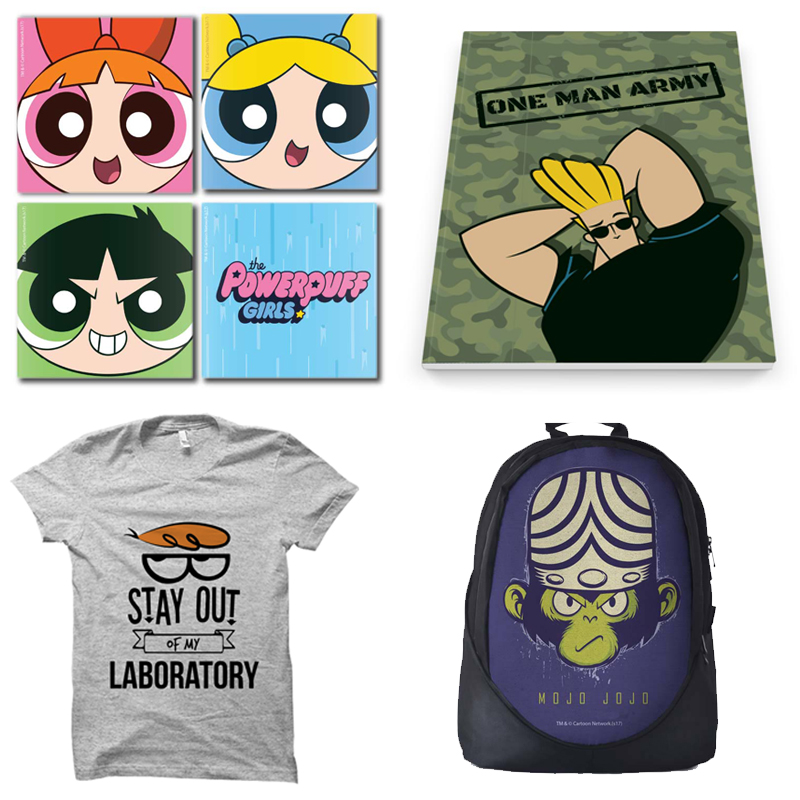
Cartoon Network Enterprises is launching ‘Back to School‘ products featuring Ben 10, Ben 10 Ultimate Alien, the Powerpuff Girls, Cartoon POP and Gwen 10.
The products include school bags, stationary, picture storybooks, water bottle, sippers and lunch boxes.
The Ben 10 school bags are priced between Rs 895 to Rs 1,295 and the new range of stationary is available from Rs 20 to Rs 599. This year, Cartoon Network is also launching school bag range featuring Johnny Bravo, Courage the Cowardly Dog, Billy and Mandy amongst others as part of its Cartoon POP franchise priced between Rs 795 to Rs 995.
Girls can look forward to the ultra stylish Powerpuff Girls and Gwen 10 school bags which are available at a price range of Rs 795 to Rs 995 besides storybooks of Gwen Tennyson, Ben‘s feisty and intelligent 10 year old cousin who has the ability to use spells and magic to attain superhuman attributes.
Published by Wisdom Tree, these books are priced between Rs 50 to Rs 100.
Cartoon Network has also launched its picture storybooks for young readers in 3D format for Rs 125. This collection of back to school merchandise and over 100 new books in traditional print and fascinating novelty formats are available at all leading retail stores and online on Flipkart.com.
Cartoon Network has also partnered Attano Media & Education to launch video-ebooks and interactive activity books this season. These books, which are available on attano.com, are based on Cartoon Network‘s popular brands including Ben 10, Gwen 10, Ben 10 Alien Force, Ben 10 Ultimate Alien, Generator Rex and the Powerpuff Girls. The books are priced between Rs 40 – Rs 200 and are suitable for 4-14 year olds.
Cartoon Network Enterprises South Asia and Turner International India Director Gaurav Brar said, “It‘s our constant endeavour at Cartoon Network Enterprises to understand the pulse of our young audiences, one of them being the pride with which they flash our insignia at school. Our Back to School range helps to bridge the gap between kids and their favourite TV characters so that they too can be a part of the toon world they admire.”
-
Kids channels swing into high action
After a flood of four channel launches in 2004, the kids genre has swung into big action with three new appearances last year and the announcement of Discovery to enter the segment this quarter.
The battle isn‘t going to be easy as the advertising pie is pegged at Rs 2.4 billion in 2011, up from Rs 2 billion a year ago, and the licensing and merchandising market is still at its infancy in India.
Broadcasters, however, are finding strategic value to occupy the space at a time when India is waking up to the government’s call of mandated digitisation.
“Discovery Kids will offer Indian children the ideal combination of learning and entertainment. In light of the massive digitisation drive in India, we believe viewers will express their demand for such distinct television networks,” says Discovery Networks International president, CEO Mark Hollinger.
Expanding its bouquet in the southern region, Sun TV Network launched Malayalam kids channel Kochu in 2011 TV to complete its entire cycle of covering the four languages. Sun had launched Chutti TV in Tamil (2007), Kushi TV in Telugu and Chintu TV in Kannada (2009).
Maa TV Network launched Maa Junior in Telugu, its first channel in the kids space, while Viacom18 introduced Sonic to complement its other kids channel Nick. Maa Junior has since the beginning of the year transitioned into a GEC and has been rebranded as Maa Gold.
“In 2011, two regional broadcasters launched language channels to expand their networks in the southern states of Andhra Pradesh and Kerala. The Viacom18 channel was more a segment strategy to complement Nick,” says a media analyst.
Sonic targets children in the age group of 10-17 years with action, sitcoms and adventures. The movies cater mainly to teens.
What is encouraging kids broadcasters is the rise in viewership. The overall genre is on a growth path due to channel launches, according to research agency TAM. The total share of the genre grew to 18 per cent among the 4-14-year-olds (C&S, All India), largely due to the growth in the universe of kids to 48 million in 2011, from 43 million a year ago.
According to Sonic and Nick India EVP and GM Nina Elavia Jaipuria, the genre enjoys the loyalty of kids among the age group of 4-14
despite competition from other genres and has been growing 7-10 per cent year-on-year.“Despite the fragmentation that has happened in the entertainment world, this is one genre which continues to garner GRPs and viewerships from kids. In 2011, we once again proved to ourselves that it is a genre that is being viewed by boys and girls in that age bracket,” she says.
In her yearender column for Indiantelevision.com, Turner International India GM, Entertainment Networks South Asia Monica Tata wrote that the genre not only recorded growth but also saw the entrance of new channels like Sonic. “The kids’ genre grew in regional languages as well. In Tamil, for example, the share of Kids is higher than News. The continued investments in launching new channels and content prove that the kids’ entertainment space is a very viable market.”
Even though the kids genre commands 6-7 per cent viewership share, the problem is on the revenue said. However, while traditional advertisers like food & beverages, personal care, and household products continue to be heavy spenders on the genre, non-traditional advertisers like automobiles, electronic devices, and insurance companies have started to take notice of the genre.
“We did see a lot of non-traditional advertisers. We now have insurance companies who are talking to the 4-14 TG,” says Jaipuria.
Hindustan Unilever and Cadbury India were top advertisers on the genre for both 2010 and 2011 in a list dominated by FMCGs and personal brands, TAM AdEx data shows. Interestingly, Maa Network and Sun TV, who operate channels in the genre, were among the top 10 advertisers in 2011.
“There has been increasing awareness that kids now have a say in purchase decision-making that extends far beyond traditional categories. Today, around 63 per cent of parents involve their children in the decision making process. This is one of the main reasons that has attracted advertisers to kids’ channels in order to effectively target families,” says Turner South Asia network head ad sales Juhi Ravindranath.
Agrees Walt Disney Television International India business head Vijay Subramaniam, “Brands understand the importance of engaging this TG because this is a very loyal base. It is important to realise that the kids of today will become the consumers of tomorrow. A lot of advertisers are now including kids channels in their advertising mix.
L&M is another revenue stream the channels are betting big on. Disney, for instance, has inked a licensing deal with Mukesh Ambani-owned IPL franchise Mumbai Indians to launch co-branded merchandise products targeted at under-14 kids segment. The merchandise will be sold in around 5,000 Reliance retail outlets and will be also be promoted through the digital medium.
But considering the number of channels in the genre and the ad revenues it attracts, is running a kids channel a viable proposition?
Jaipuria feels it depends on the business models of the individual channels and whether or not they fill the need gap. “How the channels source content – whether it is a localised or is it sourced internationally – also plays a role in channels‘ viability. Although the gestation period for a kids channel maybe longer than other genres, it‘s about having an intelligent business model and having a right mix of content,” she avers.
Jaipuria is also betting big on digitisation as it will make possible an increase in subscription revenues and bring down high carriage fees.
Sun Group CEO Tony D‘Silva believes kids channels need to become more and more segmented as their needs keep changing as they grow up. “Right now most of the channels are targeted at 4-14 age groups,” he avers.
-

2011:Growth in kids genre makes it a viable market
India is the world’s third largest TV market with almost 138 million TV Households next to China and the USA. The television and broadcasting industry has grown tremendously over the last two decades, with an average double digit growth rate.
Overall, 2011 was a mixed year with events such as the Cricket World Cup driving up high growth despite the last quarter seeing effects of the macro-economic slowdown. New players entered the market with niche offerings like food channels and there are now more channels in the English entertainment space than ever before. Viewers are able to access niche content easily on DTH platform even in smaller markets.
2011 has been the year of consolidation in the media and entertainment industry. The year saw the biggest consolidation in the distribution business and the formation of Media Pro Enterprise, a 50:50 JV, formed between Zee Turner and Star Den. UTV was acquired by Disney, and Network18 has bought over ETV. Businesses would do what gives them the best value, and if the best chance of realising that value is through consolidation and acquisition, then this trend will continue.
The kids’ genre is the largest genre in terms of viewership after mass genres like GEC contributing to 18.3 per cent of the viewership pie (Source: TAM Media Research | TG: CS 4-14 | Market: All India | Period: 2010 – Wk 3 of 2012). In 2011, this genre not only recorded growth but also saw the entrance of new channels like Sonic. The kids’ genre grew in regional languages as well. In Tamil, for example, the share of Kids is higher than News. The continued investments in launching new channels and content prove that the kids’ entertainment space is a very viable market indeed.
Content
With consumers having a much wider choice of channels, ownership of quality content is increasingly being seen as a key differentiator for broadcasters. Once, Cartoon Network was the only kids’ channel airing international content. Fast forward to today, and there is a plethora of kids’ channels airing classic international content (like Tom and Jerry), anime cartoons (like Hagemaru), local live action shows (like M.A.D) and the latest craze – Indian animated content (like Roll No. 21 and Chhota Bheem). There’s no doubt that the kids’ entertainment space has gone through an incredible and rapid evolution.The content of animated shows has also seen a subtle but consistent change. Initially, new animation content creators took inspiration from the lowest hanging fruit available to them – popular mythology, inspiring movies like Hanuman, Krishna and Ramayan. Then came fictionalizing these mythological stories with shows such as Krishna Balram where characters based on these mythologies were placed in fictional plots. Now, we are at a stage where the linkage to mythology has dwindled further. Series like Chhota Bheem on Pogo and Roll No. 21 on Cartoon Network just have character names similar to those in mythology. Other series like Kumbh Karan, although may invoke a linkage; in reality have nothing to do with popular mythology. Kumbh Karan is a series based on two fun loving, twin brothers.
Just as the supply side of the chain has seen evolution, the consumption pattern has also changed over the years. One shift noticed in 2011 is that kids prefer to watch fewer shows on kids’ channels than before and have begun to spend more time per show. Thus, although the viewership for the number of shows has reduced, the overall category viewership remains mostly unchanged.
The animation industry in India is also growing simultaneously where locally animated shows are the flavour of the season. The Indian animation industry was estimated to have been approximately Rs 11 billion in 2006 and it is expected to grow at a rate of 22 per cent to reach Rs 54 billion at the end of 2014 (Stockmarketreview.com) – with television estimated to contribute 65-70 per cent of overall consumption (FICCI-KPMG Report 2011).
Although the market is not as mature as its global counterparts, the growth of this segment provides immense opportunities for investment by local companies and MNCs. This can be seen in the number of kids’ channels and the percentage of animated shows on them. Between Cartoon Network and Pogo we aired the highest number of hours of animated content (25,000 half hours) in 2011.
One important factor to consider while creating content for kids is to ensure the gatekeepers approve of the content. It is thus important for content providers to assuage the fears of parents regarding loud content and the aggressive language in kids’ entertainment shows. Without parental approval it is difficult to reach this target audience as 48 per cent of parents always exercise control over what their kids watch (Cartoon Network New Generations Research 2011). Another way to garner success for content is to make it fun and engaging for gatekeepers as well as 66 per cent of parents watch TV together with their kids. For instance, Pogo has continued to hold the title as ‘The No. 1 Kids and Family Channel’ thanks to shows like Chhota Bheem and Mr. Bean that are among the top three rated kids shows by kids and adults.
Online
In today’s multiscreen playground, it’s not uncommon for kids to consume content on more than one platform. Gone are the days when the television set was the only screen in the home. Over the past decade, we have witnessed a four-fold growth in kids’ access to computers and Internet at home. Add in access in schools and cyber cafes, and now half of the kids are computer users. These “Netizes” have helped the Internet usage to grow to 18 per cent (Cartoon Network New Generations Research 2011).What does that mean for content providers? It represents huge opportunities to expand the presence of a brand or a character in the mobile and online space through smart phones, tablets and computers. Moreover, broadcasters and content houses are increasingly working towards building anytime anywhere access to content. With technological evolution, porting these content platforms without any additional cost is expected to become a reality.
The key component to digital success is Content as well – leveraging popular content on television to these online and mobile platforms and creating content on these platforms that is engaging, innovative and unique. For instance, Chhota Bheem’s popularity on-air has definitely contributed largely to the success of www.pogo.tv. ‘Chhota Bheem Balloon Blaster’ is one of the most popular games on pogo.tv which allows fans to connect with their hero through a game. The site has seen immense success with about 500,000 unique viewers per month.
In an evolving digital landscape, there is one contestant: kids love the interactivity of online games. It’s their number one activity online.
Licensing
The kids’ entertainment market is gaining momentum at a steady pace and apart from prime television when it comes to appeasing kids, merchandising is one of the most powerful tools to connect with them.Over the last few years, we have seen a dramatic shift in the Indian merchandising market. Merchandising, today, has transformed into a global arena; providing an array of international and local brands to choose from. We are witnessing a healthy rise of various kinds of merchandising in every product category. Growth potential is fuelled by increased product availability, creating awareness of merchandising product and most importantly, building demand and loyalty for branded cartoon character merchandise. Kids want to have their favourite characters with them (in the form of stationary, bags, lunch box, bottles, clothes, toys, etc.) whereever they go; be it school or outside or at home!
For instance, Cartoon Network Enterprises (CNE), the licensing and merchandising division for Cartoon Network and Pogo, has reflected the growth of the industry by reaping profits and growing by almost 70 per cent in 2011 and has added 680 SKUs. CNE Products are now available in over 5300 retail counters across India. These achievements were recognised by the industry thereby earning us the title of ‘Licensor of the Year’ Award by Franchise India in 2011.
In recent years, the Indian consumer has become increasingly discerning. With increasing awareness levels, our consumers want products in sync with the developed world but at relevant “Indian” prices. Identifying the right product mix which would encapsulate the demand of the Indian consumers will be the single biggest challenge for this sector. Secondly, the distribution expansion could be the single biggest game changer for this sector in the immediate future. The Indian consumers are no longer restricted to those who reside in Metro towns and shop in Modern Stores. A substantial section of them resides in smaller towns and shop via the traditional stores and will continue to do so in the future.
Expanding distribution, however, is not going to be very easy and there will be a significant cost attached to it. Piracy is the single largest threat confronting the licensed sector in India. The trade partners as well as the consumers need to be made more aware of the potential harm that pirated goods could cause for this sector to truly thrive and be on par with international markets.
However, growth and development of modern trade in India is at its peak and provides immense opportunities in building brands. The easing of FDI norms will help bringing in international players which increase the opportunities of organiising this industry and in return will benefit the end consumer.
Ad Sales
As viewers and especially as consumers, kids are a critical base, and there has been increasing awareness that kids now have a say in purchase decision-making that extends far beyond traditional categories. Today, around 63 per cent of parents involve their children in the decision making process. Thus, it becomes imperative for advertisers to engage with kids to inspire product conversion (Cartoon Network New Generations Research 2011).But, Indian kids are a smart bunch and with increasing levels of awareness and an insatiable need to be entertained, it is not easy for advertisers to appease them. Thus, advertisers need to explore platforms that specifically cater to kids and understand their psychology better. Kids are far more receptive to products recommended by their favourite toon hero than regular campaigns.
Thus now, not only traditional advertisers like FMCG products reserve a large chunk of their ad sales spends for kids’ channels but also non-traditional advertisers like automobiles, electronic devices, etc. consciously target this platform. In 2011, nearly 35-40 per cent ad spends came from non-traditional advertisers on Cartoon Network and Pogo.
If media companies can shape a perception or catch an imagination – be it through television, mobile or online – it is the key to unlock that multi-million dollar industry. Today, we would estimate the Indian kids’ ad market to be Rs I.40-2.50 billion.
Future
The kids’ genre today is no child’s play. It is a competitive market considering the increasingly large volume of content providers. The players need to be adept to technological evolution to ensure content is adaptable to new devices being created at every heartbeat. They need to have the ability to constantly create content that is engaging and innovative so that kids don’t find it run of the mill and change their channel preferences. Wider access to content over multiple and mobile platforms will help to end the tyranny of a single TV household and we can hope for greater avenues of reach and success.The performance of the kids’ genre in 2011 is an indication of the potential and growth of this market with the right mix. Many automobile, telecom, financial services and grocery products now target kids as well, which means this genre will continue to be attractive to advertisers in years to come. From that perspective, launching more channels, digitisation, the advent of 3G and better penetration of Internet in rural cities will only help to increase the scope of success for broadcasters provided Content always remains King!
-
Polaris to roll out new TVC in March
MUMBAI: Polaris India will launch a new television commercial for Polaris Sportsman 90 and RZR 170.
The TVC will go on air on Cartoon Network and Pogo on 10 March. It will later be rolled out on other channels.
The campaign is created by Future Uday Communications.
Polaris Sportsman 90 and RZR 170 are positioned for kids between the age group of 6-12 years who could use them at their farm houses, gardens, outdoor and off-road venues.
The TVC uses the insight of a bully character which is often found in every school in that age group. The commercial idea showcases the bully snatching the tiffin of a young kid. This dominating act is noticed by the Polaris Gang who decides to teach the bully a good lesson.
The TVC ends with the bully apologising for his behaviour. The TVC is concluded by a chorus from all the kids, “Polaris lao, farm house mein chalao” (Bring Polaris and ride it in your farmhouse.”
The media agency for Polaris India is Oye Media Solutions.


