Tag: carriage fees

  • Delhi based cable operators form new body to represent case of smaller LCOs

    Delhi based cable operators form new body to represent case of smaller LCOs

    NEW DELHI: Soon after the south based independent multi system operators (MSOs) decided to come together as one to ensure that they were well represented and could reap the benefits of digitisation, the Delhi based cable operators have decided to follow their path.

    A total of 16 registered associations of Delhi cable operators have jointly formed the Cable Operators Welfare Federation. While A S Kohli from west Delhi has been elected chairman, Bhai Surjeet Singh will be the president of the newly formed association.


    Singh told indiantelevision.com that the body had been formed to give a better representation to smaller LCOs so that the government does not ignore their pleas for justice while implementation of digital addressable system.


    It is also learnt that a memorandum will be sent shortly to Information and Broadcasting Minister Arun Jaitley seeking a common tariff for the rates charged by the multi-system operators in Delhi. Furthermore, the memorandum is expected to point out that while the MSOs receive carriage fee, the LCOs should get a share of this, and the LCOs should also be paid a share by broadcasters of pay channels who are earning huge revenue through advertisements.


    The vice-presidents of the association are Raj Kumar Thappa, Dharmesh, Ashok Pandit, Kuldeep Rawal and Satish Bhatia. Vineet Kumar is the general secretary while the joint secretaries are Sudhir Kumar, Narinder Bhagdi, Prem, and Rajesh Pandit. Ramesh Duggal has been appointed as the treasurer.


     The legal advisors are A K Uppadhay, Romesh Zadoo and Jayant Chadda and the media advisors are Parveen Arora, Ram Kishen Tomar and Sanjeev Bhatti.


  • “The news industry is fighting amongst itself”: Rajat Sharma

    “The news industry is fighting amongst itself”: Rajat Sharma

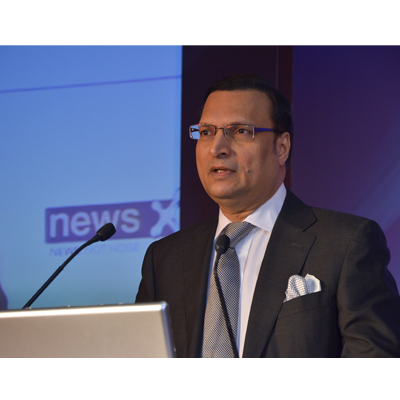
    NOIDA:  He is one of the most well known faces of the Indian media industry. Rajat Sharma, the host of popular talk show, Aap Ki Adalat, has added responsibilities on his shoulders. He is not only the chairman and editor in chief of India TV, but also represents the industry as the new president of the News Broadcasters Association as well as the vice president of strategic affairs of the Indian Broadcasting Foundation (IBF).

    Sharma, who was addressing the 7th Indian News Television Summit 2014 organised by indiantelevision.com as a keynote speaker highlighted the evolution of the news industry as well as listed the three biggest challenges that lie ahead.

    He began by saying that three years ago the news channel industry was very different from what it is today. “There has been a change in perception in the way news is seen,” Sharma said adding that news no longer is considered to be negative.

    Substantiating the evolution in terms of changing perception, Sharma gave the example of the 26/11 terror attack when reporters did 24X7 reportage and were blamed for aiding the terrorists and their handlers in Pakistan. “News channels also suffered commercial losses during the attacks as ad breaks were restricted,” he informed. According to Sharma, while news channels earlier were perceived as being a platform that telecasted frivolous events to garner eyeballs, things today have changed. “News is back,” he announced.

    He pointed out that the space has seen drastic changes.  “The society has evolved and the media has played a great role in it especially during events like the Lokpal Bill, the Delhi gang rape and the tirade against corruption,” he said.

     “Today even if Shah Rukh Khan or Salman Khan want to promote their films or emerging sports like Kabaddi wants to garner attention, news channels have a role to play in that as well,” he opined.

    Sharma while praising the social commitments of the news industry said that the space as a whole is not healthy. “The biggest problem for the industry is its revenue model,” he said while pointing out that though this year the balance sheets of the industry looks good due to elections, but, as a whole, the model is not sustainable.

    Listing the three main challenges for the genre, Sharma said that carriage fee was the biggest concern. “A few years ago, people expected news channels to be a loss making property since carriage fees were high and when broadcasters spoke to the multi system operators (MSOs) they said it was a problem of demand and supply. When digitisation kickstarted, we thought that consumers will get better quality channels and carriage fees will disappear. For the MSOs, it is the carriage fee from the news channels that helps them sustain, since they pay the GEC’s huge sums for getting their programming on their platform,” he said.

    He informed that the industry had 20-25 meetings with the previous TRAI chairman to discuss the issue of carriage fees.  While it was expected that digitisation would bring down carriage fees, something unexpected happened. Two days before the former TRAI chairman could retire he signed the ad cap. “When we were trying to improve the content and trying to solve one issue we were burdened with another one.”

    “Ad cap ensured we received 50 per cent less advertising. Death was certain now for the news channels,” he added.

    While the then Union Minister Ambika Soni said she will look into the matter, the broadcasters decided to fight the case in TDSAT. “News channels have managed to get a stay and therefore are surviving,” he said while giving the example of the newspaper industry, which has no such restriction. “We want the same for the broadcasting industry,” he opined.

    He also mentioned that the industry needs a better rating system and the TAM currency will be replaced by BARC India, which is an incorruptible agency.  “Therefore today the biggest challenge for the industry is the ad cap, the rating system and carriage fees,” he informed.

    In his closing remarks he said the whole industry including the IBF and the NBA should work together to resolve these issues. “The news industry as a whole cannot fight the MSOs as we are fighting amongst ourselves. While, we come together during a board room meeting, once we are out there will be one or two who would go against the same,” he lamented. 

  • “Carriage fees make the market place beyond reach in India”: Derek Chang

    “Carriage fees make the market place beyond reach in India”: Derek Chang

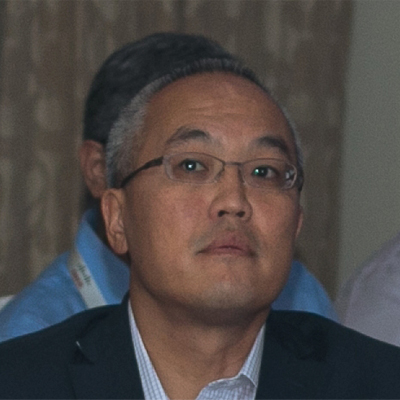
    Shy and reserved is what you could use to describe him. Open minded is another term. But Scripps Networks Interactive (SNI) managing director of APAC operations Derek Chang is far from shy about growing his network of lifestyle oriented content for TV and internet in the region.


    Chang has delved in all parts of the media industry with companies such as DirecTV, Charter Communications, The Yankees Entertainment and Sports Network, GlobalCenter and TCI Communications/AT&T Broadband.


    While SNI has successfully created niche content in the US, it has yet to enter India and Chang is well aware of the restrictions and regulations of the country. His network produces over 2000 hours of original lifestyle programming annual put out on channels Food Network, HGTV, Travel Channel, DIY Network, Cooking Channel and Great American Country.


    In a freewheeling chat with indiantelevision.com’s Sandhya Sutodia, on the sidelines of Indian Digital Operators’ Summit (IDOS) 2014, Chang spoke about the network’s future plans to grow itself in the country and the region.


    What is the spread of SNI in Asia Pacific?


    Scripps Networks owns and operates four channels across the Asia Pacific region including Asian Food Channel, Food Network, Travel Channel and HGTV, which will be launched at the end of the year. HGTV will debut on StarHub in Singapore as the first regional channel dedicated to the growing home and lifestyle category in Asia. Our preparations for the launch of the channel are very simple. Talks are on with distributors to launch it across the whole of Asia along with other operators. Scripps Networks launched HGTV in the US 20 years ago, and the network has grown markedly since then. It is now the number one upscale network for women. We have seen an increasing demand for high-quality lifestyle content all around the world and are excited to continue the HGTV brand’s global expansion, starting with the Asian region.  


    How do you market the channels in APAC?


    We work with distribution partners to help market our products. They help us market our product and run events in creating interests, on air promotion for our content. I am responsible for designing and executing growth strategies in the Asia Pacific region for Food Network and Travel Channel, both of which are available to viewers in selected Asian markets. My focus is on leveraging the Scripps brand across all distribution platforms in the region as well as managing regional programming and marketing strategies.


    Scripps Networks Interactive has ambitious goals to significantly broaden its presence in Asia, including wider distribution of our lifestyle brands and programming capabilities.


    How important is the APAC region for the company? What is your model of operation?


    We originated in US and that is the most significant market for us. Now we are investing globally and nationally. Right now the US contributes most of the revenue to the company. Asia Pacific is a wholly owned subsidiary of the US based company and contributes a small per cent to the overall international business. Asia Pacific is a small business. We have not set any targets from this market yet. However we see attractive growth opportunities.  In the UK, our channel UKTV is a 50:50 JV with BBC Worldwide. In Canada, we have a partnership with Shaw Media. In some places we work in partnerships and it is not always necessarily a subsidiary of the US-based company.


    Are you looking at any such partnerships in India?


    We are evaluating our strategy in Asia and in India too. It depends on how we see the potential market and the success model. The potential market has its own characteristics and challenges and we have faith in our brands and content.


    Content is what drives the media industry across the world but in India it is not yet content. Are you looking at increasing your advertising subscription?


    Yes, we try to increase our advertising subscription wherever we work. With growing demand for high quality home lifestyle entertainment in Asia, we keep looking for better revenues.


    How do you view the digitisation drive in India?


    It seems to me that India has been talking about digitisation from quite some time. And the industry is addressing all the challenges. Executives with lots of experience pointed out the challenges at the IDOS sessions. Slow work but yet progress is there.


    Carriage fees is a factor that is crippling Indian broadcasters? How would you deal with it?


    I have not experienced it yet so I would not be able to comment on it well. The hope is that it goes down and that would reduce one of the barriers for us. We have a unique situation here as it increases the investment of programmers and broadcasters and it is a challenge. It makes the market place beyond reach for many. We have to believe that it will come down.


    Given the diversity of languages in India, what would be your choice of language when you enter?


    The content would be in English and after exploring other markets and if we feel that the content would be attractive to that particular market, we might think of other languages. We have not made any decision about what we want to do in India. We want to see the demographics first.


    Tell us something about existing Asian Food and Travel Channels?

    As a leader in lifestyle programming, Scripps Networks Interactive owns the food category in Asia with iconic lifestyle brands such as Asian Food Channel and Food Network. People are drawn here because of the rich food culture, and AFC (Asian Food Channels) is a platform that celebrates all that the region has to offer. AFC has built a strong viewership across Asia and we will continue to fulfill our viewers’ demands with new and exciting original content and initiatives, which is in line with plans to expand our presence in the region.


    They will serve the company well as we invest in the channels, work to broaden their distribution on all platforms, and explore new business relationships throughout the region.


    Tell us more about the programmes on HGTV?

    HGTV will premiere with a robust line up of top-rated programs about property, hybrid construction, design and extreme spaces. Hit programs such as Property Brothers, Kitchen Cousins and The High Low Project, will entertain and inspire viewers with fresh ideas and authentic stories on how to find and love their own dream home. As a continued commitment to cater to local audiences, Scripps Networks will also produce localised original short-form content exclusively for the launch of HGTV in Asia, based on the popular series, Extreme Homes.