Tag: Carnival

  • Kia India promotes digital chief to top marketing role

    Kia India promotes digital chief to top marketing role

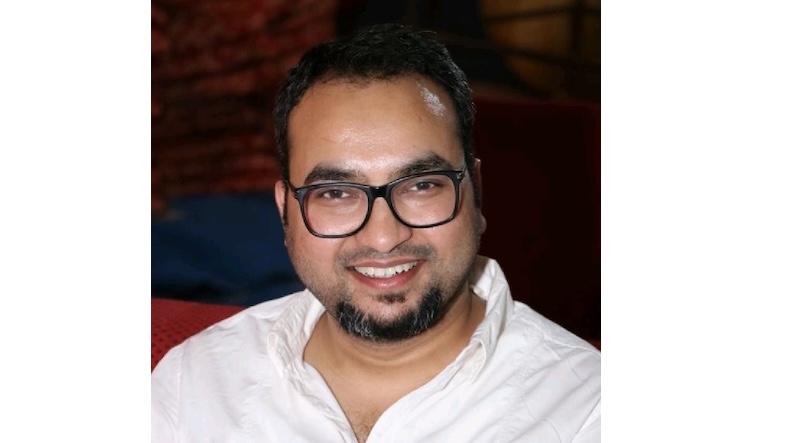
    Mumbai: Vijay Kumar has climbed to the top of Kia India’s marketing ladder, taking on the role of general manager and head of marketing and public relations in September after spending seven years transforming the Korean carmaker from an unknown entity into one of India’s most recognised automotive brands.

    When Kumar joined in June 2018, Kia was a blank slate in India. His mandate was straightforward: make the brand register. Mission accomplished. Through launches of the Seltos, Sonet, Carnival, Carens, Syros, and electric models EV6 and EV9, Kia has muscled its way into India’s cutthroat car market, earning consumer trust and—Kumar’s preferred metric—love.

    Kumar’s ascent from digital marketing responsibilities to the corner office puts him in charge of brand strategy, above-the-line and below-the-line campaigns, digital operations, public relations, media planning and buying, and consumer insights. His earlier digital work earned Kia global recognition, including best digital marketing campaign honours from headquarters in 2019 for the Seltos launch, beating out 70 subsidiaries worldwide. 

    Under his watch, Kia cracked India’s top three digital automotive brands by online engagement.

    Now overseeing media strategy across Kia’s internal combustion engine and electric vehicle portfolios, Kumar reports to Shakti Upadhyay, whom he credits as mentor and guide. His stated ambition: cement Kia as India’s most loved automotive brand and a thought leader, built on creativity and emotional connections with buyers.

    Before Kia, Kumar spent over two years at Cheil Worldwide handling Samsung’s flagship mobile and television products, and nearly three years at Interactive Avenues managing digital media for brands including Reckitt and ITC. At Kia, he’s overseen performance marketing across 450-plus dealer outlets and racked up 22 marketing awards between 2019 and 2025.

    Seven years in, Kumar reckons the hard part—building recognition—is done. What comes next is keeping India’s fickle car buyers smitten. In a market where loyalty is fleeting and competition ferocious, that might prove the tougher assignment.

  • Prepare to Samba at the 2019 Rio Carnival in Brazil with COLORS INFINITY Odyssey

    Prepare to Samba at the 2019 Rio Carnival in Brazil with COLORS INFINITY Odyssey

    MUMBAI: Stepping into 2019 with a promise to excite, engage and entertain, COLORS INFINITY announced the second edition of CI Odyssey, one of the India’s biggest travel contest. Giving consumers the opportunity to win a paid trip to the Rio Carnival in Brazil, the channel has now opened its window for aspiring gallivants to book a seat in this life-changing wanderlust–adventure.

    Last year’s campaign garnered immense success, where the winner – Purab Saxena won a chance to fulfill his dream of visiting Ushuaia, often considered as the ‘end of the world, beginning of everything’ in Tierra Del Fuego, Argentina.

    Thrilled at the announcement of CI Odyssey 2019, Sabrina D’Souza – Head of Marketing, English Entertainment, Viacom18, said, “Establishing its position as the go-to channel for the latest and best in English Entertainment, COLORS INFINITY has further embedded itself as a clutter-breaking brand to not only consumers but to the industry as well. Creating a rapport with our audience, we offer multiple avenues throughout the year for engagement and entertainment, that goes beyond conventional marketing. Yet again through CI Odyssey, COLORS INFINITY will fulfill the innate travel desires of one lucky winner, who will experience the vibrant Rio Carnival and explore the breathtaking sights of Brazil.”

    So, if you yearn for sun-soaked beaches, inimitable scenic locales of a city and the pulse of a bustling festival, follow these simple steps to participate;

    Step – 1: Log on to any of our official social media handles;

    Facebook: https://www.facebook.com/ColorsInfinity/

    Twitter: https://twitter.com/colors_infinity

    Instagram: https://www.instagram.com/colorsinfinitytv/

    Step – 2: Answer as many questions as possible in the next four weeks with a new question everyday

    Step – 3: Don’t forget to put the contest hashtag #ToRioWithInfinity

    Step – 4: Pack your bags and prepare for RIO

  • Cinema advertising begins to take centre stage

    Cinema advertising begins to take centre stage

    MUMBAI: No movie today is played in the cinema without some ads being slotted before it starts and in the interval. This means more brands get a chance to showcase their products and services as advertisers see movie theatres as a great venue because they have an immediate captive audience that is ready to view their message.

    Today, more brands are using in-cinema advertising in order to reach their targeted audience, which is usually undistracted by their smartphones and social media in the theatre.

    Around six years ago, China had approximately 9000 cinema screens but today they have 40,000 screens. Similarly, in India, major cinema chains like INOX, Miraj, PVR, Carnival, Cinepolis are growing their presence rapidly and are looking at setting up at least 1000 cinema screens in the fiscal year 2018-19. Today, high-end luxurious residential properties have also started putting up their own cinema theatre as a part of their complex offering.

    According to the latest report by GroupM’s cinema advertising arm Interactive TV, there is a clear upward trend of urban Indians who prefer to watch a movie in theatres. The study found out that 57 per cent of the audience prefers to watch a movie in the theatre at least once in six months. The report also highlights the fact that 71 per cent of these audiences are between the age group of 15 to 24. This means gala time for most brands.

    public://cover_3.jpg

    An increase in footfall resulted in a 20 per cent growth in cinema advertising in 2017 and the GroupM report suggests that 50 per cent of the movie goers were willing to consume advertisements before the start of the movie and during the interval. Furthermore, consumers usually tend to reach the movie hall 15 minutes prior to the showtime and that allows brands enough time with branding opportunities. Carnival Cinemas CMO Dina Mukherjee says, “Earlier the interval time was 10 mins which was a short popcorn break but now it is at an average of 30-35 (before the movie + interval time). Although it is an irritating factor for the viewer, the number of advertisers have increased and most of them have a 30 second spot.”

    FMCG, consumer durables, financial sector have been the major investors for longest time in cinema advertising. Advertisements of Life Insurance, Mutual funds, Chirag Din shirts, Forest Essentials and the much remembered Vicco products have been around for the longest time. But today, newer brands are willing to come on board for screen advertising. We now also see ads by Amazon Prime and Swiggy in the theatres which are fairly new category entrants in India. But a majority of brands are still reluctant to invest in the medium. Dina Mukherjee believes that brands need to be made aware of cinema advertising’s merit and what it brings to the table, primarily for newer industries that are coming up. “Cinema advertising is not an expensive medium as opposed to print on television. It falls within the category of radio and OOH.”

    Since the medium does not have an official measurement system, Carnival Cinemas has launched its own measurement tool in order to help the advertisers get the optimum result on their investment where they can choose to pay per seat, a concept similar to CPC (cost per client) that is watching the ad. In this case, the advertiser doesn’t have to worry whether the movie was a hit or a flop.

    The medium, which currently has only 1-2 per cent of total ad spends by brands, is projected to grow at 20-25 per cent in the next five years. Currently, riding at a Rs 600 crore market, in-cinema advertising is slated to grow at a double digit growth in the next few years. Today cinema advertising has various touch points that include screen advertising, kiosk, promoter activity, food and beverage counter, restrooms, exit walls and seat branding. Going forward, innovation and experiential marketing will be key drivers to enhance in-cinema advertising experience.

    On the flip side, the cost to advertise at a movie theatre is high, especially for a small business. Since small advertisers don’t have the budget to run a full fledged ad, they have to run a slide or kiosk in the cinema. Another major drawback of the medium is that alert people may arrive late to skip the initial ad playing round.

    public://cinema.jpg

    With blockbuster movies like Baahubali, Padmavat, Udta Punjab, Airlift among others that have crossed the Rs 100 crore mark, audience footfall for such movies enables brands to bet big on cinema advertising.

    ALSO READ:

    Martin Sorrell on how WPP is combating ad world slowdown

    2018 will be a year of video campaigns: WATConsult’s Rajiv Dhingra

    Godrej aims to make its Locks synonymous with safety

    Is India ready for the impact of AI on marketing?
     

  • Reliance Mediaworks completes sale of multiplex biz to Carnival

    Reliance Mediaworks completes sale of multiplex biz to Carnival

    MUMBAI: Reliance MediaWorks (RMW), a part of Reliance Group, has completed the transaction for sale of its multiplexes business to Carnival Cinemas Ltd.


    Reliance MediaWorks’ multiplex chain Big Cinemas had approximately 250 screens across the country.


    The entire proceeds for the sale of multiplex business have been duly received by RMW from Carnival Cinemas, and will be used to reduce Reliance Capital’s leverage by approximately Rs 700 crore, through a combination of transfer of debt of RMW and infusion of cash proceeds. 


    Reliance Capital executive director Sam Ghosh said, “We are happy to announce closing of this transaction with Carnival Group, which will reduce our overall leverage by approx. Rs 700 crore. This will lower our debt equity ratio to a conservative 1.75:1, amongst the lowest in the financial services sector in India.”


    “The transaction is in furtherance of Reliance Capital’s stated objective of focusing purely on its core financial services businesses, significantly reducing exposure to non-core investments in the media and entertainment sector, and reducing overall debt,” he added.


    RMW had sold its multiplex business to Carnival Cinemas in December last year, and the transaction has now been closed upon receipt of all approvals. The deal excludes real estate owned by RMW at Imax Wadala and other properties, which are intended to be separately monetized for an approximate value of Rs 200 crore.