Tag: Carlsberg.

  • Stefi Dsouza hops over to United Breweries as media lead

    Stefi Dsouza hops over to United Breweries as media lead

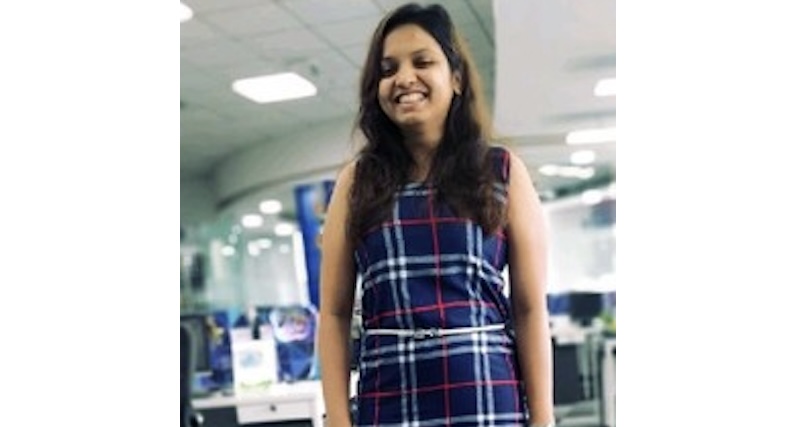
    MUMBAI: Stefi Dsouza has traded one beer giant for another, leaving AB InBev to become media lead at United Breweries Ltd, the Indian arm of Dutch brewing behemoth Heineken. The move caps a career that has seen the media planning specialist work her way through some of advertising’s most prestigious agencies before landing client-side roles at major corporates.

    Dsouza’s appointment comes after two years as senior media manager at AB InBev, where she helped the world’s largest brewer navigate India’s increasingly competitive beer market. Her move  to United Breweries—Heineken’s local operation—represents a significant coup for the Dutch company as it battles for market share against rivals including AB InBev and Carlsberg.

    The media planning veteran brings 12 years of experience spanning both agency and corporate roles. Her CV reads like a who’s who of Indian advertising, with stints at Mindshare, OMD India, MediaCom and MediaVest before making the leap to the client side in 2020.

    At Volkswagen India, where she served as media manager and later senior media manager, Dsouza helped the German carmaker navigate the choppy waters of India’s automotive market. She then moved to Tata Passenger Electric Mobility Ltd for a year-long stint before joining AB InBev in 2023.

    Her agency background includes a director-level role at Mindshare and a group head position at OMD India, suggesting she knows how to handle large-scale media campaigns. The Cannes Young Lions India shortlist recipient and Social Samosa award winner has built a reputation as what she calls an “Excel nerd”—no small compliment in the data-driven world of modern media planning.

    The appointment signals United Breweries’ commitment to strengthening its media capabilities as competition intensifies in India’s beer market. The company, which owns brands including Kingfisher, has been battling for market leadership against AB InBev’s portfolio of premium international brands.

    Dsouza’s move also highlights the increasing importance of media planning expertise in India’s consumer goods sector. With digital advertising spend continuing to surge and traditional media becoming more fragmented, companies are placing greater emphasis on hiring specialists who can navigate the complex media landscape.

    Her tagline—”bringing brands live on media, one campaign at a time”—suggests United Breweries can expect an integrated approach that combines traditional and digital channels. Given her track record across automotive, electric mobility and brewing sectors, Dsouza appears well-equipped to handle the diverse challenges of marketing alcoholic beverages in India’s highly regulated environment.

    The hiring represents a small but significant shift in the ongoing talent war between India’s major consumer brands, as companies increasingly poach senior executives from direct competitors rather than relying solely on agency talent pipelines

  • Carlsberg Smooth launched with Saif Ali Khan to target urban consumers

    Carlsberg Smooth launched with Saif Ali Khan to target urban consumers

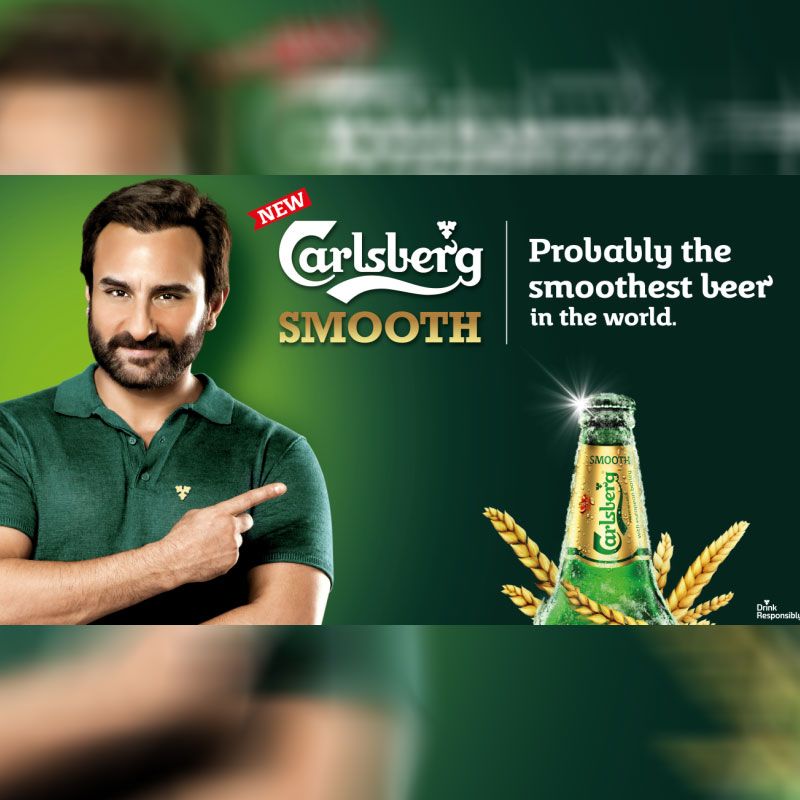
    MUMBAI: Carlsberg India has launched Carlsberg Smooth, a premium mild beer made with the finest European Barley for a rich and smooth taste. Brewed specially for the Indian palate with a refreshing and elegant taste, Carlsberg Smooth offers a unique product and a new experience to the consumers.

    The brand has also associated with Bollywood actor Saif Ali Khan for the launch.

    Carlsberg India vice president of marketing Mahesh Kanchan says, “With Carlsberg Smooth, the restaged premium mild beer, we aim to further strengthen our commitment to the Indian market and expand our portfolio. Carlsberg Smooth will be available across key markets in India and we hope to continue our tradition of providing ‘the best’ to the Indian consumers. We are confident that the refreshing brew will be hugely appreciated by all.”

    Commenting on his association with Carlsberg India, Saif Ali Khan adds, “It is always exciting to be associated with brands that not only offer a great product but also believe in creating an unforgettable experience for its consumers. I’m very happy to be associated with Carlsberg India and I wish Carlsberg Smooth great success.”

    Carlsberg Smooth will be available across key markets in India and we hope to continue our tradition of providing ‘the best’ to the Indian consumers. We are confident that the refreshing brew will be hugely appreciated by all.” 

    Carlsberg Smooth has been launched across the states of Maharashtra, Goa, Andhra Pradesh, West Bengal, Rajasthan and Haryana. It will soon be launched in Karnataka, Telangana and Uttar Pradesh. Carlsberg Smooth will be available in 330ml, 650ml bottles and 500ml cans, however the SKU availability will differ from state to state.

    Carlsberg India Private Limited (CIPL) commenced its operations in 2007 with the first production in Paonta Sahib, Himachal Pradesh. The product portfolio of the company includes its brands – Carlsberg Smooth, Carlsberg Elephant, Tuborg Green, Tuborg Strong and Tuborg Classic.

  • Grey strengthens A-Pac team with triple hire

    Grey strengthens A-Pac team with triple hire

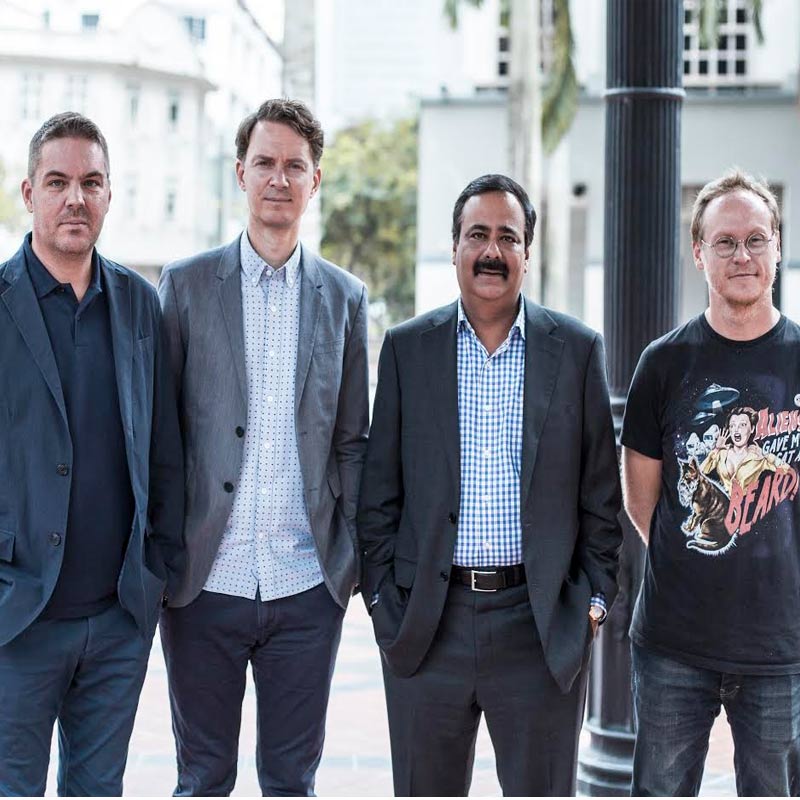
    MUMBAI: Grey Group has unveiled a set of triple hires in a move to bolster its leadership core in Asia, with a special focus on Grey Group Singapore. The trio will play an instrumental role in deepening Grey Group Singapore’s creative offerings and creative processes, as well as drive the ongoing digital transformation of the company, across the region. The senior appointments demonstrate Grey’s commitment to design a path for repositioning and expanding its services, in order to focus on growth as well as meet clients’ needs through famously effective work.

    Måns Tesch comes on board in the newly created role of Chief Strategy Officer for Grey Group Asia Pacific in order to lead the strategy teams and set the strategic direction across the region and to oversee Grey’s continued immersion into the areas of innovation, mobile and social.

    A well-respected and accomplished strategic and digital veteran he joins Grey from Crispin Porter + Bogusky where he was Chief Strategy Officer for Scandinavia. He led strategy and planning in Stockholm, Gothenburg and Copenhagen, working across the entire client spectrum including; Arla, Carlsberg, Ikea, Infiniti, Scania and Sony.

    Earlier in his career, in 1996, he co-founded Tesch & Tesch, a pioneering creative hotshop in Stockholm which quickly established itself as one of the top digital creative agencies in Northern Europe. In 2002 they were acquired by Lowe Worldwide and became known as Lowe Tesch before merging with leading Scandinavian agency Lowe Brindfors, in 2007. Thereafter, Måns was named Global Digital Strategy Director at Lowe Worldwide and based out of London, he developed the digital efforts of the Lowe network around the world whilst working with their global clients, Nestlé, Stella Artois, Unilever and Nokia, amongst others.

    In 2008, Måns took on the role of Digital Strategy Director at Fallon in London before re-launching Tesch in 2010 as a strategic and creative consultancy, advising brands such as Cadbury, LVMH, Samsung, Spotify & Unilever, on how to become more relevant through innovation.

    Måns joined Razorfish as Executive Strategy Director in March 2013 where he worked with names such as Argos, BlackBerry, DHL, and McDonalds and won new clients including; Beats by Dre, JP Morgan, Novartis and Spotify. This was followed by a stint at Wieden + Kennedy in London working on Samsung’s Olympic Sponsorship and the launch of Angry Birds 2.

    Måns is one of the world’s most awarded strategists and has been recognized as a ‘Digital Pioneer’ by the FWA (world’s leading community for digital creativity). He has participated on numerous jury panels including Campaign Big Awards, Creative Circle, and D&AD and is a sought-after speaker having chaired Creative Review’s annual “Click”-conference, and spoken at seminars such as The Guardian’s Changing Media Summit, Ad Tech London, and held lectures at Hyper Island.

    Marthinus Strydom has been appointed to the role of Global Creative Leader, Team GSK, Grey Group Singapore. He will work closely with Ali Shabaz (Chief Creative Officer, Grey Group, South East Asia) to set the overall creative direction for Grey’s GSK operations. In line with the agency’s reputation for creative excellence, he will be responsible for fostering an even-deeper culture of creativity and accelerate Team GSK’s digital transformation. Over the span of his much-lauded career, Marthinus’ work has been recognized at the D&AD, Webby, Cannes, One Show, Effies, and has been featured on the Gunn Report and other prominent industry publications.

    Originally from South Africa, Marthinus has called Singapore home for the past 12 years. Prior to Grey, he did a six-year stint as a Creative Director of BBH Asia Pacific (Singapore), where he led several memorable projects for the likes of Google, IKEA, UOB Bank, Chupa Chups, and Vaseline. In an earlier role as Digital Associate Creative Director at BBDO (New York), Marthinus was credited for the development of groundbreaking integrated work for A-list clients including AT&T and GE.

    The appointments of Måns and Marthinus follow that of key senior hire, Neil Cotton, who has joined in the dual role of Global Strategy Director for GSK and Chief Strategy Officer (CSO) for Grey Group Singapore. His career has seen him collaborate with many exciting brands such as Coca Cola, Johnson & Johnson, Heineken, Audi, IBM, and Nokia, amongst others.

    Prior to Grey, Neil was the founder of Liberty Networks, a brand and innovation consultancy with Unilever, Infiniti, OCBC, and Channel News Asia amongst its clientele. An industry veteran of 27 years, he has previously held a number of senior leadership roles including; Senior Partner & Worldwide Group Planning Director (1992-2002) at Ogilvy & Mather, New York, where he worked on IBM’s fast growing software business as well as assisting the client with several big acquisitions and partnerships. Neil then went on to become the Regional Head of Planning (2002-2005) at Bates, Hong Kong (HK), and was instrumental in building the planning function and re-positioning the Bates network before it was acquired by WPP. In 2005, he joined Lowe Worldwide, HK, as the Regional Chief Strategy Officer (2005-2007) and was widely credited with bringing in the planning discipline to their Asia operations. Neil was also the founder of GMT+8 Consulting, HK/Shanghai (2007-2009), where he worked with agencies and clients to find solutions to big strategic communications problems. From 2009-2011, he took on the role of Regional Chief Strategy Officer at Young & Rubicam, Singapore, and was attributed as a key contributor in developing their planning resources.

    A true globetrotter and citizen of the world, he has lived across several geographies including Singapore, Hong Kong, New York, and London.

    The group’s Asia Pacific, Middle East, & Africa chairman & CEO Nirvik Singh said: “In order to enhance Grey’s core leadership team, we continue to hire world-class talent in Neil Cotton and Marthinus Strydom. They have deep knowledge and proven track records in their specific areas of expertise and their roles are directed towards delivering our very best for our clients.”

    On having Måns Tesch on board, he commented: “In today’s dynamic environment, strategy, data and technology all play a crucial role and Måns is one of the world’s most experienced in this field. We want to take Grey to the next level and there is no better person to help us achieve this goal.”

  • Grey strengthens A-Pac team with triple hire

    Grey strengthens A-Pac team with triple hire

    MUMBAI: Grey Group has unveiled a set of triple hires in a move to bolster its leadership core in Asia, with a special focus on Grey Group Singapore. The trio will play an instrumental role in deepening Grey Group Singapore’s creative offerings and creative processes, as well as drive the ongoing digital transformation of the company, across the region. The senior appointments demonstrate Grey’s commitment to design a path for repositioning and expanding its services, in order to focus on growth as well as meet clients’ needs through famously effective work.

    Måns Tesch comes on board in the newly created role of Chief Strategy Officer for Grey Group Asia Pacific in order to lead the strategy teams and set the strategic direction across the region and to oversee Grey’s continued immersion into the areas of innovation, mobile and social.

    A well-respected and accomplished strategic and digital veteran he joins Grey from Crispin Porter + Bogusky where he was Chief Strategy Officer for Scandinavia. He led strategy and planning in Stockholm, Gothenburg and Copenhagen, working across the entire client spectrum including; Arla, Carlsberg, Ikea, Infiniti, Scania and Sony.

    Earlier in his career, in 1996, he co-founded Tesch & Tesch, a pioneering creative hotshop in Stockholm which quickly established itself as one of the top digital creative agencies in Northern Europe. In 2002 they were acquired by Lowe Worldwide and became known as Lowe Tesch before merging with leading Scandinavian agency Lowe Brindfors, in 2007. Thereafter, Måns was named Global Digital Strategy Director at Lowe Worldwide and based out of London, he developed the digital efforts of the Lowe network around the world whilst working with their global clients, Nestlé, Stella Artois, Unilever and Nokia, amongst others.

    In 2008, Måns took on the role of Digital Strategy Director at Fallon in London before re-launching Tesch in 2010 as a strategic and creative consultancy, advising brands such as Cadbury, LVMH, Samsung, Spotify & Unilever, on how to become more relevant through innovation.

    Måns joined Razorfish as Executive Strategy Director in March 2013 where he worked with names such as Argos, BlackBerry, DHL, and McDonalds and won new clients including; Beats by Dre, JP Morgan, Novartis and Spotify. This was followed by a stint at Wieden + Kennedy in London working on Samsung’s Olympic Sponsorship and the launch of Angry Birds 2.

    Måns is one of the world’s most awarded strategists and has been recognized as a ‘Digital Pioneer’ by the FWA (world’s leading community for digital creativity). He has participated on numerous jury panels including Campaign Big Awards, Creative Circle, and D&AD and is a sought-after speaker having chaired Creative Review’s annual “Click”-conference, and spoken at seminars such as The Guardian’s Changing Media Summit, Ad Tech London, and held lectures at Hyper Island.

    Marthinus Strydom has been appointed to the role of Global Creative Leader, Team GSK, Grey Group Singapore. He will work closely with Ali Shabaz (Chief Creative Officer, Grey Group, South East Asia) to set the overall creative direction for Grey’s GSK operations. In line with the agency’s reputation for creative excellence, he will be responsible for fostering an even-deeper culture of creativity and accelerate Team GSK’s digital transformation. Over the span of his much-lauded career, Marthinus’ work has been recognized at the D&AD, Webby, Cannes, One Show, Effies, and has been featured on the Gunn Report and other prominent industry publications.

    Originally from South Africa, Marthinus has called Singapore home for the past 12 years. Prior to Grey, he did a six-year stint as a Creative Director of BBH Asia Pacific (Singapore), where he led several memorable projects for the likes of Google, IKEA, UOB Bank, Chupa Chups, and Vaseline. In an earlier role as Digital Associate Creative Director at BBDO (New York), Marthinus was credited for the development of groundbreaking integrated work for A-list clients including AT&T and GE.

    The appointments of Måns and Marthinus follow that of key senior hire, Neil Cotton, who has joined in the dual role of Global Strategy Director for GSK and Chief Strategy Officer (CSO) for Grey Group Singapore. His career has seen him collaborate with many exciting brands such as Coca Cola, Johnson & Johnson, Heineken, Audi, IBM, and Nokia, amongst others.

    Prior to Grey, Neil was the founder of Liberty Networks, a brand and innovation consultancy with Unilever, Infiniti, OCBC, and Channel News Asia amongst its clientele. An industry veteran of 27 years, he has previously held a number of senior leadership roles including; Senior Partner & Worldwide Group Planning Director (1992-2002) at Ogilvy & Mather, New York, where he worked on IBM’s fast growing software business as well as assisting the client with several big acquisitions and partnerships. Neil then went on to become the Regional Head of Planning (2002-2005) at Bates, Hong Kong (HK), and was instrumental in building the planning function and re-positioning the Bates network before it was acquired by WPP. In 2005, he joined Lowe Worldwide, HK, as the Regional Chief Strategy Officer (2005-2007) and was widely credited with bringing in the planning discipline to their Asia operations. Neil was also the founder of GMT+8 Consulting, HK/Shanghai (2007-2009), where he worked with agencies and clients to find solutions to big strategic communications problems. From 2009-2011, he took on the role of Regional Chief Strategy Officer at Young & Rubicam, Singapore, and was attributed as a key contributor in developing their planning resources.

    A true globetrotter and citizen of the world, he has lived across several geographies including Singapore, Hong Kong, New York, and London.

    The group’s Asia Pacific, Middle East, & Africa chairman & CEO Nirvik Singh said: “In order to enhance Grey’s core leadership team, we continue to hire world-class talent in Neil Cotton and Marthinus Strydom. They have deep knowledge and proven track records in their specific areas of expertise and their roles are directed towards delivering our very best for our clients.”

    On having Måns Tesch on board, he commented: “In today’s dynamic environment, strategy, data and technology all play a crucial role and Måns is one of the world’s most experienced in this field. We want to take Grey to the next level and there is no better person to help us achieve this goal.”

  • Dentsu Creative Impact strengthens team with several senior level  hires

    Dentsu Creative Impact strengthens team with several senior level hires

    MUMBAI: Dentsu Creative Impact, creative division of Dentsu Aegis Network, has made a host of new talent acquisitions.

    The beefing up of the team has happened across functions, ranging from strategic planning to account management and creative. The appointments come in the wake of the recent client wins such as Maruti Suzuki, Carlsberg and a set of soon-to-be announced brands.

    In the creative function, the agency has roped in Sundar Iyer as copy ECD. Iyer will form the creative leadership team along with ECD Sumitra Sengupta and Art ECD Deepak Singh, whose appointment was announced a few months back. Both Iyer and Sengupta join in after their recent stints at JWT.

    On his new role and expectations, Iyer said, “Great work can only come from collaboration, which seems to be inherent to the way this agency functions. It’s a place that doesn’t have to unlearn to be ready.”

    Sengupta added, “Two months, and Dentsu Creative Impact has already broken my preconceived notions about it. It’s a great place to work at this time. The client is open to innovations, actually demanding it and I’m working at the best place that can provide it.”

    On the account management side, Dentsu Creative Impact has roped in Arvinderjit Singh as vice president, who along with vice president Hindol Purkayastha, will bolster the function and bring in greater depth and strength.

    Speaking about his new role, Singh said, “The sands of engagement as a creative partner have shifted and our industry is going through tremendous change. Working with an agency like Dentsu Creative Impact that not only recognises change but embraces it, is very exciting.”

    Purkayastha added, “It’s rare we get a chance to build and create internal ecosystems to mirror our client needs. This is exactly what we are doing around our clients. I am also excited on utilising Dentsu’s strengths in digital and new media to create advertising that actually touches people’s lives.”

    In strategic planning, Shveta Singh has been appointed as vice president. She will work with strategic planning senior vice president Kartikeya Srivastava. Shveta said, “For me, crossing over the digital divide was the next logical step because the future will have no such divide. A new approach to strategic planning is the need of the day. And, Dentsu came across as the right place with the right vision and a set of people who are already breaking the mould of traditional agency planning.”

    Talking about the new team additions, Dentsu Creative Impact Group CEO Narayan Devanathan said, “Great work happens when people commit to constantly raising the bar. At Dentsu Creative Impact, we’re doing that by first raising the bar on the talent we’re bringing together, across functions. Across Creative, Account Management, Planning, we have a first-rate second rung in place at Dentsu Creative Impact to sustain the momentum that we have going now.”

    Echoing a similar sentiment Dentsu Creative Impact branch head senior vice president Amit Wadhwa said, “It’s been great going for Dentsu Creative Impact especially in the last year or so, and one way we can really continue this upward journey is when we have the right people around. And when we were looking to expand our team this was precisely the thought in our head. We are excited about the fresh thinking and energy that all these guys bring and I am looking forward to working with all of them.”

  • The Glitch expands; enters Delhi market

    The Glitch expands; enters Delhi market

    MUMBAI: Mumbai-based digital marketing agency, The Glitch, is geared up for its first geographical expansion with entry into the capital city. Founded in 2009 by Varun Duggirala and Rohit Raj, the agency announced the start of operations in New Delhi, where they have already begun servicing clients such as Horlicks and Carlsberg.


    The Glitch-Delhi will be spearheaded by Kabir Kochhar, who comes with significant international expertise in digital media from his stint at Carat in New York as well as vast entrepreneurial exposure having recently run and exited food startup Megamenu.in. The Delhi setup will begin with a team of 10 strategists and digital junkies, who will work in sync with the Mumbai team on national clients, while simultaneously fronting their independent work. The management is looking to expand the team gradually, aiming to ramp up to 50 by the end of the financial year as a part of their Delhi growth plan.


    Duggirala said, “Plans to open a Delhi unit have been in the offing for a while, as we saw a genuine need for our services in the region and have had many brands express interest in bringing us aboard if we did decide to set up in Delhi. But the idea was to build a solid independent unit and not a branch unit, which definitely demanded the need for it to have a clear driving force in its operations, and Kabir has truly filled that spot for us.”


    Kochhar said, “The Glitch is incredibly strong as a content creation and dissemination company that uses video, tech and creativity to deliver spot on strategic solutions for clients. I am very excited to join such a talented bunch. We have a novel approach to employee engagement, retention and motivation that allows us to bring in passionate and top quality digital talent in the market and we are hiring aggressively across all divisions.”


    “Our clients are our partners and we consider ourselves to be able advisors. We have been quick to spot emerging trends and deliver creative clutter-breaking solutions for our partners in Mumbai and we plan on taking that to the next level in Delhi-NCR. These are indeed, ‘achhe din’ for us all.” he added.

  • MPG loses Rajagopal, gets Kari on board

    NEW DELHI: Media Planning Group‘s (MPG) outdoor arm, MPG Active has appointed Krishnamurthy Kari as its chief operating officer. Kari was earlier with Aircel as the head of Out-of-Home and activations.

    He has nearly 15 years of experience in the field. At MPG Active Kari will be responsible for acquiring the network business for MPG Active and enhancing the existing roster of MPG network accounts and deliver an integrated solution to the clients‘ needs.

    MPG Active has full service offices in Delhi, Mumbai, Bangalore, Kolkata, Punjab and Hyderabad, with a staff strength of more than 24 professionals. Some of its key clients are Capgemini, Hyundai, Skoda Motors, VLCC, Jabong.com, National Geographic, VIACOM 18, News 24, Cleartrip.com, fashinara.com, Quicker.com, BNP Paribas, Carlsberg, Smile Group, DBS, Fire Luxorand Puri Constructions.

    At MPG, its VP – investments (West) Gautam Rajagopal has quit. MPG CEO Mohit Joshi confirmed both the people movements to indiantelevision.com.

    Rajagopal had joined MPG in May 2011. Before this, he was with Beehive Communications as vice-president, media services for nearly four years.

    Rajagopal has more than 17 years of experience. He has worked with Contract Advertising, Madison, Mediavision and Carat Media Services. In 2003, Rajagopal joined Starcom MediaVest Group as group head, broadcast investment. After two years, he moved to Mudra (Optimum Media Solutions), where he worked for the next two years, before joining Beehive Communications.

    He has worked across various categories of brands such as HDFC Bank, Asian Paints, Parle, Bisleri, P&G, Heinz, Skoda, Bajaj and Cadbury.

  • ‘India’s diversity makes distribution a big challenge’ : Brandscapes CMD Pranesh Misra

    ‘India’s diversity makes distribution a big challenge’ : Brandscapes CMD Pranesh Misra

    In a rapidly changing business environment where brands need to be constantly rejuvenated, it is not only important to analyse but also interpret data from a marketing agenda perspective.


    The most significant change that has happened in India is the growth of the services over the consumer products sector. Mobile is also emerging as a strong personal medium, which marketers and advertisers have not fully exploited yet.


    In an interview with Indiantelevision.com’s Ashwin Pinto, Brandscapes Worldwide chairman & managing director Pranesh Misra talks about how there is need for a marketing data centric company to build profitable growth strategies.


    Excerpts:

    When you started Brandscapes Worldwide in 2008, what was the aim?
    The vision was to be a marketing data centric company. Our difference would be to not only analyse but also interpret data from a marketing agenda perspective.

    What progress has been made so far?
    We have got success with global clients. We work with clients across different markets like Carlsberg, Citibank and Coca-Cola. They employ us in different geographies across the world. We work with their issues in over 40 markets and we do projects there. In India, we get clients who are not only interested in the analytics part of it but also want us to advise in the marketing and brand strategy.

    How are you addressing this need?
    We have announced five different practices that we will focus our attention on. These are market research, data mining, marketing science, involving advanced statistics modelling to project the future. The fourth practice is dashboards which is putting all the information together in an easy-to-digest manner. The fifth strategy is the strategy planning dimension.

    What are the challenges that you face?
    The primary challenge is that when you start with data analytics, there is not enough good quality data available. In international markets it is easily available as people have invested a lot of money behind it. We have worked with clients in the SME sector here who have not done any research. This is where we felt that doing customised research for these clients would be useful. We set up our own discipline in the area of research.


    The second challenge is finding the right caliber of people. This is a people driven business. It is about understand marketing and how data can be applied to it. I have been able to put together a solid team of 10 leadership team members. Each member has 20-30 years of experience in fields like research, marketing, media strategy, sales and distribution. It is this eclectic mix of talent that I have gotten together. These are the leaders who recruit the next generation of talent and create an organisation.

    What is the advantage you offer to clients vis-a-vis competitive services?
    We are trying to create a new area. I don’t think that marketing consulting is being offered the way that we offer it. Many companies offer brand consulting which is more into the brand strategy area. Then there are large companies like McKinsey and PriceWaterHouse Coopers who are management consultants and who also do marketing consulting. Our focus is on marketing and we have people with experience in this domain. We have holistic knowledge of all areas and so play in market research, data mining.


    We are trying to carve out a niche for ourselves between the bigger consulting houses and narrow focussed marketing consulting players. We give holistic solutions around marketing problems. We are not general consultants nor are we very specific. We are not just analytics focussed or market research focussed.

    “The biggest mistake that has riddled many big companies is that their
    thinking moves slower than the consumers”

    Could you give me some examples where clients have benefited?
    As a consultant I cannot give specific examples; I can give broad ideas. There was a global FMCG client looking at a particular category. They wanted to do 20/20 planning on this category. This involved looking at 60 countries, collecting data of different natures like demographics, category penetration, competitive strength and weakness data and category development index data. Then we created a model around which data could be simplified and synthesised. On this basis we created clusters of countries. Then we did deep dive analysis in these clusters to see a common link. This was a macro level solution.


    On a micro level there was an FMCG whose brand was not doing well. We got access to retail data. We had to find an insight to take the brand further. One big pack size was not doing well while the others were growing. This size accounted for 25 -30 per cent of sales and was declining. This was the first clue and we dug deeper. Competition was coming with a slightly smaller pack size at a much cheaper price while this company had pushed the price up. We did price sensitivity testing which led to the right price point being found.


    A Marketing Dashboard was developed for a shopping mall. This helps it keep track of Key Performance Indicators relating to its tenants – and take strategic and tactical action on an ongoing basis. Strategy Maps were used to guide a global NGO on how to change its branding approach for better success in some countries.

    How have you grown over the past couple of years?
    We started with 15 people. Now we have around 85 people. We have grown at an average of 45 per cent in terms of revenues. The client roster has grown from three cornerstone clients to around 12.

    Which sector is the most challenging to deal with?
    No sector is particularly more challenging than another. It comes down to your domain knowledge. Since we have domain knowledge on consumer goods and services, banking and financial, retail and in healthcare, we are focusing in these segments. We have knowledge there. If you tell us to look at an industrial sector, it would be a challenge,. We don’t understand the topography of that sector.

    What mistakes do companies make when they go about their marketing?
    The biggest mistake I would say that has riddled many big companies is that their thinking moves slower than the consumers. Consumers move ahead very fast in terms of their attitudes. Companies sometimes focus on the unchanging consumer and lose ground. You fail to move with the consumer in this scenario. Information availability is so much that consumers accept new information very quickly. This is a big challenge.

    What other obstacles do companies face?
    In a country like India, sales and distribution is a challenge, especially for new companies. How do you reach out to big markets? When multinationals come in, the challenge is about pricing. They believe that the same prices that are in the developed markets should work here. They get a shock when nobody picks up their product. This is a pitfall that you have to work around.

    Which categories will spend the most on advertising and marketing this year?
    It would be the service sector. Telecom will be one of the biggest drivers in terms of mobile telephony, followed by consumer durables and financial products.


    During the downturn did the spends of clients on research get affected?
    We didn’t feel the pinch as we are still a young organisation. But I know that a downturn does not mean that research spending will fall. In fact research happens more as people want to be more careful about spending more ad money and marketing money. Research takes place more in downturns.

    How is India different as a market from other countries?
    In India, distribution is a big challenge. There is a lot of diversity compared to a country like the UK which is fairly homogeneous. It is not about where do you enter in India but about how do you get going. India’s complexity is a challenge in terms of distribution, pricing, target segmentation. You have to be careful in terms of deciding which markets do you go to and which audience do you address.

    You have a JV with Design Bridge. How has this worked for you?
    It has worked out well. We have worked for several clients together. They bring the actual design part of it. We don’t have any creative resource here. So what we do is the first part that is strategy planning. Then you have to create a look and feel, logo design for a product. They do that creative part of it.


    In the healthcare category we have a JV with Healthy Marketing Team. They are focussed on helping clients quickly zoom into the brand positioning strategy in the healthcare segment. We partnered with them, have trained our people on their system and have brought that to
    our clients here.

    What marketing strategies work well for alcohol companies in India, given that direct advertising on television and print is not allowed?
    Associating with a sporting event like Golf works. Spirit brands want to have a lifestyle association; they want to project a certain lifestyle and be in a premium space. Alcohol companies also take space in retail outlets. Besides, a lot of attention is spent on packaging of the product, which works towards effective brand building.
    In the financial and insurance sector a lot of companies follow a guilty tag to get parents to buy products. Is that a wrong way to go about selling products like insurance?
    It depends on the situation. Too much of guilt can be counter productive. In some situations, guilt might work. But from my perspective, a positive outlook is better than guilt. Consumers after a while do not want to receive too many negative messages.
    Which marketing avenue is most effective in terms of ROI – print, television, radio, online?
    It differs from category to category and brand to brand. This is what our marketing modeling mix practice estimates. We are able to pinpoint for a market which element gives higher ROIs.
    Is new media becoming more important?
    Yes! It is credible as a medium as people share their opinions and experiences here. It is becoming a credible source of information. A lot of companies, especially international, go to new media first to get answers about consumers.

    But are companies tapping into this medium properly in India?
    It is still a new medium here. Some companies are doing it well while others are experimenting. Mobile is about SMS at the moment. I think that as rich media comes in through 3G, marketers will use it a lot more.


    As far as online is oncerned, Indian consumers are already using that medium in categories like hotels and airlines. They want to find out what others feel about a particular brand. This is an area where a dramatic change will happen in the next three to four years. Companies have to understand that the Internet will play a critical step in the decision making process. Companies will need to have a larger presence online.


    They can be a part of the online conversation, at least in terms of keeping track of what consumers are saying, and then take corrective action if there is negative feedback. They can also find out what consumers feel works for the brand and why they choose it over competition.

    When you look at the marketing and advertising scenario what are the two biggest changes that have happened over the past five years?
    The growth of the services over the consumer products sector is a big change that has happened in India. Also, the emergence of mobile as a personal medium is a change. This has not been totally exploited by marketers and advertisers, but I think that this is a life changer today. Younger consumers have evolved.