Tag: Carat India

  • Carat India onboards Ashish Singh as VP – planning

    Carat India onboards Ashish Singh as VP – planning

    NEW DELHI: Carat India, the flagship media agency from the house of Dentsu International, has appointed Ashish Singh as vice president – planning.

    In his new role, Singh will report into Carat India CEO Anita Kotwani, and will lead the agency’s digital mandate for north and east. Singh will focus on developing and leading client relationships for Carat in addition to helping the agency deliver enhanced digital solutions to clients.

    Kotwani said, “He comes in with the mandate to drive the larger north and east offices for Carat India and help drive value for our key global clients like Microsoft, Mastercard, Phillips and local clients like Havells, DS group and others. With his domain expertise across the changing digital eco-system and his love for being a lifelong learner, I am confident that our clients will see the best of data, creative and technology amalgamation under his leadership to help drive their business outcomes.”

    Prior to this, Singh was with Mindshare India where he held the position of partner – digital.

    “With continuous change in the media ecosystem, digital is the battleground for all types of businesses where consumers are accustomed to connectedness. Carat is known for its integrated communication planning backed by some of the cutting-edge analytical tools in the industry. I look forward to this journey where together we focus on growth, expansion and nurture talent," Singh added.

  • Despite viewership growth, DD needs to overcome content, advertising challenges

    Despite viewership growth, DD needs to overcome content, advertising challenges

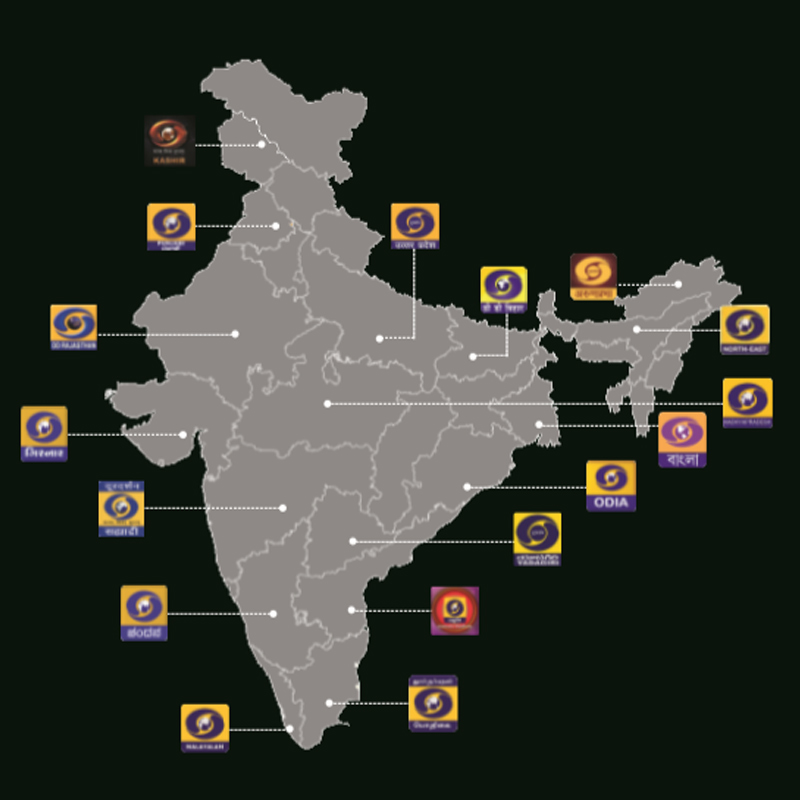
    MUMBAI: India’s public broadcaster, Prasar Bharati, is one of the largest public broadcasters in the world. It got a big boost with DD Free Dish that enabled it to reach into the interior parts of the country where pay channels didn’t have much headway. In 2019, Prasar Bharati added 11 regional channels on DD Free Dish to expand its reach, gaining 16 per cent more viewership over the previous year (2018). Half of its viewership comes from Hindi channels and the other half from regional language channels.

    Among the 24 DD channels measured by BARC India, the viewership of its English news channel DD India grew 63 per cent over the previous year, while that of DD Kisan gained 48 per cent. Notably, in the English news space, DD India contributes to 22 per cent of the entire genre viewership.

    Prasar Bharati CEO Shashi S Vempati says, “Doordarshan is not just a broadcaster; it is an institution that has helped germinate, build and popularise television in India. In the dynamic broadcast sector, Doordarshan, too, is transforming itself to keep in sync with its core mandate of public service broadcasting as well as meet audience expectations.”

    He further says, “Towards this, we rely on data and insights from BARC India to help target and deliver our content in a more effective manner. BARC India has done a great job in building the world’s largest TV viewership measurement system. As a key stakeholder of BARC India, we continue to engage and collaborate with the industry body as it consolidates and expands its services further.”

    Recently, the pubcaster revived two of its shows Ramayan and Mahabharat during the covid-19 crisis. Although it no longer enjoys a monopoly position, Doordarshan continues to have its dedicated audience and exercises its specific responsibility of public service and socially-relevant broadcasting.

    Joel Multimedia founder & CEO Varghese Thomas says, “India's public broadcaster was the one and only destination for television advertisers three decades ago. DD National, DD Metro and about 15 regional channels used to feature in all TV plans until the late 1990s. The public broadcaster has gifted a lot of good shows to the Indian television Industry such as Mahabharat, Ramayan, Surbhi, Rangoli, Chitrahaar, Superhit Muqabla, Shanti, Swabhiman etc. (Some of them were privately produced). The Friday and Saturday Hindi feature films were bumper hits among advertisers. Has anyone thought of creating a fantastic show out of a morning time band at 7 am on Sundays with a show like Rangoli? That was the power of Doordarshan during those days.”
    Thomas believes that after the entrance of satellite TV channels, pubcasters could not withstand the fast-changing trends and lost audience to private channels. He says, “Today, the HSM market has 57 per cent penetration of TV in the urban+rural markets. The proliferation of satellite channels with deep pockets and focus on innovative content has changed the way TV is consumed in India.  From fiction to sitcoms to reality shows, satellite channels have all that to entertain the ever-hungry TV audience. As the audience moved, advertisers have also moved to satellite channels as it was offering multi-dimensional opportunities for the brand rather than just buying a TV spot of 30 seconds.”

    Thomas, however, believes that though people in metros prefer satellite channels over public broadcasters only due to the programming, it would be a good idea to consider the public broadcaster for smaller towns and villages. “The terrestrial reach of the broadcaster is exclusive and no other broadcaster caters to that space which is very important. DD Free Dish is another superhit with 35 million connections and it's a great platform for even FTA satellite channels for distribution. Last year, the public broadcaster has generated revenue of Rs 500+ crore only by striking distribution deals with private channels.”

    According to the 2nd edition of BARC India- What India Watched 2019, the total viewership on DD grew to 573 billion viewing minutes in 2019 from 492 billion viewing minutes in 2018. The viewing minutes on DD's GEC channels grew by 19 per cent from 355 billion viewing minutes in 2018 to 424 billion viewing minutes in 2019.

    News genre witnessed five per cent growth in 2019 at 25 billion viewing minutes from 24 billion viewing minutes in 2018. Sports grew by four per cent at 101 billion viewing minutes in 2019 from 98 billion viewing minutes in 2018 and niche/others genre grew by 48 per cent at 23 billion viewing minutes in 2019 from 16 billion viewing minutes in 2018.

    “In spite of an increase in viewership, the number of advertisers in 2019 reduced by eight to10 per cent. In terms of spends there was growth in 2018 but in 2019 overall spends across DD network dropped by 30-35 per cent. Large CPG brands have also reduced spends on the DD channels in 2019,” informs Carat India executive VP Mayank Bhatnagar.
    He, too, agrees that the network has a vast untapped potential in the rural belt of the country. “The government has taken several steps to improve the quality of content and added new content to attract viewers. The viewership growth is exceptional, driven by the quality of the content and audience connect via increased presence on social media platforms. However, currently facing immense pressure from other FTA channels, DD needs to invest in the right content which is relatable and relevant to audiences,” he opines.

    Havas Media Group CEO India and South East Asia Anita Nayyar believe that if the public broadcaster is able to help advertisers with an attractive number of eyeballs and quality reach through innovative programming, it can get more investments.
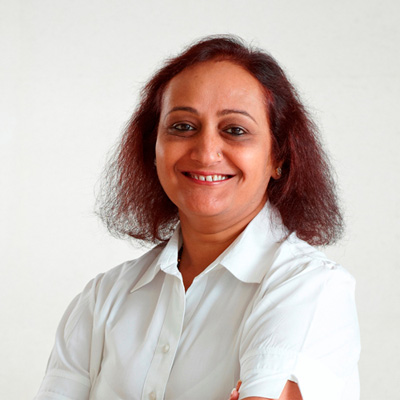
    Nayyar says, “Depending upon the kind of audience and the markets it caters to and reaches, the investments follow. Advertisers are interested in reach and that too quality reach. With reach, the focus should be on quality of programming and that will get quality advertisers. As long as the same is delivered it should automatically attract advertisers and investments.”

    She further opines, “Unfortunately, the perception of public broadcasters in spite of the reach is not up to the mark and perceived to be low quality on both the audience and content fronts. With so many options available to view and great quality content available all across they have tough competition and will need to rise to the occasion.”
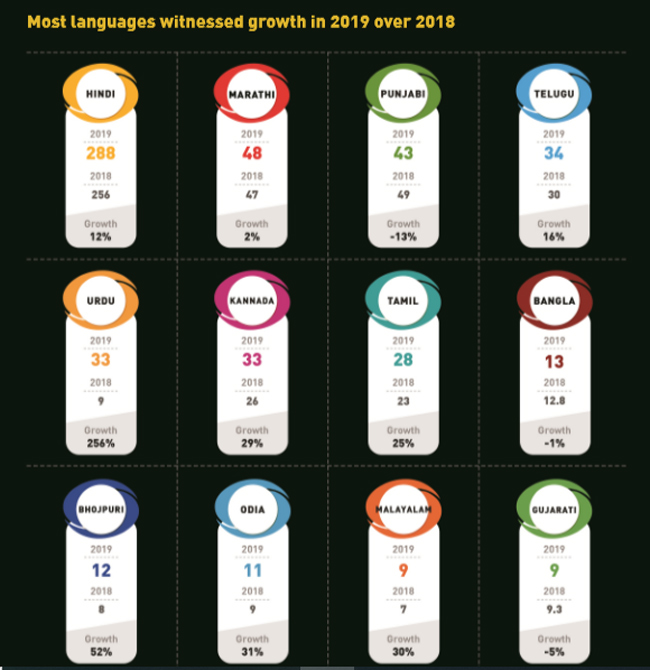
    There was some negative growth as well in some of the languages like Gujarati and Punjabi. Gujarati witnessed a fall of 5 per cent, the viewing minutes decreased to 9 billion in 2019 from 9.3 billion in 2018. Punjabi witnessed a 13 per cent fall in viewing minutes from 49 billion viewing minutes from 43 billion viewing minutes in 2018. 

  • Regional GECs on an upward growth trajectory

    Regional GECs on an upward growth trajectory

    MUMBAI: In the last four to five years, the regional television market witnessed a significant growth in viewership. Even the ad spend in the regional market has grown by 20 to 25 per cent in 2019 with more and more brands aiming to reach specific audiences. So how has the ROI improved for the regional channels? National broadcasters are expanding their footprints and businesses in the regional market by investing more on regional content and even brands are focussing more on the regional channels to reach specific markets.

    Carat India executive VP Mayank Bhatnagar says, “The overall growth of regional channels is healthy and all the key regional channels have grown. In fact, some of them have witnessed a healthy growth in ad revenue. The overall ad spends this year (2019) on regional channels have increased by 20 to 25 per cent.”

    As per BARC data, over a period of four years, regional viewership has grown to 30 – 35 per cent for languages such as Marathi, Gujarati, Bhojpuri, Odiya and Assamese. South continued to grow at around 9 to 10 per cent on an average. Hindi grew at about 7 to 8 per cent.

    Viacom18 Regional TV Network head Ravish Kumar says, “Regional channels have always offered great value to their advertisers and prioritised innovation, fresh concepts and new talent while perfecting the art of great storytelling. With their rich repository of theatre, literature, culture and music, regional content is making waves across mediums, screens and languages. So, the ROI on regional channels continues to be as strong as ever earning it an outperform rating in today’s value-seeking markets.”

    He further says: “Brands today have understood the reach a regional channel can give them. In addition to regional brands seeing value in our offerings, national advertisers too are understanding the importance of regional markets. While FMCG, auto, handset manufacturers continue to invest, there are newly emerging sectors such as education and gaming which are ramping up their advertising spends.”

    Joel Multimedia founder-CEO Varghese Thomas, however, believes that all regional players are not breaking even as content acquisition is an expensive affair and it takes time to recover the cost incurred in a highly competitive market environment like today.

    Regional channels also help brands to get the reach within a lower budget. “If we want to do a small campaign, these regional channels will help to drive efficiency. Regional will continue to grow as it is more efficient and help us to build the reach at much lesser cost as compared to HSM,” says Bhatnagar.

    Other major reasons for the growth of regional content are enhanced data bandwidth, cheap tariff and increased smartphone penetration that has resulted in digital explosion and accelerated digital adoption by audience due to which they started consuming content across screens. This resulted in regionalisation of the content from both production and consumption perspectives.

    Omnicom Media Group India Investment & Enterprise national head Yatin Balyan says, “For a national broadcaster mainline Hindi GEC continues to drive maximum business. However, regional channels are contributing more towards business growth for the network. Networks try to increase volume share with Hindi GEC as well as grow the business on the back of regional channels. National broadcasters investing in regional content also have to create a content bank for their respective OTT platforms.”

    He also believes that regional channels have seen a gradual increase in business coming from regional or retail advertisers. He says, “There is a prominent shift in how regional channels are being considered from a campaign planning perspective. Campaigns for regional markets are being planned with far more focus as advertisers started considering all these markets as mini India within one Big India.”

    Thomas is of the view that regional retail advertisers used to be the largest contributors of advertising revenue for the regional channels. But post demonetisation, the ad spends by retail business is on a downward trend and it has been really challenging to balance the revenue. Some of the players have come up with non-FCT ideas to cope with the challenges and it's paying off to an extent.

    When broadcasters look at expanding their footprint and diversifying into non-core areas of business, regional markets emerge as an option to explore. Though most of the regions are already flooded with a bunch of players, broadcasters are exploring the possibility of adding another channel to their basket in order to be part of the regional success story. It is interesting to know that some of the recently-entered regional players are doing extremely well and they have already made their position in the top 5 channels and started contributing to the growth of the network.

    Thomas says, “It's challenging for broadcasters to approach these markets with an innovative programming strategy. So, at times, they do an adaptation of their successful shows from their national channels. They also have an option to dub some of their super hit shows in to the regional languages where they are present.”

    Balyan, however, believes that Hindi GEC still commands the maximum business share within a broadcaster networks and it would be incorrect to assume that Hindi GEC has come to a level of saturation. TV penetration in the Hindi hinterland, which is still not at 100 per cent, is primarily driven by Hindi GECs. I see scope of further growth in Hindi GEC business with increased scope of audience measurement.”

    According to Kumar, from a macro perspective, 2019 was a challenging year for the entire broadcast industry, including regional, due to the impact of the new tariff order as well as the weak advertising and investing climate. However, he believes things are settling down now, and hopefully, this year will see a lot more buoyancy coming back in.

    He says, “I believe that regional markets offer more opportunities than the challenges they present. Regional audiences have become increasingly aware and hence content that is being presented to them needs to be more relatable, rooted and relevant. There is a growing demand for disruptive content, both in fiction and non-fiction spaces. Viewers are looking for fresh content experiences and stories which have believable characters. This is a great opportunity for storytellers like us.”

    Regional channels contribute significantly towards the overall growth and this will only continue to increase.

  • Carat India wins media duties of ACCA

    Carat India wins media duties of ACCA

    MUMBAI: Carat India, the media agency from the house of Dentsu Aegis network, has bagged the media duties of the Association of Chartered Certified Accountants (ACCA). The account was won following a multi-agency pitch and will be serviced from the agency’s Mumbai office.

    Commenting on the win, Rajni Menon, CEO, Carat India said, “We are excited to be a partner to ACCA. I am happy that our strategic thinking, best in class proprietary tools and consumer-first approach are a few of the parameters on which ACCA India opted for the agency.”

    Pooja Seth, Head of Marketing, ACCA India said, “Carat India has proven to be a great partner for ACCA India. During their presentation, they understood what ACCA’s brand value, mission and ambition stood for and consequently, worked on presenting innovative media solutions to help increase the brand reach and deriving effective ROI.”

  • Carat India elevates Pramod PP to senior business director, Carat – Kochi

    Carat India elevates Pramod PP to senior business director, Carat – Kochi

    MUMBAI: Carat India, the flagship media agency from Dentsu Aegis Network, has promoted Pramod PP to Senior Business Director, Carat – Kochi. With this announcement, Carat intends to strengthen its consumer focus and business solutions for the Kerala Market. Pramod PP will report to Rajni Menon, CEO, Carat Media Brands.

    Pramod comes with over 15 years of experience in media. Has been part of Carat India for over 8 years now. Prior to this move, he was Business Director, Carat – Delhi where he was responsible for managing a wide array of clientele including Preethi Kitchen Appliances and Adidas. He was also actively involved in the buying of some of the agency’s key Global clients such as Mastercard and Microsoft. 

    Commenting on his new role, Pramod PP said, “I am looking forward to raise the bar further and focus on excellence in customer experience and service. I am also clear that Carat will soon become a single source solution for a vast array of prestigious brands across the South Market.”

    Talking about Pramod’s elevation, Rajni Menon, CEO, Carat Media Brands said, “Pramod will play a critical role in maintaining Carat’s unparalleled expertise in the brand servicing industry.  The need for a strong brand voice is imperative, due to increased competition and rapidly evolving market strategies.”

  • Triton Communication appoints Shripad Kulkarni as media operations head

    Triton Communication appoints Shripad Kulkarni as media operations head

    MUMBAI: Triton Communications has appointed Shripad Kulkarni as head of media operations. Prior to this, Kulkarni was MD at Vizeum India. He started his career as a media planner at Contract India.

    Kulkarni brings with him over 25 years of experience  of professional exposure in the media industry, were he worked with Oigvly, Carat India, Percept Media etc.

    Shripad was also a member of Media Research User Council (MRUC). He was also with the technical committee for India’s first outdoor research survey IOS.

    Kulkarni holds a masters degree in statistics from the Mumbai University, an MBA degree from JBIMS, and a diploma in Operations Research from the Operations Research Society of India, Kolkata.

  • Carat to handle media mandate for British Council in India

    Carat to handle media mandate for British Council in India

    MUMBAI: The British Council – UK’s international organisation for cultural relations and educational opportunities has roped in Carat India, the flagship media agency from Dentsu Aegis Network, to handle its media duties in the country. 

    This win comes on the back of Carat’s new business wins such as Franchise India Holdings (FIHL) and Fossil group in the recent past.

    British Council India director marketing Nirupa Fernandes says, “We are very pleased to associate with Carat in India following a close association with Carat in UK. 2018 marks 70 years of the British Council in India and we have been inspired by India every day of the last 70 years. This year, we want to share the stories of the great things we’ve done together, make new connections and new stories, and inspire millions of young people to develop relationship and connections for the next 70 years.”

    Speaking about the win, Carat India CEO Rajni Menon adds, “It really feels great having British Council on board. British council has been a part of many Indians’ lives through some form of their services starting from improving English skills, courses for teachers, preparing for IELTS exams, helping students to study abroad, etc. With Dentsu Aegis Network’s integrated approach and capabilities of delivering end to end solutions, we are confident of enabling a strong connect with the young and dynamic audiences across platforms.”

    British Council has offices in nine cities across India and continually work towards creating opportunities for young people to develop new skills, become better qualified, introduce an international dimension to their learning or profession and develop a better understanding of other cultures. Its work in India covers arts, sports, higher education, English language, training solution and library.

  • Mondelez & Carat bring live #RealDosti campaign

    MUMBAI: Mondelez India, part of Mondelez International, a leading global snacking powerhouse, partnered with Carat India to launch an innovative campaign to celebrate Friendship Day on 6 August.

    Titled “#RealDosti”, the campaign promoted Mondelez’s flagship brand Cadbury Dairy Milk amongst the digitally-engrossed youth of today who have forgotten the taste of the real world.

    Consequently, the brand in partnership with its media agency Carat India and its creative agency Ogilvy India, built the campaign on the concept of “Adda”. For the record, an “Adda” is an informal conversation among a group of people, often for hours at an end, and usually accompanied by food.

    As part of the campaign, Mondelez joined hands with MTV India to create “the Adda” for college students across Mumbai. To celebrate Friendship Day, the “Adda” was held at the Sofia College on August 4. The celebration featured popular MTV Youth Icons interacting with Gen Z and ending with a performance by the ‘Raghu Dixit Project’, a contemporary Indian folk band based in Bangalore.

    Interestingly, in an attempt to get the digitally addicted youth out into the real world to experience this ‘live’ campaign, Carat India activated maximum digital touch points where the youth spend most of their time.

    The campaign was launched on Facebook by creating a profile picture filter of Cadbury, a first-of-its kind for CPG brands in APAC and Globally for Mondelez. Carat also partnered with Google to kick start the latter’s global innovative concept Vogon in India. Through Vogon, a contextual video targeting programme, Cadbury Dairy Milk activated contextual messaging on popular genres consumed by youth on Youtube.

    Meanwhile, #RealDosti is also smartly targeted the youth through WIFI inventories in Mcdonalds, Dominos and Café Coffee Day, amongst others. Carat also activated Zomato and Bookmyshow with precise messaging for the youth who are highly dependent on popular apps for culinary and cinematic exploration.

    Additionally, Cadbury Dairy Milk and Ogilvy also developed an array of snackable digital content, sourced through multiple popular social handles for increasing consumption and ‘sharability’.

    public://244481651_o.jpg