Tag: Carat India

  • Sanchayeeta Verma bows out of Carat India after a high-octane two-year stint

    Sanchayeeta Verma bows out of Carat India after a high-octane two-year stint

    BENGALURU:  Sanchayeeta Verma has stepped down as chief executive of Carat India, closing a chapter that transformed the dentsu agency’s standing in the country’s crowded media market.

    Verma, who took the helm in July 2023, leaves after what she calls “a marquee period of bold pivots and meaningful impact”. During her tenure Carat almost doubled business performance, integrated creative and customer-experience units under the One-dentsu model, and pushed the network into what she dubbed the “algorithmic era.”

    Her leadership brought a flurry of firsts. Carat popularised “attention economy” as a core media metric, built the Brand EQ Index to measure emotional connection, and unveiled the Media++ operating system to give clients data-rich, AI-powered planning tools. She also struck new alliances with e-commerce platforms to unlock what she described as “triple value” for clients, partners and the agency.

    “None of us can exist in isolation,” Verma said, quoting her mentor, the philosopher Daisaku Ikeda, as she thanked her teams, media partners and clients. “To be aware of these connections, to feel appreciation for them, and to give back to society in a spirit of gratitude is the proper way for human beings to live.”

    A recognised thought-leader and champion of women in leadership, Verma has spent more than 25 years shaping India’s advertising and media landscape. Before joining Carat she logged an 11-year run at Wavemaker, where she turned its south India operations from a loss-maker into a multi-city profit engine—growing media billings 15-fold and revenues six-fold—while later heading the ITC India strategic business unit.

    Earlier, she built national communication-planning frameworks at Mindshare, managed key accounts such as GSK and Motorola, and led planning teams at Lowe Lintas and J. Walter Thompson. She began her career in the mid-1990s in product marketing at Kiwi TTK.

    Verma, who has also served on advisory boards in education and civic-tech start-ups, has not yet disclosed her next professional move but remains a sought-after mentor and strategist. Dentsu, for its part, praised her “bold vision and collaborative leadership” and wished her well as Carat readies a successor.

  • Carat India wins integrated media mandate for TimesPro

    Carat India wins integrated media mandate for TimesPro

    Mumbai: Dentsu India’s media agency Carat has won the media mandate for TimesPro. The account was won following a multi-agency pitch and will be serviced from the agency’s Mumbai office.

    As per the mandate, the agency will manage the omnichannel media services for TimesPro.

    Speaking on the win, Carat India CEO Anita Kotwani said, “We are pleased to win the media business for TimePro. Carat is committed to creating meaningful end-to-end media solutions through data-driven marketing and to further accelerating the brand’s growth journey. As a team, we are excited to get this opportunity to work with a brand that is aiding every professional’s career aspiration!”

    TimesPro head of brand marketing & communications Gaurav Barjatya commented, “We are delighted to be working with Carat India. It’s an agency that’s responsive and nimble to the business demands of today, which span a variety of traditional and new-age media. We look forward to collaborating with them as we grow and take our H.EdTech offering to millions of learners nationwide.”

    TimesPro is an award-winning higher education technology initiative of the Times of India Group.

  • Carat India appoints Vasim Rakhangi as AVP – strategy

    Carat India appoints Vasim Rakhangi as AVP – strategy

    Mumbai: Further strengthening its leadership team, Carat India – the media agency from the house of dentsu India – has appointed Vasim Rakhangi as associate vice president – strategy for North and East. He will report into Carat India CEO Anita Kotwani.

    In his new role, Rakhangi’s core focus will be to spearhead and deliver integrated media strategy to the agency’s existing clients across the regions. 

    Rakhangi has over 11 years of experience in media and research, having led multiple brands on integrated media strategies that focus on both traditional as well as digital media. Prior to this, he worked for conglomerates in the FMCG sector like Mondelez, GCPL, Marico as well as broadcasting brands including Star Plus and Star Sports.

    With this appointment, Carat continues to accelerate its transformation of the agency across India, as it looks to bring new focus on its designing for people proposition.

    This is the fourth key strategic leadership hire for the agency in recent months, bringing a fresh perspective, increased impetus, and expertise to deliver on well-known brands in the Indian market, according to the agency.

    Commenting on the appointment, Anita Kotwani said, “With his extensive experience and passion, Vasim will help our clients stay ahead of the curve, especially as he helps them demystify the complex digital media landscape. One of his focus areas will be, to translate the disruption of video and the future of measurement to the consumers’ dynamically changing needs and, how the role of data, privacy, and technology impact their business.”

    “Vasim’s remit in our North market will encompass Phillips Domestic Appliances, Microsoft, Mastercard, Havells, and the DS Group amongst others, as he also works with our local teams to drive growth for both North and East markets,” she further said.

    Vasim Rakhangi commented, “With the kind of transformation taking place within the media landscape in India, Carat’s framework seamlessly blends in with the rapidly changing environment. It has always focused on building deeper relationships between people and brands in order to design campaigns which truly resonate with people and drive impactful results for clients. It is indeed a privilege to work with Anita and lead regions with so many great opportunities to bring this to life in partnership with such powerful brands.”

  • Ad spends are likely to get impacted if consumption reduces: Carat India CEO Anita Kotwani

    Ad spends are likely to get impacted if consumption reduces: Carat India CEO Anita Kotwani

    Mumbai: In March this year, India completed a year of double-digit wholesale price inflation (WPI inflation). This is the sixth occasion when inflation has remained over 10 per cent for a year or longer, and it came more than a quarter of a century after the last such episode — between March 1994 and May 1995.

    In an exclusive interaction with IndianTelevision.com, Carat India CEO Anita Kotwani noted that inflation is already impacting FMCG which is the broadcast industry’s highest ad spender. She offers her take on the impact of inflation noting that right now ad spend patterns are unlikely to be impacted and the market is recovering from Covid-19. But she warns that if the price of commodities significantly goes up, then that could impact consumption negatively. And ad spends are the easiest to cut back on when commodity prices rise. She offers the example of domestic aviation cutting back on TV ad spends in a significant manner so far this year. On a more positive note, she sheds light on the resilience of TV as an ad medium.

    Edited excerpts:

    There is talk about high inflation. How is this impacting companies especially FMCG?

    High inflation is likely to bite into the FMCG sector’s volume growth in 2022. Retail inflation in India rose to a seven-month high from 6.01 per cent in January, breaching the upper tolerance level. The rise was mainly on account of high food inflation, which jumped to a 14-month high of 5.43 per cent, along with a high base.

    A majority of FMCG companies have already reported a decline in volume growth in the third quarter of FY22. At this juncture, FMCG firms face the dilemma of choosing between margins and volumes. However, the analysts believe that protecting the margins will further impact volumes as consumers will hold back consumption.

    A recent Nielson IQ report suggests that demand in the rural segment has taken a hit, with volume growth declining by 2.9 per cent. Inflation in the price of fertiliser and diesel has impacted the disposable income of the farmers, thus, impacting the consumption in the rural regions.

    Some of the recent reports also suggest that consumers may have to pay more for their daily essential items. Since the FMCG companies are mulling over another round of price hikes, to offset the impact of an unprecedented level of inflation in commodity prices such as wheat, palm oil and packaging materials. A 10-15 per cent hike is expected across industries. The market is volatile as of now, therefore, brands will consider multiple factors before finalising the incremental in the price for their product.

    Do you see clients’ ad spending getting impacted in the coming quarters as consumer sentiment turns negative and spending slows down?

    Currently, the negative sentiments are not very strong and things are still volatile. Ad spends are likely to get impacted if consumption reduces. However, the impact on consumption will be determined by the increase in the cost of the product. Yes, the essentials are getting a bit expensive but that is largely due to the increased fuel cost led by the Russia-Ukraine conflict. Apart from that, the market has been steadily recovering from Covid and the advertiser spend patterns are unlikely to see any impact. Only if the price of commodities significantly goes up, then that could impact consumption negatively.

    Which are the sectors that you see coming under stress due to inflation?

    As per the Consumer Price Index (CPI) of March 2022, India stood at an inflation rate of 6.95 per cent.

    Amidst the hardening of fuel prices, India’s wholesale price-based inflation quickened to 14.55 percent in March from 13.11 percent in February. Retail inflation for March has also climbed to 6.95 per cent, a 17-month high. According to the country’s CPI-based inflation report, the spike in prices was led by food items.

    A continuous rise in fuel prices since March 22 has not been completely captured in the latest data, suggesting that inflation may remain elevated in the coming months. A surge in crude oil prices to a 14-year high has resulted in broad price pressures on Indian households.

    Among food items, the index for oil and fats recorded the largest sequential price hike, by 5.3 per cent in March. This may raise pressure on the government to make edible oils cheaper.

    The worst affected sectors include food (+1.4 percent over February), clothing and footwear (+0.9 percent over February), and fuel and light (+0.9 percent over February).

    Do you see urban and rural India both being equally affected?

    Since the beginning of 2021, inflation has started to see a gap between urban and rural geographies. For rural consumers, their basket has a higher weightage on food and essentials. Whereas, for urban consumers, the non-food items dominate their shopping baskets as well. Recreation (malls/cinemas) also impact urban consumers more than rural.

    While the inflation gap between urban and rural audiences is always going to remain, rural is also likely to see an impact in consumption due to increased prices of fertilisers and diesel. This impacts the disposable income of people in the rural region.

    The people who are most affected by rising inflation are the final consumers of goods. The prices of goods and services are constantly rising. However, the salaries and income of consumers do not rise proportionately. Hence, there is a lag leading to goods and services becoming less affordable to the final consumers. The CPI inflation witnessed significant and sustained moderation during 2012-13 to 2018-19, before rising thereafter.

    Rural and urban inflation exhibited a similar trend; the only difference witnessed was that urban inflation started rising from 2018 to 2019.

    Moreover, the annual average urban inflation which was ruling below rural inflation till 2017-18, moved above it during 2018-19 and 2019-20 (Chart 1a). Food and non-food inflation contributed to the divergence between urban and rural inflation (Chart 1b).

    The consumer food price inflation for rural areas was 3.94 per cent in March 2021. It went up to 8.04 per cent in March 2022. Similarly, the CPI for rural India has also gone up to 7.66 per cent in 2022, from 4.61 per cent in March 2021.

    The rural food inflation in March has also registered a steep hike in comparison to February 2022. It has gone up to 8.04 per cent in March, from 5.81 per cent in February.

    The Consumer food price inflation for India as a whole, including rural and urban, has gone up to 7.68 per cent in March 2022, from 4.87 per cent in March 2021. Given this understanding, yes, inflation will impact rural and urban consumers equally.

    What does the media industry need to do to prepare for growth potentially not being as smooth?

    Ad spends are the first and the easiest way to cut costs during times of high commodity prices. It is already evident. Hit by high aviation fuel prices, domestic airlines in the country have cut television advertising by as much as 27 per cent , during the first five months of the year.

    When companies try to reduce the ‘extra’ spending, the packages provided by marketers for consolidated marketing become way more lucrative for the brands concerned.
    It is imperative for brands to understand that the focus of cost-cutting should be on reducing wastages and not reducing activity that can generate future sales or build a brand.

    When a brand is in its growth phase, a reduction in ad spends is unadvisable, even during times of inflation. If a brand is sensitive to media ad spends, which consequently drives movement in business impact, then they too should not cut ad costs. This education to brands by media agencies and partners is imperative.

    360-degree media campaigns are the most lucrative campaigns. They combine the most effective and efficient mediums that drive business impact for the brand and further boost media outcomes to the best possible, depending on the category.

    Exploring newer advertising options like addressable TV, geo-fencing on digital, digital OOH and interactive print is not only more efficient but far much more sharp-targeted to the audience, avoiding spillage and minimizing costs.

    Is there a likelihood of revising the projected ad spend growth of  Rs 82,500 crore?

    As an industry we are keeping a close watch on how the media spends are progressing, advertisers and agencies have come to terms that things need to normalise despite rising in covid cases, we will have to co-exist with the virus and continue business as usual. We are hopeful that the situation will not deteriorate, and growth projections if needed will be upward only.

    It is a bit unclear right now if the projection for the ad spends will get changed. There has to be a situation as major as the 2020 Covid crisis for the ad spend projections to change significantly.

    Will print be the first medium to suffer if clients cut back on spends? What is your take?

    In a world wherein all media inputs are determined by ROI, print is the low-hanging fruit. It always witnesses cuts whenever there are budget cuts. A lot of marketing mix modeling (MMM studies) show that for a lot of FMCG brands, print has the lowest ROI, and hence print is always under the scanner.

    Dentsu’s ad forecast report mentioned TV being the most resilient. What is the reason for this?

    Linear television remains to be the most popular and resilient media in India with a 40 per cent share of spend. Linear television ad volumes continued to post a healthy growth starting H2 2021, as marketers leveraged the reach and power of TV to raise the profile of their brands.

    We have seen this in the past as well. In 2021, the TV spends were fully recovered and since TV is still the highest reach building media, brands must leverage TV for building equity and for the movement in top-funnel metrics. While there has been a shift in content viewing with some audiences moving from TV to OTTs and demand for OTT advertising is rising, the impact on TV spends is minimal.

    On TV which are the top five properties for an advertiser?

    The properties are bucketed under different genres and are listed below:

    ⦁ Cricket – IPL & CWC
    ⦁ Dance Reality Shows (“Dance India Dance,” “Dance+”)
    ⦁ Singing Reality Shows (“Indian Idol,” “SaReGaMaPa”)
    ⦁ Unscripted Shows (“Bigg Boss,” “Fear Factor”)
    ⦁ Fictions/Scripted Shows (“Anupama,” “Imli,” “KumKum Bhagya”)

    Will smaller genres like music continue to find the going difficult?

    Over the last couple of years, there has been a drop in the viewership of the music genre. A major reason is the movement of audiences from music to news and film genres, especially post Covid. Additionally, music listeners who also like to watch music videos have moved to YouTube to watch the videos of their choice. While the viewership for smaller genres will continue to remain low, relevant brands can still look at these genres for the right targeting. Brands targeting youth and females can look at this genre to build frequency.

  • Carat India appoints Megha Jain as VP – planning, South

    Carat India appoints Megha Jain as VP – planning, South

    Mumbai: Carat India, the media agency from the house of dentsu India has appointed Megha Jain as vice president – planning, South. She will report to Carat India CEO Anita Kotwani.

    As per the mandate, Jain will focus on new business development and growth for Carat across the Southern market including Bengaluru and Kochi, while overseeing the agency’s existing clients, said the statement.

    In her previous roles, Jain has driven effective brand building through strong media strategies and communications for FMCG brands like Colgate Palmolive, Unilever, Johnson & Johnson and Amul (GCMMF), to name a few. With over 15 years of experience in the media industry, she has led integrated media planning and strategic thinking, focusing on digital transformation for clients and their businesses. She has also been instrumental in spearheading communication planning for clients. 

    “The game plan for Carat India is to bring in leaders with an integrated skill set that can enhance client relationships,” said Anita Kotwani, commenting on the appointment. “Megha’s focus will be to drive strategic stewardship with our key clients in Bengaluru and other Southern markets. She will also be instrumental in helping us drive growth for the Southern market. Enriched with experience to work with top brands, she will add huge value to our global and local clients. I am thrilled that Megha will be part of the talented team and I believe she will be an asset to the organisation.”

    Megha Jain added, “I am extremely excited to join the Carat family. It is a great opportunity to work with a diverse portfolio steaming from data, technology and healthcare across global and local markets. I look forward to collaborating with partner agencies across the dentsu network, drive growth under Anita’s leadership and working with some of the best minds in the country.”

  • Vidnet 2022: Gen-Z, millennials driving OTT consumption pattern along with non-urban audience, says Carat report

    Vidnet 2022: Gen-Z, millennials driving OTT consumption pattern along with non-urban audience, says Carat report

    Mumbai: The OTT ecosystem in India has been evolving by leaps and bounds in recent times with amazing and diverse content being churned out on the plethora of platforms on the connected web today. Even as the OTT subscription market in India continues to grow at a gradual pace, it remains an exciting prospect for an increasing number of marketers and advertisers who are keen to promote their brands and ads on these emerging platforms.

    IndianTelevision.com organised the sixth edition of its Annual Vidnet Summit with an aim to have an in-depth look at the way forward for the OTT ecosystem and all the platforms on it, and the opportunities and the challenges in the space. The two-day summiit had technolgy partners Dell Technologies and Synamedia, summit partners Applause Entertainment and Viewlift, industry support partners Gupshup, Lionsgate Play and Pallycon, community partners Screenwriters Association and Indian Film and Television Producers Council and gifting partner The Ayurveda Co.

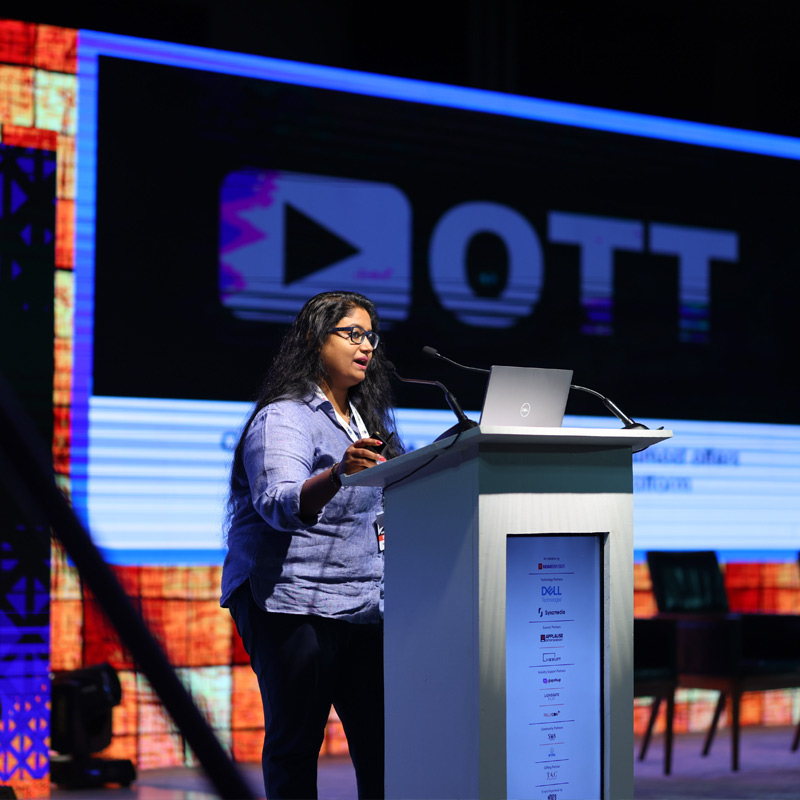
    The first day of Vidnet 2022 saw an interesting mix of sessions on the subject with bristling conversations from industry experts and stakeholders on the various panels. The day’s sessions kicked off with an informative report on ‘OTT Consumption & Advertising Trends’ presented by Carat India associate vice president- strategy Sayami Podder. The report provided insights on the key factors that have driven the growth in the space such as OTT first releases, low subscription cost, regional content, live events and Connected TV. The report also looked at who is driving the growth and estimated that the large potential audience base of 70-80 million paid subscribers comprises the age group of 15-35 years, while amongst women consumption is driven by the 25-35 years age group.

    The report also estimates that the viewing time spent on these streaming platforms have gone up from two hours pre-covid to 4.45 hours, even as the minutes of consumption have spiked from 181 to 204 billion minutes in 2021.

    Video consumption of non-fiction content beyond television on streaming platforms is also on the rise, as per the report, with the viewership for such series on Netflix alone growing by over 250 per cent.

    Digital viewership of non-cricket sports too saw an increase of 310 per cent, according to the report, while the IPL audience is expected to become even bigger with a 20-30 per cent spike in match watch time over IPL 2021 on Disney+ Hotstar.

  • Carat India onboards Sayami Podder as AVP – strategy

    Carat India onboards Sayami Podder as AVP – strategy

    Mumbai: Carat India, the media agency from the house of dentsu India has announced the onboarding of Sayami Podder as associate vice president (AVP) – strategy. 

    In her new role, Podder will be spearheading strategic thinking for the agency. She will also offer insights to the existing agency clients across the West and South regions. She will report to Carat India CEO Anita Kotwani, said the agency on Wednesday. 

    “Talent today is the key differentiator that clients look for. Our core focus is to always ensure that we have the best talent that comes on board and joins the Carat family,” commented Anita Kotwani. “Sayami’s diverse expertise across data & analytics, research, communication planning and media strategy, is certainly something that will drive growth for the clients. We see her as the ideal team player to lead Carat’s vision of ‘Designing for People’ in the West & South markets.”

    Armed with more than 12 years of experience, Podder is specialised in brand, media & communication strategy, consumer research, and market mix modelling. She has worked across a wide range of categories including FMCG, beverages, fashion, BFSI, e-commerce & manufacturing. She has helped brands strengthen their market shares by developing effective communication and media investment strategies, leading to exponential business growth and measurable outcomes.

    Prior to joining Carat India, Podder was with Mindshare India where she led strategy for brands like Ultratech Cement, Castrol, SBI Life, ICICI and Kellogg’s. She has also worked with significant retail brands like Pantaloons & Max Fashion and new-age brands like Upstox, Byju’s & TCS Ion, to name a few.

    “The consumer journey is no more linear, and the media ecosystem is constantly evolving to accommodate our new age audience. Carat is already known for its strategic thinking and integrated approach,” stated Sayami Podder. “With my expertise in data science and creative thinking, I am looking forward to building an insight-led strategy that will generate incremental and sustainable growth for our clients. I am delighted to begin this new journey under Anita’s dynamic leadership and contribute to Carat’s growth story for India.” 

    ​​​​​​

  • Carat India onboards Aruni Panda as VP – digital

    Carat India onboards Aruni Panda as VP – digital

    Mumbai: Carat India, from the house of dentsu India, has strengthened its leadership team for North and East. The agency has appointed Aruni Panda to lead these regions as vice president – digital.

    In his new role, Panda will lead strategic thinking and oversee agency clients on the digital front, reporting into Carat India CEO Anita Kotwani. He will work closely with the office head of the regions – Carat India executive vice president – planning Dipika Bhasin.  

    Panda brings over 15 years of experience and is an ardent practitioner of ad-tech tools, programmatic media planning & buying, social media & content marketing, digital customer experiences management, customer acquisition and web analytics. Prior to this, he was with GTB (part of WPP’s network of companies) where he held the position of AVP and senior digital media director, handling digital media planning, buying and execution.

    In his previous roles, Panda has been instrumental in helping brands and organisations develop digital marketing ecosystems by an outcome-led planning approach for the brand and the business. He has worked with brands like PepsiCo India and Ford India, to name a few across categories like FMCG, automotive, real estate, entertainment & sports, ISP & connectivity solutions, and IT-enabled executive education & training. Panda has re-positioned businesses as digital-first by setting up business-aligned digital ecosystems. He has also implemented and integrated seamless interplay between ad-tech and mar-tech stacks.  

    “With the changing dynamics of the media eco-system and a strong focus on digital across the clients of Carat, we felt it to be imperative to bring in a seasoned professional like Aruni to lead the digital mandate. His expertise across the full-funnel marketing will be an advantage that we would like to leverage across our existing and new client fold,” said Anita Kotwani, commenting on the appointment.

    Dipika Bhasin added, “Aruni’s experience will charter current and new growth with our partners. He will hold a strong commitment to driving Carat’s digital practice and the integrated media offerings of dentsu India. We are extremely happy to have him as part of the team!”

    “I am elated to embark upon this new journey with Carat India, an agency already known for its integrated approach backed by cutting-edge data tech and tools. It is critical to map, plan and build the right digital approach in this ever-evolving digital space for our clients to thrive into the future. I am looking forward to being a part of Carat’s growth story under Anita’s leadership and partnering with clients in their digital endeavour with the combination of media, data, commerce and technology,” commented Aruni Panda.

  • #Retrace2021: Content and advertisers return to TV, AdEx remains elusive

    #Retrace2021: Content and advertisers return to TV, AdEx remains elusive

    Mumbai: 2021 was the year of the paradox. The return of LIVE sports and original programming on TV continued to attract new and more advertisers to the medium ensuring a phenomenal growth in ad volumes over 2020 and 2019. While it seemed like the marketers catering to ‘revenge buying’ consumers were on a ‘revenge spending’ spree, the decline in ad rates that had set in as a result of the pandemic, failed to rationalise through the year except towards the end of the festive season.

    Effectively, this meant that despite the economic recovery, positive consumer sentiment, availability of fresh content, and willingness of advertisers to spend, the 2021 AdEx could not reach pre-Covid levels. The negative trend was witnessed across categories.

    Also read: New advertisers make up 19% share of TV ad volume in Nov : Barc India

    According to the third edition of Broadcast Audience Research Council (Barc) India’s yearbook titled ‘The Year After 2019’, TV viewership grew by nine per cent in India in 2020. Yet given the circumstances, advertisers reeling under economic losses used the medium either sparingly or judiciously, mainly to maintain brand recall in anticipation of the reopening. With re-runs of old shows dominating the scene, almost all of television was functioning on a second-tier channel level in the context of content as well as ad rates.

    Picking up from the previous festive, 2021 began on a positive note with some fresh programming and the IPL motivating advertisers to place bigger bets on the medium. The second wave in May-June, however, postponed this recovery to the second half. Even as the rush of new FTA channels launched in 2020-21 and regional ones were making a significant contribution to ad volumes, broadcasters were now equally focussed on achieving pre-Covid ad rates.

    In addition to leveraging their leading IPs to negotiate a ‘fair’ deal once again, channels sought to up the ante with new shows (fiction and non-fiction) and seasons, as well as with LIVE sports programming. According to media planners, AdEx recovery started from July, surpassing 2019 levels in September-October. Contingent upon the possibility and severity of the third wave, it is hoped that this momentum aided by government spending on election campaigns until March 2022, will very soon lead to a full-fledged recovery for the industry.

    Content makes a comeback

    The efficient content strategy of regional adaptations like Star Plus’ ‘Anupamaa’ and ‘Ghum Hai Kisikey Pyaar Meiin’, and reruns implemented by broadcasters to tide over the pandemic turned out to be a success. Buoyed by the TRPs of the reruns, many channels brought back their popular shows and stars with new seasons and narratives in 2021.

    While ‘Sasural Simar Ka’ and ‘Balika Vadhu’ returned on Colors, SET launched season two of its popular series ‘Kuch Rang Pyaar Ke Aise Bhi’ and ‘Bade Achhe Lagte Hain’. Star Plus came up with the new edition of ‘Sasural Genda Phool’. After premiering the second season of ‘Saath Nibhanaa Saathiya’ in October 2020, the channel also re-launched the much-loved mother and daughter-in-law duo of Giaa Manek and Rupal Patel in ‘Tera Mera Saath Rahe’ (August 2021). Star Bharat chipped in with ‘Mann Kee Awaaz Pratigya 2’ in March.

    Also read: Shark Tank to get an Indian adaptation, set to air on Sony TV

    Beginning the year with ‘Teri Meri Ikk Jindri’, Zee TV introduced six new fiction shows this year and a history-based series ‘Kashibai Bajirao Ballal’. On the non-fiction front, apart from bringing back ‘Sa Re Ga Ma Pa’, it launched the new music league championship ‘Indian Pro Music League’. ‘Dance Deewane’ on Colors TV, ‘Dance Plus’ on Star Plus, ‘Super Dancer’ on Sony TV further added to the non-fiction list. Bringing new formats to the reality TV genre were Colors’ visual-based quiz show ‘The Big Picture’ hosted by Ranveer Singh and SET’s business reality television series ‘Shark Tank’.

    Also read: Viacom18 eyes a bumper festive season, with new show ‘The Big Picture’ set for launch

    Return of LIVE sports

    The return of LIVE sports further bolstered the recovery, with a host of new advertiser categories banking on TV to build reach. Whether it was the cryptocurrency brands, gaming, ed-tech or D2C brands, Television saw the ad volume rise across channels. While the 14th edition of the Indian Premier League (IPL) was halted mid-way due to the second wave, it made a comeback in September, with the T20 cricket World Cup. It was followed by the India-New Zealand Test series.

    The year also saw other major sporting events, including the 2020 Tokyo Olympics which was held amid Covid restrictions, and set the stage for India’s spectacular performance across different sports. Not only did India win its first-ever Gold in Athletics (Neeraj Chopra), it witnessed brilliant performances in Hockey, Boxing, as well as weightlifting. Over 48 million viewers watched EURO 2020 on its official broadcaster Sony Pictures Sports Network (SPSN), as per the data shared by the network for its entire coverage of the first 36 matches of the tournament from 11 to 25 June.

    Also read: Over 48 million viewers tuned into SPSN to watch UEFA EURO 2020

    Also read: Star Sports Network logs 3.8 million AMA for 1st India vs England Test

    Then, there was the India-England Test cricket series, ICC World Test Championship Finals in June, India-Sri Lanka series, India-Australia women’s cricket series. The year ended with the return of the Pro-Kabaddi League (PKL) in Bengaluru. 

    Phenomenal recovery in ad volumes

    An analysis of Barc’s monthly data reveals that TV showed a strong recovery in ad volumes since the beginning of 2021, and a noticeable growth over 2020 and 2019 levels. In 2020, TV ad volumes contracted by three per cent over 2019. However, in 2021, ad volumes grew over the last two years for most of the months except March (data not shared), May which saw a marginal de-growth of 3.5 per cent, and December (data unavailable).

    Also read: October records highest TV ad-volume in 2021

    According to media planners, the growth in ad volumes was supported by the launch of new channels in 2020 and 2021 which led to an increase in inventory on TV. Several new channels were launched to cater to the free-to-air audience including Ishara TV (FTA), Dhinchaak TV (FTA), Enterr10 Rangeela (FTA), Sun Marathi (FTA), Zee Pichar (Pay), Zee Thirai (Pay), Shemaroo TV (FTA), DD Retro (FTA), Dum TV Kannada (FTA), Azaad TV (FTA), Colors Cineplex Bollywood (FTA), Dhinchaak 2 (FTA), Republic Bangla, Times Now Navbharat HD (Pay), ET Now Swadesh and Gubbare TV.

    Regional channels also scripted their growth story in 2021, with several Southern languages, Marathi, Punjabi, Gujarati, and Bhojpuri recording a consistent growth in ad volume, not only over 2020 but also 2019 levels. In Q3’21 (July-August-September) almost all language channels saw growth over Q3’19. 

    Also read: Regional TV channels ride the growth wave, show surge in ad volume

    Also read: Television welcomes over 850 new advertisers in July 2021: BARC India

    While the launch of new channels increased the advertising inventory on TV, their contribution to the overall spend is not significant, according to media planners.

    Another reason for growth in ad volumes on TV is the emergence new advertisers in the second half of 2021. As per Barc data, in H1’21 FMCG advertisers dominated on TV accounting for 65 per cent share of the total ad volumes (springing back to action, were also hit by the pandemic, ad spends not as before). But starting from July new categories (compared to H1’21) started advertising on TV. The data for Q3’21 shows that new advertisers comprised 54 per cent of TV ad volumes compared to 41 per cent in 2020 and 45 per cent in 2019. (Note – new advertisers: not present in previous quarter). Similarly, new advertisers had 22 per cent (not present in Jan-Sept) and 19 per cent (not present in Jan-Oct) share of total TV ad volumes in October and November, respectively. 

    Also read: #Retrace2021: The emergence of new advertiser categories in sports genre

    The AdEx paradox

    A like-for-like comparison of top channels on TV show the AdEx trend for 2021 compared to the last two years. The graph below shows that TV ad spends began recovering in July and only increased over 2020 and 2019 levels beginning in August.

    Why compare only the top channels? “The 80/20 principle applies to TV where the top 20 per cent channels get 80 per cent of the ad spends,” explained a media planner. “It was only in the second half of the year that we saw AdEx recovery starting from July, with spends matching 2019 levels during the months of September-October. Otherwise, most of the year was lagging in terms of spends compared to 2019, except in April during IPL, just before the second wave of Covid-19 struck.”

    Also read: Global cost of TV advertising up by 5%: Zenith

    According to E&Y estimates, TV advertising revenues declined by 21.5 per cent in 2020 from Rs 320 billion to Rs 251 billion. The Madison Advertising report estimates that TV AdEx was down by 11 per cent. (Note: TV advertising revenues is different from TV AdEx; TV AdEx may look only at top channels to exclusion of others)

    “The festive period this year has given the much-needed boost to businesses across sectors, including the television industry,” remarked Carat India vice president – digital media planning Megha Ahuja. “The strong growth was driven by two sporting events (IPL and ICC T20 World Cup), GECs and news.” Ahuja expects this growth in AdEx to continue for the next couple of months. “We have elections next year. The government has already started spending on ads, and will continue to do so till March 2022,” she reckoned.

    According to OMD Mudramax senior partner–client lead Sri Harsha, TV adex is expected to make a complete recovery by the end of 2021 and show slight growth over 2019 Adex levels, despite, most of the advertisers losing first-quarter advertising due to Covid second wave.

    “Advertisers still acknowledge the fact that TV is the go-to medium for mass reach. Gone are the days when FMCG, Telecom, Auto, BFSI & Consumer durables contributed the lion’s share to the overall TV Adex. This scenario has changed with the advent of new categories like E-commerce, Fintech, Online education leveraging hugely on TV leading to the growth of Adex. A lot of advertisers are still in the anticipation of current news channels ratings which are not available for over a year now. This will help advertisers apportion definite budgets to news leading to the future growth of TV AdEx,” said Harsha, adding that the average time spent by the consumers watching TV hasn’t dropped either- maintaining 3.5 -4 hrs a day as per BARC – reinstating confidence among the advertisers.”

  • Carat India appoints Dipika Bhasin as executive vice president

    Carat India appoints Dipika Bhasin as executive vice president

    MUMBAI: Dentsu International’s media agency Carat India has brought on Dipika Bhasin as executive vice president. In her new role, Dipika will lead the agency’s north and east offices, drive growth in these regions, and focus on developing and managing Carat's senior client relationship. She will report into Carat India CEO Anita Kotwani.

    Armed with more than 20 years’ experience, Bhasin has expertise in working with diverse teams, functions, industries, and has worked on challenging business leadership roles to drive business growth. In her previous stint with PHD Worldwide, she held the position of senior vice president and was responsible for media management. She pivoted the digital media operations and their effectiveness for marketers in the media mix.

    Bhasin has handled top brands like LG, Vivo, Royal Enfield, HP, SC Johnson, Perfetti, Maruti, Snapdeal, SAP, Adidas, Nissan and also various non-profit organisations. Additionally, she has also worked with Aircel and on brands that include consumer durables, FMCG, e-commerce and auto.

    CEO Anita Kotwani said, “As we strengthen and reshape the Carat offering for the Indian market, we needed a leader who is well networked, connected and understands the nuances of the Northern markets. Dipika, with her expansive and stellar work done across brands and categories, was our ideal choice as she brings in an integrated experience of the new-age eco-system. Her strong connections with the brands and marketers will ensure that the growth path crafted for Carat gets delivered in this market.”

    Bhasin added, “I would want to focus on expanding our footprint by strengthening seamless planning, digital transformation and innovation in the media space to help our clients grow. The commitment of the Carat team to deliver value for clients and partners are reckoned by the industry. It is a homecoming for me and I really look forward to strengthening the portfolio of our team offerings in collaboration with dentsu international.”