Tag: Canva

  • Sheet happens when teams can’t tell stories with data, finds Canva

    Sheet happens when teams can’t tell stories with data, finds Canva

    MUMBAI: Not all spreadsheet drama starts with macros. A new report by Canva titled Beyond the Numbers: How Data Storytelling Redefines Communication reveals that while India’s marketing and sales teams claim confidence with data, many fall flat when it comes to transforming numbers into narratives that actually persuade.

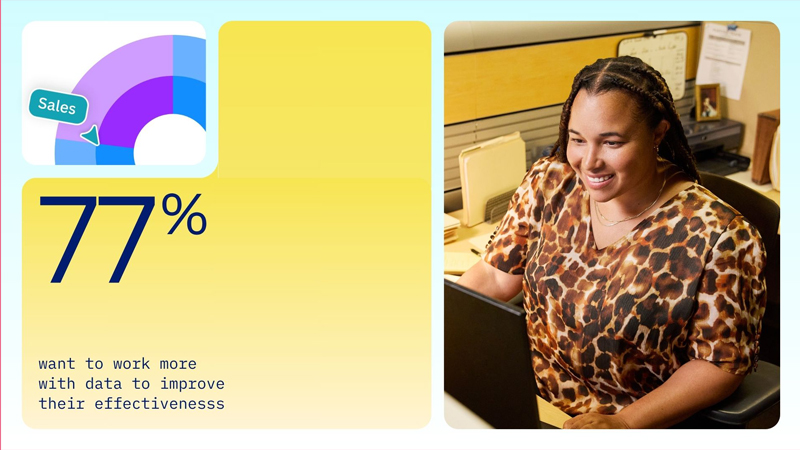
    Based on a global survey of 2,457 professionals including 313 from India the report spotlights a stark confidence-competence gap. A whopping 96 per cent of Indian respondents say they’re confident working with data, but only 66 per cent feel prepared to begin a data-heavy task. And while 92 per cent feel good about analysing and interpreting data, 74 per cent admit spreadsheet mistakes impact their work.

    From formula phobia to interpretation anxiety, it’s clear that data literacy training (offered by 81 per cent of Indian organisations) isn’t fully doing the trick. In fact, 80 per cent still experience data-related stress, and 45 per cent avoid working with data altogether despite recognising its value.

    It’s not just a question of skill, it’s one of storytelling. Nearly 97 per cent of Indian respondents work with data weekly, and 95 per cent say data literacy is expected in their role. But 44 per cent still struggle to visualise data effectively even though 96 per cent agree visuals boost credibility and make them more confident when presenting.

    The disconnect lies in outdated tools and scattered processes. 58 per cent of Indian respondents find switching between data tools confusing, and 96 per cent are eager for simpler visualisation platforms. 49 per cent are willing to spend up to three hours learning new solutions, while 91 per cent believe AI could help automate tedious tasks and enhance visualisation though scepticism remains about accuracy and creativity.

    “Working with data shouldn’t be confined to specialists,” said Canva head of EMEA Duncan Clark. “The goal isn’t to make everyone a data scientist, but to empower teams to turn numbers into compelling stories because data alone doesn’t move people, stories do.”

    With decision-making becoming more data-driven across the board 91 per cent say their organisation’s reliance on data has increased in the last two years the need for better storytelling is no longer optional. Canva’s own tools like Canva Sheets and advanced visualisation features aim to bridge this gap, making storytelling as intuitive as a drag-and-drop design.

    As teams wrestle with complex spreadsheets and campaign KPIs, one thing’s clear: the next big business differentiator isn’t just data, it’s the story you tell with it.

  • Harvard Business Review analytic services study reveals organisations are failing to nurture creativity

    Harvard Business Review analytic services study reveals organisations are failing to nurture creativity

    Mumbai: Canva, the all-in-one visual communication platform, has unveiled insights from a study of more than 500 business professionals on the challenges of fostering creativity within the workplace.

    Harvard Business Review analytic services conducted a global study in association with Canva and revealed that 96 per cent of survey respondents agree creative ideas are essential to an organization’s long-term success and performance. In addition, 94 per cent agree that organisations that invest in creative tools and technology will be more successful in the future.

    However, while many acknowledge the importance of creativity and seek a creative edge, few are successfully converting innovative ideas into business impact.

    Three categories of organizations emerged from the survey responses: leaders, followers, and laggards. These groupings were based on the organizations’ success at identifying creative solutions to business problems according to the respondents, regardless of whether the idea was implemented. Leaders (22 per cent) are those organizations that are “very successful” at identifying and implementing creative solutions to business problems, while followers (56 per cent) are “somewhat successful” and laggards (22 per cent) are “not very successful.”

    Top findings include:

    ●   Workplaces are failing to nurture the creativity of their employees. Nine out of ten (91 per cent) respondents agree that creative thinking is a key attribute for employees to possess yet more than half of laggards (58 per cent) say their organizational culture doesn’t reward creative pursuits. Only 19 per cent of leaders say the same.

    Leaders (41 per cent) are more likely than followers (17 per cent) and laggards (8 per cent) to encourage greater creativity by rewarding employees for taking creative risks and thinking outside the box.

     ●  Creativity must come from the top. Ninety-four percent agree that having a creative leader increases the creativity of their team. However, despite this widespread acknowledgment, nearly three-quarters of laggards (72 per cent) say the leadership at their organization is not engaged enough in creative thinking to support creativity among employees. Among leaders, only 23 per cent of respondents felt the same.

     ●  Creativity needs the right tools to flourish. Ninety-four percent of respondents agree that organizations that invest in creative technology will be more successful in the future. Eighty-seven percent expect their organization’s overall financial investment in creativity-building tools and technologies to increase or stay the same in the next year.

    Currently, the most used technologies to unlock creativity among leaders are collaboration platforms (65 per cent), visual communication (64 per cent), and data visualization tools (56 per cent). Collaboration can enhance the creative process by tapping into new ideas, perspectives, and approaches. Leaders are significantly more likely than laggards to facilitate cross-functional collaboration (53 per cent vs. 14 per cent) and encourage different ways of thinking (52 per cent vs.15 per cent).

    ●   Generative AI is helping organizations get ahead. Forty-two percent of leaders think gen AI can enhance creativity at their organization to a great extent. For example, according to leaders, gen AI may fuel creativity by: automating repetitive tasks, freeing employees up to focus on more creative endeavors (62 per cent), accelerating idea generation (60 per cent), and creating content with minimal human intervention (49 per cent). While forty-seven percent of leaders are using gen AI tools to foster creativity for the purpose of strategic growth, only 30 per cent of followers and 14 per cent of laggards are doing so.

    “In a business world focused on the bottom line, it’s easy to lose sight of the value of creativity. The findings highlight that creativity isn’t just a complement to business growth, it’s foundational to driving long-term success,” said Canva co-founder and chief product officer Cameron Adams. “Ultimately, innovation and creativity is what will differentiate the leaders from the laggards; it’s what drives growth in a challenging landscape.”

    For a more extensive look at the survey findings, you can read the report here 

  • Canva unveils ‘Dil Se, Design Tak’ campaign in India

    Canva unveils ‘Dil Se, Design Tak’ campaign in India

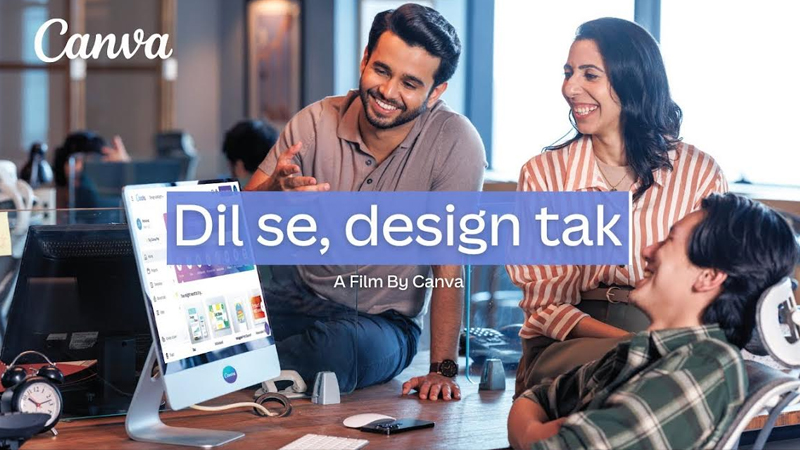
    Mumbai: Canva has unveiled its inaugural brand marketing campaign ‘Dil Se, Design Tak’ in India. This new campaign comes as the company doubles down on hyperlocal integrated marketing initiatives to reach and educate diverse segments of Indian users.

    India, home to a vibrant creator community, has quickly emerged as Canva’s fifth largest market, experiencing remarkable growth in 2023. Today over 120 Indian creators are now participating in the Canva Creator Program, and India’s Canva for freelancers community has 240,000 members—a testament to the growing demand for visual communication among knowledge workers and freelancers in the country.

    Canva’s latest brand campaign, ‘Dil Se, Design Tak’, highlights the power of using Canva to transform ideas into reality; encouraging individuals from small to large enterprises in India to unleash their creativity at work. Be it collaborating on projects between teams or creating winning pitch decks, Canva has always been at the forefront of making design accessible to everyone, from students and teachers to small business owners and large organisations.

    With the launch of this brand marketing campaign, Canva aims to deepen its connection with Indian users, and enhance top-of-mind awareness of its unique offerings.

    “In today’s world of work, effective visual communication is crucial. At Canva, we’ve seen first-hand how visual communication empowers teams to express ideas clearly, increase collaboration, and supercharge innovation,” said Canva India’s growth and marketing lead for Chandrika Deb. “To demonstrate our commitment and build a truly local brand in India, we launched this campaign to highlight how Canva is leading the charge when it comes to visual communication at work. ‘Dil Se, Design Tak’ reminds us all that there’s a designer in each and every one of us, and our creativity can flourish at work and in everyday life, with Canva.”

    In collaboration with OML Entertainment, the campaign features brand films that convey Canva’s overall brand proposition, integrating product messaging. It adopts an integrated marketing approach, showcasing creatives across TV and digital platforms.

    “So much love has gone into this campaign,” said Only Much Louder SVP and executive creative director Manav Parekh. “Partnering with Canva has been a creatively fulfilling endeavor that allowed us to realize their vision of democratizing design. Through this campaign, we aim to demonstrate how Canva’s intuitive tools can transform everyday moments into creative expressions, seamlessly integrating the power of design into daily communication. With ‘Dil se, design tak,’ our goal is to establish Canva as a brand that deeply resonates with Indian users. We’re here to recognize and nurture the creativity in everyone, positioning Canva not just as a tool, but as your new best friend for self-expression and innovation at work and in life.”

  • Canva survey: Senior marketers prioritise creativity despite investment gaps and talent shortage

    Canva survey: Senior marketers prioritise creativity despite investment gaps and talent shortage

    Mumbai: Canva, the world’s only all-in-one visual communication platform, and MMA Global, the global trade association for marketers, today released joint research on the value of creative output, tech stack saturation and navigating talent wars.    

    Canva and the MMA surveyed nearly 100 CMOs and senior marketers in decision-making roles from the U.S. and the U.K. and found that in today’s hyper-competitive brand world, more than three-quarters (77 per cent) believe creative output — encompassing all elements of campaigns and content — is more crucial now than ever before, with 69 per cent saying that creative is a top marketing priority in their organization.

    The survey revealed a variety of external forces fueling creativity in new ways and some obstacles blocking marketers from unlocking their full creative potential. The top findings include:  

    Creative Output is the New Gold Standard

    Marketing leaders are placing increasing value on creativity, and there’s an expectation this trend will continue.  

    . More than two-thirds (68 per cent) believe that creativity will become more important to their organization in the next 12 months.

    . 72 per cent believe that creative output adds value to customers’ lives.  

    But Creative Investment is Falling Short of Proven Worth

    Despite the increasing value placed on creativity, there is a significant gap in investment.  

    . More than half (55 per cent) invest 10 to 25 per cent of their total marketing budget on creative, while nearly a fifth (18 per cent) invest less than 10 per cent on creative.  

    . 41 per cent say they aren’t making the right level of investment in creative tools, systems and technologies.  

    The Creative Process Has Increased in Complexity

    Today’s ecosystem of creative tools is bringing plenty of improvements, but not without new challenges.  

    . The following elements are ranked as more challenging now (46 per cent) than they were five years ago: managing resources and budgets, maintaining consistency of output, and managing systems and tools.  

    . Most positive benefits come from the following tools, either by increasing efficiency or improving the creative output: collaboration platforms (54 per cent), photo/video editing tools (54 per cent), generative AI tools (35 per cent)

    Keeping Pace with Technological Advances is a Struggle

    Marketing leaders are mostly confident in their creative output when compared to competitors, but there are areas where they feel outpaced.  

    . Comparing their creative output and processes to competitors:  

    .  34 per cent believe their creative output is better, and 53 per cent believe it’s on par.

    .  45 per cent believe they’re worse at managing a creative process that optimizes for speed, efficiency and flexibility.  In-House Model Gains in Appeal

    The landscape of creative management is shifting with more work being brought in-house vs. outsourced to agencies. In-sourcing is mostly seen as a superior process for teams, but outsourcing is used when there is a need to collaborate on high-impact creative output.

    . 30 per cent have moved more work in-house in the last 12 months, and 31 per cent expect to do the same in the next year.

    .  48 per cent say creative strategy is mostly done in-house, while 23 per cent say it’s mostly outsourced.

    . 83 per cent say that in-house is better from a cost perspective, while 61 per cent say that outsourcing is better for the quality of creative output.  

    Pool for Top Creative Talent Is Shrinking

    There’s concern about a diminishing pool of strong creative talent, underscoring the challenge of securing, managing and retaining talent in a competitive market.

    .  47 per cent say the pool of strong talent has gotten smaller.

    .  80 per cent feel satisfied with outsourced creative talent and resources; while 74 per cent feel satisfied with in-house creative talent or resources.  

    “Producing stellar creative output while optimizing for resource efficiency is a massive challenge for every modern marketer today. How brands show up has gotten more competitive, there is a lot of tech to wade through, and the talent pool is narrowing,” said Canva CMO Zach Kitschke. “We’re delighted to work with the MMA team to identify the pain points and opportunities that marketers are facing today, in order to shed light on top-of-mind issues to inform their decision-making.”

    “While the last few years might seem solely focused on perfecting data, audience development, and targeting to drive outcomes, marketers are also recognizing the need to focus on a second creative revolution,” said MMA Global CEO Greg Stuart. “Marketers face a pivotal moment where embracing AI and the challenge of managing the Brand via what can be thousands of executions will redefine creativity’s role and brand communication, demanding a new and updated focus to managing the creative process.”

    Access “The State of Creative Process in Marketing” here.  

  • Canva Marks its tenth anniversary with a groundbreaking AI design suite

    Canva Marks its tenth anniversary with a groundbreaking AI design suite

    Mumbai: Canva, the world’s only all-in-one visual communication platform,  celebrates 10 years of innovation with the launch of Canva’s Magic Studio. Reinforcing Canva’s mission to democratize design, Magic Studio is the world’s most comprehensive AI design platform empowering individuals,  

    “A decade ago, Canva set out to empower the world to design by simplifying a complex and fragmented design ecosystem. As we go into the next decade of our journey, we’re incredibly excited to be taking a massive leap forward with the launch of Magic Studio – the first all-in-one suite of design AI tools created to supercharge the way teams create and scale visual content,” said  Canva co-founder and CEO Melanie  Perkins. “With a focus on making complex things simple, Magic Studio has been built for the 99 per cent of the world without complex design training. This launch marks the start  of an exciting new chapter as we double down on empowering over 150 million individuals and  thousands of businesses to unlock their creativity and achieve their goals.”

    Magic Studio marks the latest in a series of major product milestones over the past 12 months,  including the launch of Canva’s enterprise-focused Visual Suite in September 2022 and the rollout of new AI and marketer tools at Create this March. Fueled by the proliferation of visual communication at work, more than 65 million new users have started using Canva in the last year – a milestone that originally took the company eight years to achieve. Canva currently has 16 million paying subscribers and more than 150 million users worldwide. The company’s early set of AI-powered design products has been used more than 3 billion times.

    Magic Studio – The AI Design Platform for the Other 99 per cent.

    The rapid advancement of artificial intelligence presents an extraordinary opportunity for individuals and organisations to realize their innate creative potential. Despite an onslaught of new tools, AI-powered design remains geared towards design professionals and exists in a highly complex and fragmented market, limiting the incredible potential of this technology for the 99 per cent of workers who need to create more content than ever without advanced design skills.

    Magic Studio is a first-of-its-kind suite of AI tools built on proprietary models, in partnership with industry leaders, and through its rapidly growing app ecosystem. Magic Studio infuses the best of  AI across every part of Canva as the first and only truly all-in-one and interoperable AI design offering on the market. When time is short and productivity cannot be compromised, Magic Studio can generate compelling content, fast-track first drafts, automate mundane tasks, design like an expert, massively accelerate the creation process, and much more.  

    Starting today, Magic Studio offers the following and more:

    ● Magic Switch: An industry-first offering that instantly converts designs into a range of formats with one click. Turn a presentation into an executive summary or create a blog post from a whiteboard of ideas, plus, translate it into various languages in the process.

    ● Magic Media (text-to-image and text-to-video functionality): Turn text into engaging photos and, with its latest update, explore a wide range of new style options for any result.  Or, create compelling videos from an image or text using gen-two, a video generation AI model by Runway.

    ● Magic Design: Turn a prompt or your own media into captivating and fully designed videos,  presentations and more. Speed up the creation process by simply entering your idea,  selecting colour schemes and watching complete designs come to life ready to be shared or further customised to your liking.

    ● Brand Voice: Canva’s Magic Write copywriting assistant has been supercharged with brand voice. It’s easier than ever to write in your brand’s tone of voice in any design or document.  Simply add guidelines to your Brand Kit to generate on-brand content every time.

    ● Magic Morph: Turn your design from ordinary to extraordinary by instantly transforming words and shapes into new colours, textures, patterns and styles with a simple prompt.

    ● Magic Grab: A whole new way to reimagine your images. Magic Grab can select and separate any subject in your photo so that you can edit, reposition, or resize it.  

    ● Magic Expand: Perfect photos after they’ve been taken. Magic Expand can save zoomed-in images or turn a vertical shot horizontal by recovering whatever’s outside the frame.

    ● AI Apps on Canva: The Canva Apps Marketplace puts the best AI-powered design and productivity tools on the market all in one place. Now with access to world-leading AI  including Dall-E, Imagen by Google Cloud, MurfAI, Soundraw and more.

    Canva Shield – Industry-Leading Safety, Privacy and Indemnification

    In addition to Magic Studio, Canva also announced the launch of Canva Shield – an industry-leading and enterprise-grade collection of robust trust, safety and privacy controls designed to provide teams and organizations with peace of mind when creating content. Team administrators have full control over how Magic Studio products are enabled and used across the workplace and can toggle these features based on employee roles at any time.

    Canva Shield is the latest in the company’s substantial and ongoing investment in trust and safety following the integration of powerful automated content moderation, prompt filtering, reporting functionalities and the launch of an industry-first debiasing model ensuring Magic Studio products produce safe and inclusive results. For enterprise customers, Canva Shield also includes indemnification, providing additional peace of mind for organisations creating content with AI.  

    A Leading Creator Compensation Program

    In recognition of the importance of creators and designers, Canva also announced a $200 million commitment in content and AI royalties to be paid to the company’s creator community over the next three years. The Creator Compensation Program will pay Canva Creators who consent to have their content used to train the company’s proprietary AI models.

    Underscoring its commitment to transparency, Canva will provide creators the choice to opt out of their data being used for training purposes. Creators who opt into training AI models on their existing content will receive an initial payment followed by a monthly payment for continued use.

    “The future of design will be determined by human creativity but will also be fueled by unprecedented levels of AI innovation,” said Canva head of AI Danny Wu. “Creators are at the heart  of our community, so we fully embrace our responsibility to ensure that we’re offering them AI-powered tools that are firmly grounded in transparency, as well as ethical and fair practices every  step of the way.”  

    Fueling Visual Communication in the Enterprise  

    As Canva enters its next decade, the company remains focused on democratizing design in the workplace. A year since the launch of Canva’s Visual Suite which introduced collaborative documents, websites, presentations, whiteboards, data visualization, and more – Canva is experiencing unprecedented workplace growth and adoption, adding more than 65 million new monthly active users in a year while nearly doubling paid subscribers to over 16 million.

    More and more, professionals are expected to communicate visually at work. There are more than one million people now listing Canva as a core skill on their LinkedIn profile – a figure that’s surged  72 per cent year-over-year as visual communication becomes the status quo. For this reason, Canva’s traction in the enterprise is growing rapidly with large companies like FedEx, Starbucks, Colgate Palmolive, Zoom, Reddit, and others that rely on Canva as their visual communication tool of choice.  

    Canva’s all-in-one platform, now supercharged with more AI-powered design tools, is unlocking entirely new levels of creativity while empowering individuals, teams, and enterprises to create visual communication at scale like never before. To learn more about all of the functionality included within Canva’s Magic Studio, visit the Canva Newsroom. 

  • Nearly three-quarters of creative leaders in India view generative AI as an essential part of their toolkit: Canva survey

    Nearly three-quarters of creative leaders in India view generative AI as an essential part of their toolkit: Canva survey

    Mumbai: Canva, the world’s only all-in-one visual communication platform, has released new insights from more than 4,000 marketing and creative leaders on their attitudes towards  generative AI. The company commissioned Morning Consult to survey marketers and creatives from India,  US, UK, France, Germany, Spain, Brazil, Mexico, and Australia, to understand how AI is transforming their  organizations and their roles.

    The top findings specific to India include:

    Generative AI is fast becoming a fixture in the modern workplace. Ninety-seven percent of  marketing and creative leaders are comfortable with the rise of generative AI, with 72 per cent already  considering it an essential part of their creative toolkit.  

    AI is unlocking productivity and unleashing creativity. The majority (84 per cent) agree that AI-powered  tools reduce the minutiae of repetitive tasks, freeing them up to focus on the more creative and  meaningful parts of their role. Seventy percent say generative AI tools are enhancing their team’s  creativity with 72 per cent reporting time savings of at least 2-3 hours per week. Thirty-nine percent of  teams are saving between 4-5 hours per week on creative projects. Of the minority (15 per cent) who feel  generative AI tools are limiting their team’s creativity, the most common objection (53 per cent) was  preventing the development of original ideas.

    The AI ecosystem is fragmented and complex. Seventy-four percent believe there are already too  many generative AI tools, with 75 per cent overwhelmed by the learning curve. While most are excited  about the opportunities to elevate creativity, 62 per cent feel pressured to use it to keep pace with change  and 58% say they don’t know how to get the most value out of the technology.

    Generative AI is transforming the content creation process. With marketers and creatives tasked  with creating huge volumes of content, many are turning to AI for assistance. Most respondents  have used generative AI to create written content (88 per cent), generate unique images 84 per cent or edit  images and videos (83 per cent). Looking five years ahead, more than half (55 per cent) believe generative AI tools  will be better than humans at creating visual images.

    Concerns about data privacy persist. The ability of generative AI tools to process data and  generate sensitive information has raised some concerns. Marketing and creative leaders ranked  customer data (77 per cent), company data (76 per cent), and personal data (74 per cent) risks as their top concerns, over job loss, plagiarism, and bias. Organisations are addressing these risks, with more than half  (56 per cent) saying their company has established strict guidelines for the use of generative AI.

    Canva global head of brand marketing Natalie Schwartz said, “Tighter budgets, increased content  demands, and non-stop deadlines have led marketers to embrace generative AI tools to scale their output.  Our findings reinforce the fact that AI-powered tools are breathing new life into creativity and productivity  for marketers, a profound impact we see firsthand as a visual communication platform. In India, we’re  seeing an overwhelming acceptance of generative AI amongst marketing and creative leaders. Clearly,  they’re excited to see how this technology will impact the larger marketing ecosystem.”  

    Methodology

    Canva commissioned Morning Consult to survey 4,050 business leaders in marketing and creative roles.  These individuals are decision-makers for purchasing software in their department or company.  Specifically, Canva surveyed 505 business leaders in the United States, 500 in the United Kingdom, 513 in  Spain, 503 in Germany, 497 in France, 524 in Brazil, 315 in Mexico, 377 in India, and 316 in Australia.