Tag: Cannes Film festival

  • Madagascar 3 to premiere at Cannes

    Madagascar 3 to premiere at Cannes

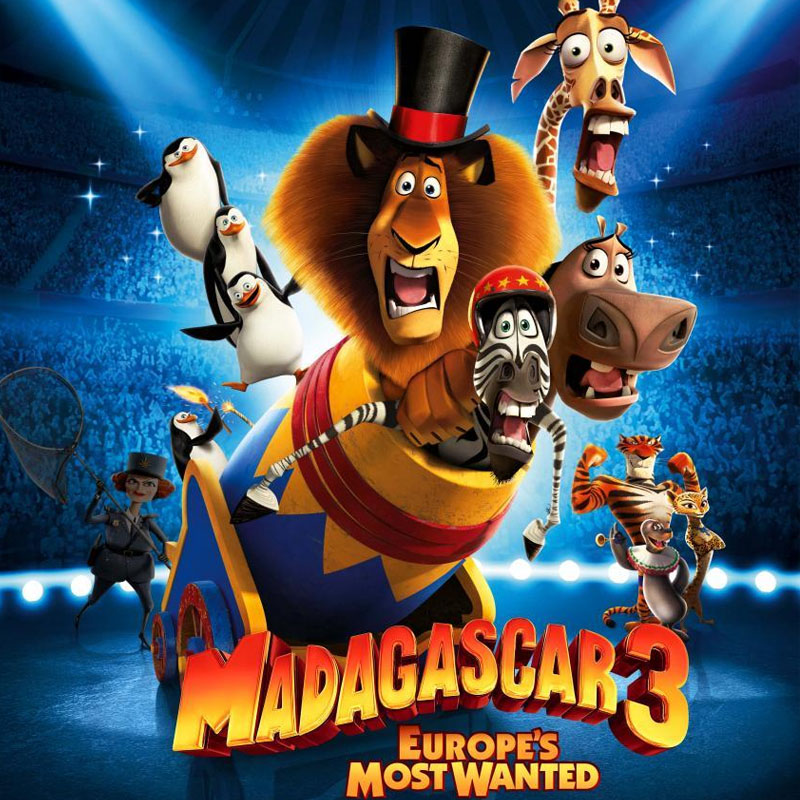
    MUMBAI: Madagascar 3: Europe‘s Most Wanted will have its world premiere at the Cannes Film Festival in May.

    The Paramount and DreamWorks Animation film, which will release on 8 June, will be the first major studio title to surface in connection with Cannes, a popular place to launch summer tentpoles.

    So far, only the opening-night film has been officially announced, Wes Anderson‘s Moonrise Kingdom, which Focus Features is releasing in the U.S.

    An official announcement about Madagascar 3 is expected in the coming days.

    Earlier, Paramount and DreamWorks Animation‘s Kung Fu Panda made its world premiere at the festival in 2008.

  • Italian filmmaker Moretti to head Cannes jury

    Italian filmmaker Moretti to head Cannes jury

    MUMBAI: Italian film producer, director, screenwriter and actor Nanni Moretti has been appointed President of the Jury of the 65th Cannes Film Festival. He follows Robert De Niro who headed the jury last year.

    Accepting the invitation, Moretti is reported to have said, "This is a real joy, an honour and a tremendous responsibility to preside over the jury of the most prestigious festival of cinematography in the world, a festival that is held in a country where film has always been treated with interest and respect.

    As a director, I was always very moved when my films were presented at the Festival de Cannes. I also have very happy memories of my experience as a jury member during the fiftieth anniversary season, and of the attentiveness and passion that went into the jury’s viewing and discussion of all the films.

    As a spectator, fortunately I still have the same curiosity that I had in my youth and so it is a great privilege for me to embark on this voyage into the world of contemporary international film."

    Incidentally. Moretti has so far presented six films at the Cannes fest including Habemus Papam (We Have a Pope) last year.

    The festival runs from May 16 to 27.


  • The Fascinating Story of Bollywood told in Doha

    The Fascinating Story of Bollywood told in Doha

    NEW DELHI: ‘Bollywood – The Greatest Love Story Ever Told‘ by Rakeysh Omprakash Mehra and Jeff Zimbalist was a star attraction earlier this week at the Third Doha Tribeca Film Festival.

    This was the only Indian film at the Festival which concluded today.

    The film is a 77-minute feature-documentary which was presented at Cannes Film Festival early this year.

    It is a film celebrating the spectacular world of Hindi cinema, featuring archival clips and interviews with Indian actors including Anil Kapoor, Amitabh Bachchan and Aishwarya Rai Bachchan.

    The film is also a tribute to a genre that established Mumbai as an international filmmaking hub and has significantly shaped the global perception of one of the largest and youngest democracies in the world.

  • Michalis Cacoyannis no more

    Michalis Cacoyannis no more

     MUMBAI: Acclaimed Cypriot film director, screenwriter and producer Michalis Cacoyannis passed away yesterday in Athens.


    Five-time Academy Award nominee 89-year old Cacoyannis was born in Limassol in 1921 and went to London to train as a lawyer in 1939.


    During his stay in London Cacoyannis produced Greek-language programmes for the BBC world service, discovered a latent interest in film and ended up studying theatre at the renowned Old Vic proceeding to work on the stage before turning to directing.


    He moved to Greece in 1953 and made his first film, Windfall in Athens that was nominated for a Golden Palm at the Cannes Film festival. 


    Among his films were Iphigenia, Attilas ‘74, Zorba the Greek, Electra and Stella.


  • Cannes 2007: 33 directors to tribute 60 years of film fest

    Cannes 2007: 33 directors to tribute 60 years of film fest

    MUMBAI: 33 of the world’s renowned directors from 25 countries will be making short films about what it is like to go to the movies in the 60th year of the Cannes Film Festival. The organizers have commissioned these directors to produces the shorts.

    Festival director Gilles Jacob pointed out that directors have been allotted three minutes each and given a theme: Moviegoing. The shorts, will then be bundled into one film, and screened on 20 May at the premier global film festival held in the French Riviera. .

    Jacob revealed that among those who have been invited and commissioned for the shots include: Alejandro Gonzalez Inarritu (Babel, 21 Grammes), the Coen Brothers (Fargo), Roman Polanski (The Pianist), David Cronenberg (A History of Violence), Lars von Trier (Breaking the Waves) and Wong Kar-wai (In the Mood for Love).

    The Cannes film fest website says that: “In this particular case, it was a matter of reuniting a group of creators – all universally famous – who represent both their countries and a proud conception of cinema, for a stroll around a unique theme, springboard for their inspiration.”
    The website says that none of the other filmmaker is aware of what the other is doing or the plot of their shorts. It adds that Wenders has so far filmed in the Congo, Tsai Ming Liang in Kuala Lumpur and Cronenberg in the… toilets!

    The website reveals they have all accepted “to discover them at the same time as the festival-goers themselves, on May 20th, as well as the general public, as it will be replayed the very same evening on television on Canal Plus.

    The list of directors who have been invited is as follow:
    Theo Angelopoulos, Olivier Assayas, Bille August, Jane Campion, Youssef Chahine, Chen Kaige, Michael Cimino, Ethan & Joel Coen, David Cronenberg, Jean-Pierre & Luc Dardenne, Manoel De Oliveira, Raymond Depardon, Atom Egoyan, Amos Gitai, Hou Hsiao Hsien, Alejandro Gonzalez Iñarritu, Aki Kaurismaki, Abbas Kiarostami, Takeshi Kitano, Andrei Konchalovsky, Claude Lelouch, Ken Loach, Nanni Moretti, Roman Polanski, Raoul Ruiz, Walter Salles, Elia Suleiman, Tsai Ming Liang, Gus Van Sant, Lars Von Trier, Wim Wenders, Wong Kar Wai and Zhang Yimou.

    Earlier in January, the Festival had announced that Stephen Frears director of the UK blockbuster The Queen would preside over the Cannes Film jury. Frears has also been behind movies such as My Beautiful Laundrette, Prick up Your Ears, Dangerous Liaisons, Accidental Hero, The Grifters, The Snapper, High Fidelity, and Dirty Pretty Things.

    Additionally, the festival office had announced that super model and actress (Helen of Troy) Diane Kruger would be be the Master of Ceremonies for the 60th Festival de Cannes. On 16 May she would be welcoming jury president Stephen Frears onto the stage of the Palais des Festivals. She will also host the closing ceremony, on Sunday 27 May, during which the Awards will be announced.

    She succeeds in this role to Monica Bellucci, Laura Morante, Cécile de France and Vincent Cassel.

  • Critically acclaimed ‘Babel’ to be simultaneously released in India

    Critically acclaimed ‘Babel’ to be simultaneously released in India

    MUMBAI: The Brad Pitt, Cate Blanchett film Babel, which premiered at the Cannes Film festival in France this year and won three awards there including one for the director will be simultaneously release in India along with the US in the mid-week of July.

    E-City films, which has distributed critically acclaimed films in the past like Million Dollar Baby and A History of Violence will release the film.Babel is the final chapter in the trilogy after the much-acclaimed Amores Perros and 21 Grams for Mexican director Alejandro Gonzalez Inarritu. The movie recently became a hot topic of discussion when imdb.com mentioned Shilpa Shetty and Mahima Chaudhry’s name in the film’s cast, even though they weren’t working on the movie.

    The title of the movie refers to the tower of Babel in the ancient town of Babylon, where humans thought they were gods and could reach the heaven without God. The film explores the subject of relationships and plays around the themes of love in adversity. It revolves around four interweaving stories set in Morocco, Tunisia, Mexico and Japan.

    At the press conference for the film at the Cannes Film Festival last month Iñárritu dwelt on the film’s title saying, “Babel, we think about man building this tower and trying to arrive to the sky and be gods. And then God got angry and he created these different languages. And that’s the reason we are talking so many languages all over the world. For me that’s not the problem, I think that language can be very easy to break.

    “For me, I think the problem is the ideas and preconceptions that we have that really keep us apart. That’s what the film’s about. And at the same time, I want this film to be basically about what separates us and what brings us together. I think that’s the key element: What makes us the same people living in the world and not what are our differences. Which ones are the similarities and I hope this film communicates that.”

    As far as the film’s message is concerned he says, “I don’t know if it’s an x-ray of the world because that’s too ambitious, but I tried to show what is going on with us at the moment. We see the “other” as always abstract, so that to be different means to be dangerous and not able to understand the other. This is happening not only country between country, but against fathers, against sons, against husband.

    “We are not able to listen anymore. I want to talk about that, the borders within our souls: our preconceptions of our fathers, the archetypes we have from religions, races, cultures. I tried to make a film that talks about prejudice without being prejudice.

    “Seeing a film is very a fragmented emotional experience. At this time, I didn’t want to play with that. I wanted to be more linear so that people wouldn’t feel distracted by the film’s structure and just let them flow with the emotion of the film.”

    Blanchett said, “This film is all about connections between parents and children, which I think so many of us understand. It felt very personal for me as well as for Alejandro. Being a parent, when you see a child in danger, particularly with an irresponsible nanny, it engages me, it’s like pulling the roots of my system out. It’s very distressing.”

    About the experience of working with Brad Pitt the Australian Oscar winner said, “It is like chocolate. He’s glorious and wonderful. We have been wanting to work with one another for a long time and to work together in quite an unexpected way and for Brad to be doing something for an audience, and Alejandro, it was intensely riveting.

    “The moment of him, which is so beautifully judged in terms of where it’s placed in the film but also so exquisitely performed, when he speaks with the children on the phone at the end, I think it’s one of the most moving moments in a film.”

    As far as America is concerned Iñárritu says, “In this film I don’t want good or bad guys. I think what is happening in the world is perpetuated. I try to be subtle in a way, to not be archetypal, and not prejudice. When I think about an Empire, it’s not about nations, human beings, others. It’s the way they normally try to pretend that everyone is a terrorist, anything can be held against you. I think there is now an obsessive idea, obsessive problem with the United States, showing its power. This is a very stressful moment in history.”
  • ‘The spring of Hong Kong’s film industry is in Mainland China’ : Wong Kar Wai – Hong Kong film director ( published in ‘Yazhou Zhoukan’ )

    ‘The spring of Hong Kong’s film industry is in Mainland China’ : Wong Kar Wai – Hong Kong film director ( published in ‘Yazhou Zhoukan’ )

    Wong Kar-wai believes that the culture and language of films in Hong Kong and mainland China share much in common. With the opportunities made possible by CEPA, there is plenty of room for the development of Hong Kong films in mainland China. The trick lies in how to capitalise on Hong Kong films’ uniqueness and strengths to plant seeds for their growth in the mainland.

    In Hong Kong, Wong Kar-wai is the film director who has won the most awards in international film festivals, yet he finds that the spring of Hong Kong’s film industry is in mainland China, since “the biggest market for Hong Kong films now is mainland China”. Wong is currently in New York preparing for his new film. He will act as the president of the jury in the Cannes Film Festival in May.

    In an exclusive interview with Yazhou Zhoukan, Wong shared his views on the development of Hong Kong’s film industry.

    Excerpts:

    You have recently become the first Chinese to be the president of the jury in the Cannes Film Festival. You seem to be closely associated with France, and a number of French people said they could easily relate to your films without any cultural barriers. What do you think are the reasons?
    The success of a film depends not only on the film’s quality, but good publicity and good film guides are also crucial. In this regard, my French distributor has been doing a superb job. The popularity of “In the Mood for Love” is mainly due to its relatively simple plot and characters. The film’s story and background as well as the characters’ relationships can be found in almost any city. For this universality, the film has been able to touch audiences in many different regions.

    All your films, from “As Tears Go By” to “Days of Being Wild”, “Happy Together” and “2046”, feature stories happening in Hong Kong, yet they can arouse empathy from audiences in different communities and races. They have an international audience. Can you share with us some tips and insights?
    The stories in my films happen mostly in Hong Kong, as Hong Kong is the place where I grew up. I have strong feelings for this city. Over the years, my creative experiences have been intertwined with happenings in this city. In filming “As Tears Go By” and “Days of Being Wild”, most of the shots were taken on Hong Kong streets. For “Happy Together”, although the film was shot in Argentina, the theme is also about Hong Kong. The city in “2046” is also a simulated Hong Kong created out of my subjective impressions from images taken in Thailand, Shanghai and Macau. Like most modern cities, Hong Kong has its own charm and all the characteristics of a cosmopolitan city. Stories happening here may very well happen in any other city. As I’ve said just now, because of this universality, my films can touch audiences outside of Hong Kong.

    The film industry in Asia including mainland China, Korea and Thailand have enjoyed increased box office sales and won wide acclaim. On the contrary, although Hong Kong films dominated the Chinese film market in the 80s and 90s, the industry’s development has not seen any major breakthroughs in recent years. What do think about the present Hong Kong film industry?
    Hong Kong films are now in a stage of transformation. Looking back, the boom in Hong Kong’s film industry had its historical reasons. Hong Kong’s film industry began to develop rapidly in the 40s in the last century. It catered not only to the local market then, but also met the needs of the numerous Chinese residing overseas. By the 70s, 80s and 90s, Hong Kong films basically dominated the Asian market. Backed by such a vast market, the Hong Kong film industry had grown to be so prosperous that not only did mainstream action films and comedies have a market, but other film genres could also exist.

    Take myself as an example, when I first joined the film industry, opportunities abounded for newcomers. But in the past several years, strong competitors have surfaced and eroded Hong Kong’s share in the film markets. Today, the future for Hong Kong’s film industry lies very much in mainland China where there is a population of 1.3 billion who speak Putonghua or Mandarin. Following the opening up of mainland China’s film industry to Hong Kong under CEPA (Mainland and Hong Kong Closer Economic Partnership Arrangement), coupled with the gradual easing of restrictions in the market, the mainland China is a good way out for Hong Kong’s film industry. We definitely have competitive advantages over Thai and Korean films, but have to think hard to identify our niche and strengths in the mainland market. We should revitalise the Hong Kong film industry with the backing of the mainland market on the one hand and have our eyes set on the world market on the other.

    So how do you think Hong Kong films should be positioned in the mainland China market?
    In the past two decades, Hong Kong has made significant contributions towards the development of mainland China’s film industry. Apart from investment in capital, Hong Kong film workers have also influenced their mainland counterparts in areas such as film techniques, creative thinking and marketing concepts. We should seize the opportunities made available by the current expansion of the China film market. Our greatest difficulty now is how to modify our films to meet with the needs of this enormous market, as moviegoers’ tastes in Hong Kong and the mainland differ a lot. We may easily find ourselves ending up in a situation where we pay too much attention to one and lose sight of the other. If we cater only to the needs of the mainland Chinese audience, we may lose our Hong Kong audience and perhaps also the essence of Hong Kong films.

    To address this “indigestion” problem, we have to be familiar with our own strengths and maximise our creative freedom to produce more film genres so that we can tap into more markets.

    What are Hong Kong’s competitive advantages in the mainland China market?
    In the mainland China market, Hong Kong has at least three competitive advantages. Firstly, in terms of culture, for historical reasons, Hong Kong is the point where east meets the west. In dealing with cross-culture themes in films or in partnering with western filmmakers, we definitely have a competitive edge. Secondly, in terms of themes, we have more freedom to create. All along, we have had a rather lenient censorship regime, giving us great flexibility in the choice of themes. Thirdly, in terms of financing, Hong Kong has a healthy and stable economic and finance systems, providing a favourable environment for film financing. This is also one of the strengths of our film industry.

    ‘Restrictions on films gradually easing in the Mainland China market

    The Korean film industry has been flourishing in recent years. What are its lessons for Hong Kong?
    Some people think that the boom in the Korean film industry in recent years is related to the Korean government’s protectionist measures, whereas in fact such measures have been in place for a long time. The prime reason for the boom in Korean films is that the Korean government has lifted restrictions on themes allowed in films in response to the major changes taking place in Korean society. As a result, themes banned in the past are now all of a sudden put on cinema screens. These films have made people sit up and attracted more moviegoers. The success of Korean films therefore lies in filmmakers’ ability to grasp the changes in Korean society and launch a facelift for their films.

    On the other hand, the Hong Kong film industry is very conservative. Perhaps because of the shrinking market, filmmakers are unwilling to take risks and tend to stick to old thinking and work patterns. Hong Kong film workers should widen their horizons and keep a close watch on our fast-changing world. They should not just reminisce on the glory of the past.

    For instance, when Hong Kong film workers complain about the lack of talents, have they ever considered where our talents have gone? If we can export our first-rate action choreographers to other countries, why can’t we borrow talents from other places? I believe that with the solid foundation of Hong Kong films and an open attitude, the prospects of Hong Kong’s film industry are still very promising.

    What are the areas for improvement in Hong Kong’s film industry?
    There are at least three areas where improvements can be made. Firstly, we need to strengthen our communication with banks. Although Hong Kong has a relatively stable finance system, banks are rather passive when it comes to talking about film financing. Secondly, the Hong Kong film industry lacks new blood. Although the government and community bodies have been organising filmmaking training programmes, the problem is that trainees do not have many career prospects when they have completed the training. This has put people off.

    Let’s take a look at the Directors Guild of America. They also organise training programmes in which trainees are put on every process in film production so that they can try out what they have learned. Hong Kong’s operating conditions are less favourable, and we do not have in place a mechanism to find jobs for trainees before the programmes are organised. This is a predicament of Hong Kong’s film industry. Thirdly, Hong Kong lacks professional film producers.

    The creative head and the producer are often the same person. Therefore, it may be difficult for them take a more macro perspective on the mainland China market or the international market.

    What do you think should be the division of work between a film’s creative head and its producer?
    A good analogy will be to liken the creative head to a seed and the producer to a gardener. A good seed needs the gardener to put it in good soil and water it. A good gardener with good soil but without a good seed cannot do much. Hence, the two should complement each other in their roles. For example, the theme of Ang Lee’s Brokeback Mountain was originally catered for a small audience. The director’s role is to film it to the best of his ability, while the producer should provide an environment, under limited costs, where the director can deliver his best, and bring the film to the right market. When a film has the ability to touch people, it can produce a good harvest given the right soil. If we say that a director is the soul in the creative process, the producer is then the guide of the film.

    Being part of the Hong Kong film industry, how do you wish the government can help and support the industry?
    The more urgent and short-term assistance needed is to clamp down on the piracy of films and BT, and the government is working hard on it now. In the long term, the film industry should sit together and discuss the issues that should be brought to the government’s attention. In fact, officials in the related government departments do not come from the film industry and will have difficulty in understanding our needs. It is best that we think about and express our needs to them.