Tag: Candyman

  • Horror movies bring good news for global box office

    Horror movies bring good news for global box office

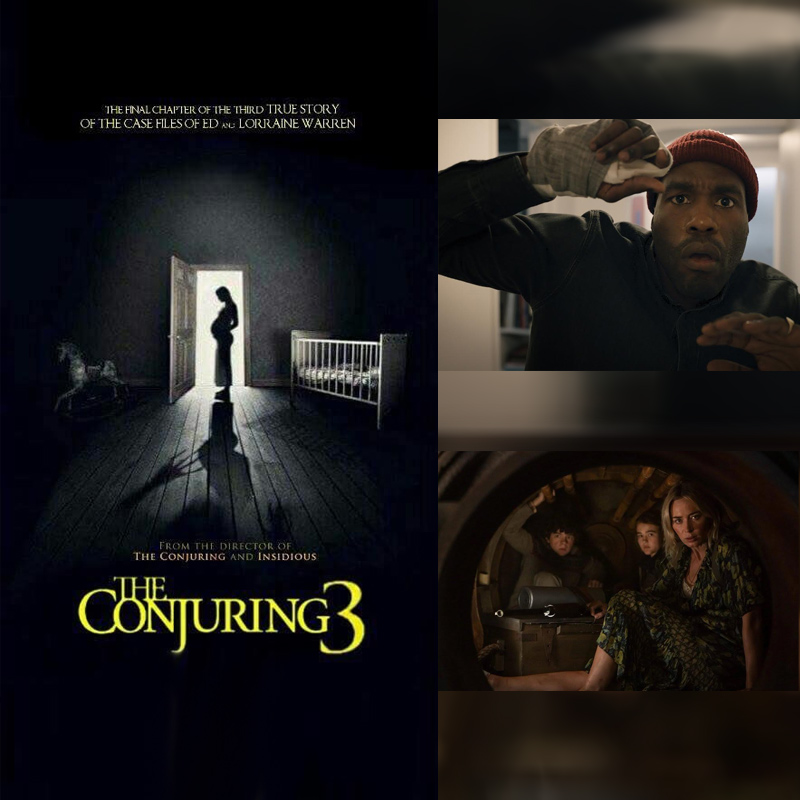
    Los Angeles: Movie theaters have been struggling to maintain a reopening momentum after being shuttered throughout 2020 due to the coronavirus. The problem has been magnified because many high-profile franchise films have been released in theatres and on streaming services at the same time. However, this hasn’t been the case across the board with Hollywood’s 2021 horror films, which are being shown in theatres exclusively or with delayed streaming access. 

    Horror is turning out to be good news for the box office as it is now estimated that the horror genre has generated 20 per cent of the overall theatrical revenue in North America during the pandemic. Furthermore, studies indicate that horror flicks may actually better prepare people for unsettling true-life events like a pandemic.

    While expensive, franchise-friendly tentpoles such as “Black Widow” have fallen short of expectations, the recently released, smaller $25 million budget, horror-flick “Candyman” had a solid debut earning $22 million at the US box office in its opening weekend. “Horror movies are an accountant’s and studio executive’s dream with a huge upside of profit potential due to their inherent cost-effectiveness,” said Comscore’s senior media analyst Paul Dergarabedian. “You don’t need to break the bank to make a killer scary movie and the box-office results for the genre, particularly during the pandemic, have been most impressive.”

    “A Quiet Place Part II” opened in May with $47.5 million and has earned $160 million domestically and nearly $300 million worldwide against its $60 million budget. “The Conjuring: The Devil Made Me Do It” debuted in June with $24 million domestically and went on to earn $65.5 million domestically and $201 million globally while also streaming on HBO Max. It had a budget of $40 million.

    By comparison, “Black Widow” had a production budget of $200 million and a marketing budget estimated to be around $100 million. With a worldwide box office of $370 million since its July release, which the studio splits with cinemas, the Marvel film likely won’t break even. Disney has reported some of its streaming grosses for the title, which includes an estimated $60 million opening weekend in digital sales.

    Likewise, “The Suicide Squad”, which opened in theaters in August, had a budget of $185 million and has currently collected an estimated $154.5 million in box office receipts. This film was also made available for free on HBO Max to subscribers.

    Just as horror flicks are faring better at the box office during the pandemic, a recent study out of the University of Chicago suggests fans of this genre may also cope better. According to the research team, fans of horror films are more psychologically resilient during frightening world events like the pandemic. Likewise, people who tend to watch so-called ‘prepper’ films about preparing for zombie invasions or the apocalypse reported feeling more prepared for life during the pandemic. These people also are more likely to watch pandemic-themed films during this time.

    According to Hartford HealthCare, the University of Chicago research team studied the answers of 322 American adult participants to questions related to movies, mental health, and the pandemic. Topics included film genre preferences, interest in pandemic films, their preparedness for the pandemic, and their mental health during the pandemic. They were asked if they have felt more depressed than usual, have been sleeping well, and whether they watch the news. They also had to report on their reaction to the pandemic, if they felt they knew what to buy to hunker down at home and if the pandemic itself surprised them.

    According to the team, horror fans were not necessarily more prepared or resilient in the face of the pandemic, but they were far less distressed psychologically. Fans of prepper genres were much more prepared for the pandemic and noted fewer disruptions to their day-to-day life. They were no more likely to exhibit positive resilience, however. Participants with a moderate or greater interest in watching horror films during the COVID-19 pandemic were found to have greater positive resilience in real life than those with no interest.

    “Scary movies allow viewers to practice coping with distressing emotions, such as fear, in a safe and controlled environment” said the director of the Anxiety Disorders Center, part of the Hartford HealthCare Behavioral Health Network, Dr David Tolin. “As we gain a sense of mastery over fear, real-world concerns such as the COVID pandemic become less scary to us as well.”

    The researchers concluded that while people generally watch horror films as entertainment, there are subtle lessons being delivered. Horror fiction allows its audience to practice emotion regulation skills and hone strategies for dealing with fear which may help in effective coping strategies in unusual true-world situations.

    The horror genre has helped buoy film theatres and possibly better prepared its fans to cope with the pandemic. Who would have known in early 2020 as COVID-19 began its deadly spread that watching a good horror flick might prove effective against this real-world enemy?

  • FCB Ulka campaign for Candyman Jellicious’ new flavor, Orange

    FCB Ulka campaign for Candyman Jellicious’ new flavor, Orange

    Having entered the fruit based jelly confectionery segment with Jellicious Strawberry,Candyman has introduced its second flavor, Jellicious Orange.


    Taking the ‘wiggle-wobble’ property forward, FCB Ulka has given a fresh twist to the brand idea, much to the merriment of kids all around.


    The film revolves around a boy visiting a natural history museum along with his parents. When his dad’s camera is taken away by the overtly stern curator, the boy decides to take things into his own hands. He tosses a few Jellicious Orange candies into the mouths of the artifacts, causing the T-Rex, a mummy and finally the curator himself, to do the wiggle-wobble dance. 


    Speaking about the new film, FCB Ulka Vice President – Bangalore Dennis Koshy said “The Jellicious promise has always been that of being a fun starter. The category demands that the commercial not only appeal to the tween, but also to the adult. The unusual setting adds to the fun image the brand has created for itself”.


    FCB Ulka Bangalore Creative Director Dharmesh Shah adds, “Our attempt was to make an entertaining and clutter-breaking ad. The T-Rex and the mummy dancing is sure to catch your attention.  Also, the wiggle-wobble jingle is very catchy and complements the dance beautifully.” 

  • ITC marketing spend trends – FY-2014

    ITC marketing spend trends – FY-2014

    BENGALURU: Indian fast moving consumer goods (FMCG), hotels, paperboards and specialty papers, packaging, agri-business, and information technology company ITC Limited (ITC) advertisement and sales promotion spend (ASP) in FY-2014 was 1 per cent lower at Rs 825.81 crore (2.28 per cent of Total Revenue or TR) as compared to the Rs 834.23 crore(2.57 per cent of TR) in FY-2013.

    Note: 100,00,000 = 100 Lakhs = 10 million = 1 crore

    The company has a huge brand and sub-brand portfolio and is one of the biggest player in the highly competative FMCG market, that is constantly adding newer and newer product categories and products. Some of the brands and sub-brands under the ITC umbrella across vertials include Sunfeast, Fiama Di Wills, Kitchens of India, ITC Hotels,  John Players, Bingo, Vivels, candyman, Mangaldeep, Aashirvaad, Classmate, Paperkraft, Wills, Aim, Engage and Mint-o.

    ITC’s ASP in terms of percentage of TR in FY-2014 was the lowest at 2.28 per cent over the 11 year period beginning FY-2004 till FY-2014. However, in absolute value terms, FY-2014 ASP at Rs 825.81 crore was the second largest during this period, the largest being in FY-2013 at Rs 834.23 crore. The company’s highest ASP spend in terms of percentage of TR was in 2004 at 3.97 per cent (Rs. 265.72 crore).

    The linear trend in Fig A below indicates that while in absolute rupee terms, the company’s  ASP will be higher in FY-2015 and beyond, ASP in terms of percentage of TR, ASP is likely to be lower or flat.

    ITC’s annual reports indicate some interesting facts. Please refer to Fig B below. The company’s TR has increased by 5.42 times from the Rs 6695.32 crores in FY-2004 to Rs 36288.03 crore in FY-2014, correspondingly, its total expenditure has gone up 5.31 times from Rs 4376.26 crore (65.4 per cent of TR)  to Rs 23236.48 crore (64 per cent of TR); it corresponding PAT too has jumped 5.58 times from Rs 1592.85 crore (23.8 per cent of TR) to Rs 8891.38 crore (24.5 per cent of TR), while its ASP has gone up by only 3.11 times from Rs 265.72 crore (3.97 per cent of TR) to Rs 825.81 crore (2.28 per cent of TR). Even in FY-2013, ASP was just fractionally more at 3.14 times the ASP in 2004. This indicates that the improvement in expenditure has been at the cost of lowering of ASP in terms of percentage of TR.

    Big players like HUL, Britannia and Parle in the foods and FMCG space are vying for the viewers attention and stomach space in the case of food, as ITC Foods division past CEO Ravi Navare once said. Over time, its ASP and specifically its ad spends should grow in absolute rupee terms, and maybe remain flat in terms of ASP as percentage of TR?