Tag: Canada

  • Corus Entertainment to launch lifestyle channel in December

    Corus Entertainment to launch lifestyle channel in December

    CANNES: Corus Entertainment, the leader in specialty entertainment with six of the top 10 specialty channels in Canada, has announced that it is introducing Cooking Channel, a 24-hour network that caters to avid food lovers, in Canada on December 12, 2016. From the creators of Food Network, Cooking Channel is the answer to a growing appetite for more content devoted to food and cooking in every dimension; from global cuisines to international travel, to food history and unconventional how-tos. A perfect pairing to Food Network Canada, Cooking Channel expands Corus’ dominance in the food and lifestyle genre and joins the company’s roster of lifestyle channels including: Food Network Canada, HGTV Canada, W Network, Slice, DIY Network and OWN: Oprah Winfrey Network Canada.

    “As leaders in specialty content, we are continuously evaluating our portfolio to ensure we are delivering audiences the best in entertainment,” said Corus Entertainment executive vice president and COO Barbara Williams. “As the interest in food content continues to grow, we see an opportunity to add the tremendously successful Cooking Channel brand to our portfolio. With Cooking Channel’s focus on serving those passionate about food and cooking, Food Network Canada will continue to bring Canadians dynamic, new entertainment-driven food related programming.”

    The launch of Cooking Channel in Canada is an extension of Corus’ long-term partnership with Scripps Networks Interactive, leading developer of engaging lifestyle content whose media portfolio includes: Food Network, HGTV and DIY Network. Since Scripps Networks’ launch of Cooking Channel in the United States in 2010, ratings and impressions have grown exponentially for core demographics (A25-54 / W25-54), averaging gains of more than 50% to date while growing its distribution to US households by 20%. The network most recently wrapped Q3 2016 notching its highest-rated, most-watched quarter to date marking 15 consecutive quarters of quarter-to-quarter growth.

    “Cooking Channel is a complementary network to Food Network and a leading lifestyle brand in the United States,” said Jim Samples, President, International, Scripps Networks Interactive. “As it has in the U.S., Cooking Channel will satiate audiences’ growing hunger for more food lifestyle programming in Canada and fuel their passion and curiosity for cooking and entertainment.” Cooking Channel in Canada is a rebrand of W Movies.

    A few of the highly-anticipated series confirmed for launch include:

    Man Fire Food

    Man Fire Food stars Canadian chef Roger Mooking and features the inventive ways to cook with fire. From small campfires to creative custom-made grills and smokers, they visit home cooks, pitmasters and chefs who are fascinated by fire and food. The smoke signals take Roger Mooking across the country, including the American South for different styles of regional barbecue, the Pacific Northwest for a tribal salmon bake and New England for a unique seafood feast. Man Fire Food celebrates the passion for building and cooking with fire.

    Dinner at Tiffani’s

    Tiffani Thiessen invites her celebrity friends over for good company, great stories and delicious food. With guests like Jason Priestley, Seth Green, her White Collar co-stars and more, it’s a wonderful blend of dinner, drinks and fun. Come for the party, stay for the food.

    Unwrapped 2.0

    Unwrapped 2.0 is a fun and fascinating look at the amazing processes, great stories and interesting people behind the creation of some of the most popular snacks. Hosted by Alfonso Ribeiro, Unwrapped 2.0 features everything from classic childhood treats to the latest candy crazes. Whether you like your snacks sweet or savoury, crispy or gooey,Unwrapped 2.0 offers behind-the-scenes access to get you a front row seat to see them made.

    Cake Hunters

    The perfect party needs the perfect cake, and that’s where Cake Hunters comes in! From weddings to family reunions and more, party hosts meet with three cake designers who present their jaw-dropping concepts to make the perfect complement to their big bashes. And once the winning design is picked, will the cake make it to the big day on time and in one piece?

    Unique Sweets

    Unique Sweets is an insider’s peek into innovative eateries that are creating the most unique and exciting desserts today. These sweet spots cover the gamut: restaurants with revolutionary pastry chefs; candy shops inventing eye-popping confections; chocolate boutiques with wild artisanal flavours and bakeries producing one-of-a-kind pastries, cakes and cookies in the middle of the night. Wherever there are gooey, crunchy, sticky and sweet treats that you won’t find anywhere else, Unique Sweets will take you there.

  • Corus Entertainment to launch lifestyle channel in December

    Corus Entertainment to launch lifestyle channel in December

    CANNES: Corus Entertainment, the leader in specialty entertainment with six of the top 10 specialty channels in Canada, has announced that it is introducing Cooking Channel, a 24-hour network that caters to avid food lovers, in Canada on December 12, 2016. From the creators of Food Network, Cooking Channel is the answer to a growing appetite for more content devoted to food and cooking in every dimension; from global cuisines to international travel, to food history and unconventional how-tos. A perfect pairing to Food Network Canada, Cooking Channel expands Corus’ dominance in the food and lifestyle genre and joins the company’s roster of lifestyle channels including: Food Network Canada, HGTV Canada, W Network, Slice, DIY Network and OWN: Oprah Winfrey Network Canada.

    “As leaders in specialty content, we are continuously evaluating our portfolio to ensure we are delivering audiences the best in entertainment,” said Corus Entertainment executive vice president and COO Barbara Williams. “As the interest in food content continues to grow, we see an opportunity to add the tremendously successful Cooking Channel brand to our portfolio. With Cooking Channel’s focus on serving those passionate about food and cooking, Food Network Canada will continue to bring Canadians dynamic, new entertainment-driven food related programming.”

    The launch of Cooking Channel in Canada is an extension of Corus’ long-term partnership with Scripps Networks Interactive, leading developer of engaging lifestyle content whose media portfolio includes: Food Network, HGTV and DIY Network. Since Scripps Networks’ launch of Cooking Channel in the United States in 2010, ratings and impressions have grown exponentially for core demographics (A25-54 / W25-54), averaging gains of more than 50% to date while growing its distribution to US households by 20%. The network most recently wrapped Q3 2016 notching its highest-rated, most-watched quarter to date marking 15 consecutive quarters of quarter-to-quarter growth.

    “Cooking Channel is a complementary network to Food Network and a leading lifestyle brand in the United States,” said Jim Samples, President, International, Scripps Networks Interactive. “As it has in the U.S., Cooking Channel will satiate audiences’ growing hunger for more food lifestyle programming in Canada and fuel their passion and curiosity for cooking and entertainment.” Cooking Channel in Canada is a rebrand of W Movies.

    A few of the highly-anticipated series confirmed for launch include:

    Man Fire Food

    Man Fire Food stars Canadian chef Roger Mooking and features the inventive ways to cook with fire. From small campfires to creative custom-made grills and smokers, they visit home cooks, pitmasters and chefs who are fascinated by fire and food. The smoke signals take Roger Mooking across the country, including the American South for different styles of regional barbecue, the Pacific Northwest for a tribal salmon bake and New England for a unique seafood feast. Man Fire Food celebrates the passion for building and cooking with fire.

    Dinner at Tiffani’s

    Tiffani Thiessen invites her celebrity friends over for good company, great stories and delicious food. With guests like Jason Priestley, Seth Green, her White Collar co-stars and more, it’s a wonderful blend of dinner, drinks and fun. Come for the party, stay for the food.

    Unwrapped 2.0

    Unwrapped 2.0 is a fun and fascinating look at the amazing processes, great stories and interesting people behind the creation of some of the most popular snacks. Hosted by Alfonso Ribeiro, Unwrapped 2.0 features everything from classic childhood treats to the latest candy crazes. Whether you like your snacks sweet or savoury, crispy or gooey,Unwrapped 2.0 offers behind-the-scenes access to get you a front row seat to see them made.

    Cake Hunters

    The perfect party needs the perfect cake, and that’s where Cake Hunters comes in! From weddings to family reunions and more, party hosts meet with three cake designers who present their jaw-dropping concepts to make the perfect complement to their big bashes. And once the winning design is picked, will the cake make it to the big day on time and in one piece?

    Unique Sweets

    Unique Sweets is an insider’s peek into innovative eateries that are creating the most unique and exciting desserts today. These sweet spots cover the gamut: restaurants with revolutionary pastry chefs; candy shops inventing eye-popping confections; chocolate boutiques with wild artisanal flavours and bakeries producing one-of-a-kind pastries, cakes and cookies in the middle of the night. Wherever there are gooey, crunchy, sticky and sweet treats that you won’t find anywhere else, Unique Sweets will take you there.

  • Prasar Bharati’s monopolistic-era mind-set has to change: CEO Jawhar Sircar

    Prasar Bharati’s monopolistic-era mind-set has to change: CEO Jawhar Sircar

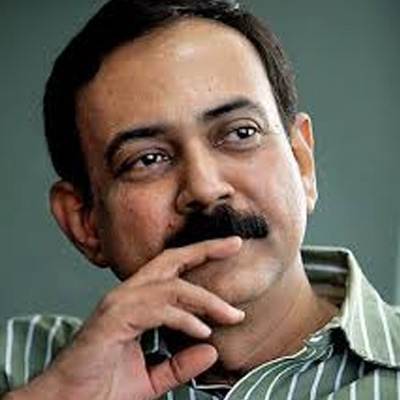
    Jawhar Sircar, the 60-something chief executive of India’s public broadcaster Prasar Bharati, is bubbling with ideas and energy —- in sharp contrast to the organisation’s headquarters that gives a casual visitor a sense of life in slo-mo.

    Prasar Bharati is the parent organisation of 57-year-old Doordarshan and 86-year-old All India Radio, the country’s public broadcasters who claim to cover almost the whole of this vast country stretching from Kashmir to Kanyakumari — and a little beyond to a few islands in the Indian Ocean.

    Critics say age and a semi-lethargic attitude of the over 40,000-strong workforce impede both the organisations from being nimble footed in an age when technology has vastly changed the speed and mode of delivery of video and voice. Add to these government controls (via annual funding from taxpayers’ money to bridge the gap between revenues and expenditure) and Prasar Bharati continues to function as a moribund government organisation despite an autonomous status.

    The chief executive of Prasar Bharati, who joined the organisation in 2012 after serving in the government for over 30 years, is not shy to admit that some fundamental problems stop it from being `India’s BBC’ or `India’s NHK’. He goes a step ahead to say (with tongue firmly in cheek) that functionaries of Prasar Bharati “are living in a time warp” — in a world of their own that could be a zillion years behind reality.

    Even if you give full marks to the tech and social media-savvy Sircar for being candid, it cannot be wished away that both DD and AIR will continue to be an extension of the government’s PR division unless there’s a radical change in the thought process of India’s ruling class and policy-makers.

    Sitting in his office, in New Delhi’s PTI Building, amidst files and colleagues, many of them keep trooping in and out for advise and suggestions, the multi-tasking Sircar, is completely at ease conversing with Indiantelevision.com’s consulting editors B B Nagpal and Anjan Mitra on a wide range of subjects. Edited excerpts from the interview:

    Q: What could be the five guiding principles that you have etched out for Prasar Bharati’s possible reform?

    JS: Having joined the organisation in 2012, I don’t have much time left now, but I am still trying to (a) bring about transparency (b) prioritise our objectives as a public broadcaster (c) get the organisation adjusted to competition (d) get the organisation to look at non-terrestrial and satellite-based transmission and (e) strengthen the FreeDish platform.

    Q: Do you think all of these could be achieved; especially as majority of Prasar Bharati workforce seems to still live in a pre-Independence era?

    JS: Sadly, the majority mindset is a big hurdle in moving forward in an era where technology is changing fast and competition (from private sector) reacts faster to changing situations and ground realities. Many of my colleagues still believe they are in a monopoly era when DD and AIR were the only source of entertainment and news for Indians. Such a mentality needs to change if we are to be in the race as a viable and relevant organisation.

    Moreover, I and the board of Prasar Bharati, have been functioning with inadequate human resources at senior levels too. There had been no Member-Finance for a long time and regular Director-Generals for DD and AIR are yet to be put in place.

    However, I also believe that with some change in mindset and additional revenue, which can accrue from infrastructure sharing with private sector players and better use of under-utilised existing infrastructure, Prasar Bharati can be more relevant as an organisation and to the Indian public.

    Q: Can you give an example of monopolistic era mindset that, probably, tries to be immune to technological advances?

    JS: (Smiles) During the first few years of my tenure nobody here understood what OTT (over the top) stood for and how it’s relevant to our services. Another example is that of adoption of MPEG-4 broadcast technology. It had been cleared one and a half years back, but procedural delays hampered quick adoption.

    Q: Now that we are talking about new technologies, what would your reaction be if digital terrestrial TV (DTT) is thrown open to private sector players by the government?

    JS:  Prasar Bharati approved DTT over a year back. We were told to come up with a plan but no base paper could be prepared as there was some resistance internally from certain quarters. And, Prasar Bharati is not afraid of private players’ entry into DTT… we are quite open to the idea. Rather we’d support any such move if the government some time allows private players in DTT.

    Q: What can Prasar Bharati gain by supporting private players’ entry in an arena that had been a monopoly of the pubcaster?

    JS: Changing with the times makes you relevant. Why should DTT be Prasar Bharati’s monopoly? By allowing others, Prasar Bharati can earn additional revenue as we can lease out our infrastructure to private players who, otherwise, would have to make huge investments in setting up infrastructure. Let a private sector (content) aggregator come forward with a business plan. DD, anyway, is investing on DTT infrastructure.

    Q: You earlier talked of bringing about transparency in Prasar Bharati. In what way do you feel the proposed e-auction system will be an improvement on the systems adopted until now to obtain content?

    JS: The proposed e-auction would be a completely transparent method and a step towards overall transparency in the organisation to acquire content for DD. It will also put the onus on the successful bidder to ensure good content.

    Q: But, before the current SFC system of self-financed commissioned programmes, DD had a system of sponsored programmes whereby good programmes where especially produced for DD. How is e-auction going to be an improvement over the sponsorship scheme?

    JS: That kind of system had led to monopolization… with a few big names dominating the entire prime time of the public broadcaster. Ultimately, the same big names from Bollywood made serials for Doordarshan and left little scope for fresh talent.

    In fact, I had initially faced internal resistance to the plan for e-auction of prime time slots too, and it took serious convincing on my part for the idea to sink in with others. DD has already announced that this is being done on an experimental basis and may be extended to its other channels if the scheme is accepted.

    I am confident that audience loyalty, national sentiment, and the vast reach of  Doordarshan would help to make the scheme a success.

    Q: You referred to giving a push to FreeDish, which is the country’s only free-to-air KU-band service. What are the plans and what would be the present subscriber base of FreeDish?

    JS: As the antennas are available in the market (at a nominal one-time price ranging between Rs 3,000-4,000) and no monthly subscription is paid, it is difficult to know how many television households have FreeDish. This audit will become easier when we complete the process of encryption of FreeDish while keeping it free to air.

    Exact figures may be difficult in our case as even the Telecom Regulatory Authority of India admits there is a gap between the number of active and registered subscribers of private DTH operators. But it is understood (from feedback from market and sale of antennas) that there are around 15 million households hooked to FreeDish.

    In recent times, FreeDish has got some very good response from private TV channels…many of them, including the big names, want to hop onto FreeDish’s platform for wider reach of their products. We have plans to increase the number of FTA television channels on the platform so a consumer gets more choice.

    Q: There were plans to upgrade FreeDish to MPEG 4 to increase its capacity to carry more signals. But there has been no report on the progress in this regard.

    JS: It is not possible to implement MPEG 4 and the new Indian Conditional Access System (iCAS) together at the same time. But the commitment of FreeDish is to reach the rural areas and also cover all the areas not reached so far by television.

    Q: After initial protests by Prasar Bharati, Broadcast Audience Research Council had begun to give rural data separately. Are you satisfied with the audience measurement system?

    JS: We at Prasar Bharati have had some issues with BARC, which we would prefer to raise directly with the organisation. But our understanding is that DD covers a large part of India via its terrestrial and satellite services.

    Q: Why is it that Prasar Bharati cannot function like BBC or other public service broadcasters in the world?

    JS: The move to greater professionalism is eventually bound to happen, but some hurdles have to be crossed including those relating to budgets.

    Public funding on the public broadcaster in India is just Rs 2,400 crore as compared to Rs 51,653 crore in Germany, Rs 39,800 crore in the United Kingdom, Rs 34,097 crore in Japan. The amount spent on Prasar Bharati was even lower than those spent on pubcasters in Canada, Australia, and Korea.

    The per capita funding in India on the pubcaster is only Rs 19 as compared to UK and Germany where it is approximately Rs 6,000 to Rs 7,000. Even Malaysia has a per capita funding of Rs 350.

    Q: What are the constraints on acquiring good content for Doordarshan? 

    JS: The expenditure on content in India is a mere six per cent as compared to 75 per cent by NHK in Japan and 71 per cent by the BBC.
     The Indian Government gives 62 per cent as compared to 100 per cent in Russia, 98.2 per cent in Malaysia, 97 per cent in Germany, and 83 per cent in the UK. So, this should answer your question.     

  • Prasar Bharati’s monopolistic-era mind-set has to change: CEO Jawhar Sircar

    Prasar Bharati’s monopolistic-era mind-set has to change: CEO Jawhar Sircar

    Jawhar Sircar, the 60-something chief executive of India’s public broadcaster Prasar Bharati, is bubbling with ideas and energy —- in sharp contrast to the organisation’s headquarters that gives a casual visitor a sense of life in slo-mo.

    Prasar Bharati is the parent organisation of 57-year-old Doordarshan and 86-year-old All India Radio, the country’s public broadcasters who claim to cover almost the whole of this vast country stretching from Kashmir to Kanyakumari — and a little beyond to a few islands in the Indian Ocean.

    Critics say age and a semi-lethargic attitude of the over 40,000-strong workforce impede both the organisations from being nimble footed in an age when technology has vastly changed the speed and mode of delivery of video and voice. Add to these government controls (via annual funding from taxpayers’ money to bridge the gap between revenues and expenditure) and Prasar Bharati continues to function as a moribund government organisation despite an autonomous status.

    The chief executive of Prasar Bharati, who joined the organisation in 2012 after serving in the government for over 30 years, is not shy to admit that some fundamental problems stop it from being `India’s BBC’ or `India’s NHK’. He goes a step ahead to say (with tongue firmly in cheek) that functionaries of Prasar Bharati “are living in a time warp” — in a world of their own that could be a zillion years behind reality.

    Even if you give full marks to the tech and social media-savvy Sircar for being candid, it cannot be wished away that both DD and AIR will continue to be an extension of the government’s PR division unless there’s a radical change in the thought process of India’s ruling class and policy-makers.

    Sitting in his office, in New Delhi’s PTI Building, amidst files and colleagues, many of them keep trooping in and out for advise and suggestions, the multi-tasking Sircar, is completely at ease conversing with Indiantelevision.com’s consulting editors B B Nagpal and Anjan Mitra on a wide range of subjects. Edited excerpts from the interview:

    Q: What could be the five guiding principles that you have etched out for Prasar Bharati’s possible reform?

    JS: Having joined the organisation in 2012, I don’t have much time left now, but I am still trying to (a) bring about transparency (b) prioritise our objectives as a public broadcaster (c) get the organisation adjusted to competition (d) get the organisation to look at non-terrestrial and satellite-based transmission and (e) strengthen the FreeDish platform.

    Q: Do you think all of these could be achieved; especially as majority of Prasar Bharati workforce seems to still live in a pre-Independence era?

    JS: Sadly, the majority mindset is a big hurdle in moving forward in an era where technology is changing fast and competition (from private sector) reacts faster to changing situations and ground realities. Many of my colleagues still believe they are in a monopoly era when DD and AIR were the only source of entertainment and news for Indians. Such a mentality needs to change if we are to be in the race as a viable and relevant organisation.

    Moreover, I and the board of Prasar Bharati, have been functioning with inadequate human resources at senior levels too. There had been no Member-Finance for a long time and regular Director-Generals for DD and AIR are yet to be put in place.

    However, I also believe that with some change in mindset and additional revenue, which can accrue from infrastructure sharing with private sector players and better use of under-utilised existing infrastructure, Prasar Bharati can be more relevant as an organisation and to the Indian public.

    Q: Can you give an example of monopolistic era mindset that, probably, tries to be immune to technological advances?

    JS: (Smiles) During the first few years of my tenure nobody here understood what OTT (over the top) stood for and how it’s relevant to our services. Another example is that of adoption of MPEG-4 broadcast technology. It had been cleared one and a half years back, but procedural delays hampered quick adoption.

    Q: Now that we are talking about new technologies, what would your reaction be if digital terrestrial TV (DTT) is thrown open to private sector players by the government?

    JS:  Prasar Bharati approved DTT over a year back. We were told to come up with a plan but no base paper could be prepared as there was some resistance internally from certain quarters. And, Prasar Bharati is not afraid of private players’ entry into DTT… we are quite open to the idea. Rather we’d support any such move if the government some time allows private players in DTT.

    Q: What can Prasar Bharati gain by supporting private players’ entry in an arena that had been a monopoly of the pubcaster?

    JS: Changing with the times makes you relevant. Why should DTT be Prasar Bharati’s monopoly? By allowing others, Prasar Bharati can earn additional revenue as we can lease out our infrastructure to private players who, otherwise, would have to make huge investments in setting up infrastructure. Let a private sector (content) aggregator come forward with a business plan. DD, anyway, is investing on DTT infrastructure.

    Q: You earlier talked of bringing about transparency in Prasar Bharati. In what way do you feel the proposed e-auction system will be an improvement on the systems adopted until now to obtain content?

    JS: The proposed e-auction would be a completely transparent method and a step towards overall transparency in the organisation to acquire content for DD. It will also put the onus on the successful bidder to ensure good content.

    Q: But, before the current SFC system of self-financed commissioned programmes, DD had a system of sponsored programmes whereby good programmes where especially produced for DD. How is e-auction going to be an improvement over the sponsorship scheme?

    JS: That kind of system had led to monopolization… with a few big names dominating the entire prime time of the public broadcaster. Ultimately, the same big names from Bollywood made serials for Doordarshan and left little scope for fresh talent.

    In fact, I had initially faced internal resistance to the plan for e-auction of prime time slots too, and it took serious convincing on my part for the idea to sink in with others. DD has already announced that this is being done on an experimental basis and may be extended to its other channels if the scheme is accepted.

    I am confident that audience loyalty, national sentiment, and the vast reach of  Doordarshan would help to make the scheme a success.

    Q: You referred to giving a push to FreeDish, which is the country’s only free-to-air KU-band service. What are the plans and what would be the present subscriber base of FreeDish?

    JS: As the antennas are available in the market (at a nominal one-time price ranging between Rs 3,000-4,000) and no monthly subscription is paid, it is difficult to know how many television households have FreeDish. This audit will become easier when we complete the process of encryption of FreeDish while keeping it free to air.

    Exact figures may be difficult in our case as even the Telecom Regulatory Authority of India admits there is a gap between the number of active and registered subscribers of private DTH operators. But it is understood (from feedback from market and sale of antennas) that there are around 15 million households hooked to FreeDish.

    In recent times, FreeDish has got some very good response from private TV channels…many of them, including the big names, want to hop onto FreeDish’s platform for wider reach of their products. We have plans to increase the number of FTA television channels on the platform so a consumer gets more choice.

    Q: There were plans to upgrade FreeDish to MPEG 4 to increase its capacity to carry more signals. But there has been no report on the progress in this regard.

    JS: It is not possible to implement MPEG 4 and the new Indian Conditional Access System (iCAS) together at the same time. But the commitment of FreeDish is to reach the rural areas and also cover all the areas not reached so far by television.

    Q: After initial protests by Prasar Bharati, Broadcast Audience Research Council had begun to give rural data separately. Are you satisfied with the audience measurement system?

    JS: We at Prasar Bharati have had some issues with BARC, which we would prefer to raise directly with the organisation. But our understanding is that DD covers a large part of India via its terrestrial and satellite services.

    Q: Why is it that Prasar Bharati cannot function like BBC or other public service broadcasters in the world?

    JS: The move to greater professionalism is eventually bound to happen, but some hurdles have to be crossed including those relating to budgets.

    Public funding on the public broadcaster in India is just Rs 2,400 crore as compared to Rs 51,653 crore in Germany, Rs 39,800 crore in the United Kingdom, Rs 34,097 crore in Japan. The amount spent on Prasar Bharati was even lower than those spent on pubcasters in Canada, Australia, and Korea.

    The per capita funding in India on the pubcaster is only Rs 19 as compared to UK and Germany where it is approximately Rs 6,000 to Rs 7,000. Even Malaysia has a per capita funding of Rs 350.

    Q: What are the constraints on acquiring good content for Doordarshan? 

    JS: The expenditure on content in India is a mere six per cent as compared to 75 per cent by NHK in Japan and 71 per cent by the BBC.
     The Indian Government gives 62 per cent as compared to 100 per cent in Russia, 98.2 per cent in Malaysia, 97 per cent in Germany, and 83 per cent in the UK. So, this should answer your question.     

  • GRB Entertainment announced acquisition of ‘Guide to fabulous’ and ‘Recipe Rehab’

    GRB Entertainment announced acquisition of ‘Guide to fabulous’ and ‘Recipe Rehab’

    MUMBAI: GRB Entertainment has announced deals for two factual make-over series in Canada — Secret Guide to Fabulous and My First Home; and a family-oriented food competition format to Sweden for Recipe Rehab.

    Canada’s Blue Ant Media acquired Secret Guide to Fabulous, from executive producers Kelly Ripa and Mark Conseulos. The series unlocks the mysteries to making life better, from whipping up a last minute gourmet meal to refining personal style, from picking the perfect gift to managing life on social media. Secret Guide provides the code to living a fabulous life.

    Game TV in Canada took two seasons of home-buying series My First Home, produced for TLC, which follows first-time homebuyers through the process of purchasing their first property, where “must-haves” and budgets don’t always meet.

    Sweden’s Elk Production acquired the format Recipe Rehab, from the creator of The Biggest Loser. In a world of fast food and fast living, two chefs are challenged to remake a family’s favourite meal by transforming their calorie-packed delights into tasty and healthy alternatives. The family then judges each meal based on preparation and flavour.

    “GRB is excited to take Recipe Rehab, our new cooking show format, to Sweden where it is sure to be a major hit and help families come together in the kitchen. Additionally, our Canadian partners, Blue Ant Media and Game TV, will find success with exceptional make-over programs My First Home and Secret Guide to Fabulous. GRB continues to evolve in our program offerings and excel in the factual genre,” said GRB Entertainment SVP of International Distribution Michael Lolato

  • GRB Entertainment announced acquisition of ‘Guide to fabulous’ and ‘Recipe Rehab’

    GRB Entertainment announced acquisition of ‘Guide to fabulous’ and ‘Recipe Rehab’

    MUMBAI: GRB Entertainment has announced deals for two factual make-over series in Canada — Secret Guide to Fabulous and My First Home; and a family-oriented food competition format to Sweden for Recipe Rehab.

    Canada’s Blue Ant Media acquired Secret Guide to Fabulous, from executive producers Kelly Ripa and Mark Conseulos. The series unlocks the mysteries to making life better, from whipping up a last minute gourmet meal to refining personal style, from picking the perfect gift to managing life on social media. Secret Guide provides the code to living a fabulous life.

    Game TV in Canada took two seasons of home-buying series My First Home, produced for TLC, which follows first-time homebuyers through the process of purchasing their first property, where “must-haves” and budgets don’t always meet.

    Sweden’s Elk Production acquired the format Recipe Rehab, from the creator of The Biggest Loser. In a world of fast food and fast living, two chefs are challenged to remake a family’s favourite meal by transforming their calorie-packed delights into tasty and healthy alternatives. The family then judges each meal based on preparation and flavour.

    “GRB is excited to take Recipe Rehab, our new cooking show format, to Sweden where it is sure to be a major hit and help families come together in the kitchen. Additionally, our Canadian partners, Blue Ant Media and Game TV, will find success with exceptional make-over programs My First Home and Secret Guide to Fabulous. GRB continues to evolve in our program offerings and excel in the factual genre,” said GRB Entertainment SVP of International Distribution Michael Lolato

  • ‘Fireflies in the Abyss’ by Chandrasekhar Reddy gets selected at Hot Docs Canadian International Documentary Festival

    ‘Fireflies in the Abyss’ by Chandrasekhar Reddy gets selected at Hot Docs Canadian International Documentary Festival

    MUMBAI: Chandrasekhar Reddy’s acclaimed Indian documentary Fireflies in the Abyss has been selected to be featured in Hot Docs Canadian International Documentary Festival this year. The festival will be held from 28 April to 6 May 2016.

    The film is selected among 38 best features from across the world to be screened in the world showcase section, marking its North American premiere at the festival.

    The 23 Hot Docs Canadian International Documentary Festival is North America’s largest documentary film festival, conference and market that is held annually in Toronto, Ontario, Canada.

    Reddy’s feature captures the dream of an 11-year-old boy who fights his way out of life in the rat-hole coalmines, to put himself in school.

    The film made its world premiere at the Busan International Film Festival and made its India premiere at the 14 Mumbai International Film Festival where it won two top awards the Golden Conch award for best documentary feature film and the best cinematography in the national competition category.

    Delighted with the selection at Hot Docs, Chandrasekhar says, “After the response and appreciation at the Busan and Mumbai fesivals, it is a great opportunity for the film to get a platform at Hot Docs, which will help reach the North American audiences and market. The Toronto audiences are known to be hugely appreciative and I am really looking forward to present the film there. There is also a brilliant selection of films this year to watch, including Herzog’s new film and am hoping to catch some of them.”

    The short documentary titled Amdavad Ma Famous directed by Hardik Mehta is competing in the international shorts category.

    Synopsis of Fireflies in the Abyss:

    The ‘rat-hole’ mines in the Jaintia Hills of Northeast India, are hostile pits where men and boys risk their lives everyday to scratch coal out of hard rock. Burrowing into narrow tunnels, they are armed with nothing more than a pickaxe and a torch.

    Each of them comes to the coal pit for different reasons. But once there, all of them are looking for a chance to breakout. Some are able to escape, most can’t. Even with the odds stacked against him, Suraj, an 11-year old boy, grapples his way out of this abyss to eventually put himself in school.

    The film follows Suraj and several other miners whose lives intertwine with his, to reveal lives under extraordinary circumstances and the brutal choices they are forced to resolve at every turn of their lives

  • ‘Fireflies in the Abyss’ by Chandrasekhar Reddy gets selected at Hot Docs Canadian International Documentary Festival

    ‘Fireflies in the Abyss’ by Chandrasekhar Reddy gets selected at Hot Docs Canadian International Documentary Festival

    MUMBAI: Chandrasekhar Reddy’s acclaimed Indian documentary Fireflies in the Abyss has been selected to be featured in Hot Docs Canadian International Documentary Festival this year. The festival will be held from 28 April to 6 May 2016.

    The film is selected among 38 best features from across the world to be screened in the world showcase section, marking its North American premiere at the festival.

    The 23 Hot Docs Canadian International Documentary Festival is North America’s largest documentary film festival, conference and market that is held annually in Toronto, Ontario, Canada.

    Reddy’s feature captures the dream of an 11-year-old boy who fights his way out of life in the rat-hole coalmines, to put himself in school.

    The film made its world premiere at the Busan International Film Festival and made its India premiere at the 14 Mumbai International Film Festival where it won two top awards the Golden Conch award for best documentary feature film and the best cinematography in the national competition category.

    Delighted with the selection at Hot Docs, Chandrasekhar says, “After the response and appreciation at the Busan and Mumbai fesivals, it is a great opportunity for the film to get a platform at Hot Docs, which will help reach the North American audiences and market. The Toronto audiences are known to be hugely appreciative and I am really looking forward to present the film there. There is also a brilliant selection of films this year to watch, including Herzog’s new film and am hoping to catch some of them.”

    The short documentary titled Amdavad Ma Famous directed by Hardik Mehta is competing in the international shorts category.

    Synopsis of Fireflies in the Abyss:

    The ‘rat-hole’ mines in the Jaintia Hills of Northeast India, are hostile pits where men and boys risk their lives everyday to scratch coal out of hard rock. Burrowing into narrow tunnels, they are armed with nothing more than a pickaxe and a torch.

    Each of them comes to the coal pit for different reasons. But once there, all of them are looking for a chance to breakout. Some are able to escape, most can’t. Even with the odds stacked against him, Suraj, an 11-year old boy, grapples his way out of this abyss to eventually put himself in school.

    The film follows Suraj and several other miners whose lives intertwine with his, to reveal lives under extraordinary circumstances and the brutal choices they are forced to resolve at every turn of their lives

  • Times Internet acquires digital video rights of ICC Events for US & Canada

    Times Internet acquires digital video rights of ICC Events for US & Canada

    MUMBAI: Times Internet owned Cricbuzz.com has become the exclusive licensee for digital video clip rights for United States and Canada for all ICC events for a period of four years. 

    The digital rights for all events scheduled to take place between 2016 and 2019, including the ICC World Twenty20 which begins in March in India will vest with Cricbuzz.com. 

    The four-year deal includes seven ICC events starting with the ICC World Twenty20 2016.

    The deal gives Times Internet exclusive rights to deliver a comprehensive video package that includes video clips of pre-match, in-match and post-match coverage.

    In the first agreement of this nature, the ICC is providing in-match video clips to digital licensees and Times Internet will have exclusive access to six minutes’ video clips from every hour of match coverage starting with the first ball and ending with the winning moment.

    As the exclusive video clips licensee for these two North American markets, Times Internet will also get access to key moments from all matches in the ICC archive.

    Times Internet Limited’s newly acquired digital clips rights in the United States and Canada will supplement Cricbuzz.com’s existing live coverage in the form of text, scorecard and infographics across its digital platforms.

    “North America has traditionally been our largest audience base outside of India and we are thrilled to be able to offer an enhanced experience of the ICC events to cricket fans across that region with near-live in-match clips. We are excited to partner with the ICC to grow the sport in the region through our coverage of the premier competitions in the sport of cricket,” said Times Internet CEO Satyan Gajwani.

    The other events included in the package are ICC Champions Trophy 2017, ICC Women’s World Cup 2017, ICC U19 Cricket World Cup 2018, ICC Cricket World Cup Qualifier 2018, ICC Women’s World Twenty20 2018 and ICC Cricket World Cup 2019.

  • Times Internet acquires digital video rights of ICC Events for US & Canada

    Times Internet acquires digital video rights of ICC Events for US & Canada

    MUMBAI: Times Internet owned Cricbuzz.com has become the exclusive licensee for digital video clip rights for United States and Canada for all ICC events for a period of four years. 

    The digital rights for all events scheduled to take place between 2016 and 2019, including the ICC World Twenty20 which begins in March in India will vest with Cricbuzz.com. 

    The four-year deal includes seven ICC events starting with the ICC World Twenty20 2016.

    The deal gives Times Internet exclusive rights to deliver a comprehensive video package that includes video clips of pre-match, in-match and post-match coverage.

    In the first agreement of this nature, the ICC is providing in-match video clips to digital licensees and Times Internet will have exclusive access to six minutes’ video clips from every hour of match coverage starting with the first ball and ending with the winning moment.

    As the exclusive video clips licensee for these two North American markets, Times Internet will also get access to key moments from all matches in the ICC archive.

    Times Internet Limited’s newly acquired digital clips rights in the United States and Canada will supplement Cricbuzz.com’s existing live coverage in the form of text, scorecard and infographics across its digital platforms.

    “North America has traditionally been our largest audience base outside of India and we are thrilled to be able to offer an enhanced experience of the ICC events to cricket fans across that region with near-live in-match clips. We are excited to partner with the ICC to grow the sport in the region through our coverage of the premier competitions in the sport of cricket,” said Times Internet CEO Satyan Gajwani.

    The other events included in the package are ICC Champions Trophy 2017, ICC Women’s World Cup 2017, ICC U19 Cricket World Cup 2018, ICC Cricket World Cup Qualifier 2018, ICC Women’s World Twenty20 2018 and ICC Cricket World Cup 2019.