Tag: campaigns

  • Share of news channels in total AdEx is encouraging: CVL Srinivas

    Share of news channels in total AdEx is encouraging: CVL Srinivas

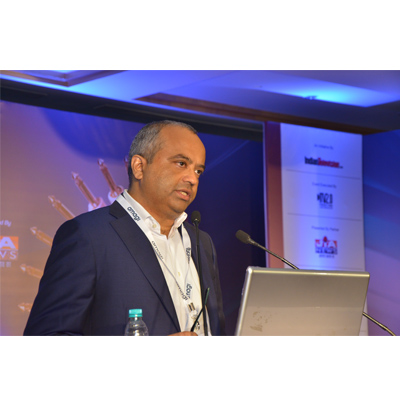
    NOIDA: “Indian news industry is as vibrant as the different cultures of India,” said GroupM south Asia CVL Srinivas as he presented the keynote on Innovations in news selling at the 7th Indian News Television Summit.


    Srinivas, sharing a media agency’s perspective on news and brands, added that the news industry today needs a lot of balance especially in terms of reportage, content for different audiences across platforms. 


    As for the AdEx, he informed that in the country the advertising expenditure for television stood at Rs 16,000 crore. “The news channels take 13 per cent share of the pie which is encouraging as the viewership of news channels stood at 10 per cent,” he stressed upon.


    Talking about the ad spend growth in the country, he informed that the television medium was growing at a rate of 14 per cent overall. The Hindi news genre was growing at 15 per cent, closely followed by regional news at 10 per cent while English news genre stood at seven per cent.


    Moving then onto brand research, Srinivas felt that today brand research is undergoing a radical change and old measurement methods are being questioned. Throwing some light on GroupM’s one such initiative, Social Command Centre, he said, “It is a virtual conference room that monitors the digital space and provides rich insights about consumers and brands.” And stated the example of Nestle which uses the tool to monitor chatter and gather buzz around the brand digitally. 


    Honda using the popular comedian Kapil Sharma to launch a series of campaign online, which garnered 1.5 million hits, was another example, he highlighted upon. He went on to say that cause-based marketing should be initiated and brands should ask themselves, how do we evolve ourselves to become more meaningful entities?  “Once brands are able to answer the same, there will be a lot of headroom for improvement and growth,” he opined. Providing another example, he said an agency called Crayon Data was able to come up with tastegraphs that showed the purchasing and behavioural pattern of different audiences in well-segmented clusters.


    He further went on to add that the evolving Indian digital space sees 220 million Indians active on the digital front spending  almost 200 minutes a day online either checking mails or watching videos. “This implies that the new medium cannot be ignored,” he informed.


    According to Srinivas, news broadcasters need to keep in mind a few things for the future such as co creating socially responsible agendas with brands, invest more in digital, adopt new metrics such as consumer sentiment, social buzz, social impact, viewers’ profile and lastly getting into big data.


    In his closing remarks, he said that while the upcoming digital environment has caused a big disruption to some it will provide a huge opportunity to the news industry and sky is the limit.

  • Avian Media further strengthens leadership team in Mumbai

    Avian Media further strengthens leadership team in Mumbai

    MUMBAI: With an aim to further strengthen its consumer practice in Mumbai, Avian Media has appointed Shalmana Tendulkar as Group Business Director, Consumer practice.


    Shalmana brings wealth of knowledge and domain experience of over 17 years. Having worked as an independent consultant and with agencies, Shalmana has in-depth knowledge of the media and broadcast industry having consulted general entertainment channels (GEC), news channels, radio channels, as well as niche channels in the action, movie, music and kids genre. Shalmana has also led publicity of feature films and managed celebrity brands.


    Over the years, Shalmana has also worked on consumer brands, having handled campaigns for large FMCG companies like HUL, Kellogg’s and Colgate. Adding to her dynamic portfolio, Shalmana has a number of special events like the tours of Def Leppard, Ricky Martin and Elton John to her credit.


    Nitin Mantri, CEO, Avian Media, said: “We are very pleased to have Shalmana join our growing Mumbai office. With her vast experience and expertise, we hope to boost the capability of our already successful consumer practice. Over the years, while working with some of the leading consumer brands, we have built the right talent and expertise to deliver successful PR campaigns for our clients. Under Shalmana’s tutelage, we will continue to accelerate this growth and deliver impactful campaigns for our clients.”


    Commenting on the appointment, Shalmana Tendulkar, said, “I am really excited to be a part of Avian Media and its talented team that has a proven track record of delivering successful PR campaigns and servicing standards. Avian Media is currently well positioned to write a new chapter in the growth story and I look forward to contribute to the augmentation of the firm by expanding the Consumer practice offerings.”


    In her role as the Group Business Director of the consumer practice at Mumbai office of Avian Media, Shalmana will bring in a renewed focus and direction to the existing client campaigns, harnessing the in-house talent and growing client base in the vertical.

  • Awards shouldn’t be taken very seriously: R Balki

    Awards shouldn’t be taken very seriously: R Balki

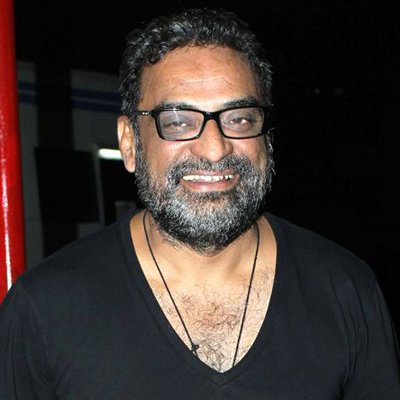
    MUMBAI: A leader is said to be the one who takes criticism in his stride and recognition is the last thing on his mind. We wonder if this is the driving thought of filmmaker and the chairman and chief creative officer of the ad agency Lowe Lintas & Partners R Balki?


    At the recently concluded Effie Awards conducted by the Advertising Club, Lowe Lintas walked away with the Agency of the Year honour as it bagged six gold, five silver and five bronze metals at the award ceremony. But the man, who is the driving force behind the stupendous work, proclaims that awards have never been in his priority list.


    In fact, most of the award shows of the advertising world have in any way not earned the required respect from the ad fraternity. While some have been shunned by most of the advertisers, some have not even been noticed. And some agencies have started their own award shows in order to bring in quality, for instance Lowe Lintas’ True Show or Ogilvy and Mathers’ Envies.


    Unlike the showbiz that’s full of award functions and celebrities gracing them as well, the award shows of the ad world are a low key affair attended by few and the number of participants being even fewer. And if in such a scenario, an award function manages to bring almost the entire fraternity together, it certainly means something. The 13th edition of Effie received a great response with almost every agency gracing the event.


    Lowe Lintas led the Effies leaving Ogilvy & Mather behind by 35 points, but the winning companies’ boss still stood by his belief that these functions are about partying and winning and losing doesn’t really matter. Indiantelevision.com probed Balki a little more to get an insight after his agency’s grand victory. Excerpts:


    On a personal level, you have been very vocal about what awards (don’t) mean to you! So what do you and your team have to say about winning the Effie?


    It is not about winning or losing but an evening of celebration. Effies have always been a constant part of the industry and we have always participated in it. It is a democratic agency where many feel that we should enter the agency and not others. So we enter in the shows where the team as a whole wants to participate.


    So if you win, you party with a lot of noise and if you don’t win then you should party without making a big noise. I think winning and losing is a part of the game and I don’t think awards should be taken so seriously. It’s not a death and life scenario at all; it is not that if one wins an award we are better or otherwise. I believe that it is the work that speaks and it could be good or bad without winning an award.


    Awards are not important but if the team feels that they want to participate in a certain award then they are free to do so. The team right now felt that it should participate in the Effies and so we went ahead and did. Tomorrow, if the team feels that it doesn’t want to participate in any award then we will not. It all depends on the team.


    Anything you would like to change about Indian advertising awards?


    One hundred per cent we would like to initiate an award where advertising should be just the way it is. It can neither be all about effectivity nor creativity. I think creativity is to make things better and sometimes it is not about making it better. Sometimes great ideas also don’t work. It cannot be just about effectiveness or blind creativity. There is a way to judge advertising ads. It is funny that an industry which creates so many ads and brands hasn’t been able to create an awesome award function for itself.


    Whom do you see as your main competitor especially during award shows?


    We don’t believe in award shows so we don’t believe in competitors. There are a lot of good agencies; O&M is a great agency which is during great work. There are few others as well but two agencies which are doing some great work are O&M and Lintas.


    Which would be the one award which you would like to hold in your hands? Since you have dabbled in films it can be a film award too?


    Since I don’t believe in them, I guess I will have to think hard before I say that. Right now, I don’t know if there’s an award that exists that really catches my fancy.

  • Brands have to take a back seat and tell human interest stories

    Brands have to take a back seat and tell human interest stories

    MUMBAI: At a time when the world is moving towards the digital medium, can advertising be far behind?


    Indeed, the last couple of years have seen several brands and agencies falling back on this space to reach out to their consumers.


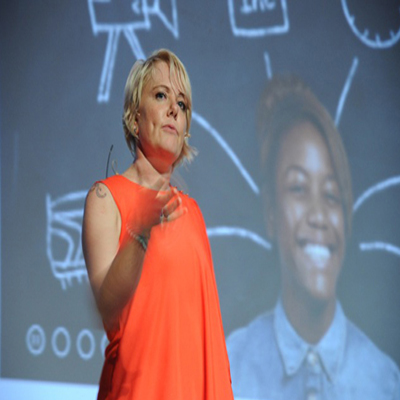
    D&AD’s CEO Tim Lindsay and president & Dare CD Laura Jordan Bambach who are in the country to address the forthcoming seminar (organised by Kyoorius) on Building Brands via Digital Media, shared some valuable insights on the subject with indiantelevision.com.


    On the fast blurring line between traditional and digital advertising in India, Tim quips: “Probably there are other markets which are further ahead when it comes to digital; and this is simply to do with the penetration of tablets, laptops and smart phones. Mobile is highly developed in this country and will only amplify. Therefore, digital advertising and marketing will develop in a separate way in India.”


    Still to recover from jet lag, Laura adds: “It is quite an exciting time and I can see the behaviour change and there is a more digital approach in various campaigns; which is more worldwide, but it is there here as well. The change in advertising message is becoming more purposeful.”


    Speaking about the trend of viral videos, Laura says they would work better if people had an interesting story to tell rather than the brand putting forth its message. “The brand has to take a back seat and tell a human interest story. Not all viral campaigns are good, there are many bad ones as well because they don’t tell you the story you want to hear,” she says, pointing out that videos which are entertaining, funny and have a human angle are likely to click with the viewers.


    Also the co-founder of SheSays, an international volunteer organisation encouraging women to take up digital creative careers, Laura feels things are changing now as more and more women are not only entering the field but also reaching high positions. “There are a quite a few women in the higher ranks and the things are looking up in India as well,” she says.


    Asked to point out the two important advertising trends of 2013, Tim talks about ads and campaigns having moved more towards story-telling apart from the increased engagement of people through branded content and added efforts by companies to take their CSR activities more seriously. He cites the example of Unilever’s latest Project Sunlight (Unilevers Project Sunlight promises a brighter future) . “In India, HUL’s Lifebuoy campaigns have been very successful. Be it the village one or the stamped rotis,” he says.


    In the coming year, Tim feels there will be more acquisitions including digital acquisitions of smaller agencies which will only serve to increase their credibility and sustainability.

    Both Tim and Laura feel that hereon, the digital space is only set for a further boom, with agencies milking the medium to reach out to as many people as possible.

  • Kolkata govt. promotes film fest with outdoor campaigns

    Kolkata govt. promotes film fest with outdoor campaigns

    KOLKATA: “Ticket kete na ki pass niye” (Did you buy a ticket or do you have a pass?) – this is what the Kolkata government has been asking its residents.

    The state government’s Information and Cultural Affairs (I&CA) department has been running an outdoor campaign to spread awareness about its 19th Kolkata International Film Festival (KIFF) that opened on Sunday.

    The department owns close to120 hoarding space in the city and has used almost one-third of the space for the promotion of KIFF.

    Government enlisted agencies including Arun Sign Service, Karukrit Advertising and Pioneer Publicity Corporation have been asked to maintain the hoardings for KIFF.

    “The teaser campaign has been out for some time now. It is just to spread the right word among the people about the festival,” said West Bengal Outdoor Advertising Association, treasurer and grievance committee convener, Ashif Kumar Biswas.

    While S Chakraborty from Karukrit Advertising said that the government has given two billboards to each agency in one area where one advertisement would be there to promote the festival and the other one will be used for commercial advertisement so that the agencies can recover the cost of the government hoarding. “We have got 20 by 10 feet flex from the authorities,” he said.

    When asked about the money being spent in the advertisements, the agencies said that since these billboards are owned by the department, the cost is not much.

    City based media analysts think that the teaser, which is usually a common aspect of such festivals, increases curiosity among film lovers.

    Apart from promoting the festival with outdoor campaigns, the state government has also made special efforts to pay tribute to legendary singer Manna Dey, who passed away recently and filmmaker Rituparno Ghosh, who too passed away earlier this year. While the singer’s famous songs are a part of the official theme song, the filmmaker’s unreleased movie Taak Jhaank (Sunglass) will be premiered at the festival.

  • Everest bags Pantaloons strategic and creative duties

    Everest bags Pantaloons strategic and creative duties

    Mumbai: Everest has won the strategic and creative duties for Pantaloons.


    This is an additional account from the Aditya Birla Group for Everest that handles the More Retail business from the same group. There was no formal pitch process involved.


    Talking about the brand, Everest president Dhunji Wadia said, “We are happy to increase our presence with the Aditya Birla Group.  There is great joy when existing clients repose their faith in us with additional business. We are delighted to get an opportunity to work with Pantaloons. It’s a sharp and aspirational brand. Besides, it’s always a pleasure to work with a company whose business is also about creativity and fashion.”


    Adding Everest NCD Rahul Jauhari said, “It’s always a lot more fulfilling when an existing client gives you more business. We are delighted that the Aditya Birla Group has entrusted us with Pantaloons.  We look forward to creating some visible magic with them.”


    With a strong national presence in exclusive stores, Pantaloons houses over a 100 prestigious brands that have something fashionable for everyone.


    Commenting on the appointment, Pantaloons Fashion Retail CEO Shital Mehta said, “Everest are a young and energetic team and they will be a good match for us at this point of time since we are poised for substantial growth in market share and revenue in the Multi Brand Retail industry. We were looking for a team who could provide a new perspective and put in the necessary effort as a partner to take the brand to the next level.”


    Pantaloons Fashion Retail head (marketing & loyalty) Gaurav Chakravarty added, “We believe Everest will work with us as partners in building our brand equity.  We welcome them on board and look forward to working on some great campaigns together.”

  • Old question, new perspective: celeb vs non-celeb ads

    Testimonials by celebrities “are below average in their ability to change brand preference. Viewers guess the celebrity has been bought, and they are right…. Viewers have a way of remembering the celebrity while forgetting the product,” quoth David Ogilvy in Ogilvy on Advertising (1983).

    Much ink has been spilt over the in/efficacy of using celebrities in ads. Even David Ogilvy, “the father of advertising,” did not spare the issue a good whipping. From Kapil Dev‘s Palmolive ka jawab nahin in the eighties down to Shah Rukh Khan‘s recent endorsement of Nokia – almost all the ads on TV, radio, print and the internet are accompanied by the physical presence or voice of some celeb. It is also true that we all liked the Palmolive ad and of course still remember it in spite of Palmolive no longer being the only lajawab shaving cream brand in the market. Indeed, advertising is just as competitive as the business of selling a product or service.

    But one thing is sure – that a memorable ad has the power to render a product memorable by making it a generic byword for all products in its category. As asianmarketresearch.com says, “The first recalled brand name (often called ‘top of mind‘) has a distinct competitive advantage in brand space, as it has the first chance of evaluation for purchase.” The “Got milk?” campaign in the US that put life back into milk sales nationwide after a 20-year slump, the Dhoondte rahe jayoge ad of HLL‘s Surf Excel that was meant to be an entertaining rejoinder to P&G‘s Ariel, the “Sunil Babu” ad of Asian Paints – are examples of memorable commercials that definitely aid in the brand recall. But how many of us can recall the ads (if there were any) of Ariel and Berger from that period? Too few, I am sure.

    Moreover, in view of Forrester Research‘s recent report that ad agencies of today are not well-structured to tackle tomorrow‘s marketing challenges and that consumers increasingly do not trust marketing messages, this old “effectiveness” debate between celeb ads and non-celeb ads ultimately boils down to the debate between ads and no-ads.

    The difference between a celebrity and a non-celebrity is obvious. A celebrity is a person who is publicly recognised and who uses that recognition to further the goals of marketers by appearing in advertisements directed at consumers. Similarly, a non-celebrity is a person who, prior to placement in the campaign, has no public recognition but appears in an advertisement for the product.

    Network 18 Group‘s network creative director Zubin Driver places importance on the script of an ad. He says, “The effectiveness of an ad depends on the script. I think it‘s a creative mistake to use a celebrity when the script is weak. There‘s also the question of execution – how the idea behind the whole project is being executed. A good idea, coupled with an original script and good execution, makes all the difference.” He adds, “There should always be an association between the image of the endorser and the product/service being endorsed. These days, celebs are being overexposed in ads. People are being confused and bored.”

    For an ad with a non-celebrity spokesperson, credibility is highly correlated to advertising authenticity, which is in turn correlated to purchase intentions. For example, we can take a recent Canara Bank TVC where a middle-aged South Indian lady learns Punjabi to welcome her son‘s Punjabi fiancé into the family. Capturing every detail and nuance of a Kannada household, the TVC lends believability to the locale and situation. In other words, the ad makes viewers feel “at home”.

    However, researchers also found that under high-involvement conditions, arguments but not celebrities influence attitudes, whereas under low-involvement conditions, celebrities but not arguments influence attitudes. This suggests that celebrity influence may be related to the nature of the product rather than the person.

    Since celeb ads are expensive, the question arises whether such ads pay in the long run. It is relevant to note here that according to media reports, Shah Rukh Khan‘s “income from endorsements fetches him Rs 1.5 billion ($38 million) a year, the highest for any Indian advertising ‘model‘.”

    Driver agrees and adds, “Like celebs, cricket is also being overexposed and overused. Everyone‘s trying to cash in on the popularity of cricket. As I said earlier, without an original idea, cricket as a background in ads doesn‘t work.”

    According to Ogilvy & Mather‘s executive creative director Abhijit Avasthi, it is wrong to say that celebrity advertising is a shortcut method but certainly not a creative way to reach out and better brand recall.

    “I‘ve worked with Abhishek Bachchan in the Motorola ad, which is a very successful ad. If a strong idea is executed well, celeb ads definitely work,” he says.

    It is also true that celebrity endorsements in India and abroad are different. In the west, celebs endorse brands that are associated with their image, fun, sports, etc. One remembers St John‘s ad with Angelina Jolie, Louis Vuitton ads with Catherine Deneuve and Scarlett Johansson, and the ads of VISA featuring Pierce “Bond” Brosnan.

    Avasthi says, “I don‘t think that there should necessarily be an association between the celeb‘s image and the product being endorsed.”

    But is Amitabh Bachchan in a Reid & Taylor ad just as effective as Amitabh Bachchan in a Navratna oil ad?

    Avasthi defends, “Celeb ads of lifestyle products are always effective because of the presence of the celebs. People tend to use such products. The celeb factor may not be a necessary component of the ad – his/her presence may be natural. Amitabh Bachchan is one of the greatest actors of our time. Since an ad is like a film, having Mr Bachchan act in an ad pays doubly.”

    Indeed, people can relate to the celebrities very easily. They talk about Amitabh Bachchan and Shah Rukh Khan in such a way as though they were members of their family. They know about the celebrities more than their own close relatives!

    There is also the matter of trust. If one sees an unknown face in a commercial for a new product he or she will not be buying it very easily unless the person concerned is an early adapter and is obsessed with that product. On the contrary, if a person sees some known face with whom he can easily relate, the trust will come automatically.

    For sure, in the successful “Got milk?” campaign, believability, knowledge, appearance and liking for the celebrity were highly correlated to each other and also with purchase intentions.

    Thus, an ad has to bring in the right person for the product. If Aishwarya Rai is made to advertise for some sport material that ad will not be as successful as those projecting her as a beauty icon.

    As McCann-Erickson‘s regional creative director (South & South-East Asia) Prasoon Joshi says elsewhere, “Celebs should be used as messengers, not the message.”