Tag: campaigns

  • Taproot Dentsu wins creative mandate for Biba

    Taproot Dentsu wins creative mandate for Biba

    MUMBAI: Taproot Dentsu has been awarded the creative duties for the Indian ethnic brand, BIBA. The account was won by the dentsuMB company and creative agency from the house of dentsu India following a multi-agency pitch, and will be serviced from the agency’s Gurgaon office.

    As per the mandate, Taproot Dentsu will create campaigns for BIBA’s ‘2022 spring-summer collection’. The focus will be on the brand’s perspective on today’s woman and its commitment to providing her ample choice in terms of outfits, irrespective of the occasion.

     Speaking of the association, BIBA managing director Siddharath Bindra said, “We are excited to partner with Taproot Dentsu as our creative partner for BIBA. They bring to the table a good mix of understanding the category and interesting creative outputs for the same. We look forward to our partnership and creating some great campaigns together.”

    “Biba is a well-established brand that every woman has seen, heard of, and at some point, shopped from,” added Taproot Dentsu Gurgaon executive vice president & head of office Abhinav Kaushik. “To work with such a well-entrenched brand in giving it a contemporary voice that will connect with the woman of today is both exciting and challenging. We are working closely with the Biba team for their upcoming collections and are gearing up to create a fantastic campaign for 2022.”

    BIBA has recently launched a variety of styles such as workwear, occasion wear, fusion, mix & match, to name a few. Apart from this, the brand has also launched a line of clothing called ‘BIBA Girls’ for young girls aged 2-15.

    Taproot Dentsu national creative director Titus Upputuru commented, “Fashion is such an exciting segment! In my college days, I remember creating designs for a few women’s Indian wear design boutiques in Delhi. When we got a chance to work on Biba, a homegrown Indian brand, my mind went straight to my college days. Working on the new direction of the brand and checking out the new collections was so fascinating. The colours, the fabrics, the cuts are all very exciting and we are excited to create stunning new campaigns for the brand!”

  • Cadbury Perk urges people to ‘Lighten up’ in new campaign

    Cadbury Perk urges people to ‘Lighten up’ in new campaign

    Mumbai: How does one ensure that absolutely no one takes offense to content one posts online? Simple- add a disclaimer that denies any accountability or responsibility whatsoever! Taking this thought further is Mondelez India’s latest campaign for Cadbury Perk titled, what else- ‘Disclaimers’.

    The digital times we live in have been shadowed by a climate of social media-triggered outrage and ‘cancel culture’. Brands and advertisements have come under the scanner for allegedly offending the sensibilities of a section of the netizens. Keeping this in mind, Cadbury Perk has come out with a quirky yet impactful campaign that throws light on today’s cancelled culture and urges the country to ‘lighten up’. To bring the ‘Cadbury Perk Disclaimers’ campaign alive, tongue-in-cheek disclaimers have been inserted into popular YouTube videos, to draw attention to the most trivial things that people may take offense to in today’s times.

    Reiterating the brand’s proposition of ‘Take It Light’, the campaign conceptualised by Ogilvy, highlights how people today have become overly sensitive and take offense over the smallest things, and need to lighten up. The inserted disclaimers that border on the hilarious help draw attention to the most trivial things that people may take offense to in today’s times. While the internet bursts with criticism at literally every scroll, this campaign urges netizens to chill and lighten up a little.

    Mondelez India vice president – marketing Anil Viswanathan said, “‘Cadbury Perk Disclaimers’ is our attempt at addressing the growing cancel-culture, especially the most trivial things posing as strong triggers – right from someone’s hair or holiday plans. Whether it’s a website or a post on Instagram, this culture has augmented the use of disclaimers, and we aim to parody this trend through offbeat disclaimers calling out the frivolousness of some of these issues. Thus, just like Cadbury Perk, urging everyone to ‘Take It Light’.”

    To do this, the brand created disclaimers for the most trending videos and top video searches and then used back-end automation to further customise them for countless videos.

    The campaign is supported with a digital film that puts the spotlight on controversies the country has witnessed playing out on social media platforms on a frequent basis, which is invariably followed by an apology and another wave of criticism debating the very nature of it. The film concludes by showcasing the brand’s idea of placing mock disclaimers for the most trending videos across genres on YouTube, about hilariously absurd reasons to be offended, thus driving home the message, ‘Cadbury Perk Khao, Light Ho Jao’.

    Ogilvy India chief creative officer Sukesh Nayak said, “These days we get triggered by anything and everything. Perk has a history of work that has always stood for keeping things light and fun. So, our idea is quite fun and modern, adding a fun warning before any video that you may watch. Ensuring things remain light, no matter what.”

    “Through Perk Disclaimers campaign, we intend to create a counterculture to the habit of finding something controversial in the most unexpected of topics,” added Wavemaker India chief client officer & head – West Shekhar Banerjee. “To give the campaign scale, we needed to find the content most watched by the youth. Since this could mean a massive number of videos, we leveraged the power of AI and automation to create custom ad versions and deployed them against the video which suited it the most. We have created a custom API with Google that would help get a pulse on the most trending videos on YouTube. Custom bumpers would then be created and played before top trending videos on YouTube.”

    The campaign is currently live on YouTube and will be further amplified through other relevant digital platforms and content creators, the brand said. Similarly, there would be multiple renditions of the core campaign proposition- whether in the form of a fun consumer or influencer engagement, to remind people to ‘Take It Light’.

  • #Retrace2021: Associating with marquee properties on TV helped us take a quantum leap on digital: Arjun Mohan

    #Retrace2021: Associating with marquee properties on TV helped us take a quantum leap on digital: Arjun Mohan

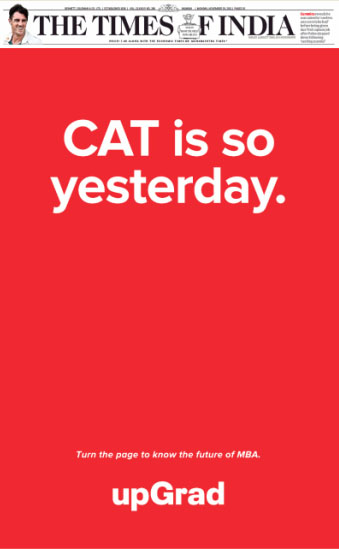
    The only ed-tech “to have a ‘donkey’ as its brand ambassador”, upGrad has been hitting all the right notes, starting from its eye-grabbing ‘Don’t lick ass, instead kick ass’ 2020 ad to its fortune-teller donkey ad in early 2021 to drive across its “Sirf Naam Ki Nahi, Kaam Ki Degree” messaging. Having achieved the desired impact with its former campaign, the edtech consciously shifted its brand positioning to ‘Fast Forwarding’ one’s career with upGrad’s online courses, ending the year with a striking print campaign that took on CAT, while also tackling with humor the perception of ‘online’ MBAs not being effective.

    The seven-year-old start-up, known to make full use of its marketing channels to amp up the reach has crossed a subscriber base of two million learners at last count, and the jump from one million to two million came about in approx. eight months.

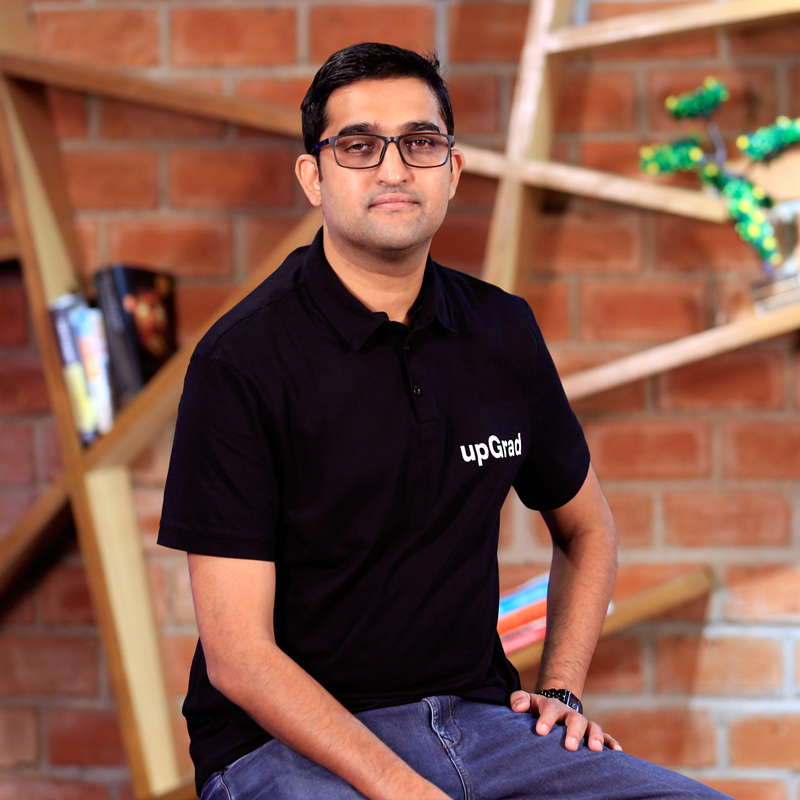
    As the person at the helm of upGrad’s India operations, Arjun Mohan has steered the edtech unicorn and helped put it on an upward trajectory. An experienced industry professional, Mohan has worked across domains spanning sales, marketing, and product development for over 15 years.  Before upGrad, Mohan worked with edtech major Byju’s as marketing vice-president and later as the chief business officer (CBO). A gold medallist from IIM Kozhikode, Mohan has worked with brands like Titan and Tata services.

    In a free-wheeling conversation with IndianTelevision’s Anupama Sajeet, the upGrad India CEO Arjun Mohan talks about steering the edtech brand through a post-pandemic world and on the key marketing innovations adopted by the brand in the past year. He also shares his thoughts on being a ‘hardcore optimist’ and the trends that might dominate the edtech industry in 2022.

    Edited excerpts:

    On looking back at how the year 2021 fared for upGrad

    In a growing industry, every year is a good year. So, from a business perspective, 2021 was a good year as overall business metrics have been quite good. But it was pretty challenging considering the multiple waves of Covid which struck us – the lockdowns, the inconsistencies of when to come to the office, and the problems that our consumers were facing. As a result, decisions were getting delayed. But then it was these challenges that pushed us and I believe as a result of that we were able to carve out several good ideas on all three aspects of business i.e. products, sales, and marketing. Hence we were able to create an impact in the market.

    On key innovations adopted by the brand in 2021

    Yes, between 2020 and 2021, there have been a lot of changes in the way upGrad communicated. That change is a testimony to consumer behaviour, where the association between education being something ‘serious’ is a thing of the past. And that is why we positioned the brand differently.  We realised that learning, upskilling, lifelong learning- all these aspects are no longer constrained to a few. There are guys who want to learn, upskill, and constantly improve themselves but at the same time, they want to enjoy life. We started talking to our consumers in a lighter vein, started communicating with working professionals in a language they connected to.

    One of the initial communications we did was on office politics- on how one should stop bothering about office politics and focus on specialisations and upskilling that will take your career ahead. The second campaign we built upon was ‘Sirf naam ki nahi, kaam ki degree’. We continuously heard from customers that “we would definitely think of doing this course, par ye degree koi kaam ki honi chahiye.” In India, a degree is associated with – a better job, a promotion, a better salary, a future, and so on. So, we worked on those insights and repositioned the entire company into offering courses that will actually be life-changing. That’s where we moved to our positioning of ‘kaam ki degree’.

    In 2022, we moved into phase two of it. Rather than just talking about online learning, we started focusing more on the value proposition part of it- On how the upGrad course/ degree is better than whatever options you have in the market. Thus, if you see our communication, it has also been based on the life-changing impact that upGrad courses have, followed by two or three shorties or 15-second films where we talk about the USPs. This format has been really helping us with the consideration part and we have been seeing that the conversion on the lead has been on the uptick. So, if last year the donkey was the high point from an ‘awareness’ perspective, then this year the MBA campaigns we did focusing on the ‘value proposition’ – that would be the highlight which saw a lot of impact for us. That’s been a big change in 2021. 

    On launching campaigns sans any celebrity endorsements

    While we do joke about it that every edtech out there has a celebrity brand ambassador- Byju’s has a SRK, Great learning has Virat Kohli, now Vedaantu has got Aamir Khan- and we have a donkey (!), it’s not been a conscious decision. If at a point in time we feel we need a celebrity vehicle we would do that. Currently, we are at an early stage of our brand building and the aspect we have been focusing on, as well as the TG we are talking about, is very different. This is not for mass India; this is for a smart audience. We didn’t see working professionals as the right vehicle for getting a brand ambassador. Even if you look at who or what they follow on OTTs or YouTube platforms – the kind of influencers these people follow are not celebrities. They are very individualistic and iconoclastic in that they follow what they think is right- they don’t believe they need to follow the crowd. And that’s why we stuck to the basics and the donkey!

    On exploring influencer marketing and subsequent ad-spends

    The way we look at brand marketing is that there are three pillars- The first pillar for us is ‘Content’ which includes social etc. Then comes the ‘Mass media’ which is where the TV and Print comes in and finally the ‘PR’ and all other aspects.

    For Content- we focus a lot on the content creators: influencers on YouTube, Instagram, OTT platforms, etc because our TG, especially the knowledge worker who is in IT/ ITES follows this segment a lot. We have started by working with multiple content creators like BeYouNick, Dhruv Rathee, who are very popular with this TG. We work with them on bringing Upgrad into their content very organically.

    Apart from relying on other content creators, we have also started creating our own original content called ‘the office canteen’. This again revolves around the theme of office politics, along with BeYouNick and YouTube, Google and has been a big success for us (trending with ten mn views).

    On the brand’s ad spend across TV, digital and print

    When it comes to mass media like TV and Print, rather than a ‘spray and pray’ our strategy has been focused on large properties.  When we do it, we do it big because we want to work on those properties which have a huge reach. So, we worked on IPL, the Test championship, UEFA, Wimbledon, and such. You can also see the sports association- as sport is connected with winners and ambitions so that works for us. Even in newspapers, our ad was an impact ad. It was more like moment marketing in that we took a dig at CAT, saying ‘CAT is so yesterday’. So that’s the kind of ‘big bang’ approach we are taking with mass media.

    We do digital marketing all the time and we’ve our leaps coming at particular CPL (Cost per lead) and traffic coming with a particular threshold. I want these brand properties on mass media to be at a point where I’ll get a quantum leap on the digital side of it. We plan it in such a way that our traffic moves a threshold and comes to a new benchmark. That’s been our larger strategy.

    Digital is where we get to do direct marketing. And we keep using large-scale marketing properties to get quantum jumps. Because, the kind of scale these properties give, digital will take years to reach there. We are also seriously looking at OOH. We shall do a clinical campaign, once our TG is back in the office, by trying to focus on places where we know our TG is- for instance, an IT park- and then do BTL inside such premises along with hoardings etc.

    So, all of this mass marketing is important to us, and we have a way to measure their impact. For that matter, even ‘Shark Tank’, where we are the title sponsors, we are quite sure that is the direction large-scale mass media is moving into. Rather than doing a couple of ads in between programs, writing your brand into the story is what really works. So that’s something we have really worked on and we have big plans for the show.

    On rising competition in ed-tech space and strengthening their USP

    We have complete confidence in our product. This product took almost five years to develop after multiple iterations. We were always clear that if we are able to get our customer to at least try our product then we can change his/ her perspective and even convince them that online is better than offline. There has been a lot of influx but if you see what’s happening today is that the players with a strong product, and sales & marketing capability are finally emerging out of this. So, I feel the solution for us is just to have our ears to the ground and keep on listening to the customer and then be ready with a solution that they will love. And that’s what we have been doing with our products, sales and marketing.

    On upcoming plans for 2022

    I am a hardcore optimist so I am sure 2022 will be superb for the brand. We are very clear we want to be the largest integrated edtech in the higher education space (post K-12) across the globe. Our international operations, which we started in 2021, is panning out well. We have our offices in the US, APAC and India where we have set up our subsidiaries. Post-India, our focus market will be the US- we really want to crack that market. So really looking forward to 2022 when we can take this to the next level.

    On key trends that might dominate the industry this year

    I think most of the ed-tech players in the K-12 segment will ultimately stabilise with the hybrid model, wherein there’s an offline component to it and an online component. But in higher edtech I don’t see that happening. Higher online learning has gotten established as a clear option or a side-by-side alternative to what used to exist earlier offline. There’s a very clear value proposition that you can continue upskilling even when you are working: ‘Learn while you Earn’.

    Hence, I believe, online education will be the preferred mechanism, at least from a Masters-degree perspective in India. The majority of Indians do not do a Master’s today because they are not sure whether thereafter, they will be able to get a job with that kind of a package. Even from a NNation-building perspective it is important for a country like India, with such a young population that we have highly skilled people. That’s when the country’s economy will move to the next level.

    Also, as we keep getting feedback from our learners, there has to be some social component to even online learning. So we are working to build a social module where learners can share their ideas, meet their lecturers, and have a session offline also. So that’s the way we see it and we will keep improving on it in 2022.

  • Winners of 2021 Indian Telly Adz Awards announced

    Winners of 2021 Indian Telly Adz Awards announced

    Mumbai: Successful advertising campaigns cannot only power up the brand, but they can stir emotions, and leave a long-lasting impact on viewers, who remember them for years to come. The last few decades have witnessed the launch of some brilliant campaigns, that have now become a part of everyone’s memories.

    It is this incredible talent that Indiantelevision.com attempted to recognise at the Indian Telly Adz Awards 2021. After a rigorous selection process that continued for months, the final list of the winners was announced at a virtual event, here on Friday. Among the winners are agencies and brands that executed some of the most iconic campaigns for Television, and celebrated TV as a proud medium of communication.

    Here are the winners:

    CATEGORY

    WINNERS

    Best Brand Collaboration with FTA Channel

    First Virtual Auditions for Crime Show – QYOU Media (The Q)


    Best Brand Collaboration with Kids Channel

    Disney Imagine That x Byju’s – Disney India


    Best Brand Collaboration with Movies Channel

    Star Gold Pay Online Campaign Star Gold – Star India


    Best Brand Collaboration with Sports Channel

    Mallakhamb Promotional Film, Tokyo 2020 – Mallakhamb – being Creative LLP


    Best Brand Collaboration with GEC Channel (Hindi)

    Tata Intra (Badle Soch Badle Zindagi) Network Integration on Sony – Tata Motors – Sony Pictures Networks India


    Best Brand Collaboration with GEC Channel (Hindi)

    Bingo! Comedy Adda – Season 1 – Disney Star India


    Best Brand Collaboration with GEC Channel (Bengali)

    Explore the “Joy of Cooking” with Fortune – Adani Wilmar – DDB Mudra Max


    Best Brand Collaboration with GEC Channel (Bengali)

    Mithai Launch Campaign – Zee Bangla – Zee Entertainment


    Best Brand Collaboration with GEC Channel (Marathi)

    Exo Bar connected with the genuine Home Minister – Jyothy Laboratories – OMD Mudramax (DDB Mudra Group)


    Best Brand Collaboration with GEC Channel (Malayalam)

    Nestle Munch Onam Campaign – Nestle India – Disney Star India


    Best Brand Collaboration with News Channel

    NDTV Dettol Banega Swasth India, Season 7 – Dettol – Reckitt Benckiser – New Delhi Television Pvt Ltd


    Special Award Best Brand Collaboration with News Channel – Editor’s choice for choosing News as a medium in 2020-21

    Dabur India Ltd

    Starcom


    Best Brand Collaboration with News Channel (editor’s choice)

    Be a Bijli Donor – Luminous – New Delhi Television


    Best Brand Collaboration with News Channel (editor’s choice)

    Gulf Suraksha Bandhan Season 3.0 in partnership with TV9 – Gulf Oil Lubricants India Ltd – OMD Mudramax (DDB Mudra Group)


    Most Iconic TV Campaigns of All Time

    Don’t Worry, It’s Bisleri – Bisleri – 82.5 Communications


    Most Iconic TV Campaigns of All Time

    #NayeRishteNayeVaade – Vedant Fashions Limited – Shreyansh Innovations


    Most Iconic TV Campaigns of All Time

    #TaiyaarHokarAaiye – Vedant Fashions – Shreyansh Innovations


    Most Iconic TV Campaigns of All Time

    Zubaan Pe Sach, Dil Mein India (Sach Dikhate Hai Hum) – NDTV


    Most Iconic TV Campaigns of All Time

    Hari Sadu – Info Edge Media – FCB ULKA


    Most Iconic TV Campaigns of All Time

    Doodh Doodh – Amul (GCMMF) – FCB ULKA


    Most Iconic TV Campaigns of All Time

    Zee Bangla Mother’s Day Campaign 2021 – Zee Entertainment


    Most Iconic TV Campaigns of All Time

    Asli swaad zindagi ka – Mondelez International


    Most Iconic TV Campaigns of All Time

    Surf Excel & Puddlewar– Daag Ache Hain – Unilever


    Most Iconic TV Campaigns of All Time

    Ariel #ShareTheLoad – Procter & Gamble


    Most Iconic TV Campaigns of All Time

    Google Search: Reunion – Google India


    Most Iconic TV Campaigns of All Time

    Mumbai Mirror – I am Mumbai – The Times Group


    Most Iconic TV Campaigns of All Tim

    Gale me khich khich, Vicks ki goli lo! – Procter & Gamble


    Most Iconic TV Campaigns of All Time

    The Dot – Essence of NDTV – NDTV


    Most Iconic TV Campaigns of All Time

    Star Movies Select: Brand Campaign – Star India


    Most Iconic TV Campaigns of All Time

    Oscars 2017 campaign – Star India


    Most Iconic TV Campaigns of All Time

    Surf Excel Lalitaji – Unilever


    Most Iconic TV Campaigns of All Time

    Washing Powder Nirma – Nirma


    Most Iconic TV Campaigns of All Time

    Onida Devil – Onida Electronics


    Most Iconic TV Campaigns of All Time

    Raymond – The Complete Man


    Most Iconic TV Campaigns of All Time

    Fevikwik Fishing – Pidilite Industries


    Most Iconic TV Campaigns of All Time

    Hamara Bajaj- Bajaj Auto


    Most Iconic TVCampaigns of All Time

    La, lalala, la, la, la – Liril – Liril – Hindustan Unilever


    Most Iconic TV Campaigns of All Time

    Vodafone Zoo Zoo – Vodafone Idea


    Most Iconic TV Campaigns of All Time

    Karram Kurram – Shri Mahila Griha Udyog Lijjat Papad


    Most Iconic TV Campaigns of All Time

    I love you Rasna – Rasna


    Most Iconic TV Campaigns of All Time

    Mauka mauka – Star Sports – Star India


  • #Retrace2021: A look back at print ad campaigns that stood out in 2021

    #Retrace2021: A look back at print ad campaigns that stood out in 2021

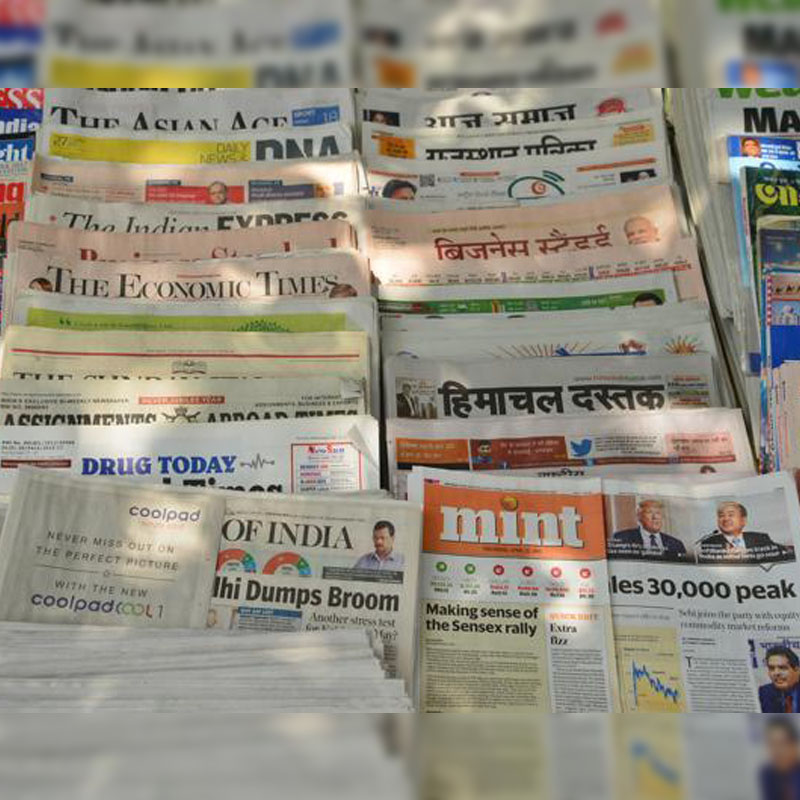
    Mumbai: Reeling under the aftermath of the pandemic, the Indian print industry began its road to recovery in 2021. According to the latest Magna Global Forecasting Report released in December, overall, the print industry grew +12 per cent from a low base (2020: -40 per cent), despite the slowdown in business in 2021. Maximum growth came from Retail, Durables, Finance, Real Estate, and Government spending.

    After witnessing a tumultuous period of plummeting circulation, and advertising revenue, the industry also began pivoting fast to strengthen its digital presence. The projections paint a heathier picture, with 2022 growth expected to be broad-based, with most categories increasing spends and elections in a few large states helping to drive an increase of +14 per cent. However, a rise in cases of the new Covid variant could prove to be dampener.

    Nonetheless, Print remains one of the most trusted mediums to influence brand perceptions on critical factors like quality, price, and trust. This explains why 2021 saw the return of traditional, as well as newer brands, and advertisers to print to create some stand-out campaigns. As we begin 2022, we take a look back at some of these campaigns …

    TRUECALLER

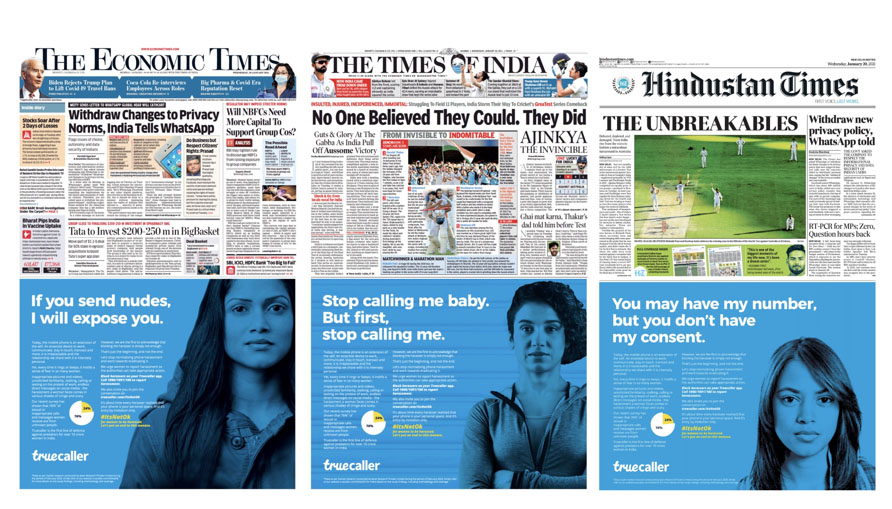
    While the businesses were beginning to reopen, the Truecaller print ad in January 2021 set the tone for the rest of the year. The in-your-face, unmissable ad carried by the app on the front pages of leading national dailies, talked about the issue of phone harassment women face. It mentioned how women could block these numbers on the app and should step forward and report these callers. The campaign #ItsNotOk has been running for four years now. But it caught everyone’s attention, courtesy of the latest print ads. Thinkstr, the Gurgaon-based independent agency for the campaign said they were “a little jittery about spending money on print” because they “knew the circulation was down”. But the print ads outdid itself “more than any other medium we’ve advertised on.” 

    NESTLE

    When in doubt, choosing ‘Print’ seems to be the mantra of marketers. Whenever there was a need to emphasise a brand’s credibility or build trust it was the go-to medium. Nestlé India’s print campaign launched in June 2021 did just that- reinforce the brand’s assurance of offering quality products, while talking about its long-standing legacy of 100 years and ‘family-like’ trust. The FMCG conglomerate switched to the damage control mode, coming out with the print ad campaign to rebuild consumers’ faith in the brand, only days after news reports questioning the ‘healthiness’ of the company’s products surfaced.

    FORTUNE

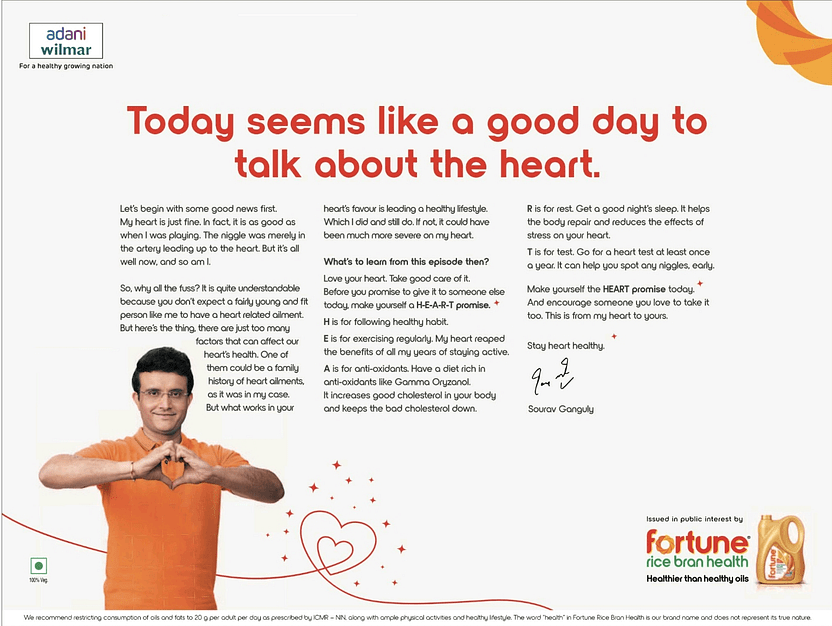
    A similar approach was followed by the Adani Wilmar Group’s Fortune oil brand. The brand’s claims of ‘a healthy oil for a healthy heart’ suffered a beating after Sourav Ganguly, the brand’s endorser, suffered a heart attack. Prior to this, he was seen in an ad for the brand’s Rice Bran oil which promotes the oil’s heart health benefits. Fortune faced severe trolling on social media as netizens chose to highlight the irony of the situation. To salvage the situation, the brand came out with front-page ads across leading publications with the caption ‘Today seems to be a good day to talk about the heart’, which had a fit-looking Ganguly dismissing the talk about his ill-health and tackling the subject of heart health head-on. The long format copy presented as a signed letter from the former cricketer himself, pushed heart health conversation to the fore, was the brand’s comeback after the stretch of online trolling.

    INDIAN OIL

    Nothing beats the traditional medium when you want to create an impactful awareness about a social cause. Indian Oil wanted to create awareness around the ill effects of excessive honking ahead of World Environment Day 2021 (5 June). It came out with a creative print campaign, conceptualised and executed by Mumbai-based agency, Grey Group that showed the life-threatening impact honking had on other living creatures. The artwork by Vaibhav Bhilare replaced the body parts of various animals with sound waves to depict the hazardous effect the loud noise had on them.

    MANFORCE

    That Print media allows a brand to tell its brand story effectively with no excessive drama is a known fact. To simply and effectively convey its message of protected sex and to educate people to use condoms as against ‘messy’ scenarios related to the consequences of indulging in unprotected sex, the Condom brand come up with a campaign, #DontMessAround. The series of tongue-in-cheek ads which appeared in leading newspapers creatively nudged people not to engage in unprotected intercourse as it can come with bigger problems such as STDs and unwanted pregnancy, even as it drove its brand message through.

    SEBAMED

    After the famed Cola ad wars, this year saw the battle of the soaps, with major soap brands taking on one another, directly targeting their rival brands in their ads. Sebamed kickstarted the creative sledge-fest at the outset of 2021, going after other popular brands like Lux, Santoor, and Dove, by comparing them to a detergent bar. The German skincare brand made quite a splash launching a series of print ads in leading dailies, with shocking claims alleging that each of these leading soaps had pH factors (ranging from 7 to 10) that rivaled that of the detergent soap Rin, to highlight the harshness of these skincare products, as against its own which it claimed stood at ‘an ideal 5.5’.

    The brand has launched another campaign ‘Conditions apply’ with print ads taking on other anti-hair loss shampoos. The campaign sought to discredit the ubiquitous disclaimer ‘Conditions apply’ used by these products while making tall claims. It has, however, refrained from naming any brand this time.

    DOVE

    The HUL brand of skincare, Dove chose to respond to Sebamed’s ‘pH’ allegations with a print campaign that reiterated its gentleness, falling back upon its familiar messaging –that the soap is mild and comprised of one fourth ‘moisturising milk’. The print ad seen in major newspapers Dove responded to the jabs that Sebamed’s ads have taken at it, coming hot on the heels of the Sebamed campaign. The ad copy in a prominent font stresses that ‘Dermatologists have put something strong in Dove’s bar – their trust’.

    The beauty soap launched another print campaign titled ‘Stop The Beauty Test’ that attempts to call out the stereotypes associated with Indian matchmaking and goes against unrealistic stereotypes of beauty in our society. Conceptualised by Ogilvy India, the campaign urges one to look at the beautiful aspects of a person’s personality and not their shortcomings. “Khoobiyan dekho, khaamiyan nahin” says the ad released across print and other media. The print ad, written in a long format, tackles in-depth how a girl is subjected to these beauty stereotypes and biases right from childhood, only getting worse as she becomes of marriageable age.

    And it is not just traditional categories that see the profit in the printed word. Newer advertiser categories like the edtech, crypto, and several digital-first brands are also opting for the mass medium, even going full-throttle with full pager, front-page displays in major dailies. For newer categories like crypto exchanges who are in their next phase of growth in India, it becomes even more crucial to target beyond the early adopters of this digital world by associating with traditional mediums like television and print, the study noted. Thus, making print a viable medium to build credibility and trust.

    COINSWITCH KUBER

    One such platform, which has been investing heavily in print is CoinSwitch Kuber. Building trust is key to the category as a lot of uncertainty and risk have been associated with cryptos in the past. The crypto brand came out with full front-page ads in leading newspapers in the last few days. “While digital media enables us to target a certain set of audiences, print has the accessibility to the most basic audience group which finds credibility in the print news,” said CoinSwitch Kuber chief business officer Sharan Nair explaining the brand’s decision to go aggressive on print advertising.

    UpGRAD

    With eye-catching full-page ads in leading dailies, edtech brand, upGrad launched the campaign for its online MBA programs to ‘fast-forward your career’ because ‘CAT is so yesterday’. The two-page managed to grab eyeballs for the brand with its effective use of empty spaces and an attention-grabbing caption.

    TINDER INDIA

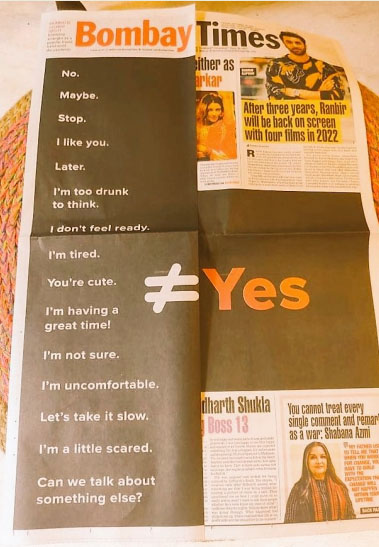
    In another resounding endorsement, a millennial and Gen Z brand like Tinder released a series of print ads, acknowledging that print still carries ‘trust and maturity’ which digital is yet to achieve. The new age dating app’s ad is indicative of how serious it is about educating its existing and potential users about consent, serving as a lesson on how many times we misinterpret our partner’s words to consider it a ‘Yes’. Tinder India’s front page Bombay Times ad is a primer on consent and what all doesn’t equate to a ‘Yes’. This ad is the latest installment from the dating app’s ongoing campaign around consent, emphasising that only a ‘Yes’ means a ‘Yes’. Nothing more, nothing less.

  • #Retrace2021: Advertising campaigns that struck a chord in 2021

    #Retrace2021: Advertising campaigns that struck a chord in 2021

    Mumbai: The pandemic has changed the way businesses function all around the world. As organisations start limping back to the new normal, they also had to find ways to adapt to the changing dynamics of the market- from consumer behaviour to the way brands communicate to their consumers.

    2021 year saw brands and advertisers experimenting with new trends, and taking a detour from their original marketing strategies. A lot of them embraced empathy and compassion to connect with their consumers, who too were learning to adapt to the new normal. From Savlon to Byju’s and from Coca Cola to Dove, let’s look at some of these brand campaigns that struck a chord with the masses, as the year draws to a close.

    Savlon- #NoHandUnwashed by Ogilvy

    Regular hand washing became a norm during the pandemic. Savlon launched the campaign ‘No Hand Unwashed’ in association with Ogilvy. The campaign featured a video that depicts the story of an artist without arms who paints with her legs and can sanitise her limbs. “If she could, why can’t you?” was the inspiration behind.

    Dove- #StopTheBeautyTest by Oglivy

    The empathetic advertising continued even after the Covid wave subsided. Dove took this approach to address other issues of Indian society. In its ad campaign #StopTheBeatuyTest Dove addressed body shaming and skin colour biases in the Indian matrimony space. Dove has always been vocal about such negative norms of society. In 2021, it came up with its ad film #StopTheBeautyTest by Ogilvy.

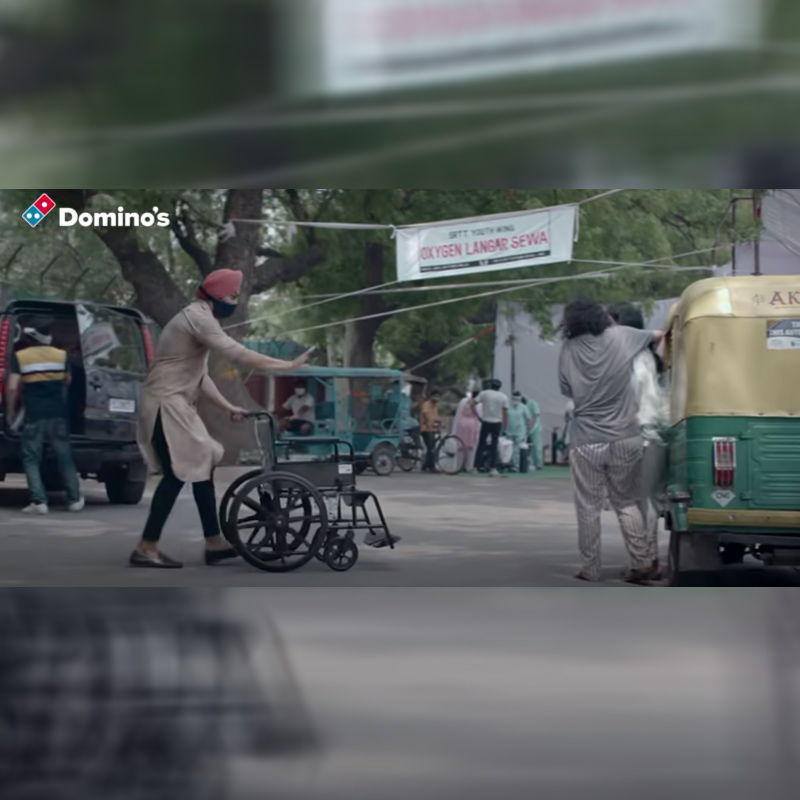
    Domino’s ke Saath #HaathBadhaoIndia #VaccineLagaoIndia by FCB

    The empathetic ad film by Domino’s takes a look back at the struggles that people went through during the pandemic. Domino’s tells people to extend their hands once again and get vaccinated together through its ad film. FCB India conceptualised the campaign. The ad film was directed by Amit Roy of Love Aaj Kal fame, and lyrics penned by Swanand Kirkire.

    Unacademy- #TeachThemYoung by Lowe Lintas

    This ad campaign by Unacademy and Lowe Lintas, Made by Lowe Lintas, tells how a brother opening her sister’s bag is nothing but an invasion of her privacy and boundaries. It talks about empowering women and teaching gender equality to boys at a young age.

    Cadbury- Not just a Cadbury ad by Ogilvy

    Undoubtedly the pandemic has shaken the spine of the Indian economy. While the big brands managed to bring back their business quickly, the local ones couldn’t do much due to the lack of resources. The spot by Ogilvy features Shah Rukh Khan, who is seen promoting local cloth merchants, shoe shops, electronic stores and the nearby Kirana shop. The ad showcased 7000+ stores across 34mn consumers in two weeks.

    Facebook- Pooja Didi by Taproot Dentsu

    The ad campaign designed by Taproot Dentsu ignites hope among the users. The ad highlighted how we could reach out to the many unorganised sector workers who had lost their livelihoods.

  • TV Brand Fest 2021: Marketers relook at TV ad spends in times of disruption

    TV Brand Fest 2021: Marketers relook at TV ad spends in times of disruption

    Mumbai: The media industry and the economy saw an unprecedented level of disruption post-lockdown phase. As marketers went back to the drawing board to scrutinise their media spend, TV advertising moved from strength to strength commanding the highest share of advertising spends.

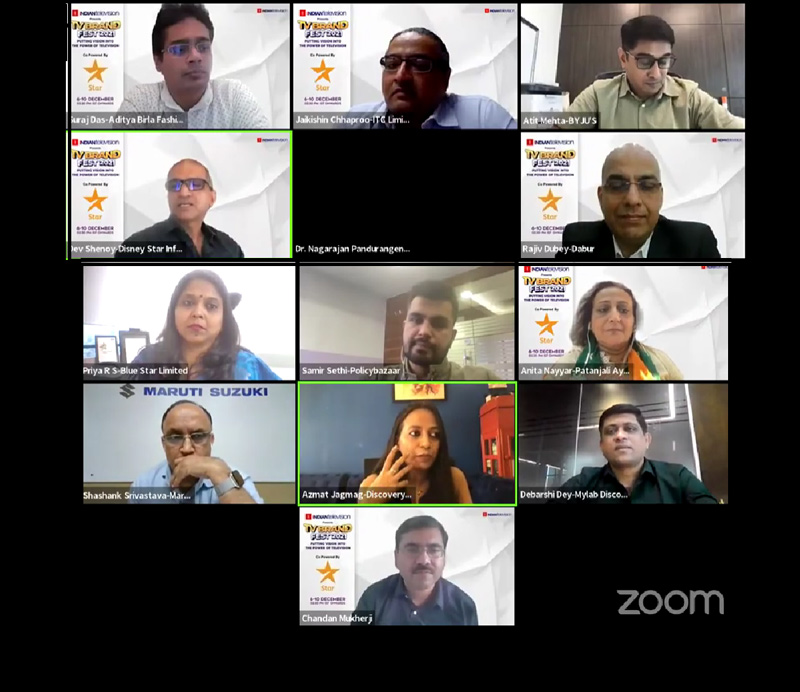
    “Television will continue to command the majority share of ad-spends in the next five to seven years,” asserted ITC head of media Jaikishin Chhaproo, as he began the discussion at the ‘TV Brand Fest 2021’ – a five-day event being organised by Indiantelevision.com, and co-powered by Star India. Day one of the event saw marketers and prominent TV advertisers discuss ‘The power of television in times of disruption’ and ways of ‘Using TV + digital strategy’.

    Maruti Suzuki India executive director – marketing and sales Shashank Srivastava noted that out of the Rs 700 crore spent on advertising, the brand spent 34 per cent on TV and 27 per cent on digital. “In terms of building brand imagery, especially in the auto category, there’s no substitute for TV,” he noted.

    Most industries were impacted by the pandemic. However, the edtech sector was one of the few that saw an increase in demand during the lockdown. Byju’s head of marketing Atit Mehta observed that this was an important moment for the edtech industry to build top of the funnel awareness. “One of the categories that increased their advertising spends during lockdown was edtech,” he said.

    The fast-moving-consumer-goods (FMCG) category remains the largest advertiser on TV. Despite the impact of the pandemic on the bottom line of most consumer goods companies, this category remained visible on TV. “FMCG cannot do without TV because you need the reach, frequency and eyeballs,” said ITC’s Chhaproo.

    “A significant number of categories operate around the magic price point of Rs 10. Due to the impact of the pandemic on the supply chain, continuing to offer this price point to consumers became a challenge”, said Chhaproo. “We had to constantly communicate to consumers to drive them to our products.”

    The category which usually invests on general entertainment channels, shifted media spends on other genres on TV. “We shifted our spends on TV to the news genre because consumption had gone up significantly,” remarked Dabur head of media Rajiv Dubey.

    Covid was a timeout for the entire world and when the normal choices were unavailable to consumers they began experimenting with different modes of consumption. When fresh content returned to GECs last year, Dubey observed that there was a significant consolidation of viewership in the eight regional markets that Dabur looked at including South (Karnataka, Andhra Pradesh/Telangana, Tamil Nadu and Kerala), West Bengal, Maharashtra, Orissa and Bihar.

    “The viewership has been on the upswing in these regional markets with consolidation of viewership in fewer programs and channels,” said Dubey. “We’ve seen that if you speak to a consumer in Maharashtra, in Marathi, using a Star of his choice, it works better.”

    There are 40-50 million homes that watch only free-to-air channels on Prasar Bharati’s free DTH platform DD Free Dish, Dubey said. “The FTA channels work like magic if you want to advertise products with smaller price points. Unfortunately, the major FTA channels only cater to Hindi-speaking audiences and no other language audiences.”

    In terms of consumer behaviour, there is a key overlap in terms of audiences on TV and digital. Audiences are watching both these media at different points in time. For Policybazaar.com’s vice president and head of brand marketing Samir Sethi it became important to map these audiences to optimise ad spends.

    He said, “The attention is now divided between a TV and mobile phone. Earlier, people watched TV undivided but now they’re also multitasking on a mobile phone. We’ve seen that there are times when people are influenced enough by your communication on TV that they respond by checking out your website or downloading your app on mobile.”

    A lot of digital and direct-to-consumer brands have understood and leveraged this behaviour. When it comes to achieving their growth targets, “all the major D2C brands have come on our platform (TV) to reach audiences at scale,” remarked Disney and Star India head of sales for infotainment, kids and regional cluster Dev Shenoy.

    In the last 18 months, ad spends have inevitably shifted to digital media platforms. For example, with retail spaces closed, certain category spends have completely moved to e-commerce. Maruti Suzuki’s Srivastava said, “At the top end of the funnel there is no substitute for TV. Digital becomes more important at the lower end. In the consideration stage of the brand, there’s an overlap.”

  • Travel portals look to woo travellers back this holiday season

    Travel portals look to woo travellers back this holiday season

    Mumbai: In the run-up to the year-ending holiday travel season, travel portals are looking to make the most of the opportunity. With the Covid cases on decline, companies in the sector are optimistic about business picking up pace. Travel advertising too is poised for rapid growth as brands look to reset their relationships with consumers after the great rupture of 2020.

    Travel companies and online booking portals have launched several new campaigns signalling the return of the ‘wander lust’. Online travel brand Goibibo has rolled out its new campaign ‘Apna Rule Toh Full Vasool’, announcing ‘Daily Steal Deals’ for hotels and last-minute flight bookings on its platform. To bring alive the campaign conceptualised by MagicCircle Communications, the company released a series of digital films that are packed with relatable slice-of-life moments that talk about getting one’s ‘full paisa vasool’ under all circumstances, be it a toothpaste, a buffet or else then a travel deal!

    EMBED LINKS:

    The pent-up demand for travel is expected to drive rapid growth in travel adspend over the next few years, but it will be a long road back to pre-pandemic spending. According to Zenith’s Travel adspend forecast published last week, the fastest growth in travel advertising is expected to come from India, where travel ad spend will be 31 per cent above the 2019 baseline by 2023. Globally, travel adspend will be still 33 per cent below its 2019 level this year, as per the Zenith report. It will take until 2023 for travel to exceed 2019 levels of spending, when it will reach $19.6 billion.

    Even as wider acceptance of Indian vaccines and easing of international travel restrictions by countries has opened up more choices for Indian tourists, there is still a measure of uncertainty that continues to linger on when it comes to travel in the post-Covid era.

    It is this anxiety associated with an uncertain or a cancelled trip that Make My Trip chose to address via its new TVC starring the delightful duo of Ranveer Singh and Alia Bhatt. The travel portal in its latest campaign ‘JoHogaWOWHoga’ aims to encourage travellers to plan, book and travel once again without any worries arising out of cancellation or hassle of refund claims.

    Shot in a circus arena, the TVC has been smartly weaved around a Circus background that is synonymous to high risks and uncertainties –subtly depicting the times we have been living in over the past few months. With a humorous narration, the TVC communicates how users can book travel without worrying about additional cancellation charges in case of any last-minute changes in travel plans.

    The 360-degree campaign ‘Sirf MakeMyTrip pe #JoHogaWOWHoga’ has been conceptualised by MagicCircle to convey how travel plans on MakeMyTrip can be worry-free yet rewarding. From a ‘100 per cent refund on last minute cancellations’ across its hotels and homestays, to introducing ‘Trip Guarantee’ feature to help travellers upgrade to an alternate travel mode in case of an unconfirmed train ticket, to making modifications to travel bookings in just a few taps on the app through My Trips–the campaign aims to communicate it all.

    MakeMyTrip group chief marketing officer Sunil Suresh said, “As travel has returned in a big way and travellers are back with evolved preferences, the prospects of serving our customers with richer, flexible and comfortable travel choices have never been this exciting,” adding that the portal has “travel solutions for everyone and for any situation.”

    Club Mahindra, the flagship brand of Mahindra Holidays & Resorts India also reached out to travel enthusiasts through its ‘Jaana Kahaan Hai’ campaign starring the ‘Shershah’ actor, Siddharth Malhotra. The campaign captures people’s desire to travel and explore new destinations and indulge in newer adventures in the new normal.

    “There is an extremely strong desire to travel amongst people. They are eager to try new experiences and visit off-beat as well as unexplored destinations,” said Mahindra Holidays & Resorts India chief marketing officer Pratik Mazumder.

    Along with leisure travel, the pandemic also brought virtually all of Business travel and the MICE (Meetings, Incentives, Conference and Exhibitions) sector to a standstill for most of 2020 and 2021. To build corporate confidence in biz travel, Thomas Cook launched its “Assured” Safe Travel Program that ensures travel safety protocols covering its distribution, delivery and partner touch points in the travel ecosystem.

    Thomas Cook (India) Limited president & country head – Holidays, MICE, Visa Rajeev Kale said, “Despite the challenges of the pandemic, our focussed initiatives that included health and safety, have increased corporate confidence in MICE Travel. With increased demand for physical groups/events our pipeline for 2022 looks robust and our teams are all geared up to delivering truly exceptional programs to delight our MICE clients.”

    It would be premature to assume we are out of the woods as new variants of the virus continue to emerge. Even as the domestic travel industry expects a surge in visitors as the year winds up, the government continues to review easing of foreign travel curbs in the light of the latest threat, necessitating all optimism to be accompanied with a note of caution.

  • International Men’s Day: Brands challenge stereotypes, start conversation on mental health

    International Men’s Day: Brands challenge stereotypes, start conversation on mental health

    Mumbai: “Real men don’t cry. Real men are tough, real men don’t seek help, real men are self-sufficient. Be strong. Be a man.”

    When it comes to gender-based stereotypes, it’s not just women, but men who also become victims of rigid and deeply entrenched cultural expectations. We live in a society where the identities and roles of individuals are often linked to their gender. That’s why it’s important to question these biases and normalise conversations around positive masculinity and manhood.

    This International Men’s Day, that’s what several brands did as they raised awareness on men’s issues that are normally brushed under the carpet.

    Man Matters

    The home-grown digital health platform for men launched a digital campaign #MenDontTalk. The brand roped in Mirzapur fame actor Divyenndu Sharma to encourage men to speak up and start conversations around their health and well-being. The digital film executed by Spring Marketing Capital addresses how socially recognised ideas about masculinity are proving painfully slow at changing the mindset. The archaic concept of ‘Alpha’ is compelling men to impose self-enforced silence on issues related to mental health, medical problems, intimacy, and other struggles. The campaign seeks to break this unhealthy cycle of stigma and urges men to open up and normalise conversations around one’s wellbeing.

    The campaign also sheds light on statistics revealing that 28 per cent of men don’t seek medical help for mental health conditions while 35 per cent wait more than two years or have never disclosed a mental health problem to a friend or family member. As per another recent survey conducted by a brand, over 80 per cent of the men do not express their emotions for the fear of being judged or getting embarrassed in front of their peer group.

    Bombay Shaving Company

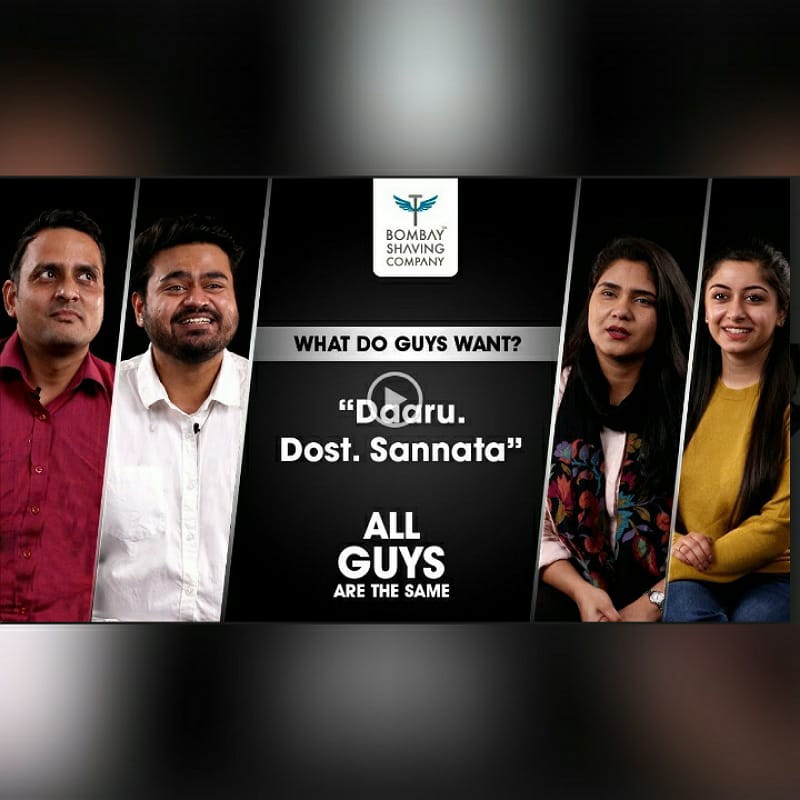
    The men’s grooming brand celebrated International Men’s Day by rolling out a campaign video #AllGuysAreTheSame. The video highlights archaic generalisation and preconceived notions about men and their emotional, behavioural, and social orientation, which results in all men being boxed into the same labels.

    The campaign conceptualised and developed in-house by the Bombay Shaving Company team tries to get close to the truth by interviewing nine men and eight women and asking them revealing questions about men. The difference in the unfiltered and heartfelt responses of these men and women highlight the misconceptions about men in our society, revealing that ‘all men are not the same’. Amusing yet thought-provoking, the film reveals some home truths about men, their struggles, insecurities, vulnerability, and stacks of self-doubt.

    SBI General

    SBI General highlighted the important and diverse roles that men play in our lives. From being a responsible sibling to a dependable husband and caring father and a son, it’s the little things men do that make them the original providers of ‘Suraksha aur Bharosa dono’ for their loved ones. The campaign by Tonic Worldwide emphasise the struggles men go through while safeguarding their families, even as they ensure to provide Suraksha and Bharosa.

    Mankind Pharma

    The importance of starting a conversation about positive masculinity can go a long way in shaping the gender notions for the coming generations. It is equally crucial to call out toxic masculinity when one sees it. Society is often guilty of turning a blind eye to a man’s not-so-gentlemanly behaviour under the guise of tropes like ‘Men will be men’.

    This International Men’s Day, Mankind Pharma tackles this unpleasant, difficult but more relevant than ever subject through its campaign  #NahiChaltaHai. It encourages people to educate themselves and be aware of the behaviours that can be uncomfortable and are downright wrong. The video featuring actor Adil Hussein urges us to talk with the men and growing boys around us to tell them about the acts that are unacceptable while promoting gender equality and improved gender relations to create a safe and better world for everyone.

    Kotak Mahindra

    The bank paid a sweet tribute to different roles played by a man in easing the lives of their families with a social media post that goes: “Thank you for loosening the tight jars, reaching the top shelves of the cupboards, being our go-to heroes, and helping us be our best selves every day”

    Onsurity

    The homegrown digital monthly employee health benefits subscription platform for SMEs & start-ups has launched a digital-first campaign #ManItsOk to mark International Men’s Day. The campaign encourages men to be vocal about their emotions and express themselves, driving the core messaging that it’s perfectly ‘OKAY’.

    The #ManItsOk campaign will run for a week, starting from 18 November to 25 November kickstarting with a social story campaign encouraging men to share stories that resonate with the theme, leading to a weeklong employee and their family engagement initiatives.

  • ICICI Lombard urges customers to track their calories in new campaign

    ICICI Lombard urges customers to track their calories in new campaign

    New Delhi: 2021 saw a sea shift of people changing their lifestyles and adopting healthy life choices due to the ongoing pandemic. This gave birth to a new cohort of consumers who are proactive in staying healthy through wellness-oriented products and apps. It is this spirit of a healthy lifestyle that ICICI Lombard has emphasised upon in its new campaign which unveils its new feature ‘Cal Scan’ on the company’s health and wellness app ‘IL TakeCare’.

    The campaign consists of two ad films that encapsulate the significance of eating the right amount of calories on the backdrop of a busy lifestyle characterised by faulty food habits, high-calorie intake, partially aggravated by the pandemic lockdown.   

    The first ad film opens with a scene from a typical halwai shop where a person is buying samosas. Upon packing the samosas, the shopkeeper tells the customer the calorie count instead of the price of the food items. He then goes on to suggest making the calorie count a round figure by adding two more samosas. To this, the customer declared a specific calorie count, took the samosa, and walked away happily.

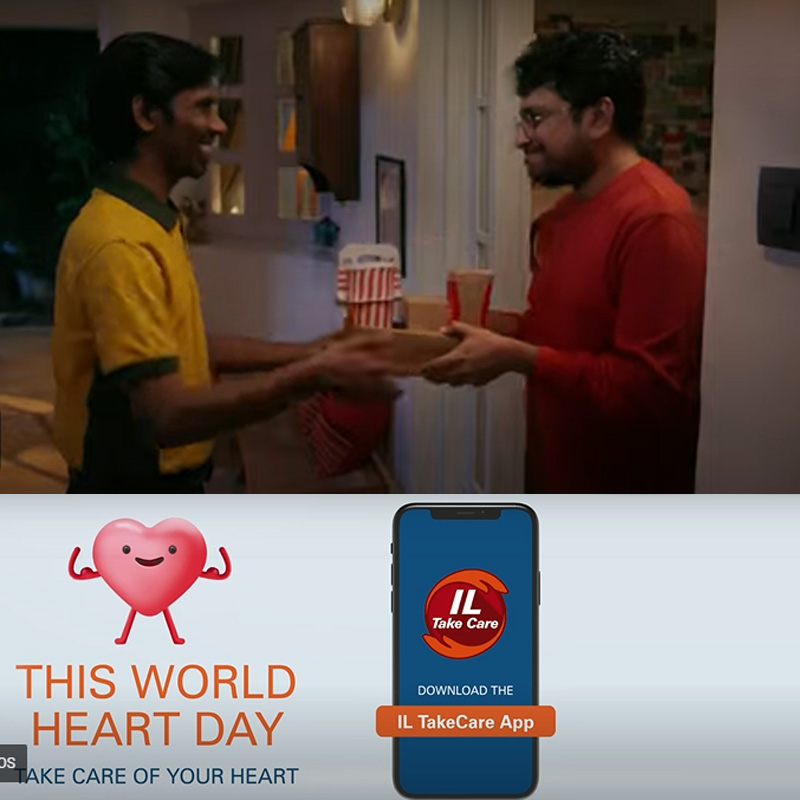
    The second ad shows a food delivery guy delivering food and affirming the accurate calorie score to the customer according to his food order. Both the ad films end with the thought that our food vendors will not be able to tell us the exact calorie count of the food consumed, hence with the IL TakeCare app’s new feature ‘Calorie Scan’, consumers can now get a personalised recommendation of their calorie intake and the tips to burn those extra calories. Through these films, the insurerattempts to guide the audience towards a behavioural change wherein they see the value of the food not in terms of money, but also the number of calories consumed.

    ICICI Lombard General Insurance executive director Sanjeet Mantri said, “While the pandemic has turned people towards a holistically healthy lifestyle, it is equally important to add the element of measurement to all our health endeavours. Considering the significant increase in the usage of wellness and health-oriented apps recently, we have introduced this new feature of ‘Calorie Scan’, which will act as a counter and encourage the user to stick to their recommended calorie budget.”

    The campaign centered on the World Heart Federation’s theme for 2021 focuses on harnessing the power of digital health to improve awareness, prevention, and management of cardiovascular diseases. Conceptualised by Ogilvy, ICICI Lombard’s Creative agency, the ad films are being promoted across ICICI Lombard’s social media assets and digital platforms.  

    Ogilvy Mumbai, executive creative directors Talha Bin Mohsin & Mahesh Parab said, “The ICICI Lombard World Heart Day campaign has had a long history of great work aimed at making people conscious of the challenges to their good health. This year, we sought to open a new chapter by going a step further and joining them in their journey towards holistic wellness. Not just by helping them count their calories, but giving them tips on how to burn them and stay fit on a regular basis too.”