Tag: Cambridge Analytica

  • Facebook to launch much-awaited ‘Clear History’ tool later this year

    Facebook to launch much-awaited ‘Clear History’ tool later this year

    MUMBAI: While social media giant Facebook promised to prioritise user data privacy amid widespread controversy, the company is going to launch its much-awaited privacy tool titled 'Clear History' later this year. This new feature would enable users to delete their information collected by Facebook through third-party apps and websites.

    The step has been taken at a time when Facebook is under scrutiny by regulators as well as facing backlash worldwide for lack of data security. Following Cambridge Analytica scandal, the feature was announced in May 2018.

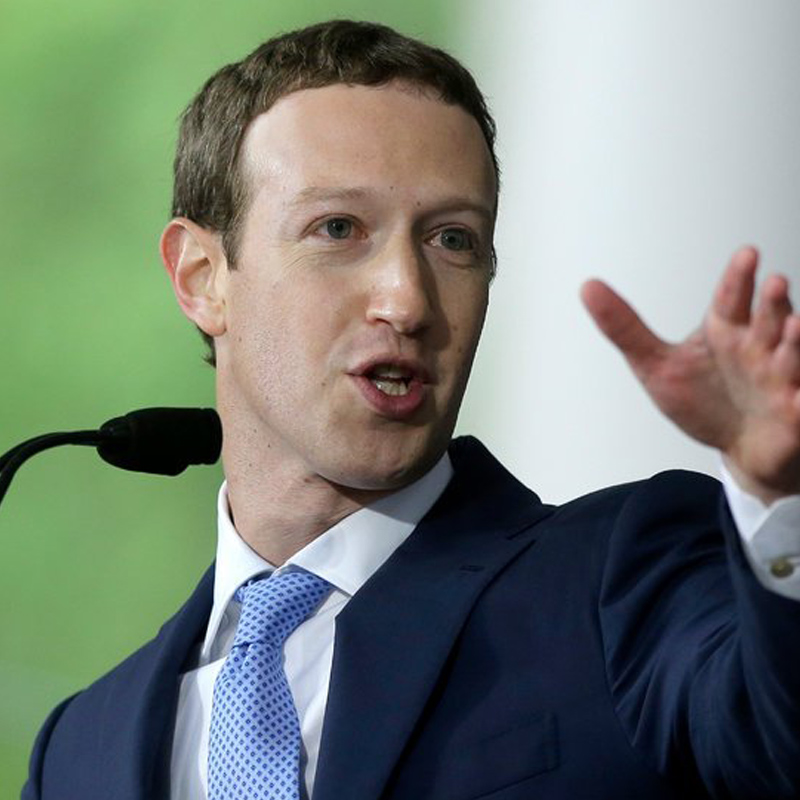
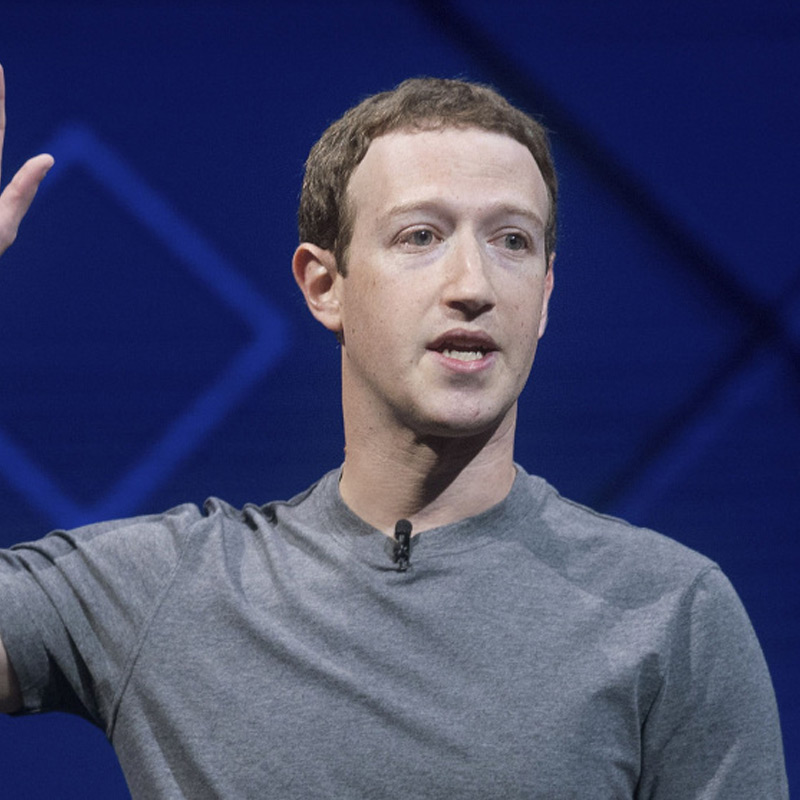
    Facebook CEO Mark Zuckerberg described the tool as a "simple control to clear your browsing history on Facebook—what a user has clicked on, what websites they visited etc". Facebook's chief financial officer David Wehner revealed that the Clear History tool was in development and could be expected to launch later this at the Morgan Stanley, Media and Telecom Conference in Barcelona.

    Wehner said the new feature would give Facebook headwinds affecting its ability to target users with adverts. "We want to make sure this works the way it should for everyone on Facebook, which is taking longer than expected," the social media giant said according to media reports.

    "In your web browser, you have a simple way to clear your cookies and history. The idea is a lot of sites need cookies to work, but you should still be able to flush your history whenever you want. We're building a version of this for Facebook too," Zuckerberg wrote earlier in a personal post on Facebook after the announcement.

  • Facebook tops list of least-trusted tech cos

    Facebook tops list of least-trusted tech cos

    MUMBAI: The year 2018 has been a stormy one for social media giant Facebook. In the latest stir of data breach events surrounding company, the company is said to have sidestepped its own privacy rules to give more than 150 companies, including Microsoft, Amazon, Netflix, and Spotify, special privileges to its user’s data.

    Now, in a recent survey conducted by research company Toluna, it reported that out of 1,000 participants, 40 per cent of participants trust Facebook the least with their personal information. This gave Facebook the number one position in the list of least-trusted tech companies.

    With 8 per cent, Twitter and Amazon are tied for second on the list followed by Uber on the fourth with 7 per cent of participants saying they trust the company least with their data.

    Google and Lyft with 6 per cent are tied on the fifth position. Apple and Snapchat at 4 per cent, Microsoft at 2 per cent, Netflix and Tesla both at 1 per cent making them the most trusted company with personal data in the survey list.

    Since the Cambridge Analytica scandal, Facebook has seen a bumpy ride as controversies have been following the social networking company.

  • Facebook India reports 27% rise in profit in FY18

    Facebook India reports 27% rise in profit in FY18

    MUMBAI: According to Registrar of Companies (RoC) filings sourced by data platform Tofler, Facebook India Online Services reported a 27 per cent increase in net profit to Rs 77 crore for the year ended March 2018.

    Facebook reported a 53 per cent rise in revenue from operations to Rs 521 crore in FY18 from Rs 341 crore in FY17. At the same time, expenses went up 55.4 per cent to Rs 443.8 crore in FY18 from Rs 285.5 crore.

    The company’s employee benefit cost also rose 18 per cent to Rs 110 crore from Rs 89.6 crore last year.

    Although, Facebook reported a 53 per cent rise in revenue in FY18 but as per filings, it reveals that there has been a slowdown in the rate of growth. Facebook had reported a 93 per cent jump in revenue to Rs 342 crore in FY17 from Rs 177 crore in FY16. And with that, the growth in net profit also looks to have been slowing down as Facebook’s net profit had jumped 31 per cent to Rs 40.7 crore in FY17 from Rs 31 crore in FY16.

    After the Cambridge Analytica data breach, Facebook had drawn a lot of criticism both from users and advertisers. Since then, Facebook has tried to take several measures to fix the issues.

    To call attention, in India, Facebook has undertaken an offline process to verify identity and locations of political advertisers in India as the country’s general elections arrive next year.

  • Airtel, Saavn got special access to users’ data even after 2015: Facebook

    Airtel, Saavn got special access to users’ data even after 2015: Facebook

    MUMBAI: Facebook’s data controversy is engulfing numerous companies including many renowned ones in India. India’s largest telecom Bharti Airtel and music streaming app Saavn were among the firms that could have accessed data of Facebook even after 2015. This revelation has come to light based on submissions made by Facebook to the US Congress.

    In the submission, Facebook named Airtel and 51 other companies for having an “integration partnership”. Facebook authorised those companies to access its user data in order to “recreate Facebook-like experiences”. However, Airtel has claimed the deal ended in 2013.

    “Integration partners were not permitted to use data received through Facebook APIs for independent purposes unrelated to the approved integration without user consent,” Facebook said in the reported submission.

    Saavn was also among the companies which could access details of Facebook users’ friends. While the social media platform announced that data access would be blocked from May 2015, Saavn along with some other app developers were given extra time to become compliant with Facebook’s more restrictive platform API (application programming interface) policy.

    “Such access to information about an app user’s friends required not only the consent of the app user, but also required that the friends whose data would be accessed have their own privacy settings set to permit such access by third-party apps,” Facebook said.

    Since the Cambridge Analytica data scandal, Facebook has been facing tough times regarding data security.

    Also Read:

    FB reveals CA harvested data of up to 87 mn people

    Mark Zuckerberg says ‘sorry’ for Facebook’s privacy crisis

  • FB reveals CA harvested data of up to 87 mn people

    FB reveals CA harvested data of up to 87 mn people

    MUMBAI: The Cambridge Analytica (CA) data breach row continues to loom over social media giant Facebook. Revealing a far higher figure of affected users than the estimated 50 million, the company itself confessed that the data of up to 87 million users may have been improperly shared. Admitting in a blog post by the company’s chief technology officer Mike Schroepfer, the company provided its plan to restrict data access on the social media platform.

    When the controversy first broke out regarding British data analysis firm CA, it was reported that CA illegally obtained data of around 50 million Facebook users. Now, the added 37 million proves the earlier reports were just the tip of the iceberg. The 2016 US Presidential election which saw the landslide victory of Donald Trump has been rife with allegations that CA targeted voters on the back of illegal data. Soon after the first few reports, the fiasco became subject of debate all over the world.

    Facebook also shared the number of users likely affected from several countries including India. Indian users constitute 0.6 per cent (562,455) of the total number of affected users and naturally, the US is the highest affected country with 70,632,350 users (81.6 per cent).

    “In total, we believe the Facebook information of up to 87 million people — mostly in the US — may have been improperly shared with Cambridge Analytica,” Facebook officially said. CA, however, had licenced data for “no more than 30m people from GSR” and “did not receive more data than this”.

    The revelation comes at a time when after seven days Facebook CEO Mark Zuckerberg would make his first appearances before US Congress to answer questions about the recent data misuse. On next Wednesday, Zuckerberg will appear before the House Energy and Commerce Committee to testify at a hearing on data privacy. It is certain he will face strong criticism.

    Australia’s privacy commissioner has launched an investigation to determine whether Facebook breached the Australian privacy act after knowing that 300,000 Australians are suspected of their data being breached by Cambridge Analytica.

    From restricting app permissions for information like check-ins, likes, photos, posts or a group content to deleting a tool which allows users to search someone with e-mail id or phone number, the company is putting several efforts to restore users’ faith. “We’ve reviewed this feature to confirm that Facebook does not collect the content of messages — and will delete all logs older than one year,” Facebook said assuring to review the feature which collects call and text history.

    Users are likely to learn from this lesson and be wary about giving away their personal information through public platforms. While data analytics is a necessity for businesses, tech companies also need to put an ethical check to data mining until proper regulations are formed to prevent such mishaps. Besides focusing on the analytic tool, the time has come to strengthen the cybersecurity of the entire ecosystem.

    Also Read :

    Facebook’s move to limit use of third party data brokers angers advertisers 

    Facebook data fiasco gets murkier 

  • Facebook data fiasco gets murkier

    Facebook data fiasco gets murkier

    MUMBAI: Data has been touted as costlier than oil in the new digital era. While it may not be the case, the Cambridge Analytica (CA) data scandal has at least indicated that it is partially true. Raising questions on users’ data security on social media platforms, the controversy has dented Facebook’s credibility enormously. Now, the hullabaloo is not only limited to the US, from where it started but is also becoming a subject of debate in other parts of the world.

    Over the last few days, British data analysis firm CA has been at the centre of attention worldwide because of its alleged leak of more than 50 million Facebook users. The firm illegally obtained data to target US voters during the 2016 presidential election, which witnessed Donald Trump’s landslide victory.

    Russian-American psychology professor at Cambridge University Aleksandr Kogan built an app in June to harvest data for the scandal-hit British firm. Under the guise of academics, Kogan accessed data of users who used the ‘This is Your Digital Life’ app to participate in a survey. Facebook grossly denied terming it a “data breach” because it routinely allows researchers to have access to user data. It does not, however, allow sale or transfer of such information.

    In the wake of the entire controversy, Facebook CEO Mark Zuckerberg has apologised in full-page ads in seven British newspapers and three American dailies on Sunday. “This was a breach of trust and I’m sorry we didn’t do more at the time,” wrote Zuckerberg. “I promise to do better for you.” He has also pledged that the company would restrict third-party apps from acquiring such data.

    This time, though, a mere apology won’t help Facebook to mend its reputation. From Russian interference in the US presidential elections to Brexit, Facebook has been constantly been in the spotlight in failing to protect users from fake news. This CA controversy has wiped out nearly $75 billion of the company’s market capitalisation in one week.

    This single incident acts as an eye-opener for a far more deep-rooted problem at hand. The entire tech industry views user data as a commodity, which can be mined any time without permission. While users give permissions to several apps, allowing the access of personal data, including location or credit scores or anything linked to the device, organisations trade with data by circumventing regulation.

    Companies other than Facebook have also been hit by data breaches, weakening public confidence in them. Facebook’s connection to people’s social and personal lives has brought to light the magnanimity of the issue. It is time to bring such platforms under a regulation to plug the problem of data misuse.

    While both sides of the Atlantic were shaken up, India has also started taking the problem seriously. The country with Facebook’s largest user base of over 241 million is obviously concerned thanks to the whole fiasco. Minister for law and IT Ravi Shankar Prasad on 21 March sent out a warning to Zuckerberg that any kind of “data theft” would not be tolerated and he could even be “summoned”.

    Later, the Ministry of Electronics and Information Technology sought a response from CA on whether it was involved in the misuse of data to profile Indians and influence their voting behaviour.

    The ministry wants to know by 31 March 2018 the methodology used by the firm for possession of data as well as whether it took consent from the users or not. It has also asked for information on entities that have engaged the firm for the data breach.

    Though it is not sure till now whether the Indian election suffered any problem from the entire scam which started in 2015, Ovleno Business Intelligence (OBI), an Indian affiliate of CA’s parent firm Strategic Communications Laboratories (SCL), listed both the BJP and the Congress as its clients. Even the company website says “CA was contracted to undertake an in-depth electorate analysis for the Bihar Assembly Election in 2010.”

    The Congress and the BJP both accused each other of alleged connections with OBI. A report in The Print states that CA CEO Alexandar Nix came down to India and worked with several others from its parent firm SCL to create an electoral database in India and to hunt clients.

    Before the 2019 legislative election, the entire revelation may help regulators to protect constitutional sanity and look into the loopholes. Facebook is now widely used by political parties and politicians. Fake news or any data breach could be dangerous for a large democracy like India. In an interview with CNN,  Zuckerberg himself mentioned the “big election in India”. The data disaster demands regulators to take a call, consumers to be more aware of being used and the whole tech industry to reinvent security to gain the faith of users.

    Also Read:

    Mark Zuckerberg says ‘sorry’ for Facebook’s privacy crisis

    Facebook to ban cryptocurrency ads

  • Mark Zuckerberg says ‘sorry’ for Facebook’s privacy crisis

    Mark Zuckerberg says ‘sorry’ for Facebook’s privacy crisis

    MUMBAI: Mark Zuckerberg has finally broken his silence five days after the Cambridge Analytica data scandal engulfed Facebook over the weekend.
    The Facebook CEO pledged on Wednesday to take a series of steps to protect data and fix what he called a “breach of trust” between the social network and its users.
    “We have a responsibility to protect your data, and if we can’t then we don’t deserve to serve you,” Zuckerberg wrote in a Facebook post. “I’ve been working to understand exactly what happened and how to make sure this doesn’t happen again.”

    In an interview to CNN yesterday, Zuckerberg told Laurie Segall that “I’m really sorry that this happened.” 

    News broke this weekend that Cambridge Analytica, a data firm with ties to President Donald Trump’s campaign, reportedly accessed information from about 50 million Facebook users without their knowledge.
    Facebook says the data was initially collected by a professor for academic purposes in line with its rules. The information was later transferred to third parties, including Cambridge Analytica, in violation of Facebook’s policies.
    “I wish we’d taken those steps earlier,” Zuckerberg told Segall. “That is probably the biggest mistake that we made here.”

    In 2014, Facebook changed its platform to limit the amount of data that third-party developers could access.
    Aleksandr Kogan, the data scientist who passed along data to SCL Group and its affiliate Cambridge Analytica, built a Facebook app that drew data from users and their friends in 2013. He was allowed access to a broad range of data at the time.

    Though Kogan’s data was properly obtained, he breached Facebook’s policy when he shared that information with a third party, Facebook has said. When Facebook learned about the information being shared, it asked Cambridge Analytica to destroy the data. Cambridge said it had.

    Zuckerberg said Facebook plans to alert everyone whose data was accessed by Cambridge Analytica. But he added that he wished the company hadn’t waited so long to tell people what happened.

    Also Read :

    Facebook to ban cryptocurrency ads

    RoW, APAC revenue grows fastest for Facebook in 2017