Tag: CAGR

  • Digital ads share low; CII-KPMG hopes for 33.5pc CAGR

    Digital ads share low; CII-KPMG hopes for 33.5pc CAGR

    MUMBAI: Confederation of Indian Industry (CII) and KPMG in India unveiled today a report titled ‘Digital – The New Normal of Marketing’, at CII National Marketing Summit, which brings out valuable information on Indian digitization and the shift from traditional to digital marketing.

    The report estimates that, India is one of the fastest growing advertising markets globally with an estimated growth of 15.5 per cent in 2016, driven by a large consumer base and a burgeoning e-commerce industry. Although the share of digital advertising spend remains low at 12.7 per cent in 2016, it is one of the fastest growing mediums at an expected CAGR of 33.5 per cent (2015-2020) to cross INR 255 billion in 2020.

    Of the total digital advertisement spends, ‘search and display’ commands the largest share even though it is a relatively maturing segment.

    “The post-demonetisation days have clearly showed how the country is set to leapfrog a few stages to embrace the power of digital. Mobile is being rapidly adopted and marketers have an incredible opportunity to enhance the game of digital communication and deliver great customer experiences at each point of the journey,” said CII National Committee on marketing chairman and Aditya Birla Group CEO – textile business Thomas Varghese.

    As per the report, connected devices, smarter devices and ‘hyper relevant rich content’ will drive consumption for the consumer. Marketers will be well served if they are able to ride the data wave and use technology to build in analytical models. The Digital marketer will be responsible to deliver a distinctive consumer experience using various channels – thus making the role a key contributor to the overall omni channel experience. The report also gives insights into nascent technologies like emotions analytics and predictive marketing.

    ‘There have been silent and not so silent changes around us that are changing the way marketing will be done. With the internet becoming all pervasive, it has become so integral to our lives that it has literally disappeared. Singularity, connected systems, Cognitive and AI will create a world where the marketer will be marketing not only to humans but the ‘self-thinking’ machines,’ says KPMG India partner and head – digital consulting Rachna Nath.

    “Digital marketing is more about big data and technology innovation rather than conventional marketing. Digital marketer today will have to look at the consumer as a living sensor which creates data. Insights on consumer behavior will drive the next big innovation on the campaign. Success will depend upon how the digital marketer is able to drive differentiated strategies for each digital channel and eventually converging on consumer experience” says Aditya Rath, Partner and Lead for Digital Customer.

    Other key findings and suggestions presented in the report are:

    Video is new data format

    The digital consumer’s attention span has now come down to 8 seconds, down from 12 seconds in 2007. Marketers are expected to direct their content strategists to curate short videos that create a greater impact on the consumer’s mind while holding their attention till the end. Live streaming videos are interactive, immersive and cost-effective.

    Omni-channel experiences and touch points are essential in the digitally charged marketplace Healthcare, automotive, insurance, retail and manufacturing companies are experimenting on various IoT use cases to enhance the consumer experience.

    Wearables provide a new dimension from a data perspective Through the galvanic skin sensors and gyroscopes that are in-built in these devices, marketers can continuously monitor the customer’s physiological and behavioural data.

    Authenticity, relevance, and value are increasingly important parameters for content creation and distribution Customers trust user-generated content and give more weightage to peer recommendations and reviews than to professionally curated content.

    Native ads are being used increasingly to combat mobile and desktop ad blocking They blend in and appear as content that would normally and deliver value and relevance to the consumer and do not hinder user experience of the website even while monetizing.

  • Digital ads share low; CII-KPMG hopes for 33.5pc CAGR

    Digital ads share low; CII-KPMG hopes for 33.5pc CAGR

    MUMBAI: Confederation of Indian Industry (CII) and KPMG in India unveiled today a report titled ‘Digital – The New Normal of Marketing’, at CII National Marketing Summit, which brings out valuable information on Indian digitization and the shift from traditional to digital marketing.

    The report estimates that, India is one of the fastest growing advertising markets globally with an estimated growth of 15.5 per cent in 2016, driven by a large consumer base and a burgeoning e-commerce industry. Although the share of digital advertising spend remains low at 12.7 per cent in 2016, it is one of the fastest growing mediums at an expected CAGR of 33.5 per cent (2015-2020) to cross INR 255 billion in 2020.

    Of the total digital advertisement spends, ‘search and display’ commands the largest share even though it is a relatively maturing segment.

    “The post-demonetisation days have clearly showed how the country is set to leapfrog a few stages to embrace the power of digital. Mobile is being rapidly adopted and marketers have an incredible opportunity to enhance the game of digital communication and deliver great customer experiences at each point of the journey,” said CII National Committee on marketing chairman and Aditya Birla Group CEO – textile business Thomas Varghese.

    As per the report, connected devices, smarter devices and ‘hyper relevant rich content’ will drive consumption for the consumer. Marketers will be well served if they are able to ride the data wave and use technology to build in analytical models. The Digital marketer will be responsible to deliver a distinctive consumer experience using various channels – thus making the role a key contributor to the overall omni channel experience. The report also gives insights into nascent technologies like emotions analytics and predictive marketing.

    ‘There have been silent and not so silent changes around us that are changing the way marketing will be done. With the internet becoming all pervasive, it has become so integral to our lives that it has literally disappeared. Singularity, connected systems, Cognitive and AI will create a world where the marketer will be marketing not only to humans but the ‘self-thinking’ machines,’ says KPMG India partner and head – digital consulting Rachna Nath.

    “Digital marketing is more about big data and technology innovation rather than conventional marketing. Digital marketer today will have to look at the consumer as a living sensor which creates data. Insights on consumer behavior will drive the next big innovation on the campaign. Success will depend upon how the digital marketer is able to drive differentiated strategies for each digital channel and eventually converging on consumer experience” says Aditya Rath, Partner and Lead for Digital Customer.

    Other key findings and suggestions presented in the report are:

    Video is new data format

    The digital consumer’s attention span has now come down to 8 seconds, down from 12 seconds in 2007. Marketers are expected to direct their content strategists to curate short videos that create a greater impact on the consumer’s mind while holding their attention till the end. Live streaming videos are interactive, immersive and cost-effective.

    Omni-channel experiences and touch points are essential in the digitally charged marketplace Healthcare, automotive, insurance, retail and manufacturing companies are experimenting on various IoT use cases to enhance the consumer experience.

    Wearables provide a new dimension from a data perspective Through the galvanic skin sensors and gyroscopes that are in-built in these devices, marketers can continuously monitor the customer’s physiological and behavioural data.

    Authenticity, relevance, and value are increasingly important parameters for content creation and distribution Customers trust user-generated content and give more weightage to peer recommendations and reviews than to professionally curated content.

    Native ads are being used increasingly to combat mobile and desktop ad blocking They blend in and appear as content that would normally and deliver value and relevance to the consumer and do not hinder user experience of the website even while monetizing.

  • Music Broadcast plans IPO; to make buys

    Music Broadcast plans IPO; to make buys

    MUMBAI: Music Broadcast Private Limited, which operates one of the leading FM radio stations — Radio City — is planning to list. It is preparing to bring out a public offer of over Rs 500 crore comprising a fresh issue of Rs 400 crore and an offer for sale of 26.59 lakh equity shares by the promoters’ family.

    The proceeds from the issue will be utilised to retire debt of around Rs 150 crore, and the remainder to create a “war chest” for future acquisitions.

    Radio City 91.1 FM brand has been synonymous with the category since inception in 2001. Innovative programming and marketing initiatives have helped Radio City pioneer FM in India. In phase III auction, the network expanded its footprint by efficiently adding 11 new markets after carefully selecting towns with greater SEC AB population. With the addition of the new towns and addition of Radio Mantra towns, Radio City reaches to 39 most important towns of India dominating the most important advertiser markets. The first FM station will be launching internet radio streams in India with 30 stations and counting

    Music Broadcast promoter Jagran Prakashan CFO R. K. Agarwal said that they already filed the DRHP and post-regulatory approvals, and intend to hit the capital market. Most of the funds would be used to strengthen the capital structure so that a war chest was created to acquire more radio stations as and when opportunity arose, he added.

    Agrawal said it sees a lot of opportunities in radio as its business has been expanding at a CAGR of 15-16 per cent for several years, and has been operating at a margin of 33 per cent.

    Music Broadcast director Apurva Purohit said that the radio sector was the youngest in M&E but was growing fast. Radio’s share in the media and entertainment industry pie was only four per cent of the total advertisement market size due to the tardy pace of regulation, which otherwise could have been as high as 12 per cent.

  • Music Broadcast plans IPO; to make buys

    Music Broadcast plans IPO; to make buys

    MUMBAI: Music Broadcast Private Limited, which operates one of the leading FM radio stations — Radio City — is planning to list. It is preparing to bring out a public offer of over Rs 500 crore comprising a fresh issue of Rs 400 crore and an offer for sale of 26.59 lakh equity shares by the promoters’ family.

    The proceeds from the issue will be utilised to retire debt of around Rs 150 crore, and the remainder to create a “war chest” for future acquisitions.

    Radio City 91.1 FM brand has been synonymous with the category since inception in 2001. Innovative programming and marketing initiatives have helped Radio City pioneer FM in India. In phase III auction, the network expanded its footprint by efficiently adding 11 new markets after carefully selecting towns with greater SEC AB population. With the addition of the new towns and addition of Radio Mantra towns, Radio City reaches to 39 most important towns of India dominating the most important advertiser markets. The first FM station will be launching internet radio streams in India with 30 stations and counting

    Music Broadcast promoter Jagran Prakashan CFO R. K. Agarwal said that they already filed the DRHP and post-regulatory approvals, and intend to hit the capital market. Most of the funds would be used to strengthen the capital structure so that a war chest was created to acquire more radio stations as and when opportunity arose, he added.

    Agrawal said it sees a lot of opportunities in radio as its business has been expanding at a CAGR of 15-16 per cent for several years, and has been operating at a margin of 33 per cent.

    Music Broadcast director Apurva Purohit said that the radio sector was the youngest in M&E but was growing fast. Radio’s share in the media and entertainment industry pie was only four per cent of the total advertisement market size due to the tardy pace of regulation, which otherwise could have been as high as 12 per cent.

  • Global OTT may expand at 14.5 per cent CAGR

    Global OTT may expand at 14.5 per cent CAGR

    MUMBAI: Over-the-top (OTT) content is the delivery of audio, video, images, and other media over the internet and bypasses traditional content distribution services. OTT services are mostly related to communication and media and are generally lower in cost than the traditional method of content delivery. OTT content, applications, and services are increasingly being adopted in all segments of commerce and society and are affecting and disrupting traditional industries at a significant pace.

    Consumers use online video instead of traditional television; online communications platforms instead of traditional telephone services; and today are able to download films and music that were once provided only on physical media. Additionally, the process of advertising and searching for services is increasingly moving to these online platforms. This has led to an exponential market growth globally. The global OTT content market is estimated to be valued at US$ 53.2 Bn by the end of 2016 and is expected to register a CAGR of 14.5% during the forecast period (2016–2026).

    Top OTT content market players are developing innovative marketing and distribution channels to enter and rule untapped markets. Some of the top companies operating in the global OTT content market include Akamai Technologies, Amazon.com Inc., Apple Inc., Facebook Inc., Google Inc., IBM, LeEco, Limelight Networks, Microsoft Corporation, and Netflix Inc. Several Indian companies have also entered the OTT content market in a big way. Some of the Indian OTT content market players include Star India Pvt. Ltd., Zee Entertainment Enterprises Ltd., Spuul, Eros International Plc., and Viacom 18 Media Pvt. Ltd, according to a PRNewswire release.

    Penetration of high speed broadband

    Growth in the penetration of high speed broadband, increasing mobile subscriptions and adoption of mobile connected devices, new features and advanced capabilities in smartphones, attractive pricing, and more content options are some of the major drivers fuelling the growth of the global OTT content market. Also, a shift in viewer preferences from the television format to a more customised, anytime, anywhere content viewing format is also boosting the growth of the global OTT content market.

    However this growth is hampered by factors such as online piracy activities, low bandwidth in emerging countries, lack of offline content availability, and technical challenges faced during OTT content delivery.

    Video content

    Video content type segment projected to be the most attractive segment over the forecast period. In terms of revenue, the video segment is anticipated to register a relatively higher CAGR of 15.8% between 2016 and 2026. This growth is attributed to extensive growth of high speed broadband infrastructure in emerging economies and popularity of subscription-based models in developed economies. This segment is expected to register high Y-o-Y growth rates throughout the forecast period.

    TVOD revenue model segment expected to register high Y-o-Y growth rates throughout the forecast period. The TVOD segment is estimated to register a CAGR of 15.8% during the forecast period. The AVOD segment is expected to witness significant revenue growth due to its ease of use; personalized, modern interface; and better viewing experience of AVOD services.

    Smartphones and Tablets

    Smartphones and Tablets device / platform type segment projected to be the most attractive segment over the forecast period. The smartphones and tablets segment accounted for a relatively high market value share in 2015 and this segment is anticipated to remain dominant through 2026. The dominance of the smartphones and tablets segment is attributed to increasing consumer preference towards these devices for availing OTT services such as video and audio streaming, social networking, and texting. The Smart TVs segment is expected to register high Y-o-Y growth rates throughout the forecast period and is anticipated to register a CAGR of 18.7% between 2016 and 2026.

    APEJ and Latin America

    APEJ and Latin America expected to be the fastest growing markets over 2016–2026. The APEJ OTT content market is projected to be the most attractive regional market in the global OTT content market and is anticipated to witness a CAGR of 24.6% over the forecast period. The market in North America accounted for a relatively high value share in 2015.

  • Global OTT may expand at 14.5 per cent CAGR

    Global OTT may expand at 14.5 per cent CAGR

    MUMBAI: Over-the-top (OTT) content is the delivery of audio, video, images, and other media over the internet and bypasses traditional content distribution services. OTT services are mostly related to communication and media and are generally lower in cost than the traditional method of content delivery. OTT content, applications, and services are increasingly being adopted in all segments of commerce and society and are affecting and disrupting traditional industries at a significant pace.

    Consumers use online video instead of traditional television; online communications platforms instead of traditional telephone services; and today are able to download films and music that were once provided only on physical media. Additionally, the process of advertising and searching for services is increasingly moving to these online platforms. This has led to an exponential market growth globally. The global OTT content market is estimated to be valued at US$ 53.2 Bn by the end of 2016 and is expected to register a CAGR of 14.5% during the forecast period (2016–2026).

    Top OTT content market players are developing innovative marketing and distribution channels to enter and rule untapped markets. Some of the top companies operating in the global OTT content market include Akamai Technologies, Amazon.com Inc., Apple Inc., Facebook Inc., Google Inc., IBM, LeEco, Limelight Networks, Microsoft Corporation, and Netflix Inc. Several Indian companies have also entered the OTT content market in a big way. Some of the Indian OTT content market players include Star India Pvt. Ltd., Zee Entertainment Enterprises Ltd., Spuul, Eros International Plc., and Viacom 18 Media Pvt. Ltd, according to a PRNewswire release.

    Penetration of high speed broadband

    Growth in the penetration of high speed broadband, increasing mobile subscriptions and adoption of mobile connected devices, new features and advanced capabilities in smartphones, attractive pricing, and more content options are some of the major drivers fuelling the growth of the global OTT content market. Also, a shift in viewer preferences from the television format to a more customised, anytime, anywhere content viewing format is also boosting the growth of the global OTT content market.

    However this growth is hampered by factors such as online piracy activities, low bandwidth in emerging countries, lack of offline content availability, and technical challenges faced during OTT content delivery.

    Video content

    Video content type segment projected to be the most attractive segment over the forecast period. In terms of revenue, the video segment is anticipated to register a relatively higher CAGR of 15.8% between 2016 and 2026. This growth is attributed to extensive growth of high speed broadband infrastructure in emerging economies and popularity of subscription-based models in developed economies. This segment is expected to register high Y-o-Y growth rates throughout the forecast period.

    TVOD revenue model segment expected to register high Y-o-Y growth rates throughout the forecast period. The TVOD segment is estimated to register a CAGR of 15.8% during the forecast period. The AVOD segment is expected to witness significant revenue growth due to its ease of use; personalized, modern interface; and better viewing experience of AVOD services.

    Smartphones and Tablets

    Smartphones and Tablets device / platform type segment projected to be the most attractive segment over the forecast period. The smartphones and tablets segment accounted for a relatively high market value share in 2015 and this segment is anticipated to remain dominant through 2026. The dominance of the smartphones and tablets segment is attributed to increasing consumer preference towards these devices for availing OTT services such as video and audio streaming, social networking, and texting. The Smart TVs segment is expected to register high Y-o-Y growth rates throughout the forecast period and is anticipated to register a CAGR of 18.7% between 2016 and 2026.

    APEJ and Latin America

    APEJ and Latin America expected to be the fastest growing markets over 2016–2026. The APEJ OTT content market is projected to be the most attractive regional market in the global OTT content market and is anticipated to witness a CAGR of 24.6% over the forecast period. The market in North America accounted for a relatively high value share in 2015.

  • OTT/VOD disrupted traditional ‘appointment viewing’ in India: Spuul’s Subin Subaiah

    OTT/VOD disrupted traditional ‘appointment viewing’ in India: Spuul’s Subin Subaiah

    The global OTT video market is poised for nearly exponential growth, a report by Digital TV Research states. It forecasts that global revenues will climb to US$ 65 billion by 2021 covering 100 countries. By 2020, AVOD’s revenues of US$ 15.4 billion are expected to surpass SVOD revenues of US$ 14.6 billion. As per Frost & Sullivan, the video market is anticipated to expand at a CAGR of over 80 per cent till 2020.

    By 2019, Cisco research states, almost 80 per cent of the global Internet consumption will be video content, OTT streaming will fuel growth, traffic from wireless and mobile devices will rise to 66 per cent in 2019, and Internet video to TV will increase fourfold by 2019.

    Competition in the OTT segment is increasing owing to companies seeking to expand their user bases in other countries.

    Indiantelevision.com’s Parvinder Sandhu caught up with Subin Subaiah, the global CEO and director of Spuul, a Singapore-based aggregator, which has a catalogue of 1000 movies, over 10,000 hours of programming and 18 million downloads to date. Co-founded by Subaiah, Sudesh Iyer, and S Mohan, Spuul (inspired from spool) has reduced the lead time between movie premieres in theaters to its availability on its platform to just two weeks and has established tiny downloads of less than 70mb for viewers in low bandwidth areas.

    A banker who held senior positions at leading global financial institutions, Subin, mixing grit and persistence with patience and respect, set up Spuul in 2012 based on his absolute conviction that on-line streaming is the pre-cursor to the world of virtual cinema.

    Excerpts from an interview:

    How will you define Spuul? A start-up or a mature media company?

    Start-ups are a buzzword these days. But, for how many years, a company can be called a start-up, and why? Start-ups need growth funding and capital support till they become self-sustaining corporates with independent and massive marketing budgets and eventual taxpayers. We are a mature start-up, which will be cash-flow positive in 18-24 months. Start-ups are nurtured till an inflection point comes in the industry.

    How do you see Spuul in the Indian OTT eco-syestem?

    In India, the OTT and VOD eco-system is still evolving and it may take 12-24 months to mature. Internet penetration here is quite low and the data cost is high, unlike in the US, China, or the UK. However, in India, the OTT/VOD eco-system is interdependent on a lot of stakeholders such as telcos, content owners, broadcasters, fibre-to-home entities, DTH players, IPTV, the OEMs and the device industry. Almost all the OTT/VOD players are struggling to find the right approach to the consumer and to understand the ideal user experience.

    Spuul is a pure play and dedicated OTT player without an agenda. We are a disciplined ship — a premium solution for the common man. Spuul is seeking to partner various industry outfits and is seeking content deals. We have already made our presence felt and are neither anxious nor feel threatened about competition. We use our own metrics to figure out ways to serve consumers.

    Considering what you said about success’ interdependence on other factors, how would you describe the Indian market?

    India is a complex market, no doubt. In India, one needs to see who is able to pay how much and what kind of value for money the consumer is seeking. We continuously address the consumer’s issues and expectations. No doubt, one would need growth capital, but the timing is important. It’s not primarily about money, but more about who we can partner with. This is a deep-pocket business. In the OTT/VOD business, there has been an escalation in

    i)    content cost;

    (ii)  customer acquisition cost;

    (iii) BTL cost (cost of e-commerce is exorbitant) and

    (iv)  ability to hire and retain talent.

    Though Reliance Jio, for example, is giving ESOPs, it does not work well in India since employees here expect cash today and not (notional money) for the future.

    What are your expectations from the Indian market?

    We expect Internet penetration in India to be sufficiently better in 12-24 months time. By that time, Internet, hopefully, would have enabled around 100-200 million people with easy access and affordable Internet. The arrival of Reliance Jio will hopefully change the scenario as it’s not just about good penetration, but affordable price points and quality (of service) that are also significant. When these converge, digital consumption would be much better.

    The market dynamics keep changing. Now, after demonetisation, many players like us had to integrate with payment wallets. So, we had many balls in the air — we may catch some and drop some. But, it’s okay.

    What , according to you, is making OTT/VOD services mushroom all over despite Indian challenges? Has there been some major shift in viewing trends?

    With the arrival of OTT/VOD, ‘viewing by appointment’ has been tossed out of the window. But, another big challenge for the OTT/VOD players is how they deliver the same content (that had been delivered till now or is still being done so via legacy platforms) on whichever device the consumer has. The scene has shifted from the broadcaster to the consumer.

    Consumer in India needs to be first educated about the difference between paid and free content platforms. Second, they also need to be made aware of legal and pirated content. Education will lead consumers to understand the rewards and penalty for making the right or wrong choices. As of now, the consumer has made soft choices.

    The industry too needs to understand some of the issues: how to provide hassle-free content? How much content is being consumed? Which type of content is being used? When is the content consumed?

    How is Spuul trying to address some of the issues in the Indian market?

    Spuul is non-discriminatory and sees every consumer as a potential client. Spuul enables downloads, consumption (rendition) of content in accordance with the device  — whether it’s running on an Android or Windows-based or some other platform, the size of the screen (large, medium or small), whether it’s a mobile phone or a tablet and similar such issues. It’s a technical game and we pride ourselves as being the best at it. The problems of easy content delivery are something that forces companies such as Spuul to find solutions on a bumpy road.

    Would you enumerate some of the initiatives of Spuul in this  technical game?

    We are the pioneers of  Progressive Download (the process wherein a user downloads his/her favourite show for offline/low bandwidth viewing). Wi-Fi needs to significantly grow for a smoother user-experience in India. Other OTT/VOD companies soon caught up with Progressive Download technology as there’s hardly anything proprietary in such technologies. As OTT/VOD is a big execution game, technology, marketing and agility to adapt to changing landscape is as important as having good content.

    In the OTT/ VOD realm, there are primarily two kinds of people who need to be taken care of:

    1.Content consumer (all his likes/dislikes need to be kept in mind and served accordingly) and

    2.Content owner who expects content to be showcased properly. We also need to take care of the licencing rights and that  best exposure is given to content for the satisfaction of the owner as well.

    As content-owners strike different deals these days to multiply its monetisation, how do companies like Spuul take care of sensitivities, including IPR issues, while rolling out services?

    Sometimes, content owners are reluctant to part with their content. What if we were to licence a top media/production house content and show it alongside C-grade movies? That’s simply not done. At Spuul, we maintain that image of the content-owner and ours is as important. As we need to have a working model that is sustainable and long-term, we need to have a degree of decorum and a certain premium-ness attached to our product.

    Relationships with the studios are important. In a corporate world, we all need to be careful about transparency in our deals and need to be aware about fighting piracy. Pirated Hindi movies that were available online lose more than half the revenue that they may have earned legitimately if online pirates had not milked their products. Spuul has created some rules around its content. Hindi movies are digitised with sub-titles. A-grade and B-grade movies are made available to discerning customers. For example, Spuul is also careful in choosing its content when it comes to markets such as the Middle East. For the sake of offering some select C-grade movies, one cannot risk jeopardising the whole franchise. We must eliminate that risk  entirely.

    We do offer some regular content like Bollywood and regional films. Racy and edgy content is a major attraction and is loved by people in the 18-35 years age-group. Except Eros, we have a tie-up with almost all producers and major content-owners. We are also in the process of moving from Hindi to Punjabi and South Indian movies and, subsequently, decent Bhojpuri movies. The inspiration for south Indian content came from a Delhi incident where we overheard a taxi-driver and his friend discussing action and VFX-laden movies from south India.

    However, Spuul is not rushing in to provide original content. We are a technology company, and not a creative organisation. Big studios can afford to have, say, 10 originals of which three may fail. It still works out to be reasonably profitable. If I were to get two million users who are spending say US$ 5 a month, for example, I can break even for my US$ 10 million investment.

    The market trends and consumer choices need to be tracked, so it seems?

    Absolutely. We do keep abreast of the market trends in terms of price points, recency of content (how soon it is available after being released in theatres) and originals. But, India is a low-yield market  compared to the Middle East, North America and New Zealand. Those markets are more remunerative with bigger payments and higher churn rates. In India, against 60 per cent consumption, the revenue is 20 per cent. However, in the rest of the world, revenue is 80 per cent against 40 per cent consumption.

    (60 per cent of Spuul content is consumed in India and the remainder by the Indian and sub-continental diaspora, across the world. In India, almost 90 per cent content of Spuul content is consumed on mobile devices.)

    public://url.jpg

    How different is the Indian consumer from those elsewhere for Spuul?

    In India, the consumption patterns are different. There is an involuntary churn since consumers switch from one telecom service-provider to another. After the switch, one needs to re-acquire the consumer, which entails a reasonably high cost. The country is a different ballgame altogether. Users here would want to watch selective content, but privately. It is not the same as content on cable TV, for example, where it is watched by the entire family. A majority of women in India do not leave their homes, lest they miss on their favourite TV programme.

    In the OTT/ VOD world, one needs to constantly empower and engage with the user. A consumer needs to be prompted to download the OTT/VOD app, which he may or may not, depending on his mood, availability of memory/space on his devise, Internet speed, cash balance and finally his willingness to spend. We may need to have all his co-ordinates to reach out to him – his email IDs, FB account IDs, his mobile number, etc. The environment is totally different from the cable TV business.

    (Spuul India CEO Rajiv Vaidya held forth on certain marketing aspects. He said that Spuul’s sachet pricing was applicable only in the India market. The sachet pricing is marketed through the telecom operator. A user is offered an entertainment pack of various duration ranging from a day to a week to a fortnight, depending on the consumer’s financial capability. The fee is automatically deducted from his prepaid mobile balance once he chooses to take a service. In India, almost 90-95 per cent mobile voice and data subscribers are pre-paid consumers.)

    You said Spuul has tie-ups with content owners. Does that strategy also include broadcasting companies?

    Spuul had taken a conscious decision to offer primarily movies and that’s why we do tie-ups with content-owners. But, I agree it would have been better if we too had a content supply chain as it happens when the OTT/VOD platform is a (brand) extension of a broadcasting company or a production house (Hotstar, Voot and Balaji’s ALT readily come to mind). A production factory is always valuable and movie studios are our production factory.

    Still, Spuul has partnerships with several broadcasters, especially the GECs, which are primarily looking at marketing their content to the Indian and sub-continental diaspora abroad

    How would a Spuul service be different from others and other delivery platforms such as cable and DTH?

    Spuul  has tie-ups in place where it gets a week-long or a 10-day exclusive window before new movies are aired on television  via DTH or cable TV services. We need to market and leverage that window correctly through digital and targeted marketing. We need to study users’ browsing habits and aim properly at targeted customers. We also need to engage directly (through in-app notifications). Text messages or SMSes are expensive in India. But, in the Middle East, we have tie-ups with telcos through whom we do SMS blasts to thousands of customers together.

    How does Spuul view the arrival of big daddies such as Amazon Prime and Netflix in India?

    The likes of Amazon Prime Video and Netflix would help expand the OTT/VOD market and all new players are welcome. They have educated the Indian consumer that one needs to pay to watch good content at a convenient time and place. They all have helped in enlightening people that one can’t rely on pirated content and, thus, have helped the ecosystem grow. Everybody here is learning and nobody is an expert on content.  All companies have their advantages and limitations. Some are in the OTT/VOD business alright, but their primary aim is to grow e-commerce revenues.

    Will AVoD be a success?

    AVoD is not expected to succeed because potential advertisers expect certain million downloads before they take a call on putting their money. Also, content owners generally are not happy when their creations are available for free. They expect it to be put behind a pay-wall.

    What are Spuul’s targets?

    Of the 23 million global consumers, 60-65 per cent users have downloaded the Spuul app. Of the Spuul subscribers, around 60 per cent are in India and the remainder in the U.S, U.K, Australia and New Zealand. We are growing 30-40 per cent month on month. Of the projected 700-800 million global OTT/VOD subscribers by 2020, we are targeting approximately 200 million or roughly 25 per cent to be on the Spuul platform.

    By 2020, owing to the sheer numbers and the status of being the second-largest penetrated market, India’s OTT/VOD subscribers should leapfrog ahead of the U.S but remain below China where the growth trajectory is similar. The opportunity in India is huge.


  • OTT/VOD disrupted traditional ‘appointment viewing’ in India: Spuul’s Subin Subaiah

    OTT/VOD disrupted traditional ‘appointment viewing’ in India: Spuul’s Subin Subaiah

    The global OTT video market is poised for nearly exponential growth, a report by Digital TV Research states. It forecasts that global revenues will climb to US$ 65 billion by 2021 covering 100 countries. By 2020, AVOD’s revenues of US$ 15.4 billion are expected to surpass SVOD revenues of US$ 14.6 billion. As per Frost & Sullivan, the video market is anticipated to expand at a CAGR of over 80 per cent till 2020.

    By 2019, Cisco research states, almost 80 per cent of the global Internet consumption will be video content, OTT streaming will fuel growth, traffic from wireless and mobile devices will rise to 66 per cent in 2019, and Internet video to TV will increase fourfold by 2019.

    Competition in the OTT segment is increasing owing to companies seeking to expand their user bases in other countries.

    Indiantelevision.com’s Parvinder Sandhu caught up with Subin Subaiah, the global CEO and director of Spuul, a Singapore-based aggregator, which has a catalogue of 1000 movies, over 10,000 hours of programming and 18 million downloads to date. Co-founded by Subaiah, Sudesh Iyer, and S Mohan, Spuul (inspired from spool) has reduced the lead time between movie premieres in theaters to its availability on its platform to just two weeks and has established tiny downloads of less than 70mb for viewers in low bandwidth areas.

    A banker who held senior positions at leading global financial institutions, Subin, mixing grit and persistence with patience and respect, set up Spuul in 2012 based on his absolute conviction that on-line streaming is the pre-cursor to the world of virtual cinema.

    Excerpts from an interview:

    How will you define Spuul? A start-up or a mature media company?

    Start-ups are a buzzword these days. But, for how many years, a company can be called a start-up, and why? Start-ups need growth funding and capital support till they become self-sustaining corporates with independent and massive marketing budgets and eventual taxpayers. We are a mature start-up, which will be cash-flow positive in 18-24 months. Start-ups are nurtured till an inflection point comes in the industry.

    How do you see Spuul in the Indian OTT eco-syestem?

    In India, the OTT and VOD eco-system is still evolving and it may take 12-24 months to mature. Internet penetration here is quite low and the data cost is high, unlike in the US, China, or the UK. However, in India, the OTT/VOD eco-system is interdependent on a lot of stakeholders such as telcos, content owners, broadcasters, fibre-to-home entities, DTH players, IPTV, the OEMs and the device industry. Almost all the OTT/VOD players are struggling to find the right approach to the consumer and to understand the ideal user experience.

    Spuul is a pure play and dedicated OTT player without an agenda. We are a disciplined ship — a premium solution for the common man. Spuul is seeking to partner various industry outfits and is seeking content deals. We have already made our presence felt and are neither anxious nor feel threatened about competition. We use our own metrics to figure out ways to serve consumers.

    Considering what you said about success’ interdependence on other factors, how would you describe the Indian market?

    India is a complex market, no doubt. In India, one needs to see who is able to pay how much and what kind of value for money the consumer is seeking. We continuously address the consumer’s issues and expectations. No doubt, one would need growth capital, but the timing is important. It’s not primarily about money, but more about who we can partner with. This is a deep-pocket business. In the OTT/VOD business, there has been an escalation in

    i)    content cost;

    (ii)  customer acquisition cost;

    (iii) BTL cost (cost of e-commerce is exorbitant) and

    (iv)  ability to hire and retain talent.

    Though Reliance Jio, for example, is giving ESOPs, it does not work well in India since employees here expect cash today and not (notional money) for the future.

    What are your expectations from the Indian market?

    We expect Internet penetration in India to be sufficiently better in 12-24 months time. By that time, Internet, hopefully, would have enabled around 100-200 million people with easy access and affordable Internet. The arrival of Reliance Jio will hopefully change the scenario as it’s not just about good penetration, but affordable price points and quality (of service) that are also significant. When these converge, digital consumption would be much better.

    The market dynamics keep changing. Now, after demonetisation, many players like us had to integrate with payment wallets. So, we had many balls in the air — we may catch some and drop some. But, it’s okay.

    What , according to you, is making OTT/VOD services mushroom all over despite Indian challenges? Has there been some major shift in viewing trends?

    With the arrival of OTT/VOD, ‘viewing by appointment’ has been tossed out of the window. But, another big challenge for the OTT/VOD players is how they deliver the same content (that had been delivered till now or is still being done so via legacy platforms) on whichever device the consumer has. The scene has shifted from the broadcaster to the consumer.

    Consumer in India needs to be first educated about the difference between paid and free content platforms. Second, they also need to be made aware of legal and pirated content. Education will lead consumers to understand the rewards and penalty for making the right or wrong choices. As of now, the consumer has made soft choices.

    The industry too needs to understand some of the issues: how to provide hassle-free content? How much content is being consumed? Which type of content is being used? When is the content consumed?

    How is Spuul trying to address some of the issues in the Indian market?

    Spuul is non-discriminatory and sees every consumer as a potential client. Spuul enables downloads, consumption (rendition) of content in accordance with the device  — whether it’s running on an Android or Windows-based or some other platform, the size of the screen (large, medium or small), whether it’s a mobile phone or a tablet and similar such issues. It’s a technical game and we pride ourselves as being the best at it. The problems of easy content delivery are something that forces companies such as Spuul to find solutions on a bumpy road.

    Would you enumerate some of the initiatives of Spuul in this  technical game?

    We are the pioneers of  Progressive Download (the process wherein a user downloads his/her favourite show for offline/low bandwidth viewing). Wi-Fi needs to significantly grow for a smoother user-experience in India. Other OTT/VOD companies soon caught up with Progressive Download technology as there’s hardly anything proprietary in such technologies. As OTT/VOD is a big execution game, technology, marketing and agility to adapt to changing landscape is as important as having good content.

    In the OTT/ VOD realm, there are primarily two kinds of people who need to be taken care of:

    1.Content consumer (all his likes/dislikes need to be kept in mind and served accordingly) and

    2.Content owner who expects content to be showcased properly. We also need to take care of the licencing rights and that  best exposure is given to content for the satisfaction of the owner as well.

    As content-owners strike different deals these days to multiply its monetisation, how do companies like Spuul take care of sensitivities, including IPR issues, while rolling out services?

    Sometimes, content owners are reluctant to part with their content. What if we were to licence a top media/production house content and show it alongside C-grade movies? That’s simply not done. At Spuul, we maintain that image of the content-owner and ours is as important. As we need to have a working model that is sustainable and long-term, we need to have a degree of decorum and a certain premium-ness attached to our product.

    Relationships with the studios are important. In a corporate world, we all need to be careful about transparency in our deals and need to be aware about fighting piracy. Pirated Hindi movies that were available online lose more than half the revenue that they may have earned legitimately if online pirates had not milked their products. Spuul has created some rules around its content. Hindi movies are digitised with sub-titles. A-grade and B-grade movies are made available to discerning customers. For example, Spuul is also careful in choosing its content when it comes to markets such as the Middle East. For the sake of offering some select C-grade movies, one cannot risk jeopardising the whole franchise. We must eliminate that risk  entirely.

    We do offer some regular content like Bollywood and regional films. Racy and edgy content is a major attraction and is loved by people in the 18-35 years age-group. Except Eros, we have a tie-up with almost all producers and major content-owners. We are also in the process of moving from Hindi to Punjabi and South Indian movies and, subsequently, decent Bhojpuri movies. The inspiration for south Indian content came from a Delhi incident where we overheard a taxi-driver and his friend discussing action and VFX-laden movies from south India.

    However, Spuul is not rushing in to provide original content. We are a technology company, and not a creative organisation. Big studios can afford to have, say, 10 originals of which three may fail. It still works out to be reasonably profitable. If I were to get two million users who are spending say US$ 5 a month, for example, I can break even for my US$ 10 million investment.

    The market trends and consumer choices need to be tracked, so it seems?

    Absolutely. We do keep abreast of the market trends in terms of price points, recency of content (how soon it is available after being released in theatres) and originals. But, India is a low-yield market  compared to the Middle East, North America and New Zealand. Those markets are more remunerative with bigger payments and higher churn rates. In India, against 60 per cent consumption, the revenue is 20 per cent. However, in the rest of the world, revenue is 80 per cent against 40 per cent consumption.

    (60 per cent of Spuul content is consumed in India and the remainder by the Indian and sub-continental diaspora, across the world. In India, almost 90 per cent content of Spuul content is consumed on mobile devices.)

    public://url.jpg

    How different is the Indian consumer from those elsewhere for Spuul?

    In India, the consumption patterns are different. There is an involuntary churn since consumers switch from one telecom service-provider to another. After the switch, one needs to re-acquire the consumer, which entails a reasonably high cost. The country is a different ballgame altogether. Users here would want to watch selective content, but privately. It is not the same as content on cable TV, for example, where it is watched by the entire family. A majority of women in India do not leave their homes, lest they miss on their favourite TV programme.

    In the OTT/ VOD world, one needs to constantly empower and engage with the user. A consumer needs to be prompted to download the OTT/VOD app, which he may or may not, depending on his mood, availability of memory/space on his devise, Internet speed, cash balance and finally his willingness to spend. We may need to have all his co-ordinates to reach out to him – his email IDs, FB account IDs, his mobile number, etc. The environment is totally different from the cable TV business.

    (Spuul India CEO Rajiv Vaidya held forth on certain marketing aspects. He said that Spuul’s sachet pricing was applicable only in the India market. The sachet pricing is marketed through the telecom operator. A user is offered an entertainment pack of various duration ranging from a day to a week to a fortnight, depending on the consumer’s financial capability. The fee is automatically deducted from his prepaid mobile balance once he chooses to take a service. In India, almost 90-95 per cent mobile voice and data subscribers are pre-paid consumers.)

    You said Spuul has tie-ups with content owners. Does that strategy also include broadcasting companies?

    Spuul had taken a conscious decision to offer primarily movies and that’s why we do tie-ups with content-owners. But, I agree it would have been better if we too had a content supply chain as it happens when the OTT/VOD platform is a (brand) extension of a broadcasting company or a production house (Hotstar, Voot and Balaji’s ALT readily come to mind). A production factory is always valuable and movie studios are our production factory.

    Still, Spuul has partnerships with several broadcasters, especially the GECs, which are primarily looking at marketing their content to the Indian and sub-continental diaspora abroad

    How would a Spuul service be different from others and other delivery platforms such as cable and DTH?

    Spuul  has tie-ups in place where it gets a week-long or a 10-day exclusive window before new movies are aired on television  via DTH or cable TV services. We need to market and leverage that window correctly through digital and targeted marketing. We need to study users’ browsing habits and aim properly at targeted customers. We also need to engage directly (through in-app notifications). Text messages or SMSes are expensive in India. But, in the Middle East, we have tie-ups with telcos through whom we do SMS blasts to thousands of customers together.

    How does Spuul view the arrival of big daddies such as Amazon Prime and Netflix in India?

    The likes of Amazon Prime Video and Netflix would help expand the OTT/VOD market and all new players are welcome. They have educated the Indian consumer that one needs to pay to watch good content at a convenient time and place. They all have helped in enlightening people that one can’t rely on pirated content and, thus, have helped the ecosystem grow. Everybody here is learning and nobody is an expert on content.  All companies have their advantages and limitations. Some are in the OTT/VOD business alright, but their primary aim is to grow e-commerce revenues.

    Will AVoD be a success?

    AVoD is not expected to succeed because potential advertisers expect certain million downloads before they take a call on putting their money. Also, content owners generally are not happy when their creations are available for free. They expect it to be put behind a pay-wall.

    What are Spuul’s targets?

    Of the 23 million global consumers, 60-65 per cent users have downloaded the Spuul app. Of the Spuul subscribers, around 60 per cent are in India and the remainder in the U.S, U.K, Australia and New Zealand. We are growing 30-40 per cent month on month. Of the projected 700-800 million global OTT/VOD subscribers by 2020, we are targeting approximately 200 million or roughly 25 per cent to be on the Spuul platform.

    By 2020, owing to the sheer numbers and the status of being the second-largest penetrated market, India’s OTT/VOD subscribers should leapfrog ahead of the U.S but remain below China where the growth trajectory is similar. The opportunity in India is huge.

  • India’s OTT video market to expand at 40% CAGR by ’20; RecoSense wins F&S award

    India’s OTT video market to expand at 40% CAGR by ’20; RecoSense wins F&S award

    MUMBAI: Over-the-top (OTT) video delivery has opened up business opportunities for new entrants as well as existing media companies. Frost & Sullivan’s 2016 Over the Top (OTT) Video Market Update, India, 2016 finds that the OTT video market in India has over 20 market participants and could expand at a CAGR of 40% to 355 million in terms of unique video viewers by 2020. As OTT video delivery becomes imperative for media companies, it is essential to understand the importance of customer engagement with insightful recommendations and content delivery. RecoSense provides a platform that uses automation and can help track user behavior across the Internet. It then interprets content recommendations suitable for a viewer and prolongs user engagement on a site with personalization. It also offers analytics with visualization and a content management system to enable OTT providers realize the efficacy of their services.

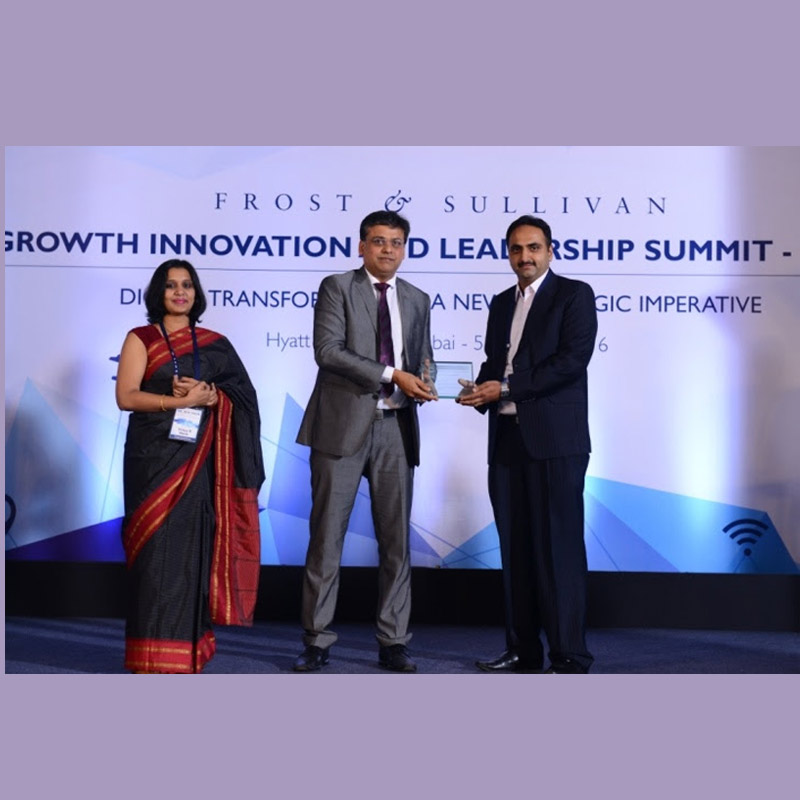
    RecoSense, an innovative venture providing SaaS-enabled platform for Data Intelligence, has been felicitated with the ‘India OTT Video New Product Innovation Award’ at the 2016 Frost & Sullivan India Best Practices Awards held in Mumbai recently. Its SaaS-enabled platform is built on complex Graph Computing, Analytics, and Machine Learning frameworks that can facilitate efficient personalization and customer engagement for rich media content.

    Congratulating RecoSense, Frost & Sullivan Global Innovation Center and Digital Media Practice research director Vidya S. Nath said, “There are three inherent problems that exist for an OTT service provider — offering an attractive video library, which is easily searchable; understanding the behavior and likes of their target audience; and keeping them engaged on their site or application as long as possible. RecoSense’s service helps solve some of these challenges as it offers a customizable platform that helps in effective discovery, personalization of recommendations, and user analytics.”

    RecoSense CEO Amith Srinivas said, “RecoSense will leverage this platform to pioneer data intelligent automations for digital content to reach the suitable target users. RecoSense will strengthen the indigenous Knowledge Graph IP and build expertise in the data science areas of personalization, recommendation, and analytics. We are grateful to our customers, our team for their committed efforts, and our investors for their contribution to achieve this milestone and seek continued support from the industry to reach higher goals.”

    The award recipient was judged on a variety of parameters that included financial performance rate, addressed unmet needs, key achievements, implementation of best practices, customer service experience, and brand equity. It involved in-depth primary interviews of various industry participants and secondary research conducted by Frost & Sullivan. Frost & Sullivan’s Growth Innovation & Leadership Awards identify companies that exhibit exemplary growth potential, attributed to high quality solutions and superior service capabilities.

    RecoSense uses artificial intelligence and machine learning to enable automatic keyword generation, effective meta tagging, and effective recommendation engine. OTT viewership in India is highly fragmented due to diverse and multiple languages and preferences. This trend has boosted the creation and aggregation of a sizable inventory of regional content. RecoSense’s clients are leading companies in the industry, both in India and abroad, providing Video Streaming networks, Digital Publisher networks, YouTube networks, Ad networks, and e-Commerce.

    RecoSense offers data intelligent platform for Metadata Generation, User Personalization, Content Recommendation, and Analytics. Given the exponential growth of digital media content across categories of Entertainment, News, Business, Sports, Music, etc.,

    Frost & Sullivan, the Growth Partnership Company, works in collaboration with clients to leverage visionary innovation that addresses the global challenges and related growth opportunities that will make or break today’s market participants.

  • India’s OTT video market to expand at 40% CAGR by ’20; RecoSense wins F&S award

    India’s OTT video market to expand at 40% CAGR by ’20; RecoSense wins F&S award

    MUMBAI: Over-the-top (OTT) video delivery has opened up business opportunities for new entrants as well as existing media companies. Frost & Sullivan’s 2016 Over the Top (OTT) Video Market Update, India, 2016 finds that the OTT video market in India has over 20 market participants and could expand at a CAGR of 40% to 355 million in terms of unique video viewers by 2020. As OTT video delivery becomes imperative for media companies, it is essential to understand the importance of customer engagement with insightful recommendations and content delivery. RecoSense provides a platform that uses automation and can help track user behavior across the Internet. It then interprets content recommendations suitable for a viewer and prolongs user engagement on a site with personalization. It also offers analytics with visualization and a content management system to enable OTT providers realize the efficacy of their services.

    RecoSense, an innovative venture providing SaaS-enabled platform for Data Intelligence, has been felicitated with the ‘India OTT Video New Product Innovation Award’ at the 2016 Frost & Sullivan India Best Practices Awards held in Mumbai recently. Its SaaS-enabled platform is built on complex Graph Computing, Analytics, and Machine Learning frameworks that can facilitate efficient personalization and customer engagement for rich media content.

    Congratulating RecoSense, Frost & Sullivan Global Innovation Center and Digital Media Practice research director Vidya S. Nath said, “There are three inherent problems that exist for an OTT service provider — offering an attractive video library, which is easily searchable; understanding the behavior and likes of their target audience; and keeping them engaged on their site or application as long as possible. RecoSense’s service helps solve some of these challenges as it offers a customizable platform that helps in effective discovery, personalization of recommendations, and user analytics.”

    RecoSense CEO Amith Srinivas said, “RecoSense will leverage this platform to pioneer data intelligent automations for digital content to reach the suitable target users. RecoSense will strengthen the indigenous Knowledge Graph IP and build expertise in the data science areas of personalization, recommendation, and analytics. We are grateful to our customers, our team for their committed efforts, and our investors for their contribution to achieve this milestone and seek continued support from the industry to reach higher goals.”

    The award recipient was judged on a variety of parameters that included financial performance rate, addressed unmet needs, key achievements, implementation of best practices, customer service experience, and brand equity. It involved in-depth primary interviews of various industry participants and secondary research conducted by Frost & Sullivan. Frost & Sullivan’s Growth Innovation & Leadership Awards identify companies that exhibit exemplary growth potential, attributed to high quality solutions and superior service capabilities.

    RecoSense uses artificial intelligence and machine learning to enable automatic keyword generation, effective meta tagging, and effective recommendation engine. OTT viewership in India is highly fragmented due to diverse and multiple languages and preferences. This trend has boosted the creation and aggregation of a sizable inventory of regional content. RecoSense’s clients are leading companies in the industry, both in India and abroad, providing Video Streaming networks, Digital Publisher networks, YouTube networks, Ad networks, and e-Commerce.

    RecoSense offers data intelligent platform for Metadata Generation, User Personalization, Content Recommendation, and Analytics. Given the exponential growth of digital media content across categories of Entertainment, News, Business, Sports, Music, etc.,

    Frost & Sullivan, the Growth Partnership Company, works in collaboration with clients to leverage visionary innovation that addresses the global challenges and related growth opportunities that will make or break today’s market participants.