Tag: CAGR

  • Wireless b’band speed: TRAI invites transparency & customer awareness ideas

    NEW DELHI: The Telecom Regulatory Authority of India wants stakeholders to give their views on ensuring transparency and customer awareness regarding data speeds under wireless broadband plans and has suggested various tools that may be deployed for measuring data speeds

    In a Consultation Paper on ‘Data Speed under Wireless Broadband Plans’, the Authority has asked stakeholders to respond to nine questions raised by it by 20 June with counter-comments if any by 13 July.

    At the outset, it says the National Telecom Policy of 2012 (NTP-2012) has the vision of Broadband on Demand and envisages leveraging telecom infrastructure to enable all citizens and businesses, both in rural and urban areas, to participate in the Internet and web economy thereby ensuring equitable and inclusive development across the nation. It provides the enabling framework for enhancing India’s competitiveness in all spheres of the economy

    Wireless access networks are the main source of delivering broadband in the country. Global mobile subscriptions are growing around 5 percent year-on-year. According to the Ericsson’s mobility report, India grew the most in terms of net additions during the third quarter of 2016 by adding 15 million connections. These figures have increased substantially in the last few quarters. Out of the total 236.09 million broadband subscribers in the country as of 31st December 2016 approximately 92.32% – 217.95 million subscribers – are through wireless access.

    According to a GSMA report titled ‘The Mobile Economy, India 2016’, at the end of June 2016, 616 million unique users subscribed to mobile services in India, making it the second largest mobile market in the world. Almost half the country’s population now subscribes to a mobile service. The report suggests that improving affordability; falling device prices and better network coverage aided by operator investment will help deliver over 330 million new unique subscribers by 2020, taking the penetration rate to 68%. It further adds that as more users migrate to high-speed broadband, mobile data traffic is expected to grow 12-fold between 2015 and 2020, at a CAGR of 63%.

    Data usage by GSM users has already shown an unprecedented growth in the recent months from an average usage of 236MB per month in September, 2016 to 884 MB per month in December 2016.

    Along with this, the composition of revenues earned by operators is also changing. Mobile operators in India have so far reported limited revenue contribution from data services, generating 17% of service revenues at the end of 2015. This is forecast to increase to 23% by 2020.

    The Broadband Policy of 2004 defined broadband as “An ‘always-on’ data connection that is able to support interactive services including Internet access and has the capability of the minimum download speed of 256 kilo bits per second (kbps) to an individual subscriber from the Point of Presence (POP) of the service provider intending to provide broadband service where multiple such individual broadband connections are aggregated and the subscriber is able to access these interactive services including the Internet through this POP. The interactive services will exclude any services for which a separate license is specifically required, for example, real-time voice transmission, except to the extent that it is presently permitted under ISP license with Internet Telephony”.

    The questions raised in the paper, which discusses the various initiatives that have been taken by the Authority in relation to broadband speeds in India and their current status and provides a summary of the international experience on similar issues, are:

    Q1: Is the information on wireless broadband speeds currently being made available to consumers is transparent enough for making informed choices? Q2: If it is difficult to commit a minimum download speed, then could average speed be specified by the service providers? What should be the parameters for calculating average speed?

    Q3: What changes can be brought about to the existing framework on wireless broadband tariff plans to encourage better transparency and comparison between plans offered by different service providers? Q4: Is there a need to include/delete any of the QoS parameters and/or revise any of the benchmarks currently stipulated in the Regulations?

    Q5: Should disclosure of average network performance over a period of time or at peak times including through broadband facts/labels be made mandatory? Q6: Should standard application/ websites be identified for mandating comparable disclosures about network speeds?

    Q7: What are the products/technologies that can be used to measure actual end-user experience on mobile broadband networks? At what level should the measurements take place (e.g., on the 26 device, network node)? Q8: Are there any legal, security, privacy or data sensitivity issues with collecting device level data?

    a) If so, how can these issues be addressed? b) Do these issues create a challenge for the adoption of any measurement tools?

    Q9: What measures can be taken to increase awareness among consumers about wireless broadband speeds, availability of various technological tools to monitor them and any potential concerns that may arise in the process?
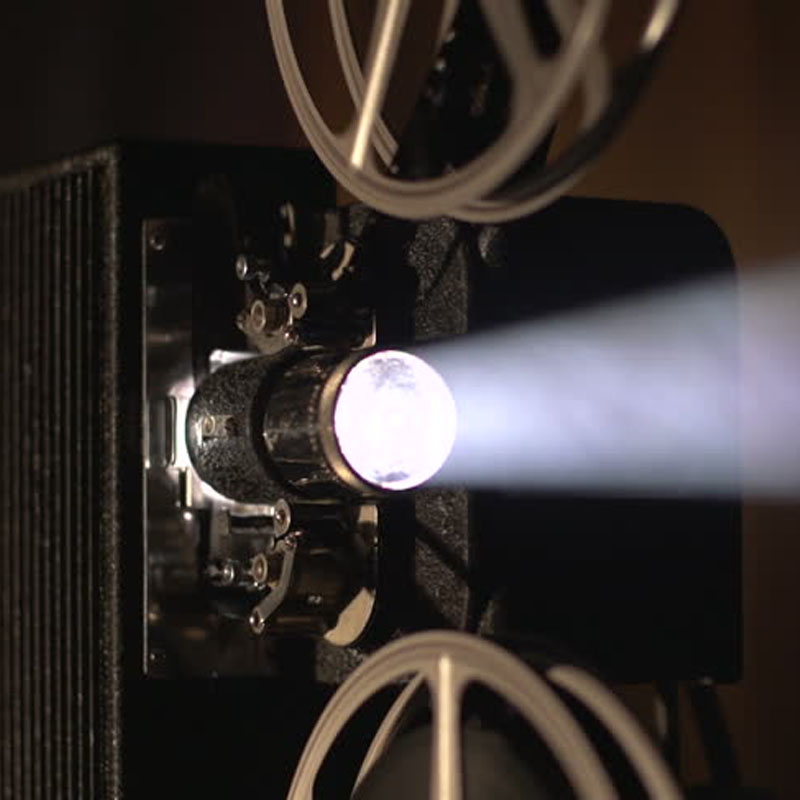

  • Shift towards Lazor/LED, projector market expanding at 22% CAGR

    Shift towards Lazor/LED, projector market expanding at 22% CAGR

    MUMBAI: Projectors are one of the fastest growing product lines in India due to the booming education market. Changing lifestyles, decrease in price and rising spending on electronics has led to an upsurge in demand for high-end products including projectors.

    Various emerging segments such as Education and Audio Video System Integration in commercial segment are booming with demand for projectors. India’s education sector is moving towards the digital age. Educational system integrators are thriving in India and helping to cater to the growing requirement of audio-visual equipment. Further, the market is expected to grow at a faster pace due to the revival of delayed projects affected by the Indian general election of 2014.

    According to “India Projector Market Outlook, 2019”, India’s projector market was growing with a CAGR of 21.74% by volume over past four years. IT, corporate, media, entertainment, rental, BPO and education sectors were the major industries driving the sales of projectors.

    The education sector is reportedly the biggest segment of digital projector sales in 2014 followed by mid-size and small business segments. Beyond this, development in the home entertainment and gaming segment is also being scaled up with the arrival of 3D, HD and Wi-Fi support features within current projector models. These days the projection technology is more sought after in homes with spectacular increase in availability of full HD and 3D content in form and availability by HD DTH and Blu Ray discs.

    The technology used in projectors can generally be broken down into two types: DLP and LCD. Both the technologies LCD and DLP have an almost equal market share in 2014 with DLP technology slightly ahead. However, in future the trend is expected to reverse with LCD technology to dominate the market heavily. Moreover, the market will continue its shift towards new technologies like Lazor Interactive/LED Interactive Android due to the low maintenance cost and superior technology. High-Definition (HD) projectors are replacing the Standard-Definition (SD) projectors due to increasing popularity among consumers.

    Out of the total shipment, almost one-third market is captured by 1024×768 display resolutions, followed by 800×800 resolutions. Higher resolution projectors are less likely to require signal compression and its associated loss in quality. Hence, High-Definition will be the most popular display resolution in future with highest market share by 2019.

    In this crowded market, BenQ is the No. 1 brand in India followed by Epson, InFocus, Hitachi, Panasonic and many others. “Apart from all these flagship players, Canon which has recently entered the category is expected to emerge as a big player in future,” said a research analyst.

    The company, which has launched nine LV and XEED series projectors, is targeting Rs. 100 Crore revenue by 2017. It has tied up with Ingram Micro as the national distributor for its mass products and will partner with AV integrated solution providers for high-end projectors. Moreover, the company will also be using its own retail stores ‘Canon Image Square’ to sell its projectors. Aggressive marketing and distribution strategy coupled with a well-know brand image will push the sales of these projectors.

    The metro markets dominate the consumption but new demand is expected from tier II and tier III cities with rapid urbanization of these towns. The vendors are targeting more than 30 Indian towns beyond the top eight metropolitan centers for projectors.

  • TV ads & apps: A-Pac mobile analytics growing fastest, connected TVs’ adoption stimulating demand

    MUMBAI: the global mobile analytics market will continue to witness pronounced growth over the forecast period on the backdrop of a slew of factors. Increasing demand for real-time analytics to deliver personalized ads and growing investment in digital advertising across mobile platforms is expected to influence the demand for mobile analytics in the near future, according to Persistence Market Research analysis.

    Further, higher investments in developing advanced mobile apps and exploding number of smartphone users are additional factors anticipated to support the overall market growth. In contrast, a dearth of technological understanding for operating high end functionalities of mobile analytics solutions and increasing concerns over privacy breach associated with customer data may inhibit market growth during the next eight years.

    On the basis of solution type, demand for application performance analytics solutions is expected to remain dominant throughout the projected period. In addition, the application performance analytics solutions segment is set to register the highest revenue by solution type.

    On the basis of development, cloud-based development is expected to remain as the most attractive segment, increasing at a CAGR of 21% during the forecast period 2016-2024.

    By end user vertical, the e-commerce & retail segment is projected to account for a comparatively higher share of the market. Further, the segment is projected to expand at over 22% CAGR through 2024, followed by media & entertainment segment.

    Microsoft Corporation accounted for a turnover in excess of US$ 93 Bn in 2015, with its latest bridge application tool “HockeyApp” launched in August 2016 gaining immense popularity amongst users. Adobe Systems Incorporated, Yahoo! Inc. (Flurry Analytics), International Business Machine Corporation (IBM), Tune, Inc., Google Inc. (Alphabet Inc.), Amazon Web Services, Inc. (Amazon.com, Inc.), Localytics (Char Software, Inc.), Webtrends Inc., and Mixpanel, Inc. are amongst other prominent players operating in the global mobile analytics market.

    PMR indicates North America to remain at pole position of the global mobile analytics market, accounting for the highest revenue share during 2016 to 2024. In 2015, the market in the region was valued at over US$ 560 Mn and expected to reach US$ 2058.7 Mn by 2024. Further, the market in Asia Pacific is predicted to be the fastest growing market, expanding at a CAGR of 22.4% over the forecast period. This is primarily due to robustly growing fascination towards mobile technology and rapid smartphone penetration in countries such as India and China.

    The arrival of smart TV technology and increasing demand for TV apps is expected to present scope of long-terms business for market players. Robust adoption of connected TVs is steadily stimulating the need for dedicated analytics solutions for measuring performance and effectiveness of both TV ads and TV applications. Moreover, growing necessity of integrated mobile analytics solutions and a higher number of connected personal devices such as laptops, wearable devices, smartphones, and tablets is fueling the demand for integrated analytics solution in order to manage data exchange across multiple devices.

  • India among A-PAC leaders as animation software market expands at 16% CAGR

    India among A-PAC leaders as animation software market expands at 16% CAGR

    MUMBAI: A-PAC is a swiftly growing segment in the animation design software market, with countries such as China, India, and Japan leading this growth. The rising interest toward 3D animations among the younger demographics is boosting the demand from the market, says Technavio.

    Analysts forecast the global animation design software market to grow to USD 4,288.94 million by 2021, at a CAGR of more than 16% over the forecast period, according to their latest report. Global animation design software market to grow to USD 4,288.94 million by 2021, posting a CAGR of over 16%.

    The research study by Technavio on the global animation design software market for 2017-2021 provides a detailed industry analysis based on the end-users (media and entertainment (M&E) industry and gaming industry) and geography (the Americas, EMEA, and APAC).

    Animation design software is a tool for creating images that appear to be moving. It also creates visual effects with the aid of computer graphics. The media and entertainment industry are the largest end-users for this software, where it is used for movies, television programs, print media, concerts, award shows, advertisements, M&E videos, and Internet media.

    Technavio analysts highlight the following three factors that are contributing to the growth of the global animation design software market:

    1. Increased use of animation design in movies and video games
    2. Use of animation design software for TV commercials
    3. Rise in demand from APAC
    &
    4.Increased use of animation design in movies and video games

    “The use of animation design in the film and television industry is rapidly increasing, driven by the rising popularity of animated movies such as Cars, Toy Story, and The Incredibles. The enhanced graphics, clarity and quick rendering of frames drives the popularity of the software,” says Ishmeet Kaur, a lead analyst at Technavio for enterprise application research.

    The demand for games with animated characters and imageries is another key factor driving the market growth. The gaming industry is a major end-user in the global animation design software market, where they use the software to create stunning animation effects in 3D and complex animations.

    Use of software for TVCs

    The increased use of design and animation in television commercials is a major growth driver for the global animation design software market. Companies across the globe are integrating the best marketing tools to differentiate themselves from their competitors and establish a strong market foothold. Companies are producing 3D animated commercials to provide potential customers with advertisements animation and design software. LG, Rolls-Royce, and Motorola are among the major brands that implemented 3D animation techniques in their product advertisements.

    Rise in demand from APAC

    “APAC is a swiftly growing segment in the animation design software market,” says Ishmeet.

    A notable investment of USD 3.05 million in the Anime Consortium was made in Japan by Kodansha, Shogakukan, Shueisha, KADOKAWA, Bushiroad, Good Smile Company, and Toei Animation. This investment and the collaboration with anime studios and game developers helped Anime Consortium add more value-added anime content in its projects.

  • India teleshopping market may expand at 17% CAGR

    MUMBAI: Teleshopping market in India is projected to expand at a CAGR of 17.20% during 2016-2021. Research and Markets, a research firm, has announced the addition of the “India Teleshopping Market” report to their offering.

    In the study of the competitive landscape in India, the research firm covered companies such as Tv18 Home Shopping Network, Naaptol Online Shopping, TVC Skyshop Ltd, Shop CJ Network, DEN Snapdeal TV Shop, HBN Network, Ace Teleshop, Telemart Shopping Network, and Teleone Consumers Products.

    Teleshopping market in India grew significantly over the past few years owing to, increasing disposable income, ease of shopping, rising television penetration in the country. Moreover, increasing offerings by private label brands at affordable prices, growing discounts and offers, coupled with rising working population are other factors driving teleshopping market in India. In addition, improving standard of living, coupled with changing consumers tastes and preference from traditional way of shopping to new and innovative forms.

    In 2015, dedicated channels segments accounted for lions share in teleshopping market in the country, and is forecast to maintain its dominance through 2021, owing to 24 hours telecast, continuous announcement of various cashbacks/ discounts offers and branded products that are offered.

    Cash on Delivery dominated India teleshopping market in 2015, and the same trend is expected to continue during the forecast period owing to rising customer preference towards cash on delivery as a payment method, as customers do not have to pay anything at the time of order, and instead pay at the time of delivery, which also boost confidence of new and existing customers on teleshopping companies.

  • MPA: India & China power APAC ad rev, ads in largest medium TV still robust

    MUMBAI: Global media research and consulting firm Media Partners Asia’s findings in “Asia Pacific Advertising Trends” indicate that net advertising revenues in Asia Pacific, measured after discounts across 14 markets, were up by 6.8 per cent in 2016 to reach ~$ 170 billion (€160bn), compared with an 8.5 per cent expansion in 2015.

    Ad spend across these markets will increase by a further 6.4 per cent in 2017, and at a 4.9 per cent CAGR between 2017 and 2022, according to MPA forecast. This follows a 7.6 per cent CAGR between 2012 and 2017, Advanced Television reported.

    India is on path to become the third largest advertising market across the Asia-Pacific region, after China and Japan to touch $17.1 billion by 2022 from the existing 9.2 billion in 2017, according to the report. India is poised to replace Australia which may touch $13.2 billion by 2022 from $11.8 billion in 2017, added from the report.

    MPA executive director Vivek Couto said that future growth was becoming more challenged, as markets mature and working populations stagnate or decline. “This leaves China and India as the main dynamos of advertising growth.”

    India is likely to become Asia Pacific’s best performing ad market over the next five years, with net ad revenue expanding at a 13.1 per cent CAGR between 2017 and 2022. This will help India overtake Australia to become the region’s third largest ad market by 2022, after China and Japan. Australia will fall to fourth place, while Korea will remain in fifth.

    India, forecast to enjoy the fastest growth over the next five years, will see net ad revenue expanding to $17.1 billion by 2022, up from $9.2 billion in 2017. For Australia, another mature market, net ad revenue will rise to $13.2 billion by 2022, from $11.8 billion in 2017. Despite slow growth, Korea will hold onto its position as Asia Pacific’s fifth largest ad market, with net ad revenue touching $9.7 billion by 2022, up from $9.0 billion in 2017.

    That momentum will make the Philippines the second-fastest growing ad market after India, among the 14 Asia Pacific markets measured by MPA. Thailand follows as the third quickest, with a 6.8 per cent CAGR forecast for 2017 to 2022. Next is Indonesia, projected to notch up a 6.2 per cent CAGR over the same period.

    “Domestic demand is stabilising across key Asian economies, helping boost consumption, which is encouraging for advertising expenditure,” Couto said. “External demand is also improving, as exports reach new highs in a number of markets, but activity may decelerate significantly in 2H 2017. In general, economic growth is slowing down, although among growth markets, China, India, Indonesia and the Philippines remain strong. Among mature markets, Japan is proving to be somewhat resilient and robust.”

    Internet advertising continues to grow at a red-hot pace, climbing 20.8 per cent in 2016 across the 14 markets in MPA’s report to reach $66 billion. In 2016, the internet was the biggest medium for advertising in Australia, China, Korea, New Zealand and Taiwan. MPA expects that by 2022, Hong Kong, Japan and Singapore will join their ranks.

    Television advertising remains robust in many territories, especially in India, Indonesia, Japan, the Philippines, Thailand and Vietnam. However, net TV ad spend as a whole slightly contracted in 2016, by 0.5 per cent across the 14 markets surveyed by MPA. Free-to-air TV ad revenues are becoming weaker in Australia and Korea among larger markets, and in Hong Kong, Malaysia and Singapore among smaller markets.

    Nonetheless, TV will still be the largest ad medium in India, Indonesia, the Philippines, Thailand and Vietnam by 2022. At the same time, the internet will also become the second-largest ad medium in these geographies over the next five years. The biggest swings will take place in Southeast Asia, as mobile and video advertising drive internet ad spends to new heights.

    “Consumers are spending more time on mobile, social and online video platforms, driving demand for internet advertising,” Couto notes. “In most places, Google, including YouTube, and Facebook are dominant. In some markets however, especially in India, Japan and Korea, local digital players, as well as key incumbents in TV and print, are beginning to grab a bigger slice of the pie. China, meanwhile, is entirely dominated by a local ecosystem.”

  • Fiber optics market worth US$ 5 bn by ’21, A-Pac largest

    MUMBAI: Fiber optics global market by cable type is estimated to be valued at USD 3.13 billion in 2016, and is projected to reach US$ 5 billion by 2021 expanding at a CAGR of 9.8%.

    The global Fiber Optics Market has a large number of players; however the market is led by some of the major players, such as Corning Inc. (U.S.), Prysmian Group (Italy), AFL Global (U.S.), Finisar Corporation (U.S.), Leoni AG (Germany), YOFC (Shanghai) Co. Ltd. (China), Sumitomo Electric Industries Ltd. (Japan), Furukawa Electric Co., Ltd. (Japan), Optical Cable Corporation (U.S.), and Hitachi Cable Ltd. (Japan), among other.

    Asia-Pacific is projected to be the largest market for fiber optics from 2016 to 2021. Factors contributing to the market growth in this region are the rise in demand for the Internet from emerging countries, growing industrialisation, and the growing telecom industry. These factors, along with the upcoming infrastructure projects in energy, transport networks, institutional sites, and residential projects are expected to drive the fiber optics market across various applications in the region. Large-scale investments along with the increasing standards of living provide opportunities for infrastructure development, and are thus expected to lead to the high growth of the fiber optics market.

    A report “Fiber Optics Market by Cable Type (Single mode, and Multi-mode), Optical Fiber Type (Glass and Plastics), Application (Telecom, Premises, Utility, CATV, Military, Industrial, Sensors, Fiber Optic Lighting, Security, Metropolitan) – Global Forecast to 2021” has been published by MarketsandMarkets.

    Rising end-use applications such as telecom, CATV, premises, and sensors are driving the market for fiber optics. Along with these, increasing demand from Internet applications such the Internet of Things, over-the-top content, and video streaming are also driving the market.

    Cable Antenna Television (CATV) segment to be the fastest growing market for fiber optics: The CATV segment is projected to be the fastest growing application from 2016 to 2021, owing to its rapid growth in the Asia-Pacific. Factors such as rising disposable incomes; changing consumer preferences towards the use of high definition content; flexible government taxation policies; rapid technological advancements in products & product offerings, by major international and domestic players, at competitive prices; are a few of the major factors driving the market for the CATV application.

    Single mode cable type projected to account for the largest market share: Single mode optical fiber is estimated to have accounted for the largest market share in 2016 and is projected to continue to lead throughout the forecast period. Efforts to increase the penetration of telecom services in the emerging nations of the Asia-Pacific are attributed to the increasing demand for single mode cable in the region.

    Glass optical fiber type to be the fastest growing optical fiber type in fiber optics market: Glass optical fiber type is projected to exhibit the fastest growth from 2016 to 2021. Factors such as rapidly expanding telecom applications in emerging economies, efforts being taken by governments of various economies to increase network connectivity, and changing consumer preferences are expected to drive the fiber optics market.
    Asia-Pacific to be the largest market for fiber optics.

  • FICCI-KPMG report projects TV sector to reach Rs 1166 bn by 2021

    MUMBAI: The year 2016 was a mixed bag for the Media and Entertainment (M&E) industry. The sector is projected to grow at a faster pace of 14 per cent over the period 2016–21 with advertising revenue expected to increase at a CAGR of 15.3 per cent, according to a report released today.

    As per the KPMG-FICCI Indian Media and Entertainment Industry Report 2017, themed Media for the Masses: The Promise Unfolds, the television industry in India stands at an estimated size of Rs 588 billion in 2016, a growth of 8.5 per cent over 2015, and is envisaged to register a CAGR of 14.7 to reach Rs 1166 billion by 2021.

    The Indian economy is expected to outperform major economies with a projected financial year FY17 GDP growth rate of 7.1 per cent despite the speed bump caused by demonetization, the report states, adding TV witnessed a slower growth in 2016 at 8.5 per cent primarily due to a lackluster year for subscription revenues and a slowdown in advertisement revenue growth. However, over the next five years as both advertisements and subscription revenues are projected to exhibit strong growth at 14.4 per cent and 14.68 per cent, respectively, the industry too will grow.

    According to the report, advertising revenues are expected to grow at marginally slower rate of 13.1 per cent due to the lingering effect of demonetization and initial volatility arising from GST implementation. Digital advertising is expected to grow at a CAGR of 31 per cent to reach Rs 294.5 billion by 2021,

  • Wire and cable market in India to expand at 15.61 pc CAGR by ’20

    MUMBAI: Industry experts forecast the global electric wire and cable in India market to expand at a CAGR of 15.61 per cent during 2016-2020.

    Electric Wire and Cable in India Market Research Report covers the market landscape and its growth prospects over the coming years and discussion of the key vendors effective in this market.

    The report, by Market Reports World, contains a comprehensive market and vendor landscape in addition to a SWOT analysis of the key vendors. The study was conducted using an objective combination of primary and secondary information including inputs from key participants in the Electric Wire and Cable in India industry.

    Following companies were the key players covered in the market report: Finolex Cables, KEI Industries, Havells India, and Polycab Wires. Other prominent vendors in the India market are: Cable Corporation of India, Cords Cable Industries, Apar Industries Limited, KEC International, LS Cable India, Shilpi Cable Technologies, Universal Cable, and V-Guard Industries.

    One of latest trends in the India market is increase in sales of HVDC power cables. HVDC underground power cables have become viable options for long distance and high-voltage safe power transfer. HVDC power systems provide a viable option for long distance bulk power delivery. The European Commission has selected 43 major energy projects to build cross-border infrastructure to create an internal energy market and enhance the security of energy supply. For these projects, high loads of electricity would be required to be transferred from one country to another. HVDC cables are expected to become a viable option for such assignments in the future. India is likely to follow this trend during the forecast period. In addition, these HVDC light cables find preference over their AC counterparts, especially in submarine power transmission, due to their lightweight and dimensions.

    According to the report, one of the primary drivers in the market is growth in renewable power generation in India. A huge emphasis is given to the commercialisation of renewable energy worldwide, which will create an enormous demand for electric wire and cables. This is because most of these renewable energy resources are set up in places where proper T&D infrastructure is not available. Future expansion of existing networks worldwide is also expected. These expansion activities are fueled by emerging economies such as India, which are on the threshold of integrating regional grids to form a nationwide electric grid network to allow a seamless flow of electricity. All this calls for extensive T&D infrastructure development activities.

    Further, the report states that one major challenge in the market is compliance to regulations. Electrical wire and cable manufacturers in India are required to comply with various safety rules and regulations for the installation of power cable systems. These regulations are scripted and decided by regulatory bodies such as American National Standards Institute (ANSI), International Electrotechnical Commission (IEC), and Institute of Electrical and Electronics Engineers (IEEE). The rules vary depending on the circuit voltage, temperature rating, and environmental conditions.

  • Power transmission towers & cables market forecast to expand at 7 pc CAGR by ’23

    MUMBAI: The power transmission towers and cables market is expected to exceed more than US$ 14 billion by 2023 expanding at a CAGR of more than 7.0 per cent in the given forecast period 2015 and 2023, according to Market Research Engine’s new report which also covered Indian companies such as Kalpataru Power Transmission.

    Power transmission towers and cables are used to transmit and distribute or broadcast the electricity to all the end user from power production unit. The important supporting element of transmission line is transmission tower. It is a fundamental part of global power transmission infrastructure. These power transmission tower having variety of design, shape and located at an suitable height from land. These towers are made up of different materials includes steel, concrete, lattice and wood. For transmitting power to a particular location it uses transmission lines which having heavy conductor and various types of cable. The power transmission towers and cables has view increase growth in the current period, as growing requirement for electricity in all over world. It changes the old power transmission tower and cable infrastructure into latest version.

    The major driving factors of transmission towers and cables market are as follows:

    • Require for efficient transmission scheme
    • Rising demand for electricity across the world

    The restraints factors of transmission towers and cables market are as follows:

    • Complex development and approval procedures holdup projects

    The patient engagement solutions market is segmented on the lines of its type and geographical region. Under type segmentation it covers power transmission cable and power transmission towers. The transmission towers and cables market is geographic segmentation covers various regions such as North America, Europe, Asia Pacific, Latin America, Middle East and Africa. Each geography market is further segmented to provide market revenue for select countries such as the U.S., Canada, U.K. Germany, China, Japan, India, Brazil, and GCC countries.

    The report covers detailed competitive outlook including the market share and company profiles of the key participants operating in the global market. Key players profiled in the report include General Cable Technologies Corp., Southwire Co. LLC, Zhejiang Shengda Steel Tower Co. Ltd., KEC International Ltd., Kalpataru Power Transmission Ltd., Nexans S.A., Prysmian S.p.A., Shandong Dingchang Tower Co. Ltd., Nanjing Daji Iron Tower Manufacturing Co. Ltd., and Sumitomo Electric Industries Ltd.