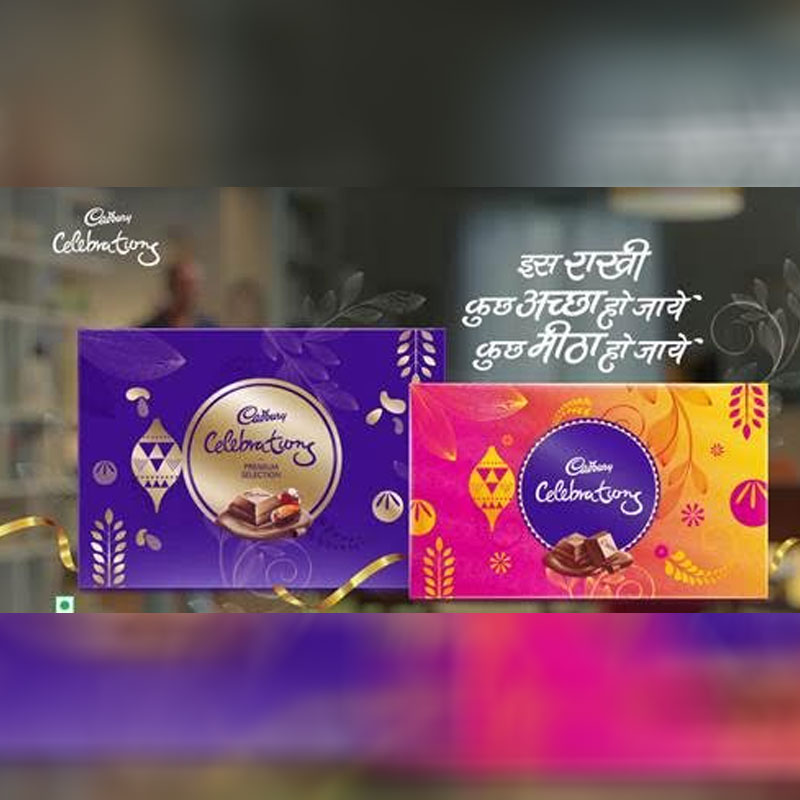
MUMBAI: Mondelez India, the creators of the Chocolate Gifting market in India have recently rolled out a new campaign for Raksha Bandhan, in line with Cadbury Dairy Milk’s new positioning of ‘Kuch Achha Ho Jaaye, Kuch Meetha Ho Jaaye’. The new exciting packs of Cadbury Celebrations and Cadbury Gifting Portfolio, are making the festive season even sweeter and memorable, along with a heart-warming TVC highlighting the brother-sister bond.
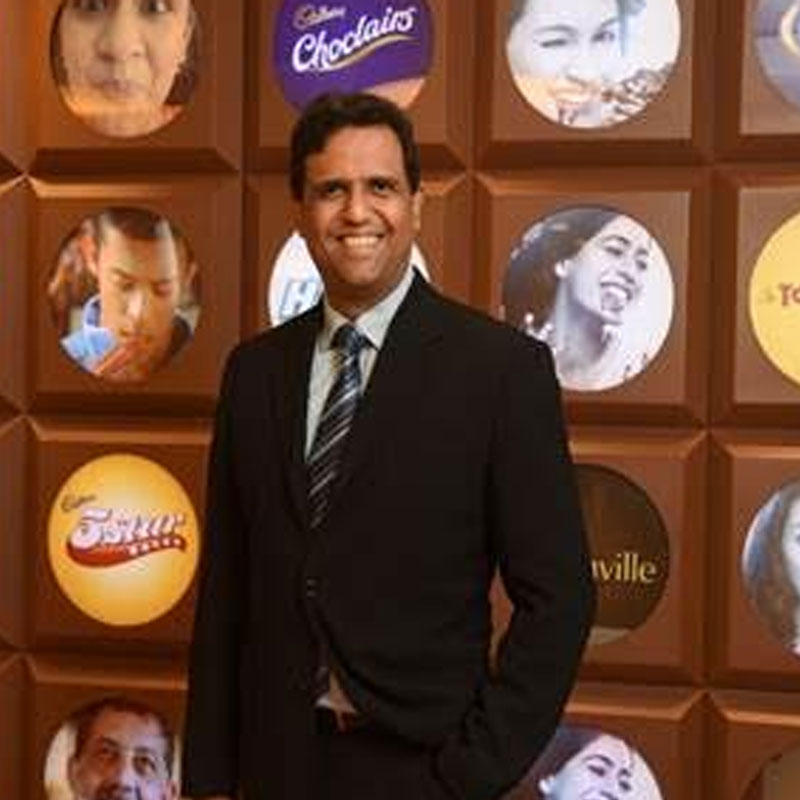
Commenting on the exciting festive offering, Anil Viswanathan, Director – Marketing (Chocolates), Mondelez India said, “Over the years, Mondelez India has been an intrinsic part of festivals with Cadbury Celebrations becoming India’s favorite gifting option. Cadbury Celebrations brings alive the joy of gifting by getting people together and strengthening relationships especially during festivals like Raksha Bandhan. We aim to bank on the Cadbury Celebrations Premium Selection chocolates with revamped and premium packaging to help us connect with our consumers this festive season. Our Raksha Bandhan TVC, in a heart-warming set up, highlights the innocent brother-sister relation and how a pack of Cadbury Celebrations brings them closer to each other, than ever. Linking in with the recently launched Cadbury Dairy Milk Generosity Campaign, this Rakhi commercial also brings alive the acts of generosity that makes our festivals full or warmth and renewed good feelings amongst relationships far and close”
The new TVC features the story of a younger brother going the extra mile, by sacrificing the money he saved for his cricket bat, to buy his sister a ‘rakhi’ gift – a box of Cadbury Celebrations. Of a simple sacrifice, that enhances the love between them. The new campaign is led by a TVC and further amplified through digital and social activations along with innovative OOH.
5The company has been making strides in e-commerce, creating new shopping opportunities through personalization and gifting platforms. This festive season, the company has also designed an ecommerce innovation using personalization to take the gifting experience a notch up. Consumers will be able to customize their Cadbury Celebrations and other eCommerce exclusive Cadbury Gift boxes with heartfelt messages to create a truly special personalized gift for their siblings.
Abhishek Ahluwalia, e-Commerce Lead, Mondelez India said “Last year, Mondelez India announced the launch of its first direct-to-consumer website “Cadbury Joy Deliveries” – www.cadburygifting.in. This Raksha Bandhan we are taking it a step further with adding a personal touch to the packaging of the Cadbury Celebrations and other eCommerce exclusive Cadbury Gift boxes. The website allows you to customize a heartfelt message and add photographs for your beloved sibling at attractive prices. So this festive season not only is the joy delivered to your doorstep but, it is personalized, too.”
MUMBAI: Go to any store in India and ask the person to hand you a Cadbury. You are for sure to get a bar of Dairy Milk, wrapped in purple cover, in your hand. Such has been the company’s branding that chocolate has become synonymous with Cadbury, although it is a brand with many candies.
Cadbury Dairy Milk (CDM) was the first chocolate bar to have higher milk content than earlier ones when it was launched in the UK in 1905. By 1914, it had become Cadbury’s bestseller. But how did it become India’s favourite?
Cadbury India, now known as Mondelez India, began its operations here right after independence, in 1948, by importing chocolates.
In the land of gulab jamun and rasgulla, chocolate was an alien and expensive. Dairy Milk turned out to be a rather failed launch for the company. None but the crème de la crème could afford to buy an imported chocolate. Also, in the 70’s and 80’s, the brand was only available in certain areas and its ads usually showcased a working man coming back home with a chocolate bar in his pocket for his child. Dairy Milk was relegated as a product for children only.
In the 80’s, Cadbury decided to manufacture Dairy Milk in India just to ensure that the production cost comes down and it’s available at a cheaper price point for Indians. But, other chocolate makers were still selling at lower prices. With sales dipping, the team was desperate for a communication strategy.
India’s ad-man Piyush Pandey from Ogilvy & Mather came to the brand’s rescue in 1991. He suggested that the brand needed a revamped identity and target the younger generation and adults. Ogilvy created the first iconic campaign for Cadbury titled, “Kuch meetha ho jaaye” in 1993 which continues to remain the favourite jingle of every 90s kid.
The campaign worked like a charm and Dairy Milk soon became every youth’s favourite chocolate. Suddenly, all these grownups — these responsible, serious grownups — had CDM bars in their hands. Batsmen, referees, grandfathers, policemen, teachers, pregnant women, college friends, lovers— the target group for Cadbury had changed and it was okay for adults to indulge now and that too in public.
There was no looking back. Since then, Dairy Milk has continued to remain every Indian’s go-to chocolate.
Through the years, Dairy Milk has been known for its loveable advertisements that make you want to sing along and do a little jig yourself. In the last decade, Dairy Milk has been positioned as something ‘meetha’ (sweet) — a strategy to counter traditional Indian sweets and the reach of local sweet shops. It comes as no surprise that Cadbury Dairy Milk is the most sold chocolate during festivals and special occasions.
Mondelez attributes the company’s strategy of constant innovation and evolving with Indian consumers as reasons for its growth. “In the beginning, we were just trying to say that chocolate is a nice treat for kids but today Dairy Milk is a mass brand and it is a part of everyone’s heart. We have made a huge change in communication right from talking to kids to being occasion specific to now a casual consumption product,” says Mondelez International associate director for chocolate equity, India and South East Asia Nitin Saini.
According to a recent market research report titled Branded Chocolate Market in India, the chocolate market is projected to grow at a CAGR of 17.8 per cent between FY 2017 to FY 2022. In the branded chocolate segment, Mondelez India has a whopping 65 per cent market share and its closest competitor is Nestle with 20 per cent market share.
Another aspect that works in favour of CDM is that it has few competitors in its category. Mars Inc’s Galaxy is the closest you can get but while CDM is available for Rs 10, Galaxy starts at Rs 25. The product’s success has even spawned cheap imitation chocolates at lower prices.
In the early 2000s, the company roped in star Amitabh Bachchan to promote it. Very soon, news about worms in CDM packets started leaking out and the company saw a 30 per cent dip in sales. The company lost no time in launching an aggressive campaign for its new tighter packaging which cost 10-15 per cent higher but did not hike the rates. It didn’t take long for consumer confidence to be back.
Mondelez has a strong distribution network in India and it is only growing every year. You visit a chemist shop, a drug store, a general store, supermarket, airport or a small pan-bidi shop, they all have a dedicated set of CDM bars to offer. In 2017, the chocolate giant had over 1000 distributors and 7000 sub-stockists who distributed products to small general stores and other retailers. Rural sales contributed about one-fifth of Mondelez’s sales in the same year which was 10 per cent higher than a year before. Mondelez currently has 350,000 outlets in 40,000 villages and sees the next phase of growth coming from hinterlands.
Though Dairy Milk cuts across all age groups and class, that seems to be changing now as chocolate and hazelnut confectionery, Ferrero Rocher, has come to be the latest favourite of the young and elite. Priced at Rs 430 for 12 pieces, the company faces a stiff competition from Dairy Milk that is India’s favourite festive gifting option. Come Diwali or Raksha Bandhan, and we see television and digital screens filled with Cadbury ads about making relationships stronger with something ‘meetha’.
Not only has CDM managed to break into a difficult market but has even maintained its lead. Riding on the back of extensive marketing, communication and distribution networks, it will take a gigantic effort to dethrone it.
MUMBAI: Mondelez International has elevated Luca Zaramella, appointing him as EVP chief finance officer.
His new role will be effective from 1 August, 2018.
As the new CFO, Zaramella will be responsible for the oversight of the company’s global finance, information and technology solutions and shared services functions.
He will report directly to Dirk Van de Put, chairman and chief executive officer, and will be a member of the Mondelez International leadership team.
Zaramella will replace Brian Gladden, who will leave the company in August. After 10 years as a public company CFO, Gladden has decided to pursue an opportunity outside of the Fast Moving Consumer Goods (FMCG) sector.
“Luca is a strong financial and strategic leader who possesses deep knowledge of our commercial business at a local level around the world, and deep financial expertise,” noted Van de Put. “He has been developed to take on this role for many years and has been closely involved in the development of our new strategic framework.”
On leaving the organisation, Brian Gladden said, “I have enjoyed working with the Mondelēz International team to build a world-class global finance organisation. Leaving the company is a tough decision, but I look forward to a new career experience and depart knowing that Luca is an ideal choice to be the company’s next CFO. Luca and I have worked side-by-side over the past few years, and I have incredible respect for his financial expertise and company knowledge.”
With more than 20 years of broad financial experience in both emerging and developed markets, and a track record of delivering strong results, Zaramella has an intimate knowledge of the company’s business across products, markets, operations, competitors and customers.
Zaramella has served as Mondelez International’s SVP of corporate finance since 2016 and was the SVP and corporate controller from 2014 to 2016. Prior to that, he was SVP of finance at Mondelez Europe. He began his career with the company in Italy before holding positions of increasing seniority in Latin America, Europe and North America.
Mondelez International had a net revenue of approximately $26 billion in 2017. The company is a world leader in biscuits, chocolate, gum, candy and powdered beverages, featuring global Power Brands such as Oreo and belVita biscuits; Cadbury Dairy Milk and Milka chocolate; and Trident gum.
MUMBAI: Mondelēz International has made some key elevations in the company, with Prashant Peres, previously director – marketing for chocolates, Mondelez India, moving into a new regional role of senior director for chocolate equity and innovations, AMEA, Mondelēz International.
Furthermore, in line with the company’s ongoing commitment to develop and groom internal talent, it has announced the appointment of Anil Viswanathan as the new director of marketing for chocolates Mondelez India, succeeding Prashant.
Serving as the director of marketing for chocolates Mondelez India since 2015, Prashant has been instrumental in leading the chocolate category turnaround, achieving double digit growth despite external economic challenges, such as the sudden currency demonetisation and GST implementation. He is credited for launching various successful innovations under Mondelez India’s chocolate portfolio, including a made-in-India innovation like Cadbury Dairy Milk Lickables in 2017, which is now a global best practice. Mondelez India is the undisputed chocolate category leader in the country and is currently in its all-time high, with respect to market share.
Stepping into Prashant’s role is Anil Viswanathan who has been with Mondelez India for about 18 years. His journey in the company has taken him into regional and global roles and into different categories including chocolate and biscuits. He has progressed through various product, brand management, and category marketing roles. Most recently, he was part of the global chocolate team driving chocolate innovation based out of Zurich, Switzerland. One of his achievements, during his stint here as senior innovation platform manager has been the launch of Cadbury 5Star globally, which is now present in three continents including markets like Brazil, South Africa and Southeast Asia. Viswanathan has also been instrumental in the launch of Cadbury Fuse in India, in 2016.
His close to two-decade long connection with the chocolate category and understanding of the Indian market will ensure Mondelez India’s continued reign as the undisputed market leader in the chocolate category in the country.
Mondelēz International is building the best snacking company in the world, with 2017 net revenues of approximately $26 billion.
Headquartered in Mumbai, the company has sales offices in New Delhi, Mumbai, Kolkata and Chennai and manufacturing facilities at Maharashtra, Madhya Pradesh, Himachal Pradesh and Andhra Pradesh in addition to a vast distribution network across the country.
MUMBAI: With cricket season in full swing, Hotstar, India’s leading premium streaming platform, has taken the excitement to another level. Users can now become part of the on-field action with Hotstar’s cricket game, WatchN’Play, which users can play while they watch the match on their mobile phones. Putting your cricket smarts to the test has never been more rewarding, as the grand prize being given away after each and every match, is a Mahindra KUV100 NXT.
Most people in India are self-styled cricket experts providing running commentary on player performance and the ebb and flow of the match, as they watch their favourite sport. Watch’NPlay gives them a chance to put this skill to good use. Through the game, Hotstar users also get to win exciting prizes from partners like Cadbury, Big Bazaar, FBB, Domino’s and PhonePe.
With over 60 matches through the entire season, and one Mahindra KUV100 NXT, along with 10 lakh other prizes, being given away at the end of each match, the game has already made Hotstar viewers across India proud car owners, with winners in metros of Mumbai, Bangalore, and New Delhi, as well as cities such as Jaipur, Kochi, and Indore, among others.
To convey to viewers that with Watch ’N Play more people can win a big prize than ever before, Hotstar has placed hoardings across cities saying “raaton raat ban jao sarkar”. Often, there is cynicism and disbelief around games promising big prizes and Hotstar recognizes and addresses that with hoardings communicating “yeh vaada nahi hai bekaar”. The intention is to make sure that people realize that this is a very real and rare opportunity for viewers to win big with cricket, every single day. The outdoor campaign is also accompanied by a new ad film wherein we see winners popping up in every town.
Turning spectators into participants, WatchN’Play is set to elevate the viewers’ experience by engaging them with the game more deeply than ever before.
MUMBAI: Oreo, the cream sandwich biscuit brand by Mondelēz International, takes the special ritual of ‘Twist, Lick, Dunk’ forward, rolling out its new global campaign called, Oreo People, simultaneously across 50 markets in AMEA, LA, MEU and will be localised with nuances to drive relevance.
The new global creative platform is the latest installment of the brand’s Wonderfilled campaign. Oreo People is built on the idea that when we connect with Oreo, playfulness is evoked in us all despite differences, playing with Oreo brings people together. Every time an Oreo cookie is twisted and opened, a new playful side comes out which is optimistic with limitless possibilities.
The campaign is especially designed to engage with consumers in today’s multi-screen, short-attention-span world with exciting visuals and irresistible music, extending across all channels, with a strong focus on digital.
The new TVC displays a wide-cross section of people and how they enjoy their Oreo cookies, making the much-loved brand relevant to them. With this latest creative platform, Mondelez India aims to widen the appeal of the brand in the country, while continuing to play on its core territory.
Mondelez India head of biscuits category Sudhanshu Nagpal says, “Oreo was introduced in India close to seven years back and in such a short span, India has emerged among its top-five markets by volume. Today, twist, lick, dunk has become a ritual; it has been at the heart of numerous warm family moments. Oreo has always stood for bringing people together and the Oreo People campaign takes ahead this proposition. The campaign is based on a key universal insight that while we all share the same playful spirit inside, we often forget about it because of the pressures of modern life. The global campaign aims at widening the appeal of the brand, connecting with a wide cross-section of people, while picking up on the local nuances to drive relevance.”
FCB regional chief client officer for Asia Jane Lim adds, “Oreo has always been a brand that encourages and inspires people to connect with the people and world around you. When we were kids, playing together was our way of communicating, we connect better when we play together. We believe everyone has a playful spirit waiting to be let out. With this film we tell the story that no matter our differences, playing with Oreo brings us together, because we are all Oreo People.”
The campaign will be rolled out across platforms with a new TVC, as well as outdoor, print and digital campaigns across sections.
MUMBAI: What comes to your mind when you hear ‘kuch meetha ho jaaye?’ If you’ve been in India for the last two decades, you would instantly blurt out Cadbury. But the popular Indian chocolate has a 100-year-old history.
In June 1905 in England, Cadbury made its first Dairy Milk bar, with a higher proportion of milk than previous chocolate bars, and it became the company’s best-selling product by 1914. Cadbury India, now known as Mondelez India, began its operations in the country as early as 1948 by importing chocolates.
The Indian chocolate industry was worth Rs 58 billion at the end of 2014 and is predicted to reach Rs 122 billion at a compound annual growth rate of 16 per cent by 2019. According to the 2016 Euromonitor International report, the chocolate confectionery market in India is projected to grow at 8 per cent per annum between 2016 and 2021 to reach Rs 16,200 crore (on constant value) from Rs 11,256 crore in 2016, backed by better retailing across rural areas. Mondelez is the market leader in India’s chocolate space with more than 65 per cent market share and Cadbury Dairy Milk is its highest-selling product that has a market share of 41 per cent.
Mondelez India has given birth to some of the most memorable ads in its 70 years of existence in the Indian market with catch-phrases that come to us at the tip of our tongue—‘kuch khans hai zindagi mein’, ‘shubh aarambh’, ‘pappu paas ho gaya’, ‘aaj pehli tareek hai’ and ‘kiss me.’
All these notable campaigns are attributed to Ogilvy & Mather (O&M), an advertising agency that has been associated with the brand for over 26 years.
English was the medium of communication for Cadbury’s when the chocolate market was a niche in 1948. Mondelez India director of marketing for chocolates category Prashant Peres believes that all of Cadbury’s communication throughout the years has been about relations and bringing people joy in celebrating relations. While that has remained constant, what has changed is what the brand is trying to achieve with advertising.
“In the beginning, we were just trying to say that chocolate is a nice treat for kids but today Dairy Milk is a mass brand and it is a part of everyone’s heart. We have made a huge change in communication right from talking to kids to being occasion specific to now a casual consumption product,” he adds.
The brand has always been known for its loveable advertisements that make you want to sing along and do a little jig yourself. We take you down memory lane and explore how the brand communication for Cadbury Dairy Milk has changed and evolved over the years.
1993: The brand launched its first TVC in India in 1993 showcasing a teenage girl watching cricket in the stadium and then jumps into the ground, eating a Cadbury chocolate as soon as the cricketer hits a century.
1994: Another advertisement showed a to-be bride with henna on her hands, trying hard to open the wrapping of Cadbury chocolate with her elbows. The ad showed that teenagers too can enjoy a treat.
1999: With the tagline ‘khane walo ko khaane ka bahana chahiye’, the ad featuring popular video jockey Cyrus Brocha became an instant hit among viewers. The objective behind the communication was to make the chocolate category more socially and culturally relevant and drive penetration in the process as the penetration level of the chocolate category in 1999 was 19 per cent in the urban market at the time.
2002: This was when Cadbury changed its strategy. Having tapped all age-groups, it wanted to project Cadbury chocolates as a meetha – thereby trying to eat into the market of traditional Indian sweets. Advertisements were doled out showing Cadbury chocolate being enjoyed at every possible instance.
2003: With this ad, the company aimed to position the brand as not just an occasion-based chocolate but as more of a casual consumption habit with the ‘khush hoon khamakha’.
2005: Passing an exam always calls for a celebration and when Pappu finally does finally clear his 12th standard exams, it calls for a sweeter celebration. The new communication from Cadbury’s Dairy Milk extended the core promise of happiness to yet another ‘moment of joy’ in one’s life. The brand signed actor Amitabh Bachchan as a brand ambassador.
2008: In this ad, Cadbury vouches that pay day is always a reason to celebrate. The brand pays a tribute to the salaried employees by giving them another reason to celebrate the payday.
2009: The campaign showcased people living a fast life in the cities spreading happiness during the festival of lights among neighbours, the postman, the pizza delivery boy and many others who, though significant, are never valued for their little contributions that bring joy to one’s life. The core thought behind the new campaign is to surprise those who work unconditionally on Diwali day and at least expect their little gestures to be appreciated.
2010-2012: Cadbury by now had launched its campaign ‘shubh aarambh’ that was based on the concept of the Indian tradition of having something sweet before every auspicious occasion, with the belief that it leads to a favourable outcome.
2014: In a significant move, Cadbury decided to move away from its occasion-related brand positioning and to make chocolate consumption a casual habit with its tagline – ‘dil jo keh raha hai suno’. The campaign was in sync with Cadbury’s global proposition of ‘Free the Joy’.
2015: With an aim to change its communication, Cadbury launched this campaign showing the bonding between a saas and bahu (mother-in-law and daughter-in-law) duo. The ad shows a small-town mother-in-law and daughter-in-law strengthening their bond of friendship with a piece of chocolate.
2016: Mondelez International created animated ads as early as 1980’s in the United States and other markets but the concept came to India only in 2004 when Mondelez India (then known as, Cadbury India) decided to have an animation film to promote its new product. Cadbury introduced an animated alien series in 2016 to promote its product with #InterstellarParty where the aliens were thoroughly enticed by the chocolate. The song became an instant hit among viewers.
The brand stopped creating ads specifically for Cadbury Dairy Milk as its focus shifted to newer variants that the company launched in the market including Silk Oreo, Lickables and Cadbury Dairy Milk Silk.
MUMBAI: Love has been in the air and on the internet all week. Valentine’s Day is no longer about just a day you spend with your loved one but is rather a week-long affair of gifts and celebration. Valentine’s Day has become no less than a festival in India, a country that takes much pride in its traditions and culture.
Although the phenomenon is only a few years old, the enthusiasm of brands investing in Valentine’s Day seems to be only increasing every year. Gifting and food and beverage (F&B) industry are most active during this time of the year and it is a big occasion for all sectors other than BFSI.
Earlier, brands focussed mainly on print advertising backed by television for Valentine’s Day promotion. But that seems to have changed now. Brands are increasingly looking at newer avenues to connect with consumers and remind them about the brand. Although the market sentiment for the day in 2018 has been tepid as major brands chose to stay away from advertising, some SMEs and new players leveraged the day to connect with consumers. The day also saw e-commerce, a major advertiser during major festivals and occasions in India, not being too gung-ho but small gifting websites such as Chumbak, Bigsmall, Dailyobjects among others got the most from the occasion on the digital platform.
iProspect India associate vice president, branding and affiliate marketing Mihir Mehta notes that brand sentiment this year has been weak as advertisers have stopped force fitting their products to occasions.
Over the years, Mondelez India has built and led the occasion through its concerted marketing efforts and gifting innovations. This year, Cadbury Dairy Milk Silk announced the launch of its new special edition pack with a heart pop, which urges consumers to not hold back from expressing their love.
Dentsu Aegis Network’s digital agency, Carat, collaborated with Snapchat to create India’s first ‘National Snapchat Lens’ for the product. Through this lens, one can blow a kiss with the Silk bar, which creates a drool effect around the consumer. Additionally, the agency also used 3D filters on Facebook that allowed users to engage and post a variety of animations on their pictures/videos, which could be downloaded and shared later.
This year, we saw brands leverage digital as the primary medium for brand activation as the occasion caters to people in the age group of 16-30 years and as the millennials are more active on digital than on traditional mediums. Other than the usual promotional ads, brands started Valentine’s hashtags to attract online audiences and organised social media contests.
Consumers have today become more product-centric and brands are making sure they deliver that. Mehta says that this year brands have not used Valentine’s Day for customer acquisition but have rather concentrated on engagement with existing customers.
Food-delivery platform Swiggy created an opt-in platform called, My ValenDine, that used interested Swiggy users’ order history, and matched them based on their favourite food and preferences. On Valentine’s Day, users could come back to the microsite to find out who their Valendine’s matches were.
Jewellery brand Tanishq created an 8-minute digital film that captured seven real love stories. Kellogg’s launched a digital-only campaign on Facebook and Instagram to create buzz around its chocolate flavoured crunchy snack.
A post shared by Kaneez Surka (@kaneezsurka) on Feb 7, 2018 at 2:26am PST
Kellogg’s believes that the response to its campaign has been very encouraging as both their branded creatives as well as content co-created with leading youth influencers like Tanmay Bhat, Ashish Shakya and Kaneez Surka have surpassed their expectation. This goes on to show that bite-sized and engaging pieces of content create relevant conversation around the brand.
Brand-Building.com founder and brand guru Ambi Parameswaran notes that this year Valentine’s Day did not see too many ads in the daily newspapers as brands decided to play it low key. “It is possible that after the furore around Padmaavat they were just playing safe but the final pudding is in the eating and if Indian upper-income consumers and youngsters do want an occasion to celebrate, then they will use Valentine’s Day to do that.”
MUMBAI: Ramesh and Suresh are back and this time they are lost at a whole new level. Over the last twelve years, Cadbury 5Star has entertained viewers bringing to them ‘lost’ antics of the iconic duo of Ramesh and Suresh.
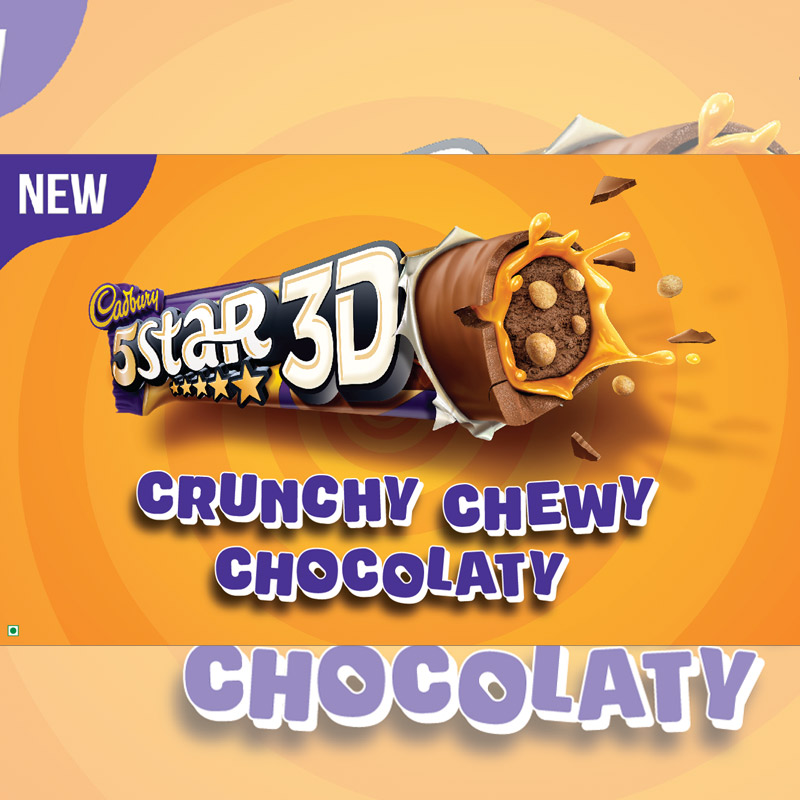
Each time as they get lost in the flavour of the chocolate, the world around them twists and turns giving way for quirky madness and laughter. With this ad, Cadbury 5Star takes forward the idea of getting ‘Lost in Taste at a different level’ with the all new Cadbury 5Star 3D. Mondelez India aims to build on its market leadership in the count line segment as it aims at premiumising the eating experience for its consumers.
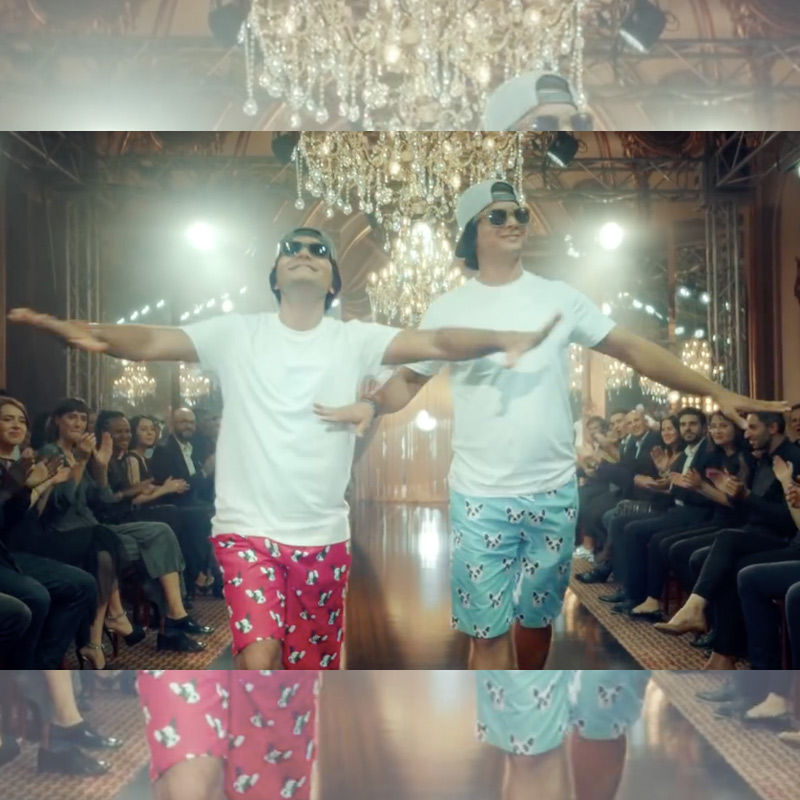
The TVC opens with Ramesh and Suresh standing in a lifeless lobby staring at a painting of a calm lake. As soon as they take a bite of the all new crunchy Cadbury 5Star 3D, the painting comes alive and Ramesh & Suresh begin to swim their way into the painting entering a whole new three-dimensional world. The viewers are taken in for a joy ride, when the ‘lost’ antics of Ramesh and Suresh land them up in a fashion show. Ramesh and Suresh are so lost in its taste appeal that they fail to realise that they are walking on a ramp. The audience is taken in for a surprise and they burst into applauding the brave quirkiness of Ramesh & Suresh.
Mondelez India director of marketing Chocolates Prashant Peres says, “With Cadbury 5Star 3D, we aim at widening the brand’s play in the category as we add another dimension of ‘Crunch’ to the mix and hence the name ‘Cadbury 5Star 3D’. Ramesh-Suresh have become synonymous with Cadbury 5Star and even as we enter the twelfth year of our campaign, they continue to tickle the funny bone of the viewers. We are confident that they will further help the brand generate strong cut through and continue to be much loved by our consumers.”
Building on the 12-year-strong legacy of Ramesh and Suresh, the new TVC conceptualised by Ogilvy & Mather has given the iconic duo a cool look as they swim their way into the 3D world.
Ogilvy & Mather group creative director Amitabh Agnihotri adds, “With the launch of Cadbury 5Star 3D, ‘lost’ gains a new dimension. The launch TVC takes everything; from entertainment to humour, to look & feel; onto a whole new level. We hope that people will enjoy Ramesh & Suresh getting lost on a different level.”
MUMBAI: Mondelez India has launched its new innovation Cadbury 5Star 3D, a premium offering in the countline segment. Cadbury 5Star 3D comes in a crunchy, chewy, chocolaty bar that promises the consumers to ‘get lost at a different level’.
Mondelez India director of marketing chocolates segment Prashant Peres says, “Cadbury 5Star has been one of our strongest brands under the Indian portfolio and has consistently experimented and revamped itself. After launching the exciting brand Cadbury Fuse last year, we are extremely delighted to bring in Cadbury 5Star 3D, which is a great milestone in our premiumisation journey and will further strengthen our market leadership in the countline segment. ”
The brand will continue to use their eccentric and quirky characters Ramesh-Suresh who have been synonymous with Cadbury 5Star to further aid the brand generate strong cut. Mondelez India’s Cadbury 5Star has been an Indian favourite for almost 5 decades.
Cadbury 5Star 3D will be first available at Big Bazaar, followed by other modern trade and traditional trade stores and will be priced at Rs 30 for a 45 gram offering.