Tag: Cables

  • Power transmission towers & cables market forecast to expand at 7 pc CAGR by ’23

    MUMBAI: The power transmission towers and cables market is expected to exceed more than US$ 14 billion by 2023 expanding at a CAGR of more than 7.0 per cent in the given forecast period 2015 and 2023, according to Market Research Engine’s new report which also covered Indian companies such as Kalpataru Power Transmission.

    Power transmission towers and cables are used to transmit and distribute or broadcast the electricity to all the end user from power production unit. The important supporting element of transmission line is transmission tower. It is a fundamental part of global power transmission infrastructure. These power transmission tower having variety of design, shape and located at an suitable height from land. These towers are made up of different materials includes steel, concrete, lattice and wood. For transmitting power to a particular location it uses transmission lines which having heavy conductor and various types of cable. The power transmission towers and cables has view increase growth in the current period, as growing requirement for electricity in all over world. It changes the old power transmission tower and cable infrastructure into latest version.

    The major driving factors of transmission towers and cables market are as follows:

    • Require for efficient transmission scheme
    • Rising demand for electricity across the world

    The restraints factors of transmission towers and cables market are as follows:

    • Complex development and approval procedures holdup projects

    The patient engagement solutions market is segmented on the lines of its type and geographical region. Under type segmentation it covers power transmission cable and power transmission towers. The transmission towers and cables market is geographic segmentation covers various regions such as North America, Europe, Asia Pacific, Latin America, Middle East and Africa. Each geography market is further segmented to provide market revenue for select countries such as the U.S., Canada, U.K. Germany, China, Japan, India, Brazil, and GCC countries.

    The report covers detailed competitive outlook including the market share and company profiles of the key participants operating in the global market. Key players profiled in the report include General Cable Technologies Corp., Southwire Co. LLC, Zhejiang Shengda Steel Tower Co. Ltd., KEC International Ltd., Kalpataru Power Transmission Ltd., Nexans S.A., Prysmian S.p.A., Shandong Dingchang Tower Co. Ltd., Nanjing Daji Iron Tower Manufacturing Co. Ltd., and Sumitomo Electric Industries Ltd.
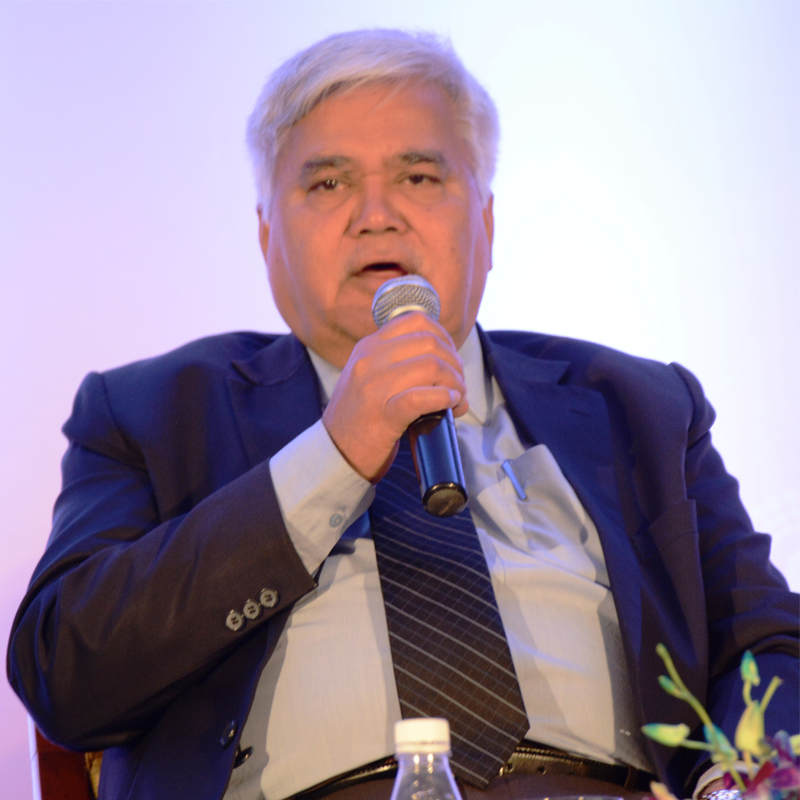
  • No exclusive pacts with telcos: TRAI to building-owners; CTI mooted

    No exclusive pacts with telcos: TRAI to building-owners; CTI mooted

    MUMBAI: The Telecom Regulatory Authority of India (TRAI) has issued its recommendations on “In-Building Access by Telecom Service Providers”.

    An effective telecommunications infrastructure is an essential component of any building for its connectivity to the outside world. Telecommunications services such as voice, data and wideband multimedia services are indispensable in the modern society. In order to improve in-building coverage and to offer quality high data rate services, installation of in-building solutions (IBS) for wireless services and laying of cables such as copper cables, optical fibre cables (OFC),LANcables etc. is required.

    To lay  cables  or  install  telecom  infrastructure   inside  the  building, Telecom Service Providers (TSP) lnfrastructure Providers (lP-I) require permission of the owner of the building. However, it is seen that generally restrictive practices are adopted by building owners while giving access to the building due to commercial. interests. In many cases, these owners enter into exclusive agreement with one of the TSPs for providing telecom services to dwellers and deny access to other TSPs, thus creating an artificial entry barrier for other TSPs. Such practices not only limit competition, it also leaves no choice to consumers except to avail services from the TSP with whom the contract is done; taking away choice and flexibility from the consumers which they would have had in terms of quality of service (QoS), tariff, redundancy etc.

    In view of the above, a need was felt for policy intervention and to evolve a framework applicable to in-building facilities to enable the telecom operators to obtain efficient access on reasonable terms and conditions. Therefore, the Authority, suo-motu, decided to initiate a consultation process on the issue. Accordingly, a Consultation Paper on “In-Building Access by Telecom Service Providers” was released on 6 June 2016 seeking the comments of the stakeholders. An Open House Discussion (OHD) on the issue was also convened on 30 September 2016 at New Delhi.

    Based on the comments received and further analysis, draft recommendations on ‘In-Building Access by Telecom Service Providers’ have been issued and the same have also been placed on TRAI’s web site. Some of the main recommendations are:

    (i)    TSPs/IP-ls be mandated to share the in-building infrastructure (IBS, OFC and other cables, ducts etc) with other TSPs, in large public places, commercial complexes and residential complexes in transparent, fair and non-discriminatory manner.

    (ii)    Indulgence   into  exclusive  contract   prohibiting   access  to  other TSPs may be treated as violation of the license agreement / registration.

    (iii)    Suitable provisions for  the creation of  Common Telecom Infrastructure (CTI) inside the building should form part of the Model Building Bye-Laws.

    (iv)    The essential requirement for telecom installations and the associated cabling should be formed part of National Building Code of India (NBC), being amended by Bureau of Indian Standards (BIS).

    (v)    Completion certificate to a building to be granted only after ensuring that the CTI as per the prescribed standards is in place.

    (vi)    Access to building including CTI facilities be available to the TSPs on a fair, transparent and non-discriminatory manner and minimum three TSPs/IP-Is should have presence in the building.

    Also Read:

    “There would be a lot on TRAI’s plate in 2017” – RS Sharma

    Wi-fi proliferation, Net Telephony discussion in January


  • No exclusive pacts with telcos: TRAI to building-owners; CTI mooted

    No exclusive pacts with telcos: TRAI to building-owners; CTI mooted

    MUMBAI: The Telecom Regulatory Authority of India (TRAI) has issued its recommendations on “In-Building Access by Telecom Service Providers”.

    An effective telecommunications infrastructure is an essential component of any building for its connectivity to the outside world. Telecommunications services such as voice, data and wideband multimedia services are indispensable in the modern society. In order to improve in-building coverage and to offer quality high data rate services, installation of in-building solutions (IBS) for wireless services and laying of cables such as copper cables, optical fibre cables (OFC),LANcables etc. is required.

    To lay  cables  or  install  telecom  infrastructure   inside  the  building, Telecom Service Providers (TSP) lnfrastructure Providers (lP-I) require permission of the owner of the building. However, it is seen that generally restrictive practices are adopted by building owners while giving access to the building due to commercial. interests. In many cases, these owners enter into exclusive agreement with one of the TSPs for providing telecom services to dwellers and deny access to other TSPs, thus creating an artificial entry barrier for other TSPs. Such practices not only limit competition, it also leaves no choice to consumers except to avail services from the TSP with whom the contract is done; taking away choice and flexibility from the consumers which they would have had in terms of quality of service (QoS), tariff, redundancy etc.

    In view of the above, a need was felt for policy intervention and to evolve a framework applicable to in-building facilities to enable the telecom operators to obtain efficient access on reasonable terms and conditions. Therefore, the Authority, suo-motu, decided to initiate a consultation process on the issue. Accordingly, a Consultation Paper on “In-Building Access by Telecom Service Providers” was released on 6 June 2016 seeking the comments of the stakeholders. An Open House Discussion (OHD) on the issue was also convened on 30 September 2016 at New Delhi.

    Based on the comments received and further analysis, draft recommendations on ‘In-Building Access by Telecom Service Providers’ have been issued and the same have also been placed on TRAI’s web site. Some of the main recommendations are:

    (i)    TSPs/IP-ls be mandated to share the in-building infrastructure (IBS, OFC and other cables, ducts etc) with other TSPs, in large public places, commercial complexes and residential complexes in transparent, fair and non-discriminatory manner.

    (ii)    Indulgence   into  exclusive  contract   prohibiting   access  to  other TSPs may be treated as violation of the license agreement / registration.

    (iii)    Suitable provisions for  the creation of  Common Telecom Infrastructure (CTI) inside the building should form part of the Model Building Bye-Laws.

    (iv)    The essential requirement for telecom installations and the associated cabling should be formed part of National Building Code of India (NBC), being amended by Bureau of Indian Standards (BIS).

    (v)    Completion certificate to a building to be granted only after ensuring that the CTI as per the prescribed standards is in place.

    (vi)    Access to building including CTI facilities be available to the TSPs on a fair, transparent and non-discriminatory manner and minimum three TSPs/IP-Is should have presence in the building.

    Also Read:

    “There would be a lot on TRAI’s plate in 2017” – RS Sharma

    Wi-fi proliferation, Net Telephony discussion in January


  • ‘Vardah’: Cables uprooted; antennae warped: Chennai MSO, DTH most affected

    ‘Vardah’: Cables uprooted; antennae warped: Chennai MSO, DTH most affected

    MUMBAI: It seemed that the month of December was not so favourable for the Indian state Tamil Nadu. We can recall that, last year, Tamil Nadu was badly affected by floods which caused damages to the tune of around Rs 9000 crore and hundreds of deaths. The more recent catastrophe is the cyclone Vardah, an intense storm to have hit the state again, which left at least 12 dead in TN and Andhra Pradesh.

    According to news reports, the severe cyclonic storm affected electricity, communication lines and put rail, road and air traffic in disarray as it crossed the coast, pounding Tiruvallur, Chennai, and Kanchipuram with heavy rain and squall.

    Also Tamil Nadu, being a broadcasting hub was badly affected by the calamity. Not only the broadcast industry but the MSOs, LCOs and DTH players too were terribly hit by the cyclone.

    Speaking to Indiantelevision.com, Raj TV vice-president programming and production vice-president Amit Bose said, “No one could do much to ease the situation because of power failure and heavy roadblocks due to uprooting of trees throughout the city. Internet and phones were out of system, and hence communication and mobility were affected.

    Bose added, “Productions were disrupted and TV viewing was not possible for the people of Chennai. DTH and cable connections were thrown out of gear and even for the people who had inverters and cable homes deserted on a powerless mode. Power backups could not sustain for a long time. This calamity might have affected Chennai’s viewership more than rest of the markets. On the whole, I apprehend the broadcasters, MSOs and viewers suffered the most.”

    Polimer TV creative consultant Mathivannan Raju said, “Failure of power is the major issue right now. Also, the antennae of houses with a DTH connection have been destroyed, and there is no way to watch television. The issue is on the path to rectification.”

    Raju added, “Of course, viewership will be affected due to the unfortunate event, which will eventually affect revenue as well but it is something beyond control. As this wasn’t our strategic plan, I am unsure how its actual impact on revenues. But, the MSOs and DTH industry has been majorly affected.”

    Commenting on the cable industry, Raju said, “At present, cables used for delivering television content have been washed away in Chennai. Almost 99 per cent cables switched off. To recover the lost ground, we need to establish the complete network again. Most of the dish antennae that MSOs had installed have been dislocated, and we need to reinstall them.” “Moreover, on the LCOs front, cables from their office to the consumer’s houses/offices have been eroded. Most of the fibre cable severed into pieces; a new network of cables will now be required,” Raju lamented.

    On the MSOs front, Chennai Metro Cable Operators Association general secretary MR Srinivasan said that there was a short supply of fibre cable and other equipment; that’s another problem that the cable industry was facing. In next 10-12 days, the association believes, everything will come to normal.”

    As there was negligible electricity in the state, Srinivasan said, it was difficult to check whether DTH antennae were working properly.

    From 15 December, the electricity will hopefully be reinstated; and only then people will come to know about the actual conditions vis-a-vis entertainment. With 120 km of wind speed, the antenna might have dislocated from their places, they need to be realigned.

    On the DTH front, Tata Sky CEO Harit Nagpal said that the cyclone had not affected the DTH industry in any way. The dish antennae at the residences of some subscribers might have tilted because of the strong winds, and this might have had temporarily affected reception, but this was set right by the subscribers themselves, and so there were no complaints of any disruption.

    Another MSO from Chennai informed that it would take another week for the cable industry to get to normal functioning in Chennai and other parts of the state. The state and local government will step in to clear fallen trees and restore wires.

  • ‘Vardah’: Cables uprooted; antennae warped: Chennai MSO, DTH most affected

    ‘Vardah’: Cables uprooted; antennae warped: Chennai MSO, DTH most affected

    MUMBAI: It seemed that the month of December was not so favourable for the Indian state Tamil Nadu. We can recall that, last year, Tamil Nadu was badly affected by floods which caused damages to the tune of around Rs 9000 crore and hundreds of deaths. The more recent catastrophe is the cyclone Vardah, an intense storm to have hit the state again, which left at least 12 dead in TN and Andhra Pradesh.

    According to news reports, the severe cyclonic storm affected electricity, communication lines and put rail, road and air traffic in disarray as it crossed the coast, pounding Tiruvallur, Chennai, and Kanchipuram with heavy rain and squall.

    Also Tamil Nadu, being a broadcasting hub was badly affected by the calamity. Not only the broadcast industry but the MSOs, LCOs and DTH players too were terribly hit by the cyclone.

    Speaking to Indiantelevision.com, Raj TV vice-president programming and production vice-president Amit Bose said, “No one could do much to ease the situation because of power failure and heavy roadblocks due to uprooting of trees throughout the city. Internet and phones were out of system, and hence communication and mobility were affected.

    Bose added, “Productions were disrupted and TV viewing was not possible for the people of Chennai. DTH and cable connections were thrown out of gear and even for the people who had inverters and cable homes deserted on a powerless mode. Power backups could not sustain for a long time. This calamity might have affected Chennai’s viewership more than rest of the markets. On the whole, I apprehend the broadcasters, MSOs and viewers suffered the most.”

    Polimer TV creative consultant Mathivannan Raju said, “Failure of power is the major issue right now. Also, the antennae of houses with a DTH connection have been destroyed, and there is no way to watch television. The issue is on the path to rectification.”

    Raju added, “Of course, viewership will be affected due to the unfortunate event, which will eventually affect revenue as well but it is something beyond control. As this wasn’t our strategic plan, I am unsure how its actual impact on revenues. But, the MSOs and DTH industry has been majorly affected.”

    Commenting on the cable industry, Raju said, “At present, cables used for delivering television content have been washed away in Chennai. Almost 99 per cent cables switched off. To recover the lost ground, we need to establish the complete network again. Most of the dish antennae that MSOs had installed have been dislocated, and we need to reinstall them.” “Moreover, on the LCOs front, cables from their office to the consumer’s houses/offices have been eroded. Most of the fibre cable severed into pieces; a new network of cables will now be required,” Raju lamented.

    On the MSOs front, Chennai Metro Cable Operators Association general secretary MR Srinivasan said that there was a short supply of fibre cable and other equipment; that’s another problem that the cable industry was facing. In next 10-12 days, the association believes, everything will come to normal.”

    As there was negligible electricity in the state, Srinivasan said, it was difficult to check whether DTH antennae were working properly.

    From 15 December, the electricity will hopefully be reinstated; and only then people will come to know about the actual conditions vis-a-vis entertainment. With 120 km of wind speed, the antenna might have dislocated from their places, they need to be realigned.

    On the DTH front, Tata Sky CEO Harit Nagpal said that the cyclone had not affected the DTH industry in any way. The dish antennae at the residences of some subscribers might have tilted because of the strong winds, and this might have had temporarily affected reception, but this was set right by the subscribers themselves, and so there were no complaints of any disruption.

    Another MSO from Chennai informed that it would take another week for the cable industry to get to normal functioning in Chennai and other parts of the state. The state and local government will step in to clear fallen trees and restore wires.