Tag: cable

  • STB market continues to thrive, expected to peak in 2015

    STB market continues to thrive, expected to peak in 2015

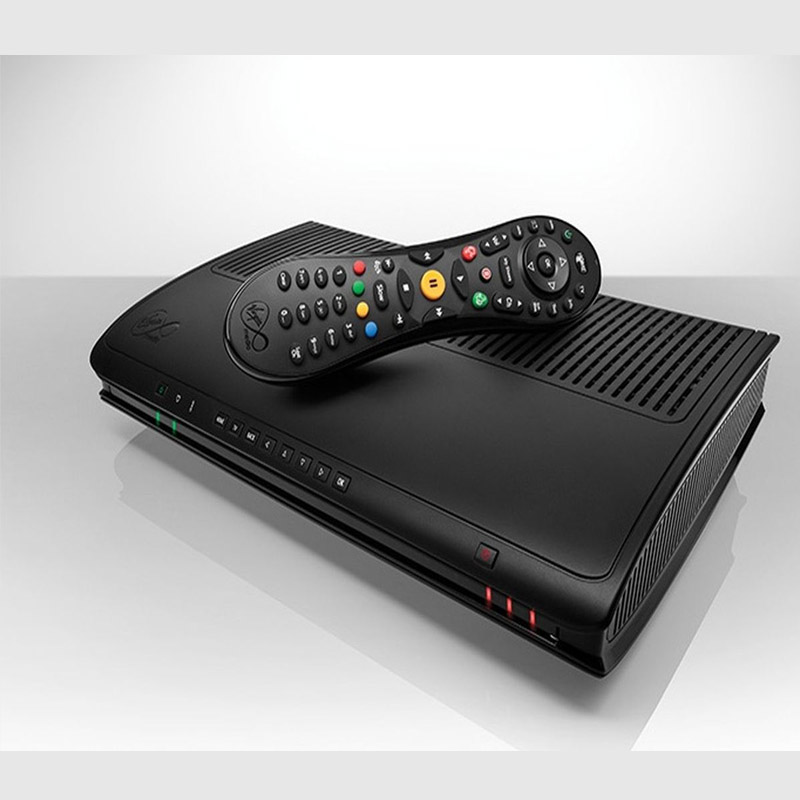
    MUMBAI: Even though the pay-TV industry has been shifting toward delivering services to computers, smartphones and tablets, the traditional set-top box (STB) continues to thrive, with market shipments forecast to hit record highs this year, according to IHS.

    Global shipments of STBs used for cable, satellite, terrestrial and IPTV digital TV services are predicted to reach 269 million units this year, which is eight per cent higher than last year. This is expected to grow another six per cent, to 286 million, in 2014, and a further one per cent, to 290 million, in 2015. However, 2015 is expected to be the peak of the market for the foreseeable future. After that, IHS predicts that STB shipments will decrease by five per cent in 2016 and by another two per cent in 2017.

    “STBs are facing a mounting challenge to their role at the dominant pay-TV video consumption device because of operators‘ growing emphasis on supporting multiscreen devices,” said Daniel Simmons, the senior principal analyst for TV technology at IHS. “However, operators are continuing to deploy STBs in order to manage the compatibility between their delivery networks and the consumer electronics devices that consumers are increasingly using to view content now.”

    “As pay-TV operators rush to accommodate changes in delivery platforms and in video formats – including the adoption of HD – STB shipments will continue to rise, hitting record levels for the next few years”, adds Simmons.

  • Cable TV carriage fees head south

    Cable TV carriage fees head south

    Carriage fees have been a bane of the Indian television industry. Most broadcasters have been groaning and moaning how they have been choking up their capital, preventing them from investing in content, especially news channels.

    Now throwing some light on the trend in carriage fees is five year old television media and distribution audit company Chrome Data Analytics & Media which has just released its Chrome Dii R3 (Distribution Investments Index – Round 3).

    Chrome Dii,says the company, has been worked out while tracking deals done by broadcasters over the past year, with information gathered from across various sources including broadcasters as well as distribution platforms. After eliminating high variance deals, an average of six solo deals per cable network were studied for their investments for S band and UHF.

    Jeffrey Crasto…

    “For the digital scenario, Chrome Dii indicates a benchmark carriage to be available on the basic tier that is channels under BST (mandated FTA channels) along with the first tier of pay channels,” says Chrome Data executive director Jeffrey Crasto. “The study is inclusive of both new launches/new deals done in the last one year and existing deals expiring in April/May 2013.”

    Adds Chrome Data founder & CEO Pankaj Krishna: “Digitisation was expected to be a harbinger of correction leading to nullification of carriage fees. As per TRAI, they had anticipated the Chrome Dii to come down to Rs 1, however though there has been a significant drop; it has not come down to Rs 1.As compared to R2, Dii has come down from Rs 20 to Rs 11.6. “

    .. & Pankaj Krishna have attempted to demystify the burden broadcasters have to bear

    In its third round, the Dii has revealed that north India has emerged as the costliest region with a whopping 16.7 crore in carriage fees for 100 per cent availability across Basic + S band for new channel launches and 13.3 crorefor renewals of existing deals whereas central India is the lowest with 3.11 crore and 2.73 crore for Basic + S band for new launches and renewing existing deals respectively.

    While a different image is revealed if the Dii (cost per contact for the television channels) is studied, Chrome Dii R3 data shows the cost (renewals, S-band) per contact (household) is the highest in west India with an average of 17.6 followed by Central at 14.4. The national average for renewals stands at 11.6.

    Out of a total universe of 47 million households in Class I India, 42 million are C&S Homes. Chrome Dii study tracks 31 million homes, 2 million remain uncovered and balance 9 million are DTH!


    Source: Chrome Data Analytics & Media

    C&S Households
    89%
    DTH
    74%
    Non TV Households
    11%
    Chrome Dii
    21%
     
     
    Balance
    5%

    Chrome Data says that its Dii R3 was pre-subscribed by eight leading TV networks. And it is an addition to the other services that it offers (covering1800+ cities and towns) Chrome Track 2.0, Chrome DPi, Chrome Dii & Chrome SES, Chrome AV, Chrome LC1, Chrome NE and Chrome Language Feed.Some 132 channels subscribe to its various services.

    Some interesting facts according to Chrome Dii R3 –

    Carriage Fee Cost
     
    Existing
    New Launch
    REGION Basic + S BAND Basic + UHF Basic + S BAND Basic + UHF
    CENTRAL 273,75,000 194,70,000 311,95,000 235,30,000
    EAST 376,65,000 281,25,000 404,65,000 340,00,000
    NORTH 1330,33,300 1118,71,800 1673,03,300 1343,67,800
    SOUTH 549,50,000 466,67,000 625,65,500 527,32,500
    WEST 1099,80,000 1014,80,000 1320,00,000 1195,00,000
    Grand Total 3630,03,300 3076,13,800 4335,28,800 3641,30,300

    * To cite an example as per the above data, comparing how much a Hindi News channel would spend for 75 per cent HSM availability as per Dii R3 as compared to Dii R2 – it would pay 75% of (Rs 36.30 croe minus Rs 5.49 crore for the south) = Rs. 23.1 crore as per Dii R3, whereas it would have paid Rs 38.2 crore as per Dii R2 – a saving of over 39 per cent! But has the overall pie reduced, not really! As there has been an increase in network bandwidth, hence the number of takers has increased.

    North emerged as the costliest region with Rs 16.7 crore for 100 per cent availability across Basic + S Band and Rs 13.4 crore for 100 per cent availability across Basic + UHF for New Launches. Renewals of existing deals for Rs 13.3 crore for Basic + S Band and Rs 11.2 crore for Basic + UHF.

    The study also provides a benchmark for carriage fee efficiency with respect to the investment indices that is Chrome Dii that is cost per contact (see tables below). Chrome reveals that the Dii (renewals, S-band, household) is the highest in West India with an average of Rs 17.6 followed by the Central at Rs 14.4. The national average for renewals stands at Rs 11.6.

    Carriage Fee Cost per contact for existing channels in Rs


    Existing-Basic+S Band

    West
    17.6
    Central
    14.4
    North
    14.1
    East
    7.1
    South
    6.6

    Source: Chrome Data Analytics & Media

    * In terms of highest Chrome Dii, West was followed by North, Central, East and South.

    * The gap between Dii for Existing and New Launches has reduced over the years owing to digitization and increase in bandwidth of the networks.

    Carriage Fee Cost per contact for new channels being launched in Rs


    New Launches –
    Basic+S Band

    West
    21.1
    Central
    17.7
    North
    16.4
    East
    7.6
    South
    7.5

    Source: Chrome Data Analytics & Media

    * Further, the gap between Dii for S Band and UHF has also reduced due to digitization

    * Chrome Dii for a New Launch in Central and East India has halved.

  • US ad revenues for Q1 seem flat

    US ad revenues for Q1 seem flat

    MUMBAI: Total advertising spending in the US in the first quarter fell 0.1 per cent from the year-ago period, at $30.1 billion, according to the latest figures from Kantar Media.

    Cable expenditures were up by 5.2 per cent, thanks to an increase in the volume of ad time and stronger demand from restaurants and auto manufacturers. Spanish-language TV spending was up 13.5 per cent, marking its seventh consecutive quarter of double-digit growth. However, this is lower than the 15 per cent annual growth rate seen in 2012. The Spanish-language segment continues to be led by gains among national broadcast networks.

    There was a 5.2 per cent decline in network TV spending, primarily due to weaker prime-time ratings. The Q1 comparisons were also hurt by the fact that ad money for NCAA Final Four Games has been shifted to April. Overall, sports programming did produce ad revenue gains for the broadcast networks though.

    Spot TV spending was down, by 2.4 per cent. However, if you exclude cyclical political advertising, this area was essentially flat versus last year. Spending on syndication was down 1.1 per cent.

    “It has been a lackluster start for 2013, with flat year-over-year results due in part to strong 2012 growth caused by political and Olympic ad spending,” said Kantar Media North America chief research officer Jon Swallen. “Data from the early second quarter are mixed, suggesting marketers are still being cautious and conservative with ad budgets. However, there are some bright spots, including healthy growth for Hispanic media and outdoor.”

  • A research by GfK reveals a rise in cord cutting in the US

    A research by GfK reveals a rise in cord cutting in the US

    MUMBAI: A research conducted by GfK Media & Entertainment shows that the estimated number of Americans relying exclusively on over-the-air (OTA) television broadcasting increased to 59.7 million, up from 54 million just a year ago. The percentage of TV households currently OTA reliant has grown from 14 per cent in 2010 to 19.3 per cent in the current survey, a 38 per cent increase in just four years. The survey also found that the demographics of broadcast-only households continue to skew toward younger adults, minorities and lower-income families.

    The 2013 Ownership Survey and Trend Report, part of The Home Technology Monitor research series, found that 19.3 per cent of all US households with TVs rely solely on OTA signals to watch TV programming; this compares with 17.8 per cent of homes reported as broadcast-only last year. Overall, GfK estimates that 22.4 million households representing 59.7 million consumers receive television exclusively through broadcast signals and are not subscribing to a pay-TV service (i.e. a traditional pay-TV service such as cable, satellite, Verizon FIOS or AT&T U-Verse).

    “Over-the-air households continue to grow, making up an increasingly sizeable portion of television viewers,” says GfK Media & Entertainment senior VP David Tice. And, the proportion of households that have never paid for cable or satellite service also continues to grow. “Our research reveals that over-the-air broadcasting remains an important distribution platform of TV programming; this year‘s results confirm the statistically significant growth in the number of broadcast-only TV households in the US, which we identified in 2012.”

    According to the 2013 study, 5.9 per cent of TV households “cut the cord” in their current home at some point in the past. Among households that eliminated pay-TV service responding to the 2013 survey, most report overall cost-cutting or not enough value for cost as the reason for doing so (respondents could give more than one reason). These were also the top reasons given in the 2012 survey for eliminating pay-TV service.

    Homes headed by younger adults are also more likely to access TV programming exclusively through broadcast signals. Twenty-eight percent of homes with a head of household age 18-34 (up from 18 per cent in 2010) are broadcast only, compared with 19 per cent of homes in which the head of household is 35-49, or 17 per cent of homes in which the head of household is 50 years of age or older. Two out of ten (21 per cent) younger over-the-air households have never purchased a pay TV service according to the current survey.

  • Pay-TV revenue growth slowing down

    Pay-TV revenue growth slowing down

    MUMBAI: The days of rapid growth in pay-TV revenues are over, according to a Digital TV Research report, which predicts that global revenues from subscriptions and on-demand TV and movie services will rise just 3.2 per cent this year, with growth rates slowing to below 2 per cent from 2015 onwards.

    In 2018, Digital TV Research expects pay-TV revenues to be $203 billion, just $19 billion higher than the 2012 levels. In 2018, DTH will be the dominant platform by revenues, generating $96.7 billion, followed by $79 billion for digital cable and $21.3 billion for pay IPTV. This year marks satellite moving ahead of cable for the first time, accounting for 45.9 per cent of revenues.

    The US will remain the DTH market leader, accounting for 43.5 per cent of satellite TV revenues last year. This is expected to slip to 38.7 per cent in 2018. The biggest gains in DTH revenues are expected in Brazil and India. Cable, meanwhile, peaked in 2012 with revenues of $86.9 billion this is expected to drop to $82.6 billion in 2018.

    While pay-TV revenues will more than double in 18 markets between 2012 and 2018 largely in – Africa, plus Indonesia and Vietnam – they will fall in 15 countries, including the US.

  • TRAI extends last date for comments on interconnect agreement draft order

    TRAI extends last date for comments on interconnect agreement draft order

    MUMBAI: For all those in the cable and satellite TV industry, you can take a breather. The Telecom Regulatory Authority of India (TRAI) which had issued the draft digital addressable system (DAS) interconnect agreement regulations on 5 June 2013 has extended the last date that they can send their comments.

    At the time of issuing the order, the last date was 18 June 2013, that is today. Under the extension, industry stakeholders can send their written comments in by 26 June 2013.

    The Draft Interconnection agreement for DAS seeks to do away with carriage fees under the must-provide clause, forces MSOs to telecast channels under the must carry provision; compliance of MSOs with the twin conditions as specified in the earlier versions of the same order.

  • Time bands for govt ads on TV news and business channels amended

    Time bands for govt ads on TV news and business channels amended

    NEW DELHI: The government has amended the time bands for its advertisements on news and business television channels announced by it earlier in September 2012.

    In a modification to the policy Guidelines for Empanelment of Private Cable and Satellite TV channels, the Information and Broadcasting Ministry has said that the three time bands will be 06.00 hrs to 11.59 hrs instead of 07.00 hrs to 11.59 hrs; 12.00 hrs to 16:59 hrs instead of 17.59 hrs, and 17.00 hrs to 22.59 hrs instead of 18.00 hrs to 22.00 hrs.

    This will apply to English, Hindi, and regional news and business channels and will be applicable from 9 May this year.

    All the spots on the channels may be displayed on dispersion basis of one third spots on each time band.

    At least three spots may be displayed in 8, 9, and 10 pm time bands.

    The rates of September 2012 offered by DAVP will apply for all audio visual spots.

    The government had earlier issued modifications on 14 May and 5 September 2012.

    In September 2012, six time bands had been laid for general entertainment channels: 7 am to 9 am, 9 am to 12 noon, 12 noon to 7 pm, 7 pm to 8 pm, 8 pm to 10 pm, and 10 pm to 11 pm.

  • More than 3,000 on-demand services in Europe

    More than 3,000 on-demand services in Europe

    MUMBAI: In May 2013, more than 3,000 on-demand audiovisual services were identified as being established in European countries or received in at least one country.

    The European Audiovisual Observatory in a report said that 447 VoD services established in the European Union offer only or mainly cinema films. More than 130 film VoD services targeting one or more EU countries were established outside the EU, mainly in the US and Switzerland.

    The database also lists 45 services offering compilations of trailers and 10 European archive services.

    The European Audiovisual Observatory has just taken stock of on-demand audiovisual services on the occasion of the Cannes Film Market. The general use of cross-border strategies for VoD services

    This month, the European Audiovisual Observatory identified 3,087 on-demand audiovisual services: catch-up TV services, newspapers‘ video services and various kinds of VoD services (general-interest, films, TV fiction, music, animation and children‘s or adult programmes) and various economic models (financed by advertising, pay per view, direct subscription, services included in a subscription to digital packages, services from public broadcasters). 2,733 services established in the European Union were identified, 447 of them film VoD services (or 18 per cent of the total available), 44 were trailer services (not including distributors‘ promotional websites) and 10 were film archive services.

    It appears only natural that the big countries should have a large number of film VoD services: 48 are established in the UK, 34 in France and 33 in Germany. Four countries have a relatively large number of services compared to their size. Three of these, Luxembourg (86), Sweden (36) and the Czech Republic (31) are very clearly countries of establishment of services targeting other countries. Luxembourg hosts the iTunes Stores that are operated by iTunes S.?.r.l. and target not only other European countries (apart from Romania) but also many countries in Africa, the Middle East and Asia (with the exception of Japan). Netflix, which provides services for the United Kingdom and the Nordic countries and has announced the continuation of its European rollout, is also established in the Grand Duchy.

    In addition, the following are established in Luxembourg: the Xbox Video platforms operated by Microsoft Luxembourg S.?.r.l., which are available in 15 countries and are not considered VoD services but as catalogue distribution platforms, most being American and each regarded as a separate service. Sweden hosts various services that target the Nordic countries (SF Anytime, Canal+ Digital, CDON, Headweb, Filmnet) and even a service targeting Spain.

    The Czech Republic hosts various language versions of HBO OD, which targets Central Europe. The Netherlands is characterised by a multiplicity of small online VoD services and a few cable or IPTV platform services.

    417 or 45.3 per cent of the 920 VoD services in the database (all countries and types combined) are operated by American groups, either from the United States or via subsidiaries in Europe.

    The Observatory estimates that in the European Union over 52 per cent of the VoD services available in one country are established in another. This development in the cross-border provision of on-demand audiovisual services, which is especially pronounced in the case of film VoD services, might make it difficult to implement measures laid down by the most stringent national regulations for the promotion of European works or for contributing to production funding.

    There are an increasing number of multi-platform services (fixed or mobile internet, cable, IPTV, sometimes digital terrestrial). More and more film VoD services are also available in the form of applications for tablets or smart TVs.

    Subscription VoD (SvoD) services have proliferated in the last few months, and 76 have been identified. This model, which was initially employed for some types of special-interest services (especially children‘s services), has been developed with the launch of film subscription services. Many pay film channels also offer catch-up services, which are included in the subscription price and are increasingly accessible on tablets or smartphones.

    European Audiovisual Observatory head of the department for information on markets and financing André Lange said, “The establishment of a database on on-demand audiovisual services in Europe is in some way Utopian. The complexity of this field is growing and the lack of transparency is rather worrying, especially as far as the precise identification of the company providing the services and its country of establishment are concerned. At least a third of the identifications that we provide in the database are plausible but are in fact based on assumptions. This lack of transparency with regard to producing companies definitely does not conform to European or national transparency standards relating to publishing or media ownership. There is some risk involved in making these data available to the public, but we hope that service providers and distributors will be keen to help us correct any mistakes.”

  • IRS’ Q4 media reach findings

    IRS’ Q4 media reach findings

    MUMBAI: Is the rollout of DAS having an impact on cable & satellite TV’s reach? Prima facie it seems to be if one goes by the numbers thrown up the Indian Readership Survey for Q4 2012. Conducted by Media Research Users’ Council (MRUC) and Hansa Research, it showed that the C&S reach generated a growth of 8.9 per cent (Q2-Q4) as against 10.5 per cent for (Q1-Q3).

    Overall, television’s reach also slowed down from 6.1 per cent CAGR in Q1-Q3 to 5.2 per cent CAGR Q2-Q4.

    The fastest growing medium was the internet which grew at a slower 24.2 per cent CAGR in Q2-Q4 as against 27.5 per cent in Q1-Q3 of the IRS.

    Radio’s reach saw a CAGR of 1.9 per cent in Q2-Q4 as against a growth of 6.4 per cent. Newspaper readership grew by a more pleasing 0.8 per cent CAGR in Q2-Q4 as against 0.7 per cent in Q1-Q3 of the IRS.

    On a quarter on quarter basis, the reach of the following mediums grew as follows:

    • Cable & Satellite TV from 499.437 million (Q3) to 509.821 million (Q4)
    • Television overall from 571.426 million (Q3) to 578.011 million
    • Internet from 42.322 million (Q3) to 44.521 million (Q4)
    • Print from 353.338 million (Q3) to 353.409 million (Q4).
  • No relaxation on DAS Phase II; analogue switch-off in stages

    No relaxation on DAS Phase II; analogue switch-off in stages

    NEW DELHI: Information and Broadcasting Ministry Secretary Uday Kumar Varma today said that the cable television sector would gain much more in the long run from switchover to digital access system than direct-to-home (DTH) television.

    Speaking on the sidelines of the India Forum of the Cable and Satellite Broadcasters Association of India which he earlier inaugurated, Varma said that cable TV would be able to provide more value added services than being provided by DTH. He also said there was greater spectrum available to cable TV than DTH.

    Earlier while inaugurating the one-day meet on the theme of ‘Digital Visions and Dividends’, he said that there would be no extension of deadline of the second phase of switching off analogue signals on 31 March covering 38 cities.

    He claimed that the first phase covering the four metros had been launched successfully despite the court case in Chennai and the initial reluctance in Kolkata.

    Varma also claimed that 55 per cent of the Phase II cities had already been digitised and the multi-system operators (MSOs) had just over two million set top boxes in stock and another two million under procurement.

    The government was keen that indigenous production of STBs should be encouraged so that the country did not have to depend on countries like Korea and China and the boxes would be BIS compliant.

    Referring to Phase III of FM Radio, Varma said that the empowered Group of Ministers chaired by Finance Minister P Chidambaram had cleared the auctioning of 839 channels.

    He expressed confidence that all the auctions would be completed within one year and the government will earn revenue of Rs 15 billion.

    Casbaa CEO Christopher Slaughter also spoke on the occasion.

    Analogue switch off in stages

    Supriya Sahu, Joint Secretary in the I and B Ministry in charge of Broadcasting Policy, said at a session later that the government was contemplating an amendment to the DAS rules to go in for switch off of analogue signals in stages after Phase II commences.

    She said that some service providers had not given the access forms to the subscribers and this was causing concern, but the Telecom Regulatory Authority of India was examining the issue. It had issued show cause notices to many service providers and was holding a dialogue to ensure smooth switchover.

    She said teams of the Ministry were also visiting service providers who had failed to meet deadlines and were helping in creating subscriber awareness. At present, she admitted that revenue flow and consumer bills were still a problem but she was confident that Trai would soon sort this out.

    The biggest challenge, she said, was to reach out to every stakeholder and also convince the last mile operator of the benefits of digitisation. The availability of STBs at affordable prizes was another challenge.

    But she claimed that the progress in Phase II was smoother than in Phase I. Data was being collected every week and meetings were held regularly with MSOs on the progress.

    Answering a question, he wondered why the industry itself did not take the initiative to go digital and the government had to make it mandatory. She denied the claim that the government stood to gain through entertainment tax, as she said this was minimal as against the benefits to the industry. DAS protects the right of every user, she said.

    More Niche channels and VAS under DAS

    Trai’s Principal Adviser on Broadcasting N Parameshwaran said that one main benefit would be the growth of niche television channels.

    He admitted that subscriber forms had not been distributed and this was leading to problems relating to revenue sharing, but Trai was actively looking into this issue.

    Answering a question, he said there was enough place in the country for both DTH and cable TV.

    Doubling of Customs Duty unwise

    IndusInd Media & Communications Ltd managing director Ravi Mansukhani wondered why the government had doubled the customs duty on imported STBs at a time when an adequate number of indigenous boxes were not available. This would also complicate the issue since the imported boxes have to first get the BIS certification.

    DEN Networks Chairman and MD Sameer Manchanda said India had overtaken many other countries in undertaking DAS in a smooth manner despite complexities. Digitisation was irreversible and therefore all stakeholders had to get together to resolve the issues involved.

    Indian Broadcasting Foundation President and Multi Screen Media CEO Man Jit Singh said that the most crucial achievement was transparency in financial deals. He said it was necessary that MSOs are helped in putting up STBs as the average revenue per user (ARPU) was bound to go up. He also felt that the TV industry which was heavily dependent on advertising may also see a change in its revenue models.

    CSG International Vice President (Product management) Chad Dunavant said that the process had taken much longer in the United States. He also said that India had an advantage as it would be able to offer more VAS and already had more variety of channels.

    Raising of FDI Negated

    Star India President and General Counsel Deepak Jacob said the raising of foreign direct investment sector on the one hand and then coming down heavily on cross media ownership would create a major problem for growth.

    IndiaCast Group CEO Anuj Gandhi said the biggest challenge was to involve the last mile operator, while Essel Group President (legal affairs) Avnindra Mohan said the biggest advantage had been the change in mindset of the consumer. He also said that cable TV had greater bandwidth than DTH.

    He said that MSOs would work harder to make Phase II a success, while learning from the mistakes of Phase I.