Tag: cable

  • Netflix said to negotiate with US cable companies for set-top box app

    Netflix said to negotiate with US cable companies for set-top box app

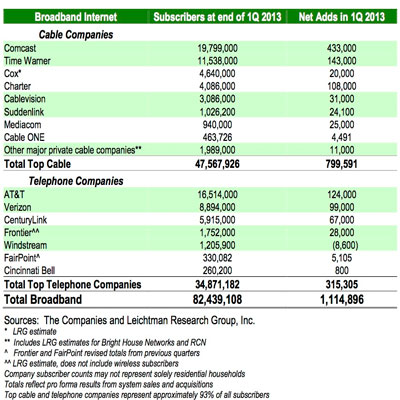
    MUMBAI: Netflix is in talks with several US cable companies with the aim of making its video streaming app available on set-top boxes, according to various reports. The reports say that Netflix’s discussions with US operators, including Comcast and Suddenlink, are at an early stage with no deal expected soon. Last month the UK’s Virgin Media became the first cable operator to offer Netflix to its customers; companies in the US have so far been reluctant to embrace streaming services, seeing the technology as broadly competitive with their traditional content offerings.

    One reported sticking point in the negotiations is that Netflix is pushing for the cable companies to adopt its Open Connect content delivery network, which it argues will provide the best streaming quality. Previously Netflix had restricted 3D and what it calls “Super HD” content, which requires a higher bitrate, to internet service providers that participated in the Open Connect initiative, but Time Warner Cable argued that its network was “more than capable of delivering this content to Netflix subscribers.” Netflix later opened up Super HD streaming to all ISPs.

  • DEN Networks appoints Yugal Kishore Sharma as president, Broadband

    MUMBAI: Broadband and value added services are expected to be manna for india‘s rapidly digitising cable TV sector. And showing its intent to stash away some of the god sent food from heaven is Delhi-Headquartered MSO DEN Networks. It today announced the appointment of telecom vet Yugal Kishore Sharma as president, broadband to spearhead its foray into broadband internet services. Yugal will be reporting directly to DEN CEO S.N. Sharma.

    Yugal joins DEN from Tikona Digital Networks, a wireless broadband company with a 4G licence where he was the COO. Prior to Tikona, he has worked with Polycom Inc. as regional director – India and southeast Asia. He has previously been associated with leading Indian and global firms like TATA Telecom, SIEMENS India, LG Electronics and PARSEC Technologies.
     

    Yugal brings with him his vast experience in the field of Consumer Technology. He has handled product businesses like Mobile Phones, VoIP CPEs, Wi-Fi, DECT, Bluetooth, Video endpoints and enterprise solutions such as Unified Communications (UC), Video-Collaboration (VC) & Tele-Presence.


    Commenting on the appointment, DEN Networks chairman and MD Sameer Manchanda said, “We are delighted to welcome Yugal to the DEN team. Following the unprecedented success of digitisation with addressability, the focus for our industry now expands to providing true high speed broadband services and bundled double and triple play offerings to consumers. High bandwidth wired broadband is the next game changer for India and has the potential to revolutionise both media and communications industries in the country.”


    Yugal brings with him his vast experience in the field of Consumer Technology

    DEN Networks CEO S.N. Sharma said, “It is our pleasure to have a seasoned broadband professional like Yugal at the helm of the broadband vertical. DEN has been gearing up for its broadband foray over the last few months. We have already carried out proof of concept tests on DOCSIS 3.0 platforms and achieved speeds of 100 Mbps in controlled conditions which is far higher than what most broadband platforms are able to offer today. We now plan to take broadband across our digital subscriber base and offer consumers an unbeatable high speed data experience.”


    DEN’s expertise in cable television coupled with its strong nationwide presence in an estimated 13 million homes and with five million digital cable subscribers provides it a strong platform to rapidly grow its broadband services. With the vision of offering double and triple play services to its subscribers, DEN has been investing heavily over the last few years to build a large fibre optic backbone through a combination of owned and leased fibre. Moreover, the existing cable going into the consumer home for digital cable TV is versatile enough to also provide high speed broadband giving the Company massive operating leverage for quick of deployment of its internet service.

  • Tewari launches Bharat Nirman portal, AIR News on SMS Service

    Tewari launches Bharat Nirman portal, AIR News on SMS Service

    NEW DELHI: A total of 69,491 video spots were released to cable and satellite television channels for the first and second phases of the Bharat Nirman Campaign, including 3,660 spots to Doordarshan.

    Radio aired a total of 107,532 spots including 12,600 by All India Radio across 92 stations and 94,932 spots across 216 private FM stations. This was apart from 6,048 spots aired on 36 community radio stations.

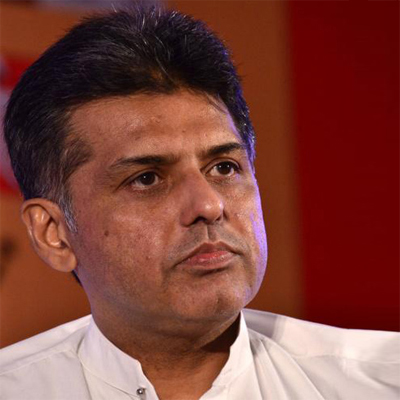
    These figures were revealed by Information and Broadcasting Minister Manish Tewari at the launch of the online portal for the Bharat Nirman Campaign which provides an interactive digital platform for the creative campaign on various schemes and programmes of the campaign.

    The Minister also launched All India Radio`s free News SMS service. The service provides AIR news headlines free of cost to its subscribers on mobile telephones. There are two or three headlines in each SMS, which also carried a public service information message.

    The event was attended among others by I&B Secretary Bimal Julka, DAVP Director General G Mohanty, Prasar Bharati CEO Jawhar Sircar, Director General (Media and Communications) Neelam Kapoor, and All India Radio Director General L D Mandloi.

    AIR News Services Division Director General Archana Datta said there will be three updates everyday. She clarified this would not replace the news on phone which people would continue to get.

    People willing to subscribe to the service can SMS “AIRNEWS <space> their name” to 08082080820. They can also give a missed call to 08082080820 to subscribe to the service. So far 200,000 people have subscribed to the service.

    Anurag Srivastava, Joint Secretary in charge of New Media said the digital platform is both in English and Hindi with creatives in 11 regional languages. The portal enables the user to get information about the Bharat Nirman and the Flagship schemes at a single place. There were six tabs on the home page on certain schemes like Aadhar card, Food Security, Real Estate, Street Vendors, Direct Benefit Transfer, and land acquisition.

    It also has live integration with social media platforms such as Facebook, Twitter and YouTube. The portal has apps for mobiles and tablets to provide easy reading. The website is available at www.bharat-nirman.in.

    The first phase of Bharat Nirman was launched in May and the second phase in August. The 360 degree communication approach used all formats of media such a TV, radio, print, outdoor publicity and special outreach programmes.

    A total of 9.7 lakh spots were screened in the two phases over 8,231 empanelled digital screens in theatres.

    A total of 27,870 advertorials were carried across about 1,450 newspapers including 9,000 strip ads.

    Outdoor displays for the Bharat Nirman in the two phases were put up at 7,715 sites.

    The multi media campaign was supported by a strong media outreach programme through eight Public Information Campaigns (PICs) in rural areas conducted by the Press Information Bureau (PIB) with support from the Directorate of Advertising and Visual Publicity (DAVP), the Directorate of Field Publicity (DFP) and the Song and Drama Division. So far, four PICs have been supported by the ‘Jamunia’ Sound and Light Show.

    The Song and Drama Division is also developing a new production taking forward the theme of ‘Priya Power’ which is scheduled to be launched in mid-September at the Red Fort grounds, New Delhi.

    In addition, Prasar Bharati conceptualised different programmes such as serials, interviews of eminent personalities and success stories/achievements of flagship schemes. Doordarshan has been airing a serial named Poorva Suhani Aaye Re every Wednesday and Thursday at 10.00 pm and All India Radio has come up with a serial named “Priya”.

    The Minister said a scientific approach has been undertaken to monitor and evaluate the Bharat Nirman Media Campaign.

    Later asked about the Indian Shining campaign of the previous government, he said the Bharat Nirman campaign was not linked to elections as it had commenced as early as 2007. India Shining on the other hand was a shoddy attempt on the eve of the polls, he said.

    He said that while new media was a highly empowering tool, it had to be ensured that it was developed with certain responsibility.

    He said the Press Council of India had been asked to go into measures that can be taken to ensure the safety of mediapersons.

  • TRAI adamant on 23 August deadline in Kolkata, blackout to follow

    TRAI adamant on 23 August deadline in Kolkata, blackout to follow

    KOLKATA: With the Telecom Regulatory Authority of India (TRAI) strictly adhering to the 23 August deadline for collection of the customer application forms (CAFs) to help in the implementation of Digital Addressable Cable TV Systems (DAS), 50 per cent of the 30 lakh cable television consumers of the Kolkata metropolis area, might see their television sets going blank.

    Till 3:00 pm on Friday, CAFs for around 45 per cent of the cable consumers had been completed, a TRAI official told indiantelevisioin.com. “By midnight we expect the details of around 50 per cent consumers,” the official added.

    However top placed industry sources said that a 14 member team from the TRAI office is likely to come to Kolkata on 26 August (Monday), to decide the fate of the customers who have not yet filled the forms with required details. “This simply proves that MSOs will not be asked to disconnect the TV subscribers,” he said.

    It should be noted that the broadcasting regulator had set a deadline of 23 August for cable TV viewers here for filling up the CAFs including choice of channels in the subscriber management system some 40 days ago and failing which services would be stopped, it notified not once but many a times, added the TRAI official. “In fact we had two meetings with MSOs in the last one month,” he further stated.

    “In this weekend the MSOs and operators will work harder and try to feed in as much details as they can,” said people associated with the cable industry.

    Manthan Broadband Services which has more than 6.5 lakh to seven lakh subscribers has managed to collect around 35 per cent of its CAFs. “We will abide by the law. South Kolkata has done well as compared to North and Central Kolkata in terms of form submission,” said Manthan Broadband Services director Sudip Ghosh.

    “However, we expect to receive more such details on coming Saturday and Sunday,” added Ghosh.
    While SitiCable which has set up around 11.5 lakh digital addressable systems here has achived 60 per cent collection of forms and is optimistic of reaching the 70 per cent mark by midnight.

    SitiCable director (Kolkata) Suresh Sethia informed that the MSOs have received a new format from TRAI and the MSOs have been asked to send the details to the regulator on an everyday basis. “Details like number of boxes switched off, number of boxes reactivated and CAFs received,” should be filed everyday said Sethia.

    While a Hathway Cable and Datacom official stated till 3:00 pm, they had received details of more than 57 per cent customers and will be looking at 80 per cent by tonight. “We will act as per the instruction of TRAI,” he said.

    TRAI member R K Arnold who was in Kolkata recently said: “We are not going to extend the deadline beyond 23 August. In this if subscriber details including channel preference is not done, his connection is liable to be disconnected.”

    Kolkata remains to be the last metro where DAS is yet to be implemented.

    Will TRAI ask the MSOs in Kolkata to disconnect the non complying subscribers from 24 August, if the subscriber data is not updated?

    If TRAI wanted the MSOs to switch off the TV connections, it would have informed the players by now but it seems that people will get some breathing space for some hours to complete the mandate, said an analyst.

    Even if the TV screens go blank, it can be connected in two hours to three hours, after the customers send all the details via their cable operators, concluded a MSO.

  • WB UDM Firhad Hakim pleads TRAI to extend deadline for CAFs

    WB UDM Firhad Hakim pleads TRAI to extend deadline for CAFs

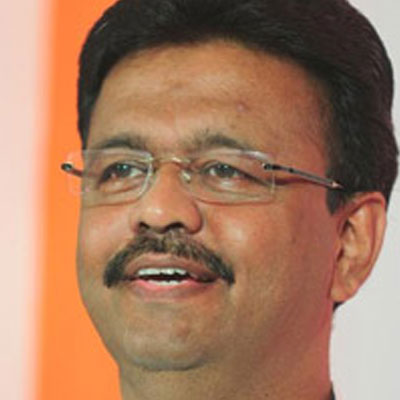
    KOLKATA: First it was Information and Broadcasting Minister Manish Tewari who appealed to the Telecom Regulatory Authority of India (TRAI) to delay implementation of ad cap for news channels till the completion of digitisation, and now it is the West Bengal Urban Development Minister Firhad Hakim who has appealed to the regulator to extend the deadline for customer application forms (CAFs) submission.

    Firhad Hakim has appealed to the regulator to extend the deadline for implementation of SMS rollout

    The request has come after TRAI confirmed last week that it will strictly adhere to the 23 August cut-off-date. “If subscriber details including channel preference is not done within this deadline, the operator’s connection is liable to be disconnected,” informed TRAI member R K Arnold.

    “After interacting with both the local cable operators (LCOs) and multi system operators (MSOs) at the ground level, we found that most of them are not aware about the registration work which they are mandated to do. TRAI before taking such decisions must spread awareness. I have spoken to the chief secretary to extend the deadline,” said Hakim exclusively to indiantelevision.com today.

    Hakim also said that TRAI must have an elaborate publicity campaign to inform the operators on the procedures involved. “How can TRAI ask the operators to disconnect its services without updating the operators about the whole process of CAFs,” he questions.

    Cable Operators Digitalisation Committee of the Association of Cable Operators convener Swapan Chowdhury informed, “So far only 30-35 per cent of cable consumers in the Kolkata Metropolitan Area have completed the form. It is not possible to meet the 23 August deadline.”

    TRAI officials who were in Kolkata last week said, “If not done within the set deadline, we will take action according to law,” said Arnold.

    Kolkata remains to be the last metro where DAS is yet to be implemented. Manthan Broadband Services director Sudip Ghosh when contacted said, “We will abide by the law and we are working towards meeting the deadline day and night.”

    While Hathway Cable managing director and CEO Jagdish Kumar G Pillai said the company is focused towards meeting the deadline.

    A MSO on the condition of anonymity said, “In the digitisation process, installation of set top boxes and offering of the channels account to more than 85-90 per cent of the work and remaining 10 per cent is clerical job which is letting the consumers to choose the channels. The LCOs have all the details of the customers, and now they just need to go and ask the customers to choose the package they want to go for. All this process will hardly take 10 minutes.”

    Can the cable operators breathe a sigh of relief after the appeal made by Hakim for the extension of deadline? Doesn’t seem like it is too easy to please TRAI, but they can only hope.

  • TV industry targets heavy VOD buyers, TV valuable customer for commercials

    TV industry targets heavy VOD buyers, TV valuable customer for commercials

    NEW DELHI: Highly addressable advertising has been a long-standing plan for the TV business, which wants to rival the ad targeting available online, and the biggest beneficiary of addressable commercials so far may be the TV industry itself even as marketers want to make their spending more efficient.

    Cable networks like Starz and HBO have begun trying DirecTV’s addressable advertising platform to find specific viewers who they believe would actually be interested in their shows. Cable and satellite operators, meanwhile, are taking advantage of the system to more efficiently target specific customers and get current subscribers to upgrade.

    Such advertising could be most effective for the actual TV operators, said Visible World executive VP- marketing and research Claudio Marcus. Visible world provides targeting technology to Cablevision.

    According to the National Association of Broadcasters of the United States, this is partly because paid TV services do not want to waste sign-up ads on people who already shell out for the product. Other kinds of marketers have a greater interest in marketing to current customers, so they’ll stick with the brand for their next box of crackers or new smartphone.

    It can also be laborious to match specific households with the cars or packaged goods they buy but pay-TV operators like DirecTV know exactly which premium channels each of its households pays for.

    “People are telling us they have enough TV,” said Media Storm co-founder and managing partner Craig Woerz. Media Storm’s clients including WeTV and NFL Network use DirecTV’s addressable advertising. “We need to make it more personalised and break through the clutter. We don’t want to break through with everyone, just the right people, who will be highly engaged.”

    “Clients using addressable advertising are seeing a 20-40 per cent higher tune in rate than those not doing it,” informed Woerz.

    Addressable commercials let you plan a TV campaign the way you would plan digital, said Starz exec VP-marketing Nancy McGee, which has run two campaigns using DirecTV’s addressable system. “Addressable makes sense in light of how people are consuming TV, cherry-picking programming and networks,” she said.

    The premium cable channel tested a small campaign in March, urging viewers to add Starz, and followed up in June with a promotion for the premiere of the second season of “Magic City.”

    In the initial test, which ran over five days, Starz showed ads to non-subscribers who frequently bought movies on demand or who subscribed to other premium channels, groups that the network believed had a higher propensity to be won over.

    The network saw a 49 per cent higher jump in sales among viewers who saw the ads than in a control group, McGee said, adding that the system provides information on how many people were exposed to the campaign, how many watched it live and in playback, on which network they saw it and during which part of the day.

    HBO, too, has used the DirecTV system for a campaign pegged to Game of Thrones, showing commercials to consumers who met criteria such as frequent VOD orders, on the same logic that Starz applied. It will run a similar effort later this year for the return of Boardwalk Empire.

    HBO is still learning, according to HBO director, domestic network distribution Gina DeSantis. But the network intends to increase its investment in addressable ads next year, she said.

    Scripps Networks is early in its exploration of addressable advertising, using it to send programming messages to viewers based on geographic location, said VP, national accounts, content and marketing group Brent Scott.

    “There are so many shows and competitive networks, if you can pinpoint a specific customer you have a better chance of tune in,” he said. “Why advertise to DirecTV’s entire customer base of 20 million if 19 million of those have no interest. I’d rather reach a couple of hundred thousand that are interested.”

    “In a lot of ways what we are doing here is no different than what Spotify is doing, what Amazon has been doing for years,” said DirecTV exec VP- chief revenue and marketing officer Paul Guyardo. “They see what you like to purchase, they see the songs you like to listen to, and they serve up songs they think you might be interested in. We are only putting the commercials in homes of people that want to know more about new cars or a premiere of a particular show because it is a show they like to watch.”

    Auto, insurance and financial marketers have also been using the addressable technology, according to Guyardo, but the limits of the pay-TV systems’ reach have held back widespread adoption.

    Some in the TV business also worry about the impact of easy, highly targeted TV commercials. “There’s a fear factor,” said Marcus. “The concern is if media buys become more efficient, does money come out of the marketplace because advertisers can do more with less?”

    But the biggest challenge is educating the marketplace, with many media buyers and planners still thinking in traditional gross rating points, according to Guyardo.

    DirecTV is trying to overcome that by pitching directly to CMOs, especially those who are data-driven. “If they value and appreciate data and analytics and they have a good understanding of exactly who they want to target, the beauty of this addressable product is it provides all of the reach that they want without the waste,” Guyardo said.

  • AFs: Mumbai switch offs begin; Kolkata quo vadis?

    AFs: Mumbai switch offs begin; Kolkata quo vadis?

    MUMBAI: With Delhi under control now, the Telecom Regulatory Authority of India (TRAI) is focusing increasingly on the other two metros to ensure that all the consumer application forms (CAFs) come in to the MSOs.

    Following a meeting held on 2 August with MSOs operating in Mumbai and Kolkata, a decision has been taken that the time for carrots is over, now one needs to use the stick to get customers to get moving on their CAFs. And that stick is like Delhi is switching off their cable TV service, if the CAF is not yet in.

    “There will be no further extensions like in the past,” says a senior TRAI official. “In fact, the switch offs have already begun from 3 August. The process for switching off the set top boxes will take at least four to five days because we are talking about a huge number.”

    Hathway Cable & Datacom MD and CEO Jagdish Kumar agrees that his network has started switching off subscribers who are being tardy from 3 August. “But the process will be tedious,” he says. “So far, we have managed to collect 80 per cent of the forms duly filled.”

    Indiantelevision.com spoke to another three MSOs operating in the financial capital and all of them stated that CAF collection was between 70 and 80 per cent. Going by that yardstick, it appears as if cable TV subscribers don’t seem to be too disturbed about the stick, as the numbers mentioned by MSOs to indiantelevision.com even a month ago were in that range. Could they be opting for a DTH connection? We do not know, but a media observer, says that it could be a possibility.

    The TRAI official says that Kolkata should not expect to be treated with kid’s gloves. “When Delhi can meet the deadline why not Kolkata?” he questions. “We are sure that Kolkata will be able to meet the 23 August deadline as it does not have any other option.”

    Well cable TV operators and subscribers in Kolkata, that’s as ominous a warning as you can get!

  • Operators see opportunities in OTT cable and broadband services

    Operators see opportunities in OTT cable and broadband services

    NEW DELHI: The Growth of OTT Content: Opportunities and Challenges for Service Providers, a new global survey of cable and broadband operators, finds that most are fairly optimistic about the potential impact of over-the-top services, with 70 per cent saying the potential benefits outweigh the risks.


    The results were part of a survey of operators in North America, Latin America, Europe, the Middle East, and Africa conducted by Incognito Software, a provider of broadband software provisioning and service activation solutions.


    “The widespread growth and popularity of OTT content across multiple devices is forcing cable operators to rethink their business models and how best to add value to their subscribers – and the survey results show that there is no single answer when looking at operators of different sizes and across multiple geographies,” said Incognito Software President and CEO Stephane Bourque. “Whether operators take a positive or negative view of OTT content, one thing is constant: their network usage is going to increase.”


    The study also found that nearly 82 per cent of respondents have already upgraded their network infrastructure to cope with increased subscriber bandwidth usage and that 75 per cent of the providers who reported a growth in bandwidth consumption attributed the increased demand to streaming video sites.


    In terms of managing OTT consumption, the survey found that the most popular approach was fair usage policies (40 per cent), followed by bandwidth caps (34 per cent), and proprietary OTT services (22 per cent), the company reports.


    Nearly half of the providers in North America utilise bandwidth caps as their primary means of managing OTT, the survey found. Fair usage and service add-ons are the next most common approaches (33 per cent).

  • Three out of 10 rural Americans do not have access to high-speed internet: FCC

    Three out of 10 rural Americans do not have access to high-speed internet: FCC

    NEW DELHI: Cable is down, DBS and telcoTV is up, and more than 80 per cent of American broadcast TV signals are now high-definition, says the latest Federal Communications Commission’s annual Video Competition Report. 

    “As of the end of 2011, 1,501-82.2 per cent-of full-power stations were broadcasting in HD, up from 1,036 stations in 2010,” the report said.

    Household adoption of HDTV sets also rose. As of 2012, 85.3 million (74.4 per cent) of US TV households had sets capable of displaying HD signals, up from 75.5 million (65.1 per cent) in 2011. DVR adoption rose as well, from 46.3 million households (40.4 per cent), to 50.3 million households (43.8 per cent).

    However, Acting FCC chairwoman Mignon Clyburn said she was concerned because “Not all of our citizens are realising the promise of these competitive benefits. Nearly three out of 10 rural Americans do not have access to high-speed internet, sufficient to receive online video distributors’ services, and I sincerely hope that these consumers are not forgotten.”

    Reliance on over-the-air TV has remained steady at around 11.1 million households, according to the report. This figure is in agreement with one proffered by Nielsen in January, but far short of another published last month in GfK’s Home Technology Monitor, an annual survey that found 19.3 per cent of U.S. TV households rely exclusively on over-the-air reception. 

    Broadcast TV station revenue followed the political cycle-$22.22 billion in 2010; $21.31 billion in 2011; and a projected $24.7 billion for 2012, a rise in part attributed to retransmission consent fees. However, TV stations were said to make about 88 per cent of their revenues through advertising, “A slight decline from the last report.”

    Prime-time ad rates for a 30-second spot in the top 100 TV markets, based on composite figures, rose from $26.76 CPM (cost per thousand households) in 2010, to $28 in 2011, and $32.08 in 2012.

    Local news is said to account for 35 to 40 per cent of advertising revenues. In 2011, the average TV station aired 5.5 hours of local news per weekday, up from 5.3 hours in 2010.

    Network compensation, once paid to TV station affiliates by the networks, has “All but disappeared,” the report said. Network compensation dipped from $48.2 million in 2010 to $25.1 million in 2011, according to SNL Kagan numbers cited in the report. The 2012 figure is projected at $287,000. Networks have reversed the compensation model by taking a percentage of retransmission fees from stations.

    Retrans fees comprised 8.1 per cent of TV station revenues in 2011, or $1.76 billion; and 9.4 per cent or $2.36 billion in 2012.

    Ancillary DTV revenues were nearly negligible. Broadcasters can use a portion of their spectrum for revenue-generating activities such as subscription video or data transfer, but they must pay the FCC five per cent of those revenues. In 2012, 81 licensees made total ancillary DTV revenue of $499,970. The peak year was 2010, when 99 licensees brought in more than $7.1 million in ancillary revenues.

    Clyburn said she was “Encouraged by the pro-consumer trends it reveals,” adding “Options for accessing video programming are swelling,” she said. “Nearly all consumers now have a choice among three. MVPDs, and today, more than one-third of all households can choose from four or more providers. I note that broadcast TV remains one of the most affordable sources of entertainment and news,” she continued. “As the report shows, 11 million American [households] still rely on free, over-the-air broadcast signals as their exclusive source for TV viewing.”

    While the commission has been bullish on reducing the spectrum available for TV broadcasting, it did give stations props for public service: “Since the last report, full-power television stations have continued to take advantage of digital broadcasting technology to offer improved service to the public. In addition to high-definition content, broadcasters are using multicasting to bring more programming to consumers by expanding the availability of established networks and adding new startup digital networks-including networks targeting minorities and programming targeting niche audiences-and Spanish language offerings.”

    Multicast diginets include Bounce TV, which now has 154 affiliates, This TV, with 133, and Retro TV with 44 affiliates. Established networks have also benefited from multicasting. The CW is on 115 multicast channels; MyNetworkTV, on 92.

    Total day audience share for the network affiliates held steady between 2011 and 2012 at 28, per cent with the total broadcast share at 33 per cent, compared to 52 per cent for ad-supported cable networks. In prime time, network affiliates held 33 per cent of the audience; all broadcast, 38 per cent; and ad-supported cable, 51 per cent.

    The availability of mobile DTV grew between reports, from 60 stations in 2010 to 105 stations at the end of 2011. 

    The National Association of Broadcasters said the total now stands at 130 stations in 30 states delivering 150 channels.

    Despite ongoing reports of cord-cutting, the FCC found that pay TV subscriptions rose slightly between the end of 2010 to June 2012, from 100.8 million to 101 million households. Cable’s share fell however, from 59.3 per cent to 55.7 per cent as of June 2012. Direct broadcast satellite TV providers picked up 600,000 subscribers in the time period to end June 2012 with 34 million, or 33.6 per cent of all pay U.S. pay TV subscribers.

    TelcoTV grew by 1.7 million subscribers during the period, to 8.6 million, according to the report. However, it noted that the total comprised “AT&T’s Uverse and Verizon’s FiOS services,” but not other small telcoTV providers around the country.

    Technologically, cable systems are catching up with telcoTV, which delivers only the channels being watched at a given time versus the entire package a la traditional cable. At the end of last year, more than half of the footprint of the top eight cable providers was all-digital, with 43 per cent of that portion using switched digital video delivering only those channels watched.

    The average price of a basic cable subscription increased by 6.2 per cent to $20.55 between 2011 and 2012, with expanded basic up 4.8 per cent to $61.63. The basic price-per-channel was up 1.5 per cent to 63 cents, while expanded price-per-channel fell one-tenth of a penny in the 50 cent range.

    The Video Competition Report divides TV distributors in to three types-broadcast, multichannel video programming distributors (cable, satellite and telco pay TV), and online video providers, or OVD. The commission cited SNL Kagan numbers indicating that the number of internet-connected TV households grew from around 26.6 million (22.8 per cent) at the end of 2011, to an estimated 41.6 million (35.4 per cent) by the end of 2012.

    The commission said OVD accounted for a growing portion of internet traffic during peak hours, and noted that most major cable operators imposed bandwidth caps or metered pricing during the first half of 2012. Phone companies are said to be following suit.
  • Indian tech success story takes the next step with wins in Africa

    Indian tech success story takes the next step with wins in Africa

    MUMBAI: Mumbai based Media Nucleus continued its impressive growth story with its first wins in the African continent.Media Nucleus has clients across India, South Asia, South East Asia, Middle East, I and now Africa.

    ANN7 based out of South Africa and TVC News in Nigeria have both chosen Media Nucleus’ flagship product, Broadcast Air Time Scheduler (BATS), to optimise revenues and deliver efficiencies in their broadcasting operations.

    The flexibility of the modular structure along with the intuitive features of the software that ensures reduction of human error that delivers accurate billing and programming were key to BATS winning.

    Value for money and the comprehensive, high quality yet cost effective were the main features that swayed the decision towards BATS in this case.

    These broadcasters join global brands such as Fox and CNBC, top Indian brands such as Star World, India News, Fox Movies, Dhammal, PTC, to name a few along with a growing number of other channels across India,Middle East and now Africa who use BATS to run their entire operational processes or parts of it. The ability of BATS to integrate with industry standard broadcast technology infrastructure as well as ERP products such as Oracle or SAP are some of the features Media Nucleus clients value.

    Media Nucleus Operations Director Santosh Nair believes this trend of gaining customers abroad would continue especially from the emerging markets that are undergoing through the digitisation revolution. Africa is the initial target but by no means the only one.

    “Africa is a big continent with varied levels of market maturity however technology is proving to be a great equaliser in many respects and “digitsation” would open new opportunities as well as challenges,” he said.

    “Our experience in supporting broadcasters and other content owners optimise revenues and deliver efficiencies in their operations and meet the challenges of digitisation in India and Middle East make us perfectly poised to do the same in Africa. “

    Although BATS is the flagship, he points out that CAMS (a subscriber management system for Cable and DTV Operators) has also established itself as one of the market leaders in its space. The product was launched timely to aid cable operators and others in the industry to comply with digitisation requirements

    The SaaS service model with little infrastructural costs and ease of use are some of the criteria that has made CAMS a success, but Nair believes, it is the comprehensive, high quality innovative nature of the product that defines it success especially as it also delivers quick RoI and results.

    Nair goes on to say: “Our commitment to delivering value for money with quality products and services supported by excellent customer services has helped us become a market leader in India and we are confident that we can replicate the same success in other emerging economies.”

    Aside from BATS, the company product portfolio also includes subscriber based management system (CAMS), a broadband billing system (BBS) and services that are aimed at optimising revenues and delivering efficiencies for all parts of the value chain in the media and entertainment industry.

    This Mumbai company with offices in London and Dubai has set its sight on making an impact in the global media industry by helping clients succeed in a complex and rapidly changing competitive landscape.