Tag: cable

  • GTPL Hathway records standalone net profit of Rs 30.5 cr in Q1 FY22

    GTPL Hathway records standalone net profit of Rs 30.5 cr in Q1 FY22

    New Delhi: Cable TV and broadband service provider GTPL Hathway Limited (GTPL) has clocked a standalone net profit of Rs 30.5 crore for the quarter ended 30 June.

    The net sales reached Rs 391.5 crore, improving from Rs 347.6 crore recorded in the same quarter last year. The consolidated net profit for the quarter stood at Rs 53 crore, up from Rs 46.4 crore in the corresponding quarter a year ago, while the consolidated revenues stood at Rs 602 crore. The overall revenues improved on the back of improvement in the EBITDA (including EPC) levels at Rs 138 crore, which was seven per cent higher year-on-year. The Q1 FY22 PAT stood at Rs 47.5 crore, up 16 per cent y-o-y.

    The company also reduced its debt burden by Rs 16.8 crore during the quarter. The finance cost was down 78 per cent y-o-y.

    GTPL added 55,000 net broadband subscribers in Q1 FY22 and the broadband revenue crossed Rs 91. 8 crore, up by 74 per cent YoY. The total number of subscribers as on 30 June were 6. 90 lakh of which 2.50 lakh are FTTX subscribers.

    Meanwhile, the company continues to widen its footprint in its existing markets and penetrate into new markets through inorganic routes. As on Q1 FY22, paying subscribers stood at 0.73 crore.

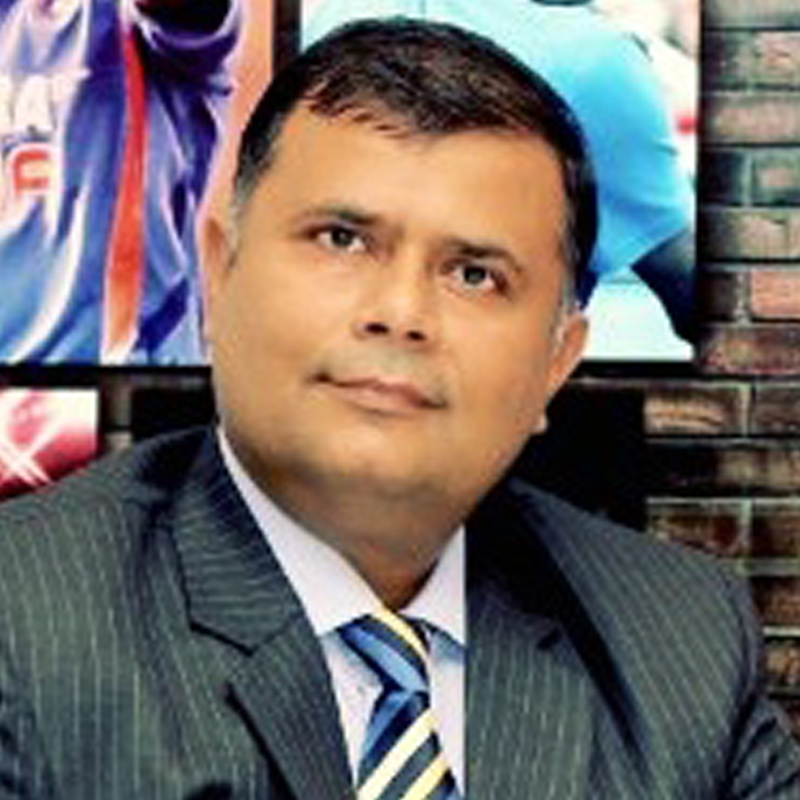
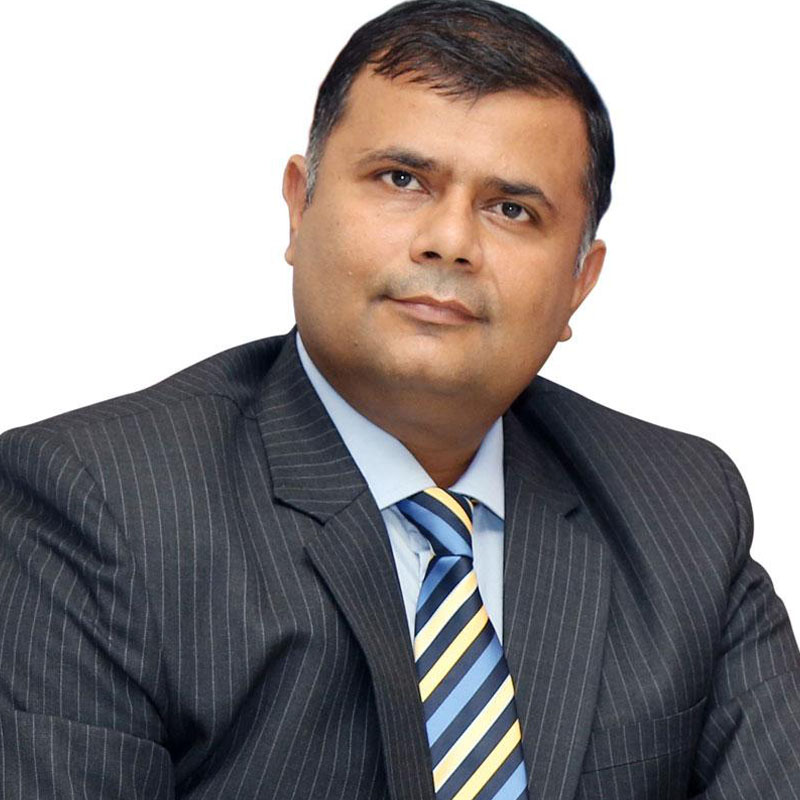
    GTPL Hathway, managing director, Anirudhsinh Jadeja said, “GTPL Hathway continued to deliver on key KPIs during Q1 FY22. The highlight of the quarter was robust subscriber additions & subscription revenues for Broadband business, strong profitability and debt repayment. GTPL has further reduced its debt by Rs 16.8 crore in Q1 FY22.”

    Jadeja said GTPL will continue to march forward on its stated strategic roadmap by coming up with interesting new products and services, enhancing customer experience, strengthening its digital infrastructure capabilities, and accelerating its footprint in the existing and new markets. 

  • Is Comcast eyeing a mega-streaming deal?

    New Delhi: The world is moving towards streaming at a pace like never before. And, the media titans are eyeing every opportunity they can get to consolidate their digital entertainment businesses and brace up for the streaming war.

    After AT&T and Amazon, it is now the turn of the US cable giant Comcast to make its move to turbocharge its streaming operations. According to media reports, the company is mulling a mega-deal with one of the two media giants- Roku or ViacomCBS.

    However, the question that Comcast’s CEO Brian Roberts is wrestling with is- whether to build something internally or buy to become a streaming powerhouse, reported The Wall Street Journal on Wednesday. The merger seems unlikely, but Roberts is evaluating his options, which include a potential tie-up with ViacomCBS or acquisition of Roku Inc, the business daily reported citing unidentified persons.

    All three companies have declined to comment on the matter and issued no statements so far.

    The US cable giant Comcast had branched out from its cable and broadband into entertainment in 2009 with the acquisition of NBCUniversal, whose streaming service Peacock is yet to catch up with the likes of Netflix or Disney+. However, its broadband business has continued to grow. As the first wave of the pandemic ravaged the world last year, its broadband business added nearly two million customers and the unit’s revenue rose 10 per cent to about $21 billion.

    An acquisition of streaming giant Roku at this stage could help it to step up its streaming game against the industry titans – Netflix, Disney, and Amazon. Roku’s valuation has more than tripled in the past year to $53 billion.  

    On the other hand, a transaction with ViacomCBS which owns streaming service Paramount+ could provide the much-needed boost to its streaming operations, but it is too early to say.

    However, several analysts say, the latest buzz could be just ‘speculation’ as a merger at this stage seems unlikely. One of the reasons is that Comcast has been largely focussing on developing the software behind its Xfinity cable boxes, called X1, and its Flex streaming boxes which resemble Roku. The other being its potential partnership with Walmart to further the Smart TV technology.

    The reports come close on the heels of two major media deals that happened over the last few weeks. First AT&T announced its decision to spin off entertainment giant WarnerMedia and merge it with Discovery becoming the world’s second-largest media firm by revenue after Disney. The new entity Warner Bros. Discovery is now led by Discovery CEO David Zaslav. Soon thereafter, Amazon made its most ambitious move in the entertainment business and announced that it is buying MGM Studios.

    So, whether or not Comcast is considering a transaction with ViacomCBS or the acquisition of Roku, it has definitely stirred many questions on the cable giant’s next step.

  • Cable operators take steps to ease vaccination process for staff

    KOLKATA: Despite the imminent health risks, the cable industry employees have continued to work on the frontlines all through the pandemic. Now with vaccination drives in full swing across the country, leading cable operators, too, are taking a step ahead and getting their employees inoculated. Apart from organising special vaccination drives in some cities, they are also helping employees schedule slots wherever the camps could not be set-up.

    NXTDigital organised a three-day vaccination camp at its head office in Mumbai in conjunction with Hinduja Hospital last week for its workforce in the city. The company extended this drive to also include employees’ families.

    “The philosophy has always been to hold the good health and safety of its employees as a paramount endeavour, something that we strived hard for since the pandemic began. NXTDIGITAL, therefore, set up an Employee Health & Safety (EHS) team to help our personnel and their families across the country impacted by COVID, including organising hospital treatment, access to critical medication and the like,” NXTDigital MD & CEO Vynsley Fernandes said.

    The EHS team is working with NXTDigital employees all across the country, not just supporting personnel to get vaccinated, but also providing every possible assistance to enhance their health and safety.

    GTPL Hathway also arranged vaccination drives for 45+ employees in many of its offices, with the help of state governments, GTPL Hathway cable TV head and chief strategy officer Piyush Pankaj said. However, the company could not organise such drives for 18-45+ due to shortage of vaccines. The human resources are helping employees to get the vaccinations scheduled, especially for people on the frontline. Teams are also trying to get the employees slots through government centres.

    On the other hand, Siti Networks could not organise the vaccination drive in one or two places given its pan-Indian footprint. But the MSO encouraged all employees to get vaccinated and reimbursed the vaccination cost, said Siti Networks group chief executive officer Anil Malhotra.

    Along with vaccination, the company informed that it would help employees procure PPE kits, masks whenever needed. It also imported oxygen concentrators to provide to employees if needed.

  • TRAI introduces new regulations for technical compliance of CAS & SMS

    KOLKATA: In a bid to put an end to content piracy in the pay TV ecosystem, the Telecom Regulatory Authority of India (TRAI) on Friday amended the interconnection regulations 2017, incorporating a framework for technical compliance of CAS & SMS.

    The authority has been receiving several complaints about the unauthorized distribution of signals and under-declaration of subscribers by distribution platforms, despite the implementation of the new regulatory digitization of the cable TV industry.

    “Sub-standard CAS and SMS also render the distribution network vulnerable to hacking and content piracy,” it said in a statement.

    According to TRAI, the framework is the first step to define an indigenous set of specifications in the line of international standards. A tightly synchronised working of CAS and SMS, as specified by the framework, will enable factual reporting of subscriber base etc. Eventually, this will reduce the revenue loss to stakeholders on account of erroneous subscription reporting.  

    “Better assurance of due revenue, in turn, may encourage the stakeholders to invest for further improvement in quality of content and service thereby benefiting the end consumer,” TRAI noted. Moreover, it will also usher-in better content security in the distribution value chain.

    The authority came out with a consultation paper seeking views on standardization of these systems last April. It also held an open house discussion later. The comments of the stakeholders received by TRAI during the consultation process were analysed. In view of the technical nature of the matter, the Authority decided to form a committee of members across the industry, related institutions.

    The committee, after extensive deliberations, recommended introducing a testing and certification regime for CAS and SMS to ensure better conformity to the standards and to improve the customer experience.

    Distribution platform operators will now need to obtain certification for their CAS and SMS systems from the certification and testing agency. The framework will be implemented through a testing and certification agency.

  • Make in India push for set-top boxes face challenges

    Make in India push for set-top boxes face challenges

    KOLKATA: Last year it made headlines when large DTH players including Tata Sky, Dish TV announced their decision to move manufacturing of a significant portion of set-top boxes (STBs) in India. The announcements were in line with the government’s renewed push for Make in India. But with complexities looming over the initiative, manufacturers remained worried about the impact of the initiative, if it remained limited to just ‘assembling the products in India’.

    There have been talks around different aspects of the Make in India push for STBs since the last two years. “In 2020, the department for the promotion of industry and internal trade (DPIIT) formed a committee. It asked the ministry of information and broadcasting (MIB) to be a part of it and a meeting was held with operators and STB manufacturers to gauge the overall situation,” said MyBox Technologies MD and CEO Amit Kharbanda. “STB as an electronic product falls under the purview of the ministry of electronics and information technology (MeitY)Meity, but buyers are regulated by MIB, an ‘unusual situation’.”

    According to MIB, Make in India is not just about assembling the product in India but also about promoting Indian designs.

    “Our entire HITS business was premised on furthering the mission of ‘Digital India’ – taking signals to remote semi-rural and rural areas across our pan-India satellite footprint; facilitating a digital transition. As regards local sourcing, our Cable Operator Premise Equipment or COPEs bear testimony to our ‘Make In India’ approach; with a significant percentage of locally sourced components. With Set-Top Boxes, we have already moved whatever inventory production was possible, to India. This includes not just India-based manufacturers but also Indian companies. But, the challenge is that several components of the STBs still need to be procured from overseas manufacturers,” said NXTDigital MD & CEO Vynsley Fernandes.

    The draft National Broadcasting Policy (NBP) finalised early this year also focused on policies to indigenise the production of consumer premises equipment including the set-top boxes, which are heavily import-dependent. This will be done by setting up a self-reliant local manufacturing ecosystem and roping in the Bureau of Indian Standards (BIS) and other agencies to publish the quality benchmark. The policy also called for setting up measures to rationalise the import tariffs and provide preference to domestically manufactured electronic products and mandate increasing deployment of indigenous equipment.

    GTPL Hathway cable TV head and chief strategy officer Piyush Pankaj said, “MIB has been promoting the initiative for the last two-three years, focusing on Indian manufacturers. But, the problem is many components like chipsets still come from a foreign country and are being assembled here. However, the MSO is also buying boxes from Indian vendors.”

    While domestic manufactures are trying to make way for Indian designing, it takes more than a year to develop designing. “Indian design companies have competence but the business is not in good shape, so the domestic manufacturers are requesting the operators to cooperate with them. The operators can be worried about the quality of boxes but they can opt for trial orders,” said MyBox Technologies MD and CEO Amit Kharbanda.

    On the other hand, some operators have distanced themselves from the matter.

    “We support the Make in India initiative. But, we have also clarified that it applies to any product manufactured in India by an entity here, whether it’s an Indian company or a foreign one. As a service provider, I can’t go checking on the antecedents of the company and whether it has ‘designed’ or ‘assembled’ in India, or whether there was a technology transfer or indigenous technology used. It is very complicated for us. We are buying from a company registered in India, paying Indian taxes, not importing. As long as we are doing that, we believe we are buying from India. Now it is up to the government to find out this nitty-gritty and it wants to take a policy initiative,” a senior executive with a large MSO said on conditions of anonymity.

  • Siti Network content and carriage GM Rajesh Sharma succumbs to Covid

    Siti Network content and carriage GM Rajesh Sharma succumbs to Covid

    Kolkata: Ever since the pandemic broke, cable operators have been working on the frontlines to ensure uninterrupted cable TV and broadband service across the country. Several of them have battled the infection and the challenges that came along with it, while others succumbed.

    On Monday, another cable operator lost his life to Covid. Siti Network content and carriage GM Rajesh Sharma succumbed to the disease. He was 42 and survived by his wife and two sons in Delhi.

    According to his colleagues, Sharma was loved by everyone in the office for his lively presence. He was promoted to his current position last year during the pandemic. “He was a kind human being, always helpful. He was cooperative, and everyone liked him in the organisation. Unfortunately, we have lost him at such a young age. He had a long career in front of him,” said Siti Networks CEO Anil Malhotra as he condoled his demise.

    India is battling the worst-ever health crisis, with the second wave of Covid-19 taking a heavy toll on people across the states. On Monday, the country recorded as many as 2.22 lakh new cases, which is lowest since 15 April. India has lost 4,454 lives to the deadly virus during the last 24 hours and the death toll has surpassed the three lakh mark, making India the only country after the US and Brazil to record over three lakh fatalities. Tamil Nadu and Maharashtra remain the most impacted, with the highest number of new infections.

  • Cable TV, broadband services impacted, as Cyclone Tauktae slams into west coast

    Cable TV, broadband services impacted, as Cyclone Tauktae slams into west coast

    KOLKATA: Cable TV services and broadband services were impacted across various places in Maharashtra and Gujarat, as Cyclone Tauktae left a trail of destruction along the west coast. Many users took to Twitter complaining about the long hours of network outage. However, both video and broadband services were restored within 12 hours, say cable operators

    NXTDigital MD & CEO Vynsley Fernandes said there were evident impacts on services especially in areas with overhead fibres and overhead wires. But timely weather warnings helped in making arrangements in advance. MSOs had placed teams in strategic locations to address issues and respond. “In most places, the network was restored in the shortest possible time. It did not take more than 12-14 hours,” Fernandes said.

    “There were damages but we were able to mobilise the staff and the workforce immediately. Major lines both for cable and broadband were down,” said Maharashtra Cable Operators Foundation (MCOF) president Arvind Prabhu. “There may still be some minor problems in certain households and we are in the process of addressing those as well.”

    The Konkan region was among the most-affected, as it witnessed the devastating impact of one of the most intense storms to hit the west coast. “Some independent control rooms reported problems in the Konkan region. In Mumbai city, there were issues mostly with fibre cables and overhead cables,” Prabhu added.

    GTPL Hathway cable TV head and chief strategy officer Piyush Pankaj said, the services were disrupted for around 3-4 hours in most areas. “But we were well-prepared this time. Even materials like wires were ready in advance to immediately address damages like a wire being cut or washed up,” he added.

    According to MSOs, cable TV was less impacted than broadband services as the latter not only faced connectivity issues but stress on speed as well. The impact on speed persisted for a longer time.

    Most importantly, the operators say, they learnt from two cyclones of 2020- Nisarg and Amphan after which they incurred huge infrastructural losses, especially in West Bengal. The staff had to invest more than a month to normalise the connections with damage of lakhs of set-top boxes, fibres of few crores.

  • Does the Discovery-AT&T Warner Media merger make sense?

    Does the Discovery-AT&T Warner Media merger make sense?

    MUMBAI: In one word. Yes. At least it gives them a chance in hell to play catch up with the well-muscled and well-entrenched rivals like Netflix, Disney, Amazon Prime Video, and Apple TV in the streaming race. While Netflix announced 208 million subscribers worldwide in its latest financial meet with investors, Disney declared that it had roped in 108 million subs in just a year and a half of its existence.

    As compared to that, Discovery recently disclosed that it had managed to lasso 15 million subscribers to its streaming business, and Warner Media’s HBO Max revealed its sign-ups at 9.7 million. Combining the two – if all subs stay put – gives a total of around 24.7 million. That’s still an ant-like figure compared to the jumbo numbers of Netflix, Disney, and hey even Amazon Prime. Both continued to concentrate on linear TV, and on cable, even as others were laying it out thick on OTT services. Their coming late to the streaming party means they have to work harder to ramp up subs. By teaming up it might be a little easier, but the hard work will need to be put in.

    Netflix – when it launched – did to HBO, what HBO did to other cable TV programmers two to three decades ago. The Reed Hastings-led OTT introduced cutting-edge, well-produced and edited, hard storytelling in its series and gave subscribers something to get glued onto almost every month. At an affordable price too as compared to cable TV’s high rates in the US.

    Can HBO do a Netflix to Netflix in terms of content in the current streaming world? 

    Many think that can be done, but it requires deep pockets as well as a global vision such as that is available aplenty with the Netflix top management. As well as a strong heart to tolerate negative cash flows, take on what some may consider strangulating debt while spending tens of billions of dollars on content, churning out fresh shows o

    Fusing Warner with Discovery will definitely give the two a lot more financial ammo as well content. Both are at the top of their game when it comes to their respective genres. Warner Media has dramas, series, movies in the case of HBO, TNT, TBS, and Warner Bros and kids programming in Cartoon Network; news in CNN, and sports in Turner Sports. Discovery has gold standard factual programming, along with its live sports lineup in Eurosport, real estate shows in HGTV and lifestyle programming in TLC, and food competitions in the Food Network.

    If the merger does see the light of day, the question about who will lead the operation will need to be answered. Warner Media’s Jason Kilar has shown he has the hunger; Discovery boss David Zaslav is no chicken; he’s a mean rooster and is extremely ambitious.  Observers believe that AT&T is likely to call the shots; so Kilar will get a shoo-in as head, while Zaslav will get a very rich golden handshake. Others however point out that the latter has the confidence of media baron John Malone who  controls about 30 per cent of Discovery’s equity and it’s quite likely that his word will carry weight.  This means Zaslav and Kilar might both be accommodated in the new organization.

    Of course, the merger will mean the joint entity  will boast of a neat bundle of offerings for viewers – covering everything from sports to drama to factual to kids to movies to reality. Scale is crucial in streaming service offerings, and that can be achieved by offering the Discovery Warner service at an extremely appealing price, in keeping with what rivals are charging. Discovery Plus has a price tag of $6.99 while HBO Max is available at $15. This is why the latter has remained as a niche offering attracting a thin sliver of viewers as compared to Netflix and Disney.

    In the Indian context, both Discovery and Warner Media, have kind of been left behind in the broadcast sweepstakes as compared to the mainline TV broadcasters and streamers. Both have kids channels, while HBO and WB channels have been wound up in the country. Discovery has its international slate of channels while it also has localised its factual programming. Hence, a merger within India would definitely bring in economies.

    Clearly, all that is in the future. Right now the two companies’ boards and management have to decide whether they are going ahead or not. You can’t forget that there was strong talk that Comcast and AT&T were conversing  for a deal between NBC Universal and Warner Media. But that kind of stalled and did not move ahead. Now, Discovery looks to have beaten NBC Universal to the punch. The days ahead will tell us if it results in a knockout or not.

  • NXTDigital turns around its business with Rs 13.66 crore profit in Q4

    NXTDigital turns around its business with Rs 13.66 crore profit in Q4

    KOLKATA: NXTDigital has turned its business profitable by raking in Rs 13.66 crore profit after tax (PAT) for the fourth quarter. The company has reported Rs 277.96 crore consolidated revenue for the quarter.

    It posted Rs 0.32 crore PAT in the previous quarter and a loss after tax of Rs 43.43 crore in the corresponding quarter of the previous year. The revenue also grew by 6.95 per cent over the previous quarter of Rs 259.90 crores and by 22.38 per cent over the corresponding quarter of the previous year.

    The Earnings Before Interest Taxes Depreciation and Amortization (EBITDA) for the quarter at Rs 67.54 crores was higher by 8.10 per cent over the EBITDA of the previous quarter of Rs 62.47 crores and a 167 per cent growth over the EBITDA of the corresponding quarter of the previous year.

    For overall FY 21, the company recorded an EBITDA of Rs 232.08 crore, growing by 6.16 per cent over the EBITDA of the previous year of Rs 218.62 crores (excluding one-time revenues of Rs 123.12 crores in the previous year. Consolidated revenue for the year remained consistent at Rs 1,008.5 crores, marginally down from Rs 1,038 crores –due to a reduction in the low-margin non-core trading business.

    “The stellar performance can be attributed to the company’s focus on uninterrupted customer service during the lockdown and after, innovative products and solutions to combat the myriad of ground challenges, driving close to a 100 per cent digital mode of collections on a prepaid basis and the unstinting and tireless efforts of all our employees and our Last Mile partners – all of whom rose to the occasion, without exception,” NXTDigital MD & CEO Vynsley Fernandes said.

    The company will continue to focus on its transformation to an “all-digital” services company, driving a host of new products and solutions, whilst expanding into new geographies. One of the key growth drivers for the future will be its recently launched infrastructure sharing PaaS or Platform-as-a-Service offering.

  • GTPL Hathway earmarks Rs 400 crore capex for FY22

    GTPL Hathway earmarks Rs 400 crore capex for FY22

    KOLKATA: Pan India multi-system operator (MSO) GTPL Hathway is increasing its capex projection for FY22 to Rs 400 crore, compared to Rs 335 crore it invested in FY21, a top executive revealed in an investors call.

    Out of the overall capex projected for this financial year, Rs 225 crore to Rs 230 crore will be invested in the broadband segment, while the rest is going to be deployed for the cable TV side, especially for expansion in new markets. All capex will be funded through internal accruals only. The company is not looking forward to any fund raising activity at this point of time, GTPL Hathway cable TV head and chief strategy officer Piyush Pankaj noted.

    Earlier, the MSO revealed its plans to grow its cable TV subscriber base by more than 50 per cent in the next three years. While the growth in FY21 was flat, the company has cited the  decline in commercial connections as reason for the sluggish addition. 

    “The hotels, corporates, housekeeping, offices, small offices and all, which have not come back totally because of the pandemic. We are looking forward that in the normal scenario this business will grow. The residential customers are growing. We have connected around half a million more residential houses in the pandemic. We are looking forward that we will continue to grow,” Pankaj commented.

    GTPL Hathway is excited about six new states it entered for potential organic growth. Moreover, there is a lot of opportunity for consolidation, Pankaj added. It is already on the verge of executing some deals. While pandemic came in the way to executing deals in FY21, it is looking at closing the consolidation deals as the situation improves going forward.

    Overall, the cable TV market has been growing from anything between four to seven per cent CAGR, mentioned GTPL Hathway chairman and non-executive director Rajan Gupta. It varies from state to state, where states like Odisha have grown higher.

    It is also optimistic about maintaining its broadband additions as well, which is around 60,000 quarterly. “If you see 31 March 2020, we were showing the ISP internet service at around Rs 5 crore, which has increased to Rs 43 crore in 2021, quarter-to-quarter it is down, but year-to-year it is ten times more,” GTPL Hathway promoter and MD Anirudhsinh Jadeja highlighted.

    Rather than increasing broadband ARPU, the current focus is to create the broadband market where it enjoys a high market share in cable like Gujarat. As upgradation happens from LAN to FTTH, there will be some ARPU increase, said  Gupta. The shift in ARPU with change in connection happened last year, and he expects the momentum to continue.

    GTPL Hathway planned to launch hybrid boxes in Q4FY21, but production has been delayed due to the pandemic. The boxes are ready and they are getting shipped, Pankaj stated.

    While Jio is adding broadband subscribers aggressively, Jadeja claims it is not a competitor yet. “It is good now that Jio is also our partner and we might say that we are getting the cost synergy benefits related to the content, infrastructure, or whatever Jio’s expertise is for the overall industry,”  remarked Jadeja.

    “Jio’s market is spread in Ahmedabad, Baroda, Surat, and some other cities in Gujarat. GTPL covers almost the majority of Gujarat with a presence in 100 towns. The major competitor is BSNL and there are no other players,” he added.