Tag: cable

  • Germany’s Panaccess bets big on CAS in India

    Germany’s Panaccess bets big on CAS in India

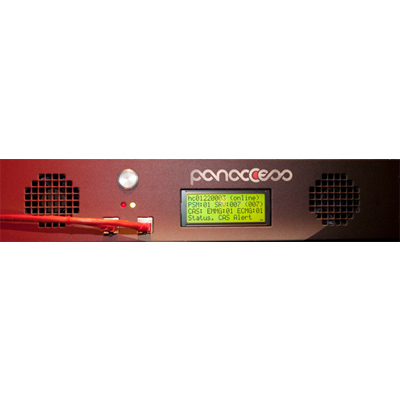
    KOLKATA: Panaccess, a German-headquartered company for CAS, SMS, billing and VoD, aims to promote CAS in India. The company is not only betting on business from the remaining phases i.e. III and IV, but is also approaching the multi-system operators (MSOs) in phase I and II.


    “There is good scope for CAS, SMS and billing in the next phases. And a few existing clients want to replace with our CAS and hence, we are approaching the MSOs in phase I and II along with newer ones,” informs Panaccess sales consultant GK Viswanath.


    “We have commissioned our conditional access system, subscriber management system and billing for a MSO in Pondicherry,” he answers, when asked about the work executed in the country.


    The company, which is slated to open a service centre in Bengaluru by April 2015, has already established its products and services in 32 countries across the world. It serves as a single window for a set of secured and revenue protected suite of solutions that complements and adds revenue streams to existing and new cable TV and DTH operations.


    After April, the company will start visiting all the major MSOs and plans to advertise a lot more as well. “We participate in all the major cable TV exhibitions etc,” he states.


    On the problems MSOs face with existing CAS system, he says, “They can resolve the problems by replacing with our CAS i.e. SMS and billing which are built in. Hence, there is no need for MSOs to go any anywhere else for these facilities. Apart from this, we also provide with solutions through broadband services.”


    In the coming months, the company, which currently employees around 15 people in the country, plans to recruit a few more.  “Next fiscal will see at least 10 for sales and 15 for technical and five for backend and five demonstrator appointments,” he says.


    On the extended deadline of cable TV digitisation in India from 2014 to 2016, he comments, “There are some people who had already started manufacturing STBs indigenously; they are the ones which have been affected by this decision.”


    “We can coordinate with the MSOs those who are planning to go for headends or STBs. We hope to capitalise the market early,” he concludes.


  • Nielsen says it has issued faulty ratings since March 2014

    Nielsen says it has issued faulty ratings since March 2014

    MUMBAI: Nielsen, which controls almost all of the television ratings measurement market in the US, has been issuing incorrect TV ratings for national broadcast networks due to a technical error. The error, introduced in March, was not discovered until 6 October, the company said in a statement.


    The error was ‘generally imperceptible until we saw high viewing levels associated with fall season premiere week,’ it added. “As a result, small amounts of viewing for some national broadcast networks and syndicators were misattributed. Cable networks and local TV ratings were not affected by this error.”


    The company fixed the error on 9 October and now plans to reprocess all of its ratings data going back to 18 August, when the first new broadcast program of the season aired. It will also conduct an analysis to determine if other weeks also need to be reprocessed.


    ABC appears to be the beneficiary of the glitch, with its programs getting credited for views that belonged to other networks.


    Nielsen’s ratings is the metric that advertisers and networks rely on to conduct their ad sales business and will be majorly affected due to this gaffe. It is not yet clear to what extent the ratings will change when the numbers are reprocessed. The changes are expected to be relatively minor.


    “We will undertake an exhaustive post-mortem-internally and with our clients-and we are asking Ernst & Young and the MRC to join us in these efforts,” the company added in its statement.


    Nielsen, along with Kantar, operates TAM in India, the current industry body for TV ratings.


    Read the full statement from Nielsen:


    In response to recent ratings irregularities, Nielsen conducted an extensive internal investigation of our systems and processes. On Oct. 6, 2014, we uncovered a technical error that impacts national network television ratings over several months.


    The technical error was introduced on March 2, 2014, and was generally imperceptible until we saw high viewing levels associated with fall season premiere week. As a result, small amounts of viewing for some national broadcast networks and syndicators were misattributed. Cable networks and local TV ratings were not affected by this error.


    A software fix to correct the problem was deployed on Oct. 9, 2014, meaning that all data being released today and going forward is correct.


    In addition,


    All of the commercial data-including C3-for the current TV season, which will begin releasing this weekend, will be correct. All previously released data since September 22nd will be reprocessed and reissued by Oct. 17, 2014. We will also reprocess all of the impacted data going back to Aug. 18, 2014, when the first new season broadcast network program aired. This data will be reissued by Oct. 31, 2014. Nielsen is also conducting an impact analysis to determine whether additional weeks should be reprocessed. We will work closely with our clients and the industry to provide updates as soon as possible. This issue has to do with difficult-to-attribute content called “all other tuning with code” (AOT with code). This data represents between 0.1% and 0.25% of all viewing minutes that we credit nationally. In the vast majority of cases, the impact is small; in a handful of cases, the impact is more significant.


    As part of our investigation, we have also determined that there are no issues with the National People Meter, our data collection process, our panel, our TV audience measurement methodology or the total TV viewership data produced during this affected period.


    We are working closely with our clients to manage this situation and will continue to be transparent with the industry and the media about our plans. In addition, we will undertake an exhaustive post-mortem-internally and with our clients-and we are asking Ernst & Young and the MRC to join us in these efforts.


    Nielsen is committed to upholding the highest standards of television audience measurement and data processing, in order to provide the most effective audience measurement solutions to meet client needs.

  • JAINHITS chooses ARRIS to meet demands of video digitisation

    JAINHITS chooses ARRIS to meet demands of video digitisation

    NEW DELHIJAINHITS, India’s first and only HITS-based Direct to Network (DTN) service, has selected set top boxes from ARRIS’s HMC portfolio to deliver digital video services across the nation. 


    According to the Telecom Regulatory Authority of India (TRAI), India is set to witness digitisation of approximately 100 million homes by the end of this year.


    Currently, JAINHITS offers more than 252 standard definition (SD) channels, following the launch of the nationwide ARRIS digital headend earlier this year, and plans to soon provide full high-definition (HD) services, which will be made available via the new ARRIS set-top boxes.


    “As we look to grow our services to meet the digital transition in India and introduce HD services later this year, we are pleased to extend our working relationship with ARRIS to add its set-top boxes to our offering,” said JAINHITS chairman JK Jain. “Our platform coupled with ARRIS set-top boxes will allow cable operators to provide 250 digital TV channels using just 12 frequencies as compared to the 106 they are using today. This will help them free valuable spectrum, and use this available spectrum to provide broadband services to increase ARPU and fulfill Prime Minister Narendra Modi’s dream of a digitally developed India.” 


    “ARRIS is driving the global transition to an all-digital content delivery platform – giving customers like JAINHITS a competitive advantage in delivering tomorrow’s services on today’s networks”, said ARRIS Asia Pacific senior vice president Tim Gropp. “JAINHITS benefits from our proven digital video portfolio and worldwide footprint, which enables us to deliver localised solutions and support.”


    JAINHITS is deploying HMC1010 SD set-top and the HMC2010 HD set-top from September 2014. Both are cost-effective digital terminal adapters (DTA) for operators looking to convert from an analog to a digital service. The compact and energy efficient design of all the HMC series set-top boxes, including the HMC1010 and HMC2010, minimizes energy consumption, reducing their impact on the environment.


  • Several Chennai-based MSOs get clearance for DAS

    Several Chennai-based MSOs get clearance for DAS

    NEW DELHI: A total of 119 Multi System Operators (MSOs), all over the country, have been granted permanent registration for 10 years to operate the digital addressable system (DAS).


    The MSOs had been given provisional permission earlier.


    Interestingly, many MSOs from Chennai have got permission except for Arasu as the latest recommendation of Telecom Regulatory Authority of India (TRAI) states that state-owned bodies should not be permitted, and also because of the denial of permission to Kal Cables and its subsidiary Sumangali.


    The nine MSOs, which have got permission as per the latest list released on 22 September, are Koduri Satyanarayana, Sri Sai TV Services of Khammam District of Telengana; Abhilash Communications of Adilabad for notified areas of phase  II and phase  III cities in PAN India; JPR Channel of Mumbai for Mumbai (phase I) and phase II areas in Maharashtra and Gujarat; Operator Digital Tamil Nadu for all the cities, towns and villages of phase II,III and IV in Tamil Nadu; VK Digital Network of Chennai for cities/towns/areas occurring against phase I, phase II, phase III, phase-IV; Saga Network Entertainment of Chennai for Tamil Nadu; Talachaer TV Home Cable Network of Talacher in Odisha for Angul District and Dhenkanal District, Odisha ; Voice and Vision Club of Singrauli in Madhya Pradesh for phase III and IV of Madhya Pradesh and Sonebhadra Districts of Uttar Pradesh; and Den Network Satellite of Mumbai for Maharashtra. 


    Digicable Network of Mumbai and Kal Cables of Chennai, which had received provisional licence’s, have been refused permission as it has failed to get the clearance of the Home Ministry.


    According to a list issued in late July, 16 MSOs had been refused permission. It also said that Kolkata based Digicable Communications had been denied permission after the break-up of the joint venture with Digicable Networks of Mumbai, which has received permission for Greater Mumbai, National Capital Territory of Delhi and Greater Kolkata.


    MSO sources, however, said that the approved list was in addition to the 140 whose names had been approved in March last year.

  • Siti Cable to roll out DOCSIS 3 broadband in Delhi and NCR in Q2-2015

    Siti Cable to roll out DOCSIS 3 broadband in Delhi and NCR in Q2-2015

    MUMBAI: Siti Cable, the multi system operator (MSO) from the Essel group is looking at expanding its business in other parts of the country. In a document given to investors, it has asked shareholders for approval to increase its authorised share capital, give authority to the board of directors to create charges/mortgages in respect of borrowings and issuance of equity shares or securities convertible into equity share of up to $100 million.


    The company says that the reason for loss was under declaration of subscriber base and low average revenue per user (ARPU). With digital addressable system (DAS) being implemented, the MSO hopes to generate higher revenue from subscription. Siti Cable also has already become EBIDTA positive this year.


    For digitisation implementation, it has procured and deployed large number of set top boxes (STBs), leading to periodical amortization, leading to inadequate profits.


    In order to improve its situation, the MSO has proposed a few measures. It is looking at expanding its business in north, south and central India, apart from its stronghold of east India. It is preparing strategies for increasing its digital market share and becoming a strong player in DAS areas. The company is rolling out its value added services (VAS) plans across the country in phased manner. Broadband services are intended to be rolled out on advance DOCSIS 3 technology in Delhi and NCR in Q2-2015, besides having broadband subscriber base in eastern region.


    Meanwhile, the increase in productivity will be measured in terms of EBIDTA margin, rationalisation of expenses, standardisation of process and systems to shift focus from individual centric approach to system driven approach and additional incremental profit by rolling out VAS.


    The BOD is asking for approval to “create such charges, mortgages and hypothecations on all or any part of assets or immovable properties of the Company wherever situated, both present and future, and/or whole or part of the undertaking(s) of the Company of every nature and kind whatsoever together with power to take over the management of the business and concern of the Company in certain events, to or in favour of banks, financial institutions, any other lenders or other investing agencies and trustees for the holders of debentures, bonds, other instruments to secure rupee/foreign currency loans hereinafter collectively referred to as “loans”) to secure the amount(s) borrowed or to be borrowed by the company from time to time for due repayment of the principal together with interest, charges, costs, expenses and all other monies payable by the company in respect of such borrowings.”


    It is also seeking approval for authorisation of loan and investments by the company. The BOD is asking approval for “giving any loan to any person or other body corporate, giving any guarantee or providing security in connection with a loan taken by any other body corporate or person; and/or acquiring whether by way of subscription, purchase or otherwise, the securities of any other body corporate; up to financial limit of Rs 1000 crore over and above limits available under Section 186 of the Companies Act, 2013, notwithstanding that the aggregate of the investments and loans so far made or to be made and the guarantees so far given or to be given by the company and securities so far provided and to be provided, exceeds the limits/will exceed the limits laid down under Section 186 of the companies act, 2013 read with companies (meeting of board and its powers) rules 2014.”


    For issuing shares, it is seeking approval to “offer, issue and allot in one or more tranches, to investors whether Indian or foreign, including foreign institutional investors, financial institutions, non-resident Indians, corporate bodies, mutual funds, banks, insurance companies, pensions funds, individuals or otherwise whether shareholder(s) of the company or not, through an issue of equity shares or bonds, debentures and/or any other securities including foreign currency convertible bonds or depository receipts convertible into equity shares of the company at the option of the company or the holder of such security, including by way of qualified institutional placement (QIP) to qualified institutional buyers (QIB) in terms of chapter VIII of the SEBI regulations, through one or more placements of equity shares (hereinafter collectively referred to as ‘Securities’), in domestic and/or one or more international markets whether by way of private placement or otherwise, in one or more tranches, so that the total amount raised through such issue(s) of securities shall not exceed Rupee equivalent of $ 100 million.”


    It has also appointed VD Wadhwa as the executive director for a period of three years from 12 August 2014.

  • Hathway: Moving towards a professional organisation

    Hathway: Moving towards a professional organisation

    MUMBAI: The cable TV industry has historically been considered as an unorganised sector. Cable networks were predominantly owned by the local cable operators, area wise, until a few years ago when government mandated digitisation of the cable TV homes.


    The amendment bill in 2011 for Cable Television Networks (Regulation) mandated the industry to gradually move from unorganised to an organised sector. Hence, the industry dynamics have suddenly introduced a spurt of new opportunities for growth and increased revenue along with a whole new way of working, with newer systems, processes, technology and most of all – talent.


    Maybe that’s why multi system operator (MSO) Hathway Cable & Datacom was awarded the HR Excellence Award organised by Genius Consultants in association with Times of India, in the first time itself when the organisation participated in an HR Award category. The MSOs Human Resource VP Sunil Suji bagged the award as “The HR Leader of the Year” in the Large Enterprise category.


    However, the process wasn’t easy. Suji recalls that moving towards being organised, introduced challenges of professionalism, towards building a whole new culture of meritocracy, appreciation, communication and transparency within Hathway.


    Traditionally, the Human Resource Function at Hathway has been an administrative / personnel function in nature. “We are dealing with an employee base that is maximum at the ground level. We still continue at a corporate literacy rate of only 40 per cent. And 60 per cent of our employee base is still maximum 10th or 12th pass out with many at the ground level, not knowing how to read or write. This further makes it challenging to drive communication at the lowest levels in the organisation. To be able to come closer to our goal, each passing day requires us to be phenomenally dedicated towards building a culture of growth, meritocracy, appreciation and engagement at Hathway,” says Suji.


    It is interesting to note that the various initiatives taken by Human Resource towards developing this culture had to go through a struggle between the old culture versus the new culture. It’s a constant struggle between old processes vs. new processes, old systems vs. new systems and most importantly, a continual struggle between the old legacy driven mindset vs. a brand new professional mindset believes Suji who also takes pride in elevating the HR function in such an industry.


    The MSO directly and indirectly employs around 4,500 employees and on an average one sticks with the organisation for seven years. And since an organisation is as good as its people, the MSO has the philosophy of rewarding and recognising. For this, Suji puts in place a uniform and standardised policy across locations for identification and recognition of exceptional work done by individuals and teams – beyond their defined job roles in terms of:  initiative, innovation, consistent efforts, team work, quality /cost consciousness and customer /safety focus.


    So came into being four categories of awards namely, Silver Recognition, Golden Recognition, Platinum Recognition and Long Service Awards. Each of the award categories is attached to a cash reward as well.


    The reward and recognition process goes parallel to the performance management process except for the fact that it measures performance through KRAs while the other measures and rewards efforts / initiatives outside the KRAs / defined job role.


    A few more changes were brought in too. For instance, in the history of the organisation, there was no Mediclaim policy for the employees. “As a benefit initiative, we drove an employee benefit policy for all employees. The Hospitalisation Policy provides for reimbursement of hospitalisation expenses incurred in the process of recovery from an ailment. While the employees on the rolls of the company are covered, outsourced companies like Cable Tech and Planman have also been extended with the benefit,” he informs.


    Being an unorganised sector, the MSO had about 72 odd designations prevailing in the system. With the help of management inputs, the HR has been instrumental in revising 72 designations into 24 (divided as management and staff cadre designations). This has brought a lot of standardisation into the HR operations and has also cleared various administrative ambiguities prevailing into the system.


    Suji says, “The employee policies at Hathway certainly needed revisions to address administrative ambiguities, reduction in cash outflows, and upgradation in terms of benchmarking with industry standards as well as benchmarking with group companies of the Rajan Raheja Group.”


    Accordingly, a number of policies were revised; while many were newly introduced. Some examples of the same are: revised leave policy to curb encashment, limit accumulations and incorporate accommodations in ERP system, introduction of code of conduct, whistle blower and harassment policies because though these are softer elements, they impact the organisation in a large fashion. Particularly, in the current context at Hathway, when there is growth anticipated in a large way, amongst other changes.


    In particular, Suji is proud of the harassment and whistle blower policy. “We have stringent disciplinary and management processes to enable the effectiveness and awareness of these policies,” he adds.


    He takes pride in the fact that amidst the cultural barriers of old legacies, people mindset, resistance by employee groups, a lot of these transitions have been implemented seamlessly across all locations. The next important highlight is that all of the above transformations have been conceptualised, conceived and implemented in the last one year i.e. (July 2013 to July 2014). The HR’s mission is to transform the industry.


    Suji is thankful to the company’s MD and CEO Jagdish Kumar for cooperation and the assurance from the board to bring in these phenomenal changes.


    On what are the big HR-related issues present in the sector, Suji states that the industry is still in an unorganised phase and hence, has a lot of potential to improve. “Hathway has taken the first leap and it certainly deserves the first mover advantage. In various conferences / seminars, when we meet our counterparts in the cable Industry, Hathway is proud to announce some of the breakthrough practices – towards developing a professional organisation. We have miles to go and these are just the baby steps…”

  • Cable companies need to provide compelling video experience along with broadband: Moody’s

    Cable companies need to provide compelling video experience along with broadband: Moody’s

    MUMBAI: A new report by Moody’s Investors Service claims that value propositions for cable providers are changing as broadband becomes even more necessary than TV. The report titled ‘Couch potatoes are switching screens as high-speed data cable subscribers overtake video’ states that most companies in the US are well positioned to reap the benefits and manage the risks of transition.


    “Cable providers’ largely upgraded networks and high-speed capabilities can make them the first call for consumers seeking fast internet connection. But if cable companies want to sell their video product as well, the onus is on them to provide a compelling video experience at an attractive price,” says Moody’s Investors Service vice president senior analyst Karen Berckmann.


    High speed data subscriber numbers will overtake video subscribers for Moody’s- rated cable companies in the next year, she adds. Fewer video customers means lower programming costs that are paid on a per subscriber basis and servicing the video product tends to be the most challenging and costly part of the business, so margins could benefit from the mix shift.


    However, the report also warns that a magnifying customer base for video also has risks. Companies that have declining number of video subscribers lose economies of scale when it comes to technicians and customer service, driving up costs per customer. At the same time the brand may be affected if it gives up on video in favour of broadband.


    The report states, “Companies with significant overlap with Verizon’s FiOS and AT&T’s uVerse, such as Cablevision Systems and Time Warner Cable, will need to invest in a competitive video product to survive while those with a less intense competitive footprint will find it easier to thrive as primarily broadband companies. An operator that loses a customer to FiOS or uVerse is likely to lose that customer entirely, whereas one losing a customer to Dish Network or DirecTV could still maintain a broadband relationship.”


    Moody’s says that Comcast is one company that is both large as well as diverse enough to invest in video as well as showing that it can sustain its video position. Cox Communications and Cablevision could struggle to grow while Grande Communications Networks and RCN Telecommunciations Services have shown that cable ops can build sustainable business on video penetration of about 20 per cent. For smaller operators, partnering with Tivo would be ideal for the next couple of years.

  • Telecast of DD to be made mandatory on all cable and DTH platforms: Javadekar

    Telecast of DD to be made mandatory on all cable and DTH platforms: Javadekar

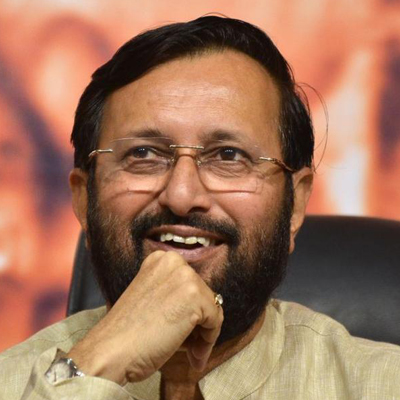
    NEW DELHI: Telecast of Doordarshan will be made mandatory on every direct to home and cable network, according to Information and Broadcasting Minister Prakash Javadekar.


    Speaking at a press meet in Ahmedabad, Javadekar said his aim was to make Doordarshan and All India Radio the first choice for viewers.


    Javadekar invited suggestions from the public in this regard. “I held a meeting with local officials and asked them to come with ideas to improve the content of DD and AIR,” he said. “To do that, we have decided to invite suggestions from people about what they would like to watch and listen,” he added.


    “We are taking steps to make Doordarshan channels available in all cable TV as well as direct to home platforms.”


    He stressed on the need to convert the Medium Wave (MW) frequency of Akashvani to FM, “as a majority of radio sets catch only FM signals these days.”


  • Cable digitisation to increase tax collection: Economic Survey

    Cable digitisation to increase tax collection: Economic Survey

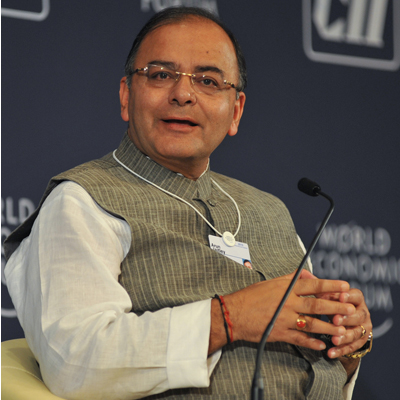
    MUMBAI: The Economic Survey for 2013-14 that was tabled by the Finance Minister Arun Jaitley shows that both the centre and the state governments will benefit from the digitisation of the cable TV industry in India because of the increase in tax collection from it.


    Jaitley in Parliament said, “Preliminary data from the state governments show that there is already two to three fold increase in entertainment tax collections.” The transparency in the subscriber base is set to add to the manifold increase in tax collection.


    Due to digitisation, opportunities are being created for the domestic manufacturers to delve into more set top box (STB) production. It stated that over three crore STBs have already been installed in the eight metros and 36 cities of the phase I and II of digitisation. The deadline for complete digitisation (phase III and IV) has been set to 31 December 2014.


    India has nearly 16 crore TV households with nearly 800 channels. Also there are 88 teleports. However, the benefits of digitisation are yet to kick in even in the phase I and phase II markets with only a few cities being billed as per the rules. Uneven and high entertainment tax is an issue that all the stakeholders including DTH, MSOs and broadcasters are standing up to and urging the government to look into and provide them relief. DTH operators are double taxed as they also have to pay a service tax apart from the entertainment tax.


    While DTH operators are adding 10 lakh customers each year, the government has also allowed two more operators to provide services through headend-in-the-sky (HITS) system. Effects of digitisation are already visible on film exhibition where 95 of the big screens are now digitised and the sector is ‘poised for buoyant growth in the long run.’


    The survey also stated that the media and entertainment industry has had tremendous growth and according to a FICCI-KPMG report, it is expected to touch Rs 1,78,600 crore by 2018. However, piracy remains a big challenge for the film industry and the government has approved an anti-piracy plan to combat it through legal methods.

  • JAINHITS creates LCO friendly schemes

    JAINHITS creates LCO friendly schemes

    MUMBAI: Giving more power to the local cable operator (LCO), India’s only HITS service JAINHITS has come up with special schemes that will enable LCOs to choose content as per their customers’ needs and pay for that.


    The schemes ‘double happiness dhamaka’ and ‘double freedom dhamaka’ that are valid till 30 September aim to streamline operations, improve efficiency and maximise profits. ‘Double happiness dhamaka’ has two variants, ‘Happy 15’ and ‘Happy 17’ allowing LCOs to choose up to 21 pay channels over and above 140 free to air channels and are valid till June 2015 and June 2017 respectively.


    Under ‘Double Freedom Dhamaka’, ‘Freedom 11’ and ‘Freedom 12’ are two sub themes that target regional viewers apart from other channel packages. MPEG4 quality set top boxes are available at the starting price of Rs 1699.  “Our offerings are a testimony to our belief in mutual growth along with our partners and wish to boost our partner ecosystem with robust growth opportunity. We would continue to facilitate our partners with such opportunities in the days to come,” stated JAINHITS head Rakesh Gupta.


    “These schemes will assist LCO’s in reaching out to greater audiences with best-in-class TV viewing solutions and  enable them to maximize profitability, improve efficiency as well cater to the consumer expectations,” states a release from the company.


    JAINHITS technology in partnership with ARRIS and IntelSat is a fast plug and play digitisation solution that comes for an investment of as low as Rs 4.99 lakhs. By signing up for the new schemes, LCOs also get technical updaradation with 24X7 sales service, CAF and CRF and marketing and promotion support which are all DAS compliant.