Tag: cable

  • Encourage greater indigenous STB production with tax holiday in budget for DAS to succeed

    Encourage greater indigenous STB production with tax holiday in budget for DAS to succeed

    NEW DELHI: With the Government hoping to achieve complete digitisation of the cable television sector by the end of this calendar year, it is imperative that the Union Budget for 2016-17 being presented on Monday has important concessions for the industry.

    Perhaps the most important step would be to give infrastructure status to the Broadcast, Cable and direct-to-home (DTH) sector so that it gets all the benefits and incentives available for infrastructure industry including the availability of finance at a concessional rate.

    Though the government claims more than 90 per cent seeding of set top boxes (STBs) in all urban areas covered under Phase III of digital addressable system (DAS) – a figure disputed by most private stakeholders, it is important that the budget should give some concessions that benefit the sector particularly as far as set top boxes go.

    While the Make in India or Digital India initiatives have failed to encourage many indigenous manufacturers of STBs, it is necessary not merely to give some tax concessions under these two schemes but also a tax holiday for some years for those who venture to beat the sale of Chinese STBs and encourage Indian STBs.

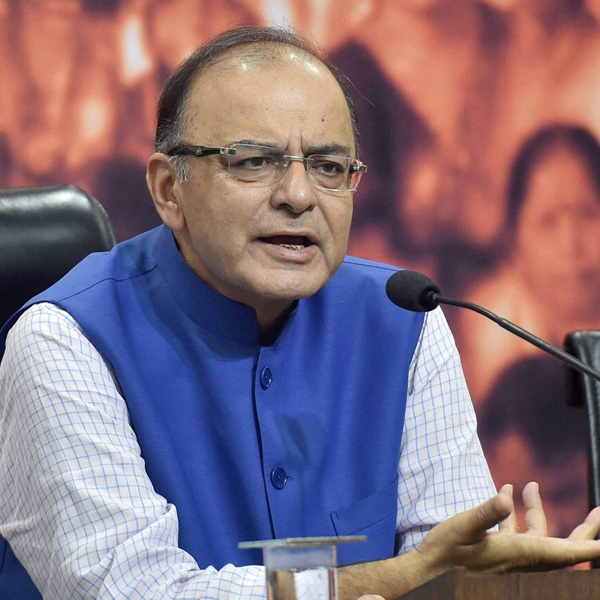
    Earlier, the Entertainment Wing of FICCI had said in a pre-budget memorandum to Finance Minister Arun Jaitley that the sector should be allowed tax concessions under Section 80-IA of the Income Tax Act.

    As the digitisation process and the deployment of STBs are heavy capital oriented sectors needing large investments, FICCI had said they should be allowed to set off accumulated losses and unabsorbed depreciation allowances to be carried forward as per Section 72 A of the Act.

    One way of giving greater encouragement to indigenous STBs is to give the broadcast industry the same benefits that the manufacturing sector gets.

    FICCI had in fact also said that the rate of taxes, which range from 30 – 70 per cent, especially the entertainment tax imposed by the states, over and above the service tax are punitive in nature. It is important that the overall taxation level is brought down for the sector as a whole.

    State Entertainment tax legislations levy high taxes on the subscription earned by cable operators and DTH operators. The non-availability of credit of central taxes against the state taxes and vice versa increases the tax burden on the entertainment industry.

    In addition to this, the Central Government has levied service tax at 14 per cent on the transfer of copyrights, which is already being taxed as ‘goods’ under the various state VAT legislations.

    There is therefore need to rationalise taxes or rush through the Goods and Service Tax (GST) Bill to bring parity and clear snags in taxation.

    With so many cases pending before TDSAT and the Telecom Regulatory Authority of India (TRAI) constantly being impleaded in such matters, the Government should provide a clarification that the payments made towards carriage fees are not in the nature of royalty or fees for technical services and TDS is required to be made on such payments as per section 194C of the Act.

    The Indian media and entertainment industry grew from Rs 918 billion in 2013 to Rs 1026 billion in 2014, registering an overall growth of 11.7 per cent. The industry is estimated to achieve a growth rate of 13 per cent in 2015 to touch Rs 1159 billion. The sector is projected to grow at a healthy CAGR of 13.9 per cent to reach Rs 1964 billion by 2019.

    The benefits of Phase I and II of DAS rollout, and continued Phase III rollout are expected to contribute significantly to strong continued growth in the TV sector revenues and its ability to invest in and monetise content. The sector is expected to grow at a CAGR of 15.5 per cent over the period 2015-2019.

  • Q3-2016: Ortel Communications’ YoY revenue up 22%

    Q3-2016: Ortel Communications’ YoY revenue up 22%

    BENGALURU: The Bibhu Prasad Rath led regional cable television and broadband internet player Ortel Communications Limited (Ortel) reported YoY revenue (Total Income from Operations or TIO) of 21.8 per cent at Rs 48.03 crore in the current quarter (quarter ended 31 December, 2015, Q3-15) as compared to Rs 39.44 crore and 4.9 per cent QoQ growth as compared to Rs 45.79 crore.


    The company reported PAT in Q3-2016 at Rs 3.89 crore (8.1 per cent margin) as compared to a loss of Rs 0.1 crore in Q3-2015 and 37.5 per cent higher QoQ PAT as compared to Rs 2.83 crore (6.2 per cent margin).


    Ortel provides services in the Indian states of Odisha, Chhattisgarh, Andhra Pradesh, Madhya Pradesh and West Bengal.


    Notes: 100,00,000 = 100 lakh = 10 million = 1 crore

    The numbers mentioned in this report are standalone.


    The company’s cable segment reported 17.3 per cent YoY growth in revenue at Rs 31.99 crore in the current quarter as compared to Rs 27.27 crore and 3.4 per cent QoQ growth as compared to Rs 30.93 crore. This segment reported 46.6 per cent YoY growth in operating profit of Rs 13.61 crore in Q3-2016 as compared to Rs 9.28 crore and 4.1 per cent QoQ growth as compared to Rs 13.08 crore.


    Ortel’s broadband segment reported 16.3 per cent higher revenue at Rs 8.28 crore as compared to Rs 7.12 crore in the corresponding year ago quarter and 1.7 per cent more than the Rs 8.14 crore in Q2-2016. The broadband segment reported an operating profit of Rs 4.78 crore in the current quarter as compared to Rs 4.52 crore in Q3-2015 and 9.1 per cent higher than the Rs 438 crore in Q2-2016.


    Ortel president and CEO Rath said, “I am delighted to share that our key strategy of LCO buyout is receiving huge response in our markets. Healthy addition to RGUs has led to strong growth of 38 per cent in bottom-line on a Q-o-Q basis. Given the strong pipeline of RGUs yet to be integrated, we are confident of improving upon this solid performance in the coming quarters.”


    “Broadband business continues to do well and remains a key focus area for us. We are working towards delivering notable growth in subscriber base, which would further augment our performance and overall profitability,” he added.


    “FY2016 will be one-of-the-best-years in the history of Ortel Communications backed by record RGU additions and solid visibility for LCO buyouts in the coming year. With more than 90 per cent subscribers on ‘last mile,’ we remain committed to this model and strongly believe it will create tremendous value for all stakeholders going forward,” Rath said.


    Ortel’s YoY revenue generating units (RGU) grew 19 per cent to 626,475 as compared to 526,551 and increased 9.6 per cent QoQ as compared to 571,834 in Q2-2016.


    Cable TV RGUs increased 19.3 per cent YoY in Q3-2016 to 558,766 as compared to 468,274 and increased 10 per cent as compared to 508,171 in Q2-2016.


    Ortel’s YoY primary digital cable RGUs grew 33.9 per cent to 127,098 in Q3-2016 as compared to 94,926 and grew 8.3 per cent QoQ to 117,401. The company says that its Cable TV penetration stood at 23.7 per cent and penetration in the current quarter.


    Broadband customers in the current quarter grew 16.2 per cent YoY to 67,709 as compared to 58,277 and grew 6.4 per cent QoQ as compared to 63,663.


    Ortel reported a slight drop in digital and analogue cable ARPUs in the current quarter. Digital cable ARPU in Q3-2016 was Rs 181; in Q3-2015 it was Rs 186 and Q2-2016 it was Rs 183. Analogue cable ARPU in Q3-2016 was Rs 141, in Q3-2015 it was Rs 147 and in Q2-2016 it was Rs 143. Broadband ARPU in Q3-2016 was higher at Rs 396, while in Q3-2015 it was Rs 394 and in Q2-2016 it was Rs 395.


    Cable Subscription, Connection and Channel carriage fees


    The company’s cable subscription fees in Q3-2016 increased 6.5 per cent to Rs 21.2 crore as compared to Rs 19.9 crore and was 3.2 per cent more than the Rs 20.6 crore in Q2-2016. Connection fees increased 32.7 per cent to Rs 1 crore as compared to Rs 0.70 crore and increased 33.8 per cent as compared to Rs 0.7. Channel carriage fees in the current quarter increased 48.3 per cent to Rs 9.8 crore as compared to Rs 6.6 crore in Q3-2015 and increased 1.4 per cent as compared to Rs 9.7 crore in Q2-2016.


    Let us look at the other numbers reported by Ortel:


    Total Expenditure in Q3-2016 increased 16.2 per cent YoY Rs 39.78 crore (82.8 per cent of TIO) as compared to Rs 34.24 crore (86.8 per cent of TIO) and was 2.8 per cent more than Rs 38.72 crore (84.6 per cent of TIO) in Q2-2016.


    The company’s programming cost in the current quarter increased 9.7 per cent to Rs 9.1 crore as compared to Rs 8.3 crore in Q3-2015, but declined 3.3 per cent as compared to Rs 9.44 crore in Q2-2016.


    Bandwidth cost in Q3-2016 increased 25.4 per cent to Rs 2.1 crore as compared to Rs 1.7 crore and increased 9.1 per cent as compared to Rs 1.92 in Q2-2016.


    Employee Benefits Expense in the current quarter increased 31.6 per cent to Rs 5.7 crore as compared to Rs 4.3 crore in Q3-2015 and increased 0.6 per cent as compared to Rs 5.64 crore e in Q2-2016.


    Lower interest costs


    SREI Equipment Finance Limited, the largest lender of the company, extended a prompt payment rebate (PPR) of one per cent on the company’s borrowings with effect from 1 October, 2015. This is in addition to the earlier rebate of 0.75 per cent, which would bring down the effective interest rate to 14.25 per cent.

  • Q3-2016: Ortel Communications’ YoY revenue up 22%

    Q3-2016: Ortel Communications’ YoY revenue up 22%

    BENGALURU: The Bibhu Prasad Rath led regional cable television and broadband internet player Ortel Communications Limited (Ortel) reported YoY revenue (Total Income from Operations or TIO) of 21.8 per cent at Rs 48.03 crore in the current quarter (quarter ended 31 December, 2015, Q3-15) as compared to Rs 39.44 crore and 4.9 per cent QoQ growth as compared to Rs 45.79 crore.


    The company reported PAT in Q3-2016 at Rs 3.89 crore (8.1 per cent margin) as compared to a loss of Rs 0.1 crore in Q3-2015 and 37.5 per cent higher QoQ PAT as compared to Rs 2.83 crore (6.2 per cent margin).


    Ortel provides services in the Indian states of Odisha, Chhattisgarh, Andhra Pradesh, Madhya Pradesh and West Bengal.


    Notes: 100,00,000 = 100 lakh = 10 million = 1 crore

    The numbers mentioned in this report are standalone.


    The company’s cable segment reported 17.3 per cent YoY growth in revenue at Rs 31.99 crore in the current quarter as compared to Rs 27.27 crore and 3.4 per cent QoQ growth as compared to Rs 30.93 crore. This segment reported 46.6 per cent YoY growth in operating profit of Rs 13.61 crore in Q3-2016 as compared to Rs 9.28 crore and 4.1 per cent QoQ growth as compared to Rs 13.08 crore.


    Ortel’s broadband segment reported 16.3 per cent higher revenue at Rs 8.28 crore as compared to Rs 7.12 crore in the corresponding year ago quarter and 1.7 per cent more than the Rs 8.14 crore in Q2-2016. The broadband segment reported an operating profit of Rs 4.78 crore in the current quarter as compared to Rs 4.52 crore in Q3-2015 and 9.1 per cent higher than the Rs 438 crore in Q2-2016.


    Ortel president and CEO Rath said, “I am delighted to share that our key strategy of LCO buyout is receiving huge response in our markets. Healthy addition to RGUs has led to strong growth of 38 per cent in bottom-line on a Q-o-Q basis. Given the strong pipeline of RGUs yet to be integrated, we are confident of improving upon this solid performance in the coming quarters.”


    “Broadband business continues to do well and remains a key focus area for us. We are working towards delivering notable growth in subscriber base, which would further augment our performance and overall profitability,” he added.


    “FY2016 will be one-of-the-best-years in the history of Ortel Communications backed by record RGU additions and solid visibility for LCO buyouts in the coming year. With more than 90 per cent subscribers on ‘last mile,’ we remain committed to this model and strongly believe it will create tremendous value for all stakeholders going forward,” Rath said.


    Ortel’s YoY revenue generating units (RGU) grew 19 per cent to 626,475 as compared to 526,551 and increased 9.6 per cent QoQ as compared to 571,834 in Q2-2016.


    Cable TV RGUs increased 19.3 per cent YoY in Q3-2016 to 558,766 as compared to 468,274 and increased 10 per cent as compared to 508,171 in Q2-2016.


    Ortel’s YoY primary digital cable RGUs grew 33.9 per cent to 127,098 in Q3-2016 as compared to 94,926 and grew 8.3 per cent QoQ to 117,401. The company says that its Cable TV penetration stood at 23.7 per cent and penetration in the current quarter.


    Broadband customers in the current quarter grew 16.2 per cent YoY to 67,709 as compared to 58,277 and grew 6.4 per cent QoQ as compared to 63,663.


    Ortel reported a slight drop in digital and analogue cable ARPUs in the current quarter. Digital cable ARPU in Q3-2016 was Rs 181; in Q3-2015 it was Rs 186 and Q2-2016 it was Rs 183. Analogue cable ARPU in Q3-2016 was Rs 141, in Q3-2015 it was Rs 147 and in Q2-2016 it was Rs 143. Broadband ARPU in Q3-2016 was higher at Rs 396, while in Q3-2015 it was Rs 394 and in Q2-2016 it was Rs 395.


    Cable Subscription, Connection and Channel carriage fees


    The company’s cable subscription fees in Q3-2016 increased 6.5 per cent to Rs 21.2 crore as compared to Rs 19.9 crore and was 3.2 per cent more than the Rs 20.6 crore in Q2-2016. Connection fees increased 32.7 per cent to Rs 1 crore as compared to Rs 0.70 crore and increased 33.8 per cent as compared to Rs 0.7. Channel carriage fees in the current quarter increased 48.3 per cent to Rs 9.8 crore as compared to Rs 6.6 crore in Q3-2015 and increased 1.4 per cent as compared to Rs 9.7 crore in Q2-2016.


    Let us look at the other numbers reported by Ortel:


    Total Expenditure in Q3-2016 increased 16.2 per cent YoY Rs 39.78 crore (82.8 per cent of TIO) as compared to Rs 34.24 crore (86.8 per cent of TIO) and was 2.8 per cent more than Rs 38.72 crore (84.6 per cent of TIO) in Q2-2016.


    The company’s programming cost in the current quarter increased 9.7 per cent to Rs 9.1 crore as compared to Rs 8.3 crore in Q3-2015, but declined 3.3 per cent as compared to Rs 9.44 crore in Q2-2016.


    Bandwidth cost in Q3-2016 increased 25.4 per cent to Rs 2.1 crore as compared to Rs 1.7 crore and increased 9.1 per cent as compared to Rs 1.92 in Q2-2016.


    Employee Benefits Expense in the current quarter increased 31.6 per cent to Rs 5.7 crore as compared to Rs 4.3 crore in Q3-2015 and increased 0.6 per cent as compared to Rs 5.64 crore e in Q2-2016.


    Lower interest costs


    SREI Equipment Finance Limited, the largest lender of the company, extended a prompt payment rebate (PPR) of one per cent on the company’s borrowings with effect from 1 October, 2015. This is in addition to the earlier rebate of 0.75 per cent, which would bring down the effective interest rate to 14.25 per cent.

  • DTH players capitalize on DAS phase III areas with aggressive campaigns

    DTH players capitalize on DAS phase III areas with aggressive campaigns

    MUMBAI/NEW DELHI: DTH players like Videocon d2h, DishTV et al have been shouting from rooftops about being DAS Phase III ready for a few months now. And since the DTH sector stands to benefit the most with the cable TV digitisation drive in India, most players have rolled out aggressive advertising campaigns to acquire more customers.


    While Videocon d2h expects Phase III to be 50 million TV households in terms of size, the scope for customer acquisition is vast.


    More so now with the ongoing High Court cases filed by various multi system operators (MSOs) and cable operators to extend the Digital Addressable System (DAS) Phase III implementation deadline, as many as five states have got temporary respite. With cable operators in several states facing shortage of set top boxes (STBs), the situation proves beneficial to DTH players in acquiring new subscribers in DAS Phase III.


    Dish TV, which is the oldest direct-to-home player in the country, has stepped up its campaign following the deadline of the Government for switching off analogue signals in all urban areas covered by DAS Phase III.


    In fact, the DTH player has been very upfront about their marketing strategy that capitalises on the confusion over digitisation in Phase III areas, as seen from their latest aggressive campaign titled Dish99. Targeting the Hindi speaking market, the catch phrase for this new campaign reads “Set-Top-Box Matlab DishTV” (Set-Top-Box Means DishTV).


    The TVC features popular TV actress Radhika Madan, who is a household name for daily soap watchers, addressing two housewives to tell them that their serials would be off air soon.


    When the panic-stricken women ask what they should do, she urges them to switch to Dish TV that offers service starting at just Rs 99 before their analogue signals are disrupted and they miss out on their daily entertainment.


    Explaining their current marketing strategy, Dish TV MD Jawahar Goel said, “DishTV’s advertising has always been very pro-active, but the ongoing campaign has been designed in view of the obvious shortage of set top boxes with cable operators. With the deadline of phase III of TV digitisation coming to a close, we aim to capitalise the huge captive user base that will eventually be on digital platform.”


    With this product, further, to augment the digitisation drive in Phase III, DishTV has introduced a 360 degree multi-media campaign spanning TV (across leading entertainment, sports and news channels), outdoor, radio, digital, online and direct marketing that leverages the power of popular TV celebrities. This DAS campaign features DishTV’s relatable faces to strike a chord amongst the audience and create awareness about TV digitisation among every household to shift from analog to digital platform,” added another DishTV spokesperson.


    Earlier Tata Sky too had rolled out a similar engaging campaign with Kangana Ranaut as its brand ambassador reaching out to people and telling them why they should switch to Tata Sky and enjoy paying for selective channels.


    However, Tata Sky points out that their campaign was not intentionally targeted to capitalise the digitisation situation.


    Tata Sky CEO and MD Harit Nagpal says, “We didn’t do any special campaign and the ads with Kangana Ranaut had commenced last year before the deadline. The ad simply says that if the viewer gives a missed call on the displayed number, Tata Sky will call back for installing their system. Thus, the viewer will save money as well as get the work done.”


    The campaign kick started earlier in June 2015, saw itself drawing several eyeballs from both consumers and industry experts by virtue of its casual and conversational style of narrative.


    On the other hand, sources share that Doordarshan’s free to air DTH service FreeDish has no plans to step up its publicity or marketing in view of the extension orders by High Courts of the DAS Phase III.


    “FreeDish was in a market that was different from the other DTH players as it was a free to air platform. DD generally publicised FreeDish only on its own channels and has no intention of any cross-channel promotion,” a source informs.


    It is undeniable that the current situation of DAS Phase III poses an opportunity for several DTH players to provide an easier alternative to consumers and bring them on board as subscribers while cable operators find a solid ground on the digitisation proceedings. What’s more, even as the government has announced 31 December, 2016 as the deadline for DAS Phase IV, it now remains to be seen how DTH players get even more aggressive on the marketing front as the year progresses.

  • DTH players capitalize on DAS phase III areas with aggressive campaigns

    DTH players capitalize on DAS phase III areas with aggressive campaigns

    MUMBAI/NEW DELHI: DTH players like Videocon d2h, DishTV et al have been shouting from rooftops about being DAS Phase III ready for a few months now. And since the DTH sector stands to benefit the most with the cable TV digitisation drive in India, most players have rolled out aggressive advertising campaigns to acquire more customers.


    While Videocon d2h expects Phase III to be 50 million TV households in terms of size, the scope for customer acquisition is vast.


    More so now with the ongoing High Court cases filed by various multi system operators (MSOs) and cable operators to extend the Digital Addressable System (DAS) Phase III implementation deadline, as many as five states have got temporary respite. With cable operators in several states facing shortage of set top boxes (STBs), the situation proves beneficial to DTH players in acquiring new subscribers in DAS Phase III.


    Dish TV, which is the oldest direct-to-home player in the country, has stepped up its campaign following the deadline of the Government for switching off analogue signals in all urban areas covered by DAS Phase III.


    In fact, the DTH player has been very upfront about their marketing strategy that capitalises on the confusion over digitisation in Phase III areas, as seen from their latest aggressive campaign titled Dish99. Targeting the Hindi speaking market, the catch phrase for this new campaign reads “Set-Top-Box Matlab DishTV” (Set-Top-Box Means DishTV).


    The TVC features popular TV actress Radhika Madan, who is a household name for daily soap watchers, addressing two housewives to tell them that their serials would be off air soon.


    When the panic-stricken women ask what they should do, she urges them to switch to Dish TV that offers service starting at just Rs 99 before their analogue signals are disrupted and they miss out on their daily entertainment.


    Explaining their current marketing strategy, Dish TV MD Jawahar Goel said, “DishTV’s advertising has always been very pro-active, but the ongoing campaign has been designed in view of the obvious shortage of set top boxes with cable operators. With the deadline of phase III of TV digitisation coming to a close, we aim to capitalise the huge captive user base that will eventually be on digital platform.”


    With this product, further, to augment the digitisation drive in Phase III, DishTV has introduced a 360 degree multi-media campaign spanning TV (across leading entertainment, sports and news channels), outdoor, radio, digital, online and direct marketing that leverages the power of popular TV celebrities. This DAS campaign features DishTV’s relatable faces to strike a chord amongst the audience and create awareness about TV digitisation among every household to shift from analog to digital platform,” added another DishTV spokesperson.


    Earlier Tata Sky too had rolled out a similar engaging campaign with Kangana Ranaut as its brand ambassador reaching out to people and telling them why they should switch to Tata Sky and enjoy paying for selective channels.


    However, Tata Sky points out that their campaign was not intentionally targeted to capitalise the digitisation situation.


    Tata Sky CEO and MD Harit Nagpal says, “We didn’t do any special campaign and the ads with Kangana Ranaut had commenced last year before the deadline. The ad simply says that if the viewer gives a missed call on the displayed number, Tata Sky will call back for installing their system. Thus, the viewer will save money as well as get the work done.”


    The campaign kick started earlier in June 2015, saw itself drawing several eyeballs from both consumers and industry experts by virtue of its casual and conversational style of narrative.


    On the other hand, sources share that Doordarshan’s free to air DTH service FreeDish has no plans to step up its publicity or marketing in view of the extension orders by High Courts of the DAS Phase III.


    “FreeDish was in a market that was different from the other DTH players as it was a free to air platform. DD generally publicised FreeDish only on its own channels and has no intention of any cross-channel promotion,” a source informs.


    It is undeniable that the current situation of DAS Phase III poses an opportunity for several DTH players to provide an easier alternative to consumers and bring them on board as subscribers while cable operators find a solid ground on the digitisation proceedings. What’s more, even as the government has announced 31 December, 2016 as the deadline for DAS Phase IV, it now remains to be seen how DTH players get even more aggressive on the marketing front as the year progresses.

  • TRAI makes interconnect agreements mandatory between broadcasters & MSOs

    TRAI makes interconnect agreements mandatory between broadcasters & MSOs

    NEW DELHI: In view of several multi-system and local cable operators supplying signals even in the absence of an agreement, the Government today said that it was mandatory for the broadcaster of pay channels to enter into written interconnection agreement (ICA) for retransmission of its pay channels irrespective of whether subscription fee is paid by the MSO to the broadcaster.
     
    The Telecom Regulatory Authority of India (TRAI) today released the Telecommunication (Broadcasting and Cable Services) Interconnection (DigitalAddressable Cable Television Systems)(Sixth Amendment) Regulations 2016 in this regard.  
     
    The amendment provides for sufficient time (minimum sixty days) for entering into new interconnection agreement before the expiry of existing ICA between the service providers for retransmission of TV signals.
     
    It was made clear that after this amendment, no scope will be available in the name of mutual negotiations for continuing the provisioning of TV signal after expiry of the existing ICA. 
     
    MSOs have been mandated to inform the consumers in the event of failure to execute new ICA, about date of expiry of its existing ICA and disconnection of TV channels, fifteen days prior to the expiry of existing ICA to enable the consumers to take informed decision in respect of their choice. 
     
    At the outset, TRAI said it was observed from the interconnection details submitted by the service providers that signals of TV channels are being provided by several broadcasters to MSOs and MSOs to LCOs even in the absence of valid ICA in writing. 
     
    It was also observed that continuation of retransmission of signal without valid ICA, on the pretext of continued mutual negotiations, often results in disputes and sometimes abrupt disconnection, which affects the quality of service to the consumers. 
     
    In this regard, the draft sixth amendment was released for consultation on 3 November last and an Open House Discussion (OHD) was held on 11 December. 
     
    The amendment was issued after considering the stakeholder’s comments and in-house analysis.
     
    TRAI noted that a few stakeholders expressed their concern, stating that the timeline of 60 days for starting of negotiation will bring practical difficulties and inconvenience at the ground level in view of the large number of service providers across the country. 
     
    This concern has been addressed by adding the word “at least” before 60 days in the amendment thereby they can start negotiations any time prior to 60 days. Moreover, several broadcasters and MSOs do their mutual agreements for all its operating areas or pan-India basis simultaneously. 
     
    A few stakeholders had suggested that similar provision may be made in the regulations for non-DAS areas and also in other platforms such as DTH. In this context it was mentioned that the delay in renewal of ICA is predominantly observed between broadcasters and MSOs in areas where Digital Addressable Cable System has been implemented. 
     
    However, TRAI noted that the stakeholders’ request may be taken up while reviewing interconnection regulations as a whole, in future, when such need arise.
     
    TRAI is already in the process of finalising a model ICA to ensure smooth transition to DAS.
  • Tamil Nadu cable TV industry incurs Rs 25 crore loss due to floods

    Tamil Nadu cable TV industry incurs Rs 25 crore loss due to floods

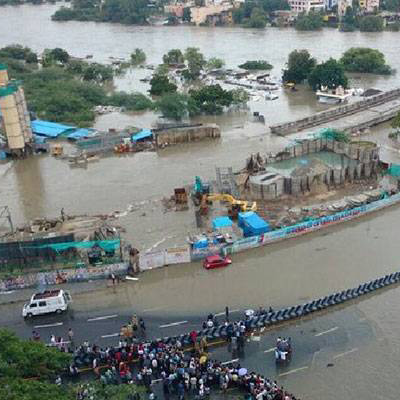
    MUMBAI: ’Twas Mother Nature’s fury at full throttle when the state of Tamil Nadu was flooded by the heaviest rainfall it has been privy to in the last century. Many lives were lost even as over three lakh people became homeless.


    While the southern state is slowly inching back to normalcy from the unprecedented rains and floods, which engulfed whatever came in its way, the natural disaster had a massive impact on the media and entertainment industry as well. The entire cable TV ecosystem was brutally affected by the calamity. It may be recalled that for the last couple of weeks, the Broadcast Audience Research Council (BARC) India hasn’t received television ratings data from the region too.


    In the light of this disaster, a senior cable federation member from Chennai estimates the overall loss suffered by the cable industry to be close to Rs 25 crore. “We have done an on-ground survey and after a thorough analysis, we came to the estimate. Local cable operators (LCOs) will have to bear the majority of the loss as most of the fibre amplifier devices, which were damaged belong to them,” he adds.


    While industry body ASSOCHAM estimated the overall financial loss from the torrential rains and floods in Tamil Nadu to be in excess of Rs 15,000 crore, the Rs 25 crore loss to the cable industry may even be a conservative one. The on-ground reality indeed paints a grim picture.


    “Thousands of fibre amplifiers got affected. The LCOs are trying their level best to restore services but the damage is so massive that it will take at least a week or 10 days more to get things back on track,” added a senior official from the cable fraternity.


    A fibre amplifier, which is located in the operating room of cable operators, costs around Rs 3500 and a large number of them were totally destroyed as they immersed in the flood water. Fortunately, no instance of head-end damaged could be traced.


    An independent multi system operator (MSO), who was also affected by the natural calamity, said, “The head-ends are generally placed at a good height and hence they got saved. But my transmitter is totally damaged. The flood has damaged cable operations brutally, and to restore services it will take me more than 15 days at least.”


    “The transmitter costs Rs 50,000 and I have to invest in a new one,” he adds.


    The other equipment that was damaged in the flood and needs serious investment is Erbium Doped Fiber Amplifier (EDFA), which is an optical repeater device used to boost the intensity of optical signals being carried through a fiber optic communications system. “I need to invest Rs 1.5 lakh in my EDFA and there are many other such operators who will have to change their EDFA,” said an LCO.


    While some equipments may be under warranty, it is unlikely that the warranty applies in the case of natural disasters. A looming question is also that of insurance. All said and done, many LCOs and MSOs affected severely by the flood will have to bend over backwards in order to get their system back on.

  • TDSAT dismisses Media Pro’s 14 petitions seeking payments from cable ops

    TDSAT dismisses Media Pro’s 14 petitions seeking payments from cable ops

    NEW DELHI: The Telecom Disputes Settlement and Appellate Tribunal (TDSAT) has dismissed 14 petitions by Media Pro Enterprise India, Mumbai against cable operators as “there is no material on record even to show what were the dues, if any, of the respondents on the date their respective agreements came to end.”


    TDSAT chairman Justice Aftab Alam and member Kuldeep Singh said in fact that three cases by the petitioner were plainly barred by limitation. 


    The judgment said, “We are satisfied that in none of the cases in the batch, the claim of the petitioner is fit to be allowed. All the petitions are accordingly dismissed with costs at Rs 5,000 per petition payable to the TDSAT Employees’ Welfare Society. A receipt showing payment of the cost should be filed in the Registry within a month from the date of the judgment.”


    The three petitions barred by limitation (time-barred) were against S.M. Advertising, Maharashtra; Nileshwar Cable TV Network, Kerala; and Tara Cable Network, Maharashtra.


    The other local cable operators (LCOs) against whom the petitions had been filed included five from Gujarat – Narmada Cable Service, Five Star Network, Star Marketing, Anjali Cable Network, and Jai Santoshi Maa; two from Maharashtra – Bhusawal Network and H.R. Entertainment; Rathore Network, Rajasthan; Apna In Cable Broad Band Services, Andhra Prdesh; Nandgaon Cable Network, Chhattisgarh; and Haridwar Cable Network, Uttarakhand. 


    Media Pro used to be the agent and intermediary of several broadcasters, including Zee Turner Ltd and StarDEN Media Services on the basis of agreements executed with the broadcasters. According to the averment made in the petition, it started its operations as their agent in July 2011. Before that the channels of the aforesaid two broadcasters were given to the distributors on the basis of agreements executed by the broadcasters themselves. 


    The 14 petitions are for recovery of different sums of money as dues of monthly subscription fees. According to the petitioner, the 14 LCOs were receiving the signals from Zee and Star DEN on the basis of agreements executed with them on different dates, on payment of different sums of money as subscription fees in terms of their respective agreements. It is further the case of the petitioner that on the basis of agreements executed with the broadcasters, it took over the control and distribution of their channels and was also authorised by its principals to collect their outstanding dues from all the distributors, including the present LCOs.


    According to Media Pro, after assuming the role of agent and intermediary, it raised invoices against the LCOs for payment of monthly subscription fees as also the past dues of the principal broadcasters. The LCOs, however, failed to make payments against the invoices and as a result dues accumulated, leading to the petitions. Media Pro has claimed the amounts due along with interest at 18 per cent from the date the amount became due till the date of the filing of the petition. 


    The Tribunal noted that in all cases, the subscription agreement had come to end before Media Pro stepped into the shoes of the agent and the intermediary of the broadcasters. Furthermore, the supply of signals to the LCOs continued for many months even after the agreements had come to end – a fact admitted in the petitions and by witnesses examined.


    None of the 14 cable operators appeared despite service of notice. Hence, all the petitions in the batch were proceeded with ex parte. As all are based on similar facts with the exception of the amounts of money claimed and the date of disconnection of signals, all were heard together. 


    The witnesses said Media Pro requested the LCOs to renew the expired agreements but the latter delayed this on one pretext or other and invoices were raised. The TV channel signals accordingly continued to be retransmitted by LCOs to their subscribers until May 2012. 


    The said retransmission by the respondent to its subscribers has been duly verified and corroborated by the petitioner through ground verification conducted from time to time and as recent as on April – May 2012.  


    However, the Tribunal noted, “the averment of Media Pro is thus directly in teeth of the clear directive of the Regulations.” 


    The Tribunal said clause 4A of the Telecommunication (Broadcasting and Cable Services) Interconnect Regulations 2004 with effect from 17 March, 2009 is clear that the Interconnection Agreements have to be in writing. It further says no broadcaster of pay channels or distributor of TV channels, such as multi system operator or headend in the sky operator shall make available signals of TV channels to any distributor of TV channels without entering into a written interconnection agreement.

  • Korea has found its ‘Kimchi’ for its content needs

    Korea has found its ‘Kimchi’ for its content needs

    MUMBAI: The Asia TV Forum kicked off proceedings this time around with a keynote by CJ E&M president, media content business DJ Lee speaking about the future of television in Asia and what lies ahead.


    CJ E&M has successfully been operating over 17 television channels and also provides nearly 3,000 hours of content – on an annual basis – across diversified platforms. But, what has been interesting in terms of the growth curve for the network, is the fact that there is a lot more of local content being created, which is doing tremendously with the local audience.


    “These are some exciting times for content creators globally. With content being consumed anywhere and being platform agnostic, it’s encouraging to see creators pushing the envelope and doing different things or just doing things differently and being able to reach a wider audience for their content,” Lee expressed.


    With an ambitious global expansion strategy along with initiatives such as digital-first original production under Lee’s guidance, CJ E&M rechristened its Multi-Channel Network (MCN) this year to DIA TV (Digital Influence & Artist TV) to focus on creating strategic business partnerships and opportunities with digital content creation platforms such as United States’ YouTube, China’s YouKu and France’s DailyMotion. By partnering content creators via the many digital platforms available, Lee also mentioned that the company is hoping to provide independent digital producers the opportunities to market their product by providing them with more support in areas such as funding, programming, digital rights management and cross-promotion.


    “Recently we have signed a licensing deal with NBC for our successful showBetter Late Than Never. So I see lot more such innovative formats traveling across the globe. Asia needs to capitalise on its own rich cultural content, while embracing the diversity in the very same culture as well,” Lee said. “South Korea has branded its content, and made it as popular as its delicacy ‘Kimchi’ and it’s time other Asian countries follow suit as well.”


    Lee has been a forerunner, pioneer and innovator of the Korean broadcasting industry, bringing Total Variety Network (tvN), the country’s leading content channel, to greater heights and surpassing Free-to-Air (FTA) giants in terms of ratings and advertising revenue. Being the first to bring international formats into Korea to be localised, while also creating the first international Research & Development department.


    With local broadcasting networks in Southeast Asia seeking to augment their original content, Lee’s address also provided insights based on his extensive experiences in cable, formats and the digital sphere.


    Lee added, “Evolution and Adaptation are two key traits to have in an industry such as ours. Be it the successful localisation of international formats or integrating existing formats into brand new concepts, it is all about providing engaging and contemporary content for your audiences.”


    He emphasised on the fact that Asia needs to find its identity and like CJ E&M find its own ‘Kimchi’ recipe to create a brighter future for the entire content ecosystem of tomorrow. “There will be hurdles like investments and restrictions that will come in your way, but it’s all about having the confidence in your content that will decide the future of your content market and whether it will find space in the hearts of your viewers and money in your pockets from brands who see value in your content,” he said.


    CJ E&M’s success is also attributed for creating short format content for the digital space as well as heavy digital marketing spends to in turn increase the content consumption on linear platforms as well. “With experience, we experimented using a lot more social marketing and digital content creation to gain eyeballs and then translate those into gaining more viewership on the linear front as well. I believe that digital is the next big thing and all content creators need to tap it as soon as possible. And what’s more important is to create a differentiated positioning for both the content,” Lee opined.


    This keynote certainly gave some great insights behind the success of one of the largest media groups in Asia. And would help a lot of other content producers to think more locally, while keeping the global audience in mind as well. Guess it’s time for India to think of taking its ‘Rajma Chawal’ to the world!

  • Q2-2016: Indian Cable TV companies report improved numbers, but only just

    Q2-2016: Indian Cable TV companies report improved numbers, but only just

    Indian Cable TV is a long haul work in progress is what we had said a couple of quarters ago and mentioned this in the last quarter also. The results of the same four sample companies in the quarter ended September 30, 2015 (Q2-2016, current quarter) in those reports once again endorse this fact. Albeit, all the four companies – the big three– Hathway Cable and Datacom Limited (Hathway), Den Networks Ltd (Den Networks), Siti Cable Network Limited (Siti Cable) and the minnow – Ortel Communication Limited (Ortel) reported a quarter on quarter (QoQ) increase in Total Income from Operations (TIO) in the current quarter, Year on year (YoY ),  TIO of three of the four companies increased, while TIO of Den fell. As expected, broadband subscriber numbers and revenues continue to grow.

    Operating margins (EBIDTA) of three of the four companies grew QoQ, and of two, EBIDTA grew YoY also. Overall the combined EBIDTA of the four companies grew QoQ, but declined by more than a third on a YoY basis. However, the results reported by the four companies show a faint glimmer at the end of the tunnel. How they perform over the next few quarters will tell if the Cable TV fairy tale is going to be real, or remain just a fable. In this paper, there can be no comparison of profit after tax, because, of the four, only one has posted profit after tax quite consistently-Ortel.

    Subscription revenues of all the four companies increased both YoY and QoQ. All the four companies reported increase in digitisation percentages. Carriage Fees show a declining trend in general. The combined Carriage Fees of the four companies was flat YoY but declined QoQ.

    The minnow wants rapid growth, and grow it should, because, as mentioned above, it is the only company among the four that has posted profit after tax. One of the avenues for growth that Ortel is looking at is LCO buyout. Ortel’s President and CEO Bibhu Prasad Rath said, “We are witnessing encouraging traction to our LCO buyout strategy in emerging markets like Andhra Pradesh and Chhattisgarh, and I am confident that this would sustain going forward. Also, going forward, we would continue with our strategy of aggressive LCO buyouts across all our markets and diligently integrate the new subscribers into Ortel’s last mile network.”

    Internet subscription revenue in the current quarter increased YoY and QoQ by more than double digits. All the four companies are focusing on broadband internet services, if one were to go by the comments of their senior personnel.

    “We are looking to further streamline our Broadband operations to provide stellar customer experience. Our commitment to digitization of Phase 3 areas remains and we expect this to gain further momentum in the coming quarter,” said Siti Cable Executive Director and CEO V D Wadhwa.

    Ortel’s  Rath said, “Healthy contribution from new RGUs (revenue generating units) along with ongoing focus on the high margin broadband business would enable us to deliver strong financial performance in the forthcoming years.”

    Note: (1) 100,00,000 = 100 lakh = 10 million = 1 crore.

    (2) Some figures are approximate.

    (3) Other income has not been factored in for EBIDTA in the report.

    (4) Siti Cable and Ortel numbers for Q3-2015 are estimates.

    (5) This paper is more skewed towards the financial performance parameters in a limited way, rather than the operational and operational performance parameters of the sample companies.

    Total Income from Operations grew both YoY and QoQ

    A major contributor to all the four companies revenues are revenues from their Cable TV Operations. All the four also offer internet services, and revenue from these services add to their revenues. Companies such as Den and Ortel have other revenue streams also. Total Income from Operations or TIO in this paper, is the sum total of all operating income generated by the company including ‘Other Operating Revenue’ such as revenue earned through advertisement,  activation and service charges, etc. TIO does not include other income such as interest, revenue earned through investments, etc. Den owns a football team and that is one of the revenue streams for its TIO, while Ortel is into infrastructure leasing that contributes to its TIO.

    Please refer to Fig 1 below for TIO for six quarters starting Q1-2015 until the current quarter Q2-2016. The combined TIO of all the four companies increased 1.7 percent (increased by Rs 14.10 crore) YoY to Rs 825.32 crore as compared to Rs 811.22 crore and increased 3.3 percent (increased 26.62 crore) QoQ as compared to Rs 798.70 crore. Ortel had the highest YoY and QoQ growth in percentage terms at 24.6 percent (Rs 9.04 crore) and 12.8 percent (Rs 5.19 crore) respectively. In absolute rupee terms, Siti Cable showed the highest YoY growth with Rs 14.97 crore (6.8 percent), while Hathway had the highest QoQ growth in terms of absolute rupees at Rs 9.62 crore (3.6 percent)

    EBIDTA

    Overall, operating profit or EBIDTA of 3 of the four companies has been increasing since Q4-2015. It is only Den that has seen a decline to the red since Q3-2015.

    YoY, the combined Earnings Before Interest, Depreciation, Tax and Amortisation (EBIDTA) of the four companies in Q2-2016 reduced by a massive 38.6 percent (reduced by Rs 50.73 crore) to Rs 80.57 crore as compared to Rs 131.30 crore, but increased 4.4 percent  (increased by Rs 3.37 crore) QoQ as compared to Rs 77.19 crore.

    Both Siti Cable and Ortel saw YoY and QoQ growth in EBIDTA in Q2-2016. In the case of Den, EIBIDTA declined both YoY and QoQ in the current quarter. Hathway’s EBIDTA declined YoY, but increased QoQ. Please refer to Fig 2 below.

    Cable TV Operations

    The major contributors to revenues of the four companies Cable TV Operations are Subscription revenues and Carriage or Placement fees. Activation fees also contribute to Cable TV Operations revenue.

    It must be noted that Cable TV Operations revenue in this article and the chart below includes only these three streams. Other revenues which are not included are Advertisement revenue, sale of traded goods, lease rentals, management charges, other networking and other income, etc.

    As mentioned above, all the four companies in this article reported QoQ increase in total income from their Cable TV operations in the current quarter. YoY also, three of the four companies reported growth in revenue from their Cable TV operations.

    The combined total revenue from Cable TV Operations of the four companies was almost flat (reduced by less than 0.1 percent or Rs 0.7 crore) YoY at Rs 699.20 crore as compared to Rs 699.90 crore and increased 1.4 percent (increased by 11.1 crore) QoQ from Rs 688.10 crore.

    Please refer to Fig 3 below that shows a snapshot of revenue from Cable TV operations. In terms of revenue from Cable TV Operations, Siti Cable overtook Hathway in Q3-2015 and is now placed second among the four with Den placed at the pole position.

    The company with the highest YoY and QoQ growth in terms of absolute rupees was Siti Cable with revenue from Cable TV operations growth of Rs 11.40 crore (grew by 5.5 percent) and Rs 5.40 crore (grew by 2.5 percent) respectively. Siti Cable’s Cable TV Operations revenue in the current quarter was Rs 218.20 crore, in Q2-2015 it was Rs 206.80 crore and in the immediate trailing quarter, it was Rs 212.80 crore.

    Ortel had the highest YoY and QoQ growth in Cable TV Operations revenue in percentage terms.  Ortel’s Cable TV Operations revenue grew 12.3 percent (increased By Rs 3.40 crore) YoY and grew 8.8 percent (increased by Rs 2.5 crore) QoQ.

    Cable TV Subscription Revenue

    The combined Cable TV Subscription revenue of all the four companies in Q2-2016 increased YoY and QoQ by 0.2 percent (increased by 0.80 crore) and 2.2 percent (increased by Rs 8.10 crore) respectively. Combined Cable TV Subscription revenue in the current quarter was Rs 381.60 crore, in Q2-2015 it was Rs 380.80 crore and in the immediately trailing quarter it was Rs 373.50 crore.  Siti Cable’s Cable TV Subscription revenues have been the highest among the four players in this report.

    Last quarter (Q1-2016), despite the flat  QoQ ARPUs and higher subscription numbers, Siti Cable’s Cable TV Subscription revenue fell QoQ because  the company had initiated strict measures against erring LCO’s and had switched off signals to the extent of about 4 lakh cable TV consumers say industry sources. The action seems to have been partly successful, because the company’s QoQ Cable TV Subscription revenue increased by 7.4 percent, but did not achieve the Rs 142.40 crores of revenue levels it had in Q4-2015.

    Please refer to Fig 4A below. In absolute rupee terms, Siti Cable’s Cable TV subscription revenue growth was the highest, both YoY and QoQ at Rs 3.50 crore (increased by 2.6 percent) and Rs 9.50 crore (increased by 7.4 percent) respectively. For the current quarter, Siti Cable had Cable TV Subscription revenue of Rs 138.50 crore, in Q2-2015 Siti Cable’s Cable TV Subscription revenue was Rs 135 crore and it was Rs 129 crore in the immediate trailing quarter.

    In percentage growth terms, Ortel’s Cable TV Subscription revenue increased by 4 percent (increased by Rs 0.80 crore), while QoQ, it was Siti Cable that reported the highest growth in terms of percentage in the current quarter as compared to the immediate trailing quarter, as mentioned above.

    Please refer to Fig 4B below.  Though Cable TV Subscription revenue has been increasing in absolute rupees, its contribution to Cable TV revenues has been declining. In the case of Den and Hathway, which have more number of Cable TV subscribers, Cable TV Subscription revenue’s contribution to Cable TV revenue was around 50 percent, while in the case of Siti Cable and Ortel, Cable TV Subscription revenue contributes to around two thirds to Cable TV revenues. The author would like to remind the reader that Cable TV revenue in this report includes only Subscription, Carriage or Placement and Activation revenues only.

    Carriage Fees or Placement Revenue

    Combined Carriage Fees of the four companies saw a 5.9 percent (Rs 16.70 crore) decline QoQ to Rs 265.80 crore as compared to the Rs  282.50 crore and was flat YoY as compared to Rs 265.80 crore.

    Three of the four companies saw a YoY growth in Carriage fees, while Den Carriage Fees declined both YoY and QoQ. Siti Cable saw the sharpest QoQ decline in Carriage Fees of 17.3 percent (reduced by Rs 12.6 crore).  Hathway and Ortel saw YoY and QoQ growth in Carriage Fees. Please refer to Fig 5 below.

    Carriage Fees contribution to Cable TV revenue shows an increasing trend in the case of Hathway and Ortel, while in the case of Den and Siti Cable the trend is declining. Please refer to Fig 5B below.

    Broadband Subscription revenue

    As mentioned above, all the four companies have reported growth in Internet Subscription revenue. The combined Internet Subscription revenue of the four companies increased 62.1 percent (increased by Rs 37.1 crore) YoY to Rs 96.80 crore in the current quarter as compared to Rs 59.70 crore and increased 12.2 percent (increased by Rs 10.50 crore) QoQ as compared to Rs 86.30 crore.

    Please refer to Fig 6 below. Hathway has the highest number of internet subscribers among the four players and its Internet Subscription revenue grew the highest in terms of absolute rupees YoY by Rs 26.50 crore (increased by 58.4 percent) and  by Rs 6.8 crore (increased by 10.4 percent) QoQ. In percentage terms, Den’s Internet subscription revenue grew to almost six-fold (increased to 5.85 times, by Rs 6.80 crore) and increased 57.7 percent (increased by Rs 3 crore) QoQ.